Strong Performances, Forgettable Story
The male and female leads both did a great job with their performances.This is my third drama with Bai Lu. I've previously watched her in Till the End of the Moon and Only for Love, and I was never particularly impressed with her acting. At times, I found it a bit immature. However, she completely changed my opinion in this drama. Her performance was consistently strong from the very beginning, especially through her dialogue delivery. The scene in Episode 34 where she cries at the tomb was absolutely outstanding and, in my opinion, one of the best emotional moments in the series.
As for the drama itself, I thought the plot was easy to follow and well-structured. However, I found the overall pacing quite boring. It took me forever to finish because there were several episodes where I couldn't stay engaged. Sometimes I just let the show play in the background so I could eventually finish it and cross it off my watchlist.
Overall, while the acting especially Bai Lu's was a pleasant surprise, the story never really captivated me. I was honestly surprised to see so many people calling it the best period C-drama of 2026 so far. It simply didn't leave that kind of impression on me.
Was this review helpful to you?

This review may contain spoilers
The Last Jasmine because I'm not rewatching the whole show
I became a huge fan of Ryan Cheng for his role in “My Journey to You” and decided to give this one a try. The drama is overall…mid. I enjoyed some parts, but took issue with most.Story [5/10]: The story has intriguing complexities, but fails miserably in its execution. This show would have been way better if it had focused on the two leads' pasts and stories and upped the villains' game. There is never a time when our leads are beaten by the villains in this show, who are annoying at best and cowardly at worst. I thought at least one of the Marquis’ sons would become a worthy opponent, but no, they just led common lives, and we never saw them again. At times, side stories and subplots are okay distractions, but when they stray and are left open-ended, incomplete, and rushed, they only ruin your main plot. For a show where the leads are exceptionally smart, surprisingly, it wasn’t mentally stimulating enough.
The development of Ye Li and Ye Ying’s relationship was fun to watch. In their last meeting, Ye Ying had said that if Ye Li ever needed a place to stay away from Prince Ding’s mansion, Ye Li was welcome to stay with her. I low-key wished Ye Li had done this during the 5 months Xiuyao had been back at the border. It would make sense because she wasn’t a fan of being dragged all over the city by Lady Wen (Xiuyao’s sister-in-law), so she could have hid out at Ye Ying’s for a bit. But at the same time, we don’t know where Ye Ying was because after Mo Jingli ditched her, we don’t know if she simply went back home or maybe stayed in Mo Jingli’s mother's hometown (like to wait for him to come back).
My biggest issue with the latter part of the story is how Princess Lingyun was assassinated. Mind you, she was praised for single-handedly putting her brother on the throne by defeating powerful enemies. She’s so powerful that the people of our leads’ feared hers. Her death was so random and rushed that I thought there was going to be a plot twist where she would survive. But no, she was assassinated by her servant-assassin, and our FL, Ye Li, was framed for it. The annoying thing is that NO ONE, including Ye Li, spoke of the maid who got her throat cut right before Su Zuidie put the knife in Ye Li’s hand. Like, why would Ye Li kill her own maid? What happened to the maid? She introduced herself, then was killed shortly after; it doesn’t make sense… We also don’t know what happened when her people went home because Su Zuidie was rescued and no one seemed to be looking for her for killing their beloved princess. Lingyun was a very cool character, too bad only Feng Zhiyao recognized that.
Also, we never got to see how Mo Xiuyao pushed Mo Jingli back; we were just told Xiuyao was successful after success. This not only screamed ‘low budget’ but also rushed the ending and eliminated any opportunities for us to see how Xiuyao felt about leading battles again. I don’t want to hear that Mo Jingli went from 50,000 soldiers to 500 men because Xiuyao was that good. I want to see how Xiuyao did it, even though I know Mo Jingli doesn’t hold a candle to Xiuyao’s strategies and fighting abilities.
The final battle was weak. The action was good but could be better. Also, why did they keep breaking the statues into three perfect pieces? Looked like knocking over stacked boxes.
So again, Ye Li and Mo Xiuyao’s pasts were very interesting (on the surface), but the execution was meh. Especially for Xiuyao’s past.
Acting/Cast [8/10]: I have no complaints about the cast, overall. The acting felt stiff at times, especially in the facial region. When the Marquis was exposed, Guo Jin couldn’t be bothered to show any emotion, be it relief or anger. Another issue with the show was that it didn’t seem to know how to handle its large cast, so most characters either appeared only a few times or were written out because the plot needed them gone. There was chemistry between Ye Li and Mo Xiuyao, but at the same time, there was very little harmony. I love it when main characters have lives outside of each other, but this was the case from start to finish; there was little room for teamwork between Mo Xiuyao and Ye Li as husband and wife.
The character of Mo Jingli/Prince Li was seriously pathetic and horribly designed. Despite being our final boss, he is boring. He attempted suicide multiple times throughout the show to gain sympathy from our married female lead while secretly leading a rebellion. I wouldn't be able to rely on or follow someone like that for very long, someone who would try to kill himself over a woman many times. He also kept saying, "if fate has it, we'll meet again" to Yeying/Princess Li (Yeli's younger half-sister), as if it meant anything. He had no feelings for her, so what would change if they met again? It also didn’t make sense for him to say that because there were only two final outcomes for him: become King or die trying. He can’t meet her again if he’s dead, and meeting her again as King will do what exactly? Anyway, Guo Jin [Empress Dowager], Maruis Muyang, and Qin Zheng [Consort Dowager] were all awful villains. Qin Zheng showed potential and was portrayed as a clever, cold woman, but her primary role was to withhold the original edict and ultimately give it up when Guo Jin didn’t return her sisterly love.
Music [10/10]: I don’t mind any of the songs, really. I wasn’t in love with any of them, but they weren’t annoying or overused. There were times when audio and BGM would just cut out, and I complained about not using fade-outs, but that’s a personal preference.
Rewatch value [2/10]: Every time Bai Lu (Ye Li) was on screen, I’d unconsciously whisper “wow, she’s so beautiful,” but unfortunately, I won’t sit through the series a second time even though she is stunning. I may rewatch certain episodes or scenes down the line, but not the entire thing again.
Overall, “The First Jasmine: MoLi” gets a 6.5 from me. I admit that the only time I was truly bored was when Mo Jingli/Prince Li was on screen, so the whole show is easy to binge. I just wasn’t a fan of how things unraveled, so the 6.5 is a personal preference and not what I believe the show is (an 8). If you don’t have the same picky issues as me, you’d most likely enjoy the show.
Was this review helpful to you?

This did not need to be 40 episodes
This started out good and then the latter half (save for episodes 32-34) was just disappointing. Some episodes and scenes felt like padding and I thought did not move the plot along but rather just dragged. I really only finished it for Cheng Lei. I did like their chemistry and Ye Li’s story really broke my heart.Was this review helpful to you?
This review may contain spoilers
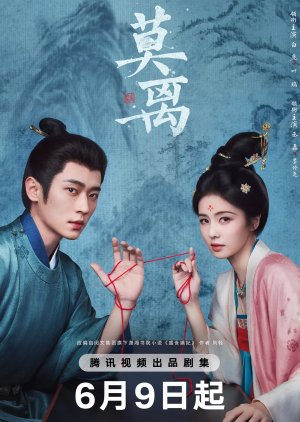
The First Jasmine Review: Two Broken Souls Who Quietly Became Each Other's Home
As a Bai Lu fan, The First Jasmine was an absolute must-watch, especially with Cheng Lei as her co-star. I had only recently become familiar with Cheng Lei through two of his dramas, and this series convinced me that he is one of the finest actors of his generation.At first glance, It looks like another historical romance built around revenge and court politics. What makes it exceptional, however, is that both protagonists are deeply flawed. Ye Li is the brilliant granddaughter of the Headmaster of Lishan Academy, gifted in medicine, strategy, martial arts, mathematics, chess, and astrology, yet she quietly carries the survivor's guilt and trauma left by the devastating epidemic that claimed the people she loved most. Prince Ding, Mo Xiuyao, is a legendary general admired throughout the empire, but beneath his calm exterior is a disabled prince burdened by the destruction of his family and years of emotional restraint.
Because both characters spend most of the drama hiding rather than expressing their pain, Bai Lu and Cheng Lei rely on subtle expressions, silence, and body language instead of dramatic outbursts. That restraint is exactly what makes their performances so powerful.
One irony I particularly appreciated is Ye Li's family. Her father is weak, foolish, and easily manipulated, while her mother—the beautiful and intelligent daughter of the Headmaster of Lishan Academy—made the tragic mistake of falling in love with the wrong man. Ye Li inherited her mother's brilliance but possessed the strength, wisdom, and resilience that neither of her parents fully demonstrated.
What I loved most was that Ye Li was never written as someone who simply needed saving. Her intelligence became her greatest weapon. More importantly, she became Prince Yao's greatest ally—initially an unknown one—quietly dismantling enemies through strategy while he fought on the battlefield. Their partnership felt equal, built on mutual respect rather than dependence.
PERFORMANCES
Bai Lu once again proves why she is one of my favourite actresses. Her portrayal reminded me of One & Only—restrained, understated, and emotionally layered. There are no traces of Bai Lu herself, only Ye Li. Sometimes a slight pause, lowered eyes, or a trembling smile conveyed more than pages of dialogue ever could.
The Lishan storyline became the emotional backbone of the drama and the strongest showcase of her acting. The epidemic was not simply a tragedy from Ye Li's past; it continued to haunt her throughout the story. Every return to Lishan, every vision of her grandfather and fellow disciples, and every reminder of what she had lost carried enormous emotional weight. Yet Ye Li never allowed her grief to define her. She continued protecting others, especially Prince Yao, while quietly carrying the pain herself.
Cheng Lei was equally impressive. Playing a disabled, short-tempered prince required remarkable restraint. Unlike his role in How Dare You?!, where he displayed an incredible range of comedy, fierceness, vulnerability, timidity, and even an adorably clingy side, Prince Yao demanded quiet control. His finest scenes weren't loud or dramatic but deeply internal. The sequence on Lishan Mountain, where Ye Li's condition worsened while he forced himself to remain composed despite being consumed by guilt, was heartbreaking. His expressive eyes alone communicated fear, helplessness, and unconditional love.
A ROMANCE BUILT ON TRUST
What truly made Bai Lu and Cheng Lei exceptional wasn't the romance itself but how they acted opposite one another. Great chemistry isn't measured by passionate kisses or intimate scenes; it's revealed in how actors listen, react, and elevate each other's performances.
Even during ordinary conversations or emotionally heavy scenes, they remained completely present with one another. The Lishan sequences, in particular, showed how responsive their acting was. They didn't simply deliver dialogue—they responded naturally to each other's emotions.
I also loved that Ye Li fell in love first. She admired Prince Yao's since her teens, his integrity and kindness long before he recognised his own feelings. Even after they married, it felt as though she fell in love with him all over again, travelling a great distance simply because she missed him. Prince Yao, meanwhile, fell even deeper. Whenever he couldn't find her, he became visibly restless. Every time he returned home, one of the first things he asked was where Ye Li was. Watching the once-feared Ding Prince become quietly devoted to his wife—gently touching her face, hurrying home to see her, or simply wanting her beside him—was sweeter than any grand romantic gesture.
The kissing scenes were relatively restrained, but I never felt the romance lacked intimacy. Their love was expressed through lingering glances, gentle gestures, and unwavering trust. Like One and Only, this drama proves that genuine chemistry isn't built on physical intimacy but on two actors who know how to communicate love through their eyes and silence.
SYMBOLISM
One of the drama's greatest strengths is its use of symbolism.
My favourite is the wind chimes. They first represent Ye Li's true home at Lishan and become one of the few memories she carries after the epidemic. They later appear in her mother's shop, symbolising her enduring connection to her family. When she finally hangs them at Prince Ding's residence, it quietly marks the moment she accepts it as her new home. By the end, the wind chimes no longer represent a place—they represent belonging. Ye Li doesn't abandon her past; she carries it with her until she finally finds someone who makes her feel safe enough to call another place home.
The straw dolls she prepares before leaving Lishan beautifully symbolise the burden of revenge she carries, promising to release them to the wind once her mission is complete. The recurring libation before drinking adds cultural authenticity, while the wild monkeys become a powerful metaphor for Ye Li's trauma. When Prince Yao leads her back to the mountain and shows her there are no monkeys waiting for her, he is really helping her confront the fears she has carried since Lishan.
The final return to Lishan remains my favourite scene. Seeing her grandfather and fellow disciples one last time before hearing Prince Yao call her back to reality felt like receiving permission to let go of the past without forgetting it.
SUPPORTING CAST, PRODUCTION & FINAL THOUGHTS
While a few key supporting performances, particularly the Emperor, Prince Li, and Zuide, lacked the emotional depth their roles required, others were excellent. Lin Muran (Han Ming Xi), Feng Xue Ya (Qing Shuang), Shawn Zhang (Li Fei Bai), and Liu Xing Chen (A Jin) all brought warmth, sincerity, humour, and emotional balance to the story.
The cinematography, costumes, dual-POV storytelling, musical score, and OST beautifully enhanced the emotional atmosphere. Bai Lu also looked stunning throughout the series, even in scenes where Ye Li appeared gravely ill with little or no makeup.
The drama isn't perfect. Some scenes could have been executed better, and stronger performances in a few supporting roles could have elevated it even further. Yet whenever Bai Lu and Cheng Lei shared the screen, I was completely captivated. They never competed for attention—they elevated each other's performances.
In the end, I realised TFJ was never really about revenge. It was about finding home again. The wind chimes that followed Ye Li from Lishan, to her mother's shop, and finally to Prince Ding's residence beautifully capture that journey. Prince Yao didn't erase her grief; he simply became the reason she could finally live with it.
I sincerely hope Bai Lu and Cheng Lei reunite in another historical drama. With another powerful script and a stronger supporting cast, I have no doubt they could create another masterpiece.
Was this review helpful to you?
This review may contain spoilers
Started out strong then got flat quick
Ok so 100% honest, overall it was good but not the great epic love story and political drama I was expecting to see. The best part was Li’s emotional journey dealing with the tragic loss of her family and how she moves through that at heals from it. They did a good job building a solid loving relationship between them. They go from strangers to a wonderful healthy supporting couple. But if you’re waiting for an epic, romantic love to develop, this ain’t it. There were absolutely no romance scenes between them other than maybe one or two very low key kisses. I’d call their relationship more platonic than a newly wed 100% in love couple discovering their relationship.On to the action. Meh. Very few battle scenes. I was disappointed here too. I am a big fan of Cheng Lei and his ability to do some epic general butt kicking. But this show literally skipped all chances to show off those skills. They send his character off to fight the rebellion and we don’t get a single scene of him beating the crap out of the rebellious prince Li?? The whole show was literally leading to that situation and they just skipped over it. We get reports that he’s kicking ass but no action? It’s just done. Like what? Then they get to the point where he’s basically defeated yet they don’t actually capture him. They just celebrate and walk away. He easily storms the capital while Prince Ding is like oh they’re throwing me a party. Cool. Like what?
Secondary characters also could have been way better developed. They had such potential but felt like they were just thrown in because they felt like they had to have them. Like Han Ming Xi. I really don’t know what the point of his character was. He didn’t really do anything but be there once in a while. His brother and him weren’t really influential in Prince Li’s rebellion or in stopping it. They could have done so much more with his character. Then there was Prince Li, who instead of the villain they portrayed him as, actually had a valid reason to rebel. The Empress Dowager killed his family and stole the throne from him. In other dramas that person is the hero. So I actually felt bad for him the whole show. He was just fighting for just revenge. And in the end the empress even admits she was wrong for it all.
So overall, it was worth watching,started out with a strong idea and intention, then fell really flat for me. Bai Lu was great in her acting skills and really brought the emotion to the character. I don’t think they gave a chance for Cheng Lei to shine in this one. The last 5-6 episodes he is barely in and more like a side character. In the beginning I felt like I was waiting for his time to shine and it never happened.
So take this for what it’s worth but I felt like it had a lot of potential and then fell really flat.
Was this review helpful to you?
This review may contain spoilers
Only one star makes for a pretty boring sky
I have such conflict over this show given how much I loved it for the first half vs where we ended up at the end. (mild spoilers ahead)This started as such a fresh take on old tropes. We didn't have to watch Ye Li carefully explain to her maids (or the audience) all of her carefully laid plans. What was going on in her world was a mystery for the viewer to solve on their own through clues and actually watching what was happening. The amount of fun it was to speculate with other fans was worth the price of admission, at least in the first half.
So far as the rest of the show goes and I feel like this goes for any story along these lines: The best way to make your main character more awesome is to have everyone else be awesome as well. Moli decided the best way to have Ye Li be awesome was to make sure to not let anyone else be interesting for longer than five minutes.
Before anyone gets mad at me, think about when we (know knowing her methods) watched her set up that whole scheme against her father. Then all she got out of it was a blank piece of paper. That was like a gut punch. We felt her despair; we watched her pick herself up and come back to that crazy climax of a showdown etc. I was high on life and cdrama giddiness about that for *days*.
Compare that feeling to watching her win her conflicts in a one-sided fight like a grown ass woman pushing down toddlers in a playground. Because that is how it went for the second half.
It was alright at first because you’re still very involved in her trauma at that point, but after the Linshan Mountain storyline wrapped that was it. That was the last of anything interesting happening in the show. We limped along till the end with a standard mid-level cdrama plot other than then occasional toddler carnage while we went down a checklist of Ye Li being the best at everything she tries. There wasn’t enough time to build a last arc plot and there were too many eps left as an “epilogue” to the main story.
It didn’t have to be like this. We were shown so many things that never got used or barely got touched on because it seemed like the camera always always had to swing back to Ye Li only. Even after switching to mid-level drama plot in the middle I think the show could have still survived with a high satisfaction level, but there was no one interesting left for her push over. Almost every side storyline was wrapped up in a way that felt like the writers were bored and just wanted to get it over with to rush back to Ye Li.
It felt like a waste of Cheng Lei and a pretty solid supporting cast. It felt like a waste for some of the best acting and a crazy intriguing character for Bai Lu too, but at least no one can argue about who or what the show was about. It just could have been so much better for everyone, including her.
Was this review helpful to you?

Jasmine with barely any fragrance ?
This drama is the perfect example of how a terrible beginning can sabotage an entire story. Episodes 32, 33, and 34 were genuinely outstanding. They contained everything I'd been waiting for; the real emotional tension... Under normal circumstances, I would've been bawling my eyes out.Instead...I felt almost nothing~
Not because those episodes lacked impact, but because the first 31 episodes had already drained every ounce of emotional investment out of me. Sitting through ten soporific episodes followed by eleven more that were merely mediocre is no small task. By that time, I had already run out of patience.
If you're someone who enjoys melodrama for the sake of melodrama, you'll probably have a much better experience than I did. The drama serves plenty of noble suffering, sacrifice and emotional speeches. But if you like your stories seasoned and spiced...you might leave the table hungry.
The first ten episodes contribute almost nothing beyond a prologue, character introductions, and a handful of painfully uninteresting assassinations. The story doesn't begin to take shape until Episode 12, when the leads finally start moving in the same direction.
Episode 12...... In a 40-episode drama.... I mean come on ... !!!
"Writer clearly forget to light the fire"~
The only reasons I made it this far were Bai Lu, Ryan, and my respect for the friends who recommended it. Otherwise, this drama delivered absolutely nothing close to what its trailer had promised.
As for the cast...
Bai Lu once again proves that questionable script choices and acting ability are two completely different things. She can pick a drama that disappoints me, but she never disappoints me as an actress. She's effortlessly talented. That said, *Jadewind* and now this one do make me wonder how long I can keep liking her as my fav for her acting talent alone. Her scripts are not scripting to me anymore. She's at her absolute best when a feel good story gives her emotional moments to elevate. Watching Bai Lu cry during an otherwise engaging dull-plot drama is heartbreaking.
I mean ..'Even her magic has limits'~
Ryan...My man is back with his trademark micro-expressions. So microscopic they should come with a complimentary microscope...... Except for scenes like thanking Ye Li for saving his legs or his first visit to the Mountain Academy, he wore almost the exact same expression throughout the series. The frustrating part is that I know he can act. He was fantastic in *How Dare You?* So why does he keep returning to his *My Journey to You* default settings????
Why~
As for the production, the costumes looked good, the sets were perfectly serviceable, and the visual effects were... fine. There wasn't much opportunity for them to shine anyway.
The OST wasn't particularly memorable, but I did love the background score during Episode 1, the entire bride departure sequence. Those sanskrit shlokas chant like BGM was unique ... In a nice way.
Would I recommend this drama?
I wish I could.
But I can't~
Three excellent episodes simply aren't enough to compensate for nearly thirty hours of waiting for the story to wake up.
Was this review helpful to you?

a victim of a bad script
Like so many Chinese drama recently it has a very strong start. a strong storyline and a selection of protagonists and antagonists. It had a strong side story as well. Yet the story felt in cohesive and the flow disrupted. Where’s Bailu had the lead all throught, Ryan Cheng played the support role with leas screen time. It made his acting seem suppressed as well. I actually the some of the supporting roles that created depth to the story but no matter how great they were the series fell very flat in the end. This is one of those where they could have shortened the series to 24 and with concise storytelling, it may have flowed more smoothly.Was this review helpful to you?

This review may contain spoilers
A Tender Drama That Leaves a Lasting Impression
A historical Chinese romance that blends palace intrigue, revenge, political strategy, and a slow-burn love story.✅What works well
◍Strong female lead: Ye Li is intelligent, calm, and resourceful rather than relying on luck or clichés. Her quest for revenge is balanced by emotional depth, making her one of the drama's biggest strengths.
◍Complex romance: The relationship begins as a political marriage between two wounded people who slowly learn to love each other. Their romance feels earned through shared hardships rather than instant attraction.
◍Political intrigue: Court conspiracies, succession struggles, and strategic maneuvering give the story substance beyond romance. The revenge plot unfolds through intelligence and planning rather than constant action.
◍High production quality: The costumes, sets, and cinematography create an elegant historical atmosphere that suits the story.
◍Music/OSTs: The music in **The First Jasmine** is elegant, emotional, and perfectly complements the historical setting. The orchestral score and traditional Chinese instruments enhance both the romantic and dramatic moments without overpowering the story. Overall, the soundtrack is memorable and helps deepen the emotional impact of the series.
❎Weaknesses
◍I feel like they didn't fully utilize some of the characters. They had the potential to play much more important roles in the story, but their characters ended up being wasted.
◍Towards the ending episodes, it felt like they had cut a lot of scenes. For example, in the last episode, just when Ye Li was about to kiss Mo Xiu Yao, the scene was cut. The fight between Mo Xiu Yao and Mo Jingli also felt heavily edited, as if several parts were removed.
👩🏻Actresses👨🏻Actors/ Characters
◍Bai Lu was incredible in this drama. I was already a big fan of hers, but this drama made me appreciate her acting on a much deeper level. Her character, Ye Li, was so complex and beautifully portrayed.Through Ye Li, I laughed, cried, celebrated her victories, and even felt satisfied when she got her revenge. And when she finally got her happy ending, I was genuinely happy for her. It really felt like I experienced all of her emotions and pain alongside her. 🥹💖
◍Ryan Cheng also did an incredible job. I'd already watched some of his previous dramas, so I was really happy to see him paired with Bai Lu. Their chemistry was amazing. 🥹✨His character was incredibly intense and carried so much grief on his shoulders. I loved watching him slowly let go of the pain, melt the ice around his heart, and gradually open up to and accept Ye Li. Their relationship developed so naturally, and it was one of my favorite parts of the drama. ❤️
◍Cai Zhengjie also did a great job. I'd seen him in a few mini-dramas before, so I was happy to see him in this role. However, I personally feel that they didn't make full use of his character, Mo Jingli. He had so much more potential, but the drama never fully explored it. At first, I really didn't like Mo Jingli, but as the story progressed, I actually started feeling sorry for him. He deserved so much more. Yes, he was a calculated person from childhood, but I believe his circumstances shaped him into that person. He wasn't born a villain—the situations he went through turned him into one. He lost his father, his position, the woman he loved, and in the end, even his life. And all of it happened because of one power-hungry Empress Dowager. Yes, he was wrong for killing innocent people and wasn't worthy of becoming emperor, but I still believe he at least deserved the chance to kill the Empress Dowager with his own hands.
◍I also feel like they wasted Han Mingxi's character. I was really looking forward to Lin Muran's performance because I'd seen him in *POJ*, where I absolutely loved his acting. Unfortunately, his character didn't get enough screen time or a meaningful storyline, which was quite disappointing.
◍Well, at first I didn't really like the emperor. I thought he wasn't worthy of the throne and even hoped someone else would become emperor. I also felt that he couldn't rule without relying on the Empress Dowager. But towards the end, he completely proved me wrong. He showed that he truly was worthy of the throne and had the qualities of a wise and capable emperor.
◍One thing I really didn't like was how they handled the Empress Dowager's ending. I wanted Ye Li to take her final revenge herself, but instead, they let the Empress Dowager die peacefully while feeling guilty. I really didn't understand why Ye Li suddenly became soft-hearted when it was finally time to kill her and complete her revenge. That part made no sense to me because almost everything that happened in the story was caused by that power-hungry Empress Dowager. After everything Ye Li had suffered because of her, I honestly felt the Empress Dowager deserved to face the consequences of her actions directly at Ye Li's hands.
💜Final verdict
The First Jasmine is best suited for viewers who enjoy intelligent protagonists, court politics, emotional character development, and romances built on trust and less misunderstandings. If you're expecting constant action, it may feel slow, but if you appreciate layered storytelling and character-driven historical dramas, it's one of the stronger Chinese costume dramas released this year.
Was this review helpful to you?

This review may contain spoilers
Bai Lu and Cheng Lei in a story that doesn't leave audiences indifferent
The drama was much discussed from inception to final airing. Although it is based on a novel ("Sheng Shi Di Fei" 盛世嫡妃 by writer Feng Qing 凤轻), the drama version differs too much to be labeled as other than "inspired by" original story. Scriptwriter Zhao Na completely rewrote the script while an earlier version was discarded, causing its writer to later raise a ruckus on social media after the drama started airing, furthermore targeting the lead actress as if that other scriptwriter had become a leader of her haters! Since this person had no copyright to the story anyway, she only appeared to shoot herself in the foot, and is kindly best forgotten, but her since quelled controversy (she ended up apologizing), caused a lot of unwelcome attacks (causing production and Bai Lu to sue).Still, the new script is not flawless; some characters which played important parts in the novel, ended up as having disappointing roles in The First Jasmine: this was notably the case for Han Mingxi (played by much anticipated Lin Muran appearing on screen again after the breakthrough success he achieved in "Pursuit of Jade", as antagonist) .
The initial meaning of the Chinese title Mò Lí, coined from the names of the protagonists Mò Xiūyáo and Yè Lí, which can be summed up as "Never Part" got distorted in the translation into English, although defenders of the choice threw in that the flower was almost rhyming in the quote "送君茉莉,愿君莫离" [Sòng jūn mòlì, yuàn jūn mò lí] : “I give you jasmine, wishing we will never be apart.” But since the story differs so much in the drama version from the novel one, the heavily perfumed title (a trend in recent dramas with "blooms" and "blooming" occurring almost as much now as "love") does fit the romance transformation of an initially more battle heavy story featuring a strong female warrior deriving her power from transmigration (totally absent in the drama, which modified the story from fantasy to an equally difficult to believe female Tarzan like upbringing, despite bringing in ghosts and apparently demonic creatures). Many incongruities were remarked upon such as the true end of Ye Li's mother. The initial sprawling novel of over 458 chapters became a spiky romance, where overcoming hurdles hid in mazes made the plot grow puzzling.
Nevertheless, the drama carried an addictive mystery aura which made many try and guess what would come next, what were the explanations for Ye Li (played by Bai Lu) apparently seeing ghosts while otherwise appearing to function normally, or for the sometimes crazy like outburst of Mo Xiuyao (played by Cheng Lei) who seemed to take a lot of time to accept his wife's ministrations and sincere feelings for him.
Another reason for the rewrite may have been the poor state of health of Bai Lu who experienced very worrying health troubles and exhaustion bouts during the long shoot which lasted from May 31 to October 11, 2025 at Xiangshan Film and Television City (Xiangshan Film City) in Ningbo, Zhejiang Province. All the palace and princely mansion, mountain academy, scenes were filmed there. But it must be noted that the summer of 2025 was particularly torrid. A heat wave lasting from June to August with relentless humid temperatures above 45°C was later acknowledged : it was the worst heatwave since the 2022 record one. In China, in the past decade, the excessively hot temperatures have been played down on weather forecasts (like in many other countries now, which find "reasons" to explain why they can't deliver a usable forecast, and blame it on El Nino, or on sudden unpredictable "heat domes") because in the PRC, the legal framework of the Administrative Measures for Heatstroke Prevention and Cooling sets limits based on outdoor and indoor working conditions where workers should not be exposed to heat over 40°C outdoors, over 33°C indoors: industries are supposed to pause then... So even with air conditioning and portable fans, the conditions were particularly difficult. Bai Lu fell ill around July 18 with searing pain from her neck to her back and headaches. She was treated with modern and traditional medicine but still lost 5kg from her already slight weight, and was often exhausted. She laughed it off as usually (never lingering on self pity) on her post-wrap meeting of October, saying the directors praised her "unhappy look" which fit with the early scenes, and her recovered look about a month later, when she played more active scenes. The BTS videos where she can be seen resting her head in the lap of Cheng Lei were not just for CP ads, and it is fortunate that Cheng Lei proved to be an attentive colleague during the shooting.
This was a drama that made me dig a bit, since I have visited the real Lishan near Xi'an, with the Guifei baths, and remember enough from this place to feel that it had no connection whatsoever with the story in the drama. On the contrary, although I at first thought of Huashan in the Qinling mountains south of Xi'an, I think the closest model was Songshan near Luoyang, There was a Confucean academy on Songshan, called Songyuan, which could be the model for the drama imaginary Lishan academy, which showed teachers who seemed to believe in a different form of creed from the Daoism that is often referred to in many scenes during the drama.
The story seemed to mix together some bits of Song dynasty, such as the rise of Confucean academies like the Songyuan one. and the earlier Tang dynasty power struggle a century earlier of empress Wu Zetian (690–705 CE). But the status of Buddhism as an almost state religion such as that reign brought is totally absent from the drama.
The story of Dowager Guo Jin ( played by Dong Jie) and the treatment of her memory after she handed power over to her son was nevertheless clearly modeled on the historical Wu Zetian , who also started her career as an out of favor concubine, although her son Li Xian , known as emperor Zhongzong, was not a youth when Wu Zetian handed power over to him. Unlike Mo Yanqi, (played by Xu Wailuo as a rather indecisive adolescent in the drama),
The Da Chu name of the imaginary country Mo Yanqi and Guo Jin jointly reigned over was just decoration to get a feel of "otherness" and "ancient History", but could not in any way be connected to Tang History. -- Contrary to the Cangbei tribes shown as enemies or potential allies in the drama, who probably got modeled on the real Xiangbei - but those were already not a threat any longer at the time of Wu Zetian, so if they are enemies in the drama, there is a small discrepancy when thinking of the name of one minister character in the drama: Murong Shen, whose name is distinctively of Xiangbei origin (Murong Shen, played by Wang Shuo, appears as the Chief Imperial Secretary who openly showed support for Mo Xiuyao, who was aligned with his cousin, emperor Mo Yanqi).
The main antagonist in the drama derives his power from his position: Zhou Jing/marquis Muyang (played by Yu Jinwei) is the Court of Judicial Review Minister, also known as Dàlǐ sì (大理寺) which has nothing to do do with a mysterious 寺 Buddhist temple in Dali 大理 town.... As such he commands what appears as a gang of corrupt and wicked ministers and inquisitors. Foremost among those was the ruthless and ugly Lu Chang Fu [General of Imperial Guard]( played by Li Hongquan), who meets a spectacular end in the drama.
Of course, the drama story is fictional, but like most "historical" fictional dramas, it does draw on some History, real or legendary, and impressions of those times' customs, dresses, and technology. The use of white phosphorus to set silk on fire, in the drama, is a creative idea; although silk can indeed catch fire from the phosphorus which reacts with atmospheric oxygen. In other scenes in the drama, oil was mentioned as an incendiary agent, and that does more conform with documented Chinese History which used 猛火油 (měng huǒ yóu) petrol bombs at least since the Eastern Han Dynasty.
I was also looking into the connection with ghost stories and the monkeys or apparently supernatural elements in the drama, and into the flower symbolism beyond the jasmine one which was not depicted in the series :
* Ye Li's rock flowers,
* the golden flowers grown in pots by for princess Lingyun, played shortly but memorably by Li Muyun (probably "Golden queen" aka Jinlian hua 金杯花, which originate in Mongolia and look like double buttercup flowers),
* the beloved potted flowers of the empress,
* the deep pink blooms of the curcuma potted plant which Ye Li stares at, in episode 39,
* the Red Pearl fruits of the plant Mo Xiuyao sends her an astringent wine from the border in ep.38,
* the bouquet of purple flowers that Ye Ying (played by Yang shuyi) brings to her last meeting with Mo Jingli. These look like aconitum aka monkshood which are "extremely toxic in all parts to humans and animals"!!
* finally, the white flowered twigs which Ye Li and Mo Xiuyao used to spar in martial arts in last episode were, I think, plum tree twigs. Plum flowers have quite a powerful symbolism in China among which Resilience and Strength, since the "méi huā"梅花 , blooming in harsh cold symbolizes the ability to endure adversity and maintain integrity (like in the famous beloved 1983 mandopop song 一剪梅 sung by singer Fei Yuching - this song is not featured in The First Jasmine of course, but the OST has many nice songs.)....
Ye Li had from start of the drama a mission, symbolized by the straw dolls which she weaved and took down from Li Shan mountain/prison. She went about showing superior craftiness and outstanding skills in unexpected fields of knowledge from a girl barely out of adolescence who had survived without relying on helpers, before she was released to get married in the capital, on her coming of age (usually around 15-16 years old in Tang dynasty times). No money had been provided: her family or other did not bring any help for that journey. She still managed to reach the city, to find that her intended had been swapped; having her own reasons, she did not complain. She had already matured beyond her years. But she had a troubled mind.... Her husband, and her brother in law Mo Jingli (played by Cai Zhengjie) also had their own demons in mind to fight, as they had been forced to hide their strengths and intentions. Mo Jingli, nephew of Mo Xiuyao and illegitimate son of the late emperor in the story, is also a somewhat tragic character whose reasons for rebellion are understandable although not really excusable. The palace politics are ruthless, despite the polished appearance of the Dowager and the Consort Qin Zheng (played by Zhang Yue) who withheld but finally released a crucial piece of evidence.
I differ about the notion of "happy ending" since the last picture show the married couple facing each other but not touching, with a gap between them: what positive developments will come next for them or for their friend Li Feibai (played by Zhang Shulun) is only implied. The moral justification in the end, expounded in the young emperor's edict, feels very preachy and spin, cant. Whatever relevance it could have with modern morals is not very clear. The opening Douban rating of 6.3 on June 30 feels too low, although we know how Douban seldom rates much higher especially for historical dramas "One and only" still sits at 7.3 in the high rating of historical dramas category); it still feels disappointing and perhaps a results of hater actions that this drama got rated below "Story of Kunning Palace", another ambitious historical drama, which garnered 6.8 on Douban.
But this TV series was still gripping enough to make me consider re-watching parts or whole. It has comedic moments and political struggle, and many other angles, some scenes with nice cinematography, such as the misty scenes on Lishan, the views in the palaces, details that can be pondered. It is very different from Bai Lu's other tragic masterpiece drama "One And Only", set in an earlier dynasty, and the story is less painful. Because of the way it kept my attention and the way the leads managed to portray their characters bridging the hurdles, I have given it top score and would recommend it to those who like historical romance dramas and prefer mature themes.
Was this review helpful to you?
This review may contain spoilers
When lonely finds someone even lonelier
I want to start by saying I'm a pretty harsh critic. I'm the type where if something doesn't make sense in the drama, I'll check if it has a book and read that afterwards in order to gauge whether the story/interpretation of the story was wrong to begin with OR was this a production related issue (erroneous script writing, amount of funding, time constraints, new laws placed on drama length or subject matter like in TTEOTM, etc).Basically, to summarize, this is a great drama if you prioritize story > dramatizations of love and relationships. It's a very adult type of love between two people who have experienced unthinkable hardships despite their age.
If I were very young again, I would likely prefer a drama that puts visuals and attraction between the leads as the main focus with less care on whether the story was all that great or well thought out. Just enough to get the two leads together would suffice with lots of heart pounding touches and looks. And to be fair, if you sign up for a romance drama then it's only right that you feel there was 'enough' romance AND drama to keep you interested. Many of these reviews cite "not enough romance" or "chemistry" as the shows weakness for this reason.
I personally felt that though they 'could' have added more blatant sexual chemistry/tension to the show, I do think it would feel less appropriate for the characters. For one, they have an 8 year age gap....and she's been quoted to say he's a man in his 'twenties' and he is crippled for the majority of the show. That does imply she's VERY young to be overly sexualized and lusted over on television for our enjoyment as well as making him feel a little like some horny disabled dude who meets a child he saved 8 years later and is lusting over her (he still vividly remembers what she was like as a child after all and recognizes her as soon as he meets her as well).
Due to this, I had the feeling the writers were careful to build the right pacing and create atmospheric events that would genuinely bring these two leads closer together emotionally before any true emphasis on physical attraction for one another. You can really tell when the male lead begins to understand the female lead from his internal monologues and the questions he asks her. The moments we do get of their love are very sweet and shows how they give each other strength as well making them appear more real. If anything, I wish they made her love for him more compelling besides "love at first sight" as a child. Especially because as an adult, you learn that attraction is never enough to sustain a relationship because you start to understand how incompatible people can be with you through experience and how that affects you emotionally over time. Nobody is perfect. But there's reasons why we can't just marry any good looking person we meet. I felt I wanted to see her learn about him the way he tried to learn about her and watch her realize that he's more than just a good looking dude with great martial arts and a stunning family background. Things like his hobbies, his dreams, his surprising talents or deficiencies beyond "he's immature when he's jealous" which I do NOT count (though we ALL love a cute jealous ML doing dumb adorable stuff while in love). Though this is me being picky because this show was REALLY done SO well already and I don't want to just glaze it all day in my review.
My only real gripe is that the two break up points felt too rushed and premature thus feeling uncharacteristically dramatic for these two. Mainly the male lead as the female lead has lived in seclusion for so long, she would understandably not know how to deal with conflict and would be scared to be alone again. But I believe these moments were shoe horned in to arbitrarily create conflict which is beneficial to create emotional impact at the risk of being overly dramatic.
If I had to point it it's strong points, I would say:
1) The cast are incredibly likable and relatable. No one feels like a true villain or saint and they flesh out each character in a way we can actually be satisfied with versus leaving them as loose ends.
2) No unnecessary deaths or drivel on the motivations of the villains as well as making them look STUPID to make our characters look smarter. Also, not making them just GREEDY for power. The queen was ambitious and smart. She made choices that were cruel but not unheard of. It's society that paints a woman doing it as so terrible but reasonable if a male ruler were to do so. She's not right. But can we really say she should have given up and let them kill her and her child? Atleast her reforms helped people in the long run. Sometimes, we can't really compromise if we want to make real change in our lifetimes and that's the point. There is no real moral high ground. Locking yourself on a mountain and taking 47 other perfectly young and amazing talents with you to the afterlife does NOTHING to fix the society you are protesting against. It only creates victims like our female lead. Even guard Qin wasn't just doing illegal stuff just to get more power. He wanted to be loved by his birth father. He longed to belong and be accepted. He heard exactly what he needed and stayed loyal to him for that reason. Even when he was betrayed and chose to rat on him--it was for survival and NOT to get even. He wasn't full of anger and vengefulness when he saw his father for the last time. Just shared the sincere words he held for a long time in his heart.
3) Romance pacing and character development were en pointe. You learn about the female character at a good pace that makes putting all the puzzle pieces together satisfying VERSUS predictable which makes them feel more one dimensional and simple. People aren't that easy. Secrets exist in us in layers that need time to be peeled back from those around us and we were on the same page as the ML due to this. I was devasted the way he was devastated and I was remorseful when he felt shame too.
4) Due to the above, another great point is that this is a VERY rewatchable show. I personally feel like the second watch through, you actually feel differently than the first time. That's because the first time you watch, you are seeing things from the male leads perspective in terms of understanding the female lead. We only see action but can't really make sense of what motivates her besides the typical "for peace and justice!" mind set they give to EVERY male and female lead or just pure "revenge!". The second time around, I felt way more emotional earlier on because I started to notice things I didn't understand before in a different light. So basically, I'm not seeing things from the perspective pf the male lead anymore but as someone who understands the female lead already.
Overall, everything was great. Music, set, costumes, casting, script and filming. I would watch this again and recommend it for anyone who wants to appreciate how two lonely and traumatized leads meet--and wrap themselves around the others wounds with their love and support for one another. A great drama with an amazing team of cast and production!
Was this review helpful to you?

hank You, Screenwriter – Right to the Last Word
From beginning to end, the drama maintains a great flow – I never felt bored. The plot is thoughtful and well worth watching. There are no shallow subplots or simplistic resolutions. As the episodes kept delivering, I grew more and more anxious about how it would all end. Dear screenwriter – thank you. You did an excellent job, right up to the last word and sound. The final episode is sentimental, yet wise. It ties up most of the storylines in a marvellous and deeply moving way. I can't say I didn't cry – because I did. I was truly touched by some of the lines I heard. I highly recommend this drama to more mature viewers, those with greater life experience.I didn't write anything about the actors, but the cast speaks for itself - gorgeous.
Was this review helpful to you?