K-Drama

This drama is full of suspense and not a moment of boredom.
I can’t understand why the current rating for this drama is so low. It’s definitely being under-rated. I have watched many Korean and Chinese dramas… it may not be the Best but it is definitely does not deserve such low and unreliable rating. Is the rating in kisskh can still be trusted and depended on?Was this review helpful to you?
It's a Masterpiece! only for aesthete people!
the story is strong and painful a bit ,,,the chemistry is good too, you all have to understand the drama of republican era wouldnt be similar with others drama . i must say its very unique and absoulately worth watching ...dont take the reviwes seriously ,,we all should give it a go ,,and then choice is yours to drop or continueWas this review helpful to you?
Great acting and a touch of magic realism
Well, I'm now on ep 27 and I think I've now watched enough of this series to say I'm thoroughly enjoying this drama. The direction and editing may not be top notch, but the acting is great, the atmosphere is very well achieved, the background music comes in at precisely the right moment to great effect, the aesthetics are superb. Sure, there are plot holes, but they aren't serious enough to break the storyline and they are mainly down to mediocre editing. The characters have also become much more neatly outlined.What I'm enjoying most is actually the sheer excess, how over the top everything and everybody is, the far too damaging trauma that somehow doesn't lose hope, the screaming-for-redemption toxicity that both ZLH and WCR portray so well. I'm just sitting back, eating sunflower seeds, having a glass of wine and letting all of it wash over me.
At this point I'm giving it 8.5 only because of the let down the direction and editing are, otherwise it'd be a 9.
EDIT: I have now finished this drama, the last 6 eps were even better.
Was this review helpful to you?

Well done and deserves a chance, but it’s definitely not for everyone. Quite the opposite!
Don't start this drama if:- You are unfamiliar with the Republican era genre.
- You lack basic knowledge of this historical period. The setting isn’t explained, making it hard to follow—especially for Western viewers—without some background context.
- You want a sweet story with classic, wholesome C-drama characters. Here, they are deeply flawed, obsessive, and border on abusive.
- You expect a traditional Western-style happy ending.
- You are looking for something strictly historical or realistic.
- You have read the novel and expect a faithful adaptation. While some key elements remain, the show takes major liberties and will likely disappoint purists.
SO, WHY DID I START IT?
I was curious. I’ve followed Zhang Linghe since his debut, and the massive marketing campaign started over a year ago caught my attention. I usually avoid Republican-era dramas because they tend to be overly idealistic, gritty, and almost always end on a bittersweet note.
WHY DIDN'T I STOP?
Despite its flaws, I found it novel and unique.
The story is sharply split into two parts:
- The beginning: It mirrors the recent wave of successful short-form dramas in this genre (like Maid's Revenge), offering a refreshing change of pace.
- The second half: It shifts into a more traditional narrative structure.
I appreciated this approach. In traditional dramas, sometimes i found the idealism and grand heroism a little forced. Here, those elements exist, but the story feels much more human. War is present, but it creeps in gradually and silently, changing everyones life before you even realize it... until you are forced to make a choice.
Also the drama cover many themes:
- revenge
- AI Integration: The series attempts to integrate artificial intelligence elements.
- Dark & Complex Themes: It tackles obsession, human trafficking, abuse, and fake charity.
- Female Empowerment: It features women helping women. It is one of the few dramas to include a foreign female character and explores unique types of family trauma.
- Psychological Depth: It portrays philophobia (the irrational fear of falling in love and feeling undeserving of affection), as well as persecutory delusions, extreme projection, pathological denial, and gaslighting aimed at manipulating reality.
- Strong family bond: good ones and bad ones
Despite these heavy themes, all the characters progress and grow for the better. I really like this underlying positivity.
Was this review helpful to you?
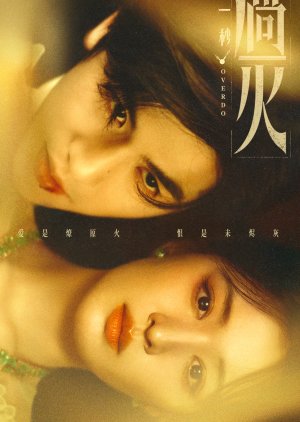
Overdo: A Drama That Only Gets Better
Overdo is one of those dramas that gradually gets under your skin. The first five episodes might not completely pull you in, and you may even wonder if it's worth continuing. But once you get past that point, the story picks up dramatically. From then on, it's incredibly addictive—you'll find yourself saying "just one more episode" until you realise you've lost sleep.The acting is one of the drama's biggest strengths. The cast delivers convincing performances, making the characters feel real and emotionally engaging. The cinematography is also impressive most of the time, with beautiful visuals that complement the story well.
The love-hate relationship is another highlight. It has plenty of tension, chemistry, and emotional push-and-pull that keeps you invested without feeling forced.
Overall, Overdo is a slow-burn drama that rewards patience. If you can get through the first few episodes, you're likely to end up binge-watching the rest.
Was this review helpful to you?
This review may contain spoilers
I enjoyed watching OVERDO
I finished the whole 33 eps….even though it’s an open ending but for me is happy ending…you really have to pay attention to every detail towards the ending to get that happy ending…for example the brothers asked qingyi to stand up n go back to susu n lean…and also qingyi letter to susu…asked her to wait…ect.Overall…I really enjoyed watching OVERDO especially with Zhang Ling He in it….his acting was superb 👍👍👍 his visual without a doubt WOWWWW
When i watch a drama I don’t really care with the cinematography and else like everyone been criticized…all i care about is the storyline and the actors acting
I RECOMMENDED YOU ALL GIVE IT A TRY
Was this review helpful to you?

Welcome to Intense emotional rollercoaster
StoryBased on the most chaotic era of China.
Explores the sensitive social issues of domestic abuse, human trafficking, slavery, child abuse, childhood trauma, crime, outlaw,power, greed, drug smuggling, biological warfare, wartime, patriotic and martyrdom.
Every characters are flawed, morally grey, extreme love, hatred, obsession and dangerous.
Storytelling style
-Melodramatic dialogue, camera cut, bgm
-Over stylized and extravagant visuals
-Fast paced Plot-driven directing
-No filler scenes and characters,No dragging parts
-**Extreme Sadomasochism**
Acting
Deliver the emotional acting from all the casts.
Highlight
Zhang Linghe -eye emotion,micro-expression and outburst, sadomasochism
Wang Churan - well executed eyes emotion, restraint mannerism
Music
All OSTs are nice and catchy. Deliver the emotion and blend with the scenes.
Overall
Apart from some technological flaws for special effects,
Overdo is a perfect show for
*sadomasochism suckers
*empathetic viewers
*who wants adrenaline rush
*familiar with plot-driven, action movies or melodramatic over-stylized western shows
*who can handle all positive/ negative emotion and dark plot
**It's not for judgmental mind and faint heart**
Have a nice day, everyone 🍂🍀🍀
Love you 😘😍🥰
Was this review helpful to you?

Viewers who appreciate melodramatic genres will find this drama satisfying..
I was thoroughly captivated by this melodrama, which kept me enthralled late into the night, eagerly anticipating the next episode. The purpose of fictional characters and stories is to engage the audience, and this drama achieved its objective. As a viewer seeking entertainment, I didn't scrutinize its logic, but instead, I appreciated the exceptional performance of the cast and the melodramatic plots. I have to highlight the outstanding acting skills of the male lead, who consistently delivered, even in the final episode. Overall, I highly recommend this drama as an engaging and entertaining watch.Was this review helpful to you?

Strong potential but has disappointments
I really anticipated this drama as watching some of the behind the scenes releases by the actors as wrap up promotion had me excited. I can see quite an improvement in ZLH’s acting, he’s been really using his eyes to act. He truly has a lot of potential!I felt disappointed however, with the story and plot, it was too much of back and forth. As for the camera work and all, some angles really made the characters unflattering. Like many have said, it really had the short drama feels of being dramatic. They had a promising budget for costumes and set but with the direction and messy plot, I felt if gave off some cheap vibes. They had a strong cast with great actors and actresses but they were not able to show their full potential due to a weak script and messy directing. Such a shame that I rolled my eyes many times at the plot. The final climax really made the story feel better, but it didn’t happen till literally the last few episodes. Many voiced that the ending was too sad, however, I think not all stories need a perfect happy ending. Each character ended their story in their own unique ways. Overall, it was still enjoyable , but don’t have too high of hopes!
Was this review helpful to you?
Great drama
Overdo is honestly getting better and better! 👏 The pacing is so good—fast, engaging, and not dragged out at all. The visuals are beautiful, and the cast really brings the story to life. Every episode makes me want to keep watching. Definitely one of those dramas that gets more addictive as it goes! 🔥❤️The story has so many twists and emotional moments that it keeps me invested. Zhang Linghe and Wang Churan look absolutely stunning together, and their chemistry is 🔥. The Republican-era setting, costumes, music, and overall atmosphere give the drama such a distinct feel. I’m already emotionally attached to these characters and just want to keep watching!
Was this review helpful to you?
Overdo Review: A Rich Psychological Drama Hidden Behind Flipped Gender Roles
THE CORE STRENGTHS*Flawless Ensemble Acting: The entire cast delivers exceptionally strong performances, completely elevating the flawed script into a compelling watch.
*Sizzling Lead Chemistry: Zhang Linghe and Wang Churan provide an acting masterclass in obsession and heartbreak, carrying the heavy emotional weight perfectly
*Grounded Brotherhood: The actors playing the Murong Qinyu and Li Boze bring a comforting sense of warmth, loyalty, and emotional maturity to the screen.
*Unforgettable Secondary Couples: The gripping, tragic performances by the actors playing Li Boze, Boss Hai, Qing Yu, and Miss Ye turn their respective subplots into major emotional highlights.
*Chillingly Convincing Villains: The senior cast members deliver fiercely intense, stomach-churning performances as the abusive parents, perfectly grounding the narrative's generational trauma while the mastermind remains perfectly disguised under a mask of harmless innocence.
*Refreshing Role Reversal: It completely flips traditional gender tropes on their head.
[Traditional Dynamic] ──► Brooding Male Lead ✕ Emotional Heroine
[Overdo Subversion] ──► Chaotic Drama Queen ✕ Stoic, Silent Survivor
The Unshakable, Silent Heroine: Ren Su Su’s silence is her weapon. By refusing to engage in dramatic theatricals, she retains absolute control over every room she enters. Her stability isn't passive; it is a calculated survival mechanism. She navigates cutthroat political alliances with cold pragmatism, rendering the traditional "damsel in distress" trope entirely obsolete. She is ironclad fortress.
The "Drama Queen" Male Lead: Murong Qing Yi's explosive outbursts provide a fascinating study of vulnerability wrapped in rage. He acts out because he doesn't know how to process his trauma quietly and he is starved out for love. Yet, his ability to "rage bait" everyone else fails completely against her. Every time he escalates, her calm demeanor acts as a brick wall, effectively shutting him down and shifting the power balance entirely into her hands.
*Trauma-Driven Personalities: Neither lead is toxic out of malice. The male lead externalizes past helplessness through explosive rages and impulsiveness. The female lead internalizes her trauma through tight emotional restraint because slipping up meant death.
*The Root of Friction: Much of the toxic tension stems from her leaving him entirely in uncertainty. Because she hides the truth, he is left to bitterly believe, "She just won’t choose me," while she seemingly leans into alliances with others because she has no feelings for others.
*Open Love vs. Rational Calculation: He demands reassurance and displays his love loudly. Ironically, this explosive transparency forces Su Su to lock him out of her dangerous plans. She initially saw him as a healing doctor, but knows his impulsive nature would ruin her calculated survival strategy and get him even killed.
*Immersive Atmosphere & Phenomenal OST: The physical sets, authentic period details, and stunning costume design create a beautiful, lavish backdrop of old Shanghai, all elevated by a soaring soundtrack.
FLAWS- While the psychological chess match and the acting kept you entirely hooked, several glaring issues constantly dragged the experience down, turning what could have been a flawless masterpiece into a frustratingly flawed ride.
*Disruptive Technical Choice: The erratic camera work—relying on jarring, repetitive flashes of light and abrupt camera zooms —destroys the visual immersion and completely breaks the mood of intense dramatic scenes .
*Underdeveloped Character Writing: The screenplay fails to properly unpack the characters' deep internal layers on its own; it leaves the dialogue so bare that viewers are forced to use active imagination to fill in the blanks.
*Peak Melodrama: The script relies on exhausting, highly questionable character logic and does not bother to show what made them do it .
* Hilariously Bad VFX: the CGI is shockingly cheap in high-stakes action sequences. The hilariously artificial green-screen airplane ride .
*A Smokescreen: The show starts as a chaotic, seemingly one-dimensional "comedy of errors."
WHAT MADE IT ADDITIVE? What made Overdo so incredibly addictive can be summed up in a single concept: it perfectly weaponized its own title. The show leaned so unapologetically into deliberate excess that the chaotic, fast-paced roller coaster ride became impossible to look away from.
*Trusting the Audience: .The drama intentionally refused to spoon-feed you information. Because the script left massive gaps in the narrative, your brain was constantly working to solve the puzzle. You became an active participant in the story, searching for hidden layers beneath the chaotic "comedy of errors" smokescreen.
*The Addictive "Life-Gambling" Dynamic: Watching a volatile drama queen explicitly shower someone with love while a stoic, tea-sipping heroine pathologically hiding her sacrifices created an electric, unprecedented friction. You had to keep hitting "Next Episode" to see who would win this ultimate psychological game of chess, as he risked his life just to see her crack, and she pushed him away to keep him safe.
*The Genius Misdirection: The show masterfully weaponized your own emotions against you. By keeping you intensely distracted with loud family heartbreaks, the protective Murong brothers, and the stomach-churning abuse of the parents, it created a thrilling narrative blind spot that kept you guessing until the very end.AI opening actually provided valuable insight to drama.
FINAL VERDICT
Overdo delivers exactly what it promises. It may be unapologetically "overdone" in its melodrama, but its brilliant gender role reversal, nuanced approach to character trauma, top-tier visual pairings and the heartwarming bond between the brothers make it an incredibly entertaining ride.
Was this review helpful to you?
The cast delivered heartfelt performances, and the emotional moments never felt forced. Every episode gave the characters room to grow, making their journey worth following.
It's a drama that deserves to be remembered for the story it told and the emotions it left behind.
Was this review helpful to you?