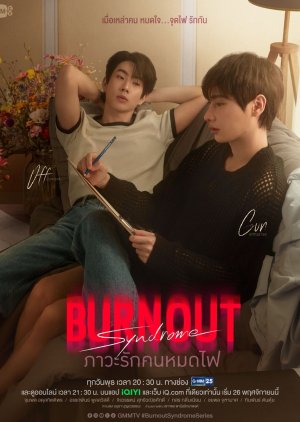
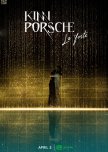
When Burnout Meets Stockholm Syndrome
this was amazing!i get that people are skipping this. I was also putting this off because I don’t really enjoy dramas with toxic relationships or love triangles. but I really appreciate BLs that go against the usual norm, which this one does. that’s what made it amazing for me.
this was such a well made drama. the direction, the cinematography, the acting, everything was amazing! especially, the acting. oh my! this is my second time watching OffGun. I watched Not Me a few days ago (I’m very new to thai bls) and absolutely loved them there. this drama made me hateeee them (the characters, not them as a person or actor). that’s how well they pulled off their roles!
this was my first time seeing Dew. and goddamn he’s HANDSOME. and a freaking giant😂😂 and his acting?? omg. i think I loved his acting even more than Off and Gun’s. the scene where he sees the painting Jira made for Ko, that scene broke my heart in a million pieces. the immense pain on his face, you could feel the pain he’s feeling!
before starting the drama, judging by the comments i could tell that there are plenty of red flags and toxicity in this drama. I was under the impression that Ko is the biggest red flag, Pheem is maybe also a red flag, and Jira is probably caught in between the red flags. boy i was so wrong😭
while Ko was indeed the biggest red flag, Jira wasn’t any greener. if anything, i hated Jira more than i hated Ko. at least Ko was a POS through and through, he never pretended to be a nice person. Jira on the other hand….sigh. at first i was somewhat feeling bad for him. but then he just started stringing Pheem along and kept hurting him over and over again. the more the drama progressed, I stopped feeling any sympathy towards any of these two, i was wishing they get doomed together. lol.
Pheem, my man :’) i see some people calling him a red flag as well. I personally wouldn’t tag him as a red flag. pitiful, maybe. but not a red flag. he got the most severe case of stockholm syndrome, first with Ko and then with Jira. I don’t blame him for not leaving Jira (even though he should’ve), because I believe he’s genuinely a good hearted person and he genuinely wanted to trust and understand Jira. I'm honestly relieved that he didn’t end up with Jira. he deserves so much better.
OffGun chemistry was explosive, as expected. I was pleasantly surprised by how amazing DewGun’s chemistry was, despite this being Dew’s first time acting in a BL. this proves once again what an amazing actor he is! i would love to see him in another BL (idk if that will ever happen though:().
I might be in the minority here, but I really disliked Gun’s makeup in this drama. I can’t quite pinpoint what it was, but it just felt…off? (pun intended lmao). the hairstyle was also awful. Gun is absolutely gorgeous, but this makeup and hairstyle didn’t do justice to how beautiful he is.
one thing that I really appreciated about this drama is how they brought up the usage of AI. I thought it would have a much bigger role in the drama, unfortunately that wasn’t the case. I wish they implemented it more, that would’ve made this drama so much more bold and refreshing.
I was also expecting the burnout aspect to be a bit bigger, considering the drama is called BURNOUT syndrome. they touched the topic, but never went any further. the psychological aspects of a burnout, how much it affects a person mentally and how it can change them, things like this was never explored. I really liked the idea of the burnout bar, though. also, the bartender was HOT 😂 and the drink names were super interesting.
overall, this was a great drama. but I highly doubt I’ll ever rewatch this and make myself swim through the ocean of red flags again😂
Was this review helpful to you?

Burnout Syndrome — We Judge People Before We Understand What Extinguished Them
I imagine that some viewers are discovering Burnout Syndrome now because Dew Jirawat is currently appearing in Mr.Kill. I am almost experiencing the opposite. I am watching Mr.Kill because Burnout Syndrome made me fall for Dew and showed me how naturally he can inhabit a character without appearing to perform for the camera. GMMTV’s current mystery series places him in another psychologically demanding role, but the quiet spontaneity that impressed me here has become even stronger there. Dew has a way of delivering dialogue as though the words have only just occurred to him. His pauses, reactions and changes in expression do not feel rehearsed, even when the scene clearly requires precise emotional control. It creates the impression that Pheem is thinking while speaking rather than waiting for the actor’s turn to recite a line. That quality is extremely difficult to fake, and placing him beside Gun and Off made the series a fascinating acting showcase.Gun is, as always, remarkable. Jira is not simply confused between two attractive men; he is someone who has lost his professional direction, confidence and understanding of what he needs from other people. After being suddenly dismissed from his job, he enters a period of creative and emotional exhaustion before becoming caught between Pheem, whose attention initially feels safe, and Koh, a wealthy technology entrepreneur who employs him as a public representative while also becoming the inspiration for his art. The ten-episode series develops this triangle from JittiRain’s novel and story, with JittiRain, director Anucha Boonyawatana and Sethinun Jariyavilaskul credited in the writing team.
The completed novel, Burnout Syndrome (ภาวะรักคนหมดไฟ), was released before the television broadcast, and Dew even created artwork for one of its Thai covers. This connection between the book, Jira’s identity as an artist and Dew’s own visual-art background makes his casting feel particularly appropriate, even though Pheem is not the artist within the story. The series remains closely tied to JittiRain’s central idea: three people who appear functional from the outside but have each lost something essential inside themselves. The title can also be misleading when approached too literally. The World Health Organization defines burnout specifically as an occupational phenomenon caused by chronic workplace stress, characterized by exhaustion, detachment or cynicism toward work and reduced professional effectiveness. In everyday language, however, people often use the word more broadly to describe the emotional depletion caused by life, relationships, social pressure, caregiving or loss. Burnout Syndrome begins with professional exhaustion, but gradually uses the image of a fire going out to explore something much wider: what happens when a person no longer possesses enough emotional energy to continue being the version of himself that everyone expects.
Most of us have experienced some form of that exhaustion, even when it would not qualify as clinical occupational burnout. It does not always come from a job. It can come from society repeatedly asking us to conform, from loving someone who cannot give us what we need, from death, loneliness, financial insecurity or the simple accumulation of disappointments that gradually removes our enthusiasm for life. Sometimes nothing visibly dramatic happens, yet we still reach a point where getting through an ordinary day requires more effort than anyone around us can understand. That is why writing characters like Jira, Koh and Pheem is difficult. Their most important emotions are not always visible, and the series refuses to translate every contradiction into a convenient explanation. They frequently behave in ways that are selfish, confusing or unfair because emotionally exhausted people do not suddenly become perfectly self-aware simply because they have entered a romance. They may want comfort while rejecting the person offering it, desire honesty while hiding their own intentions or hurt someone because admitting fear feels more dangerous than creating distance.
Playing those contradictions is even harder than writing them. Gun makes Jira’s uncertainty feel genuine rather than indecisive for the sake of extending a love triangle. His feelings change because his understanding of the two men changes, but also because his understanding of himself remains unstable. He is looking for love while still trying to identify which version of himself is real: the unsuccessful artist, the public representative created for Koh, the person Pheem believes he knows or the man whose desire returns when Koh becomes his subject. Off receives the least immediately lovable character, which is probably why so many viewers judged Koh so harshly. He is wealthy, controlling, emotionally closed and accustomed to arranging people around his needs. His fear of social contact does not automatically excuse the way he uses money, employment and authority to keep Jira close, and it is completely understandable that viewers would dislike him during the earlier episodes. However, disliking a character is not the same as the character being badly written. Koh is presented in layers because people rarely reveal the reason for their worst behaviour when we first meet them. What initially appears to be arrogance gradually exposes fear, isolation and an inability to form relationships without trying to control their terms. Off does not ask the audience to forgive everything Koh does; he allows us to understand how a man can become this emotionally distorted while still remaining responsible for the harm he causes.
Anucha Boonyawatana already proved with Not Me that she knows how to use Off and Gun beyond the familiar security of their pairing. That series placed romance inside political anger and social inequality, while Burnout Syndrome turns inward and examines the private systems of power that develop between people. The reunion could easily have become another vehicle built around OffGun’s established popularity, but Anucha instead gives them raw characters who are frequently unpleasant, vulnerable and difficult to classify. Her direction is particularly effective because she does not sugar-coat the relationships. These are not people who arrive emotionally prepared to love correctly. They bring financial inequality, professional dependence, jealousy, unresolved pain and incompatible expectations into every connection. The series looks attractive, but it does not polish the characters until their flaws become harmless or charming. That rawness also explains why the dialogue and performances can feel unusually spontaneous. Some viewers praised the fragmented conversations precisely because they resemble the way people actually speak when they are uncertain, embarrassed or trying to conceal what they mean. Other viewers interpreted the same tone as unnecessarily gloomy or mistook emotional opacity for weak characterization. The divided response therefore reflects the series itself: it asks the audience to observe people whose motives cannot be understood from their first actions, and not every viewer will have the patience to remain with them until those layers become visible.
Dew is essential to maintaining that balance because Pheem initially appears to be the easier person to love. He communicates more naturally, notices Jira’s emotional state and offers companionship without immediately surrounding it with Koh’s uncomfortable power imbalance. Yet, like everyone else in the series, the person we first meet is not the complete person. Dew allows Pheem’s charm to coexist with insecurity, desire and less attractive emotional choices, gradually complicating the character without making the change feel artificial. That is also how relationships work outside fiction. We often begin by loving someone’s face, humour, confidence or apparent kindness, but early attraction is based on a carefully limited amount of information. People usually show the version of themselves that feels safest or most desirable, not necessarily because they are deliberately lying, but because trust has not yet made complete honesty possible. The real person appears slowly. Sometimes we discover flaws we can accept because we understand where they come from and see that the person is willing to change. Sometimes we fight because love has not erased the ways we hurt one another, and sometimes we leave because understanding a person does not obligate us to remain with them. Burnout Syndrome understands that learning the reason behind someone’s behaviour does not automatically make the behaviour acceptable; it simply makes the choice to stay or leave more informed.
This is where the series becomes more than a conventional love triangle. Jira is not merely deciding which man is more romantic or attractive. He is learning what each relationship asks him to sacrifice, which person sees him most clearly and whether either man loves Jira himself or the function he performs in their lives. At the same time, Koh and Pheem must confront whether their feelings are truly love or another attempt to fill what has gone missing inside them.
The production deserves credit for supporting that complexity. Burnout Syndrome was produced by GMMTV with Chamade Film, whose catalogue was still relatively small when the series aired, including productions such as Whale Store xoxo and That Summer. Those projects received mixed responses to their writing, but they established a consistent ability to create polished, visually coherent worlds. Here, the restrained cinematography, urban isolation, artwork and desaturated atmosphere are more than decoration; they make the characters appear surrounded by people and opportunities while remaining emotionally separated from both. The small size of Chamade Film’s completed catalogue means it would be premature to claim that the company guarantees excellent writing. However, Burnout Syndrome demonstrates that it can support a mature production with experienced performers, difficult themes and a director with a clear visual identity. The disagreements surrounding the series have generally focused more on its characters, pacing and emotional darkness than on cheap filming, weak technical execution or the kind of production limitations that frequently damage ambitious BL stories.
Final Thought
I understand why some viewers disliked Burnout Syndrome. Koh can be infuriating, Jira’s uncertainty can feel exhausting, and Pheem is not allowed to remain the uncomplicated alternative he appears to be at the beginning. Watching damaged people repeat their mistakes is uncomfortable, especially when a romantic drama has trained us to expect love to heal everyone quickly and reward the character who seems nicest during the first episodes. However, I do not think the writing failed simply because the characters were difficult to love. The series is asking us to recognize how easily we judge people through isolated actions while knowing almost nothing about the fear, grief or exhaustion influencing them. Understanding those reasons does not erase responsibility, but refusing to look for them leaves us with characters who appear inconsistent only because we have decided that the first version we saw must be the real one. Gun gives Jira all the confusion of someone trying to rebuild himself while choosing between two imperfect forms of love. Off makes Koh’s cruelty, isolation and gradual emotional exposure exist within the same person without demanding easy forgiveness. Dew may have been the greatest discovery for me because his natural performance made Pheem feel as though he existed before the camera arrived and continued thinking after every scene ended. Anucha Boonyawatana created another down-to-earth work with OffGun, but this time the struggle is not fought in the streets or against an obvious political enemy. It takes place inside people who no longer understand what they need, inside relationships where affection and control overlap, and inside the distance between the person we present and everything we are afraid to reveal.
Those who saw only confused writing may experience the series differently after returning to it later. Time and personal experience can completely change the way we understand a character, because sometimes the problem is not that the story failed to explain someone. Sometimes we simply had not yet lived through enough exhaustion, disappointment or complicated love to recognize what the story was showing us.
Was this review helpful to you?
This Series is A Work of Art
P’Nuchy (Anucha Boonyawatana) has masterfully transformed the clinical exhaustion of our modern age into a breathtaking visual symphony with the Burnout Syndrome series (2025). The storyline is a visceral exploration of the soul’s limits, weaving a complex narrative of ambition and intimacy that demands your full attention. The acting is nothing short of transcendent, with the cast delivering raw, consistently outstanding performances that capture the quiet desperation and flickering hope of those on the brink. This is elevated by a musical score seamlessly woven into the show’s fabric, hauntingly amplifying every emotional beat without ever overwhelming the scene.Beyond just a television show, this series is a true work of art—a cinematic mirror held up to a generation battling emotional and physical fatigue. P'Nuchy uses the camera like a paintbrush, treating every frame as a masterpiece that explores the "negative space" of human struggle. The rewatch value is immense; each viewing reveals hidden layers of symbolism and subtle nuances in the character arcs that you might miss the first time around. In an era of disposable content, this series serves as a vital reminder that work can be labor, but storytelling of this caliber is a timeless art form that heals as much as it haunts.
Was this review helpful to you?
The music playlist was my taste , it carry most of the storyline which is bad . I wanted to see passion , longing but they fail to deliver . If it was a book I would have enjoyed it more .
Was this review helpful to you?

It had a huge potential but the end was rushed
Honestly I really liked the series's diversity. P'Nuchy is one of the very few directors who make original projects and don't copy what's already been here just with different cast and characters. I loved that the series brought awareness about AI and it's bad impact on the global environment and also how artist can hardly survive on selling their paintings no matter how talented they are because less and less people are willing to spend more money on such paintings and with AI it's killing this business completely. The acting was phenomenal here. I had no problem with that. The story was going well too but I was still disappointed at the end. I know gmmtv series hardly do sad/open endings at the end but since the story was rushed between Koh and Jira and such serious conflict wasn't properly resolved between them, it'd be far better if they just left it open. That time skip is kinda useless when we don't see how the characters put up with it and if they changed something about themselves during that time. They usually use time skips to make sense of the characters getting together at the end after break-up like in Last Twilight or ATOTS for example but it feels like something's missing there.I also hoped that Jira wouldn't be spineless when it came to his art. He kept defending it the whole time and it mattered more to him than his own body so seeing him selling his art to Koh at the end after Koh betrayed him by giving it to AI made me lose the remaining respect I had for him. I get he sold his AI which was actually developed by the employees whom he fired but he was still cocky about it even after he saw how much it hurt Jira as an artist... if Jira stood by his harsh words and didn't go back on it after some time passed, I'd have more respect for him.
Was this review helpful to you?

This review may contain spoilers
A good mess and a good trio
It’s clearly one of the most well-crafted BLs in GMMTV’s lineup. The story focuses on three characters Jira, Koh, and Pheem who really stand out, with strong personalities that are well written and genuinely enjoyable to watch.What I particularly love about the series is the way the characters interact with one another. None of them are idealized or flawless, which is a refreshing change from the usual portrayals, especially in GMMTV productions. They all have imperfections, making them feel more human and believable.
I also appreciated how the series approaches the topic of artificial intelligence. The critique remains somewhat surface-level, but it’s still engaging, especially in how technology and art are discussed, with an underlying commentary on capitalist society.
Another highlight for me is the styling. The way the characters are dressed really adds to the show’s identity and gives it an almost timeless feel. It’s a subtle detail, but it strongly contributes to the overall atmosphere.
The supporting characters are also very memorable, which is quite unusual for a GMMTV series. Ing and Mawin play an essential role in grounding Jira and Pheem and keeping them in check.
And special mention to Dew and Gun honestly, they deserve their own series. I absolutely loved their chemistry.
Was this review helpful to you?
Brave in Concept, Cautious in Execution
*Burnout Syndrome* is a thoughtful and mature series that stands apart from the usual Thai BL formula. It focuses less on fluffy romance and more on burnout, emotional dependence, ambition, exploitation, and the quiet exhaustion caused by work and social expectations. The acting, direction, cinematography, lighting, and music are all excellent, and the slower pacing suits its reflective and emotionally heavy atmosphere.
The series portrays burnout effectively—not as one dramatic breakdown, but as a gradual fatigue that affects a person’s work, relationships, identity, and self-worth. The characters are complicated and often deeply flawed, which makes the story feel more realistic. Koh is manipulative and uses people to achieve his goals, Jira is self-centred and emotionally uncompromising, while Pheem allows himself to be controlled and repeatedly cleans up the damage Koh leaves behind.
I also appreciated Dew’s participation in his first BL role. It was a refreshing and courageous choice, and he handled the emotional and romantic scenes convincingly. However, the series marketed itself as much bolder than it actually was. The trailers suggested a more daring and intense love triangle, but Jira and Pheem’s physical relationship remained limited and their kissing scenes were cut short. It felt as though the production wanted the appearance of being provocative without allowing Pheem to become a genuine romantic threat to the established OffGun pairing.
The same problem applies to the series’ exploration of artificial intelligence. It introduces interesting questions about automation, ownership, stolen creativity, and the emotional detachment created by technology. However, it never explores the ethical or social consequences deeply enough. AI remains mostly a symbol for Koh’s exploitation of Jira rather than becoming a fully developed discussion about artists, consent, labour, and the replacement of human creativity.
My biggest disappointment was the ending. After everything that happened, Jira returning to Koh felt neither satisfying nor emotionally earned. Koh had not changed enough to deserve another chance, and Jira’s journey appeared to be leading towards independence and the realisation that he could live and create without him. Ending their relationship permanently would have been the braver and more logical conclusion.
The fact that Off and Gun are an established pairing should not mean that their characters must always end up together. They can continue working together in future projects without every story forcing their characters into a romantic reunion. In fact, allowing Jira and Koh to remain separated would have demonstrated that the series was genuinely willing to prioritise its narrative over the expectations surrounding the actors’ pairing.
The reunion can be interpreted as two damaged people who remain emotionally and creatively dependent on each other. Even Koh admits that he does not know whether their relationship will work. However, understanding the psychological reason behind their reunion does not make it the strongest dramatic choice. Instead of completing Jira’s growth, the ending weakens it and makes the series feel as though it retreated into familiar BL expectations at the final moment.
Overall, *Burnout Syndrome* is different, well-acted, visually impressive, and emotionally mature. It deserves credit for attempting something more complex than a conventional romance. Unfortunately, it repeatedly approaches genuinely bold ideas without exploring them all the way. It wants to challenge the audience, but ultimately softens its consequences and chooses the safer path.
A strong and memorable series—but not nearly as daring as it believes it is.
**Rating: 8/10**
Was this review helpful to you?

This review may contain spoilers
The ending...
The fact that Jira (a struggling artist) ended up with Koh (the rich owner of an AI company) is crazy work. Especially when Koh fed Jira's art (without his consent) to his AI softwear. Their morals are diametrically opposed and Jira rightfully left Koh because of it. I would have been happy if the show just ended with them broken up. But they just HAD to get back together without actually resolving any of their previous conflict. Like don't piss me off. I think this show really could have delivered a powerful message on the challenges artists are facing because of the rise of AI. Instead it tells artists to succumb to the whims of the AI CEOs. Like actually wtf.Overall a very well produced show but I can't get over it's confused messaging.
Was this review helpful to you?

amazing first half just to get dissapointed later
I am genuinely so mad. This show had an amazing start, captivating story, beautiful cinematography, overall was just something completely fresh and new. The first episodes made me so invested, with amazing acting, beautiful scenery and interesting characters - not a single character in this show was a “good character” or so called a “green flag”. A lot of lies, toxicity, while also talking and showing how beautiful and meaningful art is, and talking about a bond between art and an artist. Things started ti get worse in the 2nd half - Jira being a two timer, choosing Koh but still not letting go of Pheem, Pheem needing theraphy, and Koh being an asshole. Later we found out that Koh has been using Jira’s art to train ai - if you find any value in art, you would be disgusted seeing it, as Jira and I were. I thought that the story would end with them parting ways, as they broke up at the end, with everyone going their way. no. Jira went crying to Pheem (again giving him false hope, give this man a break) to help him delete his art feeded to ai, Pheem was unable to do that. At the end, Jira and Koh didn’t talk, didn’t resolve anything, Koh still being a shit person, a capitalist who doesn’t really value art, while Jira despise being a shit person, being the exact opposite - a recipe for a disaster. The show hust ended with them nit resolving anything after a long time of not seeing each other after a breakup, but just having sex. Horrible way to end a show. I know that this show was not the sweetest healthiest show, and was not supposed to be, but I still can’t believe that Jira later just decided to not care about being with someone who doesn’t value art and instead values ai, while being an artist.Was this review helpful to you?
This review may contain spoilers
I wanted ml to end up with the second lead
imo the whole story would've finished better if the ml ended up with the second lead(tiny spoilers ahead so read at caution)
i mean when the last thing happened regarding the art and ai, i personally don't think i would be able to forgive someone like that when they acted to nonchalant about it, if the other lead loved ml so much why did he continue on and sell the product? like all he did was come to sleep under his house, and i honestly just think that's the only reason he wanted ml, we see the second lead put in wayy more efforts.
(end of spoilers)
I personally wouldn't rewatch it cause the ending just frustrates me really, but overall the plot, message the cast everything was on point (except the ending). It for sure is a heavy watch and i'd like to watch more bls surrounded by such topics.
Oh and I wish a bar like the burnout bar would exist irl, we really do need stuff like that<3.
Was this review helpful to you?

This review may contain spoilers
Another drama by Off-Gun, of course here I am… Let’s discuss drama…The story follows Jira, a struggling artist who feels lost, exhausted, and disconnected from the world. At his lowest point, his friend Ing suggests he visit the Burnout Bar—a quiet refuge for people worn down by life.
The bar has a simple rule: you can either sit alone or be matched with a companion by the bartender. That’s how Jira meets Pheem, a warm, gentle IT specialist who listens without judgment. Pheem quickly becomes Jira's source of comfort. Pheem turns into Jira’s “safe space” and eventually falls deeply in love with him, hoping to help him heal.
Later, Ing offers Jira a job as a dinner companion (escort). Reluctant at first, but desperate for money, Jira accepts. The job goes terribly wrong—but his bold and fiery reaction catches the attention of Koh, a wealthy yet emotionally distant businessman who happens to witness the scene.
Intrigued by Jira’s personality, Koh offers him an unusual arrangement. He wants to hire Jira—not as a lover, but as a stand-in. To attend social events, business dinners, any situation that drains him. Koh can’t face them anymore.
As they spend more time together, their purely professional relationship slowly evolves into something more personal. Both men, in their own ways, are dealing with burnout—and through each other, they begin to rediscover pieces of themselves they thought were lost.
This creates the central conflict: Jira is torn between Pheem, who offers him gentle, unconditional love, and Koh, who challenges him to reignite his passion and sense of self.
Ultimately, the story explores emotional exhaustion and the healing power of connection, showing how even the most burned-out souls can help each other find their spark again.
That's pretty much the story without giving anymore spoilers.
What I like:
+ Quite different from all GMMTV dramas. This is quite heavy. But I really like it…
+ Off-Gun chemistry never disappointed us…
Don’t know if I like it or not. But the way Jira just choose Koh is kinda trigger something for me… ^^
Overall this is quite worth your time to watch…
Was this review helpful to you?
Visuals and Vibe Deliver
This series was honestly pretty fun to watch. It kicked off really strong — the first few episodes had me hooked with the vibe, the colors, and just the overall uniqueness of the presentation. But I have to say, the last two episodes felt a bit rushed and didn’t quite match the energy of the earlier ones. It’s like they were trying to wrap things up quickly, and it lost some of the rhythm that made the beginning so good. That said, I appreciate that the show was clearly aiming to give fans something different. The aesthetic alone — the way they played with visuals and atmosphere — really set it apart from the usual BL series we’ve been seeing lately. And the cast? They carried it. Gun was, as always, consistently brilliant, and Dew really stood out too. The directing deserves credit as well; it kept things simple plot‑wise but leaned into character development, which worked for the most part, even if a few areas felt a little bland or underdeveloped. Overall, I’d call this series a refreshing change of pace. It might not have been perfect, but it was definitely enjoyable and worth the watch, a 4.5 out of 5 stars.Was this review helpful to you?