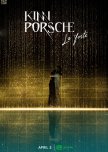
Great but never dares to go all the way
Okay so it leans into emotional realism more than flashy romance, centering on the quiet exhaustion that comes from work, expectations, and unresolved feelings.The series does a solid job portraying burnout not as a dramatic breakdown, but as a slow, heavy fatigue that affects relationships and self-worth, which makes the characters feel painfully relatable. While the pacing can feel slow at times, it fits the story’s reflective tone and allows the emotional moments to breathe. The chemistry is subtle rather than explosive, relying more on shared silences and small gestures than grand romantic scenes.
One thing that I don't get it like it wants to be brave. The show hints at bold ideas about modern labor, automation, and emotional detachment through tech, but it never really digs deep into the ethical or social weight of AI... it mostly stays symbolic rather than critical.. The show plays it safe by softening the consequences and resolving conflicts too neatly, which undercuts the rawness it’s aiming for. So while it looks courageous on the surface for tackling burnout and vulnerability, it doesn’t quite push far enough to be truly uncomfortable or transformative. It ends up feeling cautious rather than bold—well-intentioned, sincere, but ultimately not as daring as it pretends to be.
Anyway it is a thoughtful, mature show that may not be for viewers looking for high drama, but it resonates deeply if you appreciate introspective storytelling and emotionally grounded narratives.
Was this review helpful to you?

This review may contain spoilers
Something different, but not thought out all the way...
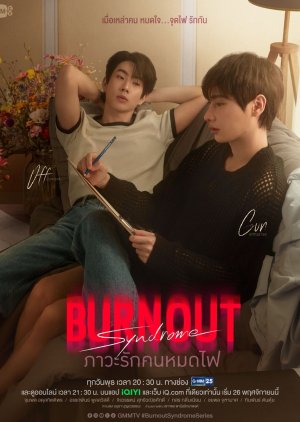
When the Director of "Not Me" is doing a new series with OffGun, it is not the normal stuff we expect from a BL. I can't even call this a BL, there is nothing fluffy in it, so I would categorize it more as a gay story. We have a red flag named Koh who uses humans as tools to get all what he desires but without achieving happyness at all. We have Jira, who is also more a red flag than not, while he is not bad per se, he is very self-centered. Then we have Pheem which is also a red flag, not because he is bad, because he let Koh control him and he has to clean up all the shit Koh is leaving in his wake for more money. The only positive persons are Mawin (or should it be Marvin, I never know with Thai nick names) Pheem's friend and Ing, not only a close friend to Jira but also his curator and confidant. There is also the "Burnout Bar" which had a nice atmosphere but is not that prominent and only plays a "role" in the beginning and the ending...One of the questions the show is asking if AI is doing any good for humanity, but it does not answer the question. AI can do good for humanity, I'm sure of, but it can also be very bad for humanity and it's going this direction more visible. Voice-actors for Netflix in Germany are on strike because Netflix demanded to use their voices for AI which would cost them their jobs. AI can't create art, as AI does not understand language most of the time. Because language is not only about the spoken words, it's also about the intention of how you say something. An AI will never grasp that. So the meaning can be something completely different compared to the sentence alone. Social Networks are flooded with AI art (pictures, music even paintings), AI messages and so on and that can't be good for anyone. But the show does not have a discourse in depth. Maybe that's something the viewer should think about.
The finale: We all could say, they should not have got together in the end - but of course it's GMMTV and they always want an happy end. But I watched the finale two times and it's not that happy anyways. maybe you did not get the subtle hints... it begins with the flowers in Koh's home which are a similar to the painting... you missed that Pheem let Jira go.... and he is the first to have a redemption arc... so he changed in the end not going even more bitter than he was, but he is now more balanced with a new job and a new goal. Koh can't escape Jira that's why he slept 277 times infront of Jira's house (taking Ing's advice of being close to him but not crossing the line) and Jira can't paint without his muse even if his muse is not a human which he really likes, but as he said his heart refuses to have any other inspiration. And when they come together it's their desire and lust speaking out of them - they are dependent on each other, regaradless of all their flaws because both work only if they have each other. When Jira asks "Can we work out?", Koh says "I don't know" - so it does make sense for me. They still have their baggage to carry. Koh did not get his humanity he has lost due to his past and Jira is still as uncompromising as ever. And because we have only 10 episodes we don't see their future. Koh's home mirrors Jira painting with all the flowers.
What impresses most of this show is the very good acting of all the cast. Off went on diet to be as skinny as possible and it shows and because they are veteran actors they all can bring their character to life and you still don't like them in the end. I have more symphaties with Pheem then with the couple. But that is also something not often seen especially in thai productions. Camera, lighting, music were all perfect.
Because this is something different, something not seen often in thai productions, I rate it that high. Yes, they could have made the couple be seperated for all eternity, but overall it does make sense how it played out. The show had his flaws and flow, it's artsy, it kept me interested and it was mature without any cringe or childish parts. The best of all, the actors showed us what they can do after the last two shows which I did not like at all :)
Was this review helpful to you?

 1
1Licking the boot of the capitalists
Note: I almost want to go lower, but there was some artistry present, which I cannot deny.I'm impressed . . .
With how disappointed I am.
The start was so strong, the cinematography consistently superb, and the dialogue snappy. But it was ultimately a steadily speeding, runaway train that made me feel burnt out by the end watching it!
Characters would say one thing with conviction in their eyes while doing another. Accountability or valuing yourself? Out of the question!
All I'm left asking is what a viewer is meant to glean from this?
Because here's what I got:
What even is freedom? Why strive and fight when you can just . . . Succumb. Lick the boot of the powerful capitalists above you with vigor and sacrifice your morality and passions for security and lust.
And, with all sincerity, I don't think that's what Burnout Syndrome meant to say in the end. Which means they completely failed in the execution of their message. And if it is . . . I can't find value in this.
I can't believe I'm saying this about an OffGun drama . . .
But I don't recommend it.
Was this review helpful to you?

This review may contain spoilers
I Loved This Until I Didn't
Burnout Syndrome follows the same, formulaic sequence that all GMMTV series have: I love it (episode 1-5), okay, something is dipping (6-8) what am I watching for (9-10). Burnout Syndrome felt like this series that could be GMMTV's anomaly, and yet, it unfortunately was not. Some of the best performances I have seen out of all of these established actors, so it sucks that the story cannot say the same thing.Let's Dive In.
Let's get one thing straight; this is the best work I've seen out of Off and Gun. I was worried with Off's portrayal as the lonely and stoic Koh, but we see the very intricate details he placed into his character, and by the end, we see a dramatic disposition turned truly beautiful from him. Gun is Gun. Gun could literally never do anything bad. His performance as Jira is heartbreaking and poignant and I loved it dearly. Dew as a new comer (for me) surprised the hell out of me. I did not think I was going to go into this loving him and his character as much as I did. I was expecting him to be treated as a throw-off second love interest, and instead, they might've told his story the best.
The problem? This series ends with zero morals. Jira throughout this series rejects and criticizes Koh's utilization of AI. Even after his art is used like some lab rat for Koh's new technology, he still ends up with him. What. the. fuck. So what is the moral of the story? Deal with it? Deal with what's going on? Oh well?
If BL Thailand didn't have some stringent rules of pairings and couples, Jira and Pheem would've ended up together, no questions asked. While Pheem has his own list of problems, he's agitated with how much he cares for Jira, and is even more upset with himself that he let himself get so attached. He tries his best at helping Jira, and nothing works, less because of Jira, and more because Koh is the walking, living, breathing devil.
This worked so well because it felt so different than another other series, cinematography-wise, pacing, the story, the way intimacy through nudity and art is shown. And then they completely fumbled the ball in the end, which is just such a let down.
If I was rating the first half of this, I would've told you 10s across the board. I cannot believe that I didn't end up loving this like I was so sure that I would.
Rating:
Story: 7.5/10 - Excellent story, a new, intimate story we haven't seen out of GMMTV yet, but they completely ruined it by the end. The audio was also some of the worst that I've heard it be in a while.
Acting: 9/10 - Every one does beautiful, even Emi, even AJ.
Music: 6/10 - Didn't pay much attention to it.
Recommendation Value: 7/10 - I think the first half of this deserves every audience it can get. The second half, I have no words.
Was this review helpful to you?

All Burnout, No Syndrome
Despite its ambition to explore the suffocating intersection of artistic passion and the encroaching sterility of artificial intelligence, "Burnout Syndrome" collapses under the weight of its own didactic ineptitude.The series attempts to project an aura of mature complexity, yet the screenplay betrays this goal with exposition-heavy dialogue that feels stripped of subtext, reducing seasoned performers to reciting kindergarten-level declarations of intent rather than embodying genuine human conflict.
While OFF JUMPOL manages to salvage moments of eccentric stoicism and shares a flickering, effortless chemistry with GUN ATTHAPAN, the narrative structure fails them both; Gun’s character acts with a frustratingly situational agency that bends to plot contrivances rather than internal logic, while Off’s role devolves into a caricature of toxic control without the requisite backstory to earn his redemption.
The supporting elements fare no better, with DEW JIRAWAT delivering a performance that feels less like a grounded adult and more like an adolescent cosplaying professionalism, creating a jarring dissonance in the intended love triangle.
Ultimately, the series treats "burnout" as a superficial aesthetic rather than a thematic crucible, resulting in a dramatically inert experience that leaves the audience, rather than the characters, feeling the true fatigue.
Was this review helpful to you?

 1
1 1
1An Artistic Mess!
Burnout Syndrome tells the story of three characters: Jira, Koh and Pheem, who will eventually make you swoon, then ragebait you, and again will make you settle for less because of some "artistic" bullshit "heart wants what it wants."Storyline wise, it was something that GMMTV had not made anything like this before. It's artistic, cinematographycally chatchy, and aesthetically pleasing to the eyes. But when it comes to the characters, the brain, who does all the judging, tells me it's a waste of time.
Out of all the characters who stood out for me were Ing, Mawin and our "second_lead_syndrome" guy Pheem. Especially, Emi, as Ing, was just outstanding and brilliant. She felt like HOME! Her every word was true to the core and had weight to it. Also, AJ, as Mawin, did a great job. He proved that he's more than just one comedy guy. He gave us something to look forward to his career in the future.
Now coming to the sad boi, Pheem; at first he was arrogant and thought he could win anything in life until he met Jira. He shattered him and left him like a broken tape recorder. He gave more than he received. Dew as Pheem was enchanting! The casting crew knew what they were doing. If it wasn't for the fixed ship, I would have been sold for DewGun.
As an actor, Off and Gun was as good as always. But Koh and Jira's character had no development whatsoever. Koh was as shitty as before without being sorry for whatever he did to him and Jira let him trample his art, soul and body. Jira let Koh EMOTIONALLY OWN HIM. AI part was left behind as it was nothing. Koh saw Jira with a capitalistic mindset and he continued to do so. Did he promise he'll not do it again? No. Then what made Jira trust him again with his art? Idk.
If you look at their characters, they were simply so chaotic and unruly that watching them makes this whole thing so overwhelming that you're left with a void inside. Why? Because they made every character so pathetic that it mentally caused me to think, "This is fictional, I shouldn't be THIS mad." But at the end of the day, because of fixed OffGun ship we, the audience had to sacrifice a good story to something like this. This storyline gives you problems, shows you the solutions but doesn't give you the liberty to enjoy it because, at the end, it doesn't make sense.
Cinematography, colouring, styling and colour combination of the series were beautiful. When there were were paired with soulful background music it became alluring. The art pieces were mesmerizing. Shoutout to the artist who's behind this. They created a very artistic vibe to the whole series regardless of how chaotic it was.
Overall, I had great expectations from P'Nuchy. I'm utterly disappointed with whatever it concluded to. It truly proved itself an artistic mess after all. I wouldn't mind if it wasn't a "happy ending". It felt forced.
Was this review helpful to you?

This review may contain spoilers
Abstract Art
Hilarious how this could have been the artistic masterpieces they tried to paint it as, but ultimately flopped and failed. Think Jira's actual artwork vs Koh's AI generated nonsense. Tried so hard to be original and ended up a mish-mash of something no one wants.Just from the outset, Burnout Syndrome promises moody men, creative expression and a savage race of people trying to stand by themselves and their ideals. Ten episodes in, and we only get a glimpse of any of that. Because when your plot starts hingeing on a love triangle and the visuals of your actors, you know it's trouble.
Much like our main character Jira, the audience is appaled and angry with the way these people behave, but just like him, we are lulled into some false sense of fantastical romance halfway through with the love triangle and the bad boy going good, making us forget that this is supposed to be something deep. Spoiler - it wasn't.
Coming to the characters, they're not relatable. At least not completely. You see sides you think you relate to, but you don't. Especially with Koh and Jira - the two people actually running the show are so badly written, they are all over the place and unpredictability is exciting but not like this. I never understood a single thing they did or said, and if you're not connecting with the two leads, whose story are you watching?
Ing? Mawin? Two great characters by the way who pulled more than their weight by being not only stable and well written characters, but also being played to perfection by Emi and AJ.
No, I suggest watching this story for Pheem, from his POV. He's the best character in this mess. The person who starts off as a mirage of perfection grows into someone closer to what we envision as perfection. Trust me, watching this for him makes the ride a bit better. Plus, Dew was an actual demon in this, his acting, which I'm usually not a fan of, grew into this monstrous beauty. Off and Gun were brilliant as usual, but Dew won me over in this round.
Jira's styling aside, everything about this just tried so hard to reach the stars, only to fly two feet off the floor. A lot of things cost them the masterpiece they so desperately searched for, but ultimately, trying to do every single thing made sure not one of them really worked.
6.75/10
Was this review helpful to you?
This review may contain spoilers
A show that sticks with you.
Utterly obsessed with this weird, beautiful, arty, queer, subversive show.If you go into this show expecting romance, there is a high likelihood you will be disappointed. Same for if you go in expecting a truly revolutionary anti-capitalist (or anti-AI) story. This is a quiet, character driven, mature story about flawed, messy people who stay flawed and messy up until the very end.
Here are things that stick with me:
-Koh's cold, clinical bedroom vs. Jira's warm, floral bedroom (and the fact that we never see Pheem's bedroom- we have no idea what his inner world is like).
-Establishing that Jira refuses to compromise his ideals and ethics for money over and over and then watching him absolutely fold for Koh to the extent Koh believes Jira will do anything for money
-Koh really seems to think he's in charge, but whenever Jira makes a demand, Koh follows.
-Jira's very accurate self-assessment that red flags turn him on
-Koh alone in his apartment posing himself like Jira's painting
-Jira isn't just gay - his art, his slang, his mannerism, his fashion all illustrate him as culturally queer.
The love triangle:
-Pheem presents himself as soft and caring but has a calculating, manipulative underbelly. Koh presents himself as cold and calculating but has a caring, vulnerable underbelly. Jira acts innocent and vulnerable but has these boys wrapped around his little finger - I think he knows exactly what he's doing.
-The way that Pheem and Jira seemed to be more into each other when they figure out they both know Koh - they are both getting off on the fact that they are denying Koh their time and on feeling closer to Koh by being with each other.
-Koh wears his crazy on his sleeve. He stalks Jira's social media, lets him know upfront and uses it to play transparent mind games. Pheem stalks Jira's social media in secret and uses it to create a persona he thinks Jira will like. Pheem cleans his apartment for Jira but Koh lets Jira see the mess.
-Pheem loves the image of Jira he's created in his mind and he loves the pursuit of someone unavailable/unattainable. Koh loves what Jira does for him - Jira gives him art, makes him feel, sees the parts of himself he keeps hidden, helps him sleep. Jira loves that Pheem wants him and he loves that Koh inspires him. But I don't think that any of them truly love each other.
The toxic romance:
-Ep. 8 is NOT a true romantic catharsis. There's a real dark underbelly through the whole episode - the leaky roof, Koh talking about opening a gallery to launder money, the fact that their "declaration" to each other was about attraction rather than connection. And this is all less than 48 hrs after Koh went full scorched earth on Jira and Pheem.
-That look on Jira's face after they kissed in the bathtub in Ep. 9 is chilling. I think he can feel something is off before he knows it consciously.
-The bedroom scene in Ep. 9 feels so scary and sinister. P'Nuchy lets the scene drag on just long enough before they both start laughing to destabilize the fantasy of their romance for the viewer.
-Koh sleeping in his car outside of Jira’s apartment 277 times and Jira leaving him there to suffer while he uses it as inspiration for his work.
The flowers:
-Koh gave Jira an iris bouquet while Pheem was still arranging roses for Jira. Koh is always 3 steps ahead.
-The iris + narcissus bouquets = Jira the artist and Koh the lonely narcissist.
-The flame lilies throughout episodes 9 and 10: "The computer scraps are me, emotionless, lifeless, haven't slept with someone in a long while. And the delicate flowers are you, who came to arouse me, and revive me." And in return for his revival... Koh creates tech that consumes and destroys Jira, generating a cold, emotionless, lifeless replica of his delicate art. I can't think of a betrayal that Jira could possibly find more horrifying than Koh stealing and bastardizing his art.
-The thought of Jira moving into that hotel was honestly devastating - he would obviously wilt just like his poor little plant. Koh moving out of his soulless, cool-toned prison of a hotel apartment and back into his childhood home, which he's apparently turned into a flame lily plantation, is a tiny glimmer of hope that Koh won't consume and destroy Jira but has maybe learned just enough to nourish the artist.
In the end, I wasn't really rooting for them to get back together, but I understood why they did.
I see Burnout Syndrome as less of a romance and more of an allegory for the tensions amongst art, tech, and capital. It makes sense that the starving artist gets in bed with commerce. Mawin the piss-throwing oracle told us that from the very beginning. And if Jira's going to find a patron in order to survive... shouldn't the artist get his pleasure where he can?
Was this review helpful to you?

This review may contain spoilers
I had no expectations, but was still disappointed
The best thing about this series is that it shows how AI is ruining creativity and taking jobs.All the actors did a great job, but good acting can only carry a show so far when the plot and the script aren't pulling their weight. To me, Dew and Gun just didn't have any chemistry, and it felt less like love and more like Pheem imprinted on Jira.
The plot was hollow at best and felt full of loose ends, especially regarding Jira's "job". The script spent more time on the artistic side of things when it should have worked more on the "plot" and developing the characters and their relationships.
I couldn't connect with or care about any of the characters because we really didn't get to know them. I honestly couldn't remember their names until around episode 7, when the show actually started to get a little interesting. Which is sad.
The friendship between Koh and Pheem just fell apart with neither of them actually caring, and I didn't care either because it had no history behind it, even though we are told they've known each other for 20 years. I believe Pheem had Stockholm Syndrome, but they didn't really do enough with it. It's like Jira just existing took him half out of it, and Koh breaking them up cured him. More time needed to be spent on his healing, and not being used like an emotional yo-yo.
Watching this honestly felt like a waste of time; I gained nothing from it, not even enjoyment.
Was this review helpful to you?

This review may contain spoilers
Three toxic characters in a captivating story
BURNOUT SYNDROME – REVIEWToday with the 10th episode „Burnout Syndrome“ finally ended. It surely is a more controversial series, and the early episodes I assume decided for many to stay or to go. Let me be clear about two things. First, all three main characters are broken and downright unlikeable characters at least for me. I would want none of them in my circle of friends or closer than a continent away from. Second, I cannot say I liked the series in a basic way.
However, writing as a critic, I had to take another perspective. First, I didn't dislike watching the series, despite the drama and the toxic main characters, because it was the premise of the series from the get-go and I can measure a series only from what it set out to accomplish: showing us human flaws and deeply flawed characters. People being burned out. With Jira the painter who played both men to fulfill his whims, Pheem the Casanova suddenly falling into some possessive love and the cold hearted capitalist Koh who regards people as material, none of them was anything but red flag characters. But in this, the series and the acting excelled to the best skill of cinematography which I have yet seen. Each has biographical reasons to be what they are, each made bad decisions to become the burned out person they are, and each manipulate and ruin each other during the entire series. The underlying topic, even broken people desire true love, was one of the saving graces. Through all the cracks and toxic traits, you see vulnerable human beings struggling to break out of the habit of their flawed personalities, stubbornly clinging to their character traits which add to their own misery. And that was extremely well depicted in directing, acting, cinematography, sets and music.
It was one of the few series where I was and still am uncertain whether I like the ending. In my age I find it hard to believe that human beings truly fundamentally change, and sometimes it is better to have a a quick end with terror than terror without end. The ending, while apparently giving hope of healing, remained ambivalent to me, and I assume that is the best such a setup can deliver. There is no guarantee of magic happiness. Only the “for now”, and as Koh admits, he doesn't know if it will work out. That is a daring honest ending, for what else could the reply be.
As someone who was, despite several times trying, unable to watch “Heart Killers” and “Only Friends” because it was just way too heartbreaking and depressing, I went along with “Burnout Syndrome” well. Partially I admit because I am not so emotionally close to OffGun, in contrast to FirstKhaotung, so I guess how easy you are able to take it somewhat depends on how you feel about Off and Gun. For me it was their first series I watched, so I had not such a close emotional bond or expectations, which certainly helped me to bear some inner distance. Also the drama was mostly not with super intense eruptions which might have unsettled me (in contrast to Heart Killers and Only Friends, which was wrecking me so I had to stop), but here acting the inner pain and trauma was more subdued, as befitting of characters who are “burned out” and deprived of emotion by the traumas they had. Artistically it was a masterpiece, and I have to add, it sadly reminded of me gay friends I had, who were the entire time I knew them constantly attracted to people profoundly unhealthy to them, which I assume goes for people of all sexual orientations. So how to rate it? I wonder. Measuring by what it wanted to be, it succeeded with flying colours. I doubt it is for everyone, especially if you hold Off and Gun in your fandom heart, it may be hard to watch. It IS a dark drama, that is to be known. Still as a piece of art, despite my personal reservations to the characters, I find nothing in itself to criticize, and with a few implausibilities especially in the end, subtracting one point, I give it a
9/10
Was this review helpful to you?

Wasted cast, wasted potential story...
This is what happens when you take 1 cup of great cast, 5 cups of good ideas, 3 cups of stories but forget to mix it all together to a smooth and consistent story before burning it in the oven.I have been struggling to rate this drama, there are some pretty decent shots, and interesting dynamics between the leads. The story does bring something new, and the fact that non of the characters is perfect or truly lovable has its charm. However they missed some key moments in the process and build of Pheems character. I do not really understand his obsession. While I can clearly see Kos progression and reasoning between his choices. While I can appreciate the show of beeing drown to the bad for you in Jira they failed to convey the glue between the on and off again. There was to much missing for me to truly understand him making him seem fickle. There was so much that could have been done here that was left out leaving me unattached and with a feeling of meeh.
That said, there are some pretty decent (hot) shots, the art is interesting , not sure about the AI side plot though...
Was this review helpful to you?

This review may contain spoilers
This Could’ve Been an Email
Jira (Gun Atthaphan) is a contemporary artist who, while struggling with a mental health relapse and desperate for a job, meets Pheem (Dew Jirawat) at a bar called Burnout—a man who sparks some deep reflections in Jira. Eventually, Jira lands an odd job with Pheem’s coworker, Ko (Off Jumpol), the CEO of a tech company. Suddenly, Jira finds himself in a love triangle and an ethical dilemma, torn between what he believes in and the one he loves.The series is directed by Nunchy, who—for those who don’t know—is the same director as Not Me, so I’ll admit, I had extremely high expectations.
And they weren’t exactly met.
Come on, I thought the premise was interesting. A love triangle, one of GMM’s longest-running couples who starred in one of the company’s best BLs, and Dew is a great actor. We had every right to have expectations.
I’m not going to take away all the credit from the production. It’s a good series; it’s visually beautiful and the soundtrack is really good. I find the whole aesthetic aspect quite interesting—it was a good production.
The characters are real. Too real, even. So real that they bore me after a while. The critique in the series is super valid—Art vs. Artificial Intelligence and where we’ve ended up with all of this—I think it’s a super interesting topic. But Jira made me SO SLEEPY that the debate didn’t even hold my attention anymore.
The love triangle was interesting and fun to a certain extent, and I think it would have been more interesting if no one ended up together, but following the GMM, obviously Jira and Ko were going to end up together, and honestly I found the dynamic between the two characters a bit forced and codependent; the series had the capacity to bring the two closer without the cliché of Ko not being able to sleep without him.
The series is shot in the same style as Asian indie films, which prioritize overall aesthetics and continuous takes; it’s an interesting aesthetic choice for this series, as it values poetry and the aesthetic appreciation of everyday life. The friendship dynamics are interesting, both between Jira and Ing (Emi Tharsorn) and between Pheem and Mawin (AJ Chayapol). They’re cool and realistic—fights, arguments, help, and advice. I see friendships like this in everyday life (except for the part where Mawin throws urine at Pheem, but I think that’s more of a boss-subordinate thing). I found those parts entertaining. I believe Pheem was a more deeply written character than Jira and Ko. Pheem was created to be a character who makes sense and is profound on his own, while Ko and Jira were made to make sense and be profound in each other’s stories. You know what I mean?
Their relationship wasn’t exactly treated as something that adds to their individual lives as characters, but rather as something that defines them. If you analyze it deeply, you realize that both have their own individual problems that are resolved only by the other; neither learns anything on their own for their own personal growth. Even with the timeskip, which for some reason brought the two back together in the last 45 minutes of the second half, leaving an open ending. I mean, why did I even watch all of this?
In short, the series is visually beautiful, and even inspiring to a certain extent—the part where Jira pours wine on her shirt makes me want to pour wine on my own shirt and appreciate how poetic my daily life can be. But it wore me out quickly; I started getting bored and only kept watching because I kept putting off stopping, and before I knew it, I’d finished it. Ideally, everyone should end up alone, because clearly everyone needs therapy.
Was this review helpful to you?