This review may contain spoilers
It's Either The Three Of Us, Or None Of Us
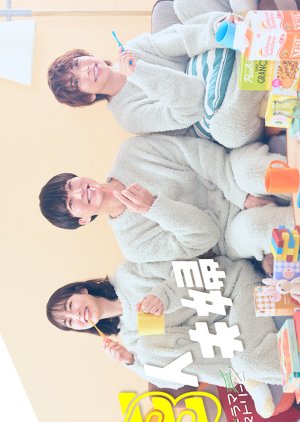
This show was such a fun and sweet experience. I genuinely looked forward to it every week, I liked these three weirdos and their chaotic softness.The premise is kind of wild in the best way, it starts off with a child narrator talking about Takuzo, a lonely guy who’s starting to think about marriage. Then there’s Mia, his ex, now dating a younger dancer named Shinpei. Things get interesting when the two attend a lesbian wedding, and Shinpei just casually suggests, “Hey, what if the three of us got married?”
At first, Mia’s thrown off (understandably), and instead of confronting it directly, she takes her boyfriend to her ex’s place, hoping it’ll stir some jealousy and kill the idea. But surprise, Shinpei and Takuzo actually hit it off. Not even a hint of rivalry. They get along so well it catches Mia off guard.
The sweet twist early on is that the child narrator turns out to be Pakhun, the pet rabbit Mia and Takuzo raised when they were dating. He’s been watching over them from rabbit heaven this whole time. That reveal mid-ep 1 was such a funny, touching moment and instantly made me love the tone the show was going for.
Throughout the episodes, we slowly unpack each character, we got some focus on Takuzo, his past, his insecurities, and his lingering feelings for Mia. We meet Sayo, a co-worker who shares his random hobby of building Lego cities. She believes in platonic friendship between men and women, but the show teases her as a love rival. Honestly, I wish they’d kept her strictly as a friend. The trio dynamic was strong enough, and her romance subplot felt unnecessary.
One of the highlights for me was how the show portrayed the trio relationship. It had its ups and downs, but it wasn’t over-dramatized. The three of them actually talk, support each other, and even argue in a realistic way. When Takuzo gets sick and Mia and Shinpei come over to take care of him, I was like okay, these three are already kind of living like a family. You can really feel how their connection grows, slowly and believably.
The final episodes bring everything together. There are a few emotional stumbles, some pushback from people around them, but nothing overly cruel or unrealistic. Even the mothers’ reactions were done well, shocked but not villainized. They take time to process, then try to support. It felt grounded.
And the ending was So cute. The trio basically says: it’s either the three of us or none of us. And they actually go through with the marriage. The show doesn’t treat it as a joke or phase, it gives them a real, soft, happy ending.
My only real critique is that while the show depicts a poly relationship, it doesn’t feel like it was written by someone who’s poly or queer. There’s a slight outsider lens, like it’s more of a thought experiment than something personal. It’s respectful, yes, but not quite as layered or lived-in as it could’ve been.
Still, overall, Sannin Fufu was a warm, charming, and refreshingly odd little gem. It didn’t always hit super deep, but it knew what it was doing: telling a story about people figuring out how to love each other in a way that works for them. And that’s honestly enough.
Was this review helpful to you?

This review may contain spoilers
A rabbid who is happy with a poly relatiosship...
It's unusual that a series/movie explore a poly relationsship. The only question I always agreed with is: Why is marriage only for two people? This is something I still don't understand, because if you are three or four people so many things in life, especially the painful stuff would be so much easier to deal with. As that may be, it was refreshing to see that in a series. While it was interesting to watch, I feel the story is in part superficial, especially the sexual aspect. While the older of the two man give me much more "gay" vibes he is the one first opposed, That did not really match for me. Also I wished there would have been more intimate moments where the three explore each other, because if that part does not work, the relationsship part would not work either imho.I also understand why this is a comedy setting, but I would have prefered if this would have been filmed in a much more serious way, But I also understand why they did this, because things beside the social norm in Japan are hard to do and I assume they wanted the viewers at home not to feel offended.
Even with the negatives, I had a lot of fun watching this and the ending is hinting a season 2 which would be so much more interesting... As usual japanese productions bring something unusal on the screen and for that I appreciate it a lot. If you prefer it light-hearted and not so heavy, you should watch it. Thanks to my friend Daniel who showed me this show, otherwise I would not have noticed it :)
Was this review helpful to you?

exploring the joys and challenges of a poly relationship
Overall: I gave this a rating boost because there aren't many series/movies that give a realistic look at a modern day poly relationship and I think this series did a pretty good job with the topic. 11 episodes about 20 minutes each. Aired on Netflix https://www.netflix.com/title/82025606Content Warnings: pet death, grief
What I Liked
- showed two women getting married in episode 1
- explored the enjoyable parts and the challenges of having a three person romantic relationship
- how they talked with each other
- the moms and the brother
- chuckled a few times
Room For Improvement
- the child-like voice overs
- needed to cut the woman with glasses out and focus more on the relationship development between the three leads (episode 9 was skippable, could watch at 18 min to the end)
Was this review helpful to you?

A sweet throuple!
This show is very fun! I genuinely looked forward to the episodes each week.The plot is instantly interesting as it begins as some sort of study about marriage, relationships and what it means for a society, for its people and how diverse versions of union are now appearing! Very in tune with our world, which i appreciated.
Now, for the story, I enjoyed how, for each characters, as the throuple relationship progresses, we had the chance to explore their background and insecurities without never putting one of them as being "wrong". We could learn about their motivations, their fears, their obstacles and it showed that at the end of the day it is all about perspectives, that it is obviously very subjective and what matters is communication, time and being able to embrace your partners (which they always end up doing). Even the moms, after being shocked, end up accepting their love and this is SO important. In a way, it was a rather genuine depiction of a throuple, slightly comedic but very humane and sincere!
I think it lacks a bit of that queer lense, essentially in the writing . It almost feels like someone who never experienced queer love or even imagined being in a throuple decided to make a series about a queer poly relationship...BUT i'm not mad at it bcs it is made with care, respect and again sincerity so imho, it's fine!
Overall, Sannin Fufu was a lovely project, a bit funny on the edges, sometimes sweet and warm, not necessarily deep but it told a real story. A story of people finding and embracing each other, people being in love in the way that feels right to them and I think that is important in itself and enough!
It’s either the three of us or none of us <3
Little mention for the narration from the pet rabbit, Pakhun, which was an absolutely sweet nod hehe
Was this review helpful to you?

One of the good ones
I wasn't going to write a review but I had to come back after a couple disappointments because I truly appreciate how fresh and good this was.I didn't have the highest hopes for how polyamory was going to be treated in this one, because the leads enter this situation stumbling through the concept, but it's so well done and with such genuine care. It's not a gimmick for a funny plot, it's a genuine development of the concept in a drama that treats it with respect.
They learn though their experience as a relationship what it means to each and to them together this family they're building and explore different aspects of polyamory that are so refreshing to see in a drama: how intimacy works for them, what they would do if there was ever a baby, what it means for them individually, their developing relationships between each and all of them, what it means for their families, what it means for their jobs, it just keeps giving. It also has a refreshing show of bisexuality and the exploration of identity, which we don't get often enough.
I honestly can't recommend it enough but not to those with biases against either poly relationships or bisexuality, if you want a traditional het or gay romance, you're gonna have to look somewhere else, because there's no problems to be fixed here, this is just not for you. For those welcoming of these subjects, you're in for a treat, because this is one of the good ones!
Was this review helpful to you?
This review may contain spoilers
Surprisingly enjoyable!
This is one of the better J dramas I've watched. This was surprisingly the only polyamorous representation I've seen that didn't end disastrously. I'm not polyamorous, but I think perhaps that community might appreciate that, by the nature of the fade to black scene, the sex lives of the three people was not the focus. Instead, this story revolves around their apprehensions, logistical issues, and fears of the reactions they'd get from their families.It took some time for me to warm up to Mia as a character (though the actress is gorgeous), but over time, the show makes it clear why all of their personalities are necessary. Shinpei is the glue and takes care of feeding two very busy office workers (though I have no clue was Takuzo does for a living?). Mia is the driving force with her somewhat demanding personality being necessary to push past awkward moments and take action. Takuzo is the structure Mia and Shinpei were missing. While I think a bit more was done showing the connections between Shinpei x Mia and Shinpei x Takuzo, I think the love between Mia and Takuzo was just a bit quieter and more understated. He also slept outside her office when she briefly left them, so I think it shows he did care about her, too.
I was surprised by how supportive everyone around them was, though it was nice to see. In reality, they weren't hurting anyone and they fit pretty well together.
The only drag in the series was the episode where Takuzo's coworker basically blackmails him into a week long free trial "friendship" marriage. The scene of her blabbing about his home life in the office did not endear her to me at all and I honestly found her kinda predatory. That one of their coworkers saw her pressuring him outside and seemed to think it was cute was a bummer.
Overall, this was a surprising gem I found. It's a recommend if the themes are your jam.
Was this review helpful to you?

This review may contain spoilers
Silly, sweet, and informative
Sannin Fuufu is a fun show! I love watching shows about polyamory and so immediately was excited for this one. While I was not the biggest fan of the directing, I did enjoy other aspects instead.Directing:
One of my complaints is that the director's camera plotting didn't always make sense to me. I'm not sure if they were working with a limited crew or perhaps were on a time crunch, but while the framing was fine, sometimes the choice of distance between the camera and the characters, or how long a specific camera held the scene, didn't really make sense to me. Some stories really do well with a single camera holding a scene of dialogue for an extended period of time, but to me it felt like the director (or maybe the editor?) didn't really know where to hold tension. The camera was also a bit more distant in some scenes than I would have preferred, which can be done well, don't get me wrong (Imaizumi Rikiya is excellent at that!) but again, just didn't feel... it just felt like some of the emotional beats in the story were underutilized at times.
Casting:
I fucking love whoever casted the secondary characters. The moms especially were so fun and full of personality. The actors were just so naturally these characters! However, when it came to the main cast, I wasn't always convinced.
Story:
This is where I did enjoy the show. I know not everyone loved the bunny narrator, but I actually really enjoyed that. It added a layer of silly and I liked how it focused on unresolved tension and emotions. I was surprised to find that the one who proposed the ex comes back into the relationship was Mia's boyfriend and not Mia herself, and quite liked that twist of my expectation. I enjoyed the building relationship between Shinpei and Takuzo, but I sometimes wished that Mia's dynamic with these two was explored a little more. Still, she is often the one who pushes things through dialogue if not through action. She's the one who brings a threesome to the table after all.
One big theme of the show was Takuzo's lack of self-esteem. He kept saying (and so did other characters) he didn't have much choice because he didn't really have many options to date. And so this trial marriage seems a bit forced by circumstances, though of course we also know that he does enjoy having people in his life and eventually comes to love both Mia and Shinpei deeply. Still, because this was a part of his character, I was very glad for Tenma's contribution to the story. First, she provided another look at alternative relationships which I thought was fun because I love that stuff on screen. But importantly to the narrative, she gives Takuzo a choice. Instead of circumstances and opportunity pushing him into this dynamic, he gets to CHOOSE to be a part of his throuple. That was really important to me and to the development of the story, so I'm very grateful the writers went that direction.
Another element I really liked was the way the show explores realistic challenges in making a throuple work in society. They talk about having a child and the legal status of their union. It would have been nice if the three of them could have talked about the child element a bit more deeply, and if we could have seen the various opinions each individual had about it, but I understand this was only an element of the story and not a major theme. Meanwhile, the legal element was also pretty interesting. Learning how it was possible to make something similar to a marriage certificate was cool. I also found it interesting that Takuzo decided not to be fully open about his relationship at work. That was such a small detail but I appreciated it for some reason. It was framed in like a "yes in the future but not now" sort of way, but just that this was something being considered at all, whether or not he is ready to be out, was kind of nice.
These characters were not perfect, and the story did not aim to tell a squeaky clean version of polyamory, which I appreciate. There were some things I saw that I didn't really agree with and would have handled differently. One thing that really bothered me was when Shinpei and Takuzo had sex mainly because Shinpei was crying about it. That just really rubbed me the wrong way. Whether or not Shinpei meant to, that was coercing consent rather than getting enthusiastic consent from Takuzo. I'm glad they seemed to like it in the end, but to me that was pretty uncomfortable. This was the main issue I had though there were a few others that had to do with boundaries and the lack of discussion around them. But hey, that might just be because of the way I explore my own relationships. And again, the show doesn't need to be perfect, it just needs to be what it is. And this show is about people who are trying this for the first time, just following their feelings, and that in itself is very sweet.
Skinship:
I needed more. Way more lmao. There's a scene in like the last arch where one of them is sitting at the table and feeling very down and I just... couldn't believe her boyfriends wouldn't at the very least touch her arm or her hand to comfort her? Idk maybe its a cultural difference, but that struck me.
Overall:
I enjoyed this show and was very grateful to watch it. Thanks to Kura2Ninja for requesting this review!
Was this review helpful to you?

Three is a magic number
This is a rare case of not only poly rep but good poly rep and not only that, good Queer poly rep.Our three leads don't enter into their three-person marriage knowing exactly what they want or having all the necessary information at their disposal. Polyamory is something new to all of them that they are discovering/exploring together.
And guess what? They're not perfect at it. They don't have firm boundaries around intimacy or have the best idea of how to approach things that convey respect for all parties involved.
But they learn and they compromise. And they come to see how perfect their three-piece Lego set is for them. How they can hold equal space for more than one person in their heart. How they fill in each other's gaps and bring out the best in each other. And above all, after many trials and missteps, they commit to their love even in the face of legal challenges and society's judgment.
Sannin Fufu holds a special place in my heart, without a doubt.
For those looking for poly rep and even more desperately than that, good poly rep, I would without hesitation recommend this.
Was this review helpful to you?

It's three or none
This was one of the sweetest, funniest and heartwarming series I've watched about polyamory, because more often than not, it evolved into a love triangle that ends with heartbreak or tragedy.Spoiler alert I guess: this one doesn't.
Throughout the drama, there was no indication that this was going to end in any other way but with all three of the leads, Mia, Takuzo and Shinpei being in a relationship. At least not for me, because despite the occasional ups and downs, it was always clear that it was going to be the three of them or none of them.
The writing was exceptional, the setting paired with endearing and likeable characters, it was a perfect balance. Watching the leads, episode by episode, navigate the complications of being in a three person marriage was refreshing, grappling with the idea themselves, and then having to deal with thoughts and inputs from those around them. This could've easily gone sideways, with having the supporting characters or the leads themselves becoming villainized as a result of their actions and reactions, but they were all written in a way where their sentiments were understandable, and their overreactions didn't come across as brash or annoying.
The leads themselves were quite the characters. Mia was a very interesting character, who I thought got the least focus out of the three. This wasn't an absurd difference in screentime, just a little less compared to the other two. Despite that, she grew into a character who went from being a people pleaser who was kind of selfish to someone who found happiness in what she wanted while also recognizing her flaws and growing from them.
Takuzo was a quintessential male lead, confused, chaotic and very cute. Along with that also came a whole lot of back and forth, and a whole lot of hesitation. His character was written as a timid person who has a hard time expressing himself, making choices. But towards the end it was so great to see him stand up for himself, be an active partner to Mia and Shinpei, growing as an individual and a partner.
My favourite was Shinpei though, he was an enigmatic presence on screen and brought the drama to life. His idea for the three person marriage, which started out kind of rocky for everyone involved, turned out to be exactly what they all needed. He was just this ever positive presence, and the perfect balance between Mia and Takuzo.
The bond between these three was genuinely wonderful, no one felt left out, they had great communication skills and brought out the best in each other. I will admit that the chemistry between Mia and Shinpei was a bit lacking, especially considering they were the "established couple", and there were a few moments where the chemistry between Takuzo and Shinpei was overflowing for some reason, but when it was the three of them on screen, it all just clicked.
I would highly recommend this drama if you're looking for a happy and lighthearted take on polyamory, that still brings up some relevant details and issues that could crop up in a three person relationship. And it has a happy ending, with exactly what we were promised, a Sannin Fufu :)
Was this review helpful to you?

Communication is Key
I had surprisngly strong emotions about this show. I went into it not expecting a lot and ended up both loving and hating it. To me, that means it was a better show than anticipated if it could envoke strong emotions.It was definitely a wild ride and the moral of the story is that it's okay to be weird and not conform to social norms. The actors did a great job making you feel for these characters and their ridiculous circumstances, and showed you that it's okay if it works for everyone involved.
I recommend this to anyone interested in a quick watch that light-heartedly tackles some of the societal norms that just don't work for everyone.
Was this review helpful to you?

Absolutely Enjoyable
This series turned out nothing like I thought it would be. I went into this thinking it would be kind of goofy and unrealistic. I was completely wrong, and for the better, too. It turned out to be so entertaining, and somehow made this crazy story seem possible and believable. There was surprising drama blended with just enough comedy to make it work.Besides the writing, the cast is what made this all come together. Each of the three protagonists added a completely different personality to the mix, proving the phrase "opposites attract" 100 percent! My favorite character was Shinpei, and Taiga Suzuki was great at portraying him. Kodai Asaka & Aki Asakura fit perfectly with their characters as well, making everything balance out.
As you get deeper into the series, you kind of start to question how things could possible turn out for the best. So many obstacles to get over ... but don't give up. Somehow, the final episode really gives us a great finish. It was surprisingly satisfying.
Overall a really enjoyable series!
Was this review helpful to you?

Poly or nothing
I really enjoyed this! It was a fun watch and pretty different from your usual romance! You don't really ever see poly relationships in media, so I liked that this showed different sides of what that is like. The trio were all really likeable and fun to watch together! They had great chemistry with each other too.Was this review helpful to you?