
 K-Drama





Cliche but very good
I don't understand why "Dynamite Kiss" has received so many low ratings. It is quite clichéd, and I am still unsure about the actresses' full range of acting. However, overall, it was a very nice drama. I love how the group of mothers of different ages came together to work, showing that they are more than just mothers. They sort of reclaimed their identity, which can often be overshadowed by their roles as mothers.It's light and positive, with great chemistry between the first lead and the second couple, who were also very interesting. I wish there had been a bit more development regarding the sister's storyline, but I really enjoyed this drama and kept clicking "next" for more episodes.
Was this review helpful to you?

A Perfect Life, A Perfect Lie: The Most Satisfying Revenge Drama I’ve Seen
The moment this drama was announced and I saw the casting, I **knew** this was going to be a banger. No doubts. No hesitation. I waited forever to watch it, and finding subtitles felt like a full-time job 😭 but once I finally did… let me just say: this drama made me thirsty and then **overfed me**. If you know, you KNOW.Plot*
The story follows Minori, a woman who truly believed she had the perfect life. She married her high school sweetheart, Yudai, and they have a son together. From the outside, everything looks stable, loving, and normal. That illusion completely shatters when Minori finds cryptic messages on her husband’s phone. Something feels off, so she decides to follow him. What she witnesses is beyond anything she could have imagined. Her husband meets up with a high school boy. Together, they go to a restaurant where they are joined by a woman. What Minori watches unfold is the perfect picture of a family celebrating the wife’s birthday. That’s how she discovers the truth: Her husband has been cheating on her for 15 years and He has a second family. Instead of confronting him right away, Minori decides to take revenge. She joins the cram school where the high school boy studies, posing as a teacher, determined to uncover everything about her husband’s other life.
Why This Drama Is Different
What makes this drama so clever is its structure. Usually, in revenge dramas, once the revenge is executed, the antagonists disappear and the story wraps up. Not here!
In this drama, we get four full episodes where the “bad guys” strike back. The roles reverse, and suddenly we’re watching Minori deal with the consequences of her own actions. The revenge doesn’t end it mutates.
It is SO hard for me to review this without spoilers because this is one of those dramas you *have* to experience blind. Every twist lands harder because you don’t see it coming.
Honestly?
This surpassed all my expectations. Hands down, one of the best Japanese revenge dramas I’ve ever watched. It gives proper closure to every character, and when it ended, all I wanted was amnesia so I could watch it again for the first time and relive that emotional rollercoaster.
Acting (aka: PERFECTION)
*Takezai Terunosuke* one of my all-time favorite actors, was incredible, as always. He is *so* good at playing morally questionable, unsettling characters. I love him every time, no matter how much I hate his role.
And * Matsumoto Marika* as Minori? Absolutely terrifying. Absolutely brilliant. Marika nails the female rage !
The facial expressions. The controlled madness. The way her anger simmers just beneath the surface. I was genuinely scared of her and I mean that as the highest compliment. She made Minori feel painfully real, and I lived every single emotion with her.
Please, do not miss this drama.
It’s intense, smart, unsettling, emotional, and deeply satisfying.
This one stays with you long after the credits roll.
Was this review helpful to you?

Pretty sure Chatgpt wrote the whole script
I really dislike writing bad reviews, and honestly, it is very rare for me to rate a Korean drama badly because most K-dramas are genuinely enjoyable. After watching more than 200 dramas, I have only rated one drama extremely low before this one. But with *Our Universe*, I honestly do not even know where to start.Every single episode made me want to drop the drama, and the only reason I finished it was because I felt so bad for the child who was constantly crying and asking for his mom. That little angel put so much emotion into his role that I stayed until the end just for him.
***The Biggest Problem: The Plot!!!!
.When you hear about a plot where the parents die and a small child is left behind, you naturally expect the drama to focus on the maternal aunt and paternal uncle coming together to raise him. You expect emotional moments, grief, struggles, bonding, and the difficulties of suddenly becoming guardians while also dealing with the loss of loved ones. Instead, the drama barely touches those emotions. Almost 88% of the drama focuses on the adults’ careers and love lives rather than the child and the emotional responsibility of raising him. The parenting scenes feel forced and unnatural, almost like the writers only inserted the child occasionally to remind viewers what the drama was supposed to be about.
I have seen American movies with this exact storyline where the emotional journey of caring for the surviving child becomes the heart of the story. But here, the drama completely lost its direction. It missed the biggest opportunity by focusing more on romance and career struggles instead of the actual emotional core.
**The Acting
The acting from both the female lead and male lead was not convincing, but the female lead’s performance stood out in a negative way immediately. When I watched the first episode, I genuinely thought she was a rookie actress, so I tried to excuse the awkward acting. But after searching her name, I discovered she already has many dramas in her career, which honestly shocked me. This is not meant as hate toward the actress personally, but I truly do not think this role suited her at all.
Her acting never felt natural or believable. None of her emotions felt convincing, and she constantly seemed disconnected from the rest of the cast. Everything felt fake; the coughing scenes, surprise reactions, emotional moments, confusion, nothing flowed naturally.
The best way I can explain it is this: Imagine listening to a beautiful song where everything sounds perfect, and suddenly someone who cannot sing starts singing loudly in the middle of it. You stop paying attention to the melody because you are too distracted by how out of place it feels. That is exactly how her acting felt throughout the drama.
Her eye contact felt awkward, her emotional delivery felt robotic, and her interactions with the child felt strangely cold. It often felt like she was acting in a completely different drama from everyone else.
** Lack of Chemistry
The chemistry between the female lead and male lead was almost nonexistent. When the male lead confessed in Episode 6, I was honestly more surprised than the female lead because I genuinely did not even think there was need to turn it romantic. The only emotion I could clearly notice was jealousy involving her first love. Beyond that, the romantic connection felt flat and forced. Their scenes together did not flow naturally, and emotionally they never convinced me as a couple. Although the male lead performed slightly better overall, but together they simply did not work.
**The Child Scenes
Ironically, the scenes with the child were actually some of the better moments in the drama because the child actor was adorable. However, even those scenes were filmed strangely. The drama puts excessive focus on tiny actions; like showing the child pulling the uncle’s pants and then suddenly cutting to another angle in an awkward way. The editing and scene flow often felt unnatural and over-constructed instead of emotionally immersive.
It almost felt like the production team spent more effort trying to capture every small movement of the child than building emotional depth around the scenes themselves. At times, the constant crying and emotional stress placed on the child also started feeling excessive. Some scenes would have worked better without the child. Also the child was literally being raised by the neighbours than his guardians.
** Production & Cinematic Feel
The overall cinematic quality felt dull and surprisingly low-budget considering how the drama was marketed. The emotional scenes lacked impact, the directing felt awkward at times, and many moments that should have been heartfelt instead felt artificial. Ironically, I honestly think I would enjoy watching the behind-the-scenes footage more than the actual drama itself.
** Final Thoughts
The final episode was probably the strongest one. When the baby was taken away, the female lead finally showed more believable emotions, and the ending montage was actually quite nice.
But unfortunately, one decent ending episode cannot save an entire drama that felt messy, emotionally disconnected, and poorly executed from beginning to end.
This drama had the potential to be deeply emotional and memorable, but instead it became frustrating, unfocused, and difficult to connect with , Maybe someone will like it but honeys this drama deserve 1/10 , the only reason I am rating it 3/10 is for the baby.
Was this review helpful to you?

This review may contain spoilers
Predatory behaviour wrapped as romance
There are many aspects of this drama that deserve discussion. First and foremost, it is a remarkable piece of storytelling; however, the subject matter is quite controversial. It's essential to approach it with an understanding that, although the themes are complex, the narrative is compelling.As I understand it, this drama is based on a manga, which can explain some of its elements, but the significant age gap between the characters is quite challenging to digest on screen. It would have been less troubling if Akira were at least 18 years old. That said, the actors delivered outstanding performances that kept me fully engaged, making it a truly memorable drama overall.
Plot***
The plot centres on Hijiri, a 25-year-old woman who begins her journey to become a homeroom teacher. She leaves behind her life in Tokyo, including her supportive boyfriend, to move to a small city in the countryside. In her middle school class, she encounters Akira, a 15-year-old boy grappling with the challenges of adolescence. Initially, Akira displays hostility towards Hijiri, mocking and trying to hurt her, but the dynamics shift dramatically when he confesses his feelings for her. This escalation turns what might have been a simple crush into a forbidden relationship.
Spoilers ahead***
The age difference is indeed significant and deserves full acknowledgement. It's crucial to recognise the implications of Hijiri's behaviour, which can be viewed as predatory. Throughout the drama, Akira is depicted as the one pursuing Hijiri, crossing boundaries that should not be crossed. Maybe it is a strategic move to bring the viewers to accept and clear her of any guilt, but it’s vital to pay attention to the fact that she is a 25-year-old adult who is aware of the moral implications of her actions and far from innocent.
The story invites viewers to think critically about the complexities of these characters' choices. Although Akira persistently pursues Hijiri, even going so far as to run away from home, the portrayal risks belittling Hijiri's role as an adult. While she initially resists his advances, her emotional response to his declarations complicates that resistance, revealing how easily one can become swayed by intense feelings.
A particularly telling moment occurs when Hijiri leaves town with her boyfriend and finds Akira chasing after her on his bicycle. This scene powerfully illustrates her internal conflict, as she is visibly affected by the situation. By choosing to remain silent instead of taking decisive action, she presents an appearance of innocence while grappling with the implications of her choices.
While some viewers may interpret the absence of a physical relationship between them as romantic, it's important to recognise that Hijiri is an adult who knows better and has the capacity to stop the situation at any time. Her silence contributes to a troubling dynamic, raising broader questions about accountability. Additionally, it's surprising that Akira's family and those around him did not intervene legally or seek help from the authorities, highlighting systemic failures in support systems.
Instead of viewing this drama solely as a romantic tale, it's more constructive to approach it as a deeply disturbing narrative that explores how adults failed to protect a young boy. The characters, despite their flaws, reflect the impact of their decisions, challenging viewers to think critically about love(?!) and its consequences.
Overall, the drama is beautifully crafted, and the acting is exceptional. Arimura Kasumi shines in her role, showcasing her ability to portray layered and intricate characters. Having followed her work, I appreciate the thoughtful choices she makes in the projects she undertakes, bringing depth and realism to her performances, particularly as Hijiri.
Was this review helpful to you?

This will make you so hungry !
When I first started this drama, I didn't think I would love it this much.In the first few minutes of the episode, the whole game concept made me feel like I would lose interest very quickly, but boy, I was wrong.
The drama was so engaging, and the characters so wholesome, from Yun Dong Hyeon, Park Jae Yeong, Hwang Seok Ho to Kang Seong Jae. You might think this drama is all about game-based cooking, but it's so much more; it does include important topics like loss, finding one's dream, standing up for the right things, and high-ranking military bribery. I mean, it's a lot. A mixture of comedy, drama and emotional scenes,
Of course, the main star of this drama is the amazing recipes. 10/10 I want to try them all! Not even kidding! They looked so delicious, and seeing the process of creation was so incredibly interesting. I won't be surprised if people start recreating these recipes. Honestly, I think they should open a restaurant that includes all the dishes because I am still dreaming about those rice balls they made.
Was this review helpful to you?

16 episodes are not enough for this masterpiece
This is probably one of the best franchises Korea has produced besides Squid Game. Season 3 is even better, and this season has surpassed all my expectations. A difference from the last two seasons is the connection of each story to keep a more natural flow. The story choices for this season were very clever, from the idol story to the taxi companies' personal stories; every single one was interesting and beautifully crafted. The beginning in Japan was very exciting to watch. I hope the series never stops, and I really hope a season 4 is announced soon, especially since a huge surprise was revealed at the end of the third season.Was this review helpful to you?

This review may contain spoilers
A dive into Japan history with Oda Nobunaga
Honestly, this movie is a gem, and I understand that not many people may fully grasp historical and culture impact in this movie.I think to fully appreciate this movie, you need a bit of context and background knowledge, and that excites my geeky side to dive into it all and let you all know.
If you've watched anime, J-drama, or movies, or read manga, you might have come across the name Oda Nobunaga. If you haven't, let me introduce you to one of the most significant figures in Japanese history.
Back in the early 1500s, Japan was fragmented into dozens of independent territories, each ruled by a daimyo (feudal lord). These families created clans and were often at war with one another, with each lord acting like an independent king. The Oda family was one of these clans, and Oda Nobunaga was the son of its daimyo. When his father passed away, Nobunaga became the new daimyo, facing considerable resistance from family members and rival clans. However, he eventually rose to power, earning the title "Demon King of the Sixth Heaven." His rule was noted for innovative military tactics, the promotion of free trade, civil government reforms, and the start of the Momoyama historical art period, but he was also known for the brutal suppression of those who resisted his demands.
Nobunaga had a dream: to unify Japan under one rule. He worked alongside two other daimyos towards this goal. His name holds great significance in Japan's history and its current state as a unified country. Culturally, he is often portrayed as an eccentric figure; in his youth, he was regarded as a delinquent, frequently wearing commoner clothes and mingling with peasants. Because of this, many manga and anime portray him as foolish or silly.
The movie follows Nobunaga’s journey from becoming a daimyo to the end of his life. Overall, it was a fascinating watch; historically, it was incredibly interesting. The film explores Nobunaga's relationship with his wife, which is not well-documented, making their portrayal in the movie even more engaging.
One aspect I appreciated was the alternative ending presented in the end. Historically, Nobunaga's fate remains uncertain as his body was never found, so the movie offers a hypothetical happy conclusion which i enjoyed.
Also, the movie features a stunning array of historically accurate costumes, with jaw dropping embroidery and decoration, especially in his palace, are breathtaking. It's a deep dive into Japanese culture, and if you enjoy that, I would certainly recommend this movie.
In terms of acting, the performances were excellent, and as a huge fan of Takuya Kimura, seeing him take on such an important role was thrilling. He remains incredibly handsome even after all these years and i am always happy to see his work and found him to potray my favorite verison of Oda Nobunag.
I highly suggest looking up more information about Oda Nobunaga. The movie does an excellent job of illustrating the different periods of Japanese history and how Western influences began to shape the country but for more lcarity you may want to dug deeper. While the movie is quite long, it's definitely worth the watch.
Was this review helpful to you?

When you are meant to be, no matter what, fate will bring you back together.
When I was first recommended to watch this movie, I was told that it would make me sweat like crazy. I didn’t fully grasp what that meant until I found myself anxious and sweating profusely until the very last second of the movie. So, yes... you’re in for a ride.Neddlessto say that I love Nana Komatsu and Suda Masaki, and seeing them on screen is always a fest for my eyes.
As expected, this movie did not disappoint. What a plot! Although I was anxious throughout the entire experience, I’m really glad I watched it. It felt like I could hardly breathe, constantly checking the movie’s runtime and hoping, wishing, and even shouting at the screen for them to reunite before the end.
Plot**
The story follows Ren and Aoi, who first meet in middle school. The two fall in love, but one day Aoi disappears. After searching for her, Ren finds out that she has moved to another city and fled from home to escape a difficult situation. When he finally reaches her house, he discovers that Aoi has been abused by her stepfather and is in a bad place. Together, they decide to run away. Unfortunately, the police find them, and they end up being separated.
Ten years later, they meet again, but they are living very different lives. Thus begins their journey, with both living their own lives in different parts of the world, while fate always seems to try to bring them back together.
It’s a beautiful story, and trust me, you won’t regret watching it. I don’t want to reveal too much because I believe you should experience it for yourself. However, let me assure you, you never know what destiny has in store for you. No matter how far you stray or how lost you feel, if you are meant to be with someone, fate will create paths and bridges for you to meet again.
Was this review helpful to you?

Darker Than I Expected
I honestly didn’t expect Intercom ga Naru Toki to affect me this much. When I started it, I thought it would be a typical revenge drama, but very quickly, it became clear that this story was something much darker, deeper, and more emotional than I expected.
The deeper the story went, the more invested I became. It wasn’t just about revenge. It explored the psychological side of people when they are pushed to their limits. The emotions felt raw and uncomfortable in a way that made everything feel very real.
What I liked most was that the revenge itself wasn’t loud or overly dramatic for the sake of the drama. Instead, it felt quiet but INTENSE. It felt less like a dramatic fantasy and more like watching something that could actually happen in real life.
The characters also felt very natural. Their actions were driven by emotion rather than exaggerated drama, and that made their decisions feel believable. Watching them slowly unravel emotionally gave the story a very dark and heavy atmosphere.
By the end, I honestly felt drained. The drama pulls you so deeply into these characters and their pain that it becomes emotionally exhausting at times. But in a way, that’s what makes it so effective. I needed to watch something light-hearted because this drama was so draining
It’s a very unique drama, and I think it works especially well as a psychological story. Dark, intense, and emotionally heavy but incredibly interesting to watch.
Was this review helpful to you?

This review may contain spoilers
I really wish I had watched this movie before seeing its Chinese adaptation, because this version carries so much more depth and cinematic power.Plot
100 Yen Love tells the story of Ichiko, a young woman who is unmotivated, unkempt, and stuck in a cycle of sleeping all day, playing video games, and buying her meals from a 100-yen store. She lives without direction, almost invisible in her own life. After a huge fight with her younger sister, Ichiko storms out of the house with all her belongings crammed into two large bags and is forced to start over.
To survive, she takes a part-time job at a 100-yen store, where she meets a strange regular customer everyone calls “Banana Man” because of the absurd amount of bananas he buys. After a series of painful and uncomfortable experiences—and after starting a relationship with him—Ichiko slowly begins to change. What starts as survival eventually turns into something unexpected: she finds her way into boxing, and with it, a path toward transformation.
Sakura Ando is one of those actresses you don’t come across often. After seeing her in Shoplifters, I knew I would always look for her name when choosing a movie. Shee is raw, unfiltered, and incredibly honest. As Ichiko, she gives us a journey to transformation that feels real, authentic and not just cinematic.
When Ichiko joins the boxing gym, nothing changes right away. Her head is still lowered, her shoulders slouched, and she looks completely out of place among the boxers. For a long time, there is no visible progress. And that’s exactly what makes this performance so powerful. The change doesn’t arrive through a dramatic montage but it arrives quietly. Only during her first real match do we finally see how much Ichiko has grown. Just because we don’t see obvious change doesn’t mean nothing is happening. I’d honestly say Ichiko’s transformation is one of the most powerful portrayals of a female character’s growth I’ve seen in cinema in a long time.
One of the reasons boxing becomes so important to Ichiko is respect. In boxing, opponents fight fiercely, but at the end of the match, they embrace. There is sportsmanship. When Ichiko sees this, she is clearly fascinated. For a woman who has been psychologically and sexually abused, discarded, and punished for not fitting social expectations, that final hug may represent something she has never truly had: acknowledgment. Respect. Being seen. In that sense, 100 Yen Love isn’t just about Ichiko’s journey toward self-respect but it becomes our own. And by the time the movie ends, you realize just how deep and quietly powerful this story truly is.
At the same time, the film is also brutally honest about the raw reality of being a woman in a closed, patriarchal society. At every stage of the movie, Ichiko is treated poorly, by her family, by society, and by men. When she experiences sexual assault, she doesn’t react dramatically; she simply moves on, almost as if she already knows nothing will be done. What makes this even heavier is that the world around her doesn’t even know what she has endured. We carry this knowledge with us throughout the entire movie a secret only we know about Ichiko and maybe that’s what makes her journey feel so personal and deeply sentimental.
Was this review helpful to you?

This review may contain spoilers
Not enough talk about it
Beautifully written ! Very empowering movie about psychological effect of postpartum depression (It's much more than postpartum depression) and gender discrimination of today society on young women.Bit slow paced but worth watching if you are up for some real life topics. Might not be popular among the male gender cuz of the main topic but worth watching to educate yourself about a serious issues in our scociety who sees woman as naturally designed to be mothers/ wives/ daughters.
Definitely a must for those who plan to have kids! Bring awareness and educate your partner.
Was this review helpful to you?

A Love So Soft It Made Me Hate Men Less for a While
I swear, Love Next Door is the PERFECT example of why Korean dramas are so popular. The acting, the longing, the slow-burning romance, everything works.If you’re looking for something that will make you blush, kick your feet, internally scream, and feel all soft and fluffy inside…then this is the drama for you.
Plot**
The story follows Choi Seung Hyo and Bae Seok Ryu, next-door neighbors who have known each other since birth because their mothers were best friends. They grew up side by side, shared everything, and even dated during their school years. But as life moved forward, they drifted apart. Seung Hyo becomes a well-known architect in Korea and opens his own firm, building a name for himself. Meanwhile, Seok Ryu studies abroad, works tirelessly, and lands a prestigious project manager position at a major company in the United States. She spends ten years building her career and reputation overseas — only to suddenly quit her job, break off her engagement, and return to Korea without telling her family why.
Let me say, Jung So Min has seriously grown on me over the past few years. She’s so effortlessly funny and natural. When she cries, I feel it. When she’s embarrassed, I’m embarrassed with her. She makes Seok Ryu feel real! not perfect, not overly dramatic, just human.
But can we talk about the romance?! Because this is where I completely lost it. The longing !! the way he looks at her, the quiet concern, the way he shows up for her without making it about himself. It’s that “I’ll do this for you, not for my own satisfaction” kind of love. Soft. Respectful. Steady. And yet I was screaming at my screen every episode like, “JUST KISS HER ALREADY PLEASE.”
This drama had me weak. I’m not even joking. It softened me. It made me hate men less for a few hours (which is saying something). It made me wish someone would pursue me with that kind of quiet devotion and years of unresolved feelings. Watching it, I found myself smiling for no reason, completely swept up in the sweetness of it all.
And honestly, this is why Korean dramas are so loved. They make you dream. They make your heart race. They make you feel giddy and hopeful and ridiculously soft.
Was this review helpful to you?
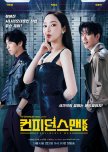
Dissaponting ! This could have been something great but in the end, it just didn’t fully deliver.
I had a lot of expectations going into this drama because it started really strong. The first story was engaging, the setup was promising, and I genuinely thought this would be one of those clever, fast-paced con-artist stories. Unfortunately, as the drama went on, the story slowly lost its rhythm, and I was quite disappointed.
To be completely honest, the high rating I’m giving this drama is almost entirely because of the stellar cast, especially the actors who played the antagonists. They were exceptional and truly carried the show when the story itself couldn’t.
Plot*
The story follows three con artists who work together to help people who have been wronged. The group is led by Yun I-rang, a highly intelligent and creative woman who organises their operations while hiding secrets of her own. Alongside her is James, a veteran con artist with wit and humour, and Myung Gu-ho, the newest member of the team.
Structure & Storytelling
The drama consists of 12 episodes, with a new case or “victim” introduced every two episodes. The structure is very much Robin Hood–style: they scam the bad people, those who exploit, deceive, or harm innocent victims, steal their money, reimburse the victims, and keep a portion for themselves.
While this concept works well at first, after the initial story, everything began to feel disconnected. Instead of building momentum and a storyline of how all this began, each new case felt loosely stitched together. There were many elements thrown in, but they never fully came together in a way that kept me emotionally invested. I often felt confused rather than intrigued.
What truly kept me watching was the antagonists. The drama had an impressive lineup of well-known, extremely busy actors appearing as villains or in cameo roles, and honestly, I was surprised they managed to cast so many big names. These actors were phenomenal!!!. Their performances as bad guys were layered, convincing, and memorable and without them, I don’t think I would have ever finished the drama.
Acting Thoughts
Park Min-young is a very conflicting actress for me. She often plays characters who are traumatised in childhood, and this drama follows that same pattern. I was initially excited because this was supposed to be a revenge-driven role, but the main storyline tied to her character felt underdeveloped and not deep enough. I often asked this question," All of this just for that ?" IYKYK!!
The emotional depth wasn’t there, and despite the drama trying to make it dramatic and heavy, it never truly pulled me in. At times, her acting felt a bit unnatural to me.
Park Hee-soon is an actor I usually enjoy a lot, but in this case, I struggled to connect with him. His comedic moments felt forced, and the humour didn’t suit him in my eyes. This is the first time i am seeing him playing a comedy role, and I struggled to laugh. It just didn’t land the way it was intended. Of course, this is just my personal opinion!
Final Thoughts & Rating
Overall, the drama felt full of plot holes, and the ending was rushed. The main storyline never had enough time to properly develop, and instead of feeling cohesive, it felt like scattered pieces of information poorly connected. Maybe the limited 12-episode format played a role, but it still didn’t meet the expectations it set for itself early on.
If I were rating this purely on story, I’d give it a 5/10. However, because of the outstanding supporting cast and unforgettable antagonists, I’m bumping it up to a 7.5/10. They truly saved this drama for me.
Was this review helpful to you?

longest backstory in the history
I wouldn't score this movie higher than 6.5. It's not that it's bad, but I felt the backstory was excessively long. They could have cut much of it to allow more time for the tsunami and the subsequent rescue efforts.The film runs for 2 hours, and the character's backstory takes up 1 hour and 20 minutes, which is far too long, especially since it has little relevance to the actual tsunami event. I think the structure was overly drawn out. However, I can understand why they might have made that choice; the cast features many iconic names, and perhaps they wanted to give them ample screen time. Unfortunately, this decision impacted the portrayal of the disaster, which should have been the main focus of the movie.
Was this review helpful to you?
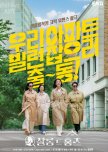
4 ahjummas coming together to fight crime and save their apartment complex
This drama 's first episode had biggest hook I have ever seen; I was instantly hooked from the very first episode, and as I expected, it turned out to be a fantastic show.Plot**
The story follows four undervalued housewives who, in the eyes of their families, are merely housewives. They come together to solve mysteries and apprehend criminals. Miri, who has a traumatic past involving a serial killer and the loss of her best friend, works hard to support her husband, who causes various issues. She possesses a keen ability to notice details and piece them together, much like Sherlock Holmes, to solve cases. Gyeong Ja, an ex-detective with impressive physical strength, left her job to let her husband excel and now embraces the role of a housewife. So Hui, a diligent delivery woman, is an endless source of information. Finally, Ji Hyeon, who owns a neighborhood supermarket, has exceptional negotiation skills and talent for acting.
Though they are different, they are united by a shared desire to address problems within their apartment complex. They start with minor issues, like improperly separated garbage, but often uncover more serious crimes in the process. If you enjoy dramas about middle-aged women joining forces with elements of crime and mystery, akin to Sherlock Holmes-style investigations, then this is definitely the drama for you. It is not only enjoyable and funny but also heartwarming. The best part is, they have conformed for a second season, and i knew they would because this was such hit. .
Was this review helpful to you?


