
 K-Drama





A Love That Continues to Beat Beyond Death
If you ever plan to make a list of the best of the best and must-watch Japanese dramas; *Beyond Goodbye* should absolutely be on it. This is not just a love story. It’s a story about connection, grief, fate, and the kind of love so strong that lingers even after death.*Plot
The story follows Saeko and Yusuke, a couple who have been together for a long time. Yusuke finally decides to propose and takes Saeko to the mountains for the big moment. But on the way there, their bus gets into a terrible accident and Yusuke dies.
Because Yusuke had signed up as an organ donor, his heart is transplanted into Naruse, a man who has been suffering from severe heart problems and waiting desperately for a transplant. Months later, Saeko and Naruse meet by chance, and that’s when something unexplainable begins. Naruse starts feeling a strong pull toward Saeko, a deep sense of nostalgia and emotion that doesn’t feel like his own.
The Red String of Fate
This drama beautifully embodies the concept of the red string of fate, the idea that two souls destined to be connected will always find their way back to each other. Even in death, Yusuke’s connection to Saeko does not disappear. Instead, it lives on through Naruse, and just like the red string of fate pull Naruse towards Saeko. It's like Yuske's heart is refusing to let go of his feeling for Saeko and refusing to become now Naruse's heart, a heart that never knew Saeko. So Yusuke's heart take control over Naruse pushing him to seek Saeko like a thirsty mouth seeking water on a summer day.
On one side, we have Saeko. She loses the love of her life once in the accident. And then, in a way, she has to lose him again when she has to accepts that his heart now beats inside someone else. Her everyday life becomes a quiet torture. Every place, every memory, every landscape reminds her of Yusuke. She is forced to continue living while carrying unbearable longing.
On the other side, we have Naruse. Before the transplant, he had already given up on life. He lived constantly aware that death was near. He never truly allowed himself to dream or feel fully alive. But after receiving Yusuke’s heart, something shifts.
He begins developing habits that were never his. A man who never liked coffee suddenly finds himself drawn to it so much that even start opening a coffee shop. He begins playing the piano something Yusuke loved. He feels emotions, memories and nostalgia he cannot explain.
It’s as if Yusuke’s heart refuses to let go of the love it once held. It’s not presented in a dramatic, supernatural way but in a subtle, emotional way that makes you question how much of the heart carries memory.
This drama is deeply sad but it’s not empty sadness. It’s meaningful. Throughout the series, you see just how deeply Yusuke loved Saeko. Even though he is gone, his presence is felt in every scene. His presence is so strong that even without being in the frame you know the difference between Naruse and Yusuke. Yusuke's love becomes the emotional thread tying everything together, and its so heartbreaking to see how deep his feelings were and that he is gone and could never come back. It’s the kind of story that makes you sit quietly after an episode ends.
Cinematography & Atmosphere
Visually, this drama is stunning. The story moves between Japan and Hawaii (though Hawaii scenes were filmed in New Zealand), and the cinematography is breathtaking. The beautiful landscapes of Hokkaido and the coastal scenery create a soft, almost dreamlike atmosphere.
Coffee plays a central symbolic role in the story and the repeated visuals of coffee growing, harvesting, toasting, brewing, steam rising, and quiet cafés add warmth and share an interesting teaching about coffee world, something a coffee lover would enjoy.
I have to mention **Kasumi Arimura**, who plays Saeko. She continues to choose incredibly meaningful projects, and she delivers one of the most emotionally powerful performances here. Her portrayal of grief feels raw but controlled never exaggerated, always sincere. The more I watch her work, the more I appreciate her choices as an actress. She has been part of some of the most beautiful series in recent years, and this is another strong addition to her filmography.
*Beyond Goodbye* is about love that transcends life. About grief that lingers. About fate that refuses to break.
It’s heartbreaking. It’s poetic. It’s visually stunning and it absolutely deserves a spot on any must-watch Japanese drama list.
Was this review helpful to you?

This review may contain spoilers
left me grieving, not just for what happened, but for what could have been...
I heard so much about Mr. Plankton when it first came out, and by the time I finally sat down to watch it, I was genuinely excited. I thought I was getting something quirky, maybe bittersweet, maybe even funny. Oh boy. This drama is trauma.You’ve been warned.!!!
Plot*
The story follows Hae-jo, a man born from an artificial insemination mistake. A clinic used the wrong donor sperm, and that single error destroys his family. Once the truth comes out, his parents emotionally abandon him, and Hae-jo grows up carrying the weight of rejection, displacement, and unresolved anger.
As an adult, he survives by running an errand service, drifting through life without roots. One day, he gets hired by a bride who wants to run away from her wedding and asks him to kidnap her. Chaos follows, landing Hae-jo in the hospital, where his life completely unravels. He’s diagnosed with a rare hereditary brain condition. Terminal. Three months left.
With death suddenly looming, Hae-jo decides to search for his biological father. But before starting that journey, he makes a decision that changes everything: he kidnaps Jae-mi, his ex-girlfriend, on her wedding day.
Jae-mi is about to marry Eo-heung, the heir to a 500-year-old Korean historical family. She’s also just been diagnosed with premature menopause, crushing her lifelong dream of becoming a mother. Despite the pain, she chooses happiness and stability until Hae-jo drags her back into his life, literally, right before she walks down the aisle.
Spoilers ahead***
This drama is tragic, not in a poetic way, but in a deeply emotionally heavy way. These characters are carrying layers of trauma, abandonment, and unresolved grief, and the story never really lets you breathe.
Watching it feels like being trapped in someone else’s emotional storm. It’s beautifully made, incredibly acted… and exhausting.
Hae-jo - A character I could not forgive!!
Hae-jo is written as a “tragic” character, and I understand why viewers might sympathize with him. Finding out you’re terminally ill, having no family, no roots, and no future, that kind of pain is unimaginable. But understanding pain does not excuse behavior!!
Kidnapping Jae-mi was wrong! It was not romantic. It was not love!! He knew there was no future for them.
He knew he couldn’t give her the life she wanted. He had once cruelly wished that she would never have children and then chose to come back into her life after learning she couldn’t.
Also his behaviour is so wrong, instead of telling her the truth, that he was dying, that he loved her, that he was terrified, he chose control. He makes decisions for her. He corners her emotionally and physically, even when she begged him to let her go.
That isn’t love. That’s entitlement. That’s resentment. That’s a wounded ego acting out.
As a viewer, you’re pushed to empathize with him because of his illness and his past. But honestly??? His actions would traumatize anyone. If he died, Jae-mi would be left carrying that damage forever.
His behavior was manipulative and punitive. He didn’t return because of love, he returned because he was dying. And if he hadn’t been, I truly believe he would have never come back at all.
Jae-mi
Jae-mi broke my heart. She grew up as an orphan, never chosen, never adopted, always waiting for a family to want her. All she ever dreamed of was becoming a mother, giving a child the love she never received.
Then she’s diagnosed with premature menopause. It’s like watching someone walk barefoot through shattered glass.
Hae-jo enters her life when she’s at her most vulnerable, and just when she finally chooses happiness real, calm happiness, he takes it away from her. She had one chance. And he stole it. If you love someone you should want the best for them, Hae-Jo behaviour sounded more like " If I can't have it, you can't have it either."
I hated the ending they gave her. Bringing Hae-jo back only reopened wounds she never had the chance to heal from. Jae-mi is kind, protective, and that goodness is exactly what traps her. Even staying with Hae-jo feels like another form of manipulation.
She deserved a future that wasn’t built on grief.
Eo-heung — The greenest flag this drama ignored
Eo-heung was everything Jae-mi needed. He loved her for her. Not for children. Not for legacy. Not for obligation. And in a society obsessed with bloodlines and continuation, that mattered.
He is the embodiment of the Korean son burdened by tradition, raised under a strict mother, expected to carry a family legacy, trained to obey rather than live freely. And yet, with Jae-mi, he was gentle, attentive, and genuinely happy.
I cannot believe the writers didn’t bring them back together.
After everything, the ending I wanted, no, NEEDED was Jae-mi and Eo-heung finding their way back to each other. They would have found a way to build a family. You could see it in him: children didn’t define his love. He loved her! As usual for the sake of romantic the plot had to remove the good guy and glorify the bad guy.
Abandonment is the beating heart of this drama. Jae-mi, abandoned as a child, growing up believing she was never enough.
Hae-jo, emotionally abandoned by the family who wanted him until he wasn’t biologically theirs. The constant fear of being replaced, discarded, or forgotten. It give this drama very heavy touch, and you are constantly reminded though Hae-jo's journey to find his biological father!
The drama also paints a sharp picture of Korean family structures, patriarchy, bloodline obsession, controlling parents, and the crushing expectation placed on men to carry family legacy at all costs.
Visually, this drama is stunning. The Korean provinces, the mountains, the wide open landscapes, honestly it was a feast for the eyes. So beautiful that make you genuinely want to visit Korea, and see all of these beautiful regions! Specially the part when they were climbing the mountain in Busan, it mad eye feel like travelling to Busan just to do that and enjoy the beautiful scenery! I found that the contrast between the beauty of the background setting and the heaviness of the story was clever mix.
There are so much I could say about this drama but I don't want make this review longer, so ...Mr. Plankton is a beautifully made drama. It’s powerful, emotionally intense, and unforgettable.
But it left me grieving, not just for what happened, but for what could have been. After everything these characters endured, I wanted a softer landing. I wanted healing. I wanted hope!
Was this review helpful to you?

Hard pass
If I had watched this movie when I was around 10 years old, I can easily see myself loving it. It has all the elements that would feel exciting and emotional at that age and would probably seem like a great story. But watching it now, in my 30s, it definitely feels very different.This live-action adaptation of a manga includes many elements that work well on paper but feel unrealistic once translated to the screen. At times, it makes you stop and think, how does this even make sense? Personally, I think this wasn’t a great manga-to-live-action adaptation. That said, it might simply be because, at this age, those puppy-love, middle-school romance stories don’t hit the same anymore.
If you asked me now, I’d rate this movie low in terms of story. However, I do appreciate the funny manga-style scenes—they brought more comedy than romance, which I actually enjoyed. Once again, I think this movie might work better for a younger audience. If you’re around 10–15 years old, you might really like it.
Was this review helpful to you?

The best of the best
There is a reason why *The World of Married* achieved the status of the highest-rated K-drama in South Korea, capturing the attention of every household. It's sad that the story resonates deeply with many of us, and perhaps this is the exact reason for its immense popularity. This drama isn't just another series to binge-watch; it's the story of someone you might know or even your own story.At the heart of the plot is a man who seemingly has everything: a successful and caring wife who works as a respected doctor in their community and a loving son. However, he betrays his family, shattering the trust of his devoted wife, who has dedicated herself to supporting him and their child. The emotional turmoil escalates when she discovers that everyone in their community, even casual acquaintances, knew of her husband's infidelity while she remained blissfully unaware. This revelation is not just heartbreaking but also evokes feelings of anger and disbelief, creating a powerful connection to anyone who has felt blindsided by betrayal.
The characters are intricately connected, each grappling with their unique struggles and strengths. The main actress delivers a stunning performance, embodying the fierce resolve of a mother driven by instinct to protect her child at all costs. Her desperation to confront the betrayal is palpable and relatable as she navigates her grief and rage.
The storytelling is masterfully crafted, drawing viewers in from the very first scene and holding their attention until the final episode. The intricate plot twists and powerful emotional moments keep audiences on the edge of their seats, making this drama unforgettable.
Was this review helpful to you?
More of an Anticlimax
This Korean Drama was something we need to talk about. When I saw the trailer and the casting, I was so ready for it. I was so excited going into it, and in fact, I finished all the other dramas I was watching at the time to make space for this one. Now, after a gripping first episode, my excitement faded real soon. If I say I am not disappointed, I would lie.I don't know what happened here, but this was so anticlimax.
First of all, the acting; now I have watched these actors in other projects, and I knew how good they are and that is why I was so excited. I must say the acting was there, but the storyline was so bad and lacking that I could not even appreciate the acting. There were some impactful scenes, but the storyline and the sequences of events were so poor that it really took a bad hit.
Now, in terms of storyline, we are given the impression of a politics and entertainment business thriller. On one side, we have a prosecutor who came from nothing marrying a famous actress, in the middle of an intricate political agenda and the dirty world of the entertainment business intertwining. Now reading it, it sounds fire, but it is not! That is what left me speechless.
It's hard to explain in summarizing what is wrong with this drama. It's like when you go to a restaurant and see a really appetizing dish on the menu, and when it gets to your table, it looks stunning, but at the first bite, you realize it's not good at all. It lacks taste and proper cooking; this is exactly how I would describe this drama. It looked good but did not fulfill the expectation.
It is really disappointing because the casting was remarkable and the elements were there, but they tried to push and make it way too mysterious and lost the plot. The characters were presented in a way, but their actions did not reflect their beliefs, and most of the time I found myself wondering why they were going in one direction, and it was so frustrating (not the good kind). Also, the whole lesbian storyline was so stretched on the surface without giving meaning.
Also, I did not understand the character development of Nana; it made no sense and I felt there was no depth. Maybe the acting, maybe the script, something was completely off with this drama.
Was this review helpful to you?
This review may contain spoilers
This should have been longer
This kdrama, I must say, I really enjoyed. I loved the characters, the storyline, and the cases. However, I must say, I did feel like this drama would have benefitted from being a bit longer to fill in the gaps and overly stretched sequences of events.Now the story follows five lawyers, working in different law firms, all located in the same building, and they are all friends and hang out together and help each other.
The distribution of the characters is one of the things that I enjoyed the most. There was no specific focus on a singular character, but all five of them got enough screen time, making me love each one of them. Also, the lawyers are all with different personalities and specialized in specific branches of law, making it very interesting.
Each episode does not concentrate on only one case, but at times you find yourself following more than three cases, and this makes each episode very interesting to watch.
That said, there are areas that felt rushed and could have been done much better. If the episodes were longer, it would have given a bit more space to see how each lawyer was going to manage their life outside the law environment. For example, when one of the lawyers becomes pregnant, she finds herself in a pickle, having to decide whether to leave or change to a different area of law. So instead of brushing it through, I would have loved to see a bit more of her, since the premise of the drama is to show their life outside of the courtroom.
The second thing I would point out is, despite the cases they were dealing with being interesting, a little attention was given to the practical legal part of each case. Most of the time, it felt like they showed the case, had discussions about it over soju, and then we saw the resolution of the case through the hearing. Now, this is not the case for each client, but it is for the majority of the cases. Being a law-based Kdrama, I would have loved seeing a bit more about legal work, like in other dramas where you feel like you are being taught about the process of building the case and following the law through each step. In this drama, that element was lacking quite a lot, and that is something I felt disappointed about, considering how good the casting was.
Also, the storyline of the person who owned the building felt weird in the sense that it gave a premise of something dark, but it was suddenly lightened. I would have loved to see more of her involvement and about her foundation and how all of that started.
Honestly, while watching the drama, I genuinely thought there would be a second season, but once I started the last episode, I understood it was the end. It is a shame that we did not get to see more about it, and I wish they had made it longer.
Was this review helpful to you?
This review may contain spoilers
The coming of age of underclass teenager in Japan
This is a coming-of-age story based on a novel written by Kenta Nishimura about a young man who has been shunned by society for crimes he did not commit; accused, outcasted, and never given a chance. Growing up without any prospects, Kenta embodies the struggles of the underclass, a person who cannot even dream of improving his life. After a long journey, he finally finds the motivation to pursue his dream of becoming a writer.Now this is the type of movie that is more for an older audience and it's a type that has more to do with quiet reflection than a boastful storyline, and I do think these are the kinds that you either like or do not like.
The story follows Kenta, a middle school drop-out who has been ostracized by society due to his father's heinous crimes. This association has branded Kenta's family as perpetrators, forcing them to flee. Since the age of 14, Kenta has worked as a day laborer, surrounded by adults who constantly reminded him that he would never amount to anything as a mere middle school graduate. As a result, Kenta grew up engaging in destructive behavior such as smoking, drinking, and frequenting massage parlors and peep shows.
Kenta is a nonconformist and contrarian, not by choice but because society pushed him away for a crime he did not commit. He represents the opposite of the hard-working individual that Japan prides itself on producing; instead of becoming a productive member of society, he rejects the norms. While children are taught from their first day of school to be polite and diligent contributors, Kenta exemplifies the opposite. He doesn’t pay rent, lives at the mercy of his landlords, ignores societal expectations, and constantly finds himself in situations where people remind him of his status as a middle school drop-out.
When he meets Shoji, a peer who also works in day labor but embodies the qualities of a disciplined and conscientious worker, their contrasting personalities highlight Kenta's excessive lifestyle and refusal to grow. Despite their differences, the two become friends. Unlike others, Shoji never blames Kenta or reminds him of his educational shortcomings; instead, he becomes an ally. However, over time, the differences in their lives come to the forefront, and even Shoji starts to drift away.
The movie takes you through a less glamorous view of the underclass society, highlighting their struggles, habits, and aspects of life that you might want to ignore or remain unaware of. A reality that many would rather not discuss. Overall, I enjoyed this movie. It’s always hard to watch films that are challenging, but they serve the purpose of exposing what lies beneath the surface or around the corner.
Was this review helpful to you?

Yaiteru Futari: Kosai 0-Nichi Kekkon kara Koi wo Hajimeyo
0 people found this review helpful
Not realistic but cute
This Japanese drama is far from reality when it comes to relationships, but if you bypass that, you can appreciate a cute story and interesting recipes.The story follows Kenta, a shy office worker looking for love and with a strong obsession with barbecuing. He truly loves barbecuing, and he can pretty much barbecue anything from fish to meat to vegetables to sweets. He is like the king of the grill. He meets Chihiro, a reserved girl, through a dating app who loves to eat and try food. The two end up getting married with 0 days of dating because Kenta is sent to work in a different city, starting a long-distance and weekend marriage.
Now the story is beyond ridiculous; imagine meeting a man and the day after getting married to him because he is moving to a new city and going and spending your weekends in his house while enjoying barbecue. I mean, that’s ridiculous and dangerous in relation to life, but since it is from a manga, there’s a lot more freedom to creativity.
Now the two characters are polar opposites. Kenta is cheerful and awkward and gets excited about anything, especially when it comes to food, and definitely not your typical guy who knows what to do in a relationship. Chihiro is quiet, reserved, and loves her space, especially loving to keep boundaries with people, so for her to marry someone or travel back and forth to see him on the weekends is quite a big thing. Regardless, she is different from other girls and truly loves eating and trying new recipes, and this love for food is exactly what brings these two together.
The food is definitely the star of the show and made me want to barbecue too. The food looks fresh and interesting, and the way they were enjoying making it and eating it truly made me salivate several times, so this might make you hungry.
Overall, I would say since the storyline is coming from a manga, there are a lot of elements that when they are translated into a live-action make you raise your eyebrows quite a bit, but if you remember it's from a manga and overlook that, it can be a cute drama to binge watch.
Was this review helpful to you?

Cooking in a prison
Maison Prison is a really cute Japanese drama, but it has a huge issue; which is it only has 5 episodes. I mean, this goes really fast, and the timeline between each episode feels confusing. I think this really affected my watching experience, especially since this had a lot of potential to be a great drama.So the story follows Yoko, who is a high-class Italian chef who suddenly finds herself without a job since her restaurant owner ran away with the money. Being a single mom, she finds herself without a job, so she decides to pick up a job as a prison nutritionist. From here, it starts an adventure of Yoko in this new environment and learning the rules and regulations at the prison while trying to create delicious meals.
I love food-centered dramas; I find them to be very interesting when it comes to learning new recipes. However, I would say in this drama the recipes are not that original and actually are very simple, and this is also because of where this takes place. The drama does a great job highlighting how there is a difference in cooking for guests and for inmates, and cooking has to take into consideration a tight budget, since the meals are made with taxpayers' money and therefore they can't and won't be getting fancy food. So Yoko finds herself having to work with a tight budget while wanting to make meals that make the inmates look forward to a something special.
Of course, the meals are tied to a sentimental story for the inmates, and it follows their correction through the prison.
Also the drama give non realistic view of the prison and each inmate is shows as someone who is kind and gentle, which is not always the reality, if this drama was longer, they could have gone through some of the main issue when it come to prison environment.
The premise is great, but the biggest problem for me was the episodes. There are only 5, and you can't really keep a long storyline with only a few episodes. The scenes and situations kind of run really fast, and the timeline feels not cohesive with the events that take place. I strongly feel if they had at least 8 episodes and we had a bit more time to see the changes and relationship develop between the people, it would have been so much better.
Was this review helpful to you?
This review may contain spoilers
Some will feel this some won't
This movie is yet another reason why I adore Hirokazu Koreeda’s work. He showcases excellence in Japanese cinematography. The story follows two brothers who are separated as their parents navigate their own struggles, trying to find a way to live together again as a happy family. It’s both sad and fascinating how the children observe so much around them; despite their youth, they learn valuable lessons.The brothers long to be together and restore their family, but they also come to understand that their parents are happier apart. Ryu wishes for his father's music career to flourish, believing it will bring happiness, while Koichi prioritizes the broader world over savig his family . The film effectively illustrates how children comprehend far more than adults often realize, they are keen observers and, ultimately, the ones who endure the most pain in such situations.
Was this review helpful to you?

This review may contain spoilers
A journey deep in the woods.
Wood Job is one of those Japanese movies that completely relaxes you and just makes you sink into the couch comfortably. I call these movies "the movies that heal me." I love challenging movies Japan puts out, but at the same time I have a strong love for the rural setting, everyday life in village kind of movies.First of all, let me tell you this movie is hilarious, and it doesn't even try to be funny; it is so effortless that it makes the experience so enjoyable. It's chaotic with so many characters, but within the chaos you learn a lot. There are moments that make you feel happy and at the same time teach you a lot. In fact, this is the very first time I watched a movie about forestry, and I learned a lot!
So let's get to the plot.
The story follows high school student Yuki, who failed to pass his university entrance test and finds himself having to resit and go to cram school while his friends are moving on. On impulse, he decides to join a forestry program advertised because of the beautiful girl on the pamphlet. He embarks on this journey, traveling to a far region of Japan lost in the mountains. Here, he finds himself in an unfamiliar environment; Here, he is met with so many challenges and difficulties, unfamiliar food and habits, all wrapped in comedy, but at the same time he learns a lot about history, the importance of forestry, and finally finds a place in the world he feels like he belongs.
The movie is just perfect for a slow Sunday; it's so relaxing, and every frame is just spectacular with the background of nature. The storyline is not complicated, and the characters are simple but chaotic, but it's not the type of chaos that overwhelms you; it's more of a warm chaos that touches your heart; like a loud and happy family.
While we follow Yuki's story from learning to do forestry work to finding a purpose, we learn a lot. When Yuki moves to the village, he is met with so many habits and challenges. To start with food, when he had to try snake or learn to wake up early. The whole journey, he is just uncomfortable and has no idea what he is doing and gets yelled at the whole time, but at the same time, you start seeing a shift when he starts following their traditions and embraces the village pride. All of this is wrapped in comedy, so effortlessly funny but warm.
For me, the warmest aspect of this movie was the journey to finding yourself, your dream, and what you stand for. Sometimes dreams will look different from others and unusual, and it will take a whole journey into the woods to understand. The job in the woods changes not only his habits but also who he is.
In terms of cinematography, this was a feast for my eyes, with such stunning background of the Japanese countryside. Watching it was a pleasure to the eyes. Honestly felt like running away to the mountains of Japan; it could really fix all of my problems.
Was this review helpful to you?
This review may contain spoilers
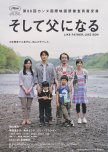
what a family truly is. Is it the blood connection? Or is it the bond built?
Like Father, Like Son is yet another example of why Japanese storytelling and cinema should be studied. Japan never shied away from taking on hard topics and delivering them beautifully.Spoilers****
So the story is hard! We have two families with completely different backgrounds and styles of life who find out their son is not their biological son, and due to the malicious work of a nurse, they have been switched at birth. Now, after 6 years, they have to decide whether to switch or not. This is like the biggest tragedy if you think about it. It might sound easy, like, "Let's just take the biological kid back," but there is another child you have loved until the last minutes and one you took care of since birth, loved, and cherished, who suddenly becomes a stranger. It’s not that simple. No matter what decision you take, you are losing someone important.
Ryota Nonomiya is described as a man who has always excelled at everything he did, and he expects the same from his son. We can see his frustration when his son is not delivering what he expects, and at times he is also very harsh with the kid. So finding out his son is not his biological child culminates in him with this idea that the perfect son he wanted couldn’t deliver because it was not his. Almost like all he could think in that moment was why it all made sense. His wife, on the other hand, is shattered, caught between the guilt of not being able to notice earlier and having to decide to let go of the son she loved so dearly for the last 6 years.
On the other hand, the Saiki family is also going through shock and pain, but it seems like their whole focus is on how much money they can get as compensation from the hospital. As a viewer, it’s almost like while the Nonomiya family is destroyed by the news, the Saiki family takes on it in a more positive aspect, and that’s where we really see the difference between the two families. Although the Saikis are not as wealthy and seem like they have so much on their plate, their kids love them dearly, and they are the happiest.
This is where the brilliance of the storytelling takes us: two completely different backgrounds and family dynamics. One is cold and strict, enveloped in shades of black and grey, while the other one is bright, like a summer day, surrounded by the noise of kids playing.
But this movie is not just about finding out what blood bonds mean; more about what truly a family stands for. Ryota, who grew up with the strong idea that blood ties are important and that having a successor was the pinnacle of his life as a man, is challenged for the first time with a choice: let go of the child he raised as his own or make space for his biological son, blood of his blood. This is where things get painfully relatable, and Ryota comes to terms with the understanding that what truly matters is not the blood, but who raised you. An example is when the two families meet, and Ryota notices his biological son and the father (Saiki) who raised him both have the habit of biting their drink straws;an important detail that foreshadows how little blood ties matter.
To sum up, this movie was a brilliant piece of work, and it will make you reflect on what a family truly is. Is it the blood connection? Or is it the bond built? This movie left me pondering what I would do if I found myself in this situation and left a sad lingering feeling. Honestly, I could go on and on about this, but I truly think this movie is so worth watching.
Was this review helpful to you?
This review may contain spoilers
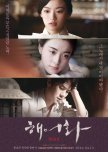
A bitter sweet tragedy
Love, Lies was a beautiful tale of friendship, betrayal, and revenge. Honestly, I do not blame the way she chose to take revenge on her best friend and the boyfriend, as they were so wrong for betraying her and discarding her like an object.The story itself is interesting because it doesn’t just highlight a friend who steals your boyfriend, but it’s a story of a friend who steals all of your dreams. It starts with stealing her dream of becoming the heart of Josen, then she takes away the respect of the singer she admires, then the popularity, and then the boyfriend. It feels painful because she was the one who opened a door for her friend when she was sold off, and after all this, she takes everything and leaves her with nothing. The worst part is the way the best friend was expecting her to still come and support her, blind to her own actions.
I don’t blame the way she decided to take revenge; I think the way her own best friend and the boyfriend were barely giving any thought to her really showed how much they did not care about her. It gave her this feeling of not being important and easily discardable, and those feelings are the ones that make a person take revenge and destroy it all.
The ending was so sad, and you can see how much being underestimated and discarded affected her. It is a bittersweet movie and a terrible tragedy for everyone involved.
Acting-wise, I really enjoyed them, but I wish some of the areas were a bit more prolonged to build a bit more buildup. But overall, it was a nice watch.
Was this review helpful to you?
I do not understand how you can rate this higher than 4
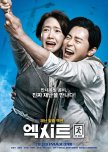
I am quite surprised to see so many high ratings, and I wonder if we all watched the same movie.This was beyond mediocre, and the only interesting part of this movie was the last 20 minutes, but you can not save the movie with a 20-minute action sequence.
The story lacks build-up, background, and all of the things that were happening were so chaotic and failed to set that nice background pre-disaster.
Characters felt messy and were following their own script, and that feeling of "grab" most disaster movies have was completely absent. It did not grab the viewer's attention and felt chaotic trying to follow it all.
I also did not like how the movie was dragging for most of the time, and that feeling of "survival" kicked in only in the last 20 minutes.
This felt poorly written and mediocre.
Maybe someone will like it, but for me this was not good.
Was this review helpful to you?
hello???? stop scrolling and go and watch this and thank me later !
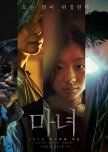
Hello??? Why did nobody tell me about this before? The way this movie got me hooked! Like, I need a 100-episode drama about this! I don't wanna give any spoilers because I think you need to go into this blindly and just savour it all. Let me just tell you: if you love Thriller, amazing choreographed fighting scenes that leave you shook! ( literally) and with your jaw on the floor, then this is the one!Was this review helpful to you?


