
 K-Drama





I Thought the Superpowers Would Ruin It… But *Memorist* Completely Hooked Me
I’m not even going to lie, when I started *Memorist*, the first 20 minutes had me doubting everything. The supernatural angle made me raise my eyebrows. With these kinds of dramas, it’s either going to be brilliant or a complete mess. There’s really no in-between. And at first, I was ready to accept that maybe this just wasn’t going to work for me.Oh, how wrong I was.
Somewhere along the way, I got completely hooked. I kept pressing “next episode” without even thinking. It’s one of those dramas where you tell yourself “just one more,” and suddenly it’s 3 a.m.
What I really loved is how tightly written the story felt. Yes, there’s a central case driving everything forward, but all the other cases have s purpose. They’re not random fillers thrown in to stretch the episode count. They feel connected , like branches of the same tree, all leading back to the main trunk.
And the individual cases? Genuinely interesting. Each one had purpose. Nothing felt like wasted screen time, and I appreciated that so much.
Now let’s talk about the supernatural element because this is where the drama could have easily failed. Dong Baek’s ability to read memories by touch is a powerful tool, but what made it work was how it was balanced. It wasn’t just “superpower solves everything.” While Dong Baek uses his gift to uncover clues, Han Sun Mi, who has no supernatural abilities often arrives at the same conclusions ( sometime way before Dong Baek ) using pure profiling skills and logic. Watching her break things down step by step grounded the story in realism.
If the drama had relied only on powers to reveal every culprit, it would have gotten repetitive or even ridiculous. But pairing Dong Baek with someone who relies solely on intelligence and deduction made the investigation process satisfying. As a viewer, what we enjoy in detective dramas isn’t just the answer... it’s the process. It’s seeing how the puzzle pieces connect, how clues are discovered, and how conclusions are formed, and *Memorist* understood that.
The supernatural element didn’t overpower the story, instead it elevated it. It added intensity without sacrificing logic. And that balance is exactly why what I thought would be a risky concept turned into such an addictive, well-executed drama.
Was this review helpful to you?

Domestic Violence Hidden Behind Red Lipstick
*Make Up with Mud* is yet another example of how skillful Japanese dramas can be when it comes to delivering heavy, uncomfortable truths through what appears to be a simple, and cute story. On the surface, this drama feels easy 20 minutes drama. It doesn’t scream “dark.” It doesn’t announce its themes loudly. But underneath that softness lies a deeply unsettling portrayal of domestic violence, hidden behind something as ordinary as red lipstick.Plot***
The story follows Miku, an employee at a department store who lives with her long-term boyfriend, Haruhisa, a successful lawyer. From the outside, they look like the perfect couple: stable, respectable, put-together. The kind of pair people assume are happy. But things begin to shift when Miku meets Takakura Eve, a handsome guy dressed as a beautiful girl. Eve passionate about makeup and self-expression, often dressing in glamorous feminine style. Through Eve, Miku begins to reconnect with parts of herself she didn’t even realize she had suppressed. What seems like a small step like wearing a bold red lipstick, quietly becomes the catalyst that exposes every shade of abuse in her relationship.
When I first started this drama, I honestly thought it would be light and empowering in a different way. I expected a story about a modest, reserved girl discovering fashion and confidence with the help of a glamorous mentor figure. I thought it would be about transformation through makeup. And in a way, it is, just not the kind I imagined.
What makes this drama so powerful is how it portrays abuse. There are no dramatic, shocking scenes at the beginning. No obvious physical violence. Instead, it starts with words. Subtle comments. Slight discomfort. When Miku wears red lipstick, Haruhisa tells her to remove the “filthy” thing from her face. At first, it doesn’t look like abuse. It looks like jealousy, maybe insecurity. It’s the kind of moment you might brush off. You might even justify it. Maybe he had a bad day. Maybe he’s just being protective. And that’s exactly how emotional abuse works.
The drama is incredibly clever because it doesn’t just show manipulation but it makes you feel how easy it is to miss it. The comments repeat. The tone sharpens. The control tightens. The humiliation becomes more direct. What begins with criticism about lipstick escalates into degrading words and actions, including moments where he deliberately humiliates her, even pouring food on her. The violence isn’t always loud, but it’s deliberate and cutting. It chips away at her sense of self piece by piece.
What also struck me deeply is what happens when Miku finally opens her eyes. There’s a clear turning point where she stops making excuses for him and begins calling his behavior what it truly is; abuse. But instead of immediate support, the people around her start repeating the same justifications she once told herself. “He loves you.” “He’s just worried.” “He’ll change once you’re married.” It’s painfully realistic. The drama shows that emotional abuse isn’t only sustained by the abuser, but also by the way society minimizes it. As long as there are no visible bruises, it gets brushed off as normal relationship conflict. That layer makes the story even more powerful, because it reflects how many real-life victims are silenced, not only by their partners, but by the voices around them that normalise control in the name of love.
What still amazes me is how something as simple as red lipstick becomes the central symbol of the entire story. It represents identity, autonomy, and choice. And the moment Miku reaches for that choice, her boyfriend’s need for control is exposed. The lipstick becomes a quiet act of rebellion. Who would have thought something so small could reveal so much? The storytelling is so organized and intentional that every reaction, every comment, every escalation feels realistic. The boyfriend doesn’t suddenly transform into an abuser, the drama simply allows us to slowly see what was already there.
This series doesn’t rely on exaggerated drama to make its point. It shows how abuse can hide in “normal” relationships. How it begins with discomfort toward independence. How it grows through manipulation and emotional control long before it ever becomes physical. And once you recognize it, it becomes impossible to ignore.
I went into this drama expecting something light and aesthetic. What I found instead was a creative, unsettling, and deeply intelligent portrayal of emotional abuse. It’s heavy, but it’s also brilliant. And I’m still amazed at how they managed to expose such a harsh reality through something as simple as a red lipstick.
Was this review helpful to you?

To even understand this drama, you kind of need to know about the “3B” rule in Japan. Beauticians, bartenders, and bandmen, the three types of men women are supposedly warned not to date because they’re seen as flirty, unfaithful, or financially unstable. When I first heard that, I thought, okay, this could be interesting. There’s so much you could do with that idea. You could challenge the stereotype, break it apart, prove it wrong.
Plot*
The story starts with Haru finding out the man she fell in love with is actually married. That alone is painful enough. Then her apartment building burns down, and she’s forced to move back to her grandmother’s house. And just when she thinks she’ll get some peace and time to heal, she finds out her grandmother has rented out rooms to three young men — a beautician, a bartender, and a bandman. Literally the three types she “shouldn’t” be around.
At first, I was curious. I wanted to see where it would go. I kept waiting for the story to really dive into the stereotype and do something meaningful with it. But as I kept watching, I felt like it was just… floating. The characters didn’t grow in a way that felt satisfying to me. The emotional arcs didn’t fully land. It felt messy, like it wasn’t sure what it wanted to say. It mostly stayed on the surface and didn't dive deep to give life to the concept.
By the end, I honestly felt like the main thing I got out of it was understanding what “3B” means, and why people say you shouldn’t date them. And that’s it. I wanted more than that. I wanted depth. I wanted the drama to surprise me or challenge the whole concept.
Maybe the manga handles it better. But this adaptation felt like it had potential and just didn’t fully use it, and I think that’s what disappointed me the most.
Was this review helpful to you?

Falling High School Girl and Irresponsible Teacher
1 people found this review helpful
Don’t judge this drama by Its Title is really worth
Despite the title, *Falling High School Girl and Irresponsible Teacher* turned out to be such a great watchYes, it’s about a high school girl who develops feelings for her teacher — but not in the way you might expect. If you’re assuming this is a typical romanticized student–teacher story, it really isn’t. And honestly? That’s what makes it so good.
The chemistry between the leads completely carries the show. The female lead is sarcastic, gloomy, sharp-tongued and incredibly self-aware. She doesn’t romanticize anything. She calls out the teacher on his words, his behavior, his irresponsibility. She challenges him constantly.
The male lead, on the other hand, is effortlessly funny. He has this unserious, almost careless energy but it works. Whenever a moment starts to feel like it’s turning romantic, they flip it into sarcasm or humor. The banter between them is genuinely entertaining.
Their dynamic feels unconventional, messy, and real. And that contrast between her darkness and his chaotic humor makes every interaction engaging.
But this story goes much deeper than witty banter. At its core, it’s about a girl who is struggling with wanting to end her life. And it’s about a teacher who, in his own flawed and imperfect way, tries to save her while she is also slowly learning how to save herself. That’s what makes the series powerful. It’s not about forbidden romance. It’s about emotional survival. It’s about pain, responsibility, and healing even when the people involved aren’t perfect heroes. The tone balances humor and heaviness in a way that feels surprisingly natural.
The first season was amazing (and yes, there is a Season 2). The actors truly elevated this story. Without their performances, it could have easily felt uncomfortable or shallow but instead, it feels layered and thoughtful. It’s funny. It’s sarcastic. It’s darker than you expect. If you’re willing to look past the title, you might find something much deeper underneath.
Was this review helpful to you?

This review may contain spoilers
Brother Trap Or More Like Akari’s Trap
First of all… who chose this title? Because it’s incredibly misleading. The poster doesn’t help either, it suggests something far more different (and suggestive) than what the drama actually delivers. If anything, this story should’ve been called Akari’s Trap, because most of the chaos comes from her choices.Plot *
The story follows Akari, who starts developing feelings for Naruse Izumi a younger guy, only to discover that he’s the younger brother of her high school ex-boyfriend Naruse Yamato. Predictably, things get awkward. The older brother is still in love with her, but somehow decides to step aside simply because his younger brother likes her (make it make sense).
The story itself is… okay. Since it’s adapted from a manga, I can see how this kind of pacing and logic might work on the page. But in live action, it’s hard not to constantly question what is going on in the female lead’s head. Akari spends most of the drama assuming things, misunderstanding situations, and jumping to conclusions. Honestly, she comes off a bit… frustrating. If there’s one real theme here, it’s "moving on "no matter how messy, awkward, or emotionally shallow that process might look.
The characters are wildly inconsistent. When the story reveals that the older brother still has feelings for Akari, it feels like the drama might finally gain some emotional weight but that hope disappears quickly when he just… lets her go without much resistance (???). As for Akari, she originally broke up with the older brother due to a misunderstanding, and when that misunderstanding is later cleared up, she reacts with a shrug and a “whatever” attitude. No depth, no reflection, no emotional consequences. (??)
That lack of emotional weight really holds the drama back. Moments that should feel impactful barely land, and everything resolves far too easily.
This drama isn’t terrible compared to some others, but it’s also not particularly memorable. I debated for a long time whether to give it a 6 or a 7, and in the end, I settled on a 7—mostly because it’s watchable even if it never fully commits to emotional depth or consistent character development.
If you’re curious and don’t mind shallow drama logic, it might be worth a casual watch. Just don’t expect the title or the story to mean much more than what you see on the surface.
Was this review helpful to you?

This review may contain spoilers
A realistic take on age gap dating
Aoshima-kun Is a Bully is another manga-to-live adaptation of Aoshima-kun wa Ijiwaru, and honestly, it’s one of those dramas you don’t expect much from… and then it turns out to be really cute. It’s light, comforting, and surprisingly realistic when it comes to age-gap relationship challenges.Plot*
The story follows Yukino, a woman about to turn 35, who has just been dumped by the boyfriend she was planning to marry. After that disappointment, she kind of gives up on marriage, on expectations, on doing what she’s “supposed” to do. She decides to enjoy being single, and her small daily pleasure becomes grabbing a drink after work at her favourite izakaya.
One night, she runs into Aoshima, a 26-year-old coworker. Even though they work at the same company, they’ve never really spoken because they’re complete opposites. Yukino is the dependable, mom-type employee who puts 100% into her job. Aoshima is the popular heartthrob everyone at work gushes over.
Their short interaction gets awkwardly interrupted when Yukino’s friend reminds her about an upcoming wedding and how excited everyone is to meet her boyfriend. Since Yukino was just dumped, she panics and impulsively asks Aoshima to pretend to be her boyfriend—for just one day.
That one lie quickly turns into a deal.
Aoshima wants to escape constant female attention, and Yukino wants to prove to others and maybe to herself that she can still be like anyother woman. Of course, what starts as a fake relationship slowly turns real as they begin catching feelings for each other.
Spoilers ahead*
The drama is genuinely cute, and the cast did a really good job. But what I enjoyed the most was how the age gap was handled. They don’t just mention it, they show it in everyday life.
Yukino has been single for most of her life, and by 35 she has built a solid routine. When she starts dating Aoshima for real, his constant visits to her home slowly exhaust her. She can’t sleep comfortably. She feels the need to dress up all the time. She loses that quiet space she used to recharge.
And honestly? That felt extremely real.
In your 20s, you’re flexible. You’re exploring, experimenting, and relationships flow without much thought. But in your 30s, you already have a life. You have a way you start your mornings and end your days. You’ve learned to enjoy being alone. There are parts of yourself you don’t want to show to anyone.
I really appreciated that the drama highlighted these aspects. They’re small, often overlooked details, but they matter. They show that an age gap isn’t just about numbers, it’s about rhythm, lifestyle, and emotional space.
Overall, Aoshima-kun Is a Bully is a soft, easy watch that still manages to feel relatable and honest. It doesn’t try to be deep, but it understands its characters, and sometimes that’s enough.
…Also, did anyone else notice the cameo from Usokon main lead ? That was such a fun little moment, considering Shota Watanabe( Aoshima-kun) also plays in that series.
Was this review helpful to you?
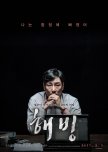
A journey of madness to find the truth
Bluebeard was a very pleasant surprise. Without a doubt, it’s a well-developed movie, and cinematography-wise, its pacing reminded me of old-school thrillers in the best way.The story easily pulls you in and presents events so convincingly that you never question the truth being shown. Everything feels solid and believableuntil the film suddenly pauses near the end, and the gaps start to fill with a new reality that completely turns the story upside down. What once felt certain becomes confusing, and doubt slowly creeps in.
It almost made me resist accepting the truth. But just when it seems like all the puzzle pieces finally fall into place, the real truth unfolds right before your eyes.
And that final reveal? Absolutely chilling.
Was this review helpful to you?
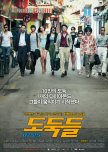
Too crowded
The Thieves feels like a Korean take on the Ocean’s series. If I’m being honest, the plot is very messy and doesn’t allow for good storytelling. Many scenes seem designed only to showcase the cast rather than move the story forward.Sometimes having a huge, star-studded cast doesn’t guarantee success, and this movie proves that. I found it chaotic and hard to follow, and it often felt like a collection of famous actors sharing the screen instead of a cohesive story.
Individually, the actors are unbelievably talented, and they’re honestly the only reason I gave this movie a 6/10. But even their performances can’t fully save it. The poor execution and weak plot drag everything down.
In the end, despite the strong cast, I don’t think this movie is really worth watching.
Was this review helpful to you?

This review may contain spoilers
Not what you expected
This was a really sad movie—but it also made me say the biggest “woahhhh” ever. If you go into this film without reading the plot, that will probably be your exact reaction too. Because of that, I won’t say much about the story at first. I’ll just say this: it’s a good movie, very unexpected. I thought it would be uncomfortable to watch, but instead it was much sadder and more emotional than I imagined.I’d definitely recommend watching it if you’re curious. And if you want to know more details, you can keep reading.
*Spoilers below*
The story follows an unemployed art school graduate who unexpectedly finds work as a maker of sex dolls. He actually majored in sculpture, which makes the job feel less random than it first sounds. Under the guidance of his mentor, Kinji, he helps mold flesh that can produce tactile sensation. Kinji suggests using a human cast to improve realism, and they advertise for a model under the excuse of creating breast prosthetics for “medical purposes.”
That’s how he meets Sonoko.
What surprised me most is how their interactions are completely devoid of lust. Instead, their sessions are filled with awkward sweetness, almost like shy teenage romance. Eventually, the two get married, and the movie shifts its focus to their married life. We watch as Tetsuo works late into the night, pouring all his energy into creating happiness for others, while slowly neglecting his own wife and marriage.
A large part of the film reflects on harsh aspects of Japanese work culturehow the excitement of marriage slowly fades into routine, and how couples can start to feel more like roommates than partners. The warmth that once existed is gradually replaced by distance and silence.
One thing I really appreciated is how the movie approaches the topic of sex dolls. Instead of portraying it in a lustful or provocative way, it focuses on the technical and artistic process behind their creation. Learning about the craftsmanship and production was genuinely interesting and completely unexpected.
The contrast is what really stayed with me: the cold, strange machinery and rubbery mannequins set against a story filled with quiet sadness and very human warmth. It’s an unusual topic, but the emotions are deeply relatable.
This movie surprised me in the best way—and emotionally wrecked me more than I expected.
Was this review helpful to you?
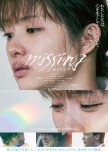
This review may contain spoilers
Contains Spoilers
Missing is a Japanese film about a six-year-old girl, Miu, who disappears while walking back home. What makes this movie stand out immediately is where it chooses to begin. Instead of focusing on the kidnapping itself, the story starts three months after Miu has already gone missing. By then, the shock has settled, routines have returned, and the tragedy has become something the family is forced to live with every day.
The film gives us a perspective we don’t often see in kidnapping stories. Rather than dramatizing the moment of loss, it throws us into the quiet aftermathwhen the case is no longer breaking news, when hope and despair coexist, and when grief becomes almost chronic. Life continues for the world, but not for the people directly involved.
We are shown multiple perspectives, and they depict human emotions in an incredibly honest and uncomfortable way.
Miu’s mother, Saori, is portrayed as emotionally unstable and deeply desperate to find her child. She is consumed by guilt for letting Miu walk home alone that day so she could attend a concert by her favorite boy band. That guilt follows her everywhere, amplified by cruel and malicious online comments that constantly remind her of her “mistake.”
Saori is a fascinating and painful character to watch. She moves through layers of emotiondesperation, hope, anger, resentment, guiltand sometimes she appears almost “crazy.” But the film makes it clear that this is not madness; it’s grief in its rawest form. She struggles to understand why others, especially her husband, don’t grieve the way she does. She is willing to do anything, push anyone, endure anything for Miu’s sake, and she can’t accept that others cope differently. At the same time, there’s a part of her that wants someone especially her husband to blame her, because blame might give her something solid to hold onto. She never rests. Every second is torture. Through Saori, the film shows us the overwhelming and conflicting emotions a mother lives with in a situation like this.
Miu's father, Yutaka, is a more passive figure, contrasting with Saori's frantic efforts on behalf of Miu. He struggles to express his desperation, illustrating another aspect of grief that the film aims to convey the internal suffering that can be difficult to articulate, rather than outward expressions like shouting or crying.
Alongside the parents, we follow Sunada, the reporter covering the case. He faces pressure from the TV network to sensationalize the story, to “add spice,” but with no leads and no progress, there is very little he can do. Sunada wants to believe he has integrity, that he is showing reality rather than chasing ratings. Yet he is also fighting an internal battle—watching younger colleagues rise in their careers by bending the truth, while he remains stuck.
What makes his character compelling is that the movie doesn’t paint him as purely right or wrong. While he claims he wants to help the family, we slowly realize that part of him is also trying to help himself. He pushes the parents at times, crossing emotional boundaries, and eventually he is forced to confront the uncomfortable truth that maybe he was lying to himself about his intentions all along.
The story also introduces a possible suspect: Keigo, Miu’s uncle and Saori’s brother, who was the last person to see Miu and allowed her to walk home alone. Everything initially points toward him, making him one of the most intriguing characters in the film. Layer by layer, however, the movie reveals the truth about him, challenging our assumptions and showing how easily suspicion can destroy a person.
Beyond its characters, Missing makes a powerful statement about society. These cases may capture public attention for a while, but eventually they fade away. People move on. The news cycle moves on. But the parents don’t. They remain trapped in a nightmare that never ends. From the outside, it can even start to look unreasonable that they “can’t move on” and if we’re honest, most of us have been guilty of thinking this way when we’re not directly involved. The movie forces us to confront that uncomfortable reality: the gap between public reaction and a parent’s lived experience.
As the film progresses, we see how support slowly disappears. The people who were once actively helping begin to fade away, leaving the parents increasingly alone.
It’s a deeply emotional and heavy movie. The ending wasn’t what I wanted, but maybe it was what we needed. Not all stories end with answers. Not all pain is resolved. Some losses don’t end you simply learn how to live with them. And that lingering feeling is exactly what Missing leaves you with.
Was this review helpful to you?

You may as well book in for therapy before watching this movie !
**Trigger Warning:** If you're considering watching "The World of Kanako," tread carefully. This film is devoid of heroes, presenting a grim tapestry woven with deeply flawed and reprehensible characters. It showcases humanity at its most grotesque and twisted, featuring a multitude of disturbing images that can be profoundly unsettling. I strongly advise you to think twice before diving in for the sake of your mental well-being.The experience left me utterly speechless for days, and four years later, the visceral shock and feelings of unease continue to haunt me. The darkness of the narrative escalates relentlessly, plunging into depths that can only be described as harrowing.
This movie is a relentless portrayal of abuse in its most explicit forms, pushing boundaries that many may find difficult to stomach. But despite its sickening nature, I must acknowledge that the film excels in storytelling and acting. If the filmmakers aimed to illustrate the depths of human depravity and the twisted realities of our world, they succeeded with remarkable intensity, leaving me utterly shattered.
Nana Komatsu delivers an astonishing performance, and it's hard to believe that this is her debut film! Watching it was a profoundly challenging experience, but undeniably impactful..
Was this review helpful to you?

This review may contain spoilers
Type of romance I don't understand
I'm not a big fan of teacher-student relationship movies; they are wrong. However, in this one, I appreciated that the teacher managed to keep his distance, even though it was still disturbing that he pursued the student. It’s a type of romance I don’t understand. I could accept it if the characters were university students, but in a high school context, it feels really strange.Additionally, the way the story unfolded felt childish. If I were 14 or 15 years old, I might have understood it better, but watching it as an adult made it seem quite irrational. Overall, I'd rate it no higher than 6/10. Some of the cinematography was really nice, but the story itself was lacking. That said, I have seen worse stories featuring similar relationships, so I would say this one is somewhat decent.
Was this review helpful to you?

This review may contain spoilers
Good but could have been better
Hierarchy now I don't know why so many people have rated this so low. Is it extraordinary? No, I don’t think so. Is it terrible? No, I don’t think so either. I think this drama was good, could have been better, and I think you really need to watch this to give a verdict.In terms of storyline, it’s not new. A rich school, scholarship poor kids being bullied and the whole school being controlled by rich families and with controversies and all, it's such a repeated topic. However, I would say aesthetically I really liked this. The classes felt more luxurious and much more high-end compared to some other schools, and it really shows the difference between the elite and normal students from the color of the ties to the special classes.
The buildings gave me major Harry Potter vibes and a bit of a hotel feel. It looked like a prestigious school no normal person could go into. So the idea of the elite was well presented.
Spoilers***
In terms of the characters, Jae Yi and Ri An are actually nice, and they have heart-breaking stories. You can see their love is very strong. Hera and Woo Jin are also complicated kids, but the four together are not terrible; they are not directly doing things, but they are involved as bystanders or solicitors.
Character of Ri An I did like the actor and his acting. I think he was good, and he was consistent throughout, and I enjoyed what he did.
As Jae Yi, well, I recently saw this actress in Our Universe, and honestly, I rated her acting 0/10 in that drama, so when she first appeared on the screen, I was worried. But I must say she did unexpectedly really good playing the part of a cold, emotionless character, and even the emotional parts or scenes with Ri An were sweet and lovely, so I feel puzzled by her work in other dramas. Maybe this cold, emotionless action might be her thing.
Now for the actress who played Hera, I really enjoyed her. I think she will make a great villain in future dramas, and I think she brought a lot of interest and spice to the story.
Kang Ha, I like his acting and all, but he did feel confusing. He went there to take revenge on his brother, but then he was hesitant because of Jae Yi, and I felt like there was no tension between them and it was mostly him. It felt like his character lacked a bit of consistency from the beginning to the end.
The main character who was behind the anonymous messages, his character was puzzling. We didn’t get any backstory: why he started, what was the reason, and what they showed was not strong enough, and also his tie to Kang Ha’s brother felt weak. I felt like his character did not get enough backstory although he was the mastermind behind it all and felt like it was thrown there and lacked really a lot of backstory.
Overall, I feel like most parts of the story were cut, like scenes were missing, and left to the imagination, and it’s really annoying, especially when they cut off important scenes. This is why I do not like Netflix-backed K-dramas; they really ruin it. An episode is 1 hour 17 minutes long, but 25 minutes is about the credits.
Overall, I would say the drama is good, but it has a good setting and interesting characters. All the elements are present, but the storytelling lacked a lot, and there were inconsistencies. I don’t know if they actually filmed scenes and cut them to adapt for Netflix style, but I really felt like a lot was missing in between, which made the overall experience lacking.
It's good, but there are things that could have made this into a 10. There are interesting elements, and the feeling of the rich elite was nicely done but lacked cohesion and connection between scenes. A lot of characters were left, like what happened to Jae Yi’s brother? Did Kang Ha graduate as the top student? What would happen between Woo Jin and Hera? Will Ri An and Jae Yi meet? What happened to the students once the hearing happened? Did they get punished?
I enjoyed this, but it lacked a lot, but it’s not as terrible as many say. I would definitely rate this a - 8 for sure.
Was this review helpful to you?

Everybody should watch this !
I am so mad at myself for not starting this drama earlier! why didn't I listen to those who suggested it to me? I am blown away by how amazing it was! It’s so sad that the themes of bullying are the most realistic. Honestly, the only flaw in this drama was that it had only 8 episodes, each about 35 minutes long, which felt criminal! Ten minutes of credits deserve a red card (if you catch the pun). I really hope to see Sun Ho in the second season. As for the action, it was top-notch, and this actor is captivating! His eyes convey so much; they speak louder than his words! That's some incredible acting.Was this review helpful to you?
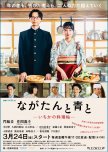
Feels Like a Deep Exhale!
Have you ever heard of *iyashikei*? It’s a Japanese genre often translated as “healing-type” stories that focus on peaceful daily life, calm environments, and emotional restoration. That is exactly how I would describe *Kitchen Knife and Green Chili Pepper*. This drama doesn’t rush you. It doesn’t overwhelm you. It gently invites you to slow down.Plot**
The story follows Ichika, a 34-year-old divorcee and the daughter of a prestigious Kyoto ryōtei (a traditional high-class Japanese restaurant). She works as a chef in a Western-style restaurant, while her family’s historic ryōtei struggles financially. In an attempt to save it, the family plans to marry her younger sister into the wealthy Yamaguchi family. But when her sister elopes with the man she loves, Ichika is suddenly asked to step in and marry 19-year-old Amane Yamaguchi instead. At the same time, the family’s financial crisis deepens, pushing Ichika to confront both tradition and survival in order to protect her family’s legacy.
RYŌTEI**
To fully understand this drama, context is everything. A ryōtei is not just a restaurant; it is a deeply traditional, refined space historically reserved for elite gatherings, sometimes involving geisha entertainment and discreet political or business meetings. In these establishments, the kitchen was traditionally ruled by male chefs, while women often the wife or “okami” of the house served guests in elegant kimono. The role of the women in kitchen is very important to highlight because, although women were expected to cook at home, they were long excluded from professional culinary roles. It was never heard of seeing a woman cooking in restaurant was almost an insult to tradition. This gender dynamic sits quietly but powerfully in the background of Ichika’s journey.
Post War**
The time period also matters. The drama unfolds in post–World War II Japan, during a time of rapid modernization. You see the tension between tradition and change everywhere in clothing, architecture, and even in food. Ichika often wears Western-style outfits, while her mother remains in traditional kimono. American soldiers appear in certain scenes, holding meetings at the ryōtei showing a new modern world next to close traditionally driven society. There’s a subtle layering of cultures: old Japan, new Japan, and Western influence, all coexisting, sometimes clashing.
Food is the true heart of this series. The reason it feels like *iyashikei* lies in its pacing and cinematography. It is slow, deliberate, and comforting. The camera moves slows, at times it lingers on Ichika’s hands as she chops, mixes, and prepares ingredients. You find yourself unconsciously relaxing, just watching her cook. The dishes are beautiful blends of traditional Japanese cuisine with Western influence, reflecting the transitional era of the story itself. Also the attention is focused on the subject without the backdrop being too overwhelming, but appears more calm and comforting.
But cooking here is more than sustenance. It is intentional. It is emotional. Food becomes a language a way to celebrate, to remember, to apologize, to heal. There’s something deeply soothing about how the drama frames these moments. The soft lighting, the focus on textures, the steam rising from dishes, the hydrangeas in the background, the quiet alleys of Kyoto everything feels magical without trying too hard. It’s a visual feast not only for the eyes but for the soul. At times, it's feels like we are in Kyoto, just glancing though a window to find Ichika cooking in the kitchen, it gives homey feeling, the sort of familiarity that make you happy.
I genuinely felt like this drama reset my nervous system. It moved me from tension into stillness. Watching it felt like taking a deep breath after holding it for too long.
Even the end credits reflect this calm intentionality. Instead of random images or a black screen with names rolling, the camera often returns to Ichika in the kitchen sitting quietly, thinking about a recipe, tasting, reflecting. It feels like we are standing outside her kitchen window, gently observing her world.
With a second season coming this year, I truly hope they preserve the same softness, the same visual poetry, and the same healing energy that made this drama so special.
Was this review helpful to you?


