K-Drama

This review may contain spoilers
Surprised to find a crisp interpretation that make it stand on itself
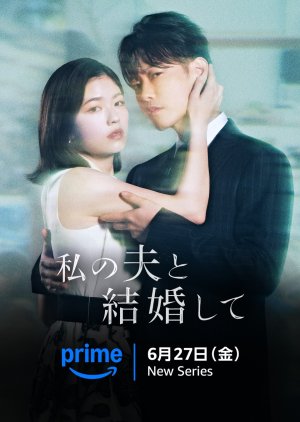
I had pretty low expectations—remakes seldom live up to their originals, and I was bracing for an impersonation of Marry My Husband starring Park Min‑young. But after seeing Fuka Koshiba (as Misa) in a few feel‑good dramas, I wondered how she would handle the more cold‑blooded FML role. Incredibly, the writers leaned into her natural brightness and warmth instead of molding her into a terse avenger, and it works beautifully. The show skips the dramatic showdowns that the Korean version leaned on and instead delivers its revenge arc more subtly and tightly, all within just 10 episodes—about two‑thirds the length of the original—for efficient pacing that avoids padding.Storywise, it follows the same time‑travel/revenge premise, but the boyfriend is sleazy here, not really making you hate him like how it is in the korean version, and the best friend is more cunning, adding layers that feel sharper in Japanese context. Misa’s transformation is well-balanced: now she plots with more emotional nuance rather than cold cruelty, which suits Koshiba’s strengths in soft transitions and hidden grit.
Acting across the board is solid, but Koshiba and Satoh’s chemistry truly surprised me—they build tension through looks and understated moments instead of shouting, making their dynamic more grounded than the emotionally magnified original pairing. I think that Koshiba “steals the show … winning praise for her natural acting and emotional depth, even surpassing Park Min‑young”, making Misa felt more relatable and self‑aware rather than perpetually hurt.
Music in the drama isn’t flashy—nothing memorable stuck with me after the episodes—but it serves the mood: supportive, understated, occasionally sweeping during emotional beats.
I found the show surprisingly rewatchable. In ten tight episodes I kept catching little character beats or the intentional foreshadowing and cultural touches (Japanese office norms, tea‑room moments) that reward a second viewing.
Was this review helpful to you?

Surprisingly good!
I’m not sure what prompted me to watch this. I’ve not seen the original kdrama nor read the manhwa. But I saw it on Amazon Prime and thought, sure, I’ll check this out. And I’m glad I did! It was a fun show. While it was a “revenge” type drama, it really also was about Misa living her best life and finding happiness. She starts wearing clothes she likes, she gets a good haircut, she eats amazing looking food, she finds new friends, and gets rid of the toxic people in her life. So while the revenge plot was fun and it was cool to see how Misa manipulated things so that Reina married her husband, it also was just great to see Misa be happy. The show did not drag, nor did it feel rushed, which I found a little surprising given that the original was 16 episodes. I’m not sure what they changed, but whatever they did worked. I enjoyed all the characters, even our delightfully evil ones. Everyone did a great job acting, especially the one for Misa’s role. The plot twists and turns were fun, and there were funny moments and more melodramatic moments that were well-balanced. Overall, I had a good time watching this show!Was this review helpful to you?

marry my husband : japan aka what an adaptation!!
when i started watching this dorama, i didn't think i'd end up loving it so much, perhaps even more than the korean adaptation. the japanese version had no business being THAT good. its creators took the original idea, gave it a cosy japanese coat and sent it into the world with a style. and iam glad they did!! the execution of the story feels raw yet fresh (plus there are no unnecessary twists at the end to make it confusing). character-wise, not only is misa incredibly badass and owns her story, she feels like a complex human being, and her synergy with wataru aka the greenest yearning man in the world, is top-notch!! the chemistry is sizzling and the vibes are immaculate. plus even the villains make sense the way they are portrayed, they let you understand their motivations without feeling any need to excuse their actions. and don't even get me started on the supporting cast, i love them so so so much (miku and yuto shipper for life)!!marry my husbad simply draws on the art of a good adaptation—it takes the original story and makes it its own thing while retaining the utmost respect. definitely worth the watch!!
Was this review helpful to you?
This review may contain spoilers
Satoh Takeru...enough said
Personally, I liked this version better than the Korean version for a couple of reasons:- Only 10 episodes
-Satoh Takeru
-good chemistry between leads
-Satoh Takeru
Offhand, I can't remember a role that Takeru played where he smiled as much as he did here. And believe me, that's worth the price of admission! He's got that cold, unapproachable thing down to a science, but when he smiles it changes everything. I LOVED how he had liked her for so long. It was sad when he was talking about being an extra in the story of her life, blurred in the background, with no lines to speak.
This version gives you all the information without all the convoluted stuff that the Korean version used to bloat it out to 16 episodes.
I thought the 2ML was really overacting through the whole thing and that threw me off.
I would have liked to see a wedding.
But I'm so glad I watched this, especially after the Korean version.
Was this review helpful to you?

 1
1"When your dignity is trampled on, being angry is the right response"
It has been a long, long time since I’ve enjoyed a romance drama like I did Marry My Husband: Japan. I’ve not watched or read any of the other versions, so my review will be solely focused on this one. Koshiba Fuka and Satoh Takeru were delightful in the lead roles. While there was the supernatural element and business side, revenge and a modicum of suspense, the drama excelled in developing friendships and characters which I quite enjoyed.Kanbe Misa is suffering from terminal cancer and to add salt to the wound, her only family in the world turns out to be a traitorous best friend and a murderous husband. She wakes up to find herself 10 years prior, the only one aware of her time jump. In her second life, she keeps bumping into handsome “Noble Son” Suzuki Wataru. Faced with her empty life and disloyal loved ones, she has to scramble to figure out what is going on and even more, can she change her future?
Koshiba gave a wonderful performance as the doormat Misa and also as the woman whose courage and confidence begin to steadily grow. I found myself highly invested in her journey and emotions. At her core she was still the kind Misa, but also learned through Wataru that she’d been a trash magnet. It was okay to have a few thorns to ward off toxic trash. Slowly, she came to realize that there were good people around, people far more worthy of calling friends and that she was worthy of being theirs. Misa could be a dim bulb when it came to putting facts together, bless her heart. In the past her vision had been myopic. She’d not seen the gorgeous student who sat 10 feet from her every day in the park or on the many occasions at work. In the present, hints were dropped with the subtlety of a sledgehammer that she could not add up. While Misa developed a backbone and confronted problems head on, she also failed to use her words on occasion. Someone who had better communication skills…
… was the socially awkward Wataru, whose failure to be brave had led to disastrous consequences. Satoh was lovely as the secret science nerd. At first, I thought he was going to be one of those crass cold male leads, but his acerbic tongue was short-lived...thank goodness. Wataru refused to live with misunderstandings and asked the right questions to get everything out in the open. He was a bright green flag whose loyalty was unwavering. Like Misa, his brain wattage had a tendency to dim at times as well, but like her it made them relatable.
The supporting cast was a good crew. Shiraishi Sei as the sabotaging best friend and Yokoyama Yu as the useless adulterous husband were perfectly vile. Though the script tried to make them a tad sympathetic, the characters were awful in two lives which won them zero sympathy from me. They blamed all their problems on others, the opposite of Misa’s job of assuming the blame. I loved the friendships that developed between Miku, Sumiyoshi, Yotu, and Misa. They looked out for each other, comforted and bolstered each other, and celebrated the small wins in life along with the big ones. The changes in Misa’s life changed theirs for the better, too, showing that confidence and loyalty are contagious. Instead of living in misery many of the characters came to the conclusion that taking chances, even starting over when necessary, had the potential to lead to greater gains and happiness. Life is short, make the most of it!
Misa learned that not only had Reina and Tomoya been lying to her but that the far graver sin was that she had been lying to herself. The truth truly did set her free. And when changing the polarity of her magnet she became a treasure magnet, attracting love and true friendships. Not a bad thing when handsome, kind, Wataru (Satoh!) was around. The two little turtles might have been slow in the romance department but made the journey and scenery worthwhile.
29 July 2025
Was this review helpful to you?
Marry My Husband: from Korea to Japan, from (post)makjang to thriller
Truly another masterpiece and award-winning work from director Ahn Gil Ho, following Stranger (Secret Forest) and The Glory.The Korean version of Marry My Husband leans toward a post-makjang revenge story. Meanwhile, the Japanese version has a suspense/thriller undertone. It perfectly fits my taste and matches my expectations of director Ahn Gil Ho.
I think this is the first East Asian drama (K-drama, C-drama, or J-drama) in 2025 that, as it reached its final episodes, I watched with such intensity that I reflexively clapped—and even empathized with the villain.
The character design for each figure is excellent; every character has a clear motive and logic. The cinematography is both beautiful and thrilling, especially in the final episode.
Why did I sympathize with the villain? Because Marry My Husband (Japan) portrays so well the story of a "neglected" child.
Just like in Stranger, director Ahn Gil Ho explicitly shows the cycle of violence and crime. Reina, who was neglected; Tomoya, who was overly pampered within a patriarchal culture; and Wataru, whose opinions were constantly dismissed by his grandfather—all are roots of destructive traits in adulthood: being manipulative, narcissistic, and lacking courage. Only Misa was raised with love & kindness.
Unlike the Korean version which focuses on revenge & punishment, Marry My Husband (Japan) is about how humans “powerplay” with fate—including the fate of which family one is born into—so that we can still live as mature adults, living well & by virtue as human being. Or we just want to blame the situation how we live, then weaponize it to justify our bad & evil behaviour. We become similar toward someone we hate: the bad family. We become reflection of bad parents/grandparents. We dont fight, we dont change, & just maintain the evil cycle. And in that situation, we lose completely to fate powerplay.
Was this review helpful to you?
Amazing acting, impressive production, overall entertaining
**updated after finishing the drama**This was tightly paced and well done except for some blips in the later episodes. Overall the production value of this drama is so great.
I am loving this drama! Both leads are doing an outstanding job. I did watch the Korean version first and I do compare the storyline often, but I am also enjoying this version thoroughly. There are some minor changes (and we can anticipate more since this is only 10 episodes while original was 16) but changes so far works for the japanese adaptation.
I am a huge Satoh Takeru fan so I started this just for him but Koshiba Fuka has also done a good job. Even the second leads/villains are good so far.
The Soundtrack is also super fun and I am loving the Japenese/Korean collaboration with the director and music. Definitely gives the drama a different feel compared to typical jdramas.
Was this review helpful to you?

To love and to be loved are different things.
Do you remember that song from Eurovision 2025, where the singer shared this deep life philosophy?“Life is like spaghetti —
Hard until you make it.
No stresso, no stresso,
It's gonna be espresso.”
Well, I’m pretty sure the main character of this series took that advice to heart. She made herself a double espresso macchiato and told the annoying ones dragging her down that this time, it wasn’t going to happen. Because life is too short to be poisoned by people who don’t respect you—especially when you can sip espresso in peace, surrounded by good company… and the person who takes care of your turtle.
Something like that, just with more dramatic flair and a background ballad.
First:
I haven’t seen the original, so I’m not burdened with comparisons or expectations.
Second:
It’s a series about love, friendship, and the big question:
What would you do if you had the power to go back and change the future?
That’s not to say it’s all sunshine and feel-good moments. It was sad and lonely at times, but also fun and romantic.
I really loved the two main characters.
Wataru especially stood out—he’s not a man of grand declarations, but one of quiet actions. And sometimes, that’s even more powerful. He was kind, thoughtful, a little awkward, but so genuine. He gave Misa exactly what she needed: time, space, and a safe place to find herself.
And Misa needed exactly that. To grow up, discover her strengths, and learn how to tell the difference between real friends and people who are just… there.
I liked watching Misa grow, and how her love for Wataru blossomed. She remained kind and gentle—but only to those who truly deserved it.
And most importantly, she finally learned to love and respect herself.
I also loved that the story had more going on than just romance—the workplace scenes, the meetings with friends, even her colleague’s family.
It was a soft reminder that fate doesn’t disappear—it simply changes direction.
As for the ex-girlfriend and the ex-fiancé?
They got the justice they deserved—very Korean (crossed out) Japanese drama style: quiet, graceful, and with no need for a dramatic monologue.
The new friendships reminded me that true connection is mutual. It’s built slowly, carefully, with effort from both sides. And if that effort’s missing?
That’s okay. Just walk away.
Honestly, I don’t have much bad to say about this series.
I just didn’t connect as deeply as I thought I would.
Did I like it?
Yes.
Did I love it?
Not quite.
That’s why it’s not a 10-star for me—more like a solid 8,5.
The romance was there, sure, but I wanted it to burn a little brighter. I expected more spark.
And… that’s it.
I’ll take that espresso macchiato now.
I’m not kidding
Was this review helpful to you?

❤ 私の夫と結婚して❤
This is one of the best dramas I have watched this year and I really loved it. The protagonist Kanbe Misa who is too kind and always puts others first believes in her best friend and husband to continues to do her best but she loses her life due to their betrayal. In the first life she loses her life through death of her friend and husband who betrated her with the worst scenario. One day she suddenly realizes that she has traveled back in time to 10 years ago, she wakes up and re-lives the second life which then she plans a revenge into her friend and ex-husband. She then meets her work manager Suzuki Wataru who she falls in love with but he has known her since a little kid. He has taken care of the turtle [ kamekichi ] which is the first friend of kanbe-san. Suzuki bucho has always been next to Kanbe-san for a long time and in the end they finally get married ❤❤❤Was this review helpful to you?

Not Your Typical Revenge Drama: A Quiet Story About Healing and Second Chances
IF YOU’RE SKEPTICAL ABOUT JAPANESE DRAMAS OR WORRIED THIS WILL BE ANOTHER OVER-THE-TOP REVENGE TALE, WATASHI NO OTTO TO KEKKON SHITE MIGHT SURPRISE YOU.This compact 10-episode series isn’t about loud confrontations or cliché payback. Instead, it’s a subtle, introspective journey centered on self-growth, forgiveness, and the courage to take new chances in life.
A WINDOW INTO JAPANESE CULTURE:
The drama reflects the quiet emotional restraint often found in Japanese storytelling. It explores deep themes like regret, guilt, and personal change, not through explosive scenes, but through quiet conversations, small gestures, and meaningful silences. If you're new to J-dramas, this is a gentle, reflective introduction that balances emotional realism with cultural nuance.
ACTING:
The cast delivers nuanced performances that pull you in, especially the leads whose chemistry feels natural and restrained rather than forced. They carry the emotional weight with believable depth, no melodrama, just real human moments.
DIRECTING & VISUALS:
Director Ahn Gil-ho (The Glory) brings his signature subtlety here, using soft lighting and careful framing to create intimate, emotionally rich scenes. The visuals never distract; they enhance the mood, guiding you gently through the characters’ inner struggles.
SCRIPT & PACING:
With only 10 episodes, some plot elements get trimmed, and the story feels tight, sometimes almost too tight for deep emotional investment. But this brevity works in the show’s favor, making every scene count. The script smartly focuses on character development rather than convoluted twists.
SHORTCOMINGS:
The limited runtime means some storylines and character arcs get less development than they deserve, leaving a few threads feeling rushed or underexplored. If you prefer intense drama or complex plot twists, the pacing might come across as too quiet. Viewers who enjoy deeper immersion may also find it challenging to fully connect in such a short span.
WHY WATCH:
If you want a drama that’s more about healing than hurting, more about quiet courage than loud revenge, and if you appreciate thoughtful storytelling wrapped in beautiful visuals and strong acting, give this a chance. It’s a breather from typical tropes and a reminder that sometimes, growth is the best kind of payoff.
QUICK TAKE: Highly recommended if you want something compact, emotionally honest, and quietly powerful without the usual drama fireworks. Actual rating: 8.5, bumped up to a 9 because this is how you wrap up a story right.
Was this review helpful to you?

My favourite version of Marry My Husband
This drama isn't just a drama but is also an art because tell me why the hell are the aesthetics and cinematography so dang beautiful??!?!?!?!?! But i love the female lead! Not only is she realistic but also relatable, more so than the Korean version. It's interesting how they are so similar yet so different and both are great in their own way even though I like the Japanese version of both the male and the female lead better (just my personal taste). The story flows beautifully and everyone gets their karma! Amazing drama!Was this review helpful to you?

Better than the Korean Adaptation
Completely different style than the Korean version. I did like the FL's OTP glamourous version in the Korean version, but I didn't feel the pairing of the ML was strong. In that sense I felt that the Japanese version did a better job at pairing. I am biased though because I love the ML Satoh Takeru ever since Rurouni Kenshin series. In any rate the FL also felt more real, not OTP. Even though it's the same story, it felt different. If you didn't like the Korean adaptation, you might still like this adaptation because it's a different vibe.Was this review helpful to you?