News


 1
 1
 1
This review may contain spoilers
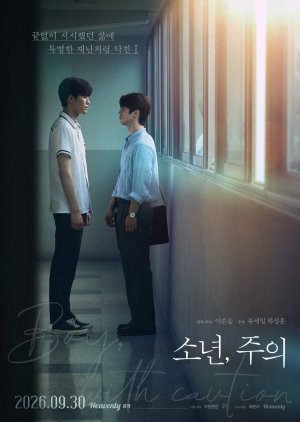
"Have you ever misinterpreted someone's kindness?"
The core of the drama were the characters and dynamics between them, no one can deny that. It was all about how their relationship developed, why, and where it led them. What’s beautiful about this drama is the fact it made me care not only about them as a couple, but also them as individuals. Putting aside the romance, it was a story about people, their traumas and how they try to heal from them.Starting with Han Gi Woo - a character that was struggling with his identity, be it as a teacher, or as a human being. Attentive, caring for the students, trying to help them, not ignoring their struggles - just enough to show he cares, but never fully committing, balancing right on the line. He struggled deeply with what he expected from himself, and what other people expected from him - since these were often mutually exclusive.
No matter what the situation was, he tried to react in the most normal way. But what is normal? He did not know. Hence he did not really react. So he became "dull" - he couldn’t react as himself, but he also did not know what other reactions to give.
“Turning a blind eye, pretending not to know, acting like everything was fine… I realized I was way too cruel”. Cruel to other people, for always keeping them at arm's length, but most importantly, cruel to himself for ignoring what he thought, felt and wanted. Until he reached a breaking point and saw him take a step forward after staying still his whole life.
Then we had Lee Hyeon Jae - a child so deprived of affection, that he was willing to cause himself harm, just to receive the care. In a situation when everyone pretended he did not exist, his wounds did not exist and his pain did not exist - Gi Woo noticed him. That was enough. He was emotionally captivated by Gi Woo’s attention.
"I can handle myself, so just stay out of it"
"Then don't give people a reason to worry"
For Hyeon Jae it's something he did not experience - someone being worried about him, someone being concerned about his well being. The feeling of "I matter to someone" when your whole life you felt invisible, when people told you to act like you don't exist. When everyone pretends you don't exist.
What I found the most interesting is the fact that Gi Woo not only saw Hyeon Jae and paid attention to him, he also led Hyeon Jae to pay attention to himself. He forces him to think about his future, reasons for his actions. Because it's not only other people who ignored Hyeon Jae. What's worse, he ignored himself. Sadly, he was never fully able to set himself free of that thinking.
"Have you ever misinterpreted someone's kindness?"
"Yes. I think I'm going through that... right now"
I loved that he was aware of the fact he was reading too much into it, but he also desperately wanted to convince himself that what he saw, felt and interpreted was the reality. No matter what Gi Woo felt, he decided to read it in a way that he felt was right, that satisfied his wants, but when the feelings finally became mutual, that’s when he took a step back - unwilling to push forward anymore. The fact that despite mutual feelings Gi Woo still rejected him was what made him give up.
Their journey, as heartbreaking as it was, was also painfully well executed.
Gi Woo was forcing himself to stay in line all his life because of his mother, so he literally lost the sense of who he is, and that description of being "dull" became both the way he navigated through life without issues, but also the thing that created problems for him - and he hated it. But Hyeon Jae came and told him that he does not think he is dull, that he sees past that.
"This is the first time anyone's ever treated me as special. You're special to me too, sir" - on one hand this is something Gi Woo wanted to hear. On the other hand it was something he feared hearing. "I'm nobody special anyway. What I'm saying is, don't read too much into it.”, "What I think is my business"
Hyeon Jae was not putting a foot in the door, he was kicking the door open with full force and not backing down. And that's what got to Gi Woo. Someone not letting him stay in that dull state, someone who told him he is special no matter how many times he denied it.
With Hyeon Jae, being abused was one thing, but he was being ignored - that's the motivation behind his feelings for Gi Woo, because Gi Woo did not pretend like he does not exist, he noticed him and thought about him. He did not let him just leave when there were issues, but rather forced him to think about them and about himself. Gi Woo literally made him feel like he exists.
What started as just a misguided sense of being seen for who they are, that was being confused as love, developed into a real romantic feeling. I do think at first it was mostly a response to psychological and emotional deprivation they went through, but I also have to applaud the writer for clearly showing the contrast between what was happening between them, and how other relationships with Gi Woo’s students were structured. They were not the same. What they had was undeniably real.
As for the ending - extremely fitting and to some extent on brand with Hyeon Jae: will we stay in our delusion and assume they did meet in the future? Will we move to a more bittersweet ending of them living their separate lives slowly improving? Or will we dive deep into a hell fire of misery and assume Jeong Ha’s prediction happened and Gi Woo can only now live a life full of regret? Personally I live by the motto “staying delulu is the solulu” and in my brain they met on that bus stop in the epilogue. I do not accept any other ending.
On the brighter side, Kim Jeong Ha and Park Seong Won with all the miscommunication, confusion and teen angst, were able to pull through and set on the path of mutual feelings. I love how their “ending” was literally the beginning of exploration. The fact it ends on Jeong Ha giving Seong Won time to figure out his feelings - for me it was less about starting to like him, and more about accepting the fact he already does. They both cared for each other, they both loved each other and now they will slowly learn how to accept that and change the way they view the relationship.
The more I write this review the more I appreciate how well written the drama was, when even characters that did not have much screentime still felt distinctive and memorable.
Sure thing I hated Hyeon Jae’s father, Gi Woo’s mother, and the majority of the teachers. I felt some conflicting feelings about some students, the wife and Kim Ji Tae, but what’s most important - I feel like I fairly well understand these characters, I remember their personalities, motivations, scenes they were in. Each had at least one or two memorable moments I can point to. Even if they existed as a backdrop for the lead’s story, they did not really feel like props to me.
Aside from the characters, there were some themes and clever devices used for express them:
The use of the Amuna app as a storytelling mechanic deepens the understanding of the characters and their relationship. First of all, I need to say that there were some mistranslations happening: "Need to vent? Try Amuna Random Chat" - it should say: "Want to be honest" or "Want to be truthful" not "vent". And it perfectly matched Gi Woo's issue - he wanted to be honest and truthful with himself, but he felt like he did not know how. It's not about venting, it's about internal honesty. And this app was his tiny salvation where he could explore himself without the burden of any consequences. Where he did not need to keep the persona of normality. When he could express his thoughts freely.
And for Hyeon Jae, it was a kind bridge to connect with Gi Woo, to keep him in his life, to understand him better, to reach him. In some strange way they both achieved what they aimed for - Gi Woo wanted to open up to a stranger, and Hyeon Jae wanted to open up to Gi Woo.
The theme of abuse, neglect and the peace of ignoring the issues - all that presented through Gi Woo’s interactions with his co-workers. They disliked him, because he ruined their illusion of normalcy and easy ways out. Hyeon Jae became their answer to any troubles. They deluded themselves into thinking that as long as they push through the last semester there will be no victims - they will be able to move on and Hyeon Jae will graduate, as if the abuse would stop with him leaving the school.
But Gi Woo couldn’t make himself pretend like he did not see anything. And it bugged them. And the more he cared for the students, the more involved he was, the more their perfect picture was ruined. And that was one of the reasons Gi Woo left - he knew the truth and could not pretend like it does not exist. The fact he changed his path from being a teacher to wanting to be a career counselor was beautiful - someone who cares that deeply should not work in a place that punishes you for caring and pushing students towards improvement.
To the acting - I kind of want to cry. Everyone, and I mean everyone did an amazing job. Not only were the leads perfectly cast, but all the supporting characters and even the background actors delivered what was needed to make this story feel real.
Ryu Se Il with his restrained emotions hidden behind the micro expressions, that only exploded by the end of the show - that breaking down crying scene had so much impact, because we witnessed how much he was holding it all in throughout the show. Comparing it with how raw and exposed Ha Jung Hoon’s feelings were, how you could feel every tear, every shift of the eyes, every sad smile. Then we have Lee Jung Chan as Kim Jeong Ha - believable as the bully he was forced to be by the circumstances, but also a vulnerable teen who cannot lean on the friend he like, and Jung Si Wan with that fear in his eyes every time Seong Won had to let Jeong Ha go.
As for production, I can imagine they had a limited budget, but it truly does not feel like it. Great use of light and shadows to create more depth in the shots. Extremely well done make up for the injuries and bruises - that also was consistent with the time passing. Set design that did not look empty - spaces that fitted the characters and their personalities. And that intro. Second best right after Gray Shelter.
All that good things said, there were some details of the story I wish were explained/elaborated more. What did Park Seong Won do that Kim Jeong Ha’s hand got injured? Was Hyeon Jae locked in a mental hospital for 2 years after the drug issue at school, when they pretended he studied abroad? What happened to his mother? What was the Secretary’s deal - sometimes he was annoyingly cruel, sometimes it seemed like he was borderline on Hyeon Jae’s side, or at least feeling bad for him. I feel like some of these could literally get more closure with one or two lines of dialogue, so the vagueness felt unsatisfying. Honestly such minor issues taking into consideration the overall quality of the drama.
Overall, ending up on the mental list of my favorite BLs and short dramas. I just adore any project that makes me reflect on what I saw, want to discuss it with others, rewatch to check for details and better understanding.
Was this review helpful to you?

This review may contain spoilers
Dark, darker - a social study of koreas society.
First for all the fangirls: This is not a BL. There is nothing fluffy about it. It's just dark and darker. A story about loneliness, desire, abuse and insecurity and characters which felt real. When I read the creator behind "Grey Shelter" is doing a new project I was excited because she does not the "normal" stuff. After this series I await "Winter Season" (don't look for it on MDL because it's not there). (Not to be mixed up with the CBL with the overlong title or the TBL :))There are some main-characters: Hyeon Jae is between sides in school, either be bullied or the son of the chairman who's untouchable. He obviously has no friends because he is the son of "the chairman". His father is the devil in human form. The outside recognizes him as a powerful chairman who is always friendly with the people except his son. His "lapdog" is also a very dark man, subservient to his master, packing his son in the trunk/boot because his master said so. This devil uses his wife, Hyeon Jae mother, as leverage to force his son to do his bidding. He's really one of the most despicable characters we have seen on screen. We don't know why the mother is in the hospital but we can assume father went into a rage frenzy. He beats his son on a regular basis. What is even worse, the chairman is the school principal. And of course the beating started far back because he is older than his classmates because he was 2 years in a hospital.
The teacher Gi U, who was forced in a marriage by his mother which only brings him misery and depression. I also assume he is gay from the get go but has never aknowledged this to himself and the pressure from his mom does not help. He wants genuinely help all his students but he can't and parents/teachers are insinuating things which of course never happened.
The school is full of trashy teachers who don't give a rats ass about the students. The head of the teachers is just a puppet for the chairman, ignoring abuse and problems with other students. His mantra is "The chairman will fix it" even when the son is framed, because that is the easier solution for him.
While the story is short and only eight episode about 25 minutes each, we have something like a "side-couple" in this series. They had a fallout of sorts. While one (Seong Won) tries to connect again, the other (Jeong Ha) is keeping his distance or tries to avoid him completely. That cumulates in the most unromantic confession sceme I have ever seen. Jeong Ha has also money troubles because his grandmom is in the hospital (no universal healthcare in Korea) forcing him to do jobs which should never been taken. There is also some background story and a character who was expelled, drug abuses (mental doping) is also a recurring theme.
I won't spoil more of the story here, because this series is easily binge-watched, taking only around 4 hours. Production quality was very good, cinematography is perfect for the scenes, especially for the gloomy ones. All the lead actors do an incredible job and the rest of the cast is also very good. The "love" story is just in the background, but everything connects. Don't expect a fluffy happy end, but it's also not a sad one. The end is quite open-ended there is maybe a chance to get a 2nd season which I would appreciate. This is a very realistic feeling series, so everyone expecting the run-of-the-mill series should not watch this. Also a fair warning for people with mental issues, this series can be very depressing and disgusting. Regardless, it has my recommendation!
Was this review helpful to you?

Excellent drama! Despair Recognizes Despair
Just finished the drama and - wow.Boy, With Caution is the kind of drama that doesn’t need a long runtime to leave a deep mark. In eight episodes, it builds fully realized characters, explores loneliness, abuse, regret, responsibility, and the complicated ways people try to save one another, and never reduces any of it to easy answers. The romance matters because the people matter first. The acting is restrained and exceptional, the atmosphere is haunting, and even the quietest moments carry weight. I went into this expecting an interesting short drama and came out feeling like I had watched something genuinely special.
Ongoing reviews:
Halfway through and I’m completely hooked. The dark, melancholy tone, the loneliness, the despair that is so profound it has its own frequency, the being deeply misunderstood…all of it is amazing.
The teacher/student dynamic is concerning for the reason it appears - authority imbalance. Nothing excuses that. But keep in mind the student is 21-years-old. He is an adult. Again, that doesn’t excuse the power imbalance, but they are both adults.
Two episodes in, and Boy, With Caution already has me completely.
What hooked me first wasn’t the plot. It was the atmosphere. The music, the pacing, the expressions, the body language—especially Jang Ki Woo’s. Before the drama ever explains what is wrong in his life, you can feel that something in him has collapsed. He carries despair so quietly that he barely needs dialogue to communicate it.
And that becomes the heart of these opening episodes.
Jang is struggling with his own sadness, regret, loneliness, and the aftermath of his divorce, yet when he meets Lee Hyeon Jae, he immediately recognizes something familiar in him. Lee is surrounded by adults who either fear his father, protect his father’s reputation, or treat Lee himself as a problem to be contained. Jang does something much simpler and much rarer: he actually looks at him.
He notices when Lee is missing. He questions whether Lee really stole a phone instead of accepting the convenient story. He brings him food because he thinks he hasn’t eaten. He sees the bruises on his face and wants to know why they are there.
When Lee asks whether he is getting special treatment because he is the chairman’s son, Jang tells him no—he is getting special treatment because he needs it.
That line got me.
What makes their connection work so well is that it doesn’t feel forced or prematurely romantic. Right now, it feels like two people living on the same emotional frequency. Jang recognizes Lee’s despair because he understands despair himself, and instead of retreating into his own pain, he reaches toward someone else.
Lee, meanwhile, is beginning to realize that this may be the first person in a very long time who actually sees him as a human being rather than as the chairman’s troublesome son.
The story around them is already darker than I expected: abuse, school politics, drug rumors, violence, coercion, family secrets, and an institution more interested in protecting status than protecting a student. But the drama never feels melodramatic just for the sake of being dark. The emotional tone feels controlled, deliberate, and deeply sad.
I also appreciate that Lee is clearly an adult despite still being a high school senior. That matters given where the story is headed romantically, and the casting supports it rather than asking us to pretend a visibly older actor is a child.
I am only two episodes in, so obviously there is a long way to go, but these opening episodes are extraordinary.
The acting is subtle. The atmosphere is beautiful and heavy. The emotional connection already feels earned.
Was this review helpful to you?

When love truly hurts…it’s epic
Just from the mood of the characters, I can already tell this series is going to be emotional. What troubles our two leads…a 32-year-old temporary teacher and a 21-year-old repeat student?For one, viewers who didn’t do their research may immediately assume this is a story about pedophilia, but that’s a myopic reading that can’t see the forest for the trees. He is 21 years old. The real controversy here is the teacher-student relationship and the imbalance that comes with it…and perhaps a serious subject like this is exactly what should be explored in an open environment where honest discussion can happen.
But I think there’s something much deeper the writer wants to convey. Neither of these two has been able to move forward. Both seem anchored to their past by regret, and for me, the mystery isn’t simply whether they fall in love…it’s discovering what happened to them, what they’re carrying, and why they remain stuck in place.
With only eight episodes, there isn’t much room to wander. Even with all the supporting characters surrounding them, I expect the story to confront these issues quickly. Maybe the real question isn’t who troubles them…but what troubles them, and whether they can finally let it go.
And now with only two episodes to go…
This is not a story of love…Sometimes the hardest person to find isn’t someone who will love you…it’s yourself.
This isn’t even a romance in the conventional sense. Like River Phoenix’s character in My Own Private Idaho, it’s about searching for yourself, desperately chasing the meaning of happiness, only to find yourself wandering down a path of self-destruction.
I realized the writers don’t want us sitting comfortably in our seats, munching popcorn and feeling good about love. Hell no. They want us squirming, with that awful gut-wrenching sensation as we watch people make decisions we know will hurt them. This drama challenges our beliefs, our prejudices, and perhaps most uncomfortably…our own sense of morality.
Four characters, four different manifestations of human vulnerability. And somewhere among them is probably someone we know…or worse, someone we recognize in ourselves.
The Savior. The person with an almost pathological need to help others, so consumed by doing good that he fails to recognize when compassion crosses ethical boundaries. His intentions may be noble, but when does helping someone become a way of satisfying his own emotional needs? And who gets hurt when he can’t tell the difference?
The Abandoned Soul. Someone so starved of affection that even the smallest gesture of kindness becomes something worth clinging to. He isn’t necessarily looking for romance…he’s looking for proof that he matters. And when you’ve spent your life feeling unwanted, even the wrong kind of love can feel like salvation.
The Desperate Survivor. Cornered by circumstances beyond his control, trying to save someone he loves while slowly sacrificing himself in the process. Like a rat trapped in a corner, he’ll do almost anything to escape. We can condemn his choices from the comfort of our living rooms, but what would we do if desperation came knocking at our own door?
The Wounded Lover. Someone who loves so painfully that affection becomes suffering. He holds on, even when holding on hurts. Is that devotion, obsession, or simply the terrifying thought of losing the person who gives his life meaning?
And I find myself hurting alongside these characters. The Samaritan in me wants to reach through the screen, grab them by their shoulders, and scream, Please, stop doing this to yourselves! I want to help them, guide them, somehow pull them out of their miserable circumstances. But perhaps that’s my own uncomfortable realization…I have been a savior, a cornered rat, once looking for love in the wrong places, desperate for affection. Wow I can relate to each of them
With two episodes remaining, I don’t know whether these characters will find happiness, redemption, or simply more heartbreak. And strangely, I’m no longer certain that a happy romantic ending is what this story needs.
Because perhaps the greatest tragedy isn’t failing to find someone who loves you…
It’s spending your entire life searching for love without ever discovering who you are.
…………….. my final review
And what a finale! The writers ended this drama exactly as I hoped not with every question answerd or wound healed, but with a beautifully told story that lingers long after the credits. Hyunjae’s heartbreak, Giwoo’s misguided compassion, and Jeongha and Seongwon finding hope amid the suffering made for an unforgettable emotional journey. I didn’t need a fairytale ending; I needed something honest and thought-provoking, and they delivered. This eight episode drama deserves a Baeksang Award, if only there were one for BL dramas. Truly epic..not in grandeur, but in its profound understanding of the human heart.
So I changed my rating from a 9.5 to a 10.
Was this review helpful to you?

This review may contain spoilers
Condemned tenderness and accepted cruelty
There is something disturbing and depressing about Boy, with Caution. It makes us root for a taboo relationship, not because we approve of it, but because we have witnessed the horrors surrounding its protagonists. Sometimes, respectability is simply cruelty with its paperwork in order.Gi-woo has helped construct his own private hell by trying to meet expectations he can never quite fulfil. He does not speak out; he keeps performing the role, even as it makes his life uninhabitable. Hyeon-jae, by contrast, tries to reach out for help, but is physically abused and silenced by the very circumstances he is trying to escape. Both find each other while grasping for a safe space and a little comfort.
Gi-woo’s body is beginning to revolt against a life he can no longer bear: he grows numb and physically ill, struggling to move beyond mere existence. His mother insists that he preserve his marriage at all costs, terrified that he will be exposed as anything other than the man society expects him to be. Gi-woo’s departure is therefore more than a gesture toward Hyeon-jae. It is an attempt to reclaim a life he has spent hiding from himself and others.
Hyeon-jae’s longing is particularly painful to watch. His feelings spill out with brutal, overwhelming honesty. He knows he is receiving breadcrumbs. He knows tenderness is not a promise, that his feelings may be misplaced, and that the situation is dangerous. Yet knowing this does nothing to quiet his hunger. His repeated admission that some feelings are wrong becomes heartbreaking precisely because he cannot reason his way out of them. He is intoxicated by the smallest glimpse of sympathy after being starved of it for so long.
This emotional asymmetry lies at the heart of their story. Hyeon-jae pours the full force of his longing into the space between them. His passion seems to awaken something in Gi-woo, but it does not consume him in the same way. Gi-woo draws the line, retreats, and leaves. Neither man is untouched, but they are not equally exposed. We understand why Hyeon-jae clings to this connection and why, however genuine their feelings, it cannot save him on its own.
This is the story’s most uncomfortable achievement: it makes us root for a relationship we would ordinarily scrutinize by letting us see the inner lives that social judgment so often obscures. The teacher-student power imbalance is real; genuine feelings do not erase it, even when both are of legal age. Yet the story sets this fraught connection alongside forms of domination that are more deeply embedded, more socially protected, and far more devastating in their consequences.
For Gi-woo, escape begins with dismantling the life he has endured. For a brief moment, his connection with Hyeon-jae seems to rekindle the part of him that still believes another future might exist. But a spark is not a sanctuary, and desire cannot substitute for safety. The boundary between them may be necessary; the absence of any credible alternative for Hyeon-jae is devastating. The credits roll, but the machinery keeps running.
Even the surrounding storylines seem determined to extinguish any hope of relief. Drugs, bullying, loan sharks, and accumulating threats weave an ever-tightening web of danger. Harm is never an isolated rupture in an otherwise safe world; it breeds further vulnerability until there seems to be nowhere left to turn.
Perhaps this is where Boy, with Caution reaches beyond its own story. We are all frightened children trying to grow up inside systems that demand performance as the price of belonging. Growing up may not mean escaping these dynamics, but acquiring new roles, new dependencies, and new ways of concealing fear.
The story’s ache comes from recognizing that search for escape in the lives we build around ourselves, and in the circumstances we cannot control. Nowhere feels entirely safe, and no relationship is guaranteed to be free of harm.
Was this review helpful to you?

This review may contain spoilers
Dull? I think not!
I put off watching the ending because I knew it was going to hurt. It hurt. I knew the writer would leave the ending unresolved and live in ambiguity where it mattered—at the end.I have no qualms with age differences unless there is a power dynamic at play. Here it wasn't as expected. What happens when both can break and free the other? Boy, With Caution happens. Gi Utried to do the right thing for everyone but himself. Expectations of perfections, resting heavily on his shoulders, boxed himself into a corner he didn't know he needed freeing from until Hyeon Jae. He could easily walk away from the others, but Hyeon Jae asked nothing from him but to let him love him. Here Gi U world crumbles. He makes the harsh decisions but stumbles at the last. He knows what he wants and is afraid of the cost.
Hyeon Jae, trapped by an abusive situation, finds someone he can not afford to lose. He does everything for his attention and to protect him. All he asks is to be loved, though he willingly gives up on that part just to stay at his side. Well, if he could. Many times I was left wondering who was the adult in the situation.
The writer did throw a few scraps hoping it would soften the pain. It didn't. Jeong Ha and Seong Won are the bl love that wins in the end. Though they had their fair share of obstacles, from the beginning we knew where this would end.
I would be remiss if I didn't add Mr Kim Ji Tae. An excellent agitator who was perfectly executed by Jung Jae Woon. I can't find fault in his performance.
The palpable tension was enhanced with the lack of music when it mattered to see the starkness or the heightened danger. I liked that the focus was on the conversations and the lack of conversation. The apathy was felt.
I would have given higher marks if it weren't for the lack of emotive skill from both Ha and Ryu. They did good but compared to the other three, it needed more work. I will say Han did shine at the end and Lee in the scene before they slept together.
I have been trimming my viewing due to the plethora of similar or low par series. Here I was not disappointed. I will re-watch.
Was this review helpful to you?

A Dark, Emotional and Forbidden Love Story That Has Me Completely Hooked!
I am not going to lie, I have always been interested in BL dramas that explore forbidden relationships between teachers and students. I know this is completely fictional and that such relationships would be inappropriate in real life, but as a fictional storyline, I find the complicated emotions, tension and moral conflicts fascinating to watch. So when I first came across this Korean BL, Boy, With Caution, I immediately added it to my watchlist!And OMG, after watching the first four episodes, I can confidently say that it has NOT disappointed me!
What makes this BL so interesting is that both main characters are struggling with their own personal lives, and neither seems to be receiving the love and affection they desperately need.
We have Jang Gi U, a 32 year old high school teacher who is married but appears to have very little affection or emotional connection with his wife. Despite having a wife and a seemingly normal life, he comes across as lonely and emotionally unfulfilled. You can sense that something is missing from his life, and deep down, he wants to feel loved and appreciated.
Then we have Lee Hyeon Jae, a high school student whose home life is heartbreaking. Instead of receiving love and support from his father, he experiences hatred, physical abuse and constant emotional pain. Watching how his father treats him genuinely makes me feel sorry for him. Home should be somewhere a child feels safe and loved, but for Hyeon Jae, it is the complete opposite.
What I find particularly interesting is how these two characters, despite being at completely different stages of their lives, are both dealing with loneliness and a lack of affection. As their connection develops, we begin to see how their emotional struggles bring them closer together, even though the teacher and student relationship creates serious complications.
And this is exactly what makes the storyline so intriguing to me!
Unlike many high school BL dramas that focus on cute moments, innocent crushes and fluffy romance, Boy, With Caution takes a much darker and more emotional approach. This is definitely NOT your typical sweet school romance!
The drama explores difficult subjects such as childhood trauma, abusive parenting, loneliness, emotional neglect and forbidden attraction. I really appreciate that this Korean BL is willing to explore uncomfortable and complicated themes rather than following the usual predictable romance formula.
Another thing I love is how different the storyline feels compared to other BL dramas I have watched. There is a sense of sadness surrounding both characters, and I find myself wanting to understand them more with every episode. Their circumstances are far from simple, and that emotional complexity is what keeps me interested.
I am already halfway through the series, and I am genuinely loving it so far! Four episodes in, the story has kept my attention, and I am curious to see how their relationship develops and what consequences their feelings might bring.
Overall, Boy, With Caution has been an excellent watch so far. It is dark, emotional, mature and filled with complicated characters who are searching for something missing in their lives. It certainly will not appeal to everyone because of its sensitive subject matter, but that is also what makes it stand out from the usual BL dramas.
If you enjoy darker Korean BL dramas with unique storylines, complicated relationships, emotional trauma and characters who are struggling to find love and acceptance, this is definitely one to consider adding to your watchlist! ❤️
Was this review helpful to you?

This review may contain spoilers
Dark, disturbing, and really good, with an ending that though heartbreaking, keeps hope alive...
I was half expecting the usual white-washed Korean School BL drama and this turned out to almost the polar opposite, and so damn good...be warned that this will make you disturbed and angry given the difficult and dark story, with substantial dose of abuse, bullying and repression...BL-Needle Score: 6. Low BL-ness
Jang Gi-woo is a 32-year-old temporary high school teacher, who joins and immediately gets embroiled in a difficult play of power, drugs, bullying, and typical delinquent high school boy-rivalries..He is gay and seems to be hiding it from everyone, including his mom, with a fake marriage, etc....and also seems very wary given a past rumour-scandal involving a student...but with all that is troubling him, he can not but reach out to the helpless, bullied, abused and on the edge, Lee Hyeon-jae.....as the plot unfolds gradually that embroils fellow teachers, other students, and his own troubles, it all seems headed for a disaster....but Jang Gi-woo refuses to look away from the trauma and abuse that Lee seems to be living through...and to further complicate things, it seems like that the person he is speaking to one on a dating/friendship platform, might just be Lee.....
All through it was a lot of difficult, angering, and traumatising times and an ending that, though heartbreaking, keeps hope alive...
Verdict: Yes, Watch
Was this review helpful to you?

Everything is great but the age & authority gap,,
Okay so first of all the acting is really good. Script & character writing also seems great for now, and chemistry is not bad either.The story itself is also rather unique, i don't think I have seen one like that before.
My main/only issue is the age gap. Yes around 12 years isn't much (esp the older you get) and Hyunjae is an adult. But there is a huuge experience and additionally authority gap.
Giu has been through multiple jobs, marriage and is now a highschool homeroom teacher, while Hyunjae is still a Highschool senior.
Personally as someone who is around his age, just thinking about anything like that with my teachers makes me feel icky.
Story wise I am still intrigued though and will continue watching. Portraying these "relationships" in media isn't a bad thing, as long as it gets realistically talked about.
I don't have high expectations that they will talk about this, but i hope everyone watching this keeps in mind it's not a professor x student kind of relationship but high school teacher × senior.
If there is a happy end and they stay together, I really hope they got to know each other trough those chats.
I am prepared for the worst though, which in my opinion would be one of them falling really hard and the other just giving in :,)
Lastly, I want to add that there isn't automatically a bad person with horrible intentions in these relationships. They can get really toxic very fast, while both genuinely just want to best for each other.
I hope everything is understandable, english is not my first language :D
Was this review helpful to you?
This review may contain spoilers
Depression and More Depression, but a Good Story
I am currently drowning in my tears after sitting through the ending. Its a perfect set up for a season two and honestly needs one to truly be considered an amazing series, but sad to know just how unlikely it is that we'd actually get one. So I am filled with dread. I really enjoyed this series though, it had a very good deep plot that explored heavy topics and emotions, quite nontypical of the majority of gay romances we tend to see. The cast also delivered with great acting performances to appropriately portray the heavier themes of the script, which alone deserves an applause as many other series fail to do so. Cheers to the alternate universe in which we would have seen the proper continuation and complete end to this story.Was this review helpful to you?

This review may contain spoilers
“If meeting me hadn’t brought you so much misery, then could we see each other again?” — Lee Hyeon JaeI enjoyed this much more than I expected to, given the duration of the episodes. I loved how it felt short and yet, at the same time, whole—transitioning through its layers with each episode. The actors were amazing. Ha Jung Hoon did exceptionally well portraying that raw deprivation and emotional vulnerability. The way he nailed every expression of showering warmth while craving and yearning for the teacher's affection! It staggered me to see how his character, Lee Hyun-jae, who is quiet, isolated, and distrustful, cloaks himself as a brash troublemaker. He is someone who has entirely stopped expecting anyone to see him as a person, which brought so much curiosity to the story. I enjoyed the first few episodes immensely. Later, however, I must admit it didn't pique my interest as much, whether it was the pace or the script.
And how does one fall in love again? How does love bloom? Do just a few words of concern and comfort really move a soul? What does it take, and how much, for one to fall completely in love? Seeing Lee Hyun-jae made me ponder whether his 'love' for the teacher was true love or simply an attraction—an attachment he tried to weave because no one had ever shown concern for him before. How did his deserted soul instantly build an obsession and complete attachment to a teacher, driving him to go to extreme heights, even if it meant falling or being hurt by the public? And how does the teacher reciprocate that love? How does his heart waver for the younger student? Is it the boy's constant presence and unwithering, impulsive desire for him? The beginning of their love for one another was lost in blurred lights.
But I would say the series tried and succeeded in capturing the tone of dark, emotional, and complex relations, as the narrative focuses on emotional trauma, forbidden attraction, and the power imbalance of a teacher-student relationship. It carried the psychological toll and societal taboos of their bond with a solid intensity that gripped me the whole time.
Although I wasn't entirely into the second couple at first, their story became an instant highlight for me. I loved how the themes of pride and shame were deeply woven into Kim Jeong Ha and how they molded his embarrassment and the slight agony of confronting Park Seong Won (who was so gorgeous). Honestly, I was wholly taken aback by their confessions! I needed more of their scenes.
And I liked how it concluded with an open ending (I shall consider it that way), though I was a bit puzzled at first. This way, it ultimately emphasizes and weaves the story's themes more strongly, highlighting the difficulties of separating affection from responsibility and the consequences of their actions. Although there were a lot of unresolved things and it felt like the story got nowhere, it remained a truly interesting KBL.
Was this review helpful to you?

When Tenderness Becomes a Lifeline
Boy, with Caution is the kind of series that makes it difficult to separate understanding a character from agreeing with their choices. It is dark, uncomfortable and, at times, deeply frustrating in the best way.Both Gi-woo and Hyeon-jae are trapped by what their surroundings expect of them, though in very different ways. Gi-woo has spent years constructing a version of himself that gives no one grounds for criticism. His life is built around managing how he appears rather than how he actually feels. Hyeon-jae’s situation is more openly brutal: he lives in an environment where power determines whose suffering matters and whose voice can safely be ignored. The people who should protect him either look away or become part of the problem.
What makes their dynamic so uncomfortable and so compelling is precisely this asymmetry. When someone has been deprived of genuine care for long enough, even a small gesture of attention can begin to feel essential. That doesn’t make Hyeon-jae’s feelings any less real. But it does make them painful to watch, because it raises the question of whether what he is reaching for is love or simply the relief of being seen.
I want to be careful here, because I think the series earns nuance. Hyeon-jae is an adult. But the teacher-student dynamic and the significant gap in age, life experience and authority between them remain relevant, especially when Gi-woo becomes one of the very few people in Hyeon-jae’s life who treats him as though he matters. That kind of dependency can develop not because of manipulation, but simply because some people have so few safe relationships that one person’s kindness fills a space that should be occupied by many.
This is where the series broader social dimension becomes most interesting to me. The cruelty Hyeon-jae experiences isn’t confined to one person making terrible choices. It’s sustained by a wider pattern of institutional silence: adults who know and do nothing, hierarchies that protect the powerful at the expense of the vulnerable, and social expectations that place reputation and appearances above honesty and accountability. No single fictional series can represent an entire society, but these dynamics feel disturbingly recognisable and they raise real questions about who gets to be protected and who is quietly expected to endure.
Boy, with Caution doesn’t ask us to approve of every choice its characters make. It asks us to understand how people arrive at those choices when tenderness is scarce and the systems that should intervene consistently fail them. That, for me, is where the series is most honest and most affecting.
Tenderness can remind someone that a different life might be possible. But it cannot undo years of harm. And being someone’s refuge is not the same as being able to save them.
Was this review helpful to you?