


This film doesn’t announce what it’s really about. It pretends to be modest, almost gentle. A documentary PD follows a blind seal engraver. His hands are skilled, his labor dignified, his son nearby to translate a world he cannot see. The PD asks careful questions in a soft voice, the kind people use when they think respect means minimizing friction. At first, it looks like a familiar narrative: perseverance, craft, resilience. Something uplifting. That assumption is the film’s first deception, and it’s deliberate.
Because this film is not about resilience. It’s about what happens after resilience is depleted. It’s about humiliation that never metabolizes into grace. About people who survive cruelty without ever being taught how to release it. It’s exhausting in the way real life is exhausting, where nothing resolves cleanly, where no one gets to be “just” a victim or “just” a monster, and where truth arrives not with relief but with nausea.
Structurally, the film is meticulous and unforgiving. It oscillates between past and present, intertwining Dong-hwan and Su-jin’s contemporary investigation with the reconstructed lives of Young-gyu and Young-hee. These temporal shifts are often unmarked, forcing the viewer into active reconstruction. This is not a stylistic flourish; it is psychological alignment. We are made to experience time the way Young-gyu does: through fragments, through sound, through touch, through implication rather than visual certainty.
The visual language reinforces this moral architecture. Young-gyu’s world is rendered in muted earth tones and heavy shadow, reflecting not only his blindness but the suffocating social environment he inhabits. Light feels rationed. Space feels compressed. When Young-hee enters, the palette warms subtly. Not romantically, not sentimentally, just human warmth, a small relief. The film later turns that warmth against us, making its loss feel like a moral temperature drop rather than a narrative beat.
The camera is often voyeuristic, especially in Baek Joo-sang’s sequences, positioning the audience as witnesses who cannot intervene. This implicates us directly. The film is constantly asking what it means to watch, to document, to observe suffering without stopping it, and whether there is a meaningful difference between witnessing and using.
Young-gyu is the film’s most unsettling creation. Blind, marginalized, routinely infantilized by a society that confuses pity with kindness, he survives by reading the world socially rather than visually. He understands tone, hierarchy, power. He knows when admiration is real and when it’s condescension. That sensitivity keeps him alive. It also poisons him. Kwon Hae-hyo’s performance charts his transformation with terrifying subtlety, from warmth to obsession, from affection to moral rationalization, not as a sudden break, but as erosion.
The film never denies his suffering. But it also refuses to turn that suffering into a moral exemption.
Young-gyu exists in constant tension between victimhood and perpetration. His love for Young-hee is genuine, but narrow. He loves her loyalty, her gratitude, the way her life orbits his. What destabilizes him is not her appearance - he cannot see it - but the way others describe her. “Ugly.” “Slow.” “Like a monster.” “똥걸레.” These words are not descriptions; they are weapons. Each one grants permission: to mock, to dismiss, to dehumanize.
Young-gyu absorbs these words as social facts. He understands what “ugliness” means in this world, not aesthetically, but hierarchically. He understands who gets laughed at, who gets erased, and what it would mean to be attached to someone deemed laughable. His fear is not irrational, but his logic is. Instead of confronting the society that taught him worth is conditional, he redirects his terror downward. Toward the one person who depends on him most.
His blindness becomes both truth and excuse. He cannot see, so he imagines. And what he imagines, fueled by gossip and cruelty, is far uglier than reality ever was. His eventual killing of Young-hee is not framed as shocking, but as psychologically inevitable: the terminal point of accumulated humiliation, fear of ridicule, and distorted protective instinct. Violence here is not explosive. It is resigned.
Young-hee is the film’s moral axis, and the tragedy is how little protection morality affords her. She is awkward, cognitively marginalized, earnest, and unguarded. Shin Hyun-bin plays her without sentimentality, grounding her intelligence and ethical clarity in everyday action. She helps because injustice feels unbearable, not because she expects reward. She tells the truth because lying is impossible for her, not because she wants to be brave.
And the world she inhabits cannot tolerate someone like that.
She is punished for being slow. For being poor. For being a woman. For being inconveniently moral. Her persecution is systemic and banal: coworkers’ eye-rolls, family dismissals, casual cruelty disguised as humor. Even the people she tries to protect recoil when truth becomes expensive. That slap from Jin-sook is one of the most brutal moments in the film, not because it’s violent, but because it’s shame turning sideways. Cowardice choosing an easier target.
Young-hee does not die because she is weak. She dies because no one stands with her long enough.
Baek Joo-sang is terrifying precisely because he is ordinary. Polite. Generous. Smiling. The kind of man people defend reflexively. His apartment, cluttered with photographs of victims, is both literal horror and symbolic rot - memory turned into possession, proof into trophies. Photography, meant to preserve truth, becomes a mechanism of control. He represents the intersection of personal depravity and institutional power, a system that not only enables men like him but rewards them. Decades later, time has not punished him. It has calcified him.
That is the film’s most damning social commentary.
The documentary PD occupies a morally gray space the film refuses to sanitize. She is not cruel. She cares, she cries. And she also knows exactly which pain will sell. Her empathy is real, but conditional, filtered through narrative value. That hidden camera in her bag is not subtle symbolism. It’s the film asking us, directly, what distinguishes witnessing from exploitation. The answer is left unresolved, because resolving it would let us off the hook.
Dong-hwan, operating in the present, becomes the audience surrogate not through innocence but inheritance. His investigation into his parents’ past is a negotiation with generational trauma. Knowledge does not free him. It corrodes him. Every answer dismantles something he needed to believe in order to survive. His final choices are not framed as noble or cowardly, but as survivable. And that is perhaps the bleakest honesty the film offers.
When Young-hee’s face is finally revealed, the film delivers its most devastating blow. After so much buildup, so many insults, so much imagined monstrosity, there is nothing extraordinary there. She is ordinary. Slightly awkward. Completely human. Which means none of this ever needed to happen. The horror was never her face. It was everyone else’s gaze.
Set against the backdrop of 1970s Korea of rapid economic growth masking deep social regressiveness, the film grounds its moral inquiry in historical reality. Disability neglect, labor exploitation, patriarchal oppression, and pervasive prejudice are not peripheral themes; they are structural forces shaping every act of violence and every failure of intervention. Culpability exists on a spectrum, influenced by trauma, social conditioning, and fear.
This film refuses clean morality. Young-gyu is both wounded and culpable. Society is both enabler and bystander. Young-hee is murdered twice: once physically, once narratively. The second death lasts longer.
When it ends, you don’t feel inspired or cleansed. You feel implicated. You feel the discomfort of recognizing how easily people become disposable when they are inconvenient, how often silence masquerades as practicality, how violence arrives not with shouting but with resignation.
It doesn’t ask who is good or evil. It asks how many times a person can be humiliated before they start humiliating someone else, and how many people have to look away for that cycle to continue.
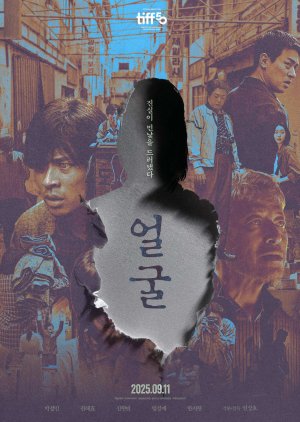
Details
- Title: The Ugly
- Type: Movie
- Format: Feature Film
- Country: South Korea
- Release Date: Sep 11, 2025
- Duration: 1 hr. 43 min.
- Genres: Thriller, Mystery, Drama
- Tags: Production Director (PD) Female Lead, Sculptor Male Lead, Ceramic Artist Male Lead, Blind Male Lead, Disabled Male Lead, Hidden Past, Father-Son Relationship, Disability, Blindness, Investigation
- Content Rating: 15+ - Teens 15 or older
Statistics
- Score: 7.5 (scored by 476 users)
- Ranked: #6505
- Popularity: #7434
- Watchers: 1,912
- Favorites: 0
Top Contributors


Popular Lists
Related lists from users




Recently Watched By


