
 News


This review may contain spoilers
The drama revolves around twins Lee Seo-young (Lee Bo-young) and Lee Sang-woo (Park Hae-jin), who grew up in poverty due to the failures of their father, Lee Sam-jae (Chun Ho-jin). Seo-young blames her father for her mother's death and walks out of his life. She becomes a tutor for the Kang family, where she meets Kang Woo-jae (Lee Sang-yoon), the eldest son, who falls in love with her. Despite initial resistance and opposition from his family, the two get married. But Seo-young falsely claims her father is dead, permanently cutting ties with her family of origin.Three years later, Seo-young is a successful judge. Woo-jae saves Lee Sam-jae from a car accident without knowing who he really is. When he discovers the truth about his father-in-law, the marriage hits a crisis. In parallel, Sang-woo gets engaged to Kang Mi-kyung, unaware that she is Woo-jae's sister, creating a tangled web of secrets that eventually explodes.
Woo-jae is presented as the classic male drama lead: rich, handsome, determined. Too bad his determination turns into intolerable presumption and pathological intrusiveness.
He doesn't give Seo-young a minute of peace. If she is even a little late, he practically calls the police. A minor ailment becomes a terminal illness. He doesn't wait for an answer from anyone: he acts, period. He is always right, like certain left-wing politicians who know what is right for everyone without ever listening to anyone. His decisions are already made and everyone else just has to adjust.
The culmination is his fixation on his wife's father; he torments him, controls him, interrogates him as if he were his property. There is no respect for personal space, for pain, and he doesn't realize he is embarrassing him.
The underlying hypocrisy: he gets angry with his wife for lying, but doesn't ask for explanations — he already has his answer. He became obsessed, he tormented her, he never understood her pain, her shame, her fear. He only judged her and threw her away, forcing her into a divorce.
The climax is reached when he discovers that Seo-young is taking contraceptives. But excuse me, did you ever ask her opinion? Whether she wanted children? You had already decided, period. But it takes two to have children, it's not an obligation for women. They have their own rights and ambitions too. If you care so much, you carry them around for nine months. But of course, he wanted Seo-young to give up her career to raise his children. Who do you think you are?
The truth is that Woo-jae doesn't see Seo-young as a person with her own desires and needs, but as an extension of himself, an object to possess and control. And this, coming from a man who is supposed to understand a woman's needs, is simply unacceptable.
What the authors want to pass off as caring love is actually possessive obsession and a lack of respect for the other person. His "attentions" make you want to slap him. It's the classic case of a character who is romanticized in fiction, but who in reality would be grounds for pressing charges.
If there is one character who deserves compassion, it's Seo-young. She experienced the traumatic family situation more deeply than anyone else: she worked as a teenager, paid for her brother's studies, paid off her father's debts. And no one, ever, said thank you to her.
Her lie about her father's death is wrong, but understandable. It's the desperate act of a person who has carried the weight of a dysfunctional family on her shoulders and who, for once, wants something for herself. The tragedy is that this lie imprisons her and forces her to live in constant fear of being discovered. Seo-young is not a villain; she is a wounded person who made a terrible choice to survive. And the man who should love her, instead of understanding her, suffocates her.
Woo-jae and Seo-young divorce. Finally, one might say. Seo-young has the opportunity to rebuild her life, and she manages to open her own firm. But she reconsiders as soon as Woo-jae approaches her again, and she remarries him. I would have told him to go to hell for all the pain he added to her life. I would have closed that door and thrown away the key.
This ending isn't romantic. It's masochism. It's the triumph of toxic relationships to make us believe that love unilaterally justifies everything, that a woman must sacrifice her dignity for the sake of the family, endure, forgive, and return. Always.
If Woo-jae deserves a slap, Sang-woo deserves a punch. He is uncompromising, hypocritical, and blind. His blind defense of the father, who ruined the family, doesn't hold up. And he doesn't understand the sacrifices his twin sister made for him.
Saved only by Lee Bo-young and Seo-young's storyline, who deserved an ending worthy of her, not a return into the arms of the one who made her suffer.
Was this review helpful to you?
This review may contain spoilers
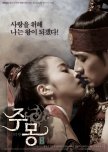
Jumong tells the life of Jumong (Song Il-gook), the legendary founder of the kingdom of Goguryeo. The story begins with General Hae Mosu (Heo Joon-ho) and Princess Yuhwa (Oh Yeon-soo), Jumong's true parents. When Hae Mosu is believed dead, Yuhwa, pregnant, is taken in by King Geumwa (Jeon Kwang-ryul) of Buyeo, who raises Jumong as his son.Jumong grows up as a weak and despised prince, overshadowed by his half-brothers Daeso (Kim Seung-soo) and Yeongpo. After being expelled from the palace, he meets his blind father Hae Mosu, who secretly trains him. When Hae Mosu is killed, Jumong swears revenge.
Together with Soseono (Han Hye-jin), Jumong flees Buyeo and, after countless hardships, founds the kingdom of Goguryeo in 37 BC. But the return of Yuri, the son he had with his first wife Ye So Ya, creates a succession conflict that drives Soseono to leave Goguryeo with her sons, who will go on to found Baekje.
1. Narrative Licenses: An Intelligent Use of Historical Gaps
The narrative licenses in this drama are well integrated and functional. The scarcity of detailed historical sources on Jumong's life was exploited intelligently: saying that Ye So Ya and Yuri were hostages of Buyeo is very plausible, as is Daeso's coup d'état and his subsequent exile. These elements add a touch of drama that, had they strictly followed history — with Daeso succeeding his father after his death — would not have had the same narrative tension.
The drama proves that historical truth and good storytelling can coexist when the screenwriter knows the material and knows where to intervene. It's not about betraying history, but about filling the gaps with plausible elements that serve the drama.
MBC itself admitted that, given the scarcity of sources, a perfect historical reconstruction was impossible, and that the drama mixes fiction and non-fiction. This awareness allows the authors to take liberties that serve the narrative without betraying its spirit. The result is a tale that, while not a documentary, manages to convey the essence of an era and a character.
2. A Rating I Would Give Ten with Honors
I would give it 10 with honors, but I must limit myself to the maximum allowed by Viki Rakuten. It had been a long time since I had seen a k-drama that kept my eyes glued to the screen, comparable to Empress Ki or Hwarang.
Jumong has that rare quality that distinguishes great historical dramas: every episode counts. Despite its 81 episodes, the narrative never gets lost in filler. The characters grow, alliances change, betrayals follow one after another, and the viewer can't help but want to know what happens next. Song Il-gook builds a Jumong who goes from being a despised prince to an almost mythical figure, and the journey is gripping from beginning to end.
The production is polished, the costumes and sets are well reconstructed, and the soundtrack accompanies every moment effectively. It is a drama that deserves its status as a "national drama" in Korea.
3. The Only Sour Note
The only sour note is the relationship between Hyupbo and Sayong, two of Jumong's companions. Not because of its presence in itself, but because of its evident nature as a 2006 commercial insert disguised as the 1st century BC. The era did not condemn homosexuality; it is the drama that uses it as a decoy. And this forcing of woke concepts at all costs is counterproductive: the more they are imposed, the more people flee.
Was this review helpful to you?
This review may contain spoilers
The East Palace is a drama I watched on Netflix, and I'll start right away with a consideration that's close to my heart. As a sageuk enthusiast, when I found myself in front of the Italian translation of the subtitles, I felt a mix of annoyance and disappointment. The subtitles were clearly handled by professionals, that must be said, but there's one detail that really didn't sit well with me: the use of the term "archiatra" (archiater).The archiater is, yes, the chief physician or protomedicus, a court term historically linked to the figure of the personal physician of a sovereign or a pontiff. It derives from the Greek ἀρχίατρος, composed of ἀρχι- (chief) and ἰατρός (physician). However, in a Joseon context, using "archiater" sounds like a foreign body. It's a term that belongs to the classical and pontifical tradition, not to the Korean one.
For a sageuk, the most correct and historically applicable choice would have been Eo-ui (어의), the Korean term for the sovereign's personal physician. He was the senior-ranking physician (dang-sang-gwan) belonging to the Uiwon (내의원, the court medical office), tasked with the exclusive care of the king and the royal family. Alongside him operated the Uigwan (의관), the actual physician-officials, who had passed the medical qualification examination (uigwa) and served as state technicians, handling the health of the court and, in some cases, of the public as well.
Furthermore, it should be noted that the term archiater is an archaic term, very rarely used in Italian, and I presume few people know its meaning. You understand it by logic, based on the scene, but the term contextualizes nothing: it says nothing about the era or Korean culture. Sageuk experts would have used other terms, clearer and more suitable: "royal physician," "protomedicus," "court physician."
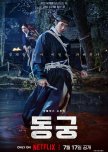
The premise is strong: an imaginary Joseon dynasty, a curse that has been killing heirs to the throne for thirty years, a vengeful spirit living in the pond of the Eastern Palace. The King, played by a Cho Seung-woo who dominates every scene with his grave and tormented presence, is forced to summon Gu-cheon (Nam Joo-hyuk), a cynical and reluctant spirit hunter who can cross the boundary between the living and the Realm of the Gwi. He is joined by Saeng-gang (Roh Yoon-seo), a court lady who hears the voices of the dead and who hides a secret: she is the illegitimate and estranged daughter of the King himself.
The chemistry between the two protagonists works, but don't expect a classic romance. Their relationship is more fraternal than romantic, made up of bickering, misunderstandings, and a trust that is built slowly, mission after mission. Nam Joo-hyuk is convincing in the role of the tired and disillusioned man who finds himself, against his will, fighting for something more than his own survival, and Roh Yoon-seo confirms she is one of the most interesting young actresses on the Korean scene. Their dynamic is the emotional heart of the series, and when the two begin to trust each other, the viewer roots for them.
The action scenes are brutal and well choreographed. Director Choi Jung-kyu infuses an almost animated energy into the fights, with intelligent use of practical effects and CG. The Realm of the Gwi is an eerie and visually successful place, and the creatures that inhabit it are carefully designed. However, the series is not without flaws: halfway through the season, the plot begins to rely excessively on twists, some of which seem more gratuitous than logically constructed. The supernatural mythology becomes confusing at times, with rules that are introduced or bent according to narrative necessity, and this breaks the rhythm.
The supporting cast is solid. Jang Young-nam is impeccable as the Queen Mother, an ambiguous and unsettling figure, and Kwak Dong-yeon, in the role of the Crown Prince, manages to be intimidating and tragic at the same time. Special mention for Ggeomeoksali, Gu-cheon's little spirit companion, who brings a breath of lightness to an otherwise dark drama.
In conclusion: The East Palace is a good supernatural costume drama, visually sumptuous and supported by a cast in form. It's not the most original — the debt to Stranger Things and Kingdom is evident — and the screenplay loses some clarity in the second half. But if you're looking for eight episodes of palace intrigue, ghosts, and well-choreographed duels, with a finale that leaves the door open to a possible sequel, then it's a more than decent watch. A shame, though, about that translation choice that, for someone like me who cares about details, jars quite a bit.
If you watch it, let me know what you think—especially if you also noticed that "archiater" and wondered why.
Was this review helpful to you?

This review may contain spoilers
My Father is Strange tells the story of the Byun family, seemingly ordinary, composed of the father Byun Han-soo (Kim Yeong-cheol), the mother Na Young-sil (Kim Hae-sook), and their four children: the eldest Joon-young (Min Jin-woong), the lawyer Hye-young (Lee Yu-ri), the former judoka Mi-young (Jung So-min), and the youngest Ra-young (Ryu Hwa-young).The family's life is turned upside down by the arrival of Ahn Joong-hee (Lee Joon), a former idol actor who shows up at their door claiming to be the biological son of Byun Han-soo. But his presence forces Han-soo to confront an enormous secret: in reality, he is not Byun Han-soo, but Lee Yoon-seok, a man who took the identity of his deceased friend to escape an unjust past.
While Joong-hee integrates into the family and develops feelings for Mi-young (with great confusion for both of them, who believe they are step-siblings), Hye-young begins investigating to clear her father's name and restore his true identity.
1. A Family Drama That Works Despite Its Length
My Father is Strange has 52 episodes, a length that normally intimidates. Yet there is never a dull moment. The strength of the series lies in its ability to weave together the stories of all the family members without any of them feeling superfluous. Lee Joon is the beating heart of the drama, and Jung So-min gives Mi-young a sweetness and quiet strength that make her immediately empathetic.
2. Song Ok-sook: The Annoying Mother Par Excellence
Particular praise goes to Song Ok-sook, who plays Oh Bok-nyeo, the landlady and mother of Cha Jeong-hwan. It is not the first time she has taken on the role of the "annoying mother" or the unbearable mother-in-law, and by now she has become extremely good at it. Her role is unbearable — an intrusive, nosy woman who meddles in her son's life and that of his fiancée Hye-young — but Song Ok-sook plays it to perfection, making it hateful and believable, never caricatured.
3. Cha Jeong-hwan: A Pathetic Mama's Boy, and She Won't Leave Him
Cha Jeong-hwan (Ryu Soo-young) is a pathetic mama's boy. He is the classic mother's son who has never cut the umbilical cord, incapable of taking a clear stance against his mother. The worst moment comes when he lies for four days about his mother's serious illness, deeply undermining Hye-young's trust. And why does he do it? To defend his mother, who has clearly done wrong, by making up that she was sick and walking around with a brace on her arm just to attract attention and exploit her daughter-in-law by making her do all the work and household chores. And the worst part? She won't leave him. Hye-young, an intelligent and strong woman, continues to stay with him despite the lie and the mama's boy behavior. The truth is that trust, once broken, is very difficult to repair. Four days of lies are not a small mistake: they are a betrayal.
4. The Issue of Pregnant Women and Workplace Ostracism
The drama also addresses the ostracism that pregnant women suffer in the workplace in Korea, through the character of Kim Yu-joo (Lee Mi-do), who becomes pregnant and has to face heavy consequences: opportunities are taken away from her, her duties are scaled back, and she comes under pressure to leave. However, this issue is not handled at its best: it is introduced and then dropped without real development or a satisfactory resolution. It could have been handled better.
5. A Drama That Reflects Social Change
My Father is Strange is also a portrait of the social transformations of Korea in 2017. It tackles themes such as premarital cohabitation, contract marriage, premarital pregnancy, and even "jolhon" (졸혼), meaning married couples who live under the same roof but lead separate lives. In a traditionally conservative genre like the weekend family drama, it dares to show different views of marriage without judging.
Was this review helpful to you?
This review may contain spoilers
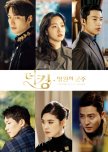
Let me start with a premise: The King: Eternal Monarch is a drama that divides people. It's the kind of series that you either love for its epic romanticism and excesses, or you drop because the plot makes you feel like you're trying to solve a geometry theorem while someone chases you with a sword.The premise is fantastic. The idea of two parallel worlds — a modern Kingdom of Corea led by Emperor Lee Gon (Lee Min-ho) and the Republic of Korea where detective Jung Tae-eul (Kim Go-eun) lives — is fascinating. The way the story intertwines Gon's childhood trauma, his father's murder, and the mysterious figure who saved his life (with Tae-eul's badge in his pocket) creates an initial mystery that keeps you glued to the screen. Lee Min-ho is perfect in the role: elegant, charismatic, and with that wounded look that makes you understand that behind the crown is a boy who never truly grew up. Kim Go-eun, for her part, gives Tae-eul a solidity and intelligence that make her anything but a passive female protagonist; she's someone who fights, and she does it alongside her man, even if they often find themselves in different dimensions.
The chemistry between the two is the real engine of the drama. If I'm being honest, there were moments when the main plot — with all its talk of time portals, magical flutes, and quantum physics — became so convoluted that I risked losing my way. And that's where they come in: Lee Min-ho and Kim Go-eun have an electric tension that makes even the most absurd scenes believable. The scene where he arrives on horseback, covered in blood, shouting "Save her, she is the Queen of Corea!" is such blatant excess that you can't help but love it. It's pure Korean drama, for better and for worse.
I really appreciated the fact that the story left me wanting to know more: I found myself trying to connect the small details scattered throughout each episode to figure out what would happen next, and that's usually exactly what pushes me to watch a drama to the end. I think there were many plot twists I didn't expect at all and, although some of them didn't fully convince me, I still found them compelling enough to keep watching. For me, it was the plot as a whole that drove the series, more than the characters — if that makes sense. It's as if the story itself were the true protagonist, and the characters were the lenses through which to view it.
Kim Go-eun's acting was extraordinary. I don't think anyone could have done better: she captured the emotions perfectly.
A special mention also goes to Woo Do-hwan: he plays both Jo Yeong, Gon's bodyguard, and Jo Eun-seob, Tae-eul's friend, managing to shift from formal, loyal rigidity to a comic and slightly clumsy sweetness with a naturalness that is a pleasure to watch. For me, he was one of the best surprises of the cast.
The soundtrack was epic. The music created the right atmosphere: whether it was romantic, heartbreaking, happy, or action scenes, the soundtracks accompanied them perfectly.
What didn't fully convince me? After episode 10, the story starts doing acrobatics that sometimes feel gratuitous. There's a final plot twist about who saved Gon as a child that, in my opinion, takes away some of Tae-eul's agency and makes Gon the center of everything, which honestly I didn't feel the need for. Moreover, some secondary characters and subplots (like the Prime Minister's) seem a bit sacrificed or resolved too hastily. The writer uses the "time jump" to give vague explanations and resolve intricate knots, which left a slightly bitter taste in my mouth.
And then we come to the ending, which is the part that left me most with a bitter taste. I have to acknowledge that everyone got their happy ending, but I didn't like the two protagonists' ending very much: they see each other two days a week and travel endlessly through time, without a stable life. I would have preferred a more rewarding conclusion, one that gave them a concrete daily life — in short, a real life together, instead of this eternal commuting between dimensions.
In conclusion: The King: Eternal Monarch is not a perfect drama. If you're looking for rigorous science fiction and a plot without holes, it will probably make you curse. But if you're willing to let yourself go, to enjoy the lavish aesthetics, the over-the-top romantic scenes, and the chemistry between two actors who know how it's done — and if you love intricate plots that push you to look for clues episode after episode — then it's a journey worth taking. It's a drama that asks you to believe in love that crosses worlds, and sometimes, that's all you need. It's just a shame that the ending didn't give me the stability I was hoping for.
Was this review helpful to you?
This review may contain spoilers
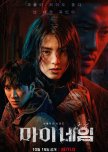
Han So-hee in this drama is simply iconic. Her Yoon Ji-woo is a silent fury, a girl who has lost everything and who transforms her pain into a determination so blind and all-consuming that at times it's frightening. The scene where she witnesses her father's murder, hidden behind the door, broke my heart, and from that moment I knew I would follow her anywhere. It's not just a matter of acting: she is Ji-woo, in every glance, in every punch, in every silence.The plot is simple, and that's fine. Ji-woo wants to find out who killed her father, joins Choi Mu-jin's gang, trains, and then goes undercover in the police. The beauty of it is that, as a viewer, you are as much in the dark as she is. You don't know who to trust, you don't know who is lying, and this makes every episode a little exercise in suspicion. Some found the story predictable, and in part that's true: after two or three episodes you start to sense where it's going. But for me it wasn't a flaw, because what kept me glued to the screen wasn't the "whodunit," but the how Ji-woo got there, and what she was willing to sacrifice along the way.
The action scenes are the real strength. They are not elegant, clean choreography—they are brutal, dirty, exhausting. Ji-woo is not an invincible superhero: she takes hits, she bleeds, she gets tired, and this makes every fight much more credible and emotionally engaging. There's a scene where she fights in a narrow corridor, and the camera follows the movements so closely that you almost feel short of breath. It's the kind of action that makes you want to sign up for a martial arts class, exactly as it happened to me.
The supporting cast does its job, albeit with some shadows. Park Hee-soon is a charismatic and ambivalent Choi Mu-jin, a boss who seems to feel paternal affection for Ji-woo but who remains a ruthless criminal. Ahn Bo-hyun is very sweet as Detective Jeon Pil-do, the honest cop who grows fond of her and who represents the only glimmer of light in a life made only of violence. Their dynamic is sweet, but don't expect a fully developed romance: it's barely hinted at, and this is perhaps one of the series' limitations. I would have wanted more time for them, more breathing room between one chase and the next.
And now we come to the finale, which is open but not for that reason unsatisfying. Pil-do dies, and his death is the hardest blow, because it comes at the moment when Ji-woo seemed to have finally found someone willing to reach out to her. But the finale, on closer inspection, is not at all a dead end. Ji-woo places an empty funeral urn with her name on it in the family tomb: this gesture, to me, means that the captain has given her a new life and a new identity. Ji-woo "dies" symbolically as Yoon Ji-woo, and is reborn as someone else, free from the past and from revenge. We don't know where she will go, but we know she can go somewhere. And for a character like her, who spent the entire series running toward a fixed goal, this openness is almost a promise of rebirth.
In conclusion: My Name is a tense, violent action drama upheld by a monumental performance from Han So-hee. It's not perfect: the story is linear, the romance is barely sketched, and the finale deliberately leaves questions unanswered. But if you're looking for a short series (eight episodes, you can finish it in one night) that will keep you on the edge of your seat and show you a woman fighting against a world of men with a ferocity that has nothing to envy of the genre's male protagonists, then I highly recommend it. It's the kind of drama that leaves you emotionally exhausted, but that you will hardly forget.
If you decide to watch it, let me know what you think—especially about the finale, because I'm curious to know if it had the same effect on you.
Was this review helpful to you?
This review may contain spoilers
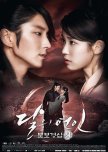
Moon Lovers: Scarlet Heart Ryeo is a 2016 historical-fantasy drama, consisting of 20 episodes, broadcast on SBS and directed by Kim Kyu-tae. Based on the Chinese novel Bu Bu Jing Xin, it tells the story of Go Ha-jin (IU), a 21st-century woman who, during a solar eclipse, is transported back in time and awakens in the body of Hae Soo, a young woman who lived during the Goryeo dynasty, in the midst of the power struggles among the princes of the royal family.Hae Soo finds herself caught up in court dynamics and meets the numerous princes. Initially she feels attracted to the eighth prince Wang Wook (Kang Ha-neul), kind and caring. However, her fate soon becomes intertwined with that of the fourth prince Wang So (Lee Joon-gi), feared by everyone, forced to hide his face behind a mask because of a scar and nicknamed "wolf dog." A deep bond develops between the two, but the court is a nest of vipers: upon the death of King Taejo, the princes plot and fight fiercely for the throne, and Hae Soo finds herself trapped in a spiral of power, intrigue, and betrayal that will severely test her love and her very survival.
The strength of the drama lies in its emotional intensity and its cast. Lee Joon-gi is extraordinary in the role of Wang So: his ability to shift from the most brutal cruelty to the most disarming vulnerability is what holds the entire production together. Kang Ha-neul builds a Wook who is first gentle and then tragically ambiguous, and his transformation is one of the most interesting in the drama. IU, despite some criticism for a performance that is at times unripe, still manages to give Hae Soo a fragility that works.
The screenplay, however, has obvious flaws. The biggest problem is the lack of logic in the development of the female character: Hae Soo is lively and courageous at the beginning, but in the middle section she makes decisions that seem to "push the plot toward chaos" rather than representing a natural development. The narrative pacing is also problematic: the original Chinese drama has 35 episodes, while the Korean version has only 20, making the development of the second part extremely rushed. The competition for the throne is handled superficially, and the love story becomes excessively dramatic, losing its weight.
The ending is tragic and devastating. Hae Soo dies in the past after giving birth to Wang So's daughter, while Go Ha-jin wakes up from her coma in the present, at the museum, where she sees Wang So's portrait and remembers everything. Wang So remains in the past, alone, with the memory of her and the promise to find her again. The separation between the two worlds and the awareness that their love truly existed make the ending memorable and painful. The political subplots that precede it are confusing, but the ending itself works, and anyone who has followed the story to the end cannot remain indifferent to it.
The connection with Scarlet Heart (2011)
Moon Lovers is an adaptation of the Chinese drama Scarlet Heart (2011), and many dynamics are present in both versions, because the narrative structure is the same: the emperor who kills his brothers after a bloody struggle for succession; the rapid succession of kings; the king who kills the faithful servant of the woman he loves (in Moon Lovers it is Court Lady Oh, and this is one of the moments that mark the rupture between the two); the beloved woman who falls ill and dies from complications related to childbirth; the beloved woman who leaves the palace by marrying the fourteenth prince (Wang Jung here, as Ruoxi does in the Chinese drama); the woman who comes from the future and returns to the future after the coma. The difference between the two dramas is the addition of the detail of the secret daughter entrusted to Wang Jung, which is not present in the Chinese drama.
Trivia: In 2023 it was revealed that an alternative final scene had been filmed (then cut) in which Wang So and Ha-jin meet in the present at the museum, recognize each other, and restart their story.
Moon Lovers is a drama that deserves to be watched, at least once. The cinematography is splendid, the costumes are carefully crafted, the soundtrack is unforgettable, and Lee Joon-gi delivers one of his best performances. It is a drama that makes you angry, makes you cry, makes you shout at the screen, but it does not leave you indifferent. I personally liked it very much, despite some critical issues: the emotional impact and the acting performances more than make up for the flaws in the screenplay and pacing. If you are a fan of Lee Joon-gi or a lover of historical dramas willing to accept a tragic ending, it is worth seeking out. The most accurate description remains that of a classic that commands respect, but that cannot be defined as flawless.
Was this review helpful to you?
This review may contain spoilers
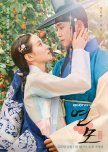
The King's Affection is a story of stolen identity, impossible love, and power. Dam-yi, a twin princess condemned to death at birth, survives outside the palace and years later comes face to face with her brother, Crown Prince Lee Hwi. When he is murdered, she is forced by her mother to take his place: she becomes a man, a prince, a future king. All while falling in love with Jung Ji-woon, her first childhood love, who believes she is a man and torments himself over "impossible" feelings.The writing: a editing problem
Indeed, in the first two episodes the narrative proceeds through time jumps that are never signposted: in one scene Dam-yi talks to her mother and three seconds later, in the next scene, her mother is on her deathbed, without any understanding of what happened in between. To introduce the backstory, the writer and director put together a jumble of scenes devoid of captions and of any explanation of the connections between the blocks: the passage of time is never indicated, and the viewer has to reconstruct everything alone.
Love with the enemy's son: a forced plot that rests on a fragile character
Ji-woon is the enemy's son, and a normal person — even granting that he is the first love — would hardly be able to sustain such a relationship, given that loyalty, politics, and concrete risk to one's own life are involved. Worse: his father killed Dam-yi's brother. In other dramas, when the protagonist discovers that the beloved's father is responsible for the death of a family member, the relationship breaks: you see the rupture, the inner conflict, and only over time, if ever, do the two reconcile. Here, no: Dam-yi knows and does not leave him, no inner conflict is shown, no hesitation or fracture, despite knowing the origins of her beloved. The script glosses over this weight as if the spilled blood counted for nothing, and the love story moves on as if nothing had happened.
Jung Ji-woon: the black hole of the drama
Ji-woon is the most infantile character in the drama. He thinks more about flirting than about the problems his feelings create: instead of helping, he generates misunderstandings; instead of reasoning, he acts on impulse. He has a ruthless father, he lives in a court where one false step means death, yet he behaves as if in a romantic comedy. The actor does nothing to make him more adult: his facial expressions do not help, and where weight would be needed, out comes the offended little boy or the dreamy lover.
The critics have praised him, but the facts say otherwise. From the river, it is Dam-yi who saves him. From the pond, it is Dam-yi who saves him. When he is kidnapped by the grandfather in episode 19, it is again Dam-yi who saves him. He does not think about protecting her or about the consequences of his actions: he thinks only about his own desire. He is liked only because he is the first love, a label that covers up his infantilism and practical uselessness.
The grandfather: an antagonist who wins by inertia
Lord Sangheon always manages to gain the upper hand, not because he is more intelligent, but because the script allows it. In the end it is Dam-yi who resolves everything in the most extreme way: she poisons the tea, serves it to her grandfather, and drinks it with him, attempting a joint suicide. A powerful scene, but it comes after twenty episodes in which no one has ever truly challenged the grandfather's advantage: more than a victory, it is a desperate draw.
The cousin: the only man who deserved more
Prince Jaeun, the cousin who eventually becomes king, is a breath of fresh air. He truly protects Dam-yi, does not put her in difficulty, does not force his feelings, does not create misunderstandings. He too feels something for her, but his loyalty never becomes a burden: he is a silent support who acts for her good without asking anything in return. Jaeun is mature, loyal, protective without being possessive, and understands the weight that Dam-yi carries. Jaeun as romantic lead would have been more credible and more mature, but unfortunately he remains the token "good guy."
Park Eun-bin: the reason it is worth watching
Park Eun-bin is the center of gravity of the entire drama. She is extraordinary in playing the part of the man for almost the entire series, a full 18 episodes, managing to convey all the bitterness of losing one's own identity and being forced to play the role of a man: she is the one who gives weight to the silences and makes the torment credible.
A note, since it comes up: this drama is not a gender drama. Dam-yi never shows ambiguity: just look at her love for Jung Ji-woon, or the marriage to the queen, which is never consummated — and it shows. Let us stop putting political correctness everywhere, even where it does not belong: The King's Affection is the story of a heterosexual woman forced to play a male role in order to survive. Stop.
Verdict
A drama with a fascinating premise and uneven execution: confused editing, a love story that rests on a forced plot, an infantile and poorly acted male lead, an antagonist who wins by inertia, and a finale that is saved only because she takes the situation in hand. But it has two weapons: Park Eun-bin, who alone is worth the watch, and Prince Jaeun, who would have deserved the role of romantic lead.
Rating: 7.5/10 — it would have been 6.5 if not for Park Eun-bin.
Was this review helpful to you?


