


 1
1


This review may contain spoilers
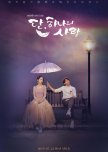
For the Love Of An Angel!
All in all, this is an exquisite story about love, loss, sacrifice, and forgiveness as an angel finds himself in love with a woman and whether or not a love such as theirs is even possible. This lends much of the intrigue to the story about how an angelic being can condescend to human love, or if it is even possible.Despite the fact that much of ideals and beliefs surrounding “God” and “angels” is medieval and extremely primitive, the story still manages to work, as long as you can suspend your disbelief. The best series I’ve ever seen about angels is “Highway to Heaven,” a landmark American series that saw angel, Jonathan Smith, going around trying to spread a little love and life on his missions.
This series is very “Old Testament.” We have a vengeful, jealous “God” who demands obedience and who has no problem exacting punishments. Only a person with ego, who creates a “God” in his/her own image, could ever possibly conceive of a “God” filled with human ego. This is another reason why “God” can never be found or understood through books and scriptures—books and scriptures that were written by men. However, for the purpose of this story, you have to allow yourself some leeway, knowing that God, Herself, is getting a serious kick out of this interpretation!
Angel Kim Dan is given a mission—a last mission—for interfering in human affairs by saving a human woman, Lee Yeon Seo. He’s given exactly 100 days to help her find love, or risk oblivion. The first handful of episodes are highly comedic, as we quickly find that Lee Yeon Seo is a rich, spoiled, conceited brat who is colder than glaciers! She barks at her house staff and doesn’t seem to have a shred of happiness. Part of the problem is that her eyesight was taken in a show where she performs as a ballerina—one of the absolute best in the business, due to her ability to bring tremendous feeling into her performances.
As always, there’s far more that’s going on than meets the eye, as we quickly find out that Lee Yeon Seo’s twisted aunt is plotting to take the “Fantasia Ballet Company” away from her. Little do either of them know that her aunt’s sociopathic daughter, Geum Ru Na is plotting something far darker and more sinister!
Not only is Kim Dan trying his best to eek out a morsel of feeling from the cold Yeon Seo, but he’s also having to protect her from her crazed family members. On top of that, we have Ji Kang Woo, the new artistic director for the ballet company who brings his own tragic past with him. Ji Kang Woo is a fallen angel who was condemned to live as a human being after the loss of a human woman who looks remarkably like Yeon Seo. Of course, he quickly becomes obsessed with Yeon Seo, as well as bringing his bitterness and anger to bear against “God” and all of the angels. As soon as he finds out the truth about Kim Dan, their rivalry heats up, and Ji Kang Woo does everything to try to convince Yeon Seo that a life with Kim Dan is impossible.
The first half of the series plays out much like the “Taming of the Shrew” in which Kim Dan is constantly trying to find some way to like a fire under the ice princess. Of course, it becomes apparent that they are in love with each other, after a few “back and forth” scenarios. You know the kind I’m talking about. She confesses her feelings. He flees. He confesses his feelings, and she stays…until she finds out that he’s an angel, and then she tries to flee (despite the fact that literally saves her life and doesn’t even get a shred of gratitude for it!).
The last four episodes or so are pure gold as Kim Dan races to find a way to become human, and Yeon Seo also finds herself on her knees in a church begging, demanding, and pleading for something to be done. Neither refuses to let go of the other, and neither will allow the other to be sacrificed so that the other may live.
At one point, Kim Dan is told that it’s a sin for an angel to love a human. I couldn’t help laughing at the sheer absurdity of such a statement. Angels are all about love! And by the time the series ends, it becomes painfully obvious that Kim Dan succeeded in his mission: Yeon Seo has, indeed, found out what it means to love, and Kim Dan also finds out the joy of loving someone as well. A sin? The only “sin” is suggesting that this is in any way, a sin. It’s amazing how often people attempt to make something wonderful and loving into something bad and impure.
There’s a sweet backstory that was especially poignant, in which we find out that Kim Dan was actually Yeon Seo’s childhood friend, and that he died trying to escape his abusive father. Yeon Seo is heartbroken when she finds out, as she’d always hoped that he was alive somewhere—completely unaware that Kim Dan is that soul.
I’ve said it in so many reviews, but it has to be said again: Shin Hye Sun is simply a marvel to watch. This woman has such range—she can take on any part and make it her own. This is the first time I’ve seen her play a cold, spiteful woman, but man, she nailed it! And then, just like a light switch, we see just how easily she taps into the reservoir of love and feeling. Her emotions are so powerful and heartfelt, that you feel them as the viewer.
I must say that Kim Myung Soo (Kim Dan) was her equal. Playing the playful, light-hearted angel to tapping into those baser, human emotions, and dealing with potential loss easily matched Shin Hye Sun’s. Perhaps that is why their chemistry was unmistakable and why it worked so well. I think I could have easily watched these two for another ten episodes.
I especially enjoyed the fact that this relationship was balanced. None of these silly mind games, or one chasing the other while giggling and saying, “No, don’t!” when they don’t mean it. No parental interventions either. It doesn’t happen often enough in K-dramas where two adults can simply love and show their affections. It was more refreshing than I can say, and I was very grateful for it.
I’ve always enjoyed the ballet, and I wish I’ve seen more performances than I have, but I also loved the music and dancing in this series as well. It truly is a magnificent art form that doesn’t get as much notoriety as it deserves.
If you’re looking for a series that feels like cuddling up with a loved one on a cold night in front of a fireplace, then this series should definitely work for you!
Was this review helpful to you?
This review may contain spoilers
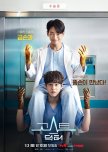
Angels Among Us
What happens when a gifted heart surgeon is devoid of empathy and feeling? He becomes a robot; a man who builds walls around himself to avoid feeling much of anything. This is part of the premise of this series in which Dr. Cha Young Min has forgotten the important part of being a doctor: caring and being there for the patient. It doesn’t matter how amazing your skills are. A doctor without feelings is truly no doctor at all.Dr. Cha Young Min finds himself having to relearn this lesson when a car accident puts him into a coma. Before the incident, he’s cold and surly toward everyone, especially the new young intern, Dr. Ko Seung Tak as well as his ex-girlfriend, Dr. Jang Se Jin. He doesn’t approve of Dr. Ko’s lack of interest in his job. While Dr. Ko doesn’t seem interested in the least in learning about being a doctor, he does seem to care a great deal about the patients, especially those in the coma wing. And Dr. Cha still doesn’t understand why Dr. Jang returned from America after leaving him suddenly, nor does he care to find out.
We find out early on that Dr. Ko has a special gift as well. He’s able to see ghosts. Not only is he able to see them, but he can also communicate and interact with them. This is an ability he seems to have had since he was a child. Of course, he does his very best to hide it, but when Dr. Cha appears as a coma ghost, he realizes that his only link to the real world is Dr. Ko. Thus begins an unlikely friendship that begins tenuously at best. Why? Because we also find out that Dr. Cha is able to possess the body of Dr. Ko.
This sets up a fascinating premise as well as an often funny one, in which Dr. Cha utilizes Dr. Ko’s body in order to perform the most complex surgeries. This brings instant notoriety from the senior staff as well as the administration as to how he’s able to do this. After all, they only see Dr. Ko suddenly doing surgeries that even the most senior members are unable to do—except for Dr. Cha who is revered as the hospital’s best and most gifted surgeon.
Interestingly enough, Dr. Ko has no recollection of what happens once Dr. Cha takes over. Initially, he’s understandably upset and even forbids Dr. Cha from doing it again, but soon Dr. Ko finds himself realizing what can be done for the patients, not to mention his growing fame. Never mind that the hospital staff is left completely puzzled at how a mere intern is suddenly able to perform these surgeries. They chalk it up to Dr. Ko being like Dr. Cha: blessed with unprecedented skill. It’s here that partnership is formed between the two doctors.
Meanwhile, we find that there’s more to Dr. Cha’s accident than meets the eye, and there is also a conspiracy operating within the hospital as the Dr. Ko’s cousin, and hospital administrator, is looking to gain more power and money for himself, and Dr. Cha is in his way. Dr. Jang regrets leaving Dr. Cha the first time around, and she creates a private room where she can look after him 24 hours a day.
Dr. Cha is able to move around the hospital, but he’s limited due to the distance between himself and his body. If he finds himself too far away, he begins to fade away into oblivion which would also lead to the death of his body. He’s able to use his spirit form to find out just how indifferent and cold he’s been to nearly everyone, and he vows to be a different man should he ever regain consciousness. He’s heartbroken to see how much Dr. Jang has always loved him, and her leaving him for America those many years ago had nothing to do with him as she finds herself in the middle of her own power struggle with her mobster bully of a half-brother who’s trying to take their father’s fortune by whatever means necessary.
We quickly find that there are the ghosts of several other coma patients wandering around the hospital, as well as that of a long-since passed surgeon who simply goes by the name of “Tess.” He has a connection to one of the other doctors and finds himself unable to leave the hospital. Unlike Dr. Cha, he’s able to possess anyone at any moment, obviously learning how to master this feat in order to help others. He also has the wisdom that both Dr. Cha and Dr. Ko lack. Dr. Cha needs to remember how to be a caring surgeon again, and Dr. Ko has to learn how to be a proper surgeon by studying and taking the job seriously.
The series is very light in its overall tone. The true brilliance of the story lies in the chemistry and friendship that develops between Dr. Cha and Dr. Ko. Rain and Kim Bum give fantastic performances. You can tell that they had a lot of fun with their roles! Their light banter and bickering also provide a lot of fun and humorous interactions between them. However, as with so many great K-dramas, there are also plenty of heartfelt and touching moments between the two as well. Add Dr. Jang, beautifully played by Uee, and Dr. Oh Soo Jung, who has an obvious crush on Dr. Ko, and you have the perfect scenario for some fun and light romance.
Tess, however, is my favorite character of the series. He’s like a wise sage who wanders around the hospital with a glint in his eye, seeking small things to try and help or fix. He only interferes when he absolutely has to, as he also understands the importance of not imposing himself upon the human condition. He knows that, for some people, it’s simply their time to go. He also has a beautiful connection with Dr. Ko’s past as well. While compassionate, he also has no problem treating Dr. Cha and Dr. Ko like the two petulant children that they are sometimes.
There are no contrived plot elements or silly, immature romantic triangles in this series. The premise that we can all strive to be better people, and even skilled people like doctors, often need such a reminder. Take your job and your passion seriously, but never leave out the human element. Both are necessary, like two sides of the same coin. And most importantly, let people do what they want in life. Stop imposing your will upon someone else. When you do that, it’s selfishly only about you and not the other person.
It doesn’t matter if you believe in ghosts or not. It doesn’t matter if you believe in angels or not, but it certainly warms the heart to know that perhaps your friends and loved ones are in your corner and helping you out in ways you couldn’t possibly believe or fathom. And what’s wrong with that?
Was this review helpful to you?

This review may contain spoilers
You Just Might Feel Like You've Gone a Few Rounds Yourself With This Incredible Series!
“Bloodhounds” reminded me a little of “My Name,” one of the most spectacular thrillers I’ve seen in a long time. If you go into this series thinking it’s just about two boxers mixing it up, you’re only scratching the surface. As with so many fantastic Korean shows, there’s so much more going on, and you barely have to watch even half of the first episode to realize that this story—like so many others—is like an onion. Peel back one layer, and there’s another one waiting. That’s the sophistication of the writing of this series.Kim Geon Woo is a professional boxer who is doing all he can to help his mother pay the rent on the small café that she owns. Little does Geon Woo realize that his mother has taken out a loan, via one of the most notorious loan sharks in the business. The story is set during COVID-19 when so many businesses are struggling to survive, and so many of them are turning to alternative means to try and keep going. Unfortunately, this falls right into the hands of Kim Myung Gil, a ruthless mob boss. You might be a little surprised to find that Geon Woo is polite and courteous, even when he’s knocking his opponents down, he rushes over to make sure they’re all right.
Hong Woo Jin is the fiery, impulsive professional boxer who is actually a bit familiar with the loan shark world, as he’s been a “bloodhound” which is basically another word for a “collector.” After losing to Geon Woo in a fight, he’s shocked when Geon Woo wants to strike up a friendship. Woo Jin is pulled back into the loan shark world when Geon Woo is ruthlessly beaten in his attempt to defend his mother.
Both fighters are soon brought under the protective umbrella of Choi Tae Ho, a former powerful loan shark who’s only too familiar with Myung Gil and his tactics. Choi Tae Ho now uses his immense wealth to give out principal-only loans (no interest) to those in desperate need. However, once he finds out that Myung Gil is behind the series of plots to take over a building in order to open a casino and bleed foreign customers dry, Choi Tae Ho comes out of the shadows to try and bring Myung Gil down, his former lieutenant.
The series is brutally honest and realistic in its violence, which can be difficult to watch. As good as Woo Jin and Geon Woo are, they can’t escape getting beaten, battered, and bruised, including cutting up their knuckles. It’s one of those rare times when you realistically see that knuckles get cut up during a fight, which impressed me, since this is a detail that most scenes of this caliber too often overlook.
Myung Gil is a fantastic villain, and a series like this can only go so far as how good the villain is. He’s smart, cunning, and absolutely ruthless threatening to punish anyone who gets in his way like a massive tidal wave. However, like so many people like Myung Gil, he believes he’s untouchable, and that ultimately leads to his downfall.
I was incredibly impressed with Woo Do Hwan (Geon Woo) and Lee Sang Yi (Woo Jin). They must have trained with professional fighters, because their movements and tactics are spot on! And they also do it so fast and effectively, that you’ll likely marvel at the fight scenes! I’d be curious how long it took to choreograph just one fight scenes (and there are a number of them throughout this 8-episode series).
The Korean underworld is dark. The sun doesn’t even really come out. Even in the daytime, it’s cloudy, as if marking the level of corruption that dwells within the city of Seoul. Too many times, we actually wonder if this small group can finally come out on top over Myung Gil. Each time Geon Woo, Woo Jin, and Choi Tae Ho score a point, Myung Gil finds a way to score two. The entire series plays out very much like a boxing match. Two sides, bobbing, weaving, trying to outthink their opponents, while scoring a hit and then moving back into defensive mode.
What impressed me the most was the naivety of Geon Woo and Woo Jin. They may be able to box, but they know very little about the Korean mob world and what to do. They are anxious and eager to help, but Choi Tae Ho and his lieutenants have to teach them and share the wisdom of their own experiences.
This is an intense but bingeworthy series! As soon as you finish one episode, you immediately have to keep going to find out what happens next. By the time the series is over, you feel like you need to sit in the corner to get a breather!
The story is tautly written, and the performances throughout are absolutely spot-on! This is a fantastic series, that when it’s all over, you may feel like you’ve gone 15 rounds!
Was this review helpful to you?

This review may contain spoilers
Watch Jun Ji Hyun and Kim Soo Hyun Shine!
The two leads (Jun Ji Hyun) and (Kim Soo Hyun) really keep this series afloat with their dynamic performances. There are a number of flaws and inconsistencies in the series, especially with the depictions of Do Min Joon as the alien who has been living in Korea for 400 years.Do Min Joon seems to be a cross between E.T. and Superman in the sense that he seems to have been left behind and won’t be able to return home until our current time. He’s used a number of different identities, systematically “killing off” previous ones so as to not arouse suspicion that he’s an ageless alien living among humans. He’s also a bit like Superman in the sense that he has enhanced strength, speed, and hearing as well as the ability to stop time. With only three months left, he finds his abilities are becoming more unpredictable.
What is interesting about Do Min Joon, is that he appears to be a rather primitive alien in the sense that he’s not very long on wisdom. For a species that has mastered space travel as well as time manipulation, he doesn’t have much wisdom to share in how to live, thus demonstrating that his species is not very evolved. Do Min Joon is a bit temperamental, doesn’t like to be touched, and has some serious trust issues. In other words, he doesn’t trust anyone or find the need to do so.
Enter Cheon Song Yi, arguably the most popular actress in Korea, and she knows it. I lost count how many times she says to someone, “I’m Cheon Song Yi!” as if her very name demands attention, respect, and immediate capitulation to any request that she makes. She’s spoiled, conceited, immature, a bit dimwitted, and yet, she is also incredibly captivating and loves with all of her heart. It cannot be understated how well Jun Ji Hyun plays this part. To take a character with so many unappealing characteristics and to make that character so appealing and likable demonstrates Jun Ji Hyun’s mastery. Cheon Song Yi is also a horrendous tease! Lee Hui Kyung is the son of a powerfully rich family and a long childhood friend who’s had eyes for nobody by Cheon Song Yi. And yet, despite not having any feelings for him, she strings him along because she simply loves the attention. She also has a gold digger for a mother who mooches off her wealth, believing that her daughter owes her everything. I can’t imagine a worse person for a parent. Parents who treat their children like property and commodities aren’t parents at all. They’re parasites.
Most of the series is spent with Cheon Song Yi and Do Min Joon teasing and dancing around each other, obvious that they like each other. Do Min Joon acts as though he could care less and finds Cheon Song Yi annoying. They end up neighbors, each living in massive penthouses. Cheon Song Yi finds Do Min Joon cold and aloof, but as someone who demands and commands attention from everyone, she initially sets out to find a way to get Do Min Joon’s.
Now, Do Min Joon does have a viable reason for not getting romantically involved. Well, he has a couple of reasons. First, he’s leaving in three months, so what’s the point of getting into a relationship? And second, his body chemistry prevents him from prolonged physical touching, especially kissing which incapacitates him to the point of a high fever and requires long periods of time to recover. In that sense, they are incompatible.
The charm of the series is watching these two beloved characters figure out a way to acquire the courage to simply confess their feelings for each other before it’s too late. And the chemistry between Jun Ji Hyun and Kim Soo Hyun is undeniable as well as being the central reason why the series works.
On a less effective side story, we have the brother of Lee Hui Kyung as a very bland and uninteresting sociopath who has a long history of murdering anyone who stands in his way. Actor Shin Sung Rok was the least impressive to me of the mostly talented cast. His portrayal just as no flavor or uniqueness to it. He’s almost robotic and wooden that it nearly ruins the character. Seeing him and Do Min Joon has an ironic similarity to Superman and Lex Luthor. In fact, I wondered if they were the inspiration for this rivalry.
The series is heartwarming and has some very humorous moments. As with so many K-Dramas, it also has some tender moments that might tug at your heartstrings. Actress Jun Ji Hyun really sells us the last couple of episodes when Cheon Song Yi realizes that she’s likely to lose the love of her life, and how devastating that blow is to her, even when she knows it’s coming.
Overall, this is actually a very good series that rests upon the strength of its two lead actors. The story, especially when Do Min Joon is suddenly “found out” borders on the ludicrous. Scientists from around the world would have converged on Korea in a heartbeat to find out more about him. Sometimes, the writers fail to fully consider the ramifications of such a ploy rather than simply find an easier out. But fortunately, this doesn’t do too much damage to the story. Sometimes, charm and sweetness can outweigh the rational and the obvious, which isn’t always a bad thing.
Was this review helpful to you?

The Uncanny Counter Season 2: Counter Punch
0 people found this review helpful
This review may contain spoilers
Power of Faith and Redemption!
Once again, “The Uncanny Counter 2” does not fail to disappoint. While I feel that the first season was stronger overall, the second season is solid and a lot of fun as the counters take on new evils and new challenges.The first season had more of a mystery and thriller element to the story, which actually made for more captivating and taut storytelling. This season’s themes are about faith, trust, and redemption.
Things start off when three high-powered evil spirits slaughter the Chinese counters and take their powers and abilities. Psychokinesis is one of the prevailing skills, and So Mun—who is the only counter to master this ability—is trying to teach his teammates with hilarious results. Uncanny Counter still has plenty of humorous moments, especially from Mo-Tak.
So Mun is not only the most powerful counter, he also seems to have taken on the leadership role of the team. So Mun’s greatest strength is his unswerving faith in people and never giving up on them even under the most dire circumstances. In short, So Mun doesn’t hesitate to act even when the odds are stacked against him, even from Yung itself.
Do Ha-Na is a bit more loose in this season. She smiles a bit more, perhaps because she was finally able to let go of her past from the first season. Do Ha-Na also finds a potential love interest, but her strength is to be with and protect others at all costs. She painfully puts her love interest’s livelihood above her own desires, and when Mo-Tak storms off, she goes with him even though she doesn’t agree with his decision. “I’ll never leave any of you alone,” she tells him.
Ms. Chu, of course, is the caring, nurturing teammate, and she also meets up with a young man from her past with the hopes of helping him.
Mo-Tak is still the fierce warrior of the team who has no “quit” in him, and there are some tense moments between him and So Mun. And Mo-Tak can always be relied upon for some of the funniest moments.
Jeok Bong is the newest member of the team. He’s a bit goofy and his “special” ability is to literally smell evil spirits and being able to track them down. I’ll admit that it’s an odd thing, and I believe is played more for laughs as Jeok Bong is often seen with his head out of the car window—much like a dog—sniffing the air.
This season sees a beloved friend in Ma Ju Seok, whose beautiful, young pregnant wife is murdered by the three evils spirits. Absolutely distraught and overcome with grief, Ma Ju Seok swears revenge. His rage is so consuming that he unwittingly opens himself up for possession by a truly sadistic spirit. It doesn’t take long for Ma Ju Seok to begin wreaking havoc as he tries to track down anyone and everyone responsible for his wife’s death. Even his beloved friends, the counters, are warned to stay out of his way or face the consequences.
Hwang Pil Gwang is the leader of the evil spirits whose sole purpose is to kill So Mun and steal his powers to add them to his own. He manipulates Ma Ju Seok by sending him off in the wrong direction to seek his vengeance.
Sometimes the monster created is far worse than the despair we feel due to the loss of a loved one. The Chinese saying, “Before seeking revenge, you must first dig two graves” is especially poignant here. We can understand, and perhaps even relate to Ma Ju Seok’s grief and rage, but he’s so blinded and consumed by revenge, that he threatens to destroy everything that his beloved wife stood for. I found it interesting that nobody attempted to tell him this; he was destroying his wife's memory and their love. Would she really have approved of his actions? Of course not.
As Ma Ju Seok continues to gain in power—mostly due to Hwang Pil Gwang’s influence, the counters are forced to ask the hard question: do they try to save Ma Ju Seok, or kill him? Even Yung believes that Ma Ju Seok must be eliminated, and for a time, So Mun stands alone because he still believes that Ma Ju Seok can be redeemed. And, of course, So Mun finds a way to do the unthinkable and the uncanny, and thus live up to his namesake. In short, it is So Mun’s faith in the goodness of his friend, that ultimately saves Ma Ju Seok.
There are plenty of tense action sequences and several that put you on the edge of your seat because you couldn’t help wondering if we might lose one of the counters. We’ve all come to love these characters, from their humorous moments to the obvious love and devotion that they feel for each other, to learning how to overcome their differences and obstacles in order to work together. Such is the hallmark of a true family.
Was this review helpful to you?
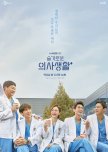
Hospital Playlist Is Like a Warm Blanket On a Cold Night!
There have been a number of "hospital shows" over the years. And yet, with so many, Hospital Playlist is unique. Why? Because it sticks with its strengths: chemistry between the five leads and staying away from the typical hospital politics.Instead, Hospital Playlist is about people. It's about how we, as people, can endeavor to treat others just a little bit better; to put ourselves in the other person's shoes rather than resort to snap judgments. If you remember Patch Adams, you'll find that--for these five doctors at Yuji Medical Center--the people matter more than the disease or injury. In other words, it no longer pays to be indifferent and to block out natural emotions.
Hospital Playlist is actually a fairly light show. Yes, it has some tense moments, but overall, it never gets bogged down in melodrama. Instead, it relies upon the unique chemistry of the five doctors who've known each other since medical school. And once a month, they get together and sing a song. Hence, the Hospital Playlist.
Each doctor specializes in a certain field. First we have Ik-Jun, who is a general surgeon but specializes in the liver and liver transplants. He's the lead singer of the group, and in many ways, he's the glue of the group. He's the first to crack a joke or do something humorous to lighten the tension. And Jung-Suk Jo is masterful at this! He's got as much talent for comedy as he does for singing. He never takes things too seriously. His job is important, but treating his staff and his patients with respect is always of utmost importance to him.
Next we have. Song Hwa who is a neurosurgeon. She's kind, dedicated, and a bit of a workaholic. HIlariously enough, she's someone who THINKS she can sing, but she can't. Actress Jeon Mi Do is actually a professional singer, so to see her purposely sing out of tune is impressive.
Seok Hung is the somewhat aloof but dedicated gynecologist in obstetrics. He's every bit as caring about his patients and staff even though it's not always obvious.
Jun Wan is the brilliant cardiologist who can appear cold but to characterize him this way would be a disservice. Underneath the tough exterior is a man with a heart who believes that hard work and dedication is a key to success.
Last, but certainly not least, we have Jeon Wong Ahn, the professor of pediatrics. Nurses and parents alike adore him for his unique way of handling children. He relates with them. He talks with them, and he never sees them as just another patient.
There are many touching and heartfelt moments throughout the series as we journey along with them through the days, weeks, months, and even years. Don't be surprised if you find yourself shedding a few tears one moment and then roaring out loud with laughter in the next. That's the Hospital Playlist. In the end, it provides comfort. It provides hope that people can still treat each other with respect, with compassion, and with empathy.
If you're a music lover, you'll find a cache of great songs, all sung and performed by the characters. At the end of each episode of Hospital Playlist, we are reminded not to take life so seriously. We're reminded that life is supposed to be joyous and fun.
At some point, I will definitely want to re-watch this great series. So, if you're looking for something that is light, with many feel-good moments, as well as many hilarious ones, I'm sure you love Hospital Playlist!
Was this review helpful to you?
This review may contain spoilers
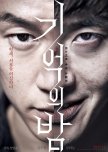
A Masteful Psychological Thriller In the Hitchcock Tradition!
This is a fantastic psychological thriller reminiscent of some of the best films of Alfred Hitchcock, the master of suspense. In fact, I’m sure he would have been delighted by a plot that has so many twists and unexpected layers that I seriously doubt that most viewers will be able to figure everything out until the final reveal. When a writer can keep the viewers on their toes, you know you’ve done your job well. This film is simply a work of art.The film opens in a seemingly generic plot of a family of four moving into a new house. Jin Seok has a strange sensation of having been there before, but he quickly dismisses it as a mere afterthought. However, he’s puzzled by a single room on the second floor that he’s told is forbidden to enter under any circumstances. From here, strange workings begin to occur. Noises in the middle of the night. Sounds that seem to come from the forbidden room above make Jin Seok wonder what is really going on. Things culminate one evening when he and his brother, Yoo Seok step out for the night when Yoo Seok sees that Jin Seok is unsettled. As Yoo Seok walks back to the house, Jin Seok witnesses several men abducting his brother by tossing him into a van and driving off. Yoo Seok returns 19 days later, but Jin Seok immediately notices that something isn’t right.
The film truly takes off from here because nothing is what it seems to be, and the viewer begins to struggle with Jin Seok and the reality of his situation. Is he hallucinating or dreaming about what’s been going on? Who is involved and why? Trust me. This movie has as many layers as an onion. Just when they’ve pulled back one layer, and you think you’ve got it figured out, a whole new layer is presented, and you’re left with yet another plot twist to unravel.
The writing, directing, and acting performances are all top-notch. Frankly, this may be the best thriller I’ve seen since “The Game,” which is another thriller that literally has the viewer guessing right up until the very end. That is a hallmark of masterful storytelling at its finest!
Was this review helpful to you?

This review may contain spoilers
Moving is Riveting and Touching Story-Telling!
For anyone whose first time venturing into K-dramas, you’ve just unlocked a treasure-trove of some of the best shows in the world. As good as “Moving” is, there are a lot of “just as great” or even better shows out there. I’m speaking mostly to the Hulu/Disney subscribers rather than the Netflix ones.Moving is a tremendous series about generational people with special abilities. This isn’t your typical “superhero” series, which is a good thing. In many ways, it’s much better than that.
Over the last 30-35 years, people with special abilities have been slowly cropping up. Lee Mi Hyun has heightened senses (much like Daredevil). Kim Doo Shik has the ability to fly. He’s also a master marksman, capable of placing a bullet anywhere he wants. And Jang Joo Won has the ability to regenerate, making him virtually impossible to kill, although we later find that he cannot regenerate lost organs, like an eye. However, much like “Wolverine” he can’t get drunk or sick, although it’s never mentioned if he has a slower aging process. These three represent the first generation of people with special abilities, and of course, what do you think happens when the government finds out? Yes, they want to use them for their own sinister plots.
We also find that North Korea also has people with special abilities, and it doesn’t take long before one government is trying to outdo the other. And just because it’s North Korea doesn’t necessarily mean that things are so black and white. In fact, there is a lot of gray when it comes to both countries. Min Yong Joon is the evil South Korean member of the NIS (National Intelligence Service) whose sole desire to find those with special abilities and bring them into the fold…by whatever means necessary. His North Korean counterpart is no less diabolical. And we even find that the CIA is also involved, trying to oversee things in both countries!
We learn that special abilities can be handed down, and that the “next generation” inherits the abilities of both parents, if they have them. Kim Bong Seok is a sweet high school boy with an infectious smile and personality to boot. His mother, Lee Mi Hyun, does her best to protect him from being discovered, as Bong Seok can fly AND he also has his mother’s heightened senses as well. He gets ready for school with his mother putting weights on him in order to keep him on the ground. Whenever Bong Seok experiences happiness or joy, he automatically begins to float. This leads to a few hilarious moments, especially when he’s around Jang Hee Soo, Jang Joo Won’s daughter, who also has regenerative abilities.
There is also Lee Kang Hoon, who has enhanced speed and strength, which he inherited from his father, a simple-minded but equally sweet father who jumps from rooftop to rooftop much like the Hulk.
The Koreans are masters at their craft when it comes to writing. This 20-episode story begins with the children and shifts to the adults and how they came into being as well as their initial roles with the South Korean government, and finally we get an epic battle at the high school between North and South Korean superhumans, waging an all-out battle for control of the information. The end might surprise many in the way it shifts back to the real villains of the story: the respective governments.
The series is very much grounded in reality. When the children engage in battle for the first time, it’s very clear that they’ve never been in a fight. While they have special abilities, they have no experience, especially against those who do. What we get is a very dominating victory by the North Korean operative, and that’s exactly what would happen. Bong Seok looks very much like “The Greatest American Hero” during his first attempts to fly. And while Jang Hee Soo is athletic, she has no fighting abilities.
You may be surprised to find out that the last battle takes place over the last four episodes, but there is a lot of backstories that is told to give us a clearer picture as to what has happened to Kim Doo Shik (if he’s alive or dead) as well as what is happening in the South and North Korean governments. Koreans are superb at always revealing just enough, but not giving the viewer the whole picture until later. Therefore, many of our assumptions and perceptions end up being skewed and incomplete. In short, nothing is as it appears to be, and you cannot automatically declare the North Korean operatives as “bad guys” because we don’t know the whole story.
Joo Won is probably my favorite. The man is selfless and a man with a big heart. His romance with his wife is touching and heartfelt, and when he loses her, we share his anguish and despair. He struggles to live a life away from the NIS, but despite his abilities, he’s always roped back in. Of course, his primary motivation is to protect his daughter, and Lee Mi Hyun is no less dedicated. While overprotective and overbearing, her heart is in the right place.
Performances are first-rate across the board, from the actors portraying the adults to the ones portraying the children. At first, I was upset that they cut away from the kids to cover the adults, but their story is equally riveting, and soon, I couldn’t get enough of them either. This was beautifully done, because by the time the final battle begins, we’re fully vested in the adults as well as the children. A good “superhero” story always puts the human element first, rather than the abilities. Those who do this end up with a masterpiece, such as we have here. Why? Because in the end, we still want characters we can relate to.
Things are certainly left open-ended for a sequel series. “Uncanny Counter” and “Strong Girl Bong Soon Do” are still among my favorite series about people with special abilities, but this one is equally good! And at 20 episodes, you will certainly get your fill!
Was this review helpful to you?

This review may contain spoilers
A World of Deviant, Horrible People!
The film strives to be inspirational and sentimental, but it comes up short on both. In the beginning, we find ourselves cheering and rooting for Loh Kiwan, hoping that he can find a better life than the one he’s been living in North Korea and China.Loh Kiwan emigrates to Belgium with the hope of starting a new life. He has only the money his mother left him as well as whatever money were obtained by selling her corpse. In Belgium, we find that Kiwan has traded one bad situation for another. He has to wait several months before he can apply for asylum. He’s beaten up by thugs, and he has his wallet stolen by Marie, another North Korean defector who has been living in Belgium with her father. Marie is a rather disgusting woman who smokes, does drugs, and finds herself in the clutches of a ruthless underworld Belgian gang. Of course, it’s hard to sympathize with a woman as immature and cowardly as Marie is. After all, she made her world what it is, while Kiwan is trying to change his.
Kiwan finds himself sleeping in public bathrooms or anywhere he can find shelter against the bitter winter cold. After a time, he finally finds himself a job in a slaughterhouse. Once again, a former North Korean defector vows to help him, only to betray him when he needs her help the most. It seems that Kiwan can’t seem to catch a break anywhere. The Belgian government requires proof that he’s a North Korean defector since many Chinese have used that in order to gain residence in the country.
Meanwhile, Marie is an expert marksman with guns, and she’s used by the Belgian gang boss to earn money and help him pay off his debt. Caught up in the world of drugs and violence, Marie doesn’t see anything changing. A typical rebellious daughter, who doesn’t know the truth about her own mother’s death, uses it as an excuse for her pathetic life.
In the end, we wonder just who is saving whom. We initially believe that Marie will help Kiwan, but in the end, it’s pretty much the reverse as Kiwan finally helps Marie escape the horrible underworld, but at the price of leaving the country.
The story is based upon a book written by Marie about Loh Kiwan. I’d be interested in finding out how much of this film is fact or dramatized. The film could have been so much better. While it’s brutal in its honesty, its attempt to be romantic and sentimental fail. Marie is hardly appealing in any way, shape, or form, and the ultimate hero of the story is Kiwan for finding some way to keep on going, even after the beatings, the betrayals, and being in a country where very little ever goes right for him. Kiwan is clearly made of sterner stuff, and he’s a far stronger person than Marie could ever hope to be. Marie is simply petulant and cowardly.
Peformances were very good in this film. It’s just too bad that it wasn’t nearly as inspirational as it could have been. It certainly doesn’t paint a very good picture of Belgium as a country either. Given his limited funds, Kiwan isn’t able to simply leave and go somewhere else until the end when he finally meets Marie in Madagascar, which is where the film ends. Ironically, it’s also the only scene in the film where there is actual sunlight. It’s almost as if the rest of the world is dark, gray, and bleak. Unfortunately, most of this film is that way too. Overall, the film was a disappointment, which is a shame given the story and performances.
Was this review helpful to you?
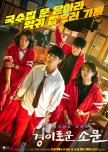
This review may contain spoilers
Rock Solid Entertaining Series!
Either I have been extremely fortunate, or there is simply a treasure trove of K-dramas that I have had the pleasure of watching that have simply been superb! Series from "Mr. Sunshine," to "Descendants of the Sun" to "It's Okay to Not Be Okay," to "Crash Landing on You," to "Stranger" and on and on. I have been exposed to the very best that Korean television has had to offer, and I'm still leaving out many others.On the surface, a viewer may look at this as a sort of "Buffy the Vampire Slayer" type series where three individuals (which becomes four) run a Noodle restaurant, but on the side, they're catching demons, i.e. evil spirits. These people are called "Counters" as they are imbued with special, superhuman abilities from their "sponsors" or "counterparts" in Yung (a sort of staging area before moving on to "heaven."). To look at this series with those eyes is to short-change it dramatically.
Like nearly all great K-drama series, this series is driven by great, and even deep characterizations with a rich story that actually has something to say; how to deal with bullies, both within the school system as well as within the corporate world; those who would prey upon the weak and helpless.
Someone once said that evil tends to pervade when good people do nothing to stop it. Many consider this to be even worse than becoming "evil."
The story centers around Mun, a young high school boy who's suffered untold and unspeakable horrors by losing his parents in an accident and also the physical disabilities that are the result. And yet, he never hesitates to jump in and protect his friends and those who are "weak." Where most people would hesitate or not act at all, he doesn't even think about it. He simply acts. And while he can be impulsive and wears his emotions on his sleeve, he is essentially fearless when it comes to doing the right thing.
"The Uncanny Counter" is a testament to the ideal belief that even the smallest person can make a difference. Yes, the Counters have special powers, but they are also only four people going up against a system. Much like Superman who always finds himself in over-his-head against Lex Luthor...someone who uses the power of the system against him.
One of the things I love about K-dramas, is that they aren't afraid to allow their characters to demonstrate natural emotions. In this way, we are given deluge of deep, realistic, and relatable characters. We are also usually given something to really think about. In this series, we are presented with the idea that a person doesn't need to have special abilities or super powers in order to do the right thing; that, indeed, one person, no matter how small, can make a difference. It also conveys the truth that no one needs to stand alone. Bullies are cowards. All of them. And they are easily dealt with when people rally together to fight them.
All of the performances in this series are fantastically done. Characters that will make you laugh, sniffle, and evoke raw emotion. I suppose there is a reason why I'm far more into K-dramas right now than American shows, which no longer seem to provide me with stories and characters that speak to me. Instead, we're given a barrage of CGI, wooden characters that have virtually no depth at all.
Was this review helpful to you?

This review may contain spoilers
YOU Must Be the First Priority!
Most everyone has been told that you should always think of others first and yourself second. To do otherwise is considered “selfish.” However, this is putting the cart before the horse, for what good can you possibly be to anyone if you don’t take care of yourself? It took me 30 years to realize this truth, and I saw much of my old self in Jung Da Eun.The series focuses on mental health and the illnesses that many people suffer, and sadly, suffer in silence. Much of the world still has many stigmas and dogmatic beliefs in those who suffer from mental illnesses. Psychiatry is still a relatively new science, and like a fledgling science, it’s still trying to work out many of the kinks.
Jung Da Eun is a very capable nurse who’s transferred from Internal Medicine to the Mental Health ward. This is partly because she’s a nurse with a big heart. She loves caring for others. However, when a patient she is closest to ends his life in suicide, she blames herself for not doing more. This event is only a catalyst to something much deeper that has been festering within Jung Da Eun for years. She’s always been a pleaser, sacrificing her own desires and needs for someone else’s. While this may seem like a noble way to live, it isn’t. Sacrifice means to give up something to gain something else. The ultimate goal is to help yourself AND the other person!
I, myself, was a pleaser for years. How people perceived me, from parents to teachers to friends and people in relationships meant everything to me. This is a losing battle because you never find what you truly need outside of yourself. It’s an impossibility. Once I learned how to love and appreciate myself, and make that my priority, only then did I learn how to set boundaries, to take care of myself, and then be able to help others. Set your own feet first. You cannot give what you do not have.
As Jung Da Eun goes through deep depression, she starts off denying that there is anything wrong with her. Why? Because to admit that something is wrong would mean that everything she believes herself to be (her whole identity) would be a farce. Of course, this is the mental story she tells herself, even though it’s completely untrue. This is something that everyone does. We identify so much with the mental projections of who we believe ourselves to be, that we feel as though we’re lost without it. Of course, this is all a part of the delusion; the lies we tell ourselves.
Just as the body becomes ill with diseases, so too, does the mind. All disease (dis-ease) stems from the same core problem: lack of love for yourself. Unfortunately, much of psychiatry attempts to deal with the symptoms rather than the cause. The same can even be said of physical ailments as well.
The series does a wonderful job of pulling back the layers of mental illness and shining the spotlight of awareness on them. We see parents refusing to believe that something is wrong because they take it as a negative reflection on themselves. Children in the west believe that parents owe them everything. Parents in the east believe that children owe them everything. Both are wrong and equally abusive and unhealthy. What you end up having are spoiled children and overbearing parents. And yet, some parents have the courage to admit that they cannot help their children, and out of love, they find someone who can. Just as when your car breaks down, you don’t deny that there is something wrong or even that your level of “expertise” prevents you from fixing it. So, you find an expert; a mechanic.
We see some intriguing storylines involving the staff of nurses at the hospital. Dr. Song has a sister who suffers from schizophrenia, and the prejudice involved when she tries to move into an apartment building. Nurse Min suffers from extremely low self-esteem, largely due to her mother’s abuse. It takes a tremendous amount of persistence from Dr. Hwang to start viewing herself differently and to also take a stand and end the cycle of abuse from her mother. Remember, if you remove either the abuser or the person being abused from the equation, abuse can no longer exist.
Another component of the show is finding and doing what you love. Most people don’t realize how vastly important this is, and why it’s also a necessary one when demonstrating how much you love yourself. So many people are told what they can do or what they can’t do, largely by those who have no clue themselves. It’s the blind leading the blind. Never let anyone tell you what you can or can’t do. Ignore and refrain from listening to anyone who attempts to meddle with your life. After all, it’s YOUR life, and whenever you give your power away, you cannot blame the other person for why your own dreams didn’t work out.
This series was on par to some degree with “It’s Okay to Not Be Okay” which in some ways, was a better show as it seemed to delve much deeper into the psyche of people. However, that doesn’t make this show any less powerful or compelling as we see that a mental breakdown can literally happen to anyone at any point in time. The key, however, is to recognize that most events are nothing more than catalysts for revealing something that has been festering within. Again, this is why loving and taking care of yourself MUST be your number one priority! Only then will you be far more likely to recognize when something is off within yourself, and you will be in a far better position to deal with those events when they occur.
Bo Young Park continues to be one of my favorite actresses. She is a master of tapping into any emotion or feeling that the role requires, and she really does give us a complex character who may be glowing on the outside but is quietly suffering within. We also feel her despair as she finds herself a patient, and why hitting rock bottom is always a blessing. There’s only one way left to go: up!
This an important series to watch, not only for people to hopefully begin to prioritize themselves but also to recognize that most people with mental illnesses are not a threat to others, any more than someone with cancer or some physical disease. While the world has a long way to go, this series demonstrates that a daily dose of sunshine provides us with hope.
Was this review helpful to you?


