


 1
1



This review may contain spoilers
Power of Kindness and Connections!
We’ve seen many times how one life touches so many, and how one act of kindness can be like a pebble dropped into a pond. Its ripples stretching all the way across. People should never underestimate what one act of kindness can do for someone. We never know if a smile, a kind word, or act might will have an effect that we can’t possibly predict or fathom.Life is about connections. Connecting with ourselves as well as connecting with others. Chihiro is a former sex worker who now works at a small bento shop in a seaside town. Initially, a person may scoff at her former life as a sex worker and judge her as someone of little/no value. Ah! How often do we judge a book by its cover? The film invites us to understand how a connection and a small act of kindness can help someone in need, while also learning how to dispel our own judgments about people.
The film opens with Chihiro paying attention to and playing with a cat. Initially, one might wonder why this is such a compelling scene. Because more often than not, how a person treats animals is often an insight into how a person treats people. Chihiro greets the customers warmly, and we can see her warmth is genuine. It isn’t fake or an attempt to win anyone over. It’s simply how she interacts with others.
Throughout the course of the film, we find Chihiro helping a variety of people. An old, homeless man down by the waterfront. She brings him a meal, gives him some company as they eat, and even invites him into her home so that he can have a bath. And sadly, when she’s looking for him in order to bring him another meal, she finds that he has died behind a small fence, and she takes the time to give him a proper burial in the middle of the night.
Chihiro also befriends a couple of high school girls who see themselves as outcasts within their own families. Chihiro treats them with kindness, accepting them fully as they are. Kuniko is one of these girls who’s basically told what to do in a family home with little warmth. When she’s given a meal by a single mother—as a means of gratitude for helping her son—Kuniko breaks down in tears, overwhelmed that she’s found more warmth from this stranger than she’s possibly received in her own home.
Chihiro also has to deal with the same, single mother who is outraged that Chihiro has been feeding and spending time with her son, Makoto, a lonely boy who has to spend much of his time fending for himself because his mother works. When the boy gets an idea from a TV commercial to buy flowers for his mother, the mother wrongly accuses of Chihiro of being behind it. After having the flowers thrown in her face, Chihiro calmly hands the flowers back, telling the mother that she will be making a huge mistake if she doesn’t accept the flowers and to see her son for what he is: a kind but lonely little boy who simply wants to show his mother how much he loves her.
Lastly, Chihiro also interacts with a woman in a hospital who has recently lost her eyesight. Little does the woman know that Chihiro is the woman she’d briefly had an encounter with, it becomes apparent that the woman is more of a mother to Chihiro than Chihiro’s own.
Chihiro is like a breath of fresh air, a gentle rain, a beam of sunshine as we quickly discover how she interacts and touches the lives of the various souls around her. Nothing about her is superficial or fake. She’s asked by her friend and former co-worker in the sex trade why she’s never fallen in love. It becomes apparent that Chihiro does not find romantic relationships appealing, largely due to their selfishness and propensity to strip a person of their freedom to be who they are.
Kasumi Arimura is a true delight in this film, and she shines brightly on the screen as she invites the viewer to look past her past. A person isn’t necessarily their job. How they treat others and interact with them counts the most. And like a passing rain—seeing that her job is done—she moves on to the next town, the next job, spreading her joy for life to everyone she meets. She takes pride in small moments of sitting on the dock in the sun or standing barefoot in the water.
I also found it interesting when I looked it up that Chihiro means, “A thousand questions.” This name is appropriate as one might have a thousand questions about her, but find that much like the wind, she can’t be pinned down to one thing or perhaps even grasped. Everyone could use a “Chihiro” in their life, and hopefully, everyone can try just a bit harder to be a Chihiro for others.
Was this review helpful to you?

This review may contain spoilers
Resident Playbook is Like a Dazzling Sunset!
If Hospital Playlist is like a warm blanket on a cold night, then Resident Playbook is like a dazzling sunset on a warm summer night. This fantastic spin-off series beautifully captures many elements of the previous series that have captivated millions. Hospital Playlist is one of my all-time favorite series. I have most of the songs on my iPod, and while I still feel that Hospital Playlist is a better series, make no mistake - Resident Playbook is simply delightful. It’s also different in many respects.Resident Playbook follows four first-year residents in the OBGYN department. You’ll note that Hospital Playlist’s protagonists were four men and one woman. Here, we have three women and one man. One difference is that the characters from Hospital Playlist knew each other for years, and it was apparent from the chemistry they all had. Here, four first-year residents are pooled together, with only two of them knowing each other as former classmates.
Oi Young is the reluctant young woman who started the resident program previously but quit. She’s also in serious debt and living with her sister, her sister’s husband, and the husband’s brother, Koo Do Won, whom Oi Young has a crush on. Koo Do Won is a charming and delightful upper resident of the OBGYN department. Oi Young doesn’t realize that she has great, natural ability, but she’s always a bit hesitant and unsure of herself. She’s easily the most unhappy of the four, always trying to find a way out of her predicament rather than finding the joy in her work. Of course, as time moves on, she slowly begins to realize her gift.
Pyo Nam Gyeong is the drama queen of the group. That isn’t a knock against her. She actually brings a lot of charm for someone who loves to shop and read the latest horoscopes. She has an even bigger heart than she realizes, and she forms a quick attachment to a patient who appears to be too demanding. Pyo Nam Gyeong wears her heart on her sleeve.
Um Jae Il is the “energizer bunny” of the group! This guy’s got a full tank and then some in reserve. He’s very eager to learn but even more eager to help the patients as much as possible. He’s a bit of a perfectionist when it comes to making sure he does things right, which drives the second-year residents crazy! He’s a bit too cautious sometimes and struggles to learn how to be confident in his decision-making. He’s not shy about losing sleep if it means being there for a patient.
Finally, we come to my personal favorite, Kim Sa Bi. Nicknamed “the android” due to her intellectual prowess and really not caught up in feelings, she tends to drive people crazy with how much she knows. However, even Kim Sa Bi has to learn the difference between book knowledge and experience. She can come across as a bit arrogant, and she doesn’t like it if someone appears to know more than she does, which got her into a brief spat with Oi Young. She even speaks in an almost robotic-clipped manner, which, frankly, I found endearing. She rarely smiles, but when she does, she lights up the room. However, even Kim Sa Bi can’t hide her admiration for the previous all-boy band member, Um Jae Il! Their dance sequence is easily one of the highlights of the series! Her struggles are about trying to be more empathetic and caring toward her patients.
Resident Playbook is a series that gets off to a somewhat slow start. This isn’t necessarily a bad thing as there are many new characters to get to know within the span of the first few episodes. However, once it gets going, it keeps going until you can’t wait to see the next episode. After only 12 episodes, I was a bit sorry that the series didn’t extend to the usual 16. I wanted more.
Performances are fantastic, and seeing yet another collective group of performers do so well that you like all of them says a lot about the depth and quality of the characters. Of course, anyone who has seen Hospital Playlist will gasp and cry out with joy when you see all five of them make cameo appearances throughout this series. They also got together to contribute more songs!
Resident Playbook is a different type of series in which we see the struggles of four new residents trying to learn and stick it out in a very stressful department. One can only imagine the number of hours and amount of dedication it takes for someone to endure all of the trials and tribulations that go with it. One can’t help but be impressed.
Much like its parent show, Resident Playbook has a number of heartfelt moments as well as inspirational ones that will touch your heart and soul. There are also quite a few moments to tickle your funny bone too.
Resident Playbook is simply a terrific feel-good series that has the viewer wishing that there was still more to come!
Was this review helpful to you?

This review may contain spoilers
Breathtaking Love Story About Letting Go of the Past
Ever since I began really getting into K-Dramas, the one series that has eluded me is this one. It wasn’t in the US region, and I’d heard so many things about it that I kept trying to figure out a way to watch it. Fortunately, moving to Taiwan put me in a different Netflix region, and I almost missed it again, because it’s under the title, “Guardian: The Lonely and Great God.”My expectations for this series were surpassed in every way. I was slightly worried that the reputation of the series would somehow come up short. It didn’t. This is one of the most charming and transcendent love stories I have ever seen. It’s light, beautiful, and full of laughter and tears. In short, it’s full of Life. And perhaps that is why it has touched the hearts of so many.
The four leads of this series are all captivating and you scarcely want to blink for fear of missing something whenever any of them are on screen. Gong Yoo (Kim Shin) has the smoothest, most soft-spoken, and calming voice I think I have ever heard. He reminded me of Cary Grant, one of history's most romantic and effortless actors. He has such charm that he doesn’t have to do much to be in awe of his performance.
I haven’t seen Kim Go Eun in many things, but this is easily the most vivacious and endearing role that I have seen her in. She plays Ji Eun Tak to perfection. She has such a lovely smile and bubbly personality that you can easily see why Kim Shin is so taken with her. Despite her hardships, she simply oozes Life itself.
Lee Dong Wook, the grim reaper with a past, plays the very heartbroken and wounded soul who somehow senses that he’s done something terrible in his past. I’ve seen this talented actor in several series now. As good as Gong Yoo is at acting with his eyes, Lee Dong Wook shows us every ounce of pain that his character is going through. We feel it. We eventually know of the horrendous things he’s done, but in the end, all we want is for him to let go of the pain.
Finally, we have Yoo In Na, an actress I have only seen one other time in “Touch Your Heart.” She is such a charmer with that incredible smile of hers and her very youthful expressions. Only Yoo In Na can take a somewhat conceited character and make her likable and pleasing. She did the same in “Touch Your Heart” and it’s obviously something she’s a master at doing. In many ways, she’s a character who’s torn between the Goblin and the Reaper, and we somehow sense that she knows this. Perhaps that it also why, despite the pain of the past, she’s the strongest of the three because she’s actually able to let go.
While this is an absolutely endearing love story, the series’ power is its message of forgiveness. Everyone carries baggage around, holding on to the painful experiences of the past with the weights of guilt and shame for the things we’ve done. For the Goblin, this is represented by the sword. For Sunny, it’s the ring. And for the Grim Reaper, it’s his hat. And the glue that binds them, with the wisdom of living a free and carefree life, is Ji Eun Tak.
How long must people continue to suffer before we let ourselves and others off the hook? Punishment does not come from anyone or anything except for ourselves. So, how long will you continue to carry the burden? Release lies in the wisdom and power of forgiveness, which is the process of letting go. Leave all of your burdens behind.
The music of this series mirrors the series itself with light piano pieces and soft songs that always seem to mirror the story, the characters, and even the environment. I loved how part of the series was filmed in Quebec, obviously during the fall season when the scenery is at its most captivating.
The series doesn’t miss a beat with some outrageously hilarious moments. One of my favorites was when the Goblin and the Reaper are trying to figure out how to use a cell phone and the camera that goes with it. Gong Yoo and Lee Dong Wook had me laughing so hard during that scene! It was priceless.
Korean performers are masters of emotion. The tears that were shed were so powerful and convincing by all four actors, that it had you really feeling those moments of sadness and pain. That is what separates Korean actors from so many others: they make you FEEL it! When Ji Eun Tak loses the Goblin, and she begins to wail uncontrollably on the rooftop, you can’t help but feel her pain and despair. The same happens for the Goblin in the last episode. But alas, all is not lost. No one goes away forever, and that is another aspect of the story that is truly beautiful and what made that final scene so epic.
Goblin is easily one of the best series I’ve ever seen, and at some point, I will certainly wish to sit down and watch it again. Goblin is like sitting at home under a warm blanket, drinking a cup of hot coffee in front of a fireplace while the autumn leaves fall outside in the crisp air with the reminder to enjoy Life and each moment.
Was this review helpful to you?

This review may contain spoilers
Lackluster and Ultimately Disappointing Series With Cowardly Characters!
By the time you reach the last few episodes, the series becomes like a plate of mushy carrots. You choke them down just to get through them, so you can move on to something better.I’m going to start this review by saying that Shin Hye Sun is one of my favorite actresses, and I started watching this series because I saw that she was in it. However, I will say that this is the worst series that I’ve seen with her. It’s not her fault, however. As always, she gives an illustrious performance, given the lackluster and convoluted story and a very unappealing character in Cho Sam Dal.
The series is pretty solid through about the first eight episodes or so, but then it’s all downhill from there. No, it’s actually more like dropping off a cliff because the lack of story, quality, and direction, are suddenly nowhere to be found.
Cho Samdal is a prominent photographer, rising to near the top of stardom as one of the most sought-after photographers in the business. She photographs model and celebrities. Her protégé torpedoes Samdal’s career, forcing her to retreat to Jeju Island, where she is from. She hates the island, viewing it as a primitive locale where no one can possibly succeed in anything. What we end up having is a character who whines, drinks, and cries—often in that order too! At heart, she’s a true coward and unable to deal with her thoughts, feelings, or desires as well as her inability to stand up for herself. There is very little that is actually appealing about Cho Samdal.
Cho Young-Pil is a weather man based on Jeju Island and Samdal’s former boyfriend. Young-Pil is a man dealing with the tragic death of his mother—a haenyeo diver (women who dive for mollusks and other sea life) eight years prior. At the start, all we know is that Young-Pil and Samdal broke up, leaving the viewer to question why the breakup occurred as well as who instigated it. We find that one of the most cowardly characters of the entire series is Sang Tae, Young-Pil’s father.
A drowning man will always try to pull someone down, and Sang Tae is the spitting image of a man so lost within his own grief, that he sabotages Young-Pil and Samdal’s relationship. He holds Samdal’s mother responsible for the death of his wife, despite the two women being the best of friends. What is sad is that Young-Pil never really confronts his father about his irrational and self-destructive behavior. Even when Sang-Tae is verbally abusing Samdal, Young-Pil simply stands there without offering any defense or attempt to pacify. Sang Tae is a man who can’t see anything beyond his own pain, which literally mars and threatens to destroy the true memory and love of his wife. However, nobody bothers to even bring up this point with him. He spends his time drinking and sulking. The ultimate coward is the one who won’t let go.
In the midst of this, Go Mi-ja (Samdal’s mother) is suffering from a heart condition, which we might well connect with her own grief and guilt. I found her character the most appealing, and I wished the story had focused more on her and the friendship she shared with Young-Pil’s mother.
One side-story that was also far more appealing than the main one, involved Hae Dal Cho, the youngest sister and widow of Samdal. Her interactions with Ji Chan—a dolphin expert—were sweet and far sweeter than anything between Samdal and Young-Pil. I would have preferred a story surrounding her than Samdal.
By the end of the series, we have a cast of characters who are largely cowards at heart. Samdal is unable to deal with her past or even truly fight for her future. Doormats are only appealing because you can wipe your feet on them, and yet Samdal allows her protégé to use her as one three times throughout the course of the story. Samdal only wags her finger at her protégé, which does absolutely nothing. And I’m not entirely sure why Samdal would allow her ex-boyfriend to work with her after he betrayed her. So many things in this series made absolutely no sense at all.
It's sad how everyone believes that a “better life” must be in Seoul rather than in Jeju. I would have preferred seeing everyone make a success in Jeju, rather than treating it as the hindquarters of Korea where success goes to die. Who said you have to go to a big city in order to be successful? Not only is this deluded thinking, it’s also untrue. Samdal only succeeds in revealing her level of immaturity by how much disdain she has for her hometown.
Also, are you seriously going to tell me that someone with her wealth and notoriety doesn't have an attorney on retainer?! That was about the most ridiculous thing of this series as if the writer had no clue!
The writer and director clearly had no idea where to take the story, and we have everything magically being resolved within the last few episodes without any viable explanation. Samdal doesn’t bail herself out. Everyone else does it for her, leaving the viewer to realize that she’s still never grown up or known how to take care of herself. True strength isn’t as much about helping someone out of trouble as it is about helping them figure out how to get themselves out of trouble! The story would have been far better served had they chosen that road.
Despite having some truly hilarious moments—especially the seaweed fight—Samdal is just a very annoying and largely unlikable character. She acts like a 14-year-old child most of the time. She gets angry with Young-Pil over the smallest things. She peeks at him through her bedroom window, and then gets angry when he confesses his feelings for her. She then runs off like a scared child and barricades herself in a shed because she can’t deal with any challenges or forms of confrontation. She’s about as big of a coward as you will ever find! I also lost count of how many times she hits Young-Pil. It was supposed to be humorous, but by the tenth or eleventh blow, it just becomes silly and tiresome.
Given the great cast and acting performances that this series had, it’s a real shame that it was all wasted on this unappealing story, which lacked both charm and sophistication.
I went back and watched “Our Beloved Summer” again just to get the bad taste of this series out of my mouth. I wanted to revisit a series that was well written with smart, likeable characters, because this series just doesn’t have either one. “Welcome to Samdal Ri”? More like, stay away!
Was this review helpful to you?

This review may contain spoilers
Underwhelming, Cliche-Riddled "Fairy Tale" That We've Seen So Many Times Before!
I’m not sure why I continue to fall into the trap of watching these romantic dramas that overuse cliches that have been done hundreds of times before. It’s the biggest reason why I stopped watching American romantic comedies because they’re mostly all the same. However, perhaps it’s because I’ve seen enough refreshing takes on the genre in K-Dramas that I remain hopeful, that there are still a few gems out there. This series isn’t one of them.Once again, we have the super-wealthy man who swoops in for the plain working girl. We’ve seen this duo so many times, that it’s literally become tiresome. It’s also insulting that women today—in any part of the world—are made to feel that the “jackpot” is still the rich man. Look around, and you’ll probably find that many such relationships don’t last or end well.
There is little innovation or creativity in this series. It’s about as predictable as you could imagine. It follows this predictable formula: wealthy son has a problem, so he’s a bit of a recluse. Wealthy son has a parent who is unhappy with him and, of course, he disapproves of the girl he likes and is told to get rid of her. Always a power struggle between the guy and a sibling or rival. Regular girl doesn’t have much self-esteem and struggles to make ends meet. Regular girl begins to question her value as soon as any objection is made against her, especially by his parents. Wealthy guy miraculously recovers from his problem, usually with the help of the girl, and we see him begin to soften and see life in a different way. Wealthy man treats the girl to many exotic events that nobody could possibly experience (bought out restaurants, amusement parks, lavish hotel rooms, etc.) as if this is the only way to enjoy each other’s company. Everything is miraculously wrapped up in the last episode so that everything ends on a happy note.
What we end up having is a very predictable series where we already know what’s going to happen from the very start. This formula is used in nearly every Hallmark movie ever made. In fact, I wondered if the writer stole their template to use for this series. It wouldn’t surprise me.
The series could have been brave and chosen to go off in a totally different direction. Perhaps the guy gives up his wealth to pursue his own dreams and happiness. Or how about this? Why can’t the woman be the wealthy one and the guy be the regular shmo? Because culturally, we still live in a world where women continue to believe that ultimate happiness lies with a wealthy man, which is beyond sad. It’s pathetic because it’s so completely untrue.
Gu Won (Lee Jun Ho) is the reclusive son of a wealthy company and hotel owner. His mother suddenly disappears from his life at a young age, and he doesn’t trust people who smile. He views such actions as fake as well as insulting as if the person is hiding their true feelings. He’s not entirely wrong. There is nothing so superficial as a fake smile. He comes back to Korea after years in the UK to learn the business, even though at first, he has no interest in taking over.
Cheon Sa Rang (Im Yoon Ah) is a young woman who’s always dreamed of working at the King Hotel. It’s a place of warm memories from when she was a child, and because of her customer service skills, she finds herself moving up the ladder to King the Land—an exclusive VIP floor of the hotel, only for the very richest of people who demand special service. She’s very good at her job, and when she’s asked to interview Gu Won for a promotional scheme, of course, there is immediate friction, especially when he demands that she stop smiling.
As you can already guess, these two are whisked away alone (you have to hand it to the writers who scheme to come up with some plausible way to force these two characters to be alone in order to break the ice!), and they begin to learn about each other. The sad part is that by the end of the third episode, Gu Won miraculously recovers from his problem of seeing people smile. This is an area that could have, and should have, been explored much more thoroughly than it was. This was a missed opportunity.
Cheon Sa Rang has two other friends who both work under the same company. Kang Da Eul works at a duty-free shop. And Oh Pyung Hwa is a flight attendant. All three women are very immature, cowardly, and weak. Wallflowers are never attractive or appealing. Sa Rang constantly allows herself to be abused at work. Kang Da Eul is abused by her in-laws and husband. It’s sad that her little girl has more maturity than she does. And Oh Pyung Hwa has her past held against her, and she’s also abused by the pilot and co-workers. None of them ever speak up and stand up for themselves.
To be fair, Korea is arguably the most competitive country in the world. And what we see is a very cutthroat mentality in which workers are expected to fall-in and do whatever they’re told without argument or complaint. This leads to a hierarchy of those above abusing those below. In one of the high points of the series, Gu Won attempts to correct this oversight. His plan is for companies to appreciate their employees and to treat them as valuable commodities rather than throwaways. This is a philosophy that is sorely needed in today’s world, but perhaps especially in Korea. This point was actually my favorite aspect of the series, so it wasn’t a total loss.
Lee Jun Ho is the glue of this series. He has a very natural acting style that makes you appreciate his acting chops in nearly every scene that he’s in, and in many ways, he single-handedly prevents this “ship” from sinking completely.
I’ve always loved Kim Young Ok (Grandma) who dazzled us in “Hometown Cha Cha Cha” as well as “Tomorrow.” She’s a true delight in everything she does. I smiled when I saw her in her first scene.
Im Yoon Ah is the weak link in this series. this woman is like a Jekyll and Hyde actress. She's either upbeat, bubbly, and warm, or she's cold, rude, aloof, and indifferent. She has no other "speeds" which is why her range isn't very good. She has no clue how to build up a scene. She can only hit one button or the other, which really hurts her performance. Too often, she looks uncomfortable in scenes where she shouldn't be. I found it ironic that she’s the last one to smile in the wedding of the last episode. She looked so uncomfortable, and it showed. She has a good grin, but she hardly has “the best smile.” Her performance is very inconsistent and lacking believability in many scenes. I certainly won’t be watching any more series that showcase this actress. She’s decent at best.
Kim Sun Young plays Gu Hwa Ran, Gu Won’s sister, even though she looks more like his mother. While she played the character well, Gu Hwa Ran is way too one-dimensional. This was another character that should have been explored with much more depth.
Finally, we have Ah Se Ha playing No Sang Sik (Gu Won’s assistant). There is a fine line between playing the idiot and playing the funny man. The buffoon is rarely appealing, and the Thailand trip was cringeworthy and easily my least favorite part of the series. It takes someone with real acting chops to toe the line between being annoying and funny. He was easily my least favorite character of the series, making me question why he was there.
I prefer series like “Business Proposal” that showcased strong, mature women who could fend for themselves. Women who didn’t act like wallflowers who wilt under every kind of pressure, which is what we have here. “Hometown Cha Cha Cha,” “Our Beloved Summer,” “Touch Your Heart” and “Love To Hate You” were vastly superior to this series. These writers really need to start thinking outside the box instead of hammering us with the same plots and weak characters that have been done to death.
Was this review helpful to you?

This review may contain spoilers
Don't Treat Me Like I'm Broken
Yuma Takada is a 23-year-old woman who suffers from cerebral palsey. However, she is also an extremely talented manga artist and writer. An arrangement is made with her friend, as they publish a well-known manga series, but her friend, Sayakara gets all of the credit (despite not being an artist or a writer) even though Yuma gets some payment for the job.Yuma lives with her loving but overprotective mother who treats her more like a 10-year-old. She doesn't like Yuma going out on her own or wearing dresses as "there are too many creeps out there."
Having had enough of the oppressive lifestyle where she is used and abused, she attempts to fight for her independence. Finding some discarded adult manga books, she calls the various publishers to find out if they have job-openings. She's called into the offices of one, asking that she submit her work. Having had no sexual experiences of her own, Yuma's asked to come back when she has some so that her stories will be more authentic and realistic.
Yuma tries in vain to acquire some sexual experiences by going down to the red-light district on her own. Of course, things don't go as she planned, but she does meet a high-priced escort in Mai, who encourages her to live and enjoy life. Mai ends up being Yuma's window of opportunity toward a life of freedom as she is arguably the first person to treat her as a normal human being.
This drives a deeper and wider wedge between Yuma and her mother, who finds out what Yuma has been doing. Yuma eventually runs away but is taken in by Toshi, Mai's driver. Yuma decides to try and find the father that she never knew, and in doing so, finds yet another family member she had no knowledge of. This also gives the viewer the answer to the significance of 37 seconds, which is revealed in a beautiful scene.
People are often uncomfortable when dealing with people with disabilities, not realizing that they are people just like anyone else. They have the same thoughts, dreams, feelings, and goals. But most people treat them as though they are broken. We end up cheering for Yuma as she fights for her own freedom with as much determination as when she's forced to crawl across the floor in order to get from one place to another. The point is, she can do it. She can do many things if people would simply give her the opportunity.
This is one of the most delightful films I've seen in a while that is completely character-driven. Actress Mei Kayama gives us a Yuma who as the voice of pure sweetness and the heart of a lion. She doesn't want protection. She wants to live and be who she is, and who has the right to keep her (or anyone!) from fulfilling her goals?
The film iis heartfelt, but it isn't bogged down in melodrama or at risk of being too sentimental because the goal isn't to make the viewer feel sorry for Yuma. The goal is to make the viewer cheer Yuma on, and writer-director Hikari gives us that kind of a movie.
Was this review helpful to you?

This review may contain spoilers
Whenever Your Heart Calls To Me, I Will Come To You
This is a very touching and innovative series despite some serious flaws in the story. Whenever you are dealing a “time travel” movie or series, careful attention to detail is necessary, otherwise, when you pull one thread that doesn’t quite work, the whole thing can come apart like a house of cards. Einstein once said, “Nothing happens until something moves.” This was his reference regarding time and space, which he scientifically proved, do not exist because it’s all relative.The series is about love, time travel, and a chilling murderer, and how all three are intertwined and what can be done about it. Of course, some suspension of disbelief is necessary, but in many cases with this series, even that isn’t enough. This is a case where the series might have worked better had it extended the story another four episodes to give the characters time to be more grounded and realistic.
A big flaw in the series is how quickly everyone accepts the time traveling component. I’d wager that if someone approached you with this explanation, you’d laugh in their face with disbelief. Even if the person seems to have “changed,” time travel would likely be the very last thing you’d accept as a plausible explanation. Something else was needed to try and convince others about time traveling being the cause of a personality change.
In 1998, Kwon Min Ju is a lonely, shy high school student who walks around, staring at the ground and never really looking at anyone. She meets Nam Si Heon and his friend, Jung In Kyu, and she seems to come to life a bit, especially when the tall, handsome Nam Si Heon is around. However, he has absolutely no interest in her.
In 2023, Han Jun Hee is suffering from the loss of her boyfriend, who has died in a plane crash. She looks like Min Ju, except that she is outgoing, vivacious, and spirited. In short, she’s full of life, whereas Min Ju is a girl suffering from extremely low self-esteem. A mysterious tape player with a tape is sent to Han Jun Hee, and upon listening to it, she finds herself transported back to 1998 and in the body of Min Ju. However, it’s Han Jun Hee’s personality, and everything she is, inhabiting the body of Min Ju, who can only sit and watch from within Jun Hee’s mind.
Like many time traveling stories, this one is about attempting to prevent the events of the past in order to change the future. On the one hand, Jun Hee is trying to find a way to get her boyfriend back. However, a cold, serial killer is on the loose, and Jun Hee is also trying to prevent the murder of Min Ju.
For the most part, the story actually works, largely due to the performances of the two leads in Jeon Yeo Been (Min Ju/Jun Hee) and Ahn Hyo Seop (Si Heon/Yeon Jun). You might feel like you need to keep a notebook handy in order to keep track of all of the time movements and who is embodying whom! Jeon Yeo Been just an exceptional job of playing the dual role, so much so that it took me an episode to realize that she was playing Min Ju and Jun Hee!
Another big problem is the character of Oh Chan Yeong, the serial killer. Now, by the end of the series, Jun Hee is able to prevent him from inhabiting his brother’s body and going to 1998 to kill Min Ju. However, Chan Yeong is still alive in 1998, and very likely, he will still become a killer, and yet nothing is mentioned about this, and it’s something that should have been addressed.
The suicidal aspect of Min Ju doesn’t entirely work either. Someone who is that determined to commit suicide, even to the point allowing someone to murder them, is someone with severe problems. Min Ju’s issue with being “too hopeful” or having “too many expectations” are laughingly bad. Her issue has to do with incredibly low self-esteem and not feeling worthy of anyone or anything. If you deal only with the symptoms rather than the cause, then you aren’t doing anyone any favors, and Jun Hee is hardly a therapist who can easily diagnose Min Ju. A person with such a low self-esteem is highly likely going to attempt suicide again, especially when something bad happens in their life.
I also didn’t think that Si Heon would so blindly accept Min Ju’s explanation about “making up Jun Hee” when the handwriting is still the most solid evidence against such a whimsical attempt to explain her.
Also, the emotional depth could have been much deeper than it was. I was disappointed in the scene when Jun Hee finds Si Heon at the morgue, having just been murdered by Chan Yeong. She lost of the love of her life, then briefly got him back only to lose him yet again. She should have been far more distraught than what we’re shown. Anyone else in that situation would have been completely devastated. Now, it’s all right for her regain her resolve to try and set things right, but in that immediate moment, I was waiting for a deeper and much more realistic reaction. I just didn’t feel it all from the usually sound performance of Jeon Yeo Been. I think that part of the problem is that there simply wasn’t great chemistry between the two leads. It was good, but not great, and you can always easily tell when chemistry exists. There are a number of youtube videos from actors/actresses who speak to this. I’ve seen Jeon Yeo Been and Ahn Hyo Seop in a couple of series now, and their acting chops in this one is very good. I was just hoping for more.
The series starts out strong, but by the end, it felt a little rushed and a bit contrived as well. It also needed more heartfelt moments which could have served the overall story even better. While this is actually a very good series, it felt like a missed opportunity to be even better. I haven’t seen the original series from Taiwan, but it made me wonder if that version filled in many of the gaps that this version left. A good series, but in the end, it also felt like a letdown, a missed opportunity.
Was this review helpful to you?
This review may contain spoilers
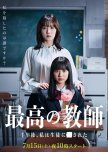
A Teacher Changing Lives, One Student At a Time!
I have been an ESL teacher for nearly 10 years. Many teachers will say that their primary job is to impart knowledge to their students. However, I have always believed that a teacher’s true job is to empower their students. To teach them “how to think” rather than “what to think.” The best teachers are facilitators and always encourage their students to find their own answers. This is the style of teaching that is pervasive throughout the Scandinavian countries.Rina Kujo is the homeroom teacher for a class of underachievers, and those who care very little about their education. For many, getting through a day is all that matters. She finds that on March 10, 2024, on Graduation Day, one of her students pushes her off a bridge to her death. She awakens to find herself on Opening Day a year ago. She realizes that for some unknown reason, she is given the chance to relive the past year and, perhaps, prevent her death. At first, this is her goal.
Rina’s determined to find out who pushed her to her death as she gazes at the sea of unhappy and unruly faces in her classroom. It then becomes apparent to her that it wasn’t just the students who struggled to get through a day, and soon, her focus shifts to understanding why her students behave the way that they do, and perhaps in doing so, she might begin to effect real change.
It begins with Ugumori Kanau, a shy but kind student who is being bullied by a number of students in the class. At first, Ugumori is very skeptical that Rina can do anything to help her until she finally asks Ugumori to summon the courage to face the class and tell them how their bullying has affected her. Courageously, she does just that, and very quickly, Rina has a staunch ally as she begins to help students one at a time. At first, the class stands against her, but soon, they begin to realize that Rina is truly trying to help them realize that they can live their lives a much different way than they have been. That there is hope, and that they aren’t quite as trapped in their life situations as they believe.
The themes attached to the students are all things that teenagers can relate to. Being bullied, being used by their parents, being an outcast among peers due to looks, allowing others to bully you, doing things you don’t want to do in order to be popular, and be a part of the “in crowd” despite the fact that you really don’t want to be friends with them anyway. These are all elements that are addressed. Rina, however, doesn’t lecture her students, but helps them realize that they are the cause of their own misery, but that they can change.
It's ironic how many people despair that any change is possible, and how they firmly believe that there simply isn’t any way out of their “hopeless” and unhappy situations, and so they take drastic measures, such as suicide, violence, or attack on others. As it’s been said, “Misery loves company.” Why else do you think bullies love a crowd? Their ploys don’t work without an audience.
This is the type of series that should be required viewing throughout high schools around the world. Students would quickly find themselves relating to one or more of the characters depicted here, and perhaps even be inspired to make their own changes.
Rina finds that she must change herself before she can inspire change in others, thus mirroring Gandhi's famous words, "Be the Change you wish to see."
Rina doesn’t just point out the problem behavior, but makes each student realize how that behavior affects others and how it’s so destructive. There’s no point in pointing out such behavior if the perpetrator is unable to see how it affects everyone around them. Empathy is something that is sorely missing from schools, and it’s something that should be required as part of learning.
There are some very problematic students in this series, and you wonder how Rina can possibly get through to them. But, where there was one voice, it soon grows into many, and even the most vicious students are suddenly finding themselves not only having to face Rina, but most of their classmates as well. They learn to accept and appreciate everyone for their talents as well as for their differences. It’s very hard to hate someone when you really get to know them.
There are some incredibly powerful moments in this series, at least one per episode, that you will find both moving and poignant. I’ve seen some great stories regarding teachers and students, such as “Freedom Writers” and “The Dead Poet’s Society.” This one ranks right up there with the best of them.
In a world where bullying is at its all-time worst, a series like this one becomes more paramount than ever before. This is a series that easily invites multiple viewings as we learn that it’s impossible for a student to learn something from a teacher without a teacher also learning something from a student. It always goes both ways. I learned so much from the students I taught. Things I still use to this day.
For any true teacher, you have to find a way to connect with your students. That’s half the battle. You can’t be afraid to get to know them and share things with them. This series endeavors to demonstrate what true learning is all about.
Don’t be surprised if you find yourself reaching for some tissues! This series digs deeply, as well it should. After all, a teacher has to always let their students know that they are there for them. Teaching is one of those jobs that, if you don’t love it, then you shouldn’t do it.
Was this review helpful to you?

This review may contain spoilers
Extremely Promising Series Utterly Destroyed in the Last Two Episodes!
I'm not sure if there is anything worse in television shows where you invest time in a series that is going really great for you, and then it collapses like a house of cards at the very end.When you destroy the ending of a series, it destroys the series itself, regardless of how good things were before. That is just a fact. The only reason my original score of "9" didn't go down to "1" is because the performances and literally 11 of the 13 episodes were really good. The last two episodes were so bad that I nearly gave up the series on the spot.
Two people suffering from mental issues end up living next door to each other. Min-Kyung is suffering from extremely low self-esteem and is the victim of abuse. It's also very clear that she does not like herself. Hwi-Oh is a cop on suspension who is trying to deal with anger management issues. The premise is quite good, setting up some very humorous scenarios between the two.
However, as I stated above, the last two episodes are costly to the series, as if the writers piece-mealed everything together to make a horrific picture.
First, Hwi-Oh is not a very good cop or even a realistic one. He allows Min-Kyung to go into an abandoned building by herself. He also doesn't find it remotely suspicious that the abandoned building is occupied.
Min-Kyung swaps from loving Hwi-Oh to helping him to abandoning him, to loving him, to moving away within the span of two episodes. Of course, this doesn't even serve as a red flag to any sane person that this is a person to stay as far away from as possible. Not to mention the "no explanation" of the capture of Min-Kyung's abusive boyfriend at the very end. It would have been more credible to have a fairy appear out of thin air and scream, "That's him!" instead. It was also laughable to see Hwi-Oh chasing after Min-Kyung not once, but TWICE! And, of course, Min-Kyung changes her mind more rapidly and suddenly than a jackrabbit on a hot date! By all intensive purposes, even after the series ended, one has to wonder if she'd already changed her mind about Hwi-Oh...again!
The car chase scene was beyond absurd as Hwi-Oh rolls down his window and tells the ex-boyfriend to pull over with an unconscious Min-Kyung in the passenger seat. Again, not a very bright cop. Especially when he jumps on the hood of the car. When did this become like a bad 70s/80s action flick?!
We also have a crime plot that miraculously resolves itself in the span of about five minutes!
Also, one of the silliest things I have ever seen was Min-Kyung's reaction to Hwi-Oh beating up her sadistic ex-boyfriend as well as the fact that as a cop, the officer interrogating Hwi-Oh at the station could have easily looked into the ex-boyfriend's record. Never mind that Hwi-Oh doesn't even bother to suggest this or offer up any kind of a defense, which was beyond ludicrous!
Like poor, amateur writer, they make sure everything is all nice and tidy at the very end, regardless of how implausible it was.
We also have a side-story of a covenience store clerk and a cross-dresser that serve absolutely no relevance to the story at all. They literally add nothing.
In short, what started out as a well written series, quickly turned into a convoluted hot mess in the space of its last two episodes. Traffic accidents have taken longer than that to develop!
Was this review helpful to you?

This review may contain spoilers
All You Ever Have is Right Now
This is definitely not your typical drama, which is actually a good thing. The series has enough curveballs and plot twists to keep the savviest viewer guessing right up to the end. These “time” plots are among the most challenging for a writer to track because there are so many elements. Perhaps that is why very few of them actually end up working, while so many others end up with enough plot holes to look like fly swatter by the end.We have a family with special abilities. Bok Gwi Ju has the ability to go back to the past to his happiest moments. However, he doesn’t have the ability to affect the past, or at least, so we think until Do Da Hae shows up; a con-woman who is initially only after the Bok’s money on behalf of her loan shark of a “mother” and her adopted family. We quickly find that Gwi Ju can actually communicate with Da Hae and even interact with her. However, for the first few episodes, Gwi Ju is suffering from severe depression after a car accident take the life of his wife while he was “away.” He drowns himself in his sorrows through alcohol, even failing to be a father to his daughter, I Na.
Bok I Na is a young preteen who spends all of her time on her cellphone, not wanting to look anyone in the eye. We later find that her special ability is to read the minds of anyone she makes eye contact with. Her anxiety of reading minds isn’t just limited to her classmates, but she believes that she’s the reason why her mother was killed. Both father and daughter are suffering from tremendous guilt.
Bok Dong Hee has the ability to fly. However, she finds herself “weighted down.” Literally! Putting Claudia Kim in a fat suit really carried off the character well as a woman who finds her only solace is in food.
Last, but certainly not least, is the matriarch of the family, Bok Man Heum who has the ability to see the future through her dreams when she’s asleep. In many ways, she’s become addicted to her ability, not only through the fear of something bad happening to her and her family, but also as a means to acquire future knowledge, and thus, making herself and her family extremely rich.
Do Da Hae seems to show up in the Bok family on a whim, but nothing is as it seems, and she later finds that the mysterious “fireman” who saved her from a school fire when she was in high school, is none other than Gwi Ju. She soon finds herself wrapped up in the “time travel” plot of the Bok family as well as falling hopelessly in love with Gwi Ju as well as with his daughter, I Na (who actually discovers Da Hae’s true intentions through her mind-reading ability).
The head of Da Hae’s adopted family is a cruel, vindictive loan shark, Baek Il Hong, whose plot is to get Da Hae married off to Gwi Ju with the hopes of acquiring some of their wealth. Still, very few things in this series follow the “typical” plot line, and this is what truly makes the series so special.
Is it possible for the “villains” to actually turn over a new leaf and to actually have good intentions? Is it also possible to change the future if one already knows what is going to happen? So many TV shows/movies have dealt with this question. The irony is that the only point in time that any can experience is “right now.” There is no future or past, which is something that Einstein himself proved: that all of time and space is relative. As Socrates states in “Peaceful Warrior,” all we have is right now. More and more people are realizing that the only power you can ever have is in this moment. Life is choice, which negates the ridiculous belief that there is somehow a “fate” or a “destiny” involved. The only “fate” or “destiny” that exists is in whatever moment we decide it to be. Those who believe that the universe is a random place where they are controlled by fate or destiny are cowards at heart. Why? Because they fail to acknowledge their own power of choice.
The series only has a few minor flaws to it, which isn’t a bad thing, and since it’s a “time plot” we can hardly blame the writer too much. First, Da Hae attempts to make it appear that she’s “died” in an accident to prevent Gwi Ju from going to the past to save her (which, if he does, he will die). She and her uncle set things up while Gwi Ju is in the past. The only problem with this is, how does Da Hae know how much time she has before Gwi Ju comes back? It’s never explained, and for all she knows, Gwi Ju could be back within seconds or minutes from whatever point in the past he’s returning from. And yet, she acts as if she has all the time in the world, which makes no sense.
Second, in the last episode, Gwi Ju is holding teenage Da Hae on the windowsill, telling her to jump to the blow-up fire cushion below. However, as much as time as it takes Gwi Ju to explain things, he could have easily jumped out of the window with her. It would have been more convincing if something had happened to prevent him from doing this. Again, these are very minor points, and they certainly don’t detract from the story.
This isn’t your typical superhero series. Many of the people in this series are selfish and greedy. They only care about their own happiness. Gwi Ju is so caught up in his own pain, that he neglects his own daughter. Da Hae is so caught up in getting out from under her “mother” that she initially fails to realize that there is already a loving family waiting for her. I Na is so caught up in trying to avoid pain, that she isolates an alienates herself from everyone around her. Bok Man Heum is so consumed with her dreams, that she fails as a mother and a wife. Everything has its price, even for those with special abilities. Why? Because in the end, they are people too. And the most captivating of superhero movies and shows are those that show us the “human” side of the characters. Not their superhero abilities.
Performances in this series are absolutely fantastic, but for me, there was one standout. Park So Yi (I Na) was incredible in this series. This young lady has an incredible future ahead of her! At a young age, she is already able to convey feelings and emotions with simple looks and gestures; something that many adult actors and actresses are unable to do! She makes us feel her pain of loneliness, guilt, and isolation of someone who believes herself to be an outcast, not only at her school but within her own family as well! Park So Yi is able to show us the terrible burden that I Na carries and carries alone. I was captivated every time I Na was in a scene!
If you’re looking for a very “atypical” drama, you really can’t go wrong at all with this one! It will have you laughing and crying, and perhaps help you ask yourself the important questions such as, what is really important in life? Money or love? Money or family? And also to never forget to live life in each moment.
Was this review helpful to you?
This review may contain spoilers
Easily One of the Worst Romantic Series I've Ever Seen!
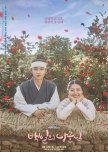
100 Days My Prince? Even 10 days is far too long to have to deal with two of the most pathetically unromantic people I’ve seen in recent memory. Screenwriter Noh Ji Sul must have had a brain aneurysm when she put this farce of a story together. It’s about as “romantic” as watching an automobile accident. And that’s what this entire story feels like: a bad accident.I have to wonder about Korean history as it seems that nearly every single K-Drama I’ve watched involves a king who is an absolute incompetent moron. He has no guards. He has no support, nor does he even know how to utilize the resources that are so obviously at his disposal. Conversely, there is also always some “First Minister/First Premier” who craves power and seeks to undermine the king. Is this truly the only scenario that Korean writers see and use for such stories? Repetition quickly becomes tiresome. And Noh Ji Sul’s feeble attempts are beyond tiresome!
Here, we have a somewhat ridiculous premise: Prince Yi Yul is summoned to a rain ritual (yeah, don’t even get me started on that one!), and, of course, he’s ambushed. He conveniently strikes his head on a rock and his found by Yun, a local villager who nurses him back to health in order to fulfill a silly edict, issued by the Prince himself: all bachelors and spinsters are required to get married or get flogged 100 times. Now under the guise of Won Deuk, as he doesn’t remember who he is, the Prince is forced to marry Yun’s daughter, Hong Sim, who is a noble woman also living under another identity after her father was murdered years ago by the current First Premier, Kim Chae-Eon, who is the mastermind behind all of the manipulations that are going on.
Won Deuk and Hong Sim live a precarious life together as a forced married couple. Never mind that they don’t sleep together (after all, the integrity of both must be kept intact until the final reveal), and they scarcely act like a married couple at all. Nobody in the entire village catches onto Won Deuk’s obvious noble upbringing in his speech and mannerisms. The only one who knows is Yun because the Prince was in his bodyguard’s attire when he was found. Meanwhile, Hong Sim is searching for her brother, whom she hasn’t seen in years, and the Crown Princess happens to be pregnant with another man’s baby. Of course, Kim Chae-Eon is trying to keep all of these “balls” in the air while trying to remedy the mess. The last thing he wants is for the Prince to come back, and when he does, after finding out about his lost memories, hopes to use and manipulate him.
It isn’t difficult at all to piece this shabby puzzle together, as we already know that Hong Sim’s brother is the father of the Crown Princess’s baby. The whole thing plays off like a bad episode of “The Young and the Restless,” leaving the viewer to wonder what else can be thrown in with the kitchen sink.
Perhaps the silliest gimmick used was during the final episode when the reveal comes out. Finally free of Kim Chae-Eon, the Prince finally has Hong Sim, right? Of course, not! Why would things be wrapped up too soon? Instead, she begs him to forget the past, as she feels responsible for all of the pain and turmoil he’s suffered. However, she conveniently chooses to NOT let go of the past herself. Such is the sound advice of a truly pathetic hypocrite and a coward. Don’t worry, it gets worse. The Prince, after a year, returns to the village to try and convince Hong Sim to marry him again, and again, she refuses. He asks her to find some books that he conveniently dropped and to return them to him. Of course, these are his diaries, and, of course, she sits down to read them. So, I guess what’s written down is far more important than a man’s spoken word? I was already tired of this silly escapade when this drivel came around! And, of course, she finally accepts him in the most pathetically ridiculous manner I’ve seen in a long time. I guess Noh Ji Sul really had no clue what she was doing.
We also get another ridiculous premise. One of the Prince’s closest allies, Jung Jae Yun conveniently suffers from “Face Blindness,” and yet, he’s always able to recognize the Prince under his guise of Won Deuk, even when Won Deuk doesn’t speak?! The stupid gimmicks for this series just kept coming, which is always indicative of a poor writer. The series is literally riddled with such poor plot devices.
When Hong Sim’s brother is finally killed by assassins, Hong Sim goes to look for him, and yet, she somehow (without being told) knows where to look for him?!
It’s bad enough that the story and plot are carried out so poorly, but then you have two of the worst acting performances to make sure it’s even worse!
Doh Kyung Soo is obviously trying to give the Prince a very haughty and high-mannered personality. However, what we get is a man who speaks robotically without any personality whatsoever! The trick is to make an arrogant character likable, and he fails miserably! Take TV icons like Sheldon from “Big Bang Theory” or Alex Keaton from “Family Ties.” Both were extremely arrogant, but the actors knew how to make those characters likable. Doh Kyung Soo succeeds in giving us a vain, rude, and overbearing Prince with virtually no redeeming qualities at all. The man needs acting lessons!
Nam Ji Hyun is almost as bad with Hong Sim. She’s got to be one of the most undesirable women ever put to screen. She acts like a little girl half of the time. Even Nam Ji Hyun’s voice sounds like a 12-year-old girl speaking! It’s unnervingly irritating! She rarely smiles, and she’s never grateful for anything at all. It’s bad enough that her father whines and cries like an old woman in just about every scene he’s in. It’s also a fact that Nam Ji Hyun and Doh Kyung Soo have absolutely zero chemistry together. They’ve also got to be the worst kissing couple I’ve ever seen. If you don’t like doing kissing scenes, then pick projects that don’t have them! Hong Sim is also a cowardly hypocrite, which makes her about as appealing as a piece of used tissue paper.
Han So Hee is a vastly superior actress, and she should have been given the role of Hong Sim. And conversely, Kim Seon Ho is also a much better actor than Doh Kyung Soo, and he should have also been given the lead role of the Prince. These two would have been an infinitely superior job, given that they both outshone the lead actors (not that that was hard to do!) of this series. The only actor who stood out was Cho Seong Ha (Kim Chae-Eon), whose masterful performance was wasted.
This is easily one of the worst romantic series I’ve seen in a very long time. Trust me, you don’t want to spend even 1 day with this farce of a series!
Was this review helpful to you?

This review may contain spoilers
How To Be There For Someone And Let Them Be There For You!
There is one thing more powerful, captivating, and endearing than one person being there for someone else. It’s when two people are able to be there for each other. This is the hallmark—the foundation—of any true relationship. Relationships are not about what you get out of them, but what you put into them. And any true companion will never ask you to be anything other than who you are. In fact, they won’t encourage you to be anything else.I doubt there is a person alive who cannot remember their first love. The series does a masterful job of demonstrating the awkwardness as well as the intrigue of first love. It’s new. It’s scary. And it’s also so encompassing that a person can scarcely believe that it’s happening. At the start of the series, Sang Zhi is a young middle school student who quickly finds herself enamored by her brother’s friend, Duan Jia Xu. Despite the fact that he’s five years her senior, it doesn’t matter. As we well know, love defies logic and rationale. Most would quickly define Sang Zhi’s feelings as a crush and nothing more. However, over time, a single seed can grow and blossom, and it soon becomes obvious that this is not a crush.
Sang Zhi isn’t merely captivated by Duan Jia Xu’s looks. She marvels at how well and respectfully he treats her, always being thoughtful, attentive, and willing to help, no matter the situation. Initially Duan Jia Xu sees Sang Zhi as a sister and nothing more. After all, with such an age gap, it’s hard to imagine him seeing her in any other way. But, as people grow older, that gap narrows. It just takes some time; time enough for him to begin seeing her in a new light. Or as Sang Zhi wisely states, “I had to catch up to him.”
Duan Jia Xu is a gentle, hardworking young man who suddenly finds a massive responsibility thrust upon his young shoulders. His father, in a drunken state, is involved in a hit-and-run fatality. Rather than face the consequences of his actions, his father hurls himself off the balcony of their home. However, he doesn’t die, but is in a vegetative state. Bills pile up. Duan Jia Xu’s mother’s body is wracked with cancer. And works multiple jobs to try and pay off the debt that he owes to the family who was affected by the tragedy. In short, he’s forced to grow up very quickly. Despite having Sang Yan’s friendship (Sang Zhi’s hilarious older brother!), Duan Jia Xu feels very much alone. One can’t help but figure that, even at a young age, Sang Zhi gave him a reason to not feel this way. And by the final episode, we are proven right. She is the bright star in his life and always has been.
Sang Zhi is a young, spoiled, and often immature young girl. Her defense mechanism of “playing mind games” with Duan Jia Xu leads her into needless and silly predicaments, such as making up the idea that she has an online boyfriend, hoping to make him jealous. Of course, it backfires, and she often reacts terribly, leading her to jump to conclusions. However, make no mistake. Sang Zhi is a very strong woman who proves to Duan Jia Xu that she is more than capable and fit to be by his side during the most trying of times. In short, she’s exactly the kind of partner any sane man would want. Someone who’s there for you during the lightest and darkest of times. She never hesitates or wavers in her convictions. She is steadfast and acts very much like an anchor. Even when her parents initially disapprove of their dating, it doesn’t sway her. Nothing does.
For the most part, the relationship between Sang Zhi and Duan Jia Xu is done very well, even when she is given very poor advice from her roommates—most of whom have no clue how to be in a relationship. Sang Zhi often contradicts herself; wanting to be pursued and then reacts immaturely when Duan Jia Xu doesn’t do something or pursues her in a way that she doesn’t understand. She is fortunate enough that Duan Jia Xu’s own love for her is as strong as hers is for him, and he won’t be turned away so easily either. However, there are a few awkward and even puzzling moments after they start their relationship, how often Sang Zhi recoils as attempts of kisses or hugs or even holding hands. This was done a bit too frequently, in my opinion. It reminded me of Sang Zhi’s funny attempt at the high jump in high school when she kept awkwardly stepping forward, then back, and then ran toward the bar only to crash into it. Once she finally gets over her girlish reactions and aversions, things finally begin to settle into a space of normalcy.
This is my first foray into Chinese dramas, and I wasn’t disappointed. Through the first 21 episodes or so, I had this series at an “8” or so. The last few vaulted it to a “10.” Lu Si Zhao got to me when she reacted to her brother after he’d hit Duan Jia Xu. Her tearful reaction of feeling betrayed by someone who was supposed to be on her side, hits full force. The series only got better from there. The airport scene when she follows him back and finally reveals her “secrets” to Duan Jia Xu and letting him know that she will never leave him is incredibly powerful as was their scene together at his mother’s grave. However, the “proposal scene” was done so effectively, that I’ll wager that not many saw that coming. I’m not a fan of having a crowd for a marriage proposal, but seeing all of their loved ones standing around the heart of flowers, and Duan Jia Xu’s heartfelt proposal culminated everything that the series was about.
The chemistry between Lu Si Zhao and Chen Zhe Yuan is undeniable and unmistakable as they make sure that the viewer takes in every single raw feeling and emotion that occurs between them. "Our Beloved Summer" is my all-time favorite romance between young couples. This one is right up there with that one.
So many romantic dramas and movies often leave the viewer actually wondering if a “happy ending” is feasible or if reality will simply prove to be too much and the “happy couple” will eventually dissolve into an ambivalent one. Not this couple! I have no doubt that Duan Jia Xu and Sang Zhi will have a happy and largely fulfilling life together. Why? Because they’ve both realized at a tender young age, the most important thing to do for someone you love is to be there for them and to also let them be who they are. If you’ve lost faith in romance, this series just might help you find it again.
Was this review helpful to you?

There Is No Greater Purpose Than Service To Others!
As gentle, as simple, and as sweet as the gerbera flowers depicted in this movie, this little romance shares all of the beautiful qualities of those flowers. A vast array of colors and meanings, the gerbera flower, in its short lifespan, is able to convey the full spectrum of unconditional love. After all, it’s not how long you live those matters, but how well you live!This is a touching story about two people, both of whom are terminally ill. Hayasaka Akito is standing on the roof of the hospital, obviously contemplating suicide after learning that he has a year to live when a tumor is discovered in his heart. However, something catches his attention. A young girl (Sakurai Haruna) sitting alone on a bench on the rooftop, drawing in her sketchbook. It’s enough for him to pause and wander over to meet her. Thus begins an especially keen and poignant story of love, friendship, and above all, service.
Akito learns that Haruna has an extremely rare condition, and she has only six months left to live. What baffles Akito is Haruna’s attitude as she tells him that she is not afraid to die. Of course, he begins to visit her often, and he learns that he is her sole visitor. Seeing her bright and cheerful personality, despite her situation, he vows that he can never tell her about his own condition. His action is selfless as Akito realizes that virtually Haruna’s entire life has been mired in pain. He chooses to do all he can to bring some spark of joy to the last months. In this, he more than succeeds.
The true “gem” of the story is that secrets never remain secret for long. It isn’t until after Haruna has passed away and Akito is struggling to fight off the disease that will soon inevitably take his own life. But not before learning that the secret of his own condition was discovered by Haruna early on in their friendship. Determined to maintain Akito’s secret as well as the unconditional love and gratitude for the gift he gave her, she made her own vow to not let him know that she knew. Akito viewed Haruna as an angel, when in truth, both were angels to each other. Akito carried Haruna in Life, and Haruna carried Akito in Death.
It's been stated that there is no greater gift than simply being there for someone. The exchanges between Akito and Haruna are incredibly sweet without being melodramatic. There are no demands for sympathy or sorrow. Each learns to simply be in the moment for each other. Each learns to simply be there for each other. And each learns that there is no love without friendship or unconditionality, and that is the true beauty of this story. The magic of unconditional love. And even though Haruna conveys her love to Akito through the gerbera flowers, we also know that no words are necessary, and she knew that he loved her as well. Actions speak volumes.
Nagase Ren and Deguchi Natsuki have real chemistry on the screen. It’s conveyed in their eyes and smiles, which is a big reason why the story works so well. My other favorite character was the woman in the flower shop.
Love is actually very simple. We’re the ones who make it complex, no thanks to the egoic mind that loves to put conditions on everything. This film makes me appreciate the simplicity of love, much like the simplicity of the gerbera flower. Keep some tissues handy! You might need them!
Was this review helpful to you?

This review may contain spoilers
Love And Embrace Who You Are!
I’ve been watching K-Dramas for almost eight years now. I’ve watched shows from Canada, England, Australia, New Zealand, Japan, China, and Taiwan. For my money, the Koreans are masters of the industry because they almost always incorporate some kind of meaning and wisdom. Not to mention that they are experts at putting different genres together and making them all work.This collaboration of Korean and American performers is incredible! Frankly, I was hesitant to give this movie a try until a co-worker came in the next morning and told me how much he loved it.
The film takes all of the best elements of K-Dramas and K-pop music to give everyone—no matter what your age—an absolutely magical thrill-ride and puts them front and center! Better yet, this movie presents an important message for both young and old.
A “demon” is nothing more than the culmination of your fears that originates within your mind. Of course, none of the things that your mind tells you about yourself are real. And yet, so many people allow those thoughts to tell you who you are. They can reveal no more about who you are than a freckle can at the end of your nose. Too often, we focus too much on who we are not.
Rumi, Mira, and Zoey are three friends of the hottest K-pop band in Korea. They are also given the ability to fight demons. Thus, they provide entertainment, love, and protection. However, Rumi has a secret. She is also part demon, and she refuses to let anyone know for fear of everyone seeing her differently. Sound familiar? How often do people do all they can to cover up parts and aspects of themselves that they are too afraid to reveal? Guilt and shame are learned behaviors.
Enter the Saja Boys, a new K-pop boy group who secretly work for Gwi-Ma a powerful demon who wants the souls of everyone. Led by Jinu, he and his group are actually Grim Reapers—if you’ve watched enough K-Dramas, they are easily identified by their dark coats and black hats. Grim Reapers in Korean lore have the job of helping souls cross over. Some depictions have them as good beings, while others have them depicted as evil and serving evil.
Jinu uses Rumi—especially after finding out that she’s part demon—to get close to her with the hope of tricking her. It nearly works as Rumi is suddenly forced to face who she is and come to terms that there is nothing wrong with her, nor has there ever been. This is the core lesson that this wonderful movie is attempting to pass on to its viewers, and for my money, it more than succeeds. Children, teens, and everyone should take heed of this message.
The end of the film has one of the most inspirational songs and scenes that I have ever seen. I can only recall a handful of films that touch both the heart and the soul, and frankly, I can’t think of another animated movie that has done this. As the fans begin to snap out of Gwi Ma’s control, they begin to lend their own voices—and power—to Rumi, Mira, and Zoey. There are few things more inspiring than people coming together to fight for a common cause. Many viewers have been surprised to find themselves needing some tissues during this powerful climactic ending! And frankly, I can’t blame them in the least. This is a movie the world desperately needs right now, and it’s no surprise how much it's resonating with people everywhere.
The vivid colors and animation bring an amazing world to life, something that Disney could take some lessons from. Maggie Kang and Chris Appelhans deserve so much credit and praise as well as everyone who was a part of this project. I loved seeing Korean performers Ahn Hyo-Seop (Jinu) and one of Korea’s absolute top actors in Lee Byung-Hun (Gwi-Ma) participate.
As I write this review, I found that the soundtrack is ranked #1, and the song “Golden” is the number one song! I’ll wager that kids and adults alike are bopping to these incredible tunes as much as possible! I know I will be! Frankly, I haven’t seen a soundtrack this loaded with great songs since “The Greatest Showman.”
I hope the rest of the world takes a note from Korean culture and entertainment; that it’s not only possible to make entertaining movies and shows with a message, but that the world is desperately eager for them! I already know that I’ll be watching this gem of a movie again and again!
Was this review helpful to you?

This review may contain spoilers
Like Watching Kids Play "House."
You know when you’re watching a mediocre series when the first episode is better than all of those that follow it. By the time I’d reached the final three episodes, I nearly dropped the series completely. I was tired of watching these so-called “adults” acting like spoiled, immature brats, especially when they didn’t get what they wanted.More often than not, less is more. In this case, had the series focused its energies on the business story rather than the romance, this series would have been much better, much more cohesive, and not felt like a story that an amateur writer put together piecemeal. Never mind the romance triangle (which doesn’t work at all in any case), but there are enough plot holes to drive a 18-wheeler truck through! The classic Korean series, “Misaeng” managed to keep its story focused on the four interns without needlessly deciding to add some silly romance angles.
The only relationship aspect of this series that held any interest for me was that between Mr. Han Ji Pyung and Choi Won Deok, the grandmother. There was a sweet tenderness between these two, especially as we discover that Mr. Han is resentful orphan who initially doesn’t want to be owing favors to anyone. Forget the fact that Mr. Han’s backstory is never revealed (and should have been) or why he ends up being the way he is. He’s a brilliant businessman who’s never afraid to offer true, honest criticism to anyone. He knows what happens to goldfish who decide to swim in the shark tank before they’re ready. And the story never really delves deeply into Mr. Han’s helping Grandma Choi write letters to Dal Mi, who ends up falling for more of an ideal than a real person.
The Sandbox is an intriguing place where up-and-coming inventors in the field of technology are able to showcase their abilities with the hopes of gaining funding and establishing a company. They are assigned a mentor as well as electing a CEO to lead each group. Nam Do San is a brilliant programmer, along with his two sidekicks (who do virtually nothing throughout the series but provide silly and unappealing comedy relief). It was interesting when he selected Dal Mi for his CEO rather than her sister, Won In Jae (a woman with much experience in the field). While Dal Mi ends up proving herself (with much help and assistance from Mr. Han), she later proves that she’s far more incompetent than she is being a true CEO. And her luck would have run out long ago had it not been for Mr. Han. She has no clue how to interact with those under her, and she always reacts emotionally to a situation rather than with a savvy business logic and rationale. A 50 question test does not a CEO make!
There are too many plot holes for me to list, but I will point out a few here. First, after Dal Mi finds out that Mr. Han wrote the letters and that her grandmother was the mastermind behind it, there is no conversation between Dal Mi and her grandmother about why she did it. Dal Mi is upset with Mr. Han and Nam Do San for deceiving her, but yet, no scene with her grandmother?! She would have been the first person I would have talked to!
Also, the ransomware perpetrated by the twins was so blatantly obvious that it killed any mystery regarding who was behind the act. That's never a good thing. Funny how neither of the sisters had any suspicions about them.
Sometimes, a three-year jump in the story does more harm than good, especially when the writer fails to take into consideration everything that transpires during that three-year gap. For instance, Dal Mi has an estranged relationship with her mother, who moves back in with her and her grandmother. And yet, there are no scenes showing how they’ve managed to reconcile things. There are also no scenes showing the process of reconciliation between Dal mi and her sister either! It’s like the writer was in too much of a hurry and skimmed over things. Perhaps if the silly romance had been thrown out (as it should have been!) then there would have been ample time for the more important aspects of the story.
Aside from the grandmother, we have a group of young and very immature children masquerading as adults. Dal Mi is so upset with her sister, that she feels she has to prove herself. Her sister wants to prove that she never needed her step-father’s money, and yet, she doesn’t seem to care at all about her late father or what he meant. Nam Do San is a little boy, pretending to be a “man,” crying at nearly every drop of a hat. His father is a tiger father who has Nam Do San’s life mapped out. Nam Do San is extremely immature and mistakenly puts Dal Mi at the center of his universe like a 16-year-old high school boy. What we end up with are two silly kids in a relationship that is about as appealing as watching kids in middle school.
Suzy Bae is a decent actress at best. Another big problem with the romantic angle is that Suzy Bae has absolutely no chemistry with either Nam Joo Hyuk (Nam Do San) or Kim Seon Ho (Mr. Han), and it was a headscratcher trying to figure out why a romance with either of them would work, let alone be even remotely appealing. Most of her expressions are very bland, and she certainly doesn’t have the range of many Korean actresses who are far superior in ability. I still can’t figure out why so many people are enamored with a woman who doesn’t seem to have much talent.
I can also say the same for Nam Joo Hyuk. A pretty face does not an actor make. Easily the weakest of the entire cast, Nam Joo Hyuk just looks lost half the time. Too often, he had that deer-in-the-headlights look on his face. He’d cry and then become a petty, jealous little boy in his scenes with Kim Seon Ho (a far superior actor). It felt like they picked the most popular boy and the most popular girl in high school and put them in a school play…just because they’re the most popular rather than because of any real talent.
Ultimately, this series ends up being a hot mess of contrived scenarios that would have been best left up to a fantasy writer. Not much was believable, let alone appealing, about this series. They should have hired the writer from “Misaeng” to handle this series rather than some clueless amateur. I ended up fast-forwarding through most of the final two episodes, but I was so sick of the story and the pathetic characters. Not a good sign that you’re watching a quality series. For me, “Start Up” didn’t take long to be finished, much like those groups in the first few episodes who were eliminated from the Sandbox. This series should have been eliminated from any kind of consideration as well.
Was this review helpful to you?


