


 1
1


This review may contain spoilers
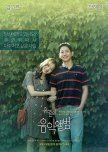
This is the story of two people, who believe themselves to be broken; who believe that they aren't really worthy of anyone or anything. It's very hard to be in a relationship with someone with this mindset, as it isn't long before they look to the other person to fill the void that they believe exists in their life. The astonishing secret is this: there is no void in anyone's life. And nobody outside of yourself will ever be enough because unless you love yourself first, you will quickly find that you cannot give what you do not have.Hyun-woo is a boy with a very troubled past; a past that he desperately wants to forget and keep from influencing his ability to create a life for himself. There is only one person of whom he dreams of spending a life with; one of the few people he feels that he can trust, and that's Mi-Su.
Mi-Su is a young woman, who also has a troubled past. She can never seem to get her life in order, and she views herself as a loser; a loser due to choices that's she's made in her life that have not brought her the fulfillment she seeks. The only person she feels remotely happy with is Hyun-woo, who shows up at the bakery where she works.
Hyun-woo and Mi-Su are two people who clearly like each other, but can't seem to find a way to connect for more than a fleeting day or so. Over the span of about 11 years, they float in and out of each other's lives, until finally, they are able to reach a more permanent connection.
Mi-Su is someone who has always had a difficult time trusting. This isn't uncommon from someone who's lacking in self-esteem and self-love. Hyun-woo is someone who is trying to keep the past from tainting his relationship with Mi-Su.
People keep secrets for a reason, and they should never feel pressure to reveal something if they do not feel ready. Prying, of course, never ends well. However, keeping a secret from someone can also come back to bite you.
The performances are very good, even if the plot loses a bit of traction in the last 30 minutes or so. Some of the scenes don't make a lot of sense toward the end, but ultimately, the director finds a way to save the story before it falls flat on its face.
I can't help thinking that Hyun-woo and Mi-Su will never be able to have a successful relationship until each of them begins to love themselves. A dysfunctional relationship involving two gloomy people, isn't likely to succeed. Eckhart Tolle wisely points out, "Movies always have those happy endings when the two people get together. However, they never tell you what comes after."
If the writer and director had filled in some of the holes of the movie, it would have been much better. However, this is a very watchable, and mostly enjoyable, film.
Was this review helpful to you?
This review may contain spoilers
What is Missing in Education!
Throughout history, there have been those who wish to impose their own societal, cultural, or religious beliefs upon others. This is not something new. However, what most advocates for the imposition of arbitrary rules fail to realize is that all imposition and oppression will always be fought again. Why? Because these things go against the very nature of the soul. And the nature of the soul is freedom.Life is choice. It always has been and it always will be. “Rules” are implemented by those who lack the wisdom of education; to help people make better choices. And yet, all education lacks the central core value that everyone needs: learning how to love yourself. When you love yourself, you will find it very difficult to make any decisions that bring harm to yourself as well as others. When you love yourself, you will no longer need outside help and influences to make decisions. They will simply become a fabric of who you are. In short, they will be second nature. This is what is lacking in every single educational institution on the planet. Mankind has not yet evolved to this level yet, but there are those very few who are trying to help people realize that this is absolutely necessary because it is the missing piece. And it is even more vital that this type of education be implemented from the very first levels of schooling (kindergarten/pre-school).
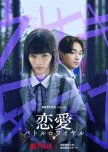
The headmaster of an elite all-girls school has merged with an all-boys school. Immediately, she implements a ban on romance. Anyone caught engaging in romantic activities--even if it’s not on school grounds, will be expelled. This is the type of primitive, Puritanical control spawned by the most cowardly of people; those who are incapable of dealing and facing their own feelings, and so instead, they attempt to control others. It’s entirely cowardly and fear-based. Such cowards will eventually have to come to terms with their own impotence.
A gestapo group of students are even utilized by the headmaster to hunt down and find any students are breaking the rule. They are asked to bring back photos or any evidence they can obtain. Of course, most of the students who are engaging in such practice are those who have been spurned or rejected by someone, and therefore, do so out of anger and self-loathing.
Ichika Arisawa is a young girl whose mother is in tremendous debt. Debt collectors harass her, due to her father’s inability to pay off the family debt, despite the fact that Ichika’s parents are divorced. Her mother is working long hours to just to make enough to make ends meet. The school is made up mostly of very rich students, and Ichika spies a way to make some money to help. She finds students engaging in romantic activities, and then she makes a “demand” of money to keep their romance safe. She even gives herself the pseudonym of “Love Keeper.” At first, it’s very self-serving and nothing short of blackmail, but students eager to keep their romance safe and not risk getting expelled are more than happy to pay the one-time payment. Ichika even knows how to break into the school counselor’s computer in order to delete any evidence.
Ichika, however, soon finds herself front and center when she falls in love with Maki Ryogo, a rebellious student who, at first, is trying to get expelled from the school. However, his father, a bitter, abusive man, donates a tremendous amount of money, and therefore, his “romantic whims” are simply overlooked by the headmaster. Maki discovers that Ichika is the “Love Keeper” and decides that he actually wants to help.
The series plays out much like “Footloose” a movie based upon a true story where dancing was banned in a small town because it was thought to be a promiscuous act. The headmaster endeavors to “protect” the students with such a ridiculous rule, but failing to realize that it’s impossible to go through life without pain. It’s how we deal with the pain that matters, but she hasn’t the wisdom to realize that her job is to empower and help students navigate these temporary, painful moments of life. Attempts to shield your children from pain is like standing in front of them in a rainstorm, and actually believing that you are protecting them from the rain. It’s an impossibility. Instead, you teach them how to protect themselves and empower them with the wisdom and confidence that they will, hopefully, make wise decisions. They won’t always do so. Not even adults bat .1000 in this regard!
The series is insightful, despite the fact that it may be hard to believe that in this day and age, there are still those of a Puritanical mindset, but the series works. It is also not afraid to address all aspects of romance, whether it be heterosexual or homosexual. Remember that true love has absolutely no conditions.
Performances are first-rate across the board. We share in the angst and frustrations of the students are simply trying to get through a day while battling the feelings and seemingly conflicting emotions which are prevalent in teenagers. Remember the joy of experiencing something for the first time, whether it was kissing someone or holding their hand? To a teenager, it’s huge, and most adults have forgotten those precious moments. To cast them as “bad” is like throwing a bucket of mud on a flower.
Make no mistake. This series isn’t really about sex, although it’s discussed and shown briefly as well as tastefully. It’s about trust. It’s about empowerment, and these are things, even in today’s world, that are sorely needed!
Was this review helpful to you?

This review may contain spoilers
Freeing People From Pain One Patient At a Time!
Most people might have a hard time believing that there are even worse things than death. Living in constant pain is one of them. Some might call it “suffering,” but suffering is a subjective term. Pain is inevitable, but suffering is optional.The irony is that death is not the opposite of life. Life has no opposite because it is eternal. People die, but they simply change form. No one is ever “lost” to us. That is a fabric of the mind and the ego. Birth is the opposite of death. Life can never be lost nor taken away because it’s who you are. You can no more lose your life than a wave can be lost from the ocean. It’s always a part of it.
Doctor John is a brilliant series that begins with a doctor who works as a janitor in prison. He’s been serving three years for committing euthanasia. However, he has no compunction about helping out a fellow prisoner who is suffering from pain. Doctor Cha Yo Han is nicknamed the “Ten Second Doctor,” because he can often diagnose a person within 10 seconds.
If Doctor Cha Yo Han has one principle in his life, it’s to never allow a person to suffer needlessly from pain, whether that be physical or mental pain. He fervently believes that his sole job as a doctor isn’t to necessarily save lives (even though it’s a big part of it) but to save people from pain.
We see that most of the doctors at the local hospital measure people in money. They also believe that a doctor who is empathetic is the weakest type of doctor. It’s sad that in today’s world, most of the medical community still views feelings as a weakness rather than as a strength. They walk around the hospital hallways as nothing more than robots. Shut down your feelings, and you’re not stronger. You’re simply half of a human being, which is a weak human being, indeed.
Kang Shi Young is a second-year resident assigned as a doctor to the prison because, according to Doctor Cha Yo Han, the previous doctor was an inept fool. Kang Shi Young is able to look past Doctor Cha Yo Han’s initial arrogance and see a man who has a gift. A gift for diagnosing patients, and a bigger gift of using his talents to help free people from pain.
We learn that Dr. Cha Yo Han was sent to prison for a crime he didn’t commit. Two people, Prosecutor Son Suk Ki and Nurse Chae Eun Jun have a piercing hatred for Doctor Cha Yo Han. Both are suffering immeasurably. A sadistic killer brutally murdered their children.
Prosecutor Son Suk Ki believes that euthanasia is a crime, and he was the lawyer who prosecuted Doctor Cha. However, after Doctor Cha is released after three years, he vows to put him back where he belongs: behind bars. He feels he was robbed of the chance to see the killer prosecuted, and he blames Doctor Cha for it.
Nurse Chae Eun Jun is an even worse case. She’s a mother so wrapped up in her own pain, that she sadistically forced the serial killer to sign a DNR, hoping that he would suffer immeasurably from his own illness and pain. However, Doctor Cha saved the killer from this fate by performing euthanasia on him, and thus robbing Chae Eun Jun of her revenge. The Chinese proverb, “When you set out for revenge, make sure to dig two graves,” came to mind. It’s sad that she lost her daughter, but it’s even more pathetic that a woman is willing to desecrate the memory of her own child in the name of revenge. When all you see is pain, you lose sight of everything else. That is even more tragic than what happened to her child.
The brilliance of Doctor Cha is like watching Dr. House. He’s a genius, but he also has a hidden secret. He suffers from CIPA (Congenital Insensitivity to Pain Anhidrosis). In short, he’s unable to feel anything. This puts him at great risk as he’s also unable to regulate his own body temperature. He daily takes and monitors his blood pressure, temperature, and other readings to make sure that nothing is wrong. As he says, “I am a ticking time bomb” as such people don’t normally live for very long. It also puts him at risk of losing his job, as his patients might view him as “less than a doctor” because he’s unable to feel pain.
Of course, Doctor Cha only cares about himself as far as his ability to help others. He is put in charge of the Pain Management Team at the hospital. Soon, after curing several patients of their pain, people from all over flock to him for help.
Kang Shi Young quickly falls in love with Doctor Cha, despite his best efforts to let her know that she has no future with him. However, her feelings are unwavering, and she soon appoints herself as his guardian, helping him to monitor his body as soon as she finds out about his disease.
I was happy to see the romance was sweet without the usual cliches, pitfalls, and games that we typically see. In many ways, the romantic story was refreshing.
It’s also interesting to note that Doctor Cha doesn’t give in to Prosecutor Son Suk Ki and Nurse Chae Eun Jun’s anger and hatred. He, instead, patiently waits until they are willing to listen, to help them realize that they are the only source of their own pain. In fact, Chae Eun Jun discovered that Doctor Cha had seen the fake DNR sheet that she had forced the killer to sign, and yet he never mentioned that at his trial. She demands an explanation. “I figured that you had suffered enough,” he tells her. That is the mark of a true, loving and caring person. And Chae Eun Jun, despite her rage, cannot help but be touched, even after trying to sabotage and destroy him.
The series is filled with touching moments as Doctor Cha refuses to be drawn into the hospital politics as well as giving in to Prosecutor Son Suk Ki’s threats. His sole purpose is helping others, and he does a masterful job. Doctor Cha reminded me of Dr. House and Dr. Patch Adams. He has House’s brilliance without the temperament and Patch Adams’s love for helping others. The world needs more doctors like Doctor Cha.
Was this review helpful to you?
This review may contain spoilers
A Good Series That Should Have Been Great!
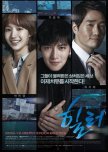
“Healer” kicks off like a massive thunderstorm, and by the time it ends, it’s just a gentle rain, which left me to wonder, “What the heck happened?”Seo Jung Hoo is a man in his late twenties who is basically a sort of “hero for hire.” He has fancy gadgets supplied by his hacker partner, Jo Min-Ja. He’s hired to do any job except for murder A master at hand-to-hand combat as well as being able to evade pursuit and detection, he’s sort of a cross between Ethan Hunt and Jason Bourne. Little does Seo Jung Hoo realize that he’s soon thrown into job that takes him back to his own origins from 20 years ago.
Chae Yeong Shin is a novice reporter working for an online tabloid news company. She’s tenacious when it comes to tracking down a story, but other than that, she has no real journalistic skills at all. This is coupled by the fact that she gets severe panic attacks whenever she’s in a violent situation; attacks that incapacitate her. Of course, why she never suffers an attack during her first confrontation with Seo Jung Hoo is never explained, even when he threatens to harm her if she resists. She, too, has a tie to 20 years ago.
Finally, we have Kim Moon Ho who is Korea’s most famous journalist. He’s nothing short of a celebrity, but thanks to Seo Jung Hoo and Chae Yeong Shin, he is quickly immersed in a massive cover-up that involves his brother and their friends from 20 years ago. Kim Moon Ho is the only one who knows Chae Yeong Shin’s true connection to his brother’s wife (who is Chae Yeong Shin’s mother who believes her daughter to be dead). This sets the stage for a sort of “David vs. Goliath” showdown in which our three protagonists struggle to uncover the truth, who is pulling the strings, as well as trying to stay alive in the process!
While this all sounds intriguing, and for the first twelve episodes or so, it is, but suddenly, there are just way too many plot holes to plug up by the final episode. It lacks the tautness both of story and character that were present in such thrillers as “Vincenzo” and “Stranger.” In those series, the writers and actors knew their characters backwards and forwards. If only “Healer” could have been done with the same attention to detail, this may have been a very different series.
As you may expect, Chae Yeong Shin is like a 7th rate Lois Lane. She soon finds herself falling for the mysterious Seo Jung Hoo, especially after he saves her (fairly typical of nearly every superhero movie ever made!). She’s soon behaving much like a swooning 18-year-old. Min Young Park seems to try her best to keep a handle on her character, but too often, she goes from a journalist with some degree of professionalism to a shy, don’t touch me in front of my father, little girl. Korea is a somewhat conservative country, at least when it comes to K-dramas. Their movies are something else entirely! I guess they want you to believe that Korean women are still innocent and the property of their families. When Chae Yeong Shin tells Seo Jung Hoo that he needs her father’s approval to date (after they’ve already spent the night together!), I cringed. Is this 1950 all of a sudden?! A late twenties woman hasn’t the guts to speak for herself. Wow!
There were a lot of key missing conversations that never took place in the series that had me scratching my head. At one point, Seo Jung Hoo is overwhelmed by the death of his master. Chae Yeong Shin finds his lair and attempts to help. She never asks him why he secluded himself. So much for journalistic attributes to say nothing about someone simply showing concern. Ever after she finds out about his true identity, there’s no real conversation about it.
At one point, Seo Jung Hoo runs off to help his mother who is in danger. He’s operating in the guise of Bong Su Park, who works undercover with Chae Yeong Shin. Chae Yeong Shin finds him unconscious on the rooftop. Bong Su is a bit of a coward, and yet Chae Yeong Shin never asks why he ran off in the first place after he recovers.
Chae Yeong Shin also seems to have strange mood swings. She’s upset one moment and then she’s suddenly okay. I’ve never seen characters with such speedy recoveries in my life! In one scene, she’s nearly catatonic, and by the time Seo Jung Hoo reaches the first floor of the coffee shop where she lives, she comes bounding down the stairs with a smile on her face as though nothing had happened. I wondered if she was bi-polar!
I also found it strange when Seo Jung Hoo is set up for a murder rap, and Chae Yeong Shin sees him covered in blood, she’s initially shocked until he runs off. She never once attempts to contact him. It isn’t until a couple of days later that she finally asks if he’s ever killed anyone. So much for trust and faith, eh?
Seo Jung Hoo is a man who is in tremendous shape, literally scaling buildings and running across rooftops. He and Chae Yeong Shin stupidly decide to try and have a “normal” life, despite the fact that there has been NO resolution to their situation. Suddenly, Seo Jung Hoo is sleepy and seems to have no energy in the office workplace. Give me a break! A guy in that kind of shape is suddenly struggling to stay awake?! Even after he’s already been working those hours as Bong Su? This wasn’t just laughable. It was absolutely ludicrous! It was bad enough that someone of Seo Jung Hoo’s intelligence would suddenly decide to hang up his “cape and cowl” when the bad guys are still out there and there hasn’t been a resolution. It was an insult to the intelligence of the character as well as the viewer to buy such a cheap ploy.
I was also a little surprised that we didn’t get a final “daughter/mother” reveal between Chae Yeong Shin and her mother in the last episode. Even though it’s obvious that they both pretty much knew, I was waiting for that moment which never came.
Also, I felt that the final ploy to bring down “the Boss” at the end was a fairly cheap one. I was hoping for something bigger from “the Boss,” and a guy who seemed almost unbeatable.
Performances are pretty good in this series. Kim Mi Kyung is easily my favorite character of this series. She’s just a fantastic actress! Ji Chang Wook did a good job with what he had to work with, and Min Young Park was decent who just had too many awkward moments. One, which was at the end when Seo Jung Hoo puts out his hand to her, and Chae Yeong Shin actually hesitates to take it! Right after she does, she immediately goes into a little thing about how she can never imagine being without him. Then, why the hesitation?! It made no sense!
While the music was good, I started getting tired of the same two songs always being played after nearly every scene! The vocalizing choir really got on my nerves after just the first few episodes.
Healer is a series that was good, but it really should have been great. I know this series has very high ratings. Honestly, I guess I just don’t understand why, especially with so many problems with the script and the characters. It made zero sense not to tell Chae Yeong Shin’s mother about her daughter. You really think that kind of new would actually kill her?! If anything, it would give her some well-needed healing and hope! That was just a horrible reason!
It's sad that after 20 episodes, they still couldn’t quite get everything right. It made me wish that Hacker Jo Min Jae could have hacked into the script and done some serious editing and fixing! Now that would have been worthy of the Healer!
Was this review helpful to you?
This review may contain spoilers
All Things Must Pass
There is one constant in the universe: Everything changes. Nothing stays the same. All “Goodbyes” are temporary. Shakespeare may have said it best: All the world’s a stage and all the men and women are merely players. They each have many entrances and exits, and one man in his time plays many parts.Hotel Del Luna is an extraordinary series about the high price of holding onto grievances, unfinished business, resentments, guilt, and grudges. They create a heavy burden; a weight that must be released. The pivotal theme of this series is “letting go.” Surrender may be one of the most fearful things you’ll ever do, and yet, it’s also so incredibly simple. The fear of letting go is that we lose that which we most care about. The irony of letting go is the realization that we never lost anything to begin with! It’s always been there and always will be.
Hotel Del Luna is a hotel for the dead; the dead who aren’t quite ready to move on due to the reasons listed above. It becomes a bit of a staging area, and the irony is that the guest determines how long their stay will be based on when they are willing to let go of the past. Such is the power of forgiveness. There is only ever one person you need to forgive: yourself. Let go.
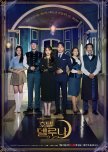
Jang Man Wol is the illustrious owner of the Hotel Del Luna. She’s been the owner for 1300 years. What binds her to the hotel is her own deep-seeded hatred and grudges from the past. Rather than face and deal with those things, she chooses distractions (like most people in life do!). She is a woman of opulence who is always looking for something to buy, whether it be expensive cars, clothes, jewelry, or even just money itself. She’s a bit of a con artist who is able to trade various services with her guests for monetary payments. She’s selfish, greedy, and someone who cares little for anyone’s happiness except for her own self-indulgence.
Enter Goo Chan Sung, a young hotelier who has been recruited by Jang Man Wol to be the new “human” manager. Of course, he’s initially reluctant, but he quickly sees the value in the hotel. And more importantly, he helps Jang Man Wol to treat people with respect as well as give her a glimmer into a life she could have if she were able to simply let go of her anger and hatred. Goo Chan Sung represents all that is decent and ethical in people. He chastises Jang Man Wol for her greed and treating guests little more than bank accounts, and he’s never afraid to do so. He speaks his mind, no matter how much the honesty might upset Jang Man Wol. What starts out as a very rocky business relationship, soon turns into one of both necessity and love.
Of course, nothing is quite as it seems, which is indicative of some of the best K-Dramas. We get to know the staff and how each of them has a past that must be faced and let go. They are all likeable, but one can see that there’s something sad about each of them. And why wouldn’t there be? There are fewer things sadder than a soul who is determined to remain earthbound because they are unable to let go of their attachments and their past.
Jang Man Wol is unique in that she is neither living nor dead. It’s as if she has a foot in both worlds. And with that, she has special abilities that help her deal with some of the nastier spirits and protect Goo Chan Sung as well, since he is human and has no true defenses against the dead.
One of my favorite characters is Ma Go Shin, who is a deity who represents the various aspects of the Divine. Some are somewhat cold and methodical. Others are gay and delightful. Each one shows up when it’s most necessary. While she imparts wisdom, she also understands that even she cannot interfere in the freedom of choice. Each soul must make his/her own choices with the understanding that there are always consequences. Seo Yi Sook did a masterful job with these “multiple” roles!
The visuals and cinematography are astounding in this series with vibrant, crisp colors that seem almost ethereal and other-worldly. Hotel Del Luna looms into the sky like a monstrous Taj Mahal that endeavors to touch the sky. And yet, these visuals do not detract in any way from the story or characters. As with so many well-made K-Dramas, the plot and characters are never sacrificed for spectacle.
There are many hilarious moments as well as many tearful and heart wrenching ones. Koreans are masters of never revealing everything all at once. This enables them to go back and fill in the missing pieces that make the story work. This is often done at the perspective of the character or characters which explains their behavior until they’re given “the whole picture.” In short, nothing is ever as it seems! And this keeps the viewer on their toes!
If I have one minor complaint about the series, it’s the chemistry—or lack of it—from IU and Yeo Jin Goo. There’s warmth and respect there, but it rarely strays into love or romance. You just don’t quite feel it from these two. I understand that IU is trying to depict Jang Man Wol as a cold, selfish woman, but chemistry is absolutely vital to this kind of a story. As many actors have stated: you either have chemistry or you don’t. It’s nearly impossible to manufacture. We see tears and a lot of emotion, but I was waiting to feel that angst; that despair of a love that must be let go. However, as I said, this is a minor issue that, fortunately, never really distracts or takes away from the story. It simply would have served the series better if the two leads had had some kind of chemistry which is why it's imperative that casting directors do their due diligence.
“Missing: The Other Side” is still my favorite “after life” series from Korea. This one’s pretty close. It starts at a slow burn and gradually starts moving. This isn’t a bad thing though as there is ample time to understand and get to know this intriguing, mystical world.
The series’ strength lies in its thematic elements of letting go of the past and releasing those resentments and grudges. I’m not sure many people understand or fully realize how important this is. Life is a process of letting go. If you dare to hold onto anything, it’s a lost cause because it’s ultimately doomed to failure which brings nothing but heartache and resentment. Knowing that all things pass away is a blessing. Why? Because nothing is lost, and you will eventually share “the stage” once more with those who have always been there but are simply playing a different role with a different face. How do you know this? Because they are with you now.
Was this review helpful to you?

This review may contain spoilers
Justice Is Served!
***I am reviewing Parts 1 and 2 here***The best revenge is when the person ends up digging their own grave. Moon Dong Eun is literally a master of strategy and orchestrating a revenge that sees these monsters taking each other out. What makes this so satisfying is that she uses their own acts of violence and cover-ups against them. In short, this may be one of the best stories of revenge I’ve yet seen, in which the revenge actually does feel more like justice. Moon Dong Eun doesn’t use acts of violence against them. She nudges. She prods. She pokes just enough to let them do the damage themselves. In some ways, the K-Drama “My Name” felt more like a revenge story than this one. That is not to say that “The Glory” is somehow inferior. It isn’t at all. And because Moon Dong Eun is able to create justice—disguised as revenge—I didn’t feel one shred of sympathy of those who ultimately caused and created their own downfall.
This story takes bullying to an extreme level. Not necessarily one that is unbelievable. In today’s world of bullying, it’s sad that nothing seems to shock or surprise us anymore. The first half of the first episode is tough to watch as we see Dong Eun enduring horrendous torture as her nemesis, Yeon Jin, take great delight on burning her with a curling iron. It doesn’t take long for the viewer to realize that Yeon Jin isn’t a typical bully. She’s a sadist, who is also very likely a psychopath. These days the terms “psychopath” and “sociopath” are now under the term “Antisocial Personality Disorder.” Yeon Jin doesn’t feel a shred of guilt or remorse for her actions. She smiles and even cackles with delight as she torments the girls at the school. Bullies rarely act alone, as Yeon Jin has five friends, including two boys, who also take pleasure in raping the girls. In short, these five people may be five of the most sadistic and diabolical bullies I’ve seen. Bullies are cowards, and it often takes someone of real strength and courage to fight back. By the time the first couple of episodes are over, you really can’t wait to see what Dong Eun has planned.
At first, Dong Eun’s plans don’t seem to be doing too much. But, ah! Just like the master tactician on a chessboard who moves his pawns to set up his other pieces, or in this series where the game of “Go” is used as means of illustrating Dong Eun’s plans, we see that her plans are carefully thought out as she sets each one of the five perpetrators up. She’s also like a master Judo or Akido fighter—using her opponent’s momentum against them. In other words, she knows the weaknesses of each of the five and how to exploit them perfectly so that they end up actually fighting against each other. By the time the second season begins, you can’t help but begin to marvel at Dong Eun and how she can weave such a complex tapestry to orchestrate a nearly flawless revenge!
If Dong Eun has a blind spot, it has to do with her alcoholic mother. Just because you give birth to a child or make a child, doesn’t make you a parent. Only a true parent raises their child properly with love and wisdom. And I found it a bit frustrating that Dong Eun gave in to her mother, yet again. But fortunately, she quickly realizes her mistake and rectifies it. No parent like that has any business being a part of their child’s life. None.
We quickly see how the rich and powerful believe that they are untouchable. Yeon Jin learns this at an early age from her own mother. And it’s quite obvious that the parents of the other four were likely no different. Spoiling a child is also a form of abuse, but as I said, we don’t feel sympathy for Yeon Jin and her sadistic cohorts! As each one of them falls, it’s hard not to feel that sense of justice because that is exactly what it is. In some ways, the other four get off somewhat easily compared to Yeon Jin, but that’s all right. Seeing Dong Eun speaking to Yeon Jin in prison was sheer perfection as Dong Eun gently smiles and outlines exactly how Yeon Jin trapped herself as well as the life she now has to look forward to. And the bully becomes the bullied as Yeon Jin now finds herself the target of her cellmates. Yes, justice is sweet!
This series is definitely hardcore, compared to most K-dramas I’ve seen. It’s dark, gritty, and it certainly doesn’t pull any of its punches. The writer really illustrates the point that nobody gets away with anything. Ultimately, the truth will always come out and justice will be served.
Performances in this series were all first-rate. I hadn’t seen Hye Kyo Song since “Descendants of the Sun.” I thought she did an incredible job of playing a character that was so different from the previous one. And I’ve been seeing Yeom Hye Ran in so many series lately! And that’s good because she’s an amazing and versatile character actress! She is fantastic at playing Dong Eun’s sidekick and intelligence gatherer as follows the five around taking photos. I also loved how she played Yeon Jin—which was almost even more satisfying than what Dong Eun had cooked up! I was waiting for someone to smack Yeon Jin a couple of times!
This series may not be for everyone, given its very dark theme, but frankly, it is a necessary one that doesn’t try to dilute the effects of bullying. People have no idea how many children take that abuse into their adult lives—both physical and emotional. Isn’t any wonder that Dong Eun has to take matters into her own hands when the judicial system, the parents, and the schools, fail to help protect them? It may have taken Dong Eun 18 years, but finally, justice is served!
Was this review helpful to you?
This review may contain spoilers
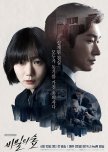
Corruption, Mystery, Intrigue..."Stranger" Has it All!
There is nothing so beautiful as an intricate plot so deftly woven that it is literally a work of art. And there is nothing that compliments a masterful plot like deep and intelligent characters."Stranger" is one of the best series I've ever seen. And I've been watching shows for over 45 years. When I began Season 1, I was instantly hooked, and I found myself binge-watching the series.
The story has so many plot twists and turns that I doubt that even the most savy viewer will be able to figure it all out. It centers around what seems to be, a fairly standard murder. Hwang Shi Mok is, what would be our equivalent of an assistand district attorney, knows the victim, and takes it upon himself to investigate.
Shi Mok is like watching a master detective at work. He's like a Korean Sherlock Holmes. He is not only able to piece together events, but he does so in a way that makes you think of a master jigsaw puzzler who is able to put the 3000 pieces together within a short span of time. Shi Mok is smart, intelligent, and also calm and cool under fire. Why? Because he has a unique characteristic: he lacks empathy. Due to violent outbursts as a child, he had a surgical procedure done that literally prevents him from having such outbursts anymore. Therefore, to most of his colleagues and even strangers, he appears cold and aloof.
Shi Mok's sole partner in his investigation is Lieutenant Han Yeo Jin (Bae Doona). Bae Doona quickly became one of my favorite Korean actresses. She also successfully brings us a very intelligent and driven detective who is as determined to get to the truth as Shi Mok is. Of course, she has trouble figuring out why Shi Mok comes across as such a quirky fellow, but she soon develops tremendous respect for him and his ability to speak his mind (which he always does!).
It isn't often that I bring up the theme music for a show, but this one reminds me of Hans Zimmer's Batman score a bit! It's catchy, and it seems to sum up all of the excitement and intrigue that this series provides!
The plot is expertly crafted and multi-layered. Much like an onion, once one layer is exposed, there is another. This forces Shi mok and Yeo Jin to wonder just how far and how deep the conspiracy goes.
The British series "Line of Duty" is a show about police corruption. This show not only takes it much farther, but this story is far more taut and exciting! I cannot emphasize enough just how much credit the writers should be given. It's not easy to put something like this together. "Stranger" is nothing short of a being an absolute masterpiece! Master mystery writers like Agatha Christie would be proud! Literally from start to finish, "Stranger" keeps up the intrigue and never pauses even for a moment!
**I was so excited when Season 2 came out, and even more excited to find out that there is a Season 3 on its way!**
Was this review helpful to you?
This review may contain spoilers
The Power of Healing
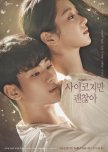
"It ain't about how hard you hit. It's about how hard you can get hit and keep moving forward."This line from "Rocky Balboa" seemed to ring loudly in my mind as this series concluded for me. Indeed, no one goes through life unscathed, and some take even greater lumps than most. However, no matter what we've suffered, it's perseverance that matters most. Not giving up. Always push on.
To my mind, K-dramas are dominating the television airwaves. While I have watched a few bad ones, most have been anywhere from great to superb. "It's Okay to Not Be Okay" certainly fits the "superb" bill for me.
As several reviewers have already mentioned, this is a very unique series that deals with the mental and emotional suffering that everyone has to deal with at some point in their lives. Perhaps that is what makes the series so relatable as well as profound with the central question: when do people finally acquire the courage to take responsibility for their own lives?
For so many people in this world, we blame our parents for our misfortunes and our sufferings. Why didn't they love us more? Why did they mistreat us? Where was that unconditional love we were supposed to be showered with?
Unfortunately, the answers we tell ourselves are filled with as many lies as the questions we come up with. Perhaps we weren't worthy of that love. Perhaps we simply weren't good enough. No matter what answers we contrive in an attempt to "makes sense of it all" we, too often, play the victim.
Gang-Tae is a caregiver at a local mental hospital. His body is riddled with scars given to him by patients who have lashed out at him. However, his physical scars pale in comparison to his emotional ones. In short, he truly believes he is not worth loving.
Sang-Tae is Gang-Tae's older brother with fairly severe autism. He suffers from a moment in the past when he was present for his mother's murder. The murderer threatens to kill him should he ever tell anyone about it. So scarred by the event, Gang-Tae placates his brother by making sure to move every autumn of every year. He somehow wants to be free of his burden.
Ko-Muen Young is a woman who was touted as a princess by her mother; someone who is head-and-shoulders above everyone else. And people should be treated with disdain and contempt for being so beneath her. This is a woman who has no idea how to interact with people. She had no filter, and therefore, speaks her mind and her feelings, both good and bad. She is a little girl desperately wanting someone to love her.
The irony is that all three characters, in some way, shape or form, represent some of the most common fears and desires of every single person on this planet: to be worthy of love, to be relieved of our fears and burdens, and to simply be loved for who we are.
The series masterfully navigates how all three characters are able to find peace with themselves, and perhaps, even some joy culminating in a last episode that will have you smiling and crying at the same time.
Yes, it is okay to not be okay. It is okay to fall. It is okay to be knocked down. It is not okay to give up and stay down. Everyone must find the courage to get up and keep going. That is the series' central message.
The performances in this series are top-notch all the way around. However, accolades must truly be given to Jeong-Se Oh (Sang-tae) who turns in a performance that easily rivals Dustin Hoffman's "Rain Man." In fact, to my mind, Jeong-Se Oh's performance surpasses it. He is truly deserving of any awards he might acquire for one of the best acting performances seen in a long time.
This series has almost everything: a mystery, laugh-out-loud moments, heartfelt moments, cringeworthy moments, and plenty of relatable moments, depending on who you are.
I cannot recommend this series highly enough. It should almost be required viewing. For perhaps, you might find some "healing moments" of your own as you watch this show, and be presented with the question: will you blame others for your problems? Or will you find the courage to begin living your own life?
Was this review helpful to you?

This review may contain spoilers
I watched "Descendants of the Sun" and wondered if I'd see another series that could match it. Then, I watched "Mr. Sunshine," and thought, "there's no way I'll ever see another series like this." Imagine the joy of being wrong twice! Along comes, "Crash Landing on You," which may end up being my favorite of all of them. It's a toss-up between this and Mr. Sunshine. In short, this is one of the best series I've ever seen, and for me, the Korean Dramas I've watched have not disappointed at all as most are character and plot driven. In fact, overall, I've seen better quality shows out of Korea and Japan in the last several years than I have with American shows.The writing, and especially, the editing is some of the best I've ever seen. The plot is intricately weaved, not using some of the typical cliches and devices as some shows do when trying to get the two main characters together. In this case, we're given the beautiful wise lesson on screen: happiness is in the journey. Not the destination.
Seri is a woman who owns her own company and is part of an extremely rich family. Her world, despite the money and success, is cold and empty. She sits alone in a massive penthouse. She has all of the luxuries that one could ask for. However, she has a family, especially her half-siblings, who are about as cut-throat as anyone could imagine. She doesn't realize what is missing in her life until a storm, while para-gliding, blows her across the border into North Korea.
Ri Jeong-Hyeok is a North Korean captain who comes across Seri. At first, he and his unit of men aren't sure who Seri is and why she's there. Ri Jeong-Hyeok was a master pianist before joining the military, and intent on solving the mystery of his older brother's death. At first, he seems very straight-forward and unassuming, while underneath is a man full of life, passion, and love.
The first set of episodes of Seri trying to adapt to life in a North Korean village are especially hilarious. Imagine a pampered woman suddenly having to go without electricity? How to take a bath...how to cook, etc. As a former Peace Corps volunteer, I know full well what this adaptation feels like!
Perhaps for the first time in her life, Seri not only finds a connection with Ri Jeong-Hyeok, but also with the village women and also with the members of Ri Jeong-Hyeok's unit. It's ironic that she had to cross the border to find a group of people who were more like family for her than her real family back home!
The best plots are ones that aren't forced or contrived, and this one doesn't use either one. We are taken effortlessly from North Korea into South Korea as Seri and Ri Jeong-Hyeok find themselves at the center of two sinister plots, each one contrived by people on either side (North and South Korea).
Of course, the biggest question is: despite the situations they must survive and unravel, can they spend a life together? Is it feasible for two people, from the only divided country in the world, be able to have a relationship? North Korea might as well be the darkside of the moon, as communications between the people of the two countries is non-existent. Finding the answer to this question is the beauty of the journey of this series.
The entire cast is simply terrific. They meticulously and effortlessly give us endearing characters who are absolutely hilarious at times and heartfelt at others. All are also able to deftly convey a range of emotions, especially the two leads in Hyun Bin and Ye-Jin Soon whose chemistry is much of what makes this series so incredible.
The editing is some of the best I've ever seen in a movie or series as we are given scenes in one episode, only to realize that we were only given a partial look at the whole. Each time, we are given a joyful surprise and many, "Ah-ha" moments when we realize what really happened!
Apparently North Korean defectors served as consultants on this series to try and make life in North Korea depicted as accurately as possible.
Some might feel that the ending isn't the most ideal, but that's why I like it. It's realistic. They end up making the absolute most of the time that they have. These contrived, formulaic "happy endings" simply do not reflect life or relationships themselves.
I have been watching movies and television series for over 45 years, and frankly, this series absolutely blew me away. It captured my imagination and my heart as I see a veritable "Romeo and Juliet" struggling to find ways to connect, love, and protect each other. They are such a short distance away from each other across the border, but as I stated before, the distance might as well be from the earth to the moon. I love stories about relationships, where the two people have to find a way to overcome the obstacles and pitfalls laid out before them. Two people with enough love and determination will always find a way. And that is why the joy of watching this series is in the journey and not the destination! And this journey was simply sweet, magical, and joyful. What more could you ask for in a great series?
Was this review helpful to you?
This review may contain spoilers
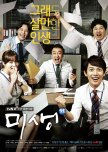
So far, I have seen three Korean dramas that have blown me away. "Descendants of the Sun," "Stranger," and now "Misaeng." "Misaeng" is about four interns, hoping to secure jobs in the Korean trading company, One International. Those unfamiliar with how Koreans do business may easily find themselves intrigued and sometimes disgusted with the Korean working environment.Still mostly a male dominated work environment, you will see that it is still a difficult and challenging place for women to break into. Being verbally abused, and even occasionally sexually harassed, despite the company guidelines forbidding it, women take on the challenge of having to "put up with it" while trying to climb the corporate ladder.
A group of interns are working at One International with the hope of securing a permanent position through a contract offer. Of course, the four interns that the series focuses on, all come from different backgrounds and have differing personality traits. What makes them interesting is that they are all complex characters, causing the viewer to find certain things endearing about each one as well as things you may be turned off by. Sounds like real life, right? And that is just one of the charms that makes this series work so well.
First, we have Geu-Rae, a highly introverted young man, who doesn't have much of an educational background. His resume is full of small, part-time jobs that cause his fellow interns to contemptuously wonder how he got the internship in the first place. Especially contemptuous is fellow intern, Baek-Gi. Unknown to most of his co-workers and even his supervisors, Geu-Rae is a champion in the classic game of bad-uk (Go). Somehow, he is able to utilize bad-uk strategies to help him solve problems. He is also able to take criticisms without taking them personally. He knows he's there due to connections, and not because of any ability that he has. Geu-Rae, therefore, knows that he has to prove himself by working even harder than any of the other interns.
Next is Young-yi, portrayed by the beautifully capable So-ra Kang as the only female intern. She is dedicated, and she already has much knowledge about the trading business. She is also able to speak several languages fluently. However, she has to take the abuse from her male colleagues, forcing her to do nothing more than retrieve coffee, get their shoes cleaned, and so forth. Somehow, she is able to do these things long enough to prove to them, that she's highly capable and only wants to serve and support her team. I cannot imagine how it must be for a Korean woman trying to succeed in such an environment where she is derided and taking constant abuse. To make matters worse, her own father tells her that he regrets that she wasn't born a boy.
Baek-Gi is the ambitious intern who is a bit prim and proper. He's a bit arrogant, and feels that certain jobs are beneath him. It takes him a while to understand why there is a learning curve in place and also to learn how to be humble and supportive. When Geu-rae, at one point, appears to be getting more recognition than him, Baek-Gi doesn't take it well as his resentment builds toward Geu-rae...until he finally learns the truth about Geu-rae's past. Baek-Gi starts off as a very unlikable character, but he quickly grows on you.
Seok Ryul is the wild, passionate, and somewhat lazy intern, who'd rather spend his time gawking at girls than working. However, his strength lies in his knowledge of the working factory man; the blue collar workers who "slave away," often in unfavorable conditions and with outdated equipment, in the company factories. He's also a bit resistant to authority, especially if he feels that he's being taken advantage of. However, he loves his fellow interns, and his friendship with all of them is important to him.
The power of this series is in the relationships between, not only the interns, but also with their co-workers. These are people who spend more time with each other than with their own families. Comradery is important to them , and they often work late hours or go out for drinks together after work.
The heart and soul of this series, rests with Mr. Sang-shik Oh (stellar performance by Sung-min Lee, who all but steals the series!), who is Geu-rae's boss of Sales Team Three. At first, Mr. Oh is reluctant and even a bit hesitant to help Geu-rae learn the job due to his lack of qualifications and experience. However, upon seeing Geu-rae's willingness to learn the job as well as his determination, Mr. Oh relents. More than that, he takes Geu-rae under his wing, and we quickly find that the two characters have a love and a respect for each other that is quite touching and heart-warming. Geu-rae, who has been alone much of his life, finds a "father-figure" in Mr. Oh.
We see our cast of characters dealing with one obstacle after another, as they struggle in the workplace; a place that is sometimes friendly, sometimes hostile, and always competitive. The stories are first-rate as well as the actors who bring these fascinating characters to light. You'll laugh, you'll cheer, and you'll occasionally even find yourself choking back tears.
You'll quickly adhere yourself to characters that you love, and despise those that you don't. In the end, I think most people would love to have a boss like Mr. Oh who demonstrates wonderful integrity, despite the back-dealings, and money-grubbing traits of many of the greedy managers around him. He looks after all of the interns, and he has no problem "tripping" those who abuse them in very funny situations.
Misaeng shouldn't be missed or overlooked. This series has it all.
Was this review helpful to you?
One of the Best Shows I Have Ever Seen!
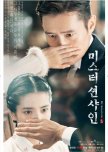
I have been watching movies and shows for over forty years. And, yes, this show is THAT good! After watching "Descendants of the Sun" only a couple of years ago, I was wondering how long it would be before another grand series came about; a series that resonates with the heart and soul; a series with a crisp story and fantastic performances by the actors. And along came "Mr. Sunshine."I can only think of a couple of series that are on par with "Mr. Sunshine." "Band of Brothers" is one and "Descendants of the Sun" is another.
What is truly sad is that much of the world is quite ignorant when it comes to Korean history, I'm sure. It's a country that always seems to be at odds with Japan, and sometimes China and Russia as well. Its turbulent history has too often been plagued by invasions or other countries attempting to gain control of the small peninsula.
"Mr. Sunshine" tells of the time when Korea was, once again, fighting against Japanese occupation in the beginning of the 20th century. With virtually no real army to speak of and a king with little power on the throne, Korea or "Joseon" found itself relying on rebel guerilla tactics to try and prevent the Japanese from a complete takeover.
Several characters find themselves unknowingly intertwined with each other at the outset of the series. One boy finds himself quickly orphaned and making his way to America to begin a new life. He returns to Joseon years later as a U.S. Marine Captain. Little does he know how the turn of events would pull him into the conflict between his previous homeland and Japan.
The story's focal point is on three men who all happen to have feelings for the same woman, Go Ae-shin; a woman with a background as terrible and wrought with horror as the marine captain's. And yet, she is the heart and soul of the rebel forces. It is admirable and captivating to see this woman spearhead the rebellion, as well as her willingness to do whatever it takes to help her country. Tae-Ri Kim is perfectly cast, giving Ae-shin tremendous depth and complexity to her character.
The cast is simply magnificent from top to bottom. Every role, no matter how large or small, is handled with immaculate precision and depth. However, there is, to my mind, one who stands out just a hair above the rest. And that is Byung-Hun Lee as Eugene Choi, the marine captain. The man has a regal distinction that very few actors in history have been able to pull off with such ease. He may appear to be emotionless in many of his scenes, but to make such an assumption would be wholly inaccurate. I've said many times: an actor/actress who can say more with their eyes than with words, is a true master at their craft. Byung-Hun Lee is such a performer. I cannot imagine anyone else playing this part with the integrity and depth that he brings to Eugene Choi.
This is quite literally a "Do not miss!" series. With 24 episodes, each at about 75 minutes each, you are in for a wonderful treat. This is a show to savor. One might be wishing to quickly move on to the next episode, but I found myself stepping back and letting each episode soak within me instead. Like a perfect French dessert, you relish taking your time and savoring each bite. This is such a series.
Was this review helpful to you?
This review may contain spoilers
A Series Nearly Ruined By the Final Episode!
If I was to compare this series to a 400m track race, I’d say that it got off to an explosive start. It then showed a bit of a loss in pace, got back on track, and then with only 50 meters left, it crashed to the ground and had to crawl across the finish line.I have been watching TV shows and movies for over 50 years. Perhaps there is nothing so frustrating than investing in a series that drops the ball just before the goal line. As a novelist, I know how challenging it can be to come up with a viable ending to a story. It’s absolutely criminal to come with an ending so silly and contrived that it virtually destroys the entire story.
Baek Sa Eon and Hong Hui Ju are married. Nothing is at it seems as the marriage is only for show. Baek Sa Eon treats her as though she were an intruder in his house rather than as a wife. He’s short and temperamental with her. And it’s obvious that Hong Hui Ju would rather be anywhere else than with Baek Sa Eon. However, due to the family’s past and arrangement, Hong Hui Ju is like a piece of luggage that is passed on from one person to another. She has virtually no say in her life, which is pretty much literal as she’s unable to speak, or so we think.
Baek Sa Eon gets a strange phone call from someone threatening to kill Hong Hui Ju unless he complies with the kidnapper’s demands. He instantly refuses and even bates the kidnapper by telling him to “go ahead and kill her.” We quickly find out that Hong Hui Ju has set everything up herself with the hopes of forcing Baek Sa Eon to divorce her due to the unhappy state of their marriage.
As more of the story unfolds, we discover that Baek Sa Eon isn’t the real son of his family but a stand-in. His “family” has deep, dark secrets that he becomes unwittingly a part of. Hong Hui Ju’s family is no less corrupt as Baek Sa Eon’s father is running for president and needs the support and power of Hong Hui Ju’s family. Instead, Baek Sa Eon was put in place of the real Baek Sa Eon, who was a sadistic murderer even as a child. Baek Sa Eon’s grandfather chose to get rid of the boy rather than attempt to help or rehabilitate him.
Throughout most of the middle part of the series, Baek Sa Eon finds himself falling in love with Hong Hui Ju, or so we’re made to believe until we find out that he’s actually always liked her, despite his contradictory behavior in the first few episodes. Almost laughingly, we also find out that Hong Hui Ju also had feelings for Baek Sa Eon going back to their childhood.
Despite the story being put together a bit piecemeal, it’s the chemistry and obvious feelings between Baek Sa Eon and Hong Hui Ju that keeps the story afloat, thanks mostly to Yoo Yeon Seok and Chae Soo Bin, two exceptional actors. I’ve seen Yoo Yeon Seok in several series, and the man’s a truly gifted performer. From “Mr. Sunshine” to “Hospital Playlist,” he showcases his diversity and his ability to get inside any character he plays. This is my first time watching Chae Soo Bin, and she is simply mesmerizing in how she brings true vulnerability to her character, making you wonder how and why Baek Sa Eon can treat Hong Hui Ju so badly.
As Baek Sa Eon learns more about his family’s history and what they’re plotting, the more determined he becomes to protect Hong Hui Ju as well as trying to rectify what’s happened to her. All of this is done as the real Baek Sa Eon attempts to destroy the imposter, typically by going through Hong Hui Ju, knowing that is where his true vulnerability lies. Never mind that Hong Hui Ju isn’t kidnapped once in this series, but twice! Going to the same “well” twice doesn’t quite work.
The series all but collapses in the final ten minutes of the 11th episode and into the final one as the writing becomes incredibly sloppy and asks the viewer for a lot of suspension of disbelief.
It appears that Baek Sa Eon is killed, although we quickly learn that it isn’t the case as Hong Hui Ju, recovering from her kidnapping, insists that he’s been at her bedside. However, Baek Sa Eon disappears for over six months, leaving poor Hong Hui Ju wondering where he is, what’s happened to him, and also wondering why he won’t contact her. Hong Hui Ju is going through a deep depression waiting for any information that will give her a clue as to where he is.
Finally, a clue comes through, and she finds herself traveling to some country halfway around the world in search of Baek Sa Eon. After nearly being killed by country rebels, Baek Sa Eon saves her and begins admonishing her for showing up. Really?! What did he expect her to do? I was a little surprised that Hong Hui Ju didn’t get angry with him, given his pathetic reasoning. Baek Sa Eon insists that he needed to punish himself for what his family had done to Hong Hui Ju. His logic is so backwards and ludicrous that it invites the obvious question: how does punishing Hong Hui Ju fit into his plans? Because that is exactly what he is doing by disappearing and going off the grid. Did he truly think that she wouldn’t do everything possible to try and find him? Did he never fully understand or realize how much Hong Hui Ju loves him?
Frankly, it made no sense, and it also makes Baek Sa Eon come off as a truly pathetic coward. I didn't feel sorry for him even when he was sniveling like a child. You want to make it up to Hong Hui Ju? Then love her and do your best to make her happy. Instead, he’s actually responsible for bringing her further pain and suffering. His actions are completely counterproductive. I can see Baek Sa Eon being upset and perhaps even overwhelmed by his family’s actions toward Hong Hui Ju, but I couldn’t see him taking it out on her. This is what happens when a writer makes the mistake of going against character for the sake of the plot.
This series would have benefited greatly had it only been ten episodes and avoid the absurd ending that we ultimately got. Even in the last scene, Baek Sa Eon is still terrible at letting Hong Hui Ju know where’s going, forcing her to worry and wonder why she can’t get ahold of him.
Too many inconsistencies and a terrible ending nearly ruined this series. Only the performances of the two leads kept me vested enough to wade through the last episode. A series with such promise and great performances deserved a competent writer who obviously didn’t know the characters as well as we do.
Was this review helpful to you?
This review may contain spoilers
Incredibly Sloppy Work in One of the Worst Action Series!
I’ve read a number of reviews that compare this series to “24,” which is an insult to anyone who has ever watched the show. “24” never had so many blatant plot holes, poor characterizations, and lapses in basic writing skills. I know the series was made in 2009, but this series plays like a bad episode of the A-Team. People who can’t hold weapons properly or even fire them with any kind of skill. I lost count of how many supposed “professional soldiers” are holding and firing their guns sideways! I guess the budget didn’t allow for a technical advisor, nor did they have the brains to have a medical examiner and pathology lab at NSS Headquarters. By the way, “24” had all of these things because they did their best to make sure everything was as accurate and functional as possible.The sad part is that the premise for the story is actually a really good one. A secret organization called “Iris” is manipulating and controlling events in both North Korea and South Korea to prevent the reunification of the peninsula. Iris reminds me a lot of SPECTRE from the old James Bond films.
The story begins with Kim Hyun Jun and his best friend Jin Sa Woo who have entered the special forces. Life is good, and they are actually enjoying their time together until they are recruited into the secret intelligence agency, NSS, which runs under the NIS. It’s headed by Director San Baek. Their “team leader” is Choi Seung Hee, whom Hyun Jun falls in love with. Little does he realize that Sa Woo has also fallen in love with her. Unaware that he’s been manipulated by San Baek since the death of his parents when he was a small child, Hyun Jun is sent off the assassinate a high-ranking North Korean in Hungary. Of course, San Baek has no intention of allowing Hyun Jun to live, and so they try to—and believe—that they’ve killed him. He’s shocked to find that Sa Woo shoots him down when he tries to escape in a plane.
Hellbent on revenge Hyun Jun spends years trying to recover from his injuries, escape other attempts on his life, and get back to South Korea to get revenge on all those responsible. He teams up with Kim Sun Hwa, a former member of the North Korean Supreme Guard, who is initially dispatched to kill him. It becomes quickly apparent, after he helps her, that she’s fallen in love with him. Yeah, that’s a big theme of the series: everyone falling in love with everyone else. I heard the same two love songs play so often that I thought I’d have to visit the dentist.
Hyun Jun finally returns to South Korea with Kim Sun Hwa as they attempt to uncover—what initially seems to be a North Korean plot to set off a nuclear bomb in Seoul, only to later find that it’s Iris that has been pulling the strings. Finally, you have North Korean and South Korean agents teaming up to try and prevent these catastrophes.
While the premise is good, the execution is downright laughably bad. Aside from the aforementioned glaring issues, there were so many more! So much so that I had an entire page of notes just on these problems. I won’t mention them all here, but the biggest ones. Forget that the layout of the NSS is terrible. Those working computers (only two) work side-by-side and across from each other. I laughed each time Sa Woo or someone else tried to hide what they were doing. I also seriously doubt that any intelligence agency would allow their agents to have personal photos on their computers! The fact that they have only one member of the forensic science team, who has a table in his office for autopsies. Not even an autopsy table, but a regular table covered with a sheet in his tiny office.
The last episode was an absolute travesty. Supposedly, terrorists switched places with some of the hostages, and yet at no time do the “hostages” attempt to let Sa Woo or Hyun Jun know what has happened. It was bad enough watching two “special forces” guys have no clue how to hold or use a gun! Also, the final role of Choi Seung Hee has so many inconsistencies and plot issues that it was laughable
The most glaring character issue was easily Choi Seung Hee. She’s not even believable as an agent. She acts more like a lovesick high school girl. When the terrorists infiltrate the NSS, she’s sneaking around—in heels! She’s also prone to going off on her own with backup or even a sense of how to clear a room or an area. She also can’t hold a gun properly. I laughed when she shoots Hyun Jun during the infiltration, and he shoots a man about to shoot her. At no time, even after she realizes who it was, is she worried that she might have actually killed him?! That made zero sense! It also made zero sense, that even after learning about San Baek and his connections, she’s suddenly worried about telling Hyun Jun that he’d attempted to recruit her. Had this happened BEFORE San Baek’s connections had come out, that would have made sense. Instead, it was poorly placed within the story, and again, made absolutely no sense at all. It was bad enough that she was suddenly reluctant to tell Hyun Jun why she had disappeared.
A big difference between Jack Bauer of “24” and Hyun Jun was that Jack never allowed his personal feelings to get in the way of a mission. I’m talking about a mission, not the last season after his girlfriend is killed and he goes rogue. Hyun Jun is careless, and too often, he allows his emotions to get the best of him, which, unfortunately, leads him to make very poor and amateur decisions. Turning his back on assassin Vick was a big one. No, he’s not methodical or believable as a good agent, certainly not being in the same realm as a Jason Bourne, Jack Bauer, or even Vincenzo, and that is what is desperately missing from this character and why he’s just not believable as an agent.
The character who stood out best for me was Kim Sun Hwa, and frankly, I liked her a heck of a lot more than the wishy-washy Choi Seung Hee. The actress, Kim So Yeon was far more believable as an agent than the flimsy Kim Tae Hee, who wears her emotions on her sleeve. Choi Seung Hee has no poker face at all. None. I was actually hoping—even though I knew it wouldn’t happen—that Hyun Jun would have made the wiser choice with Kim Sun Hwa. She’s a stronger woman and just as loving and passionate. I loved how she always had Hyun Jun’s back. Frankly, she went underappreciated.
First rule of writing is to write what you know. These writers had no clue, and frankly, shouldn’t be allowed to work in this industry again. Second rule is to never make the characters do something they wouldn’t do for the sake of moving the plot. These two problems plague the entire series, which tells me that the writers were completely clueless.
This will go down as one of the worst action series I’ve seen in a very long time, and shouldn’t even be uttered in the same breath as “24” because it’s not even a close comparison.
Was this review helpful to you?
This review may contain spoilers
A Small Light of Hope in a Deplorable World!
Since they essentially run together, I’m reviewing both Squid Game 2 and 3 here.Just when you think you’ve seen human beings at their absolute lowest, with a few bright moments from the first season, you haven’t seen anything yet. The writers clearly decided to push the envelope to an even bigger arena (no pun intended). It seems clear that the premise is about just how low can people go?
At the start of the second season, Seong Gi Hun is determined to find out who is behind the games and put a stop to it. He hires dozens of loan sharks to scour the subway lines, looking for the recruiter, whom he believes will lead him to the island. Meanwhile, former Detective Hwang Jun Ho is out on the water desperately trying to find the island as well.
One of the minor issues I had with the start of the second season was how Seong Gi Hun is brought in to participate in the games again. He’s scarcely spent any of the money he’s won because he sees it as blood money. He finally communicates Hwang In Ho and volunteers to be a participant again. Now, Seong Gi Hun believes he can beat the game and warn other participants because he’s already won. But, is Seong Gi Hun really that gullible and stupid to think that the games won’t be changed up? It would have made more sense for him to be kidnapped involuntarily and forced to participate again.
Once again, we get a new cast of unusual characters. The most intriguing was Kang No Eul who surprised me by being a soldier rather than a participant. A North Korean defector, she’s desperately searching for her daughter. Her story doesn’t entirely work, and frankly, it’s a bit of a weak link. In the end, she’s still a cold-blooded killer, and there’s no getting around that. She develops an interesting connection with Park Gyeong Suk (246) because he’s a single father with a sick little girl. Kang No Eul tries to help him escape.
Hwang In Ho still firmly believes that most people are garbage and have no morality nor do they deserve to live. The participants, once again, are people in severe debt, hoping for a chance to get out from under. And so, he uses greed and corruption as tools to set them against each other. It’s not unlike the gladiators of Rome, a truly primitive form of entertainment, if it can even be called that. The VIPs, the wealthy 5 who fund the entire game, are easily the most depraved, who are obviously so bored with their own lives, they’re like drug addicts, and not at all unlike human traffickers. They see humans as cattle, viewing them as disposable and expendable as long as it brings them some pleasure. Without displaying any conscience or sense of morality, they have no problem killing off a newborn child, and some of the players quickly demonstrate that they’re no better in that regard, especially if it will get them even more money.
Seong Gi Hun does his best to warn the other participants about what’s at stake, but when the prospect of winning a fortune is on the line, his good intentions fall on deaf ears for the most part. One twist to the games is that after each round, the participants can vote to stop and take what money has already been won or keep going. This sets off some fascinating back-and-forth debates as the participants argue about what to decide.
Of course, with each round, we see the greed and violence come out, especially from those who care about nothing else but winning more money, even deciding that arbitrarily killing people off outside of the games will also yield them more.
As with the first season, there are a few people who struggle to do the right thing. My personal favorite was Jang Geum Ja (149), an elderly woman who was there to try to help her son, who was also a participant, get out of his massive debt. She does her best to be there for him, but in the end, she’s forced to make a decision I wouldn’t force on anyone: kill her son, or let him kill Kim Jun Hui (222) who has just given birth to a baby. That second episode of the Season 3 may well be the best of the entire series, and it was a tough watch, but not nearly as tough as the following episode which sees a crippled Kim Jun Hui make the ultimate sacrifice in order to keep her newborn safe. That episode knocked me for a loop, and I ended up staring at the screen in disbelief. Kim Jun Hui enters the games already pregnant, clearly not understanding that she’s put herself and her baby at great risk. There is a sweetness and naivety about her that makes you hope and pray that she gets out.
The games are just as cruel and sadistic as they were in the previous installment. They speak to the absolute most base of human conditions: the joy of watching people being killed. How anyone can find joy in such an act is beyond me, but there are plenty of people out there like that. Ever wonder why people slow down for a car accident, hoping to see something?
Season 3 is pretty good, but unfortunately, it has some severe flaws that prevent it from being as good as the two previous seasons.
Kang No Eul gets into a fight with her boss, and after being stabbed, she crawls toward the elevator where she’d dropped her gun. Her boss lets her until he realizes her intentions, and then, of course, it’s too late. I had a really hard time believing that he wouldn’t have just killed her outright, nor would he have been clueless about the gun. He’s not that dumb.
Hwang Jun Ho, despite being rescued by the boat captain, would have been a lot more suspicious of him, and likely would have told his squad to be on the lookout. Being a former cop, I found it a stretch that he wouldn’t feel that something was off, especially after being warned by Mr. Choi.
In the final fight between Seong Gi Hun and Lee Myeong Gi (333), are you really going to tell me that Seong Gi Hun wouldn’t have hit that Start Button, knowing full well what it would mean if he didn’t? He had more than ample opportunity, and it was a huge stretch by the writers to overlook this. This made the entire scene completely predictable. After Lee Myeong Gi is killed, you know there’s only one option left. Frankly, it was a cheap gimmick that took all the element of surprise out of it. By then, the suspense was already gone.
The last few minutes in Los Angeles, especially with a great guest appearance by the lovely, talented Cate Blanchett, seems to indicate another season coming, perhaps by the Americans. For me, I think I’ve seen enough to get the idea. It would almost be overkill, at this point, and I think the point was that something like this will just keep going; there’s no end to it because enough people want it.
Season 1 is still pretty good. Season 2 was almost there, and Season 3, despite some incredible moments, was a bit of a letdown. This isn’t an easy series to watch at all. You can’t help but put yourself in the various situations and wonder, “What would I do?” Seong Gi Hun represents the best of humanity, even if he may be viewed as a bit naïve, especially when he’s tricked by Hwang In Ho, who ironically enough, becomes a participant himself for a time. Hwang In Ho wants to prove to Seong Gi Hun that everyone is capable of tapping into those baser instincts. The ultimate victory, however, belongs with Seong Gi Hun, who proves Hwang In Ho wrong, in the end.
Now that I’ve finished the series, it’s time to take a shower and find something uplifting to watch! I have to side with Seong Gi Hun and have faith that despite what goes on around us, humanity is better than that.
Was this review helpful to you?

This review may contain spoilers
Love is All You Need
I found myself quickly relating with Ko Gyeom, because much like this character, I’ve loved movies and TV shows since was about 5-6 years old. Also much like him, I vowed to watch every “Best Picture” winner ever made. I’ve come close except for the more recent films which I haven’t liked very much. Hence, more foray into K-dramas!There may not be a genre of films and TV series that gets more appeal as well as flack than melodramas, or romantic dramas. When they are done well, they can be incredible. But, when they are done badly, they are so cliched and tiresome that you find yourself wishing you’d done something else with the time you’ve lost. In this genre, it’s the unique stories that stand out. For the bad ones, it follows a template that tends to be done to death.
Over the years, many people have grown to love movies. They can be a wonderful escape. However, too often, people get too caught up in them, wishing that their own lives were more like a movie’s. In short, people find themselves unable to sort reality from fiction.
So, why is the melodrama have such appeal? Perhaps because it provides a story with a universal theme as well as a universal desire: to love and be loved. Such is the central theme of this series as well. We have four wounded characters who are desperately trying to find love in all of the wrong places. Such is the illusion and delusion of filmmaking and movie stories. They always make you think that love and happiness lie with someone else.
Ko Gyeom is a young man whose only true connection is with his sickly, older brother Ko Jun. It’s obvious that he loves and admires his brother very much, after the two become orphaned when Gyeom is a young boy. Jun is much older than he is and views him as much as a parent as he does a sibling.
Kim Mu Bi is a young woman who grew up loving her father, who was a film actor. However, he constantly left her to go work on his film projects, and soon Mu Bi develops a tremendous resentment toward her father for always neglecting her, despite the fact that he obviously loves her. Too often, parents fail to realize that there is no substitute for their presence. “Things” cannot replace a parent. While Mu Bi still has her mother, her mother is cold and distant with her daughter. Too often being rejected and abandoned by those she loves most, Mu Bi vows not to allow anyone to get too close to her. Initially, she trusts Gyeom until he ends up leaving her unexpectedly and without explanation either.
Hong Si Jun is another young man who has a talent for composing music. Unfortunately, like so many people, he ends up trapped in the past at a time when he was happiest with his girlfriend, Son Jua, until at least she broke up with him. There is always a danger of living in the past as well as making someone else completely responsible for your happiness and well-being. He easily the most immature of the four. When Son Jua resurfaces years later asking for his help, he's cold and resentful towards her.
Finally, we have Son Jua, a young up-and-coming screenwriter who is anxious to get her script off the ground. Ironically, her script shares many of the same experiences that she had with Hong Si Jun. She, too, is much like Hong Si Jun in which she is caught up in the past. She makes the mistake of assuming that Hong Si Jun is over her.
The series is much about love, healing, and learning how to move on from past experiences. It’s easy to blame our parents for not giving us the things we feel we’re entitled to as children. Perhaps the biggest flaw in parenthood is trying to keep our children from seeing our flaws and faults. Parents are people too who often make mistakes. Children need to see and understand this. Children also need to realize that everyone is different and people are only capable of giving what they have. Quite often, those feelings are expressed in unexpected ways, which is why there is often disappointment in how those feelings are shared and expressed.
Perhaps the truest piece of wisdom comes from Hong Si Ju’s boss and he asks Hong Si Ju, “What do you think completes love?” Most people in the world would say, “Being with someone.” However, when Hong Si Ju is unable to think of anything, his boss says, “Love is already complete as is.” Of course, the path to such love is within each person, not in someone else.
The series is a fairly light one, that quite frankly, I wish had gone deeper. At only ten episodes, I would have loved to have seen it stretched to the usual sixteen. I wanted more of Gyeom and his brother as well as Mu Bi and her parents. I also found the relationship between Hong Su Ji and Son Jua more compelling and intriguing than the one between Gyeom and Mu Bi, probably because it felt more real and authentic. Two people stuck at different points in the past and trying to figure out if they can move on. Because each was each other’s first love, we can empathize with the possibility of them recapturing what they had in the past, but as we know, this too often leads to disappointment. The key to living any kind of a successful life is to learn how to be in the moment. The past can a wonderful stroll down memory lane as long we don’t get caught up in it, and only healing and forgiveness can help us let go of the past. There are two great scenes that speak to this: between Gyeom and his brother in a dream and between Mu Bi and her mother.
Performances in this series are fantastic. Choi Woo Shik is easily my favorite. He has a natural gift of facial expressions which he’s so adept at utilizing as an actor. So often, with those soulful eyes, he looks like a lost puppy. Not many actors or actresses are capable of pulling off such expressions as deftly as Choi Woo Shik.
Bo Young Park has been one of my favorites for a long time. However, acting across Choi Woo Shik, I realized that sometimes, she lacks the ability to act with her eyes, especially in scenes across from a romantic interest. If you look at many of the scenes between herself and Choi Woo Shik, it becomes all too apparent. Choi Woo Shik isn’t afraid to let himself feel and feel that connection. Bo Young Park can be too guarded sometimes.
Overall, this is a nice series. It’s enjoyable with one or more characters that you’re likely to relate to on some level.
Was this review helpful to you?


