


 1
1



This review may contain spoilers
A Cute and Fun Series!
Coming on the heals of “Hidden Love,” I decided to do another Chinese drama (my second one). “When I Fly Towards You” is actually a very light and delightful series, although it lacks the depth and heart of the previously mentioned series. It’s a series that doesn’t really take any chances or risks. This isn't necessarily a bad thing, but I felt that there were missed opportunities, and thus, this series, while very good, is very “vanilla.”While the series is about a quiet, shy boy and a perky, vivacious young 16-year-old girl, the series could have almost been called, “School Friends” or something to that effect. I’d say that a good 40-45% of the series is focused on the five friends in their high school days, and the rest is on the two protagonists who should have been the focus and had more screen time.
Su Zai Zai is a very upbeat young girl, who always has a smile on her face, and certainly isn’t shy at all. If you’re looking for the doe-eyed girl who bats her eyes and waits for the boy to make his move, Zai Zai is not that girl. She is tenacious in the pursuit of her dreams and goals, and she makes no apologies for her direct and abrupt manner. Her target is the very quiet, shy boy, Zhang Lu Rang.
Zhang Lu Rang is a boy who barely cracks a smile. He quietly goes about his days, even when girls are lining up to have a chance with the handsome and brilliant Lu Rang. However, he gives none of them even a glance…that is, until he runs into Zai Zai at a small corner store. Her first reaction is to call him “an idiot” for walking to the store without an umbrella. She quickly regrets her reaction, and as soon as she sees him again at their military training, she’s quickly in hot pursuit. She teases him, playfully needles him, and showers him with cute remarks. Anything to bring this quiet boy out of his shell. At first, he tries to shrug her off, but Zai Zai’s charm and quick wit soon begin to melt the “ice king.”
We soon discover the reason behind Lu Rang’s shyness, which we realize is a result of very low self-esteem. His parents are both tiger parents, some of the most monstrous forms of child abusers there are. Only westerners with their indifference toward their children would give tiger parents a run. I know first-hand because I am an ESL teacher and have seen some of the most horrifying things from tiger parents and how they abuse their own children. Lu Rang is constantly berated by his parents, especially his mother who believes that he is a failure, despite his exemplary grades. His younger brother is the golden child of the family, who outshines even Lu Rang academically. There are no warm words of encouragement or comfort from Lu Rang’s cold mother during their exchanges, and it’s quite clear that Lu Rang’s brother is the favorite.
Zai Zai uses her charm and love for Lu Rang to let him know that he’s none of the things that his parents believe him to be. She becomes a ray of hope for him, as he very slowly begins to grow in confidence. Zai Zai simply won’t give up on him, nor will she allow him to sulk alone. Bubbly and perky, Zai Zai always finds a way to get the smallest crack of a smile out of Lu Rang.
The series ran into a crossroads. Focus on Zai Zai and Lu Rang or focus on the group of friends. Rather than picking one road, it tried to do both. The focus of the series should have been on Zai Zai and Lu Rang. I wanted more scenes with them. I wanted to find out how Lu Rang is able to resolve his problems with his parents—if at all. Instead, his parents all but disappear from the series from about the 12th episode. This is an area that could have, and should have been, explored in more depth as well as come up with more ways of showing the transformation of friendship between Zai Zai and Lu Rang into romance. Unfortunately, when you try to give the same attention to two stories, you end up coming up short in both. The old Native American saying of, “If you chase two rabbits, you’ll lose them both.”
“Hidden Love” dared to delve deeply into the characters of its two protagonists, and the payoff was well worth it. We felt close to these characters, caring about how they were going to overcome their obstacles. In this series, there really isn’t ever any real conflict or problems that Zai Zai and Lu Rang must deal with. For Zai Zai, it’s dealing with her boss acting like a pimp with her. For Lu Rang, it’s talking things out and resolving things with his brother.
It's the charm and performance of the cast that really makes the series work, despite not having the courage to delve more deeply below the surface. There are many funny and cute moments that still make this series more than watchable, but I just couldn’t help feeling that it was also a missed opportunity.
We still get those really awkward and silly intimate moments where college-aged kids act like 13-year-olds whenever a kiss, a hug, or even holding hands might occur. They make too big of a deal out it, which also flies in the face of logic and reality, even in China. They react as though they are about to commit a crime.
Zhang Miao Yi (Zai Zai) is a cute performer. With those eyes and dazzling smile, we can see why so many are captivated by the amount of charm that she brings to the table. She’s a bit inconsistent with her romantic scenes, however, especially her kissing scenes. Many of them felt wooden and forced. If you’re an actress who doesn’t like doing these kinds of roles, then you simply shouldn’t do them. There were times when she was very believable with Zhou Yi Ran (Lu Rang) and others when she almost looked out-of-place.
Zhou Yi Ran was good too, but he needed to find a way to make Lu Rang likable and charming, despite his shyness and low self-esteem. Too often, he came across as stiff. It’s a tough task to balance these traits, and yet, that is another reason why the series should have allowed him to do more had they put him front and center rather than being a peripheral character too often.
Because of the imbalance between the two plots, the series also suffers from pacing issues. We’d get an episode to update us on Zai Zai and Lu Rang, and then we’d get one that scarcely showed them at all, which leads us to a warp-speed ending in the last two episodes where we constantly jump years ahead within the space of a few minutes. It felt as if the director said, “Okay, we’ve got to hurry and wrap this up!” It didn’t have the natural feeling of an organic ending like “Hidden Love” had.
If you’re looking for something very light and fun without much else, then you’re likely to enjoy this series!
Was this review helpful to you?

This review may contain spoilers
Follow Your Heart And Fulfill Your Dreams!
Following your heart may sound like a very simple thing. And yet, why do so many people end up letting others tell them what to do and what their dreams should be? Why do so many people end up choosing the “safer” path which only leads to unhappiness and unfulfillment because that path has nothing to do with their dreams?Kobe Bryant once said, “If you’re not following your passion and doing what you want to do, then why are you doing it? I love waking up excited because I’m doing what I love.” He’s got a valid point, and it’s a question that most people should be asking themselves.
This is a sweet series about two high school students who fall in love. However, the series traces their lives from the past as well as the present to see how their choices ultimately end up affecting both of their lives. It also allows us to see how making choices that are not in line with their passions and dreams leaves them sidetracked and living a life filled with regrets
Yae Noguchi is a young woman who is bright and is always looking to push the boundaries of her life. She has big dreams of outer space and traveling. She also finds that the love of her life, Namiki Harumichi is a big part of her life. However, after being struck by a car, Yae loses all memories of the past few years, which includes Harumichi. Yae also has a drunk and controlling mother who lives vicariously through her daughter. Feeling that Harumichi is no longer good enough, she tells Harumichi to stay away from Yae. Yae ends up marrying a doctor from a wealthy family. It’s ironic that Yae’s in-laws end up treating her mother the same way her mother treated Harumichi. Yae’s life is soon centered around her son, Tsuzuru, and she drives a taxi cab in Sapporo as way of making money and providing her son with as much as she can. What she may not realize is that Yae’s greatest gifts to her son are support and belief that he can do and be anything he chooses. Something her own mother failed to give her. Most people have no idea how invaluable it is for a parent to simply be there for their children and to let them know that you believe in them. A good parent isn’t about telling your children what to do and what to be. It’s instilling confidence in them to follow their own dreams and passions.
Namiki Harumichi life is centered around Yae from the moment he sees her. Everything he does has her at its center. While he has dreams of becoming a pilot, we see that even those dreams are second to Yae. It is always dangerous to put a person at the center of one’s world. That path is wrought with disappointment. And Harumichi finds his world turned upside down when he discovers that Yae doesn’t remember him, and that Yae’s mother has intercepted every letter that he’s written to her. He’s crushed. Years later, Harumichi is part of a security team at a government building. His dreams of being a pilot seem buried in the past.
Yae and Harumichi end up meeting because Harumichi has been unknowingly helping Yae’s son, Tsuzuru enter the building to watch the girl of his dreams dance. Of course, Harumichi immediately recognizes Yae, but Yae has no idea who Harumichi is.
The series does a masterful job of charting the course of both characters, leaving the viewer to wonder—that after over 20 years, can these two star-crossed lovers find a way to be together? We find ourselves rooting for both of them. Of course, life always throws us curveballs, usually to test our resolve. Will we quit and give up? Or will we push forward no matter how many times we’re knocked down? The series is a testament to the latter. Despite being engaged, Harumichi is spending time with Yae, and it’s clear that—despite not remembering who he is—is infatuated with him.
Harumichi is a character who does the most growing up throughout the course of the series. In the end, he realizes that he can’t sacrifice his own dreams—being a pilot—simply for the love of a woman; a woman who doesn’t even remember him. He wants her back whole, and he’s willing to put her aside. In other words, he doesn’t choose the path of force and manipulation. To do so would be to destroy the memory and love of Yae, both past and present.
While the ending may be a bit predictable, the way it happens isn’t as a few clues—a song and remembering a time capsule—help Yae finally get back the memories she’d lost so long ago. We can see her tearfully realize that the man she’s in love with is the same boy she fell in love with in school long ago.
This is a beautiful story that demonstrates that love is timeless and cannot be held under any conditions or constraints. It also dares the viewer to take a hard look at their own lives. Are you living your passion and dreams? Are you living the life you want to live? If someone is dictating how you should live, don’t blame them for unfulfilled dreams. You gave them that power, and therefore, you are still at fault. Life is about risk. Life is about daring and pushing yourself to do what you may believe to be the unattainable and the unthinkable. Do not believe that such dreams can only be attained by the few. They can be attained by anyone who has the will and the drive to make them happen. Both Yae and Harumichi prove this in this timeless classic!
Was this review helpful to you?

This review may contain spoilers
How Expectations and Different Goals Affect A Relationship
There aren't very many realistic relationship movies out there. Most are mired down by cliches and melodrama where everything always works out in the end. If that is what you're hoping for with this movie, you'd best move on, for this is one of the best films about relationships that I've seen in recent years.Relationships are work. Period. And the more expectations that two people bring to the table, and the more differing goals that are brought, the more likelihood that the relationship is ultimately doomed.
This is a poignant story of two people who meet on a train, heading home for Chinese New Year. I've lived in China. There is no greater mass migration on the planet than during Chinese New Year. I lived in Shenzhen, a city of 20+ million. The city looked like a ghost town.
Jianqing is a young man living in Beijing. His dream is to create video games. He works at a small kiosk. He doesn't make much money, and his room in his apartment looks more like a metro station...people crammed together and living in bedrooms that look more like cubicles. It's a simple existence that doesn't seem to hold much promise, based upon Jianqing's dreams.
Xiao-Xiao is a young and vibrant woman, full of life, and seems to hop from place to place. Her dream is finding true love. So much so, that she invents stories of boyfriends in order to make her own goal--Jianqing--jealous to the point where she hopes he might come around.
Eventually, Xiao-Xiao pretty much takes the initiative and the two make love. She moves into Jianqing's cramped bedroom. Xiao-Xiao's dream is fulfilled, and she even reminds a frustrated Jianqing that she doesn't care if they live in a box. However, Jianqing firmly believes that Xiao-Xiao can't possibly be happy in their current living situation. In the process of trying to better their living situation, he slowly begins to alienate her, failing to understand that Xiao-Xiao only cares about being with him.
The story is masterfully told by taking us back to 2007 and progressing through the years up to present time. All of the flashbacks are done in color. The present is in black and white. The director is demonstrating a time when dreams were attempting to be realized up to the point where everything is now stale, desolate, and unfulfilled through the black and white landscape of crushed and unrealized dreams. Of course, in the present, after bumping into each other for a final time, they begin to wonder if things could have been different. Based upon how they each saw things, they realize that it couldn't have been. Xiao-Xiao has a bit more wisdom to see the folly than Jianqing.
Jianqing can only focus on--what he feels--his failure to provide for Xiao-Xiao. Xiao-Xiao already knows the futility that he was already everything to her; that he never needed to struggle and fight to make her happy. She was already happy. But, of course, he failed to see it.
Only in the end, when they are finally able to let go, do the vibrant colors begin to fill the landscape, almost as if it were happening in that very moment of their realization and appreciation for what they had...and frankly, still have.
Not only do people's expectation and goals often differ, but people also change as time moves on. Depending upon the couple, these can appear to be insurmountable barrier. And for those who choose to refuse to see what is right in front of them in the other, it too often is just that: an insurmountable barrier.
Most relationships fail due to a lack of communication; to talk things out when it's obvious that things are moving in two different directions, taking each person with them. Perhaps a film like this will inspire folks to look a bit harder at what--and more importantly who--is right in front of them. It's funny and sad how often most people fail to notice.
Was this review helpful to you?

This review may contain spoilers
The Only Thing that Stops Us Is Ourselves!
Point to anyone on the planet, and you will find a deluge of problems, obstacles, challenges, disabilities, and differences. When our attention is on any of these things, we lose sight of what is truly important and beautiful. We lose the ability to maximize the potential of something wonderful.Most people do not realize that we are NOT our problems, obstacles, challenges, disabilities or our differences. What is needed is the correct perspective about who we are and the ability to communicate. Most relationships fail or struggle due to lack of communication.
This is a story that challenges the idea that two people from two different worlds (in this case, hearing and those who can't) can be together. Yes, the challenges might be more profound, but does that make any less worthwhile?
Mara is a young woman who has just failed to acquire her degree to become an architect. She begins to question whether or not it something that is even right for her.
Living down the hall in the same apartment complex is Gali. He is a young man who just happens to be deaf. He has a gift for teaching and working with deaf children. He aspires to go to the US to study so that he can return to educate more children and people due to a lack of facilities in the Phillippines.
What starts out as a wonderful friendship, soon turns into romance. Of course, it doesn't take a genius to know the challenges that are on their way.
Mara makes the mistake of leaving Gali alone at an office party. He quickly finds himself unable to communicate or even know what to do. Of course, the other people at the party have no idea about his disability, and he soon feels like a fish out of water.
Gali, on the other hand, has a troubled past where the woman he loved--a woman who could hear--broke off their engagement. Despite his best efforts to prove otherwise, he soon believes that his relationship with Mara will follow the same path. He comes to believe that someone who is deaf cannot be with someone who can hear. And so, he suddenly ends it. In short, Gali believes that his disability is who he is and that it cannot be dealt with by someone who doesn't have it.
The beauty of the story is how Mara and Gali come to realize that ANY relationship is work! And that it takes communication and effort. If two people want it badly enough, there is nothing that can stop them.
The best version of this type of story for me comes from the old TV show, "Life Goes On" which came out in the early 90s. It eventually takes on the question if a young girl can be in a relationship with a boy who is HIV+. Since then, we've seen a number of wonderful stories like this film that endeavor to tell people: don't give up on something just because it's hard! The rewards can be well worth it!
The performances from Carlo Aquino and Maine Mendoza are first-rate, and nobody can deny the chemistry between these two actors. The movie is moving, heartfelt, and profound. Anyone who questions being with someone they love because it might be too difficult, should give this film a look! And even if you're just looking for a beautiful and inspiring story, you can't go wrong with "Isa Pa, With Feelings."
Was this review helpful to you?

This review may contain spoilers
Absolute Thrill Ride Despite Flaws!
When it comes to a series that has all of the twists and turns, the action sequences, and the intrigue like "24," you really can't go wrong with "Vagabond."Much like "24," nothing in Vagabond is as it seems. Characters aren't as they appear to be, and those that you figured to be the "villains," you suddenly find everything turned around.
A Korean airliner is taken down by terrorists, and the absolute distraught uncle, Cha Dal Geon, is determined to find out why as well as who is behind it. Of course, at first, nobody believes him until small pieces begin to fall into place. Geon is given some credibility as a movie stuntman who also teaches martial arts classes. However, he quickly finds out that martial arts rarely beats out a special forces soldier. I liked that they put some limitations on Geon. However, I was occasionally frustrated by how he took the lead in NIS investigations. That part was lacking in realism. I understand that he has a vested interest, but I doubt that NIS would give him such free reign and latitude. Still, Lee Seung-gi brings a character with a lot of charisma as well as genuine feeling to the role. He was excellent.
Go Hae Ri is the "rookie" NIS agent stationed in Morocco. I had a harder time with her character. Suzy Bae is a good--but not great--actress. She seemed to find a hard time treading the line between depicting an agent who is inexperienced but trained. There were times when I just didn't find her depiction believable. I was hoping more for a seasoned actress like Doona Bae (Stanger) who brings intelligence and presence to her roles. Half the time Go Hae Ri doesn't seem to know what she's doing. And too often, she took a backseat to Geon, when she is the field agent! If you're stationed in Morocco as a field agent, you can't be that green. I thought the writers could have done a better job here. Bae also needs to broaden her range. Too often, she has an almost blank expression or the same expression in most of her scenes. I also quickly tired of her "16-year-old" reactions to the small, intimate moments with Geon. If there is a "weak link" in the cast, it's definitely Suzy Bae!
There were a number of character errors in the series. Never implement a character error in order to move the plot. That's a rookie mistake, and it was used several times in this series to the point when you can't help but shake your head at such carelessness.
Several times, Go Hae Ri or Geon would return to their homes even when they know that they are targets. Do you really think an NIS agent would make this kind of a mistake?
There was an instant when Go Hae Ri is assigned to protect Geon. She's drugged and knocked out. When she comes to, she immediately goes to the bathroom rather than checking to see if Geon is in danger...or even worse, not knowing if the assassin is even still in the building! If she has enough state of mind to easily make her way to the bathroom, I doubt she was disoriented.
Another instant is when we have a sniper trying to take out a target. Geon and Hae Ri are protecting him. We already know that the sniper has orders to kill anyone, including Geon and Hae Ri. And yet, a professional assassin decides not to shoot them in order to kill her target?! I don't know many assassins who have such a conscience. It made no sense.
I also wondered if male prison guards are allowed to work at female prisons in Korea.
In any case, don't let these minor flaws prevent you from watching this adrenalin-boost of a series! There's scarcely a dull moment, and the rest of the cast, especially Kyeong-Yeong Lee (Edward Park) is nothing short of fantastic! I've seen him in several other series, and he's always tremendous!
What really got me, however, was the season-ending cliff-hanger! So unlike most of the Korean series I've seen where I now have to wait for Season 2! I absolutely can't wait!
Was this review helpful to you?

This review may contain spoilers
The Beauty and Tenderness of Love
Anyone who watches this series, hoping for a depiction of a torrid, passionate love affair will be disappointed.This series is handled with a certain delicacy; a restraint that doesn't prevent or hold back, but depicts the tender beauty of two people in love. I submit that a viewer may find it very difficult to pass judgment, for how does one justify judging love? Can love be judged?
To the naive viewer, Sunjae Lee is a young man, barely 20, who thinks and feels with his hormones. This is a gross misinterpretation and understanding of who he is. Sunjae Lee is a simple young man who knows how to do things in only one way: with love and passion. A gifted pianist, Sunjae is able to captivate his audiences, whether they be a concert hall or a few listeners, not with just the beauty of his play, but with the heart and passion he puts into it. Several viewers are so captivated by his play, that he moves them to tears. It is a bit ironic that a young man of 20 already knows the secret to love and living simply.
Oh Hyewon is a middle-aged woman, approximately twenty years older than Sunjae. A renowned pianist when she was Sunjae's age, she has now found herself pulled into the world of wealth and power. She works for a Seohan Art Institute as an executive/accountant. She loves the life that her money buys for her, and she has long forgotten the passion and her own love for music. She is married to a university professor, who also works for the institute. They share a house and a life that is more like those of roommates than of spouses. There is little tenderness or warmth in their relationship or in their house, which looks like a cold bastille atop the street. It is somewhat ironic that the only room in the house that has any warmth at all, is the music room.
Sunjae's talent is soon discovered, and he's asked to come over to the professor's house to play. Hyewon is asked to listen, given her musical background. Immediately, she is taken back to a time when she used to share the same love and passion for music that Sunjae has. Hyewon can't help but be enamored by the young man, unable to realize that she has already captivated him.
There is a certain degree of irony in their relationship, in which Hyewon attempts to teach Sunjae about her world; the world of power and treachery. It is a world that is completely foreign to Sunjae, and he already realizes that he wants no part of it. He is not interested in money or acquiring things. And yet, it is his simple and complete way of loving, that makes him Hyewon's teacher in that regard.
The acting performances are all first-rate, especially those of Ah-in Yoo (Sunjae) and Hui-ai Kim (Hyewon). The relationship between these two characters is handled deftly, like a piano piece...full of love, beauty, and grace. Viewers may find themselves longing for their own "Sunjae"...someone who can love so unequivocally and unconditionally as Sunjae can. His love is all the more profound in the little things that he does to ensure her comfort.
One cannot mention this series without the incredible musical performances. Nearly every episode has a piano piece that seems to perfectly coincide with the feelings of Sunjae and Hyewon. Watching this series is like listening to a long concert, and by the end, you feel all the better for it!
Was this review helpful to you?

This review may contain spoilers
Compelling and Provocative Series About Moving Forward and Following Your Dreams!
Anyone who simply views this series as a story about a 31-year-old woman being in a relationship with a 15-year-old boy is simply not looking deep enough. The world is made up of religious, societal, and even cultural "rules" about how to live. Many of those "rules" involve telling others how to live.Wako is a young woman who has always lived her life under the premise of doing what everyone else expects her to do. I've lived in Korea, China, and Taiwan as an ESL teacher. I don't think many people understand or appreciate what it means to be a woman who is being told how to live her life. In many cases, they are told as children what they will do for the rest of their lives. This is no joke. I had a mother who'd already told her 8-year-old daughter that she was going to be a doctor. And, yes, if you're a woman at/near 30, and if you aren't married yet, you will undergo enormous pressure to hurry up and marry and have kids. Asian parents often live vicariously through their kids.
Wako is constantly reminded of how old she is and how she needs to hurry up and marry and have kids. She is in a familiar and comfortable four-year relationship with a boyfriend with whom she no longer connects with. Of course, as with 99% of the people on this planet, we often prefer the mundane, shallow, and unfulfilling life to taking a chance on something better. In short, people settle. And perhaps there is nothing so sad as someone who settles. Someone once said, "Your comfort zone is a beautiful place, but nothing ever grows there." This is why so many people lapse into doing things they don't love. Why? Because it's safe.
Iko represents a step out of that comfort zone for Wako. Of course, they are despised and nearly ostracized. Those who believe in the "rules" will likely say, "And rightly so!" But this series isn't about the relationship as much as it represents going against the grain. Swim up river even when everyone else is going down it. Don't be a lemming. Follow your own heart and your own dreams no matter how many people cry against you. Carpe Diem!
Of course, it does take courage to do this. To tell your family and friends that you aspire and want to do something that they all disapprove of. Wako finally understands why she isn't happy. She looks for "love" and approval in all of the wrong places, in everyone, and yet she can't understand why this does not bring her happiness. Love can only come from within. It can't be found outside of yourself. And it isn't until Wako finally realizes that the only person who is responsible for her love and happiness is herself.
The series is beautifully filmed, deftly acted, and the story is something that is sorely needed in today's world that loves to tell everyone what to do and how to live. The world wants followers. Masters dare to walk alone on a path created only by them. And yet ironically, people find them so compelling that they end up saying, "How did you do that? How can I do that?" The master can only respond, "Not by following me, but by following your Self. By being true to who you are! That is the only way!" Becoming absolutely vulnerable to your Self and others is the only true courage. And that is what this series represents.
Was this review helpful to you?

This review may contain spoilers
I watched "Oh My Ghost" a while back, and that series is infinitely superior to this one. It had intelligent characters, a great plot with some good twists, and a cast that was first-rate, led by Bo-Young Park, who is one of the best in the business.This series is a poor imitation by comparison. It actually starts out quite strong with interesting characters, for the most part, and an interesting story. However, much like a house of cards, everything falls to pieces in the last 4-5 episodes when one is expecting things to continue strongly.
Bong-Pal Park is a young college student living on his own, majoring in Economics, and yet he has an interesting ability: he can see, hear, and even fight ghosts. In fact, he's earning money by being hired as an exorcist. This isn't your "western" exorcist who recites prayers and performs silly rituals, but a man who literally beats up ghosts until they disappear/move on. Yeah, I know...it's a bit silly too. Bong-Pal is a loner who doesn't interact with anyone except for a disheveled and inept monk who feels responsible for Bong-Pal's situation.
Bong-Pal is called to exorcise a ghost at a haunted high school. It's there that he meets Hyeon-Ji Kim, a rather weak, vain, and pesky ghost.
After a fight, she begins following him all around, and they end up teaming up together to fight ghosts. Yes, she can fight them too.
Meanwhile, we have Professor Joon Hye-Seong, who has a way of making any girl sway in her shoes, but is far more diabolical than meets the eye.
There is a connection between all three characters which attempts to drive the story.
The series is intriguing while Bong-Pal and Hyeon-Ji are together. However, a twist unfolds that shakes things up. You can't very well have a K-Drama without a wedge that drives them apart, can you?
We find that, for some reason (unexplained) that Hyeon-Ji is an even weaker and more pathetic young girl than we thought. For some reason, her personality changes, and she's a 24-year-old woman living under the heels of her overbearing, controlling mother. Yes, she has no say in her life, which unfortunately, is very typical of Asian mothers. I ought to know as I've worked as an ESL teacher in China, Korea, and Taiwan. Hyeon-Ji may be 24, but she acts like she's 14, and her mother treats her as such. Some of the worst parents in the world are Asian and American parents. Neither one knows how to empower. One rules by complete control, and the other spoils their kids with everything under the sun. Both are pathetic.
To make matters worse, she's a typical 24-year-old woman who acts 10 years younger than she is, because she's so immature. She gets upset if calls/texts aren't immediately returned (also typical of Korean women) which are followed up with threats of being cut-off permanently if an immediate response isn't given, and she gets upset if all of the attention isn't on her. She pouts and constantly asks, "Did you miss me?"
A 24-year-old woman (who's actually a couple of years older by now) having to ask her boyfriend to ask for permission to date, is one of the saddest and most pathetic things in any culture. This isn't the 1900s!
Episode 15 finally gives us a silly, unconvincing climactic battle. At one point, Hyeon-Ji is asked to get the weapon that will kill the evil spirit. She sits on the ground for 5 minutes before being told again. She literally says and does nothing during the whole battle. The series should have ended here.
Instead, we're giving a completely useless and unnecessary Episode 16 that will challenge even the most hearty viewer to sit through as we are lulled to sleep because it took the writers a whole episode to sort things out with Bong-Pal and Hyeon-ji. We're given scenes that any decent editor would have scrapped! I couldn't even get through the final episode. I finally shut it off with, "Enough!"
If you're looking for a good series to watch, I highly recommend the vastly superior, "Oh My Ghost." Leave this one to the exorcists, as that's what it would take to sort through this contrived mess of a series!
Was this review helpful to you?

This review may contain spoilers
The Pain We Carry
On the surface, "Our Beloved Summer" is about two unlikely high school students who are paired together for a documentary. Yeon-Soo is the top student in her class. She's driven and determined to be the best. At the other end of the spectrum is Choi-Woong, who is dead last in his class. He appears to be lazy, uninterested, and lacking in ambition.On a much deeper level, "Our Beloved Summer" is about the pain we all carry around with us. Much of it has to do with the past and how people are treated, whether it be from parents, other friends, or people from relationships. Pain is inevitable. Suffering, however, is optional. And it's amazing how much we suffer by holding on to the past. Yeon-Soo bitterly states in one episode, "The more you try to ignore the past, the more you become trapped in it. And the more you try to run away, the more it traps you." This is because the past needs to be released. Especially the pain. And much of this series is about that: letting go of the pain, and thus, coming to peace with the past.
Yeon-Soo is a woman who appears confident and doesn't seem to care what anyone thinks about her. This makes her appear cold and indifferent. However, this is what is on the surface, because underneath, she's a young woman in turmoil. She pushes everyone away from her because she feels she is not worthy of being liked or loved by anyone. The irony of pushing people away in order to avoid pain is that the person we really end up hurting is ourselves.
Choi-Woong is similar in his pain. However, instead of pushing others away, Woong chooses to barricade himself in his house, focusing on his art and having little contact with others. Why? Because he's been abandoned by those that should have loved him and been there for him. And so, just like Yeon-Soo, he also feels unworthy. And when Yeon-Soo breaks up with him the first time, it reinforces his feelings of unworthiness all the more. Woong is also a gifted artist. However, he draws only buildings, which seem to mirror his own feelings of trying to remain emotionless and distant from anyone else. We come to find that his true masterpiece of art is finally revealed in the very last episode in a most profound and touching way!
Ten years later, Yeon-Soo and Choi-Woong are asked to do another documentary, due to the success of the first one. Reluctantly, they agree. However, the more they begin to spend time together, they not only realize that the feelings they had for each other never went away, but they're able to finally confront their own demons from their past and put them to rest. They do this by acknowledging their fears and realizing what's been holding them back. They also realize that the goal of a relationship isn't to change the other person, but to change yourself. And this is why their relationship ultimately works.
The world is full of Yeon-Soos and Choi-Woongs. People who build up defensive walls, or hide themselves away because they believe what others have told them: that they are unworthy. Feelings of unworthiness truly rob us of our chance of having a happy, fulfilling life. And they exist only within our own minds.
This series is truly beautiful and uplifting in depicting the pain of these two lovable characters, and watching their healing finally begin to take place. What's more, they also learn how to lean on each other when needed. They begin to trust their own love and strength and use it for each other as well as for themselves.
I cannot speak highly enough of Kim Da Mi and Choi Woo-Shik. Not only is their chemistry undeniable, but they are able to give us deep, complex characters using subtlety as a powerful acting tool. A look, a smile, a falling tear...all brilliantly showcased to make us feel every emotion that they are conveying.
I was also thankful that the writers didn't succumb to a "typical" ending in the last episode. I love it when writers dare to follow a more realistic path that suits the characters and the situation rather than force a "happy ending" that is contrived and unbelievable.
I rarely speak of the music in my reviews, but Kim Kyung Hee has quickly become a favorite of mine! His title song is something that I've found myself playing over and over again. I also loved his songs from "Crash Landing On You." He seems to capture Yeon-Soo and Choi-Woong in his song perfectly. I can't listen to it and not think of them!
This is one of my all-time favorite series involving "young" love. I cannot say enough about it. The series was cute, funny, heartbreaking, inspiring, touching, provocative, necessary, and deep. How many series can I say that about in over 45 years of watching shows? Not many.
Was this review helpful to you?
This review may contain spoilers
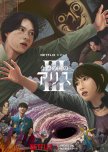
Usagi The Foolish "Rabbit"
Too often throughout the history of TV series, people decide to keep a series going instead of leaving well enough alone, or to push a series, despite the fact that the well has been run dry of good ideas. "Alice In Borderland " joins the fraternity of shows that should have “quit while it was ahead.”The first two seasons of the show gave us some of the most powerful and thought-provoking storytelling that I have ever seen. Season 3 fails to even measure up to the first two seasons, largely due to the fact that we got some silly ideas to keep the story going, and the games aren’t nearly as interesting or creative. In fact, some of the games are downright dumb. We also don’t get nearly the same level of focus on the characters or depth of the story, either.
Don’t ask me why the writers decided to go off on such a stupid tangent. Perhaps they couldn’t come up with anything else. Usagi is having nightmares about her father’s suicide, and she’s obsessed with finding a way to reach him. We’ve seen this premise before in The Flatliners and other similar stories. She and Arisu are happily married…well, married, anyway. Anyone who’s truly happy would learn to let go of loved ones who’ve passed. Instead, her pain and suffering drag Arisu into the problem as well.
Usagi meets Ryuji Matsuyama, a man who’s obsessed with finding out what’s beyond death, and she’s tricked into taking a drug that takes her back to the Borderlands by placing her body in a debilitating coma, which she’s not likely to survive. There is one last card to defeat: the Joker, and Matsuyama is promised answers if he can bring Arisu back, and is instructed to use Usagi to achieve that goal. Of course, once Arisu finds out what’s happened, he doesn’t hesitate to head back to the Borderlands to find her. Ann, from the previous series, helps acquire the drug to help Arisu.
The games are much different this time. Players are simply instructed to play random games with the hope of getting to the Finals, and potentially getting back to their world. There are no visas. They simply have a day or two to get to the next arena. Obviously, there are no suits of cards left to defeat, and it seems that there aren’t nearly as many players this time either.
For most of the series, Arisu and Usagi are separated. Never mind that Arisu is doing all he can to find Usagi, while Usagi never even questions Matsuyama about her goal of finding her father and why it seems she was tricked in the first place. Also, never mind that after Arisu sees Usagi, he worries endlessly about how to get back to her. Not once does Usagi show even the same level of passion or concern. In fact, she never mentions Arisu again until they finally meet up for the final game. It’s clear we have a very unbalanced relationship between the two.
The Final ends with a few survivors, and Arisu meeting with “The Watchman (expertly played by Ken Watanabe), who gives Arisu a choice: Life or Death. He can let it all go and choose Death, or he can continue the inevitable struggle and pain by going back to his world. There is no suspense, as we already know which one Arisu is going to choose.
Back in their own world, Arisu is fine, and Usagi is brought out of her coma. Of course, there is no explanation, apology, or anything at all from Usagi, who brought the entire situation upon herself and Arisu for really no reason at all. Rather than seek help, counseling, or a number of other choices, she chose the most reckless and dangerous choice, because she thought so little about her own life as well as Arisu’s.
The premise of this season is the meaning of Life. Ultimately, this is a meaningless theme because the meaning of Life is whatever meaning a person gives it. This didn’t have nearly the same effect as the last episode of the second season, when Arisu battles the Queen of Hearts, who profoundly tells Arisu that life is choice, and you decide how to experience something.
The most ridiculous game was the last one, in which players are in 25 rooms in a square grid and have to find the exit. Along the way, they are shown what their futures might be, given the choice of which door to go through. It’s funny that there are still people out there who believe in fate; that their futures are somehow pre-determined. No future is set. It is impossible to predict the future. Only possibilities based on where you are now. The idea was that, instead of players simply ignoring the images and trying to find the exit, we have players only thinking about trying to manipulate the game to ensure a good future. It was bad enough that this one game took up most of the last two episodes. And where we were supposed to cultivate some sympathy, there was none to be had.
Alice in Borderland should have left well enough alone. If I choose to go back and revisit the series, you can be sure I’ll only watch the first two seasons. Overall, a series that was a huge “10” for me has now taken a big hit, no thanks to this lackluster and uninspiring third season that should have never been made.
Was this review helpful to you?

This review may contain spoilers
Letting Go
Life is a process of letting go. The futility of attempting to hold on to anything is that nothing lasts forever, and it’s the struggle to attempt to hold on to things that leads to unhappiness, misery, and suffering. As Socrates from “Peaceful Warrior” wisely stated, “When you don’t get what you want, you suffer. And even when you get exactly what you want, you still suffer because you can’t hold onto it forever.”“Missing: The Other Side” is one of my all-time favorite dramas. The first season yielded so many touching and heartfelt moments. Season 2 attempts to dive even more deeply into the reason why the villages for the missing exist, and what can be done about those poor souls who find themselves trapped in “limbo.”
Kim Wook and Mr. Jang are back and unwittingly find themselves in yet another village in a different place and with a different group of people. This time, the village is headed by a matriarch in Kang Eun Sil, or as she’s nicknamed “Captain Kang” by the villagers. The new village holds a special meaning for Mr. Jang who quickly finds out that this is where his beloved daughter, Hyun Ji stayed before moving on.
Mr. Jang quickly finds himself attached to the village, especially Hyun Ji’s friends Ha Yun and Young Rim who tell him all about Hyun Ji. He also finds that Captain Kang has kept mementos of many of the villagers who have since passed on, and he’s given a small, pink box with a letter inside addressed to him. Mr. Jang is a sweet man who wears his emotions on his sleeve, and each time he breaks down in tears, we feel it. Such is the mark of an incredible actor in Huh Joon Ho.
Meanwhile, we find that the construction scandal from the first season was just the tip of the iceberg as Kim Wook and Detective Shin quickly find themselves investigating a drug ring, no thanks to Oh Il Young, a young man who is somehow able to traverse the land of the living as well as the village. In fact, we find out that he’s been looking for Kim Wook due to his ability to enter the village, and it’s through Oh Il Young that Kim Wook and Mr. Jang are able to find the current village.
We still have the beloved Lee Jong A and her amazing computer and detective skills which she uses to help Kim Wook and Mr. Jang as well as indirectly helping the people of the village.
Once again, Kim Wook and Mr. Jang set out to help the people of the village find their bodies. Some are tough because the victims are children. The diabolical, evil woman who’s been killing children and the elderly for years is easily the most disturbing. How anyone could conceive of harming a child is beyond my comprehension, and when Ha Yun and Young Rim finally transform into beings of light as they are on the swings and disappear is pure sweetness.
While I found that Season 1 had more tender and heartfelt moments, Season 2 is just as powerful and effective. It’s especially heart-wrenching when we find out what happened to Captain Kang as well as disturbing that one of the newest members of the village is a 5-year-old girl in Alice who quickly takes to Kim Wook and Oh Il Young. Still, the mere thought that someone killed this sweet, little girl is enough to make your blood boil.
This is simply an amazing series that certainly left us with a cliffhanger for a Season 3! If the writers continue to give us these kinds of stories, then I have no doubt that the next season will be just as amazing.
I’ve said in many reviews, but I still marvel at how deftly Korean performers can access their emotions and make us feel it. They aren’t afraid to let it all hang out and thank God for that! It makes their performances all the more powerful and effective.
Everything in this universe is made up of energy, including us. And if energy can neither be created or destroyed, what does that say about those who have “moved on?” Grief is for us, and it’s a necessary component that allows us to let go of our attachments and those who have moved on to another plane of consciousness. One has to wonder if the people in the villages exist because their bodies aren’t found, or if it’s simply due to attachment to their bodies. Either way, the premise for this series is intriguing, and I already can’t wait for the next season!
Was this review helpful to you?

This review may contain spoilers
Cherish Your Loved Ones In Life While You Have the Chance!
First of all, before I begin this review, I need to make a recommendation for anyone who hasn't seen this series yet: get a box of tissues. You're going to need it."Missing The Other Side" brings a unique concept for this story. There is a staging area. A village that exists for people who have died but whose bodies have not been recovered. It doesn't really matter what your beliefs are, you simply have to just go with it. If you do that, you won't be disappointed, as this is one of the most beautiful, heartwarming stories I've ever seen. I had no idea that so many heartfelt moments would be in a 12-episode series.
Anyone who has experienced the death of a loved one, is likely to relate on some level. And even if you haven't, you'll very likely still feel touched by how the story-but most especially-how the relationships unfold between those living and those who have passed on.
The series is about a con man in Kim Wook, wonderfully played by Go Soo, who surreptitiously finds himself the unwitting witness of a woman who is being kidnapped. He soon finds himself the target of the kidnappers, and after a lengthy chase, he finds himself in a world he couldn't possibly imagine. A village where the dead live until their bodies are found. Of course, he has no idea why he can see, hear, touch, and communicate with them. The only other living person with this ability is Mr. Jang, a lonely man who has essentially stopped living due to the disappearance of his little girl years ago.
Detective Shin is brought on board, initially to investigate a construction company that seems to be tied to a series of deaths, both from the past as well as the present. Believing his fiancée to have dumped him, he quickly finds that she was the woman being kidnapped that was witnessed by Kim Wook. Unfortunately, we find out that his fiancée, Yeo Na Choi has been murdered, as she is the most recent addition to the village.
We also discover that there is a conspiracy tied to the construction company, and that there is someone else masterminding the disappearances, as well as the deaths, of so many people, including Kim Wook's own mother, whom he thought had abandoned him years ago. However, after seeing the locket on a village woman, Kim Hyun Mi, we quickly discover--as does Kim Wook--that she is his mother. At first, Kim Wook doesn't understand, as he's filled with resentment regarding his mother.
The interaction between Kim Wook and the villagers is nothing short of pure sweetness, as he finally finds a true purpose in life. The villagers are unable to leave the village until their bodies are found, and Kim Wook decides to help Mr. Jang do so. While Mr. Jang is still trying to find out what happened to his daughter, Kim Wook is also trying to discover who killed Yeo Na Choi as well as his co-worker Kim Nam Gook.
Some of the most powerful and profound interactions I've seen are scenes between Yeo Na Choi and Detective Shin as each--separated by death's veil--speak to each other but cannot see or hear each other. The amount of emotion that pours from their hearts and souls is beyond touching. It is something altogether more ethereal, soul-felt, and poignant that will have you grasping quickly for those tissues! That same is also conveyed between Kim Wook and his mother as each pours their heart out to the other. And while there is no interaction between Mr. Jang and his daughter, we feel his pain as he cries out in vain-at last finding some measure of closure-even if it isn't what he'd hoped for.
I am constantly amazed at how Korean actors can emote so easily and deftly. They are able to help us feel those deeper emotions through sobbing, as though their hearts are being torn open. When I lost my father in an accident when I was just nineteen, I suffered unimaginable heartbreak as though my whole world had been shattered. These actors and actresses are somehow able to tap into that emotional level. And I don't think it is as easy to do as people might think because I've rarely seen it done in western movies and shows. I think there is something that makes those actors hold back just a little. This entire cast is to be commended for such deep, complex, and profound performances!
I can't remember ever watching a series--aside from the classic show, Highway to Heaven--that had me tearing up as much as this one did. The story is compelling and enthralling as it is as much a mystery as it is in delving into what might be waiting on "the other side."
It's hard to feel grief when you know your loved ones are safe and well. Perhaps not in a way that we understand, but it still brings about some closure. More than that, you can't help feeling happy for each member of the village as they move on to another realm of existence as soon as their bodies are found. If only we had such clarity of knowledge when our loved ones do pass, it would perhaps make the grieving process a bit more bearable.
Watching movies and shows where children and women are victims of horrible crimes has always been hard. It breaks my heart. As a TEFL teacher, I don't even want to think of something like that ever happening to one of my students.
This series is nothing short of a work of pure art. Pure beauty. And perhaps also, pure hope. Hope that there is healing for those who remain behind as well as for those who have moved on. Perhaps the lesson here is to cherish those closest to us in life so that we may then cherish them in death. Don't waste a single moment to let your family and friends know how much you love and care of them. After all, there are only so many tomorrows, and you don't want to end up wishing that you could have said something when you had the chance. Let them know. Let them know now.
Was this review helpful to you?

This review may contain spoilers
Power or Love In This Epic Fantasy Series!
First of all, I must say that Season 2 cannot get here fast enough! When the last episode ended, I literally groaned that I had to wait but was actually thrilled that this story was going to continue. Such a lush and beautiful story is too good to end here.Once again, the Koreans continue to prove why they are the most proficient storytellers in the world in film and television. I’ve been trying to think of another fantasy series that was heartfelt and full of luscious characters like this one. The “Lord of the Rings” film series is the only other one that comes to mind. That tells me just how incredible this series has been. And what makes this series soar is that it is story and character-driven. While it has some incredible special effects, they only enhance the core, which is what is supposed to happen in high-quality story-telling.
In a fictional kingdom populated by mages, we have a power struggle going on to possess the “ice stone,” a stone of magic that can bring people back from the dead. Of course, anyone who seeks immortality would have a strong desire to possess such a relic. There is also a differentiation between magic and sorcery. Sorcery is forbidden magic that goes against nature itself. And one of the main devices of sorcery is soul-shifting. This means that a person dies but shifts their soul into another body. In some cases, soul-shifting can also mean trading bodies. This, of course, is forbidden magic.
At the center of the story is Naksu, an infamous soul assassin who was hunted down by the mages of the kingdom. Mortally wounded, she is able to soul-shift into another body and take her identity; the identity of Mu Deok. However, because of her new body, she has no access to her energy in order to perform magic. In short, she’s a regular person. However, her drive and desire to reacquire her energy and carry out her threat of killing those responsible for the deaths of her family members, is still very much at the forefront of her mind.
We then have Jang Uk, a somewhat spoiled and lazy young man who is supposed to be learning various forms of magic, despite also being cut off from his energy due to an edict from his father. He’s given no reason why, and so he spends much of his time lazing around and doing nothing until Mu Deok shows up and gets a job as his maid. However, it doesn’t take Jang Uk long to realize Mu Deok’s true identity, and he asks that she train him and become his master.
One of the central themes of this story is what is more important? Power or Love? It’s ironic that most people find love to be a weakness. What they fail to realize is that power without love IS weakness. Love is the most powerful force in the universe. This is something that Mu Deok must face and decide, which becomes an important factor when she is ultimately forced to decide what she wants: her power back or Jang Uk.
The settings created for this series are absolutely incredible. I have to believe that most of the fictional towns are sets, and they are elaborate enough to rival any major film project.
There are so many amazing performances in this series, that it is incredibly difficult to pick one that stands out from the rest. Lee Jae Wook (Jang Uk) and Jung So Min (Mu Deok) are absolutely fantastic and they have great chemistry together. One of my personal favorites was Kim Do Ju (Maidservant Kim) who was too exquisite for words. She is such a lovely woman, and her performance really stood out for me. However, the performance of Jo Jae Yoon as the villainous Jin Mu was captivating, to say the least. More often than not, a story is only as good as its villain. Imagine Star Wars without Darth Vader or Lord of the Rings without Sauron. They just don’t work nearly as well, and Jo Jae Yoon gives a stellar performance as the villain behind the throne; the man pulling all of the strings. I’ve seen Jo Jae Yoon once before in “Descendants of the Sun,” but this role feels like it was tailor-made for him. He’s deliciously evil and corrupt with little smirks that make you want to hit him. What makes his performance so grand is that he never plays Jin Mu in an over-the-top way. We have no angry outbursts or rage-filled speeches. He’s calm, level-headed, and far brighter than people give him credit for.
Of course, as with so many Korean series, we have moments of love, humor, inspiration, and even wisdom. Koreans are masters of character. They are always multi-leveled and multi-dimensional, much like real people.
The fight scenes are all well-choreographed. Some of which reminded me a little of “Crouching Tiger, Hidden Dragon. I also like that they explain the magic. Robert Jordan, who wrote one of the most epic fantasy series of all time in his “Wheel of Time” series, is considered to have explained the science of his magic better than any writer ever. But Alchemy of Souls comes really close as we learn how magic and energy are used.
This series is grand on an epic scale. Even a 20-episode series with each episode at an average of 75 minutes went by at a clip because I was so vested in the show. As I stated before, I cannot wait until the next series comes out. They ended things on a great cliffhanger that made me keep looking at the clock and going, “Oh, no! It’s almost over!” Yeah, I didn’t want it to end. For me, this is one of the best fantasy series I have ever seen, and frankly, it was the central theme of love and power that kept me coming back for more. And yes, I can’t wait for more!
Was this review helpful to you?

This review may contain spoilers
Power of Love and Healing!
The series works because it doesn’t try to be anything else than what it is. Too often, especially in romantic dramas, the writers always attempt to introduce some new conflict to keep the story going rather than simply let the characters guide them.The series is about love and healing. This is a touching and sweet series that endeavors to demonstrate that sometimes what we remember isn’t always what really happened, especially memories from childhood.
The series starts out with Seong Deok Mi, who is a curator at an art museum by day and a fangirl by night. Perhaps we get a glimpse of what it means to be a true fangirl. She and her best friend, Lee Seon Ju are obsessed with K-Pop singer, Cha Si An. They are both the masterminds behind Cha Si An’s biggest fan website, “Road to Si An.” Seong Deok Mi does her best to be wherever Cha Si An is in order to take pictures and then post them on the website. Her apartment is literally littered with pictures, drawings, and even pillows with Cha Si An’s face.
Enter Ryan Gold, a famous art director from New York who is brought in to take over as director of the art museum when the owner is caught in a scandal. He’s a bit stuffy and uptight, but he’s a good person. He also has a special interest in a series of bubble paintings by the famous painter Lee Sol. Ryan was abandoned at an orphanage at seven years of age, but he’s inexplicably drawn to these paintings, which seem to unlock pieces of memories with his mother.
In order to protect Seong Deok Mi from a personal scandal, Ryan Gold agrees to pretend to be her boyfriend. We’ve seen this set up numerous times, but it still works, as it’s obvious to everyone that despite the staged relationship, they’re drawn to each other despite not really liking each other initially.
The first half of the series is about how Ryan and Seong Mi become closer and finally enter into a loving relationship. However, the more compelling story is in the second half of the series when Ryan begins to discover who his mother is and how the paintings by Lee Sol help him to connect the dots from his broken memories. I’m not sure there is anything more painful than a parent who loses a child. In a compelling discussion, it’s pointed out that there are terms for spouses who lose one another, or for children who lose their parents, but there is no term for a parent who loses a child, perhaps because it’s simply too painful.
As the viewer, we wonder how a mother could possibly abandon her own child, and yet, we soon discover that things are seldom what they seem to be, as Ryan was left waiting at a playground while his mother went to a meeting nearby. She never made it as she was involved in a serious accident. Of course, Ryan doesn’t realize this until he finally meets his mother, who turns out to be Lee Sol, and that the bubble paintings were actually of him. This was an incredibly sweet reveal, which serves to remind us that a mother’s love never dies, even when it seems to be the case.
We also learn that Seong Deok Mi and her family her unwitting participants in how Ryan was left at the orphanage. The series is about love but also about healing and forgiveness. Ryan could have easily been resentful and bitter about what happened, but instead, he realizes that, despite the contrary, his mother never forgot him. The reunion between them is a powerful element of the series. People often forget that the only way to truly move forward is to let go of the past, and to realize that parents are people and that they often make mistakes too.
Once Ryan and Seong Deok Mi are together, and we also realize that Cha Si An is actually Ryan’s half-brother, it just seems a little creepy that Seong Deok Mi’s apartment is still filled with Cha Si An’s pictures to the degree that you wonder if Seong Deok Mi’s fangirling is pushing the boundaries, especially given Ryan and Cha Si An’s relationship to each other.
There were only a few things that I didn’t care for. First, Seong Deok Mi’s best friend, Lee Seon Ju just isn’t a very good friend, especially when it comes to giving relationship advice. Given her own marital problems, she’s the last person who should be giving feedback and suggestions. She was the only character who just didn’t work for me. A wife who cares more about being a fangirl than a wife is someone with a problem.
Second, when Ryan tells Seong Deok Mi that he has something to tell her (when he’s about to confess his feelings), she tells him that they should end their “fake relationship” and then stalks off without even giving him a chance to say anything, and also when Seong Deok Mi hides behind her brother when Ryan comes over to see her because she’s in her fangirl outfit, she behaves like a kid instead of a 33-year-old woman. Those scenes just made her appear cowardly and immature.
Park Min Young and Kim Jae Wook turn in stellar performances, and it’s largely their chemistry that makes the story work so well. Park Min Young has an absolutely captivating smile, and Kim Jae Wook has real charm. My favorites were Kim Mi Kyung, whom I’ve seen in a number of series, and this veteran actress just never disappoints! She’s so good in everything she does. And even though she had a smaller role, I also really liked Kim Sun Young as the quirky and self-absorbed museum owner. She’s another actress who is fantastic in everything she’s in.
This is a warm and sweet series that doesn’t go overboard. It says a lot when the last eight episodes are more intriguing than the first eight. A series should get stronger as it progresses, and this one does just that. This was definitely one of the better romantic dramas that leaves you with a warm feeling in your heart.
Was this review helpful to you?
This review may contain spoilers
Trials and Tribulations of the Insecure
This short series attempts to put into perspective the trials and tribulations of people suffering from low self-esteem and tremendous insecurities. However, the series isn’t very effective in convincing the audience that it’s most important to love yourself first before you attempt to love another. The characters are people we should ultimately be sympathizing with, but we don’t because they don’t learn from their mistakes, nor do they evolve, even though the writer attempts to make it seem as though they have.Katagiri is a college student involved in a long distance relationship with Osanai Sachi, a girl he’s been seeing for five years. There is little chemistry between the two, and it’s clear that the relationship isn’t balanced as Osanai clearly has deeper feelings for Katagiri than he has for her. He is rather distant and aloof around her, and it’s theorized that this might have something to do with being abandoned by all of the women in his life. However, the writers never take the step or time to explore this more deeply. Instead, it’s glazed over like a train flying by a station.
Osanai adores Katagiri and sends him letters regularly. However, the letters sit in Katagiri’s apartment unopened, and he never replies. Instead, he finds some kind of solace in his next door neighbor, Shino. She’s a married woman seemingly trapped in a loveless marriage. What’s interesting is that she is just as distant and aloof as Katagiri, but for them, the sexual relationship enables each to feel something. So many people in this world take to food, sex, drugs, alcohol, or anything else that either helps them to feel some sense of pleasure or to escape from their problems. The real problem is that all pleasure is short-lived and never lasts, and escaping from one’s problems is also only temporary as those problems are still there once the effect of the “drug” wears off. No wonder there is so much misery in the world!
Osanai is an innocent and rather naïve young girl. She’s nineteen but often acts like she’s thirteen. She simply has no idea how the world works, and she also believes that her love for Katagiri can overcome their distance and their problems, which she never realizes until it’s too late. Naturally, she finds out about Katagiri’s affair with Shino, but rather than getting upset, she tells him that it’s okay with her, as she feels responsible for initially turning him down during a past attempt at intimacy. Katagiri assures her that he feels nothing for Shino, which somehow, is okay with Osanai, at least, at first. Osanai is much like a leech who believes that a painful relationship is better than on relationship at all. She’s so incredibly insecure that she can’t bear to be without Katagiri, and she makes the popular mistake of making him the center of her universe.
After they finally make love, Katagiri starts to come out of his shell when it comes to Osanai, but Osanai begins to realize that she can no longer overlook his transgression, and she eventually breaks up with him instead.
The series takes a very strange turn toward the end when Shino’s husband, who has been wire-tapping his wife’s apartment, finally comes forward and confronts Katagiri, and blackmails him into paying damages for the affair. Shino’s husband, rather than talking things out with his wife, simply plays the voyeur as he sits and watches Shino and Katagiri. This made no sense at all. I don’t know many husbands who would do this unless they took pleasure from the voyeuristic act, which is never even brought up by Shino after she finds out.
What we ultimately have are four very cowardly and immature characters with virtually no appeal at all. Katagiri cuts himself off, using his past as an excuse for his lack of feelings for Osanai. Osanai makes Katagiri her whole world. Shino battles boredom and loneliness by seducing Katagiri (even though he’s just as responsible), and Shino’s husband sits back and watches while his wife carries on with an affair because he’s too obsessive and possessive for his own good. By the time the series ends, we end up rooting for absolutely no one. The only character who shows even an ounce of integrity is Osanai when she realizes her mistake and moves on from Katagiri but not before she condescends to make love with Katagiri, not because she loves him, but because she fears losing him, which is never a good reason for sex.
This isn’t a very enjoyable series to watch, and frankly, I’m not sure that it’s supposed to be. But, what we are hoping is that Katagiri, the main protagonist, might actually grow up and face his insecurities. Sure, he pays off Shino’s husband, but that has nothing to do with facing your insecurities and learning to love yourself. That’s simply making up for getting caught. The only thing that I was relieved about was that they didn’t try to put Katagiri and Osanai back together again. That would have been ridiculous, and so that aspect of the ending was at least believable.
This series played out like a bad soap opera, and I’m thankful that it was only twelve episodes at only 20 minutes for each one. It was barely tolerable at that.
Was this review helpful to you?


