


 1
1



Korean Beauty And the Beast?
If the goal of the film was to demonstrate how many people treat others as less than human, then the film succeeded in its goal. If the goal was to demonstrate that we should treat everyone with a level of love and respect as human beings, the film comes up a bit short.Kim Sun Yi is a young, and rather sickly girl, living in a very small, rural village with her mother and sister. We can see her life is rather mundane, and she finds small pleasures in writing until she comes across a South Korean experiment gone wrong.
Enter Cheol Su, a young man in his late teens who has been locked up and used in some kind of backward experiment with animal and human DNA. Initially, all Sun Yi sees is a wild animal who eats like one and largely behaves like one. Her mother takes the boy in, and cleans him up, even though she’s unsure of what to do with him.
Sun Yi is initially disgusted by Cheol Su’s lack of table manners until she finds a book about how to treat dogs. She uses this book to train Cheol Su to only eat upon her command. We find that Cheol Su can understand Korean, due to the professor who was raising and experimenting with him. Whenever Cheol Su does something correctly, he gets a pat on the head, much like a dog.
Seok Ji Tae is the town rich boy and thug. He owns the house that Sun Yi’s family is living in. He’s a largely uninteresting and rather cliched villain of the story, which tends to play out like a Korean version of “Beauty and the Beast.” Of course, Ji Tae attempts to brazenly demand Sun Yi’s affections and becomes violent when he doesn’t get them, making him a far greater monster than Cheol Su could ever be.
The film is a touching one and the performances, especially by the film’s two leads in Bo Young Park and Song Joong Ki are especially poignant. However, the chemistry goes little beyond the affections of two people, but rather a woman and a man she perceives as an animal (even if a benevolent animal at that); like a beloved pet.
The story would have been better served had Sun Yi begun to see Cheol Su as a person, and yet she’s never really one hundred percent sure. In the end, she says that she doesn’t care if he’s a monster. It would have been more powerful if she had told him that she knew he was a human being and not a monster. His violent actions are always done to protect her as well as those around her, but she’s unable to truly see past his animalistic qualities.
In the end, despite living alone, we see just how wrong Sun Yi was about Cheol Su. Just because a person doesn’t speak, doesn’t mean that they can’t, and perhaps she learns something about how to treat others. This film had the potential to be so much more than it ended up being.

Dysfunction and Technology Are a Dangerous Combination!
This series serves as a reminder that people impel, but they do not compel, and that all actions have consequences. While people are not responsible for other people’s actions, they do have influence, which is why it’s important to understand that how we treat others is essential because it also reveals so much about ourselves.This is a superficial world in which so many people seek adoration from outside of themselves. You don’t need to look any further than today’s social media and how it impacts people’s lives. Look at Instagram, TikTok, Facebook, and others which utilize and prey upon the insecurities of others. Eckhart Tolle may have said it best: Technology amplifies egoic dysfunction. In other words, it provides the means to keep dysfunctional behaviors going and make them even bigger.
Mask Girl is about a young woman, Kim Mo Mi, who has the talent and the physical attributes to possibly succeed in the entertainment industry, save for one: her facial features. She is quickly dubbed “ugly” by her classmates in school, all the way up to her job where she scarcely gets a second look from anyone, especially men. She finds a way to entertain without using her face. She wears a mask, performs through live webcams, and suddenly has the adoration she craves. Such superficial success often unlocks its own vile problems, as she finds herself the target of stalkers, sex addicts, and men who are as psychologically damaged as she is. People fail to realize that they often attract what they perceive in themselves. And Kim Mo Mi is soon caught up in a world of lies and murder.
Kim Kyung Ja could go down as one of the worst mothers. Her son is a recluse who spends all of his time online, dreaming of women he could never have. When he viciously rapes Kim Mo Mi and is killed for his trouble, Kim Kyung Ja turns into a vengeful, sadistic monster whose sole desire is to see Kim Mo Mi suffer and put to death. Her first attempt fails, and nearly at the cost of her own life. However, she finds a second chance by exploiting Kim Mo Mi’s daughter, Kim Mi Mo, and using her to exact her own revenge: she will find a way to kill Kim Mi Mo and record the act on video. Stuck in prison for the murder of Kim Kyung Ja’s son, Kim Mo Mi vows to do whatever it takes to save her daughter.
The series is told from the perspective of different characters, featuring them in their own episodes but correlating with the other characters and what has already transpired. We end up with the pitiful, misfit people society has cast aside like trash. People starving for attention and adoration to the point where plastic surgery is one of the focal points.
You may or may not be surprised to find out that 1 out of every 3 Korean women will have had some form of plastic surgery done before they are 30 years old. That’s a staggering number, and the series demonstrates the extremes that people will go to for the smallest amount of attention.
What is truly sad is that, unless you find a way to love yourself, there isn’t enough attention in the world to ever make you feel happy. It simply does not exist outside of yourself. Yet, the world has reached a point where attention and fame are so addictive and desired, that people will do anything for it. However, what they fail to realize is that all fame and glory are fleeting.
Now, this series may represent a somewhat extreme depiction of what is going on in the world, but it’s actually not as far off as one might believe.
There are scarcely any truly “likable” characters in this series. They all represent degrees of indifference and dysfunction with Kim Kyung Ja being the most severe example of a person who has become so unhinged that she ends up truly being the monster of the story. I’ve seen Yeom Hye Ran (Kim Kyung Ja) in a number of series now, and this woman is a true genius as a character actor. She never fails to disappoint.
I will say that the last episode is a bit over-the-top when toning it down would have served the story better. It got just a bit ridiculous and unrealistic, but overall, it didn’t hurt the story very much, and we already get a sense of how it would ultimately end.
It’s of the utmost importance for people to learn how to love themselves and not be so caught up in what other people think. It’s also important treat others with dignity and respect, for we never know how our actions may cause a person to respond. In other words, don’t poke the cat. You may find that you’ve poked the cat and ended up with a tiger coming at you as a few characters in this story found out the hard way.
To Anyone Who Gave Their Lives So That Others Might Live
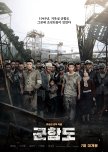
Unfortunately, so much of American education during WWII centers mostly on the European theater and not very much on what was going on in Asia and the Pacific. Of course, Pearl Harbor, Iwo Jima, and the dropping of two atomic bombs on Japan are about all that is really covered.We know that—as many atrocities committed in Europe, especially by the Nazis—it was just as horrific, if not more so, regarding what Japan did to the Chinese, the Koreans, and many others. “Battleship Island” is just one incident of hundreds, if not thousands, and yet it also speaks to the bravery and courage of anyone who fights against oppression.
The movie centers around the Japanese Hashima coal mine and the Koreans who were used for slave labor to mine the coal. Conditions were about as horrific as you can imagine, with the men working in unbearable temperatures deep in the earth while the women were used as sex slaves. Escape, at this point, seems futile for anyone.
A Korean operative (Park Moo Young), connected with the American OSS, is given the mission of helping a high Korean official—Yoon Hak Chul—to escape. However, after entering the island, he finds records of Yoon Hak Chul stealing money from the Korean laborers and providing the Japanese with key intelligence. Perhaps there is nothing so evil as treachery, especially when you betray your own people for money. Of course, Yoon Hak Chul attempts to cover his deception with murder and lies.
Meanwhile, Lee Kang Ok and his wonderful eleven-year-old daughter, So Hee are trying to survive, and initially hope that Park Moo Young will help them escape. But Park Moo Young’s official orders are to only help Yoon Hak Chul. Once Park Moo Young finds out that the Japanese plan to kill all Koreans in an attempt to cover up what they’ve been doing, Park Moo Young vows to help every Korean try to escape.
The escape portion of the movie is a tough watch as 400 Koreans try to save the women, children, and injured while staving off a least 100 Japanese guards, who have orders to kill them on sight. Koreans scramble along a small conveyor belt to the coal mine transport. The sequence is like something out of Saving Private Ryan where you have no idea who is going to survive and who isn’t going to make it.
Hwang Jun Min (Lee Kang Ok), Song Joong Ki (Park Moo Young), Kim Soo An (So Hee) are stand-outs in this film, especially Hwang Jun Min who has terrific chemistry with Kim Soo An which also gives us a tough, heart-wrenching ending.
Lee Kyung Young (Yoon Hak Chul) was also fantastic. However, I have only ever seen him play villains in the K-Dramas I have watched, so when I saw him on screen, I wondered, “Wait, is he really a good guy here?” Nonetheless, his performance is exemplary.
It’s sad that the Japanese government still hasn’t acknowledged the atrocities committed at the Hashima mine, but unfortunately, there are still so many horrible things that have happened throughout history that we’ll likely never know about.
This is a powerful film that is as honest and brutal in its depiction as any war film I have ever seen, obviously made with the hope that something like this never happens again. “Battleship Island” is a testament to anyone who has ever fought or given their lives so that others might live. It speaks to the bravery that resides in everyone, with the hope that if ever such a call is needed, we might be willing to lay down our lives to save others.
A Very Good Comedy/Action Film!
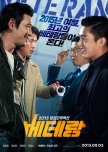
“Veteran” is just a plain, fun romp of an action/comedy film about a Metro detective who is hellbent on taking down the drug addict man who is the son of a wealthy corporate tycoon. The theme is a fairly common one of a wealthy man who believes that he’s untouchable and above the law. Plus, I needed something to get the bad taste of “King the Land” out of my mouth, and this movie more than fit the bill for me in that regard.Detective Seo Do Cheol leads a band of misfit detectives on various sting operations. The film opens up with him taking down an auto theft ring, and the apprehension of the Russian and Korean criminals down on the docks is beyond hilarious! Watching Detective Bong howl like a Native American battle cry, and fly out of nowhere to take down one of the operatives, is one of the funniest moments of the scene as she ends up missing the guy entirely and knocking herself out.
Do Cheol finds out that a friend (Bae) who helped him with the sting operation is trying to get his back pay of wages that the corporation is refusing to pay him, and the sadistic, drug addict, Jo Tae Oh takes great delight in having Bae beaten in front of his young son and then covering up an attempted murder with a suicide ploy. Of course, Do Cheol doesn’t believe a word of it as he’s already experienced Jo Tae Oh’s sadistic side first-hand at a party where he delightfully abuses two women just for the sheer pleasure of it.
As we’ve seen countless times before in K-dramas and movies, the rogue detective finds himself up against the system, where he’s forced to deal with high-priced lawyers, corrupt police officers who are being paid, and even high political officials who all want Do Cheol to leave the case alone. Even his wife is approached by Jo Tae Oh’s lawyer and assistant with a purse filled with money as a payoff. However, Do Cheol refuses to back down and vows to do whatever it takes to uncover the truth and take Jo Tae Oh down.
Do Cheol is a skilled fighter, and an above-average detective, and Hwang Jung Min plays him perfectly. He’s a likable guy who seems to take abuse from everyone, from his superiors, his co-workers, and even his wife, who snaps at him as soon as he gets home from a long day.
Yoo Ah In gives us an equally riveting performance as the drug-crazed Jo Tae Oh, a man who delights in the pain of others. He wears a smile like the Joker and before you know it, he goes on rampages of rage and violence. We are given hints as to why he might be like this as his father, while not on drugs, is certainly ruthless and prone to violence himself. Jo Tae Oh believes he has to prove himself in order to be his father’s successor, but his cravings for violence end up being his undoing.
The only part of the movie that had me scratching my head was the end. During their showdown, Do Cheol allows himself to be beaten in order to secure an “assault on a police officer” charge, or even just a “resisting arrest” as their fight is in front of cameras and many spectators all recording the incident on their phones. While it made the fight more interesting, I didn’t understand why he would have to take such a beating. Perhaps the charge is different in Korea, which is why I sort of dismissed it. In the US, after Jo Tae Oh hits him with the first punch—which takes place after Do Cheol is already read him his rights—that would have been more than sufficient for the charge to stick.
Koreans are masters of combing and using different thematic and genre elements in their shows and movies. This movie has plenty of action, laugh-out-loud moments, and scenes that will have you cringing, and the film also gives viewers something to think about. Koreans love using entertainment as a means to try and invoke change. In this case, it’s about not allowing the wealthy to prey upon the poor or the helpless nor allowing the wealthy to simply buy their way out of prosecution. In short, nobody is above the law and everyone should be held accountable, no matter who they are or where they come from.
All in all, this movie was a lot of fun, and I’m already looking forward to Veteran 2!
Don't Fall Into the Trap of Allowing ANYONE To Tell You How To Live Your Life!
If there is one thing that the viewer will hopefully take away from this series, it’s this: never, NEVER let anyone tell you how to live your life. It doesn’t matter who it is—religious people, family, society, or anyone else. As soon as you allow others to dictate how you live your life, you’ve given away your power. And when things don’t work out, you have also lost any right to get angry or resent them for it because YOU allowed it to happen. And the only person who will be dealing with the fallout is you. Those who counseled you won’t be taking the hits. YOU will! Steer your own ship. Don’t let anyone else try to steer it for you.“One Spring Night” is hardly the most romantic series I’ve ever seen, and it’s not necessarily an easy series to get through. This isn’t necessarily a criticism as the series is very well-steeped in realism about people navigating the minefield of relationships and the problems that arise because of them.
The “Before Sunrise” film series is the most realistic series I’ve ever seen regarding relationships…how they start, where they go, and how two people who were once in love, struggle to find that spark that they once shared when they first met.
Ji Ho meets Jung in one random morning when she comes into his pharmacy to get hangover medicine. It’s easy to see that he’s immediately captivated by her, despite her brusque mannerisms and snippy attitude. However, he quickly finds out that she’s already in a relationship with Ki Seok, a guy he actually plays basketball with on weekends.
It becomes very obvious from the get-go that Jung In doesn’t love Ki Seok, and the viewer is even left to wonder if she ever has. It’s ironic how many people enter relationships out of convenience or simply to use the other person because of money or social status. It doesn’t take long for Jung In to realize that she’s quickly developing feelings for Ji Ho, and soon she breaks up with Ki Seok and begins a relationship with Ji Ho.
Of course, rarely are things so simple. And yet this dynamic is an interesting one because I haven’t really seen it in Korean dramas. Ji Ho has a son, but he’s not married. What I admire about Ji Ho is that he doesn’t try to hide this fact, and he’s very upfront with Jung In about it, letting her decide if it’s a problem or not. We also find that a single father is considered to be quite unappealing, especially if you’re a single woman who’s never been married. Pretty soon, everyone is voicing their opinions and concerns, from his family to hers and even their friends.
Ji Ho is easily the most mature character of the series, with Jung In’s older sister Seo In being right up there with him. Ji Ho is honest and seemingly unafraid. He views his son as a strength and not a weakness, and he makes it apparent right from the start that he won’t allow anyone to hurt his son, even Jung In. He’s also very understanding and considerate, and perhaps his greatest strength is his ability to empathize. He knows the pressures that Jung In will experience, and he gives her the space to figure out whether or not she wants to be in a relationship with him.
Jung In—despite the actress being six years older than her male counterpart—has a number of issues. Don’t get me wrong as all of the characters are a bit flawed, but Ji Ho’s past experience has only made him stronger and more mature. Jung In’s greatest strength is her fierce independence. She has absolutely no problem standing up to anyone, including members of her own family. I LOVE this about her! She proves—at least in that regard—to be the type of companion that I think most men would love—someone who will walk through the fire with you and not look back. However, Jung In is also moody, temperamental, a bit conceited, judgmental, and tends to lack understanding and compassion when push comes to shove. Perhaps her greatest weakness is her inability to empathize. She doesn't smile very much, and it's quite evident that she's not a very happy person. She also has a tendency to be bossy. Ladies, remember this: no real man wants another mother for a wife! One mother is more than enough! That pledge was ridiculous, and if you’re in a relationship to try and change the other person, you’ve already entered into it for the wrong reasons.
In Episode 15, we find Jung In is angry by a “slip of the tongue” from a drunk Ji Ho when he asks her not to leave him or his son. She takes it as a sign that he doesn’t trust her—which is actually understandable to a point. Rather than talking it out and trying to understand why he has those feelings at all, she storms out and then tells him that they need to take a brief break. And then, immaturely, she gets angry when he doesn’t contact her. However, she never once stops to think about his past situation with the woman who left Ji Ho and his son and why that might be a source of fear and insecurity. If nothing else, this should have been a sign to both Ji Ho and Jung In that they needed more time to get to know each other. Relationships aren’t just about sharing happy, quality times. They are also about finding that person with whom you can confide and share your fears and insecurities. Every relationship is flawed and dysfunctional because everyone has those fears and insecurities. It’s how you navigate and BE there for each other during such moments that counts!
I’m not sure I’ve seen two more despicable characters in 45 years of watching shows than Ki Seok and Jung In’s “father.” I use the term “father” very loosely because such a man has no right to call himself one. Any father who uses his children for personal gain is no father. Any father who’s afraid of what people think rather than standing firm with his children is no father. Seo In has been physically and sexually abused by her husband (another deplorable man who won’t allow her to divorce him), and yet her father rants about how wrong divorce is and why she should try and work things out with her husband. That scenario literally made me sick to my stomach! And then we have Jung In’s father trying to marry her off to Ki Seok—without her consent—so that he can get a promotion at work. Utterly pathetic!
Ki Seok is almost as bad. This is a little boy masquerading as a “man.” After Jung In breaks up with him, he still contacts her, demands to see her, and unbelievably still insists that they are going to get married! Now, part of the problem is Jung In herself. She fails to see the obvious: to tell Ki Seok to his face that it’s over and then to break off all communication with him. Teasing him and stringing him along was cruel no matter how despicable he was. Ki Seok is an arrogant boy who views everyone as being beneath him, especially Ji Ho. Right up until the last episode, Ki Seok still believes that Jung In will marry him. Nobody—not even his own father—points out the obvious: that Jung In is in love with Ji Ho, and after all that he’s done, how in the world would he ever believe that she’d marry him?! Supreme delusion and arrogance.
Women are not property to be bargained off and used any way you see fit. This is something that many of the cowardly men in this world still fail to realize, and this series makes a very fine and bold point regarding this.
The series—for the most part—is well done. It’s not afraid to show the flaws, fears, insecurities, and concerns that many people have and why it’s important to find someone who’s strong enough to go through it all with you. The only thing better than being a person who won’t allow others to tell you how to live is finding a companion who lives their life the same way. Such a couple is an “iron couple” who can get through anything. If that doesn’t sound appealing to you, then I’m not sure what does. And, frankly, that was my favorite part of the series—watching Ji Ho and Jung In standing firm together and holding off all of their attackers—and as they did so, they began to help others realize just how powerful and true they are together!
If I have one glaring complaint about the series, it’s the music. My God! I’ve never heard two songs repeated (often 5-6 times per episode!) so much. The songs aren’t bad, they just didn’t quite fit the series. And it was overkill to play them so much. I love the songs from K-dramas. I have a huge list on my iPod from so many shows. Needless to say, I won’t be adding any from this series as too often, they got stuck in my head. It got to the point where I was muting the show when the song came on. I had the subtitles to read the dialogue. I kept going, “Oh, God! Not again!”
This is a series that actually gets better the deeper into the show you get. I know a lot of people stopped after four or five episodes. Believe me, it actually did get quite better. “My Business Proposal” is still my all-time favorite series depicting strong women. Unlike Jung In, the two women in that series were also soft, loving, and romantic. I also love the female lead in “Hometown Cha Cha Cha.” By the time this series ended, I had hopes for Jung In that perhaps she might soften up a bit and not make everything about her. I’m sure that with Ji Ho’s help, she would ultimately allow that to happen.
Two Exceptionally Principled Cops and One Exceptionally Weak and Compromised Reporter!
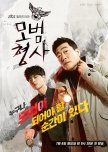
What is the price of integrity? What is the price of doing the right thing as opposed to the easy thing? And what is the price of compromising one’s integrity and doing the right thing? There have been a number of K-Dramas dealing with corruption. Some within the police force. Some within the prosecution. Some within the political annals, and several dealing with all three. “Stranger” is still the all-time best when it comes to dealing with corruption within the hierarchies of Korean judicial systems. “The Good Detective” is—for the most part—very solid with a few small issues here and there.A senior detective who’s been stuck in the same position for many years finds himself not following proper protocols when dealing with a murder suspect. That suspect is up for execution and Sergeant Kang Do Chang comes across some new evidence from some suspicious sources that prove that his suspect is likely innocent and was set up. Kang Do Chang has many years of experience under his belt, and he soon realizes the toll of doing the wrong thing can do to a person. We get the sense that this is his first major blunder, but it would soon cost him, and now he endeavors to do whatever it takes to set things right and also to vow never to go down that road again.
Lieutenant Oh Ji Hyuk is the newest member of Violent Crimes Team Two, and even though he’s technically Kang Do Chang’s superior, he takes the subordinate role for some reason. While Kang Do Chang is savvy, Oh Ji Hyuk is the smarter of the two. His skills at deductive reasoning help him see things that even his senior partner is unable to grasp. He’s also got a tie to Kang Do Chang’s case, as the principal suspect is actually his sadistic and wealthy cousin, Oh Jong Tae (played by Oh Jung Se). It’s very hard for me to see actor Oh Jung Se as anyone other than his stellar performance of Moon Sang Tae from “It’s Okay to Not Be Okay” which is one of the best acting performances I’ve ever seen.
The two detectives are principled and endeavor not to break the rules when it comes to bringing the truth to light. Little do they realize how stacked the corruption is against them, from prosecutors to superior police officers. to Civil Petition Division officers (Internal Affairs) and to the Ministry of Justice himself. Not to mention the press.
Speaking of the press, we have our third major character of the series, and easily my least favorite. Reporter Jin Seo Kyung is a selfish, immature, and weak person, who reaches for a bottle of alcohol more readily than she does her “mighty pen.” A number of times, we see her stumble and refuse to do what’s right. She compromises her own integrity because she’s afraid and doesn’t have the guts. She thinks little of anyone but herself and how a decision will impact her. In many ways, she’s the antithesis of our two detectives. Once, she withholds key evidence that might help save innocent Lee Dae Chul. And then she refuses to share the murder confession of her boss to the police, which unwittingly gets him killed. Oh, she finally gets around to doing it, but not before it’s too late. She’s a miserable woman who can’t see the forest for the trees. She easily discards the actions of her boss. She comes across as naïve, but she isn’t. She knows what he’s been up to and what he’s doing and the abuse of power he’s wielded as a prominent editor of a big-time newspaper. And yet, she does nothing. It’s been said that too often the biggest problem in the fight against injustice is for good people to do nothing.
It’s always been sickening to see how much disregard there is for human life, especially when they are pawns and victims being ground under wheels of corruption. Kang Do Chang admits his mistake but does his best to rectify the situation. Some of the most touching scenes in the series are between him and Lee Dae Chul’s daughter, Lee Eun Hye. It takes a lot of courage to admit that you’re partly responsible for what’s happened to a young girl’s father. It takes an even bigger person in Lee Eun Hye to forgive him and even thank him for trying to set things right.
As with many Korean dramas, the series is filled with suspense, touching moments, and outright humor. I’m not sure how a police officer could endure so much when they are trying to catch suspects and are—at the same time—fighting against the system they are a part of. How would an officer keep his sanity under such conditions?
I was glad to see several supporting characters realize their mistake and also try to find a way to redeem themselves, rather than simply being swept aside by the system. Yoon Sang Mi (Civil Petition Division) compromises her own integrity by lying in court in order to get a promotion. Kang Do Chang holds her in contempt and makes her face her own greed when he confronts her. Then we have Chief Moon who is also a part of the cover-up of the true crime. Fortunately, of all the characters to fall into the corruption pool, he does the most to try and set things right.
I’m not sure why Oh Ji Hyuk is held accountable for using his gun in the last episode. If there truly is a “rule” that prohibits an officer from using his weapon to save the life of another officer, then something is terribly wrong. I thought that wasn’t just silly, but insulting and offensive. Oh Ji Hyuk literally saves Kang Do Chang’s life. That was a stretch for me.
If it hadn’t been for such a deplorable character in Jin Seo Kyung, this series would have been nearly perfect for me. Her character was cringe-worthy. I’m not sure why the writer chose to make the female characters so unlikeable. Kang Do Chang’s sister drinks like a fish and snaps at him at every turn. I’d have kicked her out of the house. Her voice is even like nails on a chalkboard. I tend to prefer stronger female characters. They don’t have to be impeccable or flawless, but at least make them likable.
Acting performances—for the most part—are all rock solid. Again, I still feel that the two best performances were from Son Hyun Joo (Kang Do Chang) and Jang Seung Jo (Oh Ji Hyuk). These two have that good “buddy cop” vibe that you want to see in these types of stories.
Overall, this is a good series. However, I think I’ll wait a while before delving into Season 2, which I’ve already heard, isn’t nearly as good.
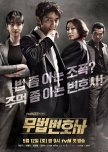
Recuse the Judge!
“Hypocrisy is the audacity to preach integrity from a den of corruption.” It’s sad that we live in a world where this is far truer than we’d like it to be. Those in power who abuse that power to exploit those around them. Promises of fame, money or even power on some level are often all that is needed to put someone on the path. What is scary about people like Hitler, Stalin, Trump, and many others throughout history, is that they convince themselves that they are doing it for the people and the greater good. When, in fact, it is always for themselves.The Lawless Lawyer sees Bong Sang PIl return to the city of Ki-Song after eighteen years to seek revenge against the kingpin of the local gang and the judge behind him for the murder of his mother, which took place right in front of him when he was ten years old. Now a lawyer, he’s determined to exact his revenge through the law. Bong Sang Pil doesn’t need to find out who is responsible because he was there to see everyone who was involved. But, he also knows that kingpin, Ahn Oh Joo and Judge Cha Moon Sook are too powerful to be taken down any other way. Oh, he could resort to petty violence, but he knows that this would only destroy him in the process. Bong Sang Pil, the nephew of another kingpin, has connections within the underworld, but he’s told by his uncle to stick to the law and not follow his uncle’s path.
Ha Jae Yi is another brilliant attorney whose ability in court is matched by her temper. After punching out a judge for his demeaning and derogatory statements about women, she’s suspended and return to Ki-Song to try and figure out what to do next. Ironically, Ha Jae Yi’s own mother disappeared the same night that Bong Sang Pil’s mother was killed. And we find out that Jae Yi’s mother was instrumental in saving Bong Sang Pil from certain death on that fateful night. We also learn that Jae Yi’s mother has powerful evidence of Ahn Oh Joo and Judge Cha Moon Sook, but she is forced to flee Korea in order to keep her husband and daughter safe.
I’ve seen several K-Dramas where the central theme is political and judicial corruption. “Stranger” was the best I’ve seen. “Chief of Staff” is another. This series is compelling because it deals with corruption within a town and how a corrupt judge rules with an iron fist, using people like tissue, and doing everything for the sake of money and fame. Actress Lee Hye Young gives a superb performance as a woman who simply cannot see that anything she does is wrong or hurtful. To her, people are there to be exploited, and we can’t help wondering how much of an influence her own father was; a man who’s hinted at being a corrupt judge himself.
For the most part, the series moves along at a great pace. What is truly impressive is how the writers are able to weave this tapestry, which is like watching two grandmaster chess players in Bong Sang Pil and Cha Moon Sook, trying to outmaneuver and outsmart each other. While Bong Sang Pil doesn’t have the power that the judge has, we quickly come to see just how smart he really is. And that is what makes his character so compelling. But, he quickly realizes that he can’t underestimate Cha Moon Sook or what she is capable of.
If the series has one major flaw, it’s this: Ha Jae Yi’s mother returns to help. And while it’s been 18 years, there is no way that Ha Jae Yi wouldn’t recognize her. Ha Jae Yi’s father runs a photo studio. The family photo sits prominently in the store window, not to mention the countless photos inside the house. And speaking as someone who lost his father, you never forget a parent’s face. I spent hours, days, and even years with his picture all around me, looking at it whenever I wanted. Ha Jae Yi would be of the same mindset. I understand that the writers did this for the sake of the plot, but it doesn’t work here. They should have come up with another ploy to make it work.
A subplot in Episode 14 also doesn’t quite work in which Ahn Oh Joo tells Bong Sang Pil over the phone that he intends to do something to Ha Jae Yi, and yet Bong Sang Pil doesn’t even bother to warn her or even Chief Tae of the threat. That made no sense either. Again, and I say this often in my reviews when I catch this: do not sacrifice character for the sake of making the plot work! In other words, don’t make a character do something that goes against their nature just to make a plot point work.
All in all, this is a highly entertaining and intriguing series. It’s my second time watching Lee Joon Gi after “Flower of Evil” and I can quickly see why he’s so beloved. The man tackles complex characters and emotions with ease. It’s clear to me that he’s a natural when it comes to acting. Even facial tics and flinches make him even more compelling. It is also my second time with Seo Yea Ji after “It’s Okay to Not Be Okay.” Obviously, her performance in “It’s Okay to Not Be Okay” has far more depth and complexity to it, which she handles like a master artist, but she’s no less compelling in this role. I love how she brings fearlessness to her character. Even when facing Cha Moon Sook, she’s got nerves of steel and won’t back down for a second. I love seeing people, especially Korean women who too often are treated like wallflowers, stand fast and stand strong.
This series has humor, wit, great characters, and a thrilling story. It reminds me a bit of one of the best detective series, “Columbo.” We know how the murder was done, and we even know who did it. What we want to know is how the detective will be able to prove it. In this case, we want to see how Bong Sang Pil will be able to catch Cha Moon Sook, along with everyone else who is responsible for destroying his and Ha Jae Yi’s childhoods.

"Revenge is a Dish Best Served Cold" In One of the Best Mystery-Thrillers Ever Made!
I have been watching movies and show for over 45 years, and I MUST start off this review by stating that Han So-Hee’s performance as Ji Woo Yoon is one of the best I have ever seen from any actor or actress. If she hasn’t literally won every single acting accolade and award, then something is seriously wrong. Yes, her performance is that good, and it’s also a big reason why this series is so good, aside from the stellar writing, directing, cinematography, editing, and pretty much everything else. This is one of the best series I have ever had the privilege to watch.After watching mostly light-hearted K-Dramas over the past four or five years, this series is entirely different. It takes us deep inside the dank and dark underworld of Korean organized crime. A place ruled with an iron fist in Moo Jin Choi (another exceptional performance by Park See Soon). As with exceptional storytelling and one of the best thrillers ever made, we know the players, but we don’t know who is who and what is what. It plays like “24,” “The Departed” and a “Bronx Tale” all rolled into one with a bit of “The Professional” thrown in. The series is, indeed bigger than the sum of any of these parts. It is its own intriguing identity. And the writers do a terrific job keeping us on our toes. Just when you think you have figured something out, and another curveball is thrown our way to make think, “Okay, maybe that’s not it at all!”
Ji Woo Yoon devotes her life to seeking revenge upon the person who killed her father when she was in high school. Throwing herself into hand-to-hand combat training and learning how to use her wits, Ji Woo Yoon becomes what happens when someone is laser-focused on achieving their goal. She doesn’t smile. Her apartment is empty, except for her weight equipment, and her life is basically as empty and dark as the streets she patrols. She doesn’t engage in anything that takes her mind away from her ultimate job: to find and kill the killer. However, things are seldom as they seem, and despite her incredible tenacity—borderline obsession—smarts, and abilities, she’s not invincible or infallible. What is it like to watch someone with that kind of determination? I think of people like Bruce Lee or Kobe Bryant; people who will do whatever it takes to achieve a goal and not apologize for it. This is part of the intrigue of this series and also why Han So-Hee so deftly is able to give us this character and bring Ji Woo Yoon to life. I would be extremely curious about the training she must have had to go through. I have seen some amazing performances by Korean actors and actresses, but this one by Han So-Hee, just blew me away. When I looked at her profile on Mydramalist, I was like, “Wait, is that the same girl?!” A transformation from a beautiful model to a person you wouldn’t want to cross on your best day is something on par with Jodie Foster, Doona Bae, Helen Mirren, Cate Blanchett or Meryl Streep. Yes, I’m putting this performance of Han So-Hee on that kind of a level. I think it takes tremendous courage and dedication to turn in this kind of performance.
At only eight episodes, this series will make you feel like you’ve sat through sixteen or even twenty. You can’t help but watch the next episode after you’ve finished one, and by the time it’s all over, you might feel like you need a vacation or, at the very least, a few days to catch your breath.
I love movies that showcase strong female characters, and this one certainly achieves that. We need more characters like this one. Ji Woo Yoon is definitely not someone you’ve ever seen in most K-Dramas, and man, am I thrilled to death that they pulled no punches in this hardcore series. The violence is extreme, but there is no scene that doesn’t belong, no act that is out of place. It plays like a meticulous hard rock song that always pulls you in. I’m so glad that Netflix collaborated to bring this series to light as well as keep every element of the story intact. As far as mystery-thrillers go, you’ll be as hard-pressed as I am to find one that’s better. I can only think of two off the top of my head: The movies “Seven” and “Silence of the Lambs.” And, yes, “My Name” belongs in that company.
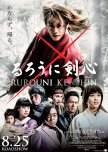
Killing Gives Birth to Hatred, and Hatred Kills In Its Turn
Himura Kenshin is a samurai and former assassin who has killed countless times. He soon discovers that each time he kills, it costs him a piece of himself.Vowing to live by a new code. A code in which he refuses to kill, Kenshin becomes a very unorthodox and yet inspiring character who uses his incredible fighting skills to help those who can't fight or defend themselves.
The Wanderer finds himself coming across young Miss Kaoru who owns a fencing dojo. Her dojo is wanted the new town bureaucrat who finds that in the new Japan, money is power. Not the samurai. He buys what he wants, and sends his own paid thugs and assassins to deal with those who refuse to sell.
Kenshin finds his new vow tested to its limits. For someone who has killed countless times, what's one more? And what does it matter if it's done to protect or save someone?
The fighting choreography is probably the best I've ever seen. The speed and skillset of each move is so lightning-quick that if you blink, you'll miss a sequence.
And yet this movie is so much deeper than a mere "samurai/martial arts" film. It's about love. It's about redemption. And it's about realizing that it's never too late to change. "No one is not worthy" Kenshin reminds one of his opponents. He's not only speaking about his foe, but also reminding himself that he's not lost.
The best pearl of wisdom is spoken to the high police official who believes that Kenshin is insane for applying a code that--in his mind--is ludicrous and can't possibly work. Kenshin replies, "Killing gives birth to hatred, and hatred kills in its turn. To break that chain, I carry a sword that will not kill." Indeed, Kenshin carries a blade that is backwards to help him prevent killing.
This series is simply a work of art. It has mystical elements, bordering on the "superhero" genre, but at its core, it's about the power of justice. There are elements of humor as well as a lot of flamboyance, but I believe that this is intentional, as I'm guessing that manga series it hails from is much the same.
I watched "The Beginning" and "The Final" before Netflix finally gave us the other three films. So far, none of these films have disappointed me at all. Two hours and twenty minutes seem to fly by.
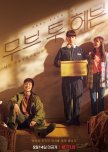
Like a Yellow Box, All of the Important and Beautiful Elements Can Be Found in this Series!
"Move to Heaven" is a little gem of a series that is fulfilling and uplifting in its short 10-episode story arc. The show is like a yellow box that has all of the important things in it, leaving nothing out, and putting no extraneous or unnecessary plot devices into it.The story is about trauma cleaners. Don't know what trauma cleaners are? Neither did I until I watched the show. Trauma cleaners are hired to go into a deceased's dwelling and clean it. Sometimes, it is not very glamorous, especially if the body of the deceased has been there for an extended period of time. But the key element of the job is to collect those important and necessary items that the deceased has left behind and give them to a relative or someone who was important to the person who died.
Han Geu-ru--who is masterfully portrayed by Tang Joon-Sang and should win every actor award that he's nominated for--is a 20-year-old boy with Asperger's Syndrome who is gifted with unique and special insight. Not only is he able to remember anything with a momentary glance, he is able to piece things together in order to learn more about the person who died. Of course, Geu-ru's world is strictly ordered, and any deviation from that order brings him into hysterics.
After his father suddenly dies from a heart condition, Geu-ru is put into trial custody under his uncle, Cho Sang-Gu, a man who's just gotten out of prison and is an ex-MMA fighter. Cho Sang-Gu is rough around the edges, to say the least, and the last thing he is initially interested in, is taking care of a nephew he doesn't give a hoot about from a brother he hated and despised. Part of the beauty of the story is in how these two grow closer together.
Move to Heaven reminds me a little bit of "Highway to Heaven." It seems like the kind of show Michael Landon would have done. The show runs much deeper than two men packing up items. In each episode, we learn how the deceased lived. There are some truly though-provoking stories of people--who may seem unremarkable--but end up being remarkable in their own, unique ways, that in real life, might not garner much attention. But we quickly learn the invaluable truth" Every life is precious. And every life has a story to tell.
Don't be surprised if a number of episodes has you reaching for a tissue or a hanky. There are many beautiful moments that will have you doing just that!
The story implores people to think about how they treat others. To think about what is really important. We see our share of greedy, selfish, and vindictive people who clearly don't give a hoot about their fellow man. Even when that fellow man is a relative. The story begs us to prioritize and remember, not only WHAT is really important in life, but WHO!
I was more than happy to see that the writers seemed to leave the door open for a second season. Ten episodes went by a little too quickly for me. But it's also a series that I loved so much that it invites repeated viewings.
In short, the world desperately needs more shows like this one!
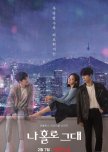
"Ships Are Safe in the Harbor, But That Is Not What Ships Are For!"
This is a fascinating character-driven series that I feel that many people will be able to relate to. So many people have suffered unimaginable suffering that they choose a life of solitude in order to prevent something like that from ever happening again. In short, the "defense mechanism" kicks in and the walls go up.We have two such characters in Nan-Do Ko, and So-yeon Han. Nan-Do is so traumatized by his mother's suicide, that he prefers a world of computers. He locks himself away, immersing himself in his latest project: an AI.
So-yeon is also traumatized, but for another reason in which her memory blocks out the event and also causes her to have facial-blindness, also known as prosopagnosia. In short, she is incapable of recognizing someone by their face. To her co-workers, she comes off as cold and rude because of this.
Little do we know that Nan-Do's invention brings a light to So-yeon, who is pretty much a social outcast. She spends her free time up on the roof of her apartment building, drowning herself in alcohol...her only means of coping with an essentially empty life.
We also find that there is much more to the story than meets the eye, as a tragic event is responsible for Nan-Do and So-yeon's current states of self-loathing.
So then, how are two anti-social people able to come together? You can only imagine the bumps and pitfalls of two people ineptly attempting to navigate the social awkwardness that exists between them, despite their obvious feelings for each other. Uniting them is Holo (Nan-Do's AI) who is only able to express himself honestly as well as unconditionally. In short, he is what many humans aspire to be--not only for themselves--but also for each other. Holo is the ideal version of the best version of a person, no matter how unrealistic he may be.
Love is the simplest thing in the universe, and yet our egoic minds make it the most complex thing in the universe. It requires us to take a chance. It requires us to have trust and faith. And it requires the ultimate form of courage: to be absolutely vulnerable.
Would people love to have their own "Holo?" Of course! But that is not a relationship. It's a fabrication for those who wish to play it safe; for those who do not want to risk being hurt; for those who wish to remain safely entrenched within their walls; for those who prefer to remain in the harbor. It's funny and sad how much our technology today has crippled people's ability to communicate genuinely face-to-face.
"My Holo Love" is only twelve episodes long, but they are rock-solid episodes! I was grateful that the writers didn't attempt to stretch things out.
Performances are fantastic across the board. Especially from Hyun-Min Yoon, who must be given the highest accolades for being able to deftly play two distinct characters. That is not nearly as easy as many people might believe.
My only issue was that the "stage" was almost too small. Such a technological breakthough would not only bring notice from a rival company as well as local law enforcement, but would easily bring the scale to nationwide attention. The National Intelligence Service as well as the government would undoubtedly be involved as well. Still, this is a minor point as the story is well written.
I was also pleased that we didn't get the typical, cliched storylines involving the romantic aspects of Nan-Do and So-yeon that tend to flood most Korean romantic dramas. It not only felt fresh but also much more realistic. I'm glad that there are writers who are still able to think outside the box in this regard.
If you want to immerse yourself in a wonderful series, you really can't miss with this one!

Mostly Fun & Cute Series About Overcoming the Obstacles for Finding Love
"Murphy's Law of Love" tells the story of two characters, Jai-Wei and Xiao-Tong who find themselves unlucky in love. The series opens with both characters at the end of their prospective relationships. Jai- Wei proposes to his girlfriend, only to be turned down. Xiao- Tong is at a dinner with her boyfriend, hoping that he will propose, but instead, finding out that he desires a break-up. Since both events take place nearby, it's fairly predictable that the two characters inadvertently bump into each other.Xiao-Tong is a psychologist who works at an internet dating company. For all of her philosophies about love, it's clear she knows very little about it. She's a young woman who is virtually incapable of thinking for herself. She's a bit whiny, moody, and she has a tendency to pout a lot. Xiao-Tong is someone who has been hurt so much in relationships, that she's unprofessionally given in to believing Murphy's Laws about love. Funny that psychologist is so pessimistic and negative that she would knowingly adopt such a fanciful set of arbitrary laws. Nevertheless, Xiao-Tong is a very guarded character. On the outside, she puts on a front that everything is just fine. Of course, nobody buys it. Inside, she's whirlwind of pain, angst, and self-loathing. She fails to understand that the secret of love is to, first, love yourself. You can't give what you don't have. And both characters fail to understand that true love is about the absolute courage it takes to be completely vulnerable.
Across the street is Jai-Wei who heads in own company that is in the business of renewing life through divorce. It's not as horrible as it sounds. Jai-Wei helps people come to terms in a relationship, learn to let go when it's time, and teach couples how to move on amicably. Jai-Wei is a young man who rarely smiles, has a somewhat gruff exterior, and is a bit insecure. We learn that he's had a tough past full of rejection and neglect. People who don't say "goodbye" is especially hard for a man who's in the "letting go" business. Underneath, he has a big heart. Except that Jai-Wei's problem is struggling to hold on to what he has. This puts unfair pressure on the women he's with.
However, the biggest difference between the two characters is that Jai-Wei doesn't give up. He's tenacious, and he's unwilling to allow the pains of the past to prevent him from taking a chance on love. Xiao-Tong, allowing herself to be ruled by Murphy's law, is overly cautious and unwilling to "take the plunge" when things become challenging or difficult. She's more prone to escape and run when she fears that she might get hurt again. You may not be at all surprised by which character "comes to terms" with themselves first.
Of course, like most series like this one, you have the "rival" characters, who are largely predictable and typical. You also have the character of Jai-Wei as a rich man pursuing the woman who is still living with her parents and being ordered about by them. These are the same parents who love to meddle in their daughter's affairs. Meddling always about yourself and never about the person you're proclaiming to help. It's still ironic that so many people in the world actually believe that a person can't be happy if they are not in a relationship.
The series also has the "secret past" for one of the characters that is a hurdle and an obstacle that must be overcome if things are to progress. In many ways, Eastern romance stories can be just as easily bogged down by formulaic situations as Western ones.
Still, the series is mostly very cute, and above all, it's light. It doesn't get tied up in too many twists and turns, nor does it get too melodramatic.
As a western viewer, just remember to try and put your "prism" aside. You still have the controlling Asian male who loves to order his girlfriend around, tell her what she's going to do or not going to do, and who also loves to grab her by the arm. Obviously in the west, if a man tried that, he'd likely end up with a black eye or worse. However, in the east, it's not so frowned upon. After living in South Korea and China, I've seen my share of this type of behavior. If this easily offends you, then you may have a hard time watching this series.
The performances are very good across the board, and the scenery of Taiwan is an added bonus.
Of all of the Asian series I've watched so far, Korea's "Descendants of the Sun" is easily my favorite with Japan's "Good Morning Call" just behind it. Still, if you're looking for a good time with some laughs and nothing that gets too serious, this is an enjoyable series

Rock Solid Romantic Comedy With an UpLifting Message!
This is my first foray into Filipino cinema, and I wasn't disappointed. A great story and wonderful chemistry between Kathryn Bernardo and Daniel Padilla make this a wonderful film. Little did I know that these two have collaborated on several movies and are an "item" in real life. Makes sense.Jackie is an angry young woman who doesn't like her life or anyone in it. Her dream is to go to New York to study photography in order to leave home. However, she is unable to stay out of trouble and ends up in jail. Her mother pleads with her father to let her come to a small, rural village to do some volunteer work for a week. Her father relents, against his better judgment.
Kiko is a responsible young man, who finds himself caring for his younger siblings while his irresponsible mother is out galavanting with any man she can find. He is also one of the coordinators for the program that provides help to the village.
Jackie sees only what has been done to her. In short, she plays the victim. One can understand her anger and resentment once her mother confesses what happened to her when she was young, but Jackie has trapped herself in a miserable situation. Playing a victim will always do that. Kiko, however, who has a number of challenges of his own, elects to fight through them. He doesn't play the victim, which demonstrates why he's a much stronger and more mature person.
Of course, Jackie is resistant to the volunteer program, and even devises plans to escape. Once locked in, she finds herself in a village without electricity, so she can't be on her phone 24/7 as she likes.
I'm a former Peace Corps volunteer, and there is nothing quite like having all of your luxuries and comforts stripped away, which forces you to deal with whatever is in front of you. Jackie learns this lesson as well. She learns quickly that there are people out there with much tougher situations than she's got. In short, she finally begins to mature and grow up. In short, service to others can induce a powerful healing, which is exactly what Jackie needs.
The film is truly beautiful in how the volunteers work with the villagers. So much of it reminded me of my own service. However, the film doesn't end there. As one easily surmises, it becomes evident that Kiko and Jackie have developed feelings for each other.
It is here that I wish the film hadn't decided to use a cliched scenario to set up the "big ending." Too many films do that. I thought that the confrontation between Kiko and Jackie, when he didn't show up for the wedding, would have been perfect, followed by family resolutions after that. I would have been much more practical and unique. However, I can't complain as the movie still works very well. Still, my heart (and my favorite part of the movie) is when they are together at the village.
And I also have to love one of my favorite songs from my high school days, Starship's "Nothing's Gonna Stop Us Now" and how it's used so brilliantly. I'm looking forward to watching more films like this one!

Dare to Fulfill Your Dreams!
There is only one person who stands in the way of fulfilling your dreams: you. Anyone who tries to be an obstacle to your dreams is probably not someone you'd want to be in a relationship with. The person you do want to be in a relationship with is someone who believes in you; not only will they not stand in your way, they'll encourage and empower you to do whatever it takes to make your dreams come true.Ethan is a young, hot-shot producer of shows. He's eagerly awaiting a promotion to production manager, that he feels that he's entitled to and has earned. However, to his disappointment, the job is given to someone else. He's told that the one area he's not very good with, is working with people. He's sent to Bacolod, a small town where he's told that if he can produce a successful show, then he will get the production manager job.
Audrey is a warm, caring young woman who dreams of making shows. She uses her small video camera to record everything for her boyfriend, Tristan, who has been comatose from an accident for over 150 days.
We learn that before the accident Audrey had a chance to go to Manila to learn about making shows. Tristan, of course, objected. In fact, we quickly find out that Tristan is a very controlling boyfriend who spends much of his time telling Audrey, "what to do" and "what not to do." However, it is clear that Audrey loves him...until she sees love for what it truly is!
Love is never about control. It is never about possession. It is about giving the other person the freedom and the space to be who they are. Ethan shows Audrey this type of love. Audrey, of course, is torn between her newfound love for Ethan and being true to Tristan.
Now, one might think that things become a bit cliched at this point, but that doesn't really happen. What makes this story work so well is that Ethan demonstrates and unconditional and selfless character who will simply do the mature thing; the right thing. They say that love conquers all. Well, Ethan is certainly an example of this.
There are a number of touching moments throughout the film, and I love the fact that Tristan is shown as being a "bad" guy. He's not. Despite his ignorance, it's hard not to sympathize with him.
The performances are all first-rate, and you end up feeling good about having watched this film. While many people believe that love is about being true to your partner, it's even more important to be true to yourself. And never let anyone or anything stand in the way of your dreams!
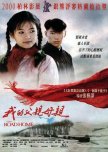
You Might Be Hard=Pressed to Find a Sweeter and More Loving Film Than This Masterpiece!
With all of the complex love stories that come out of Hollywood these days, you sometimes enjoy the refreshing feeling of a love story that is simple. I am not necessarily stating that one is better than the other, but you often find that many complex love stories just don't completely work. The Road Home is a beautiful, simple love story that is as simple as the time and location in which it takes place, and the pieces fit together like a simple jigsaw puzzle.The son of Zhao Di has come home to the village where is mother is from. He learns that his father has passed away. While the son grew up in the village, he has spent much of his adult life in the city. He has come home to be with his mother and to help her makes plans for his father's burial. His mother insists that his father be walked from the city hospital back to the village. Understand that this is no easy task since the village is good distance from the city. Her son tries to talk her out of it, but she is adament. And it is in the re-telling of how Zhao Di met her husband that convinces both the son and audience to understand why she wants to walk her husband back to the village.
The film takes off from here as the talented Zhang Ziyi portrays the young Zhao Di. She is an eighteen year-old girl living with her blind mother. She is a beautiful young woman with many suitors wishing for her hand in marriage. She has turned them all down. We don't know why except that we can guess that she hasn't found what she's looking for in a husband. Enter Luo, the new school teacher who has come to the village after living in the city. Zhao Di is immediately captivated upon first seeing him.
The sweetness in this film is in the simplicity of the village and the time. Water must be fetched from nearby wells. Looms are used to make clothing and cloths. And even the "courtship" that is done more by Zhao Di than by Luo is sweetly simple. She uses her culinary talents to make the best dishes with the hope that Luo will eat from her dish. She waits by the road for one glimpse of Luo. She walks to the well that is near the school for the chance that she might see or hear Luo.
People often make the mistake that the more primitive a technological country, the more unhappy the people must be. And yet,Zhao Di is not an unhappy girl. She is an excellent cook, and she enjoys looking after her mother. You get the sense that she does this not out of a sense of duty, but because she wants to. Zhao Di never lives anywhere else but in the village. The village is where she is happy.
Zhang Ziyi is simply brilliant is capturing the sweetness and determination of Zhao Di. She portrays Zhao Di with a fierce persistence to win the heart of Luo at any cost. You will see several scenes in which she demonstrates this.
I must mention the cinematography. The locations and colors that are captured reveal an almost magical world with golden leaves on the birch trees and snow-swept hills of winter.
Director Yimou Zhang does a great job of incorporating the technology of the time period. In many ways, I was as captivated by the use of the loom, the sweatbox used for cooking dumplings, and the walk to the well as I was of the sweet love story. I like his use of black and white in the future, and then the use of color for the past. Most directors would do it the other way around. And yet the color used for the past seems to show that it is revealing a happier time when young Zhao Di was in the fullness of her life, and the black and white showing how life is swiftly coming to an inevitable close for her after the loss of her one true love.
The Road Home will capture your heart with its story and your eyes with its images. Many saints, masters, and philosophers over the course of the centuries have stated that love is actually very simple; it is we who make it complex. This beautiful film seems to truly capture that idea.


