


 1
1


This review may contain spoilers
A Truly Loving And Unique Romantic Series About Life Itself!
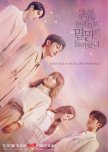
What is the difference between creation and destruction? Is there a difference? Can one exist without the other, or they merely two sides of the same coin. For creation to occur, there must be destruction, at some point, and the same can be said of destruction. A star is born from material from a supernova, which is the death of a star, which provides the basic building blocks for creating new stars.In The Lion King, we get a similar explanation for the Circle of Life. Lions eat the zebras, but when lions die, it creates the necessary components for zebras to be able to live.
It has been said that “God” is the Alpha and the Omega, as well as being neither the Alpha nor the Omega. In the Hindu religion, you have Vishnu (God) who creates Brahma, which is the creative force and Shiva as the destroyer. In short, what this is about is Life itself. And this is what this series is about.
Tak Dong Kyung is a young book editor who finds out that she has an inoperable brain tumor and that she only has a few months to live. A young woman with her whole life ahead of her, in her anger and despair, wishes for doom to fall upon the world. What she doesn’t anticipate is Doom responding. And much to her surprise, she finds herself the object of Doom’s interest. He is the destroyer, the entity who makes things disappear, as he puts it in order to maintain the balance of Life. However, Doom’s response plays an integral part in his story as his fate as well as Tak Dong Kyung’s are now tied together.
Doom promises Tak Dong Kyung that the remaining 100 days of living will be painless so long as she wears a small, red, string bracelet. The more time that Doom spends with Tak Dong Kyung, the more he becomes enamored with her, and she with him. As an entity, he has no need to eat or sleep, and he is also able to hear the thoughts of people around him. He also professes that he is incapable of love, although we begin to doubt this claim as the story progresses.
Meanwhile, a lone, young girl occupies a small hospital room, and she appears to be ill. However, we soon learn that she is the one who created Doom in the first place, and she has a mysterious pot with fertilizer but no plant. She waits patiently to see if it will bloom for her Garden. The girl represents “Life” or “Vishnu” or “God.” She represents the Observer and the Observed. Her sole desire is for the happiness of humans and nobody—not even Doom—is beneath or notice or her love. She recognizes and even acknowledges that Doom is a necessary component of Life, but even Doom is given the greatest gift: freedom of choice. He can choose to remain as Doom or “fall” and eventually become human.
Meanwhile, Tak Dong Kyung, who appears to be a strong woman, finds herself facing her own mortality, and it is with Doom’s help—despite him being a force of destruction—still possesses wisdom. As with many people upon finding out that she has a terminal disease, Tak Dong Kyung runs away, and vows never to love anyone. Even Doom knows that this is a supreme act of cowardice and that a person who cannot love, is essentially dead already. This forces Tak Dong Kyung to finally cry out, “I want to live! I want to live and love everyone!” which is an incredibly touching and powerful scene.
Equally powerful is the moment where Doom and Tak Dong Kyung must make a choice: either she dies and secures his place as Doom, or she lives, and thus makes Doom inconsequential or non-existent. Doom sweetly takes the burden from her, as he states, “I am here to save you and to ensure that you live.” And in an act of supreme, unconditional love, Tak Dong Kyung is spared the awful prognosis that had awaited her. But, at what cost? Before he disappears, Doom implores her to live and be happy no matter what, and she does her absolute best to do this.
Having faced her own mortality, Tak Dong Kyung has acquired some Life wisdom of her own, telling her indecisive friend, Na Ji Na, that she doesn’t need more time, she needs courage because you never know how much time you have left. And perhaps, for the very first time, she is able to open up and profess her love for Doom as well as for her family. It’s ironic how many people in this world are literally afraid to love, and yet, it is the only way in which true happiness can be experienced.
Aside from being an incredible love story, this series is a deeply moving and engrossing spiritual journey as well. “God,” “Doom,” and “Tak Dong Kyung” make up the trinity that exists. We find that “God” is not fearful or vengeful, nor is She a dictator requiring unswerving loyalty and obedience. She is the Loving Mother who only desires the best for all humans everywhere. And her love is no less even for those aspects—like Doom—who are simply there to be a vital process of Life itself. She tends a Garden of a sea of flowers, which is a representation of all humans. She is sweet and loving, but also non-interfering, knowing that each person must walk his/her own path. Such is the power of the freedom of choice.
Bo-Young Park is one of my all-time favorite Korean actresses. She was among the first I experienced when I began my foray into K-Dramas, and she’s never disappointed. First with “Oh, My Ghost!” and then “Strong Woman Do Bong Soon.” She’s fearless in her display and expression of emotions. What she feels, we feel. She can also be cute and sassy.
While the rest of the cast is superb, Seo In Guk (Doom) and Jung Ji So (“God) are equally dynamic in their respective roles that truly make this series work.
This isn’t just a feast for romantics, but a magical journey that just might give you food for pause regarding your own beliefs regarding Life and death. Life has no opposite. The opposite of Death is Birth. Life is endless.
In truth, I’ve never seen a series like this one, and it certainly did not disappoint. The writing, directing, and acting were all first-rate. It is a truly touching, poignant, and moving experience to watch this series. And perhaps, the series begs the viewer to ask the question: are you living Life? Or are you simply caught up in the current of Life? Yes, there is a difference.
Was this review helpful to you?

This review may contain spoilers
South Korea is the New Hollywood!
All Hollywood can do anymore is give us CGI-fest films with no depth in character or story, or remakes that are almost all worse than their originals. Typically, the films tend to mirror the demands of their audience; people who can barely sit through anything that actually requires some attention.Korea gives us a great space story that is a bit of a mixture of Wall-E, Firefly, and Blade Runner. The film also gives us a great balance of story, character, and action. Why does the story work so well? Because like all great storytellers, they focus on the story and the characters.
George Lucas once stated, "a film with special effects and no story is a pretty boring thing." Funny how he would actually end up going against his own proverb, and it is also true of what has happened with much of western filmmaking, as stated above.
The film also has a lot of heart, which will make the viewer all the more appreciative that it isn't just an action movie. This is enhanced by veteran actors like Joong-Ki Song (Descendants of the Sun) and Tae-Ri Kim (Mr. Sunshine) as well as Jin Seon-Kyu.
The movie isn't perfect, but if you want a good story, some laughs, and some great action sequences, you won't be disappointed.
Was this review helpful to you?
This review may contain spoilers
Power of Family
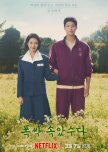
There are many people who believe that you don’t choose your family. There is nothing that happens in anyone’s life where choice isn’t a factor. You are continuously choosing and creating. The greatest gift we’re given is choice, and nothing occurs in your life without it. Nothing.When Life Gives You Tangerines is an especially powerful and exceptional epic tribute to family. There isn’t a single family that has ever been that hasn’t experienced laughter and tears, joy and tragedy, and ease and hardships. Oh, it may appear sometimes that some of the elements do not exist, but they do.
Perseverance and steadfastness can be counted among the most powerful traits a person can have. Life will knock you down. Life will throw your curveballs, but it’s how you respond that matters. Do you get back up and keep going? Or do you give in to your situation and begin blaming others for what’s happened? While all of these things involve choices of the individual, having family gives you the ability to lean on someone when needed. Of course, the true purpose of any family is to help empower each member to love and be with themselves. Only then can true love and happiness be shared.
The story follows a multigenerational family from the early 60s up to the present. The series opens with a young O Ae-Sun, the daughter of a poor haenyeo mother who works herself into an early grave. Ae-Sun is sent to live with her indifferent uncle and his family who treat Ae-Sun like a stray dog. We quickly find that despite her situation, Ae-Sun is a strong girl who knows her mind and what she wants, and no matter how often life knocks her down, she gets back up again and keeps going. Sometimes, we quickly forget that hardship is often a blessing in disguise.
In Ae-Sun’s corner is a Yang Gwang Sik, a young boy who loves Ae-Sun the moment he meets her. Even at an early age, Gwang Sik confesses his love for Ae-Sun and vows to do all he can to protect her from any harm. Gwang Sik embodies all it means to be a true, loving husband and father. If there is such a person as “Prince Charming” Gwang Sik more than fits. Seeing how these two navigate trials and tribulations of early love, struggling to make ends meet, to dealing with the loss of a son, is nothing short of pure inspiration.
Gwang Sik is a hardworking, loving man who never complains about anything, even when most other people would. He absolutely adores his wife and family, and as far as he’s concerned, he will do whatever he can to try and make their lives a little better. Ae-Sun is no less strong. She is equally hardworking, and she’s a woman full of love and passion. These two make such a beautiful couple that I’m hard-pressed to think of another that matches them. True love and true friendship are what make this couple so inspirational, and each does their absolute best to always try and be there for the other.
The family reminds me much of the Thachers from the American family show, “Life Goes On” which is about a low/middle-class family constantly trying to get by. Gwang-Sik works tirelessly on his fishing boat, trying to provide for his family. Ae-Sun does her absolute best to raise their children and create a warm and loving home. Both succeed.
Life would be pretty dull without challenges. We can only imagine what it must be like to deal with the loss of a child. Many people carry the guilt around for years, allowing it to wreak havoc on their minds and hearts. I know because I carried the same guilt for ten years after my father passed, and yet, each person must grieve and be given the space and time to process that in their own way.
The story also follows Ae-Sun and Gwang-Sik’s children, Yang Geum Myeong and Yang Eun Myeong. Geum Myeong is clearly the favorite, despite being a bit headstrong. She’s a strong woman who simply won’t allow herself to be anyone’s doormat, and when she finally breaks up with her wallflower of a fiancé, I was relieved! Eun Myeong is the son, who appears to be neglected. From an early age, he demands attention. In short, he feels he needs to act out in order to get some kind of attention from his parents. People sometimes forget that we never love the same way twice. The love we have for each person is unique and different. That doesn’t mean that we love a person less. Of course, Ae-Sun and Gwang Sik struggle to demonstrate this with their son, who ends up being a troublemaker
As children, we often don’t fully appreciate our parents for what they do for us, but at the same time, we also have a tendency not to be very forgiving of them when we discover that they are just people; people doing the very best that they can. As parents, we often struggle to give our children the time and attention that they need. I still remember my father, despite being exhausted from work, always found time to come into our bedrooms and talk to us. Little did he realize that that meant more to me than anything he could have bought for me. It’s interesting to note that in ancient Native American cultures, the elders raised the children because it was thought that the biological parents hadn’t yet acquired enough life wisdom. However, given some of the grandparents in this series, I’m not sure that would have proved to be a good choice.
The series is about family and how this family navigates the pitfalls of life. Of course, as with most families, they lash out at each other, blame each other, and do all of those petty things that every family does. But, in the end, when all of that is stripped away, there is nothing but love, admiration, and gratitude, as it should be. The last two episodes are tough to watch as Gwang Sik finds out that he’s terminally ill. The love between him and Ae-Sun is nothing short of magical and precious. And we also find that dreams do come true. They just might take a little longer to manifest as we see how the “ring” ties in all the way back to the early episodes, and Ae-Sun is finally a published poet.
Performances in this series are all top-notch. It’s actually very difficult to pick out a favorite because they are all so good! However, IU tackling the dual role was beyond impressive, and if this young lady doesn’t win every acting award for the year, then something is terribly wrong. It’s easily her best performance.
Family is about love, forgiveness, support, gratitude, and doing our best to be there for each other. If this series doesn’t serve as a blatant reminder of these things, then perhaps nothing will.
Was this review helpful to you?
This review may contain spoilers
Terrible Writing, Acting, Directing and Story...So, What Is There to Like?
“I Hear Your Voice” is a series that never seems to be able to figure out what it wants to be. Unfortunately, this becomes even true of the characters, who don’t know who they want to be either. The writer took many liberties for this story, even going so far as to make up things just to make the story work. This is one of the cardinal “sins” of writing. Always write about what you know. And never change a character for the sake of the plot.Many K-Dramas successfully blend various genres such as comedy, drama, romance, and even thriller-aspects. Most of the series I’ve watched do this extremely well. This is one of the few series that does this very badly. It uses comedy when something isn’t funny. It uses romance when things are cheesy and not even romantic, and it completely undervalues the killer of the story, causing him to tap-dance around in order to prolong his presence in the series for no real reason. At first, he seeks to kill. Suddenly, he completely changes tactics and wants to be understood. I've never even read about REAL killers doing things like this!
We also have some of the absolute worst acting performances from an ensemble cast that I’ve seen in a very, very long time. Everything from hamming up scenes to overacting, to being completely disingenuous are just a few of the major mistakes this cast makes. Usually, it’s only one or maybe two actors who are weak. In this series, only one or two actors are actually strong and believable.
The story is an intriguing one in which Park Soo Ha and Jang Hye Sung are brought together one fateful night when Min Joon Kook slams into Park Soo Ha’s car and proceeds to brutally murder Park Soo Ha’s father right in front of him. Park Soo Ha himself was about to be killed as well until a young Jang Hye Sung witnesses the crime and proceeds to take photos and be a witness to the crime. This brings about an ominous threat from Min Joon Kook who swears revenge upon Park Soo Ha and Jang Hye Sung, whom he attempts to strangle to death in the courtroom.
Years later, Park Soo Ha is a high school senior who has never forgotten Jang Hye Sung and what she did for him. It’s also obvious that he’s very smitten with her. Park Soo Ha is also a young man capable of reading people’s thoughts. Obviously, this can be very unnerving for anyone who knows of his ability. He trains hard in fighting, knowing that one day, Min Joon Kook is likely to come looking for him as well as Jang Hye Sung. Coming across her, he begins to follow her, especially after learning that Min Joon Kook has been released from prison on “good behavior.”
Jang Hye Sung becomes a public defender. Not because she feels any sense of responsibility, but because she feels she can do the job. And “doing the job” entails lazily arguing for a lighter sentence. She never believes her client and simply feels that her only “duty” is to get a reduced sentence for them. She’s incredibly immature, conceited, and believes that the whole world revolves around her. She’s vain and has no problem showboating when she’s defeated anyone in court. If something goes wrong, it’s always the other person’s fault. She loves playing the victim. If someone lies, she holds a grudge. If she lies, she feels justified. She’s a true hypocrite in every sense of the word. There isn’t much that’s likable about Jang Hye Sung.
Cha Kwan Woo is a mousy, sheepish man who’s dropped out of the police force in order to become a public defender. He seems to have high values despite being a very wishy-washy shell of a man. He constantly looks as though he’s on the verge of tears, and he’s immediately infatuated with Jang Hye Sung. A real head-scratcher is why anyone would be enamored with Jang Hye Sung! And we’ve got an absolutely ludicrous triangle involving these three characters, when none of them are worth it.
There are some serious plot problems in this series. At one point, Cha Kwan Woo feels compelled to defend Min Joon Kook when he’s caught for murdering Jang Hye Sung’s mother. Of course, Min Joon Kook comes up with a ridiculous story, and Cha Kwan Woo buys it. The real problem, however, is that at this point in the story, Cha Kwan Woo is dating Jang Hye Sung. And yet, at no point, is a “conflict of interest” raised by anyone! Mr. Shin, the veteran of the public defenders, cowardly removes himself from consideration rather than realizing that it’s his job to take the case. Of course, Cha Kwan Woo is so gullible, one has to figure out how this man could ever be a public defender, let alone a police officer. He also has zero police skills! At one point, he sneaks up on Min Joon Kook to capture him—from the side! Anyone with peripheral vision (and supposed police training) would never do that!
Another ridiculous point in the story is that Min Joon Kook cuts off his own left hand—with a 15cm knife! I’m not sure the writer had any notion of just how painful and difficult it would be for anyone to try and cut off their own hand with such a blade. They try to justify it with a pitiful demonstration that nobody with a brain would ever buy!
At one point, when Min Joon Kook is suspected of being murdered by Park Soo Ha, a witness claims to have seen Park Soo Ha, and yet nobody goes out to speak with the witness or even bring the witness to court until nearly after the fact. Talk about lawyers not doing their job! I had no idea they were so incompetent.
We have judges who roll their eyes and show emotion in court (something judges are not allowed to do!) during testimonies. We also have jurors who constantly nod their heads at every, single thing. I’ve served on juries. Jurors don’t do that, and certainly not all of them at the same time!
The courtroom scenes are just about the worst I’ve ever seen, and I’ve seen a lot in movies and TV shows. It all played out like a bad soap opera by directors and writers who haven’t a clue what really goes on in a courtroom and what court proceedings and protocols look like. I especially laughed at Jang Hye Sung wearing miniskirts to court. Somehow, I don’t think a judge would allow that kind of attire.
This is the first series I’ve seen with Lee Bo Young, and she is just plain awful. She can’t seem to find the fine line between being comedic or being dramatic. I understand that her character is supposed to be haughty, but she comes across like a spoiled high school prom-queen, constantly flipping her hair and giving snide remarks. In short, she’s just not believable in any aspect of her character. She’s absolutely clueless. She also has zero chemistry with anyone in the series. She reminded me of Denise Richards, one of the worst American actresses (or any actress!).
Yoon Sang Hyun (Cha Kwan Woo) is almost as bad. He often says his lines with a wooden expression as though he’s reciting a poem in front of a school class. I understand that his character likes Jang Hye Sung, but acting like a 15-year-old milksop is hardly the way to endear the viewer. He’s simply pathetic despite his ideals as a lawyer being very noble.
This is the second series I’ve seen with Lee Jong Suk (first being “Hymn of Death”). He’s easily the strongest of these three. He reminds us that his character is a good six or seven years younger than Jang Hye Sung, but he also comes across as easily the most mature of the three. While he’s prone to losing his temper, he’s also the most levelheaded. However, his age and lack of world experience prove to be his weaknesses. Lee Jong Suk juggled this complex character rather well.
I’ve seen Jung Woong In (Min Joon Kook) in a number of series. He’s good a playing the villain or the antagonist. However, he really hammed up and overacted his role in this series as he was obviously trying to find the line between a sadistic killer and a sympathetic victim. He’s prone to shouting way too much—especially when his character wouldn’t—and spewing ridiculous nonsense in his tirades. I would have preferred a calmer and cooler killer who revels in his intelligence rather than some madman.
Yoon Joo Sang (Mr. Shin) and Kim Hae Sook (Jang Hye Sung’s mother) were easily my favorite performers of the series. We had some peripheral characters, such as Park Soo Ha’s high school companions, who brought absolutely nothing to the story. I had a hard time figuring out if Kim Choong Ki was his friend or not, since they were constantly engaging in fist fights. So much for being friends.
The writer was clearly making it up as you go along without any notion or idea about how things actually work in the real world much less the courtroom. Perhaps the writer watched too many dramas and thought, “Hey, I can do this!” Wrong.
The music was equally bad, playing light, fluffy songs at points when something dark and sinister was about to happen. That made no sense either. The series failed as a romance, failed as a comedy, and only barely stayed afloat as a thriller. This “ship” should have been sunk before it ever left port.
Was this review helpful to you?

This review may contain spoilers
Somewhat Entertaining But Deeply Flawed Series!
For the first few episodes, you think you’re watching something akin to “Columbo” or “Sherlock Holmes,” as “Inspector Koo appears to have abilities similar to those two famous detectives. Unfortunately, by the end of the series, you begin to realize that she’s not even close to their level. The series leaves you scratching your head, wishing the writers had been as smart as their respective characters.Koo Kyung Yi is an alcoholic recluse who spends all of her time drinking and playing computer games. She scarcely has time to eat or even shower, and her apartment looks like the city dump—literally! She’s hired by her friend, who represents a prestigious life insurance company.
On the other side of the coin, we have Song Yi Kyung. Never mind that her name is similar to Koo Kyung Yi. She’s a sociopath and a serial killer. Don’t ask me how a serial killer only decides to kill people who “deserve it.” This is a contradiction in terms. She’s very smart and uses a network of clients to help her; people who owe her for killing those they hired her to kill.
Last, we have Yong Sook, a matriarchal, corrupt politician who is trying to use her money and influence to get her son elected for mayor. We’re somehow supposed to fear her power and influence, as she does nothing but bark orders at cronies who quake in their boots whenever she’s around without any reason. She’s about as intimidating as a snowman.
The series is supposed to be quirky and comical, and for the most part, it is. However, when you leave realism in the dust, you end up with a series that is a complete farce and has absolutely no explanations or logic in how things occur.
At one point, Song Ki Kyung is trying to elude her captors. She jumps on a board and begins to paddle her way toward the center of the Han River as law enforcement pursues her on a power boat. She finally dives into the water. Don’t ask me how a person who dives into the middle of a river isn’t caught. After all, she has to come up for air at some point. It’s insulting how the writers and directors treat the audience as dimwits.
The final episode was so ridiculous and absurd, I’m not sure how anyone could buy it as being real and authentic. Koo Kyung Yi may be good at putting pieces together, but she’s downright dumb when it comes to anticipating what her adversaries will do and trusting those who you know is going to betray her. A six-year-old could figure things out better! It’s bad enough that she’s a former police officer who has clearly forgotten all of her skills. Aside from her detective skills, she must have been one terrible cop!
Song Yi Kyung has taken Santa hostage. Never mind that I lost count how many times he could have easily disarmed her. They climb aboard a train, only to find Koo Kyung Yi waiting for them. At one point, Song Yi Kyung takes out the magazine of the gun to check how many rounds it has. It never crosses the minds of either Santa or Koo Kyung Yi to attack, or even in those many moments when Song Yi Kyung isn’t even paying attention to Santa. The whole scene was so badly done that I thought I was suddenly thrown back into an 1980s action TV series!
It's sad when the writers attempt to showcase the intelligence of their characters without allowing for reality or the audience that they’re writing for.
There isn’t much to like about Koo Kyung Yi. In fact, I found Song Yi Kyung far more interesting as a character, even if there were times you wondered how her intelligence suddenly eluded her. For instance, she’s tucked away in a veritable prison, guarded by only an old gardener. For all of her intelligence and ability to plan and plan ahead, she suddenly can’t think of a way out.
Performances are good, even if the true villain in Yong Sook was laughable. The music is also quite good, and frankly, it was the best part about the series.
Was this review helpful to you?
This review may contain spoilers
We All Need Someone to Listen to Us!
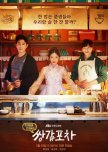
Life is about two things: connecting with your Self and connecting with others. In the end, you find that they are both the same thing. However, until you are able to connect with your Self, you will find that it is impossible to connect with anyone else.Mystic Pop-Up Bar is a delightfully sweet series about Wol Ju, who is sentenced to resolve the grudges and grievances of 100,000 people to avoid eternal damnation. Yes, you just have to go with the Judeo-Christian spin on things. Responsible for committing suicide, destroying the Sacred Tree 500 years ago, and inadvertently causing the deaths of 100,000 people, she’s required to make amends. Chef Gwi, the bar's primary cook, serves with her. The bar pops up on various street corners, hoping to bring in customers who have grudges and grievances to be resolved.
Wol Ju is a somewhat temperamental woman, who finds her task to be tedious, especially among humans, whom she appears to have a great disdain for. However, we quickly learn that she cares much more than she lets on. She’s simply blinded by her own resentment and grudge from her lifetime 500 years ago, in which her mother was murdered, which caused her to commit suicide. She also harbors a grievance against the Crown Prince of that time period, a man she fell in love with, and who promised to protect her.
Chef Gwi is a lighthearted and kind man who endeavors to do all he can to help Wol Ju achieve her goal and avoid eternal torment. It’s fairly obvious that there is something between the two, but this doesn’t come out until the end of the series. We also find out that Chef Gwi is also a reaper who occasionally assists in the capture of evil spirits.
Finally, we have Han Gang Bae, a likeable but fairly naïve young man who works the customer service counter at a local supermarket. Whenever he touches someone, he compels the person to share their innermost thoughts and feelings in a completely truthful way. As soon as Wol Ju finds out about his abilities, she recruits him to help her find people who have grudges to settle. Wol Ju promises to help Gang Bae get rid of his ability in exchange for his services.
The episodes are beautiful as the trio begin to find and help people in dire need. The series reminded me of “Tomorrow” another wonderful K-Drama in which a trio helps others. There are a number of touching and heartfelt moments. People enter the bar, have a drink, along with some food, and find themselves disclosing what is troubling them most. It’s not nearly as superficial as someone walking into a bar, settling down for a drink, and then disclosing their problems to the local bartender, or perhaps someone wandering into a church to talk to a priest or minister for the same reason. In short, we realize that everyone needs someone to listen to us, and that is the focal point of this series, and why it is so thought-provoking and relatable.
We also come to realize that the real reason Wol Ju is so determined to make her goal is to stop the pain and suffering of her child, who was conceived by herself and the Crown Prince, and who was an unintended victim of Wol Ju’s suicide. It’s ironic how things always tend to come “full circle.” Wol Ju learns that Chef Gwi was the Crown Prince in their previous incarnation, and Gang Bae is actually their son. Families are never formed by accident.
This is a truly uplifting series that demonstrates that, no matter what “sins” we’ve committed, nothing is truly unforgivable. We must also remember that our thoughts, words, and deeds are like boomerangs and will come back upon us at some point. Such is the Law of Karma. Mystic Pop-Up Bar endeavors to show us that we should appreciate those who are in our lives, and not waste a single moment. Learn to love and appreciate all of them!
Was this review helpful to you?

This review may contain spoilers
What Is the Price of a Human Life?
It’s sad that this type of question even has to be asked, but in this world where corporations, politicians, and governments dictate what a human life is worth, then the question is still relevant.This is a brilliant series that endeavors to not only ask the question but asks the viewer to really think about it. In a day and age where people lose their livelihoods due to medical costs and outrageous health insurance coverage (that is incredibly expensive and covers very little; at least in the US, which has the worst health care system on the planet), what exactly is the cost of a human life? Sadly, most people don’t care enough about what happens to others, unless they are directly affected by an emergency circumstance that threatens to take the life of one of their own loved ones.
Dr. Baek Gang Hyeok is a brilliant trauma surgeon who’s just returned from serving as a doctor with a private military company. He is brought in by the Minister of Health and Welfare with the hope of turning around the ER at a local hospital, where the trauma department (or lack thereof) is struggling. Doctors on-call are from other departments where they have very little—if any—trauma experience.
Dr. Baek is a no-nonsense doctor, who is as passionate about saving lives as he is as the premier trauma surgeon in the country. For Dr. Baek, nothing is more important than saving a life, no matter the cost or even the danger, in some cases! Watching Dr. Baek jump out of a helicopter with his young, terrified protégé in tow, was both amazing and hilarious! But it also demonstrated his amazing dedication to doing whatever it takes. I daresay that any sane person would want this type of doctor around.
Dr. Baek immediately sets up a trauma center at the hospital much to the consternation of the higher-ups, especially the Chief as well as the Director who both want Dr. Baek gone at all costs. They see him as an obstruction to the hospital’s profits. Hence, comes a question that Dr. Baek, himself asks: since when is money more valuable than saving a life?
At one point, the Chief is so hellbent on destroying Dr. Baek and his reputation, that he works with the Rescue Chief to ground the rescue helicopters unless the request is sent through proper channels. Unfortunately, this leads to a patient who ends up in a coma because Dr. Baek and his team had to use an ambulance to get to the site instead of a helicopter, thus losing valuable time. After all, in an emergency situation, time is everything.
Even at just eight episodes, the series proves that it is as entertaining as it is important. In too many countries, money is more important than saving lives. Some hospitals will turn away patients if they can’t pay. Some patients are buried under so many medical bills that they end up having to sell their homes and anything else to try and pay it off. Jon Stewart wisely stated once, “No person on this planet should have to lose their livelihood due to medical costs.” It’s not just disturbing. It’s criminal. For what sane country would bleed its own people to death over money?
Performances in this series are all first-rate. Ju Ji Hoon quickly won me over as the immovable Dr. Baek who condescends to nobody, and like Dr. House, calls out anyone over the stupidity of protocols that threatens to take a life. I love how he gets after doctors and anesthesiologists who are summoned to the trauma center to help with a case, but they simply can’t be bothered. Anyone who behaves like that in the medical field as no business, absolutely none, being in it. In fact, such people who put lives at risk should be prosecuted, especially if their procrastination leads to someone’s death.
I also enjoyed veteran actor, Yoon Gyung Ho (Dr. Han), who often plays bad guys and villains, as a doctor who is initially on the side of the Chief and the Director but suddenly sees Dr. Baek’s value when Dr. Baek saves the life of Dr. Han’s daughter. When it comes to change, it’s better late than never! And Dr. Han quickly becomes Dr. Baek’s staunchest supporter.
As with so many great K-dramas, this one is loaded with humor, excitement, entertainment, and some truly tender and heartfelt moments. Shows like this one are invaluable as they put a spotlight on a problem and ask that something be done about it. Now, that’s using entertainment wisely.
Was this review helpful to you?
This review may contain spoilers
A Grand Epic That Ranks Up There with Some of the Absolute Best!
My Country: The New Age is nothing short of an epic masterpiece that seems to have elements of “Ben-Hur,” “Game Of Thrones,” and “Braveheart” in it. I know next-to-nothing about Korean history, so I would be curious to find out how many of these characters are based upon actual persons from history. The series is grand in its scale, filled with deep, complex, courageous and magnanimous characters.The story takes place in the late 1300s when “Korea” is in a feudalistic state of rival factions and uprisings all bent on taking control of the country. The king is overthrown and replaced by its corrupt general who has eight sons. A number of them are plotting to take the throne for themselves. The plots and factions are so muddled that an ally in one moment can suddenly become an enemy in the next or vice versa.
Seo Hwi is the orphaned son of the country’s greatest general and warrior. He inherits much of his father’s principles and ideals and sense of justice. He embodies what it means to be a true hero; a man who fights for the people who are caught in the middle of this massive civil war. Initially betrayed by his best friend, Nam Sun Ho, Seo Hwi escapes danger and death time and time again, only to rise up and become an integral part of the country’s formation. Seo Hwi embodies all that it means to be noble; a man who will always do right by his loved ones, his friends, his comrades, and his country.
Nam Sun Ho is Seo Hwi’s best friend and the bastard son of Nam Jeon, a man who will stop at nothing to gain control of the throne for himself. Nam Sun Ho lacks Seo Hwi’s character and ability to stand up to his father. Instead, and once too often, he finds himself attempting to play multiple sides which pretty much all end up in failure. He’s a man mired in darkness and gives into it for a time in order to gain more power and control. History is riddled with such men who believe that there is a nobility in acquiring power with the justification that it be used to help the greater good. The Hitlers, Stalins, and Trumps of this world have always propagated such rhetoric. However, Nam Sun Ho is also someone who begins to see the error of his ways, and he proves himself to be as much of a hero as Seo Hwi.
Finally, there is Han Hee Jae who is, herself, an orphan who is saved as a child by Seo Hwi’s father. While their initial meeting is somewhat cold and ambivalent, Hee Jae and Seo Hwi fall in love, and Hee Jae becomes a part of Ihwaru, a “brothel” run by Madame Seo who uses it for the greatest power of all: the acquisition of information. And to the most cunning and dangerous, information is power. Hee Jae uses her position to help Seo Hwi and to uncover the latest plots being hatched by the current king as well as the princes.
The most dangerous prince is Bang Won, the fifth son of the current king to aspires to take over the throne one day. However, as with so many Korean shows, not everything is at it appears to be, and Bang Won is easily the most intricate and complex character of the series as the viewer attempts to find out who the true “villain” of the story is, or if, in fact, there is only one!
The series plays like a tangled web of characters and stories being laid out with a new plot direction being thrown in as soon as one appears to have been resolved. We never quite know who to trust, which puts us right in the center of things and our hero, Seo Hwi, who endeavors to deal with each new danger as they spring up.
We see the country struggling to form, but we see Seo Hwi and Nam Sun Ho struggling with their principles as well as their friendship. Don’t be surprised if you find yourself cheering one character only to pray for his downfall in the next.
Performances in this series are all incredibly stellar! While Yan Se Jong gives us a true hero in Seo Hwi, Woo Do Hwan gives us a Nam Sun Ho who is in constant struggle with himself. Unable to fully recognize the strength he has that Seo Hwi sees, he straddles the line between “right” and “wrong,” which takes someone with serious acting chops to do and do well! Finally, Kim Seol Hyun gives us a Hee Jae who is strong and steadfast in her love and devotion to Seo Hwi. She is a strong woman who is more than a match for any man in this world. She may not fight with a sword, but her weapons of information make her, arguably, the most dangerous and powerful character in the series.
Of course, a series like this is only as good as its villain, or “villains.” From Nam Jeon to Bang Won to Lee Sung Gye, we get a whole nest of vipers and villains. Sometimes, it’s challenging to determine who is the worst as each is so incredibly effective in their own way. We’re not cheated by silly theatrics and plot twists that always seem to be the demise of such characters. Instead, we fully appreciate the men that Seo Hwi is up against. Yes, indeed! The villains make the hero!
There are plenty of humorous and touching scenes in this series with incredible landscapes, colors, and memorable characters. Perhaps nothing will quite prepare you for that powerful ending that few might see coming. One can only surmise that Seo Hwi and Nam Sun Ho finally achieved what they both set out to do. You can feel Hee Jae’s despair and angst as the palace doors shut with Seo Hwi cradling the body of his best friend and awaiting his own fate. But then again, it really couldn’t have ended any other way and be as effective as it was.
This is an exhilarating series that ranks right up there with some of the best and most profound epics ever to be put to screen, either big or small. If you haven’t seen this amazing series yet, you’re in for a real treat!
Was this review helpful to you?
This review may contain spoilers
Fear of Change
“Rookie Historian Goo Hae Ryung” is a simply delightful series tackling the time-long theme of dealing with change. History is wrought with periods where the “old guard,” the traditionalists, the people who believe that things are working when they no longer are, battle against those who seek to embark a more effective way of doing things.Some countries, throughout history, endeavor to fight and even change the course of history by seeking to eradicate those trailblazers who bring about different ways of doing things. The irony about change is that Life IS change, and those who refuse to change will eventually be run over by it.
Goo Hae Ryung is a very progressive woman for the time period: Joseon in the mid-1800s or so. She doesn’t seek to get married, and invariably enjoys reading books to enhance her knowledge. When openings for female historians opens up at the palace, Goo Hae Ryung jumps at the opportunity. However, she knows that she will be tested by the male-dominated culture and those who firmly believe that women have absolutely no business educating themselves.
The ”historian” position is a fascinating one. It’s a branch of the Office of Decrees whose job is to objectively document everything said and done by the royal family. A historian is always present during political meetings and even everyday activities. Their goal is to make sure that the truth of what happens is persevered and not doctored or altered in any way. Their job is such that not even members of the royal family or other members of the government are allowed to even read what is written down. This is an intriguing position given that historically throughout the world, history is always told by the victors and it’s never about truth. For if it were about truth, then both sides would need to be told. Seldom does this ever happen.
Prince Yi Rim is the youngest son of the royal family. He’s basically isolated in his own housing and has virtually nothing to do with the day-to-day governing of the country. In fact, he’s purposely kept away from such things. His true delight is writing romance novels under a pseudonym, and it’s here that he initially befriends Goo Hae Ryung, even though she has no idea that he’s royalty. A funny and slightly tense friendship blossoms.
As with so many Korean dramas, there is far more than meets the eye as the story unfolds. We find out that a small town came under attack by the current king, citing Western influences in science, education, and medicine where those involved were seeking to overthrow the current regime. Of course, behind so many kings in history, the true power rested with Second Chancellor, Min Ik Pyung. Who fears the coming change so much that he implemented a coup against the previous king and put the king’s brother on the throne whose own policies mirrored his own. And so, those who’ve been put down seek to rise up and put the only true member of the royal family, on the throne: Prince Yi Rim.
Little does Goo Hae Ryung realize that her own origins stem from the same place and time as Prince Yi Rim’s. Both seek to find out the truth about their origins and how and why they find themselves at the very heart of the conflict. And as they struggle to find the truth, a sweet, loving relationship blossoms.
Goo Hae Ryung is no wallflower, which is what makes her so appealing. She isn’t afraid to initiate contact. In fact, she kisses Yi Rim first! She also has absolutely no problem speaking her mind about things. She even becomes mildly flustered when she realizes that Prince Yi Rim has no real skills to speak of outside of his ability as a writer. She even jabs him with that, stating, “you think you know everything about women!” Clearly, he doesn’t.
Cha Eun Woo gives Prince Yi Rim boyish qualities. This isn’t a slight against the character. It’s simply a perfect interpretation of a man who’s seen and experienced virtually nothing in the world. He has a sweet smile that often causes Goo Hae Ryung to laugh and chuckle. It’s a smile filled with innocence and naivety, and it fits him well. However, as Prince Yi Rim begins to learn more about what is really going on around him, we find that he’s a much stronger man than even he realizes.
Shin Sae Kyeong gives us a Goo Hae Ryung who is progressive and strong but also gives us a very feminine woman. She’s sweet, loving, and it’s obvious that she cares deeply for Prince Yi Rim as well as for uncovering the truth. She doesn’t waver in her principles or ethics about doing what is right and seeking to uncover the truth about what happened 20 years ago to the dethroned king and the historian who was executed for refusing to give up his daily record (his book of recorded discussions and events).
What made the series all the more effective was the fact that there was real chemistry between Cha Eun Woo and Shin Sae Kyeong. They both seemed to enjoy their prospective roles and interactions a lot!
The series’ theme is as ancient as history and time itself. There have always been those who refuse to embrace change. Even today, there are governments and regimes struggling to hold onto a past and a way of doing things that is no longer effective. Throughout time and history, many people have been killed for seeking to embark upon change. This is another reason why trailblazers are among the most powerful and courageous of people; those who “get the ball rolling” even if it costs them their lives. Goo Hae Ryung is such a person and an inspiration to many.
Was this review helpful to you?

This review may contain spoilers
Why Autopsies Are So Necessary!
This is a fascinating look into the jobs of coroners and forensic scientists in Japan, where the fewest amount of autopsies are recorded of all developed countries in the world. Most deaths reported as "accidental" or by "natural causes" are never autopsied, thus leaving the door wide open for murderers. You can't help but speculate how my deaths might be attributed to murder. Most bodies are cremated before they can ever reach an autopsy table, and there are many hurdles that must be jumped through, such as getting family consent.Misumi Mikoto is the idealist coroner who firmly believes that her job brings piece of mind as well as closure and truth to the cases she works on. She works at UDI (Unnatural Death Investigations), a company subsidized by the government. They don't necessarily work on police cases but as a private company that is paid by people who want further investigations done. She is the #2 coroner with a troubled past. While her job doesn't pay much, she's very good at what she does. She also tends to wear her heart on her sleeve.
Mr. Nakado is the #1 coroner of the group, and we find out that he's been suffering in anguish for over 8 years since his girlfriend was found dead in a scrap pile. He somehow performed the autopsy himself (not sure how anyone would be able to do that). After finding a "goldfish" imprint inside of her mouth, he firmly believes his girlfriend was murdered and possibly by a serial killer. He tries to check every body he can find for the same "goldfish" evidence with the hope of catching the killer. He barks at everyone, and is notoriously renowned for calling people, "stupid." He's incredibly smart and gifted despite his sour demeanor. He reminds me a little bit of Dr. House.
Finally, we have Kube Rokuro who is the new part-timer, who has a desire to be a forensic doctor. However, we quickly find that he's working at UDI under false pretenses (selling the secrets and stories of what happens at UDI) to a local newspaper, which acts more like a tabloid. However, after finding himself engrossed in the job as well as being smitten with Dr. Mikoto, we begin to wonder how Rokuro will be able to get out of his dilemma, if at all.
The series is an important one. Japan is a generally peaceful country where people try their best to live in harmony. They don't like to "rock the boat" and will do nearly anything to maintain that harmony, even it means avoiding any kind of confrontation. However, true harmony can never be achieved by turning your back to what is going on; by avoiding confrontation. How can harmony be experienced at the expense of others? It can't be. It's an impossibility, and this is largely the reason why this show exists. With only 170 coroners in Japan, they're desperately trying to get more as well as to change the government policies surrounding autopsies and why they are so vitally important.
While the serial killer story was a fascinating one, my favorite episode was actually the bullying, or as the boy rightfully called it, "Death by Bullying." This was an especially powerful episode that brings a world-wide problem to the forefront. The UDI group race to solve the "murder" of a young high school teen in order to prevent the death of another. However, we quickly find that nothing is as it seems, and the school as well as the other students involved, realize their horrible mistake; allowing the bullying to happen. Yes, where bullying takes place, everyone is involved, and everyone is responsible. I truly hope people take this episode to heart.
There was only one season of this fantastic show, which is easily better than any "CSI" series I've seen, and should be given more seasons. I sure hope a second season is in the works! Not only is the science fascinating but you gotta love the people of UDI!
Was this review helpful to you?

This review may contain spoilers
Don't Think. Feel!
Charlie Chaplin, in his famous speech from The Great Dictator, wisely stated, “we think too much and feel too little.” Perhaps there is nothing so powerful a tool as the mind, nor is there anything that causes so many problems. This is why Bruce Lee told his students, “Don’t think. Feel.” The mind is like a merry-go-round. All it knows how to do is think and react to everything. We all need to follow our hearts and intuition more and think less. And the biggest catalyst to getting stuck on the endless stream of thought, is playing the “what if” game.People don’t realize that when it is a soul’s time to pass, there is nothing in the universe that can stop it. There is nothing that can be done to prevent it. It is simply that person’s time. Grief, however, is a peculiar thing. It is a necessary process toward letting go and saying goodbye, and yet it can also induce a person to come up with irrational situations and scenarios; to take responsibility and blame where none have ever existed. Hence, the danger of the “what if” game.
I remember when my father passed away in an accident. Of course, I found a reason to blame myself for it, even though I had absolutely nothing to do with it at all. It took ten years of heartache and needless suffering before I realized the truth. In many ways, I could relate to Gong Woo Jin who believes himself responsible for a horrible bus accident that he believes has killed the girl he loved 13 years ago.
Gong Woo Jin lives as a recluse, closing himself off to virtually all human contact. He often ignores others and gives very clipped responses to questions. This is what happens when a person barricades themselves within the walls of guilt. The irony is that those “walls” are mere fabrications. They only exist within our own minds, and tragically, this is where Gong Woo Jin lives.
Woo Seo Ri is a vibrant young woman who wakes up from a coma after 13 years. She was only 17 when the bus accident occurred, so in many ways, she has the mindset and maturity if a 17-year-old girl. She finds herself transported into the future where everything is different. She feels like a foreigner suddenly dropped in the middle of a city without any idea about how to function. She is very much a fish out of water.
Fortunately, Woo Seo Ri comes across Yoo Chan, who also happens to be Gong Woo Jin’s nephew, and living in the same house where Seo Ri grew up. Yoo Chan is a 17-year-old high school kid who is thoughtful, considerate, and works very hard athletically. The irony is that none of them knows how they are all connected to the past, which includes the monotonal housekeeper, Jennifer, who always has wise and profound idioms and quotes to pass along. And yet, she behaves like a robot. We also find out later why behaves this way as well as her own connection to the past.
Seo Ri spends much of her time trying to find out why her aunt and uncle abandoned her at the hospital. Gong Woo Jin is simply trying to eke out some kind of existence with a design company. Hilariously, he takes measurements of all kinds of furniture so that he can create them to scale for small models, often upsetting or causing fights with people sitting on a park bench or, in one case, seeming to take liberties with another man’s girlfriend. And Yoo Chan finds himself smitten with Seo Ri and gives him a goal: if he wins the rowing race, he’ll share his feelings with her.
This is an especially touching series that demonstrates just how dire and destructive guilt can be. Woo Jin suffers severe panic attacks when Seo Ri says or does something that reminds him of what happened on that fateful day. He is so wracked with guilt that he can’t breathe or even keep his feet without struggle. There is such sweetness in the young Woo Jin and how much he adores the 17-year-old Seo Ri, even though he hasn’t a clue of who she is, and Seo Ri wearing her best friend’s name-badge only complicates things even more.
Of course, as with so many great K-dramas, what we are shown is only half the story, and when we find out the whole truth later on, we can see how unique a person’s perspective is, but also how one perspective isn’t always the whole perspective! The reveal portion toward the end of the series is infinitely touching and we can only appreciate the enormous hurdles and obstacles these two souls had to endure in order to be together.
I’ve been a huge fan of Shin Hye Sun for a while now, but in many ways, it’s Yang Se Jong’s performance that really seals things for this series. He really makes us feel the angst and pain with his eyes and the emotions on his face. I’ll wager that it wasn’t an easy thing to do, and he does this multiple times throughout the course of the series. He is so believable that half the time, I wanted to jump through the screen to try and console him. When he finally breaks down in absolute despair as he’s confessing his supposed “crime” to Seo Ri, it feels as though his very soul is screaming in agony.
I was glad that the series focused on Seo Ri, Woo Jin, and Yoo Chan without delving or contriving some ridiculous melodrama or love-triangle. The writers kept the focus on Seo Ri trying to navigate her new world, Woo Jin struggling with his guilt, and even Yoo Chan’s experiences of a first crush. All three characters are realistic, likable, and relatable.
It was stated that when a door to happiness closes, we should be looking for another door to happiness that opens. As long as a person pursues this course, happiness will be eternally elusive. As long as you believe you must be doing something in order to be happy, you’ll never find it. And when you do find it, it will be brief and then evaporate. Socrates from “Peaceful Warrior” stated, “Most of the world shares your pain. When you don’t get what you want, you suffer. And even when you get exactly what you want, you still suffer, because you can’t hold onto it forever.” The key is to BE happy. When you are able to be happy—which exists only in the moment—then any outer situation will have no power over you; it will never be able to quell that happiness that you already are. You have to BE happy, not DO happy.
And this is why Bruce Lee said, “Don’t think. Feel.” Happiness can, and never will, exist in the mind. It can only be felt and experienced within. And when you can make choices and decisions from a place of “being” you will be surprised to find that the whole world suddenly opens up around you.
13 years of suffering is what Seo Ri and Woo Jin had to undergo because of too much thinking and not enough feeling. Remember that pain is inevitable, but suffering is optional. And we must all try our very best not to get on the “what if” merry-go-round which leads to a needless, endless cycle of suffering—until we change our minds.
Was this review helpful to you?

This review may contain spoilers
Dare To Take Risks!
This is a series that finally looks through the looking glass from the other side. Instead of having one or more characters coming from wealthy, prominent families, we have four people in their late 20s struggling to make ends meet, just like most of us. What makes this series work so well is that you can relate to the characters.If you want to get anywhere in life, risks are necessary. Vulnerability is necessary. Those who play it safe never truly get anywhere, and this series is about fulfilling your dreams and taking that big first step outside your comfort zone that just might lead to something great. Complacency and settling are the only true enemies to success. If you have a dream, you have to go for it and let nobody stand in your way. Teddy Roosevelt once said, “far better is it to dare mighty things, to win glorious triumphs, even though checked by failure than to rank with those poor spirits who neither enjoy much nor suffer much, because they live in a grey twilight that knows not victory nor defeat.” This series emulates this truth.
Ko Dong Man is a disgraced MMA fighter, who finds himself doing odd-jobs just to make ends meet. Of course, he hates his jobs, but perhaps not as much as he hates his abusive boss. Still, he knows that he’s not doing what he loves: being an MMA fighter. And he finally decides to go back to it. His best friend is childhood friend, Choi Ae Ra whose loves for Ko Dong Man is only matched by her overbearing, temperamental demeanor. She often acts more like a mother than a friend. Choi Ae Ra is a woman who is also stuck in a rut, working a thankless job at a department store. Her dream is to become an announcer.
Kim Joo Man and Baek Seol Hee are in a six-year relationship and are basically living together as well as working at the same company. However, they aren’t married yet as Joo Man believes that he needs to be able to provide a better life for Seol Hee, even though it’s apparent that Seol Hee doesn’t care about that. Joo Man and Seol Hee share a sweet relationship that has, perhaps, gone a little stale. This leads Joo Man to make some unwise decisions when a female co-worker shows interest in him. Unable to see the situation for what it actually is, he falls into the traps laid out for him by the co-worker.
All four characters find themselves navigating the pitfalls of jobs and romance as they struggle to eke something out of the dreams that each of them has for themselves. Is it possible? Isn’t it safer to just continue to work in a meaningless occupation where neither passion nor fulfillment exist? You might be surprised how many people actually believe that it’s better to play it safe. I’ve even heard parents tell their children this.
There is only one Adrian Balboa. I’m talking about Rocky Balboa’s wife who hated the fact that Rocky was a boxer and routinely got hurt. However, after going through her own fears, she understands that she hasn’t the right to stand in the way of her husband’s passion and dreams. Nobody has that right.
Choi Ae Ra is a woman who loves Ko Dong Man, but she hates the fact that he is an MMA fighter. It’s understandable. How can someone stand by and watch someone they care about continuously get hurt? She can barely watch the fights that he’s in, and most of the time, she is paralyzed with fear that she’s left in tears. It’s not for everyone. However, Choi Ae Ra makes the mistake of giving Ko Dong Man an ultimatum: give up fighting or lose her. This is an unfair and completely selfish demand. If a person can’t handle being around someone else due to their job (military, policeman, etc.) then that person has every right to step out of that world, but don’t ask that person to give up being who they are. I was thrilled when Ko Dong Man refused to give in to her ultimatum and stuck with his dream. After all, he’d already quit on his dream once. Understandably, he can’t do it again.
The cast is first-rate, with Park Seo Joon (Ko Dong Man) and Song Ha Yoon (Seol Hee) being the standouts for me. This is the fourth time I’ve seen Park Seo Joon, and he brings his boyish charm and great sense of humor to his roles. This one is no exception as he virtually steals every scene he’s in. We laugh and cry with him. Song Ha Yoon is the same for me. As much as I like Kim Ji Won, Song Ha Yoon has a veritable sweetness and childlike vulnerability that is captivating. When she is crushed due to Joo Man’s betrayal, she makes us feel it. She is also the more mature of the two female leads.
The series is quite light without any serious drama or any ridiculous love-triangles. We do have Park Hye Ran who keeps trying to get her ex-boyfriend, Ko Dong Man back, but after already been burned once by her, he shows absolutely no interest in her at all. I was relieved. I nearly cringed and said, “Oh, no! Not another love-triangle!” As much as I like K-dramas, they do tend to milk the “love triangle” a bit too much.
I was also pleased with the more mature approach to the relationships. After six years together, it makes perfect sense the Joo Man and Seol Hee are living together. And while we have just a few awkward moments between Ko Dong Man and Choi Ae Ra, it also made sense that they would have a desire to spend the night together. “We’ve known each other for 20 years! How much slower do we have to go?” they ask. It added charm and realism to their situation, which always felt natural rather than awkward. I also tend to cringe in dramas where any act of intimacy (even just hugging or kissing) is treated like a crime is about to be committed. I will say that the scene where Ko Dong Man and Choi Ae Ra accidentally fall asleep in the hotel room together was absolutely hilarious!
I absolutely love how expressive Korean actors and actresses are, especially when you get really good ones like these four performers. You feel everything they feel, and there is no shame in the expression. We see just how crushed Joo Man is when he breaks down in tears after realizing that his naivety has disastrous consequences, or Choi Ae Ra’s reaction to Ko Dong Man getting seriously hurt in his fights. I love how these actors are able to tap into those emotional wells as it makes it all so real and poignant.
If you’re looking for something light and fun as well as something that you’ll likely relate to, you really can’t go wrong with this fun and delightful series!
Was this review helpful to you?

This review may contain spoilers
An Epic Series About Political and Business Corruption In Korean Baseball!!!
When I first got into K-dramas about four years ago, my first series was “Descendants of the Sun.” For me, it was like finding a gem after some lackluster TV series in the West. But, I thought that I was only lucky once. Then another series came along, and then another. To this day, I’m still amazed at how finding one “gem” has led to an entire treasure trove!Hot Stove League is a brilliant series about the interworking of a Korean Professional Baseball team, the Dreams. In the first episode, we find out that this team is terrible in nearly every facet of the game, aside from having one of the top hitters in the league. We also find out that, despite the terrible years of being “cellar-dwellers” the team continues to have a genuine following with its fans. In other words, no bandwagon fans here!
It doesn’t take long for us to realize that there is corruption at the top and throughout the team, whose owners are hellbent on gutting the team from within with the hopes of either selling or disbanding the team. Teams in Korea are owned by corporations. There have been many instances of this type of corruption within American sports teams as well. Donald Sterling (previous owner of the Los Angeles Clippers) routinely traded away any good, viable players. Publicly, he stated, “I only care about making money.”
Enter Baek Seung Soo (beautifully played by Namkoong Min) as the team’s newest GM. He has no experience in baseball at all, but he’s put together championship wrestling teams, hockey teams, and handball teams which won Olympic medals. Clearly, one of the representing owners of the team, Kwon Kyung Min (played by one of the best Korean actors in Oh Jung Se) is hoping that Baek Seung Soo will be a puppet GM who has new clue about what to do. He’s quickly proven wrong, and to everyone’s wonder, Baek Seung Soo quickly begins to right the sinking ship!
Baek Seung Soo has to deal with corruption within his own people, a corrupt scouting manager, and a slugger in Im Dong Gyu, who believes himself to be untouchable and can treat everyone around him with violent disdain.
Baek Seung Soo’s first task is to gain the support of his staff, many of whom are already scratching their heads regarding his hiring. The most charming and hard-working of the group is Lee Se Young (played by the ineffable Eun Bin Park!) and her tenacious assistant, Han Jae Hee.
Baek Seung Soo is a man who cares very little about what people think about him, and yet, he shows off his brilliance like a grandmaster chess player. He also always seems to know exactly what is going on within the staff, the organization, and the players. He’s calm but incredibly efficient, despite his lack of personal tact. He doesn’t engage in pleasantries or anything at all that may seem superficial. In short, he’s confident enough in himself to simply be himself. From other people’s point of view, he comes across as rude and insufferable, which quite frankly, adds to his charm and appeal. We rarely ever see him lose control of his emotions. He reminded me a lot of Mr. Spock from Star Trek; a man displaying wisdom well beyond his years. He may be new to the sport of baseball, but when it comes to playing the political and business game, he’s more than a match of his adversaries.
As with so many K-dramas, the show presents a heartfelt message on the back of an engaging and provocative show. It’s about people who need to learn how to speak up and stand up for themselves, and not worry so much about the consequences of their actions. There is real strength in numbers, and in a culture that is highly competitive, and where “underlings” are expected to bow and obey every order without comment or complaint, the series demonstrates that this is not the way to behave or conduct business. It demonstrates that money isn’t everything and that those who have it are quite often the most miserable people around.
This series has a top-notch cast which cannot be showered with enough accolades! Oh Jung Se (whom I first saw in “It’s Okay to Not Be Okay”), plays the complex, villainous role of Kwon Kyung Min like a master of his craft. We get subtle hints, that despite his pettiness, there is something else going on, and of course, Eun Bin Park is a young woman who can easily do any role that is handed to her, even capturing the funniest line of the series! Namkoong Min, whom I’ve only seen once so far in “Awaken” is nothing short of sublime.
The series reminded me a little of “Misaeng” in which we are given a glimpse into the Korean corporate baseball world and perhaps see that, despite the culture, there isn’t that much difference between East and West when it comes to depraved depths that people will go for money. Indeed, in today’s world, money is threatening to bury all that we love and hold dear about professional sports and why fans love them.
Was this review helpful to you?
This review may contain spoilers
The Despicable and Deplorable People of Angok!
If you're looking for something along the lines of "Hometown Cha Cha Cha," you will be sadly disappointed. And if you're looking for a mystery/thriller along the lines of "Stranger" or "Flower of Evil" you will also be disappointed. "Summer Strike" is not a romantic series, despite the presumptions one might get as the series begins, and the story is far darker than one might anticipate. In many ways, the writers seem unsure of the story. In many ways, the writers seem unsure of the story they want to tell. The romantic scenes have little-to-no chemistry between the leads, and we're left with a town of despicable, moody, and angry people who aren't very appealing.Yeo Reum Lee is a 28-year-old woman who acts like she's 18 at best. She's basically a doormat for anyone to use and abuse. She never speaks or stands up for herself and frequently makes poor choices based on the smallest influences from those around her. She's a pleaser who lacks the ability to stand on her own two feet. She's neither a mature nor a strong woman. She flees Seoul for the small seaside town of Angok, hoping to simply live an easy and frugal life. The big question is: is Yeo Reum running toward something or running away? The more we observe Yeo Reum, we can see that she doesn't change. She leaves one abusive life for another because she refuses to see that SHE is the problem. When you move from one place to another, you take your problems with you. They don't get left behind.
Kim Seol Hyun is the weakest of all the actors in this series. She just can't seem to get a handle on her character while frequently uttering her lines in a soft, breathless manner. When she's being chased by the police officer, she doesn't shout at the taxi driver to keep going, she softly says in a mousy voice, "Please don't stop. Please keep going!" Nobody in that situation would react that way! Especially a woman! Kim Seol Hyun can't even manage to put panic into her voice. She was a poor choice for the female lead of this series.
You can pretty much go down the line of characters that will leave you cringing. Arguably the worst is Ji Young Jo, who works at the library, has feelings for her co-worker and childhood friend, Da Beom An, and treats him like an overbearing mother hen. There is scarcely anything appealing about this woman who snaps and barks at everyone around her. She also does her absolute best to control and manipulate Da Beom into living the life that SHE thinks is best, without taking any consideration for his feelings. I'm not sure I've seen many characters in 45+ years of television who are as deplorable as well as lacking in any positive qualities. I'm not sure how anyone would ever find this woman as being attractive or appealing. She's as horrid as a snake with fangs at both ends!
Don't get me wrong, I liked Granny for her sweetness, even though she's a very weak-willed woman who has zero control over her son or anyone else. She's told-even by her grandkids--what to do. She is a perfect example of how Yeo Reum will likely be when she gets to be the same age. I'm not sure what kind of a grandmother would summarily dismiss an attack on her granddaughter and ask her to lie to the police in order to avoid sending the father (her son) to jail. What kind of a family member--who has ANY love or integrity--would make such a decision? It was heinous and sadistic. You would support a man who is physically abusive as well as being a raging alcoholic who nearly kills his own daughter?!
A big issue with Yeo Reum Lee and Granny is their inability to speak up--especially when they NEED to speak up! If you're not a part of the solution, then you are a part of the problem. And it's people like these two who help keep the cycle of abuse going because they are too afraid to do the right thing--and do right by others--and speak up. Make no mistake, by not saying anything, they are just as responsible for the abuse as those who are doing the abusing, which is another reason why I disliked these characters so much. And people who are too afraid to properly discipline their children, are child abusers themselves.
It seems that Chang Soo's wife can only ever vent her anger on everyone around her, including the physical abuse of a little dog. This woman is hateful, and where we are supposed to be sympathetic, all we see is a vile woman who cannot see beyond her own tragedies and problems.
This is actually true for most of the series; moments when--if we felt any kind of REAL emotional connection-we should feel sympathetic toward many of these characters. Kim Bom and Da Beom are the only two characters in the series for whom I felt some sympathy.
For the most part, this series is very dry, uneven, and disjointed, and it doesn't venture deep enough for us to really gain some perspective on characters like Da Beom and Kim Bom. Frankly, the series would have been better served had these two been the focal points of the story. Yeo Reum is hardly appealing, and by the end of the series, I couldn't have cared less about her situation. She was mostly annoying, and by the end of the series, it's clear that she hasn't learned a thing or shown any kind of growth. She's very much like a woman who's never grown up.
Despite all of these problems, the show works for the most part. I'm glad it didn't go beyond 12 episodes because the series was starting to limp toward the finish line at the end. We get the wrapping up of a mystery that already had a very weak foundation and hints of possible romance between the two leads that had no warmth or chemistry to it. Even when Da Beom is hurt or in pain, Yeo Reum just stands there, offering little-no comfort.
Angok is a dark and dismal town compared to the one from "Hometown Cha Cha Cha" filled with angry, immature people who gripe and complain about everything. There's nothing so sad as one person playing the victim as a whole town doing the same. And that isn't inspiring storytelling at all. It's sad, and not in a good way.
Was this review helpful to you?
This review may contain spoilers
Who Will Save The Children?
There is a universal disease that runs rampant throughout the world. It really doesn’t matter the country or culture. It’s there. And it’s something that has become indelibly worse over the years. The disease is indifference. And we see first-hand in this series how much indifference has seeped into the children of society. Children are no better than adults when it comes to preying upon those they deem weak and worthless. Physical and cyberbullying are only the symptoms of a much bigger problem. They are symptoms of indifference.The series could almost be called, “The Tragedy of Judge Shim.” She is a cold but effective judge who confesses that she despises young offenders. The reason for this hatred stems from a past experience that we don’t learn about until the series' last two episodes. It is not accurate to state that she doesn’t care. She does. And she is just as eager to investigate a case and uncover the truth as she pronounces sentences that she feels are the most effective and the most just when dealing with juvenile offenders. Unfortunately, Judge Shim lives in a prison of her own making. She lives in a barren apartment that has no warmth or meaning to it. Her sole purpose is to preside over juvenile offenders. In many ways, she’s allowed those who killed her son to kill her as well. For what kind of a life is that? In the end, the perpetrators may have finally been brought to justice, but she’s allowed them to destroy her too.
Judge Shim is an effective judge even though she can be quite foolish. Chasing a young offender through the streets to try and apprehend her alone wasn’t a smart thing to do. Also, breaking into the hideout of a known, violent offender was beyond foolish. It nearly got her killed in the process. But I suppose that someone who’s essentially already dead inside, probably doesn’t care too much about what happens to them. Indifference isn’t only about how we treat others. It's also about how we treat ourselves.
If the numbers that are put on display at the very beginning of the series are accurate—3,300 judges in Korea with only 20 juvenile judges—we can see why the youth of Korea are in such dire straits and why the juvenile courts certainly need more help and resources.
Each case spans about two episodes, and neither the writer nor the director holds back when it comes to depicting youth crimes. They are raw, violent, and meant to demonstrate the sheer cruelty that is perpetrated upon those who are preyed upon. It shouldn’t matter that these are children and not adults. We quickly find that it doesn’t matter the age or the circumstances. Children are just as capable of any type of violent crime as their adult counterparts.
One of the reasons I love K-dramas so much is that most of them carry a much-needed message. A show like this isn’t just for entertainment purposes but is trying to shed some light on a much-needed issue that must be addressed. Many victims and victims’ parents ask the same question: “How can someone so young do something like this?” We live in a world we think is safe. We live in a world that should be safe, especially for the children. But, sadly, it is not so.
If you don’t address the core problem, then nothing will change. Things will not only stay the same, but they are likely to get even worse. There is a common denominator among many young perpetrators. They come from broken homes. They tend to come from poor families. They tend to be bullied children and outcasts themselves. Some have mental disorders. And ironically, these are also the commonalities found among adult criminals as well.
Punishment is pointless without rehabilitation. Judge Kang is correct in his assessment that harsher punishments don’t work. Rehabilitation is required. And as Judge Shim points out to Judge Cha, it does, indeed, take a village to raise a child. People are like points on a spider web. Remove one point, and the entire web begins to come apart. And it takes teachers, friends, family, shopkeepers…everyone! Raising a child is NOT about telling them what to do and what not to do. It’s about empowering and educating them so that they can make wise decisions. But none of that matters unless indifference is removed from the equation. Compassion is a key component, for if people truly care for each other, they will always look out for one another.
One of the saddest things I saw in this series is the ostracizing of the victims. My God! This is proof of the indifference that I’ve talked about. How can you simply cut off a person for something that happened to them? And blame them? That is truly sickening, and those who do these things are no better than the criminals themselves. Indeed, they are the same.
Performances across the board were astounding and powerful. Kim Hye Soo gives us Judge Shim who is strong on the outside but broken on the inside. I saw Lee Sung Min in Misaeng—a series in which he was nothing short of brilliant—and I was thrilled to see him in this series as a judge who’s lost his way.
This isn’t necessarily an easy series to watch, but it’s a necessary one. If people don’t start to wake up and realize that changes are needed in how we deal with each other, let alone our children, then it really will be impossible to save the children, let alone anyone else.
Was this review helpful to you?


