
 K-Drama



 1



This review may contain spoilers
Money Can't Buy Happiness!
An old man presents an interesting premise. He asks, “What does a person with no money have in common with a person who has too much money?” His response is, “Neither one can have any fun. Having too much money soon becomes boring.” Such is the delusion of money. It cannot buy fun, love, happiness, or anything else that isn’t materialistic. It can only buy things. And things have a highly delusive quality to them. Why? Because people suffer when they don’t get what they want. And even when they get exactly what they want, they still suffer. Because they can’t hold onto it forever.The same old man reminisces about his childhood days of being able to play with his friends seemingly forever without any rules or constraints. People are very much like children in their attachments to things. A child gets a new toy until he plays with it enough, and then he’s bored with it. Adults are no different. The World of Delusion promises only fleeting moments of happiness that always has the same result for everyone: the feeling of emptiness.
Squid Game is about human greed and how deep and low a person will stoop for a chance at 45 Billion Won (just over 33 million dollars). The target participants in these games are people who are in dire an desperate financial straits. People who owe such a debt that it’s all but impossible for them to get out from under. How they got into these situations isn’t really the issue compared to the fact that they’ve found themselves stuck in a hole they can’t get out of—until they receive a card; an opportunity to not only pay off their debts, but to possibly have enough money to secure their futures. However, nobody explains to them that nearly all lottery winners or people who win exorbitant amounts of money almost always end up broke. Such is the pitfall of “never having enough.” Even Ebeneezer Scrooge once stated, “There is no such thing as rich enough, only poor enough.”
Seong Gi Hun is a man in severe debt. He’s borrowed incredible amounts of money. He’s a divorced man living with his mother and trying to be there for his estranged daughter. He goes so far as to steal money from his mother in order to bet on horse races, with the hope of winning enough to treat his daughter to a birthday dinner. The people he owes money find him and threaten with severe bodily harm if he doesn’t come up with the money soon. He receives the invitation; an opportunity to play a game for money. More money than he could dream of!
Of course, nothing is as it seems as Seong Gi Hun and 455 other participants are whisked away to a strange island to play six games. Winner takes all. What Gi Hun doesn’t realize is that the games played to the death. He watches in horror as 200 people are killed playing, “Red Light, Green Light.” And as with all aspects of human greed, shaky alliances are formed for protection as well employing means of disposing of the competition. Sleepless nights are common as participants fear attacks in the middle of the night, and we wonder just how strong the initial bonds of friendship and comradery will last when lives and the money are on the line.
We find out that this entire game is an instrument of the incredibly rich from various countries and walks of life. Why? For entertainment. For the ability to revel in some “fun.” Never mind that that “fun” comes at the high price of human lives. Nobody cares. Not the people sponsoring the games nor the participants, no matter how much they may cry “foul” they still play. Ironically, after the first game, the participants vote to end the games, but after more time of suffering financial woes, they reluctantly agree to play again. Like people who frequent casinos, they will lose, but they will always come back. Strangely enough, even if they win, they will also always come back. That’s why they say, “The House always wins.”
I watched “Alice in Borderland” right before this series. While both series are incredibly well done and thought-provoking, I found “Alice in Borderland” far more insightful and sublime in its premise that it’s an allegory for life; that the joys and horrors of this world are not real. “Squid Game” is more specific in exposing the level of human greed and how base human “morality” becomes when money is the goal. As the Bible verse states, “For what does it profit a man should he inherit the world but lose his soul?”
It's not hard to guess that Seong Gi Hun wins the games, but interestingly enough, he refuses to use any of the money he’s won. Survivor’s guilt? Blood money? A final conversation with one of he masterminds behind the games causes him to think about his life, as he’s lived a full year without spending any of the money. Finally, after coming across another “participant” it’s clear that the writers have set up a “Season 2” with Seong Gi Hun vowing to expose the people behind the games.
This isn’t your typical “K-Drama.” It’s vicious and brutal without apologizing for it. There are characters you cheer for and others you immediately despise. There are also some you may find yourself cheering for, but in the end, you are hopeful for their downfall. And there are still others you initially despised but find yourself rooting for. Isn’t that very much like how people are treated in the real world? How ironic that most people love to pull a hero up, but not nearly as much as they love tearing one down.
The series was nearly perfect, except for one big flaw. The police officer who is able to sneak onto the island and uncover what is going on. Somehow, the police officer is able to follow a van in the middle of the night along a dark road to an exchange point. I’m not exactly sure how the driver of the van didn’t notice a single car trailing him the entire time. That was really far-fetched. I also didn’t see how the police officer was able to prevent his cellphone from running out of battery power (as he spends much time recording and taking photos). He certainly didn’t have a charger with him! The whole scenario with the officer should have been handled differently. Instead, like too many of the participants, he just had an incredible run of luck!
Performances across the board were fantastic with Lee Jung Jae leading the way. He was fantastic in “Chief of Staff” so I was already excited to see him helming this series. Even the pink hair got a laugh from me!
Squid Game endeavors to say a lot about people and the imbalance that exists in this world between the 1% and everyone else, and how that chasm is getting wider all of the time. It’s been stated that there is only one, true joy that you can have when you have “too much” money. And that, of course, is to share it. To use it to help others who are in need. The irony of money is that it can never buy happiness nor can you take it with you.
Was this review helpful to you?

This review may contain spoilers
The Beauty of Shadow and Light
******************** I'm reviewing Seasons 1 & 2 here ************************This series is a masterful allegory about life based on Lewis Carroll’s “Alice in Wonderland” which is, itself, an allegory as well. However, this series take things to a whole different level.
Paramahansa Yogananda referred to life as like a Cosmic Motion Picture, in which we are the writers, actors, and even the directors in our own cosmic movie. Shakespeare equated life to a stage play saying, “All the world’s a stage and all the men and women merely players; they have their exits and their entrances and one man in his time plays many parts.”
In today’s world, one might easily equate life to a video game. You play and play until you’ve mastered the game in order to “clear it.” As you can see, the world of “delusion” is created with opposites. Light and dark, joy and sorrow, love and hate. Why? Because in order to experience light, there must be darkness. If all there was is light, then it would be impossible to experience it.
Virtually every master has said the same thing, but perhaps in different words; don’t take life so seriously. Learn to enjoy it. Don’t get so caught up in the “bad” things that you forget that none of this is real.
Arisu (Alice) is a young man who finds himself transported into another world, or another reality. Everyone has suddenly vanished except for himself and his two best friends. Tokyo appears empty of nearly all of its inhabitants. He quickly learns that he must play and clear games in order to survive. Failure to participate in a game within a certain time means automatic death. Clearing a game grants the victor a visa, in which the participant is given three days of a reprieve before another game must be played.
All games are based upon the classic playing cards with each suit and number designating the type of game (teamwork, deathmatch, betrayal, etc.) and its difficulty level (2, 3, 4, etc.).
The games alone are fascinating as we see participants stripped away of their morals and idealism in order to simply survive. We see people quickly betraying others. We see people so distraught by the pain and anguish that they simply give up, preferring death to any more “suffering.” And, of course, we see those rare few, that despite being knocked down and tempted with giving up, strive to continue in order to find out what this whole thing is all about. Arisu is such a person.
Arisu soon meets Usagi (Rabbit). At first, they form an uneasy alliance, and soon a friendship develops. Arisu is the idealist. He’s the person, despite making mistakes, refuses to give up. He’s a young man who had absolutely no direction in his life. He spent his days playing video games and hanging out with his two best friends. His father and brother are clearly disappointed in him for lounging around the apartment all day and doing nothing. However, Arisu is not without asking questions to the big picture. What is life? Why are we here? And as the game begins taking the lives of his friends and comrades, he even asks deeper questions such as, “Why am I alive?” Anyone who has suffered tremendous pain or suffering has asked this question.
Usagi represents the escape; the person who can only remember the pain of the “real world” and has no desire to return to it. What’s the point of “waking up” if all there is is more suffering? To Arisu’s surprise, she confesses that she prefers the “game” world, despite the horrors of mass murdering, betrayal, and constant threat of death at every turn. If you think this is pessimistic and having a quitter’s mindset, ask yourself why there are so many people in the world who prefer pain and suffering to the unknown? To the possibility that there just might be a way out? In short, Usagi is the person who prefers her comfort zone; her security and has no reason to stray beyond it.
Arisu and Usagi seem to find a community (church or religion) called “The Beach” in which people seem to be enjoying themselves in relative safety. However, not everything is as it seems. You must “follow the rules” or be designated a “traitor” and possibly killed. It’s lead by people who set up these arbitrary rules on how to live. Many of its inhabitants seek only refuge or pleasure. Others believe they can find a way to beat the game. The Beach represents the dangers of allowing anyone else to tell you how to live your life. It represents the dangers of giving power to the blind; to those who have no idea how “get out.” And because all religions are self-serving, the Beach is soon destroyed from within.
Season 2 sees Arisu and Usagi attempting to clear the most difficult games: the face cards. Some of the games employ the use of logic, trust, or simply mere survival (in the case of the King of Spades). Ironically, the last challenge to overcome is from the Queen of Hearts herself. She represents false love/hope that asks you to simply give in to a game which mirrors Lucifer’s own ideal; that it’s better to be a king in hell than a servant in heaven. However, before her demise, the Queen of Hearts smiles and gives Arisu a heartfelt reminder: life is choice. There is no “right” or “wrong” choice as there are always consequences no matter what you choose.
The final episode is a pure work of metaphysical art. It attempts to give an explanation where no explanation will suffice. It demonstrates that an attempt to understand the world through intellect alone will always lead to oblivion. We get so caught up in the world that we forget that it’s just an illusion; a creation of our own making. And perhaps that is why the most powerful message, and reminder, is the last shot of the season as a table with playing cards are swept away—all except for one which sits proudly in the middle of the table endeavoring for us to laugh at the joy and absurdity of it all: the Joker.
To the master, the universe is a playground. Much like this series depicts, it’s like entering a cosmic amusement park. To the unawakened, the dangers and pleasures seem real and they go round and round until they’ve had enough; to where they feel compelled to try and “wake up.” To the awakened, it’s simply to be enjoyed, both “good” and “evil” because in truth, neither one exists. They are mere fabrications on the cosmic motion picture of shadow and light.
Performances across the board are first-rate. We find ourselves getting attached to one or more characters, wondering who will “survive” and who will “die.” We see humanity’s beauty on full display, from acts of love and bravery to acts of insanity, brutality, and cowardice. The series makes no apologies for its depictions, nor should it. Stripped away, with nowhere to hide, we see people at their highest and their lowest.
This isn’t an easy series to watch either, as the violence is very extreme, so if you’re a bit skittish, you may want to avoid this series; unless you can understand that this is nothing more than a game. It isn’t real. Paramahansa Yogananda took some nuns to see a violent western. The nun sitting next to him covered her face with her hands because the violence was too much for her. He gently pulled her arms down and said, “Watch. Don’t get so caught up in it. None of it’s real.”
This is a series that could easily be the topic of discussion in any university class from psychology or philosophy to religious studies or any class having to do with human behavior. Yes, it is that profound, and by the time the series ends, you just might find yourself laughing along with the Joker, realizing that you were caught up in something and then realizing that none of it was real. So, enjoy!
Was this review helpful to you?
This review may contain spoilers
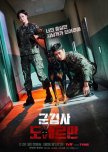
Doberman Bites and Doesn't Let Go!
Military Prosecutor Doberman is a fun ride that navigates through both corporate and military corruption. This isn’t something new, as we’ve seen plenty of stories with this combination, but this series certainly brings a new sense of style, combining drama, comedy, and thriller genres.Captain Doh Bae Man (can’t believe it took me a whole episode to get his name connection!) is a military prosecutor who was orphaned at a young age when his parents (both military prosecutors) were killed in a car accident (of course, it wasn’t an accident). So many people in K-dramas are killed involving a vehicle, that it’s tantamount to the number of Americans in American series killed by gunshots!
Doh Bae Man is initially a self-serving prosecutor who uses the power of his position to put money into his pockets. As far as he’s concerned, nothing else matters. Suffering from memory loss, he doesn’t recall the details of the accident that took his parents’ lives. On the side, he works for Yong Moon Goo, then head of a prestigious law firm who promises a high position in any law firm that Doh Bae Man wishes as soon as he’s discharged. In exchange for handling (or in Doh Bae Man’s case) mishandling cases, he’s given boxes full of cash from Yong Moon Goo.
Little does Doh Bae Man realize that there is something sinister going on around him at the military base he’s assigned with General Noh Hwa Young being in the center of it all. He also doesn’t realize that there is a connection between the general and the death’s of his parents. It isn’t until Captain Cha Woo In is assigned to his office that she nudges him to start connecting the dots.
Cha Woo In also has a dark past with General Noh Hwa Young, as the general also ordered the death of her father in order to take over his company, IM Defense Industries, which was a major player in signing contractual deals with the military. However, General Noh Hwa Young isn’t just about gaining money, but power. As part of a secret society of high-ranking military officials who all wish to nudge Korea into a future that they want, Noh Hwa Young wants to be the top-dog. She has a spoiled cowardly son in Noh Tae Nam whom she wants to complete his military service.
We see corruption at its lowest as General Noh Hwa Young skillfully manipulates and removes anyone or any obstacle that gets in her way. She’s frightening enough to make any military official quake in their boots, and Oh Yeon Soo, does a fantastic job with the role, ensuring that Noh Hwa Young is a very cool, calculating person who should never be underestimated. Too often, we’ve seen men assume these types of roles, so it’s incredibly refreshing to see a woman take on the role of chief villainess.
As Cha Woo In helps Doh Bae Man peel back the layers of corruption as well as his own lost memories, Doh Bae Man begins to change. He realizes that he’s also been used by Yong Moon Go, and that it is finally time for him to utilize his office for which it was intended: to carry out justice.
Doh Bae Man is an extremely intelligent prosecutor who is a master of manipulation and seeing things that nobody else is able to see. He’s a bit reckless sometimes, but too often, we see how he’s the mastermind behind so many amazing plans. Ahn Bo Hyun is fantastic as the confident, often arrogant Doh Bae Man who flashes his boyish charm to manipulate witnesses or convicts into doing what he needs them to do.
Cha Woo In is more level-headed and less emotional than her counterpart. Aside from being an absolute master of hand-to-hand combat, she’s smart enough to allow Doh Bae Man to regain his memories on his own rather than simply tell him. She knows that it’s far more effective for him to do it this way. However, Cha Woo In doesn’t have Doh Bae Man’s gift for seeing the “bigger picture” and doing what is necessary to carry out their plan. At first, this makes her a bit of a “weak link” in the courtroom, until she begins to understand what’s going on. She tends to be a bit too naïve and trusting where being cautious and calculating is far more prudent. In short, these two make a fantastic one-two punch team as they begin to learn from each other and how to use each other’s tactics.
Kim Young Min is probably my favorite actor of this series as the very cool and highly intelligent Yong Moon Goo. I tend to prefer villains who show their prowess with intelligence rather than with brawn or ridiculous, over-the-top outbursts. While he isn’t immune to revealing his frustrations, we see just how formidable he is, and as a viewer, we wonder who will win out: Yong Moon Goo or Noh Hwa Young? The high-powered lawyer or the high-ranking general?
The series only has a few minor problems. First, is Cha Woo In going around a red wig as a vigilante. This was almost as laughable as Clark Kent hiding his Superman disguise with a pair of glasses. So many people who know Cha Woo In, fail to recognize her simply due to a red wig. Had she kept her sunglasses on, it would have worked. This ended up going way too far.
Next, we have too many actors—who are supposed to be military generals—not acting like military generals at all. They have no esteem or presence as a military general would. Only Noh Hwa Young is the exception. The worst is easily General Heo Gang In, who acts more like a bumbling, inept fool. He’s so bad that he’s not even believable as a military person at all. Jung In Ki’s interpretation was an especially poor one and completely unbelievable.
Finally, the level of bullying that seems to emanate at all levels of the Korean military makes anyone wonder how in the world the Korean military can function at all. We hardly ever even see soldiers on duty. They’re all playing sports, loafing around in their barracks, and having free reign to come and go as they please. Given that corruption was from the very bottom all the way to the very top was just too much. I understand that the writers probably wanted to do their best to expose this type of corruption, but for this story, it was a bit too much. It was overkill.
Still, don’t let these minor issues fool you. This is a solid series with something for everyone. The plot twists themselves will likely have you guessing what’s really going on. I was also tremendously relieved that the series didn’t get sidetracked with a silly romantic storyline that would have pulled everything off course. They saved the one kiss for the end. We knew there was something between Doh Bae Man and Cha Woo In. There was no need to go any further than that, especially when their focus (their goal) was on the case. Just like a Doberman, this series is likely to bite you and not let go until the very end!
Was this review helpful to you?

This review may contain spoilers
Accepting People For Who They Are!
I’ve now seen three series with autistic characters being the subject. “It’s Okay to Not Be Okay” was the first with Oh Jung Se giving an absolutely riveting performance! The second was “Extraordinary Attorney Woo” with the incomparable Eu Bin Park. And ironically, despite this series coming out before all of them, I finally watched this one with Joo Won also giving a tremendous performance. However, that being said, “Good Doctor” is easily my least favorite of the three.Dr. Park Shi-On is an autistic young man who aspires to become a pediatric surgeon. Growing up with a sadistically brutal father who beat him relentlessly due to his disability, he’s eventually raised by the loving Dr. Choi who is the director of Sungwon Hospital. Dr. Choi hopes to help Dr. Park fulfill his dream; a dream he made after watching his older brother die in an accident in a mine.
Dr. Park has many obstacles to overcome, not the least of which are prejudice and discrimination, not only among his own colleagues but among parents too. Because of his persistence, he doesn’t give up and finds solace it the little souls of the pediatric ward who really don’t see him as anything other than a person. A slightly strange person, perhaps, but as a person nonetheless. Such is having the eyes of a child and seeing the world that way. Guilt, shame, and prejudice are all learned behaviors.
The first seven or eight episodes are tough to wade through as we see Dr. Park taking constant verbal abuse, especially from his mentor and superior, Dr. Kim Do Han and his chief assistant, Dr. Cha Yoon Su. Dr. Kim goes so far as to punch Dr. Park after a surgery. What is ironic is that Dr. Kim had a younger brother with autism, and yet he openly abuses Dr. Park without apology. If you truly think that abusive teaching methods are the best way to teach anyone, then you have no idea just how primitive and ignorant your beliefs are. Dr. Cha—in some ways—is even worse. She rebukes him with, “Stop acting like a kid!” She also physically hits him a number of times, but her even bigger “crime” is treating Dr. Park like he’s broken.
Dr. Kim justifies his treatment of Dr. Park with a strange question to Dr. Cha: “Would you rather have a great doctor who makes poor decisions or an average doctor who makes great decisions?” His point is that he wants Dr. Park to be the latter. However, his ignorance clouds his judgment as he clearly overlooks the third option to that question: Why not a great doctor who makes great decisions? That is what he should inspire Dr. Park to be. There is absolutely no justification for abuse. None. As an ESL teacher who has spent most of his career in Asian countries, I know that this isn’t something that has been completely expunged. Many teachers and even parents still firmly believe that abuse is necessary. They may not call it “abuse” but abuse it is.
Dr. Kim slowly begins to take to Dr. Park. However, during one particularly disturbing scene, Dr. Park is being beaten up by two bullies. Dr. Kim sees what is happening. He gets out of his car and walks to help Dr. Park. Walks. Not run. That was more disturbing than watching Dr. Park getting assaulted which showed just how little Dr. Kim thinks of Dr. Park.
Toward the last five episodes or so, it becomes clear that Dr. Cha is starting to develop feelings for Dr. Park, despite Dr. Park being rejected early on when he shares how he feels with her. However, Dr. Cha makes one big mistake when she goes out a blind date and finds that Dr. Park isn’t upset about it. Anyone who truly thinks that jealousy equals love doesn’t know love at all. Jealousy has absolutely nothing to do with love. Jealousy is about ego, power, fear, and control—things that love can never be. In many ways, Dr. Park proves himself to be far wiser and more mature than Dr. Cha, who frankly, has a lot of growing up to do.
The medical episodes regarding the pediatric patients were the most intriguing part of the series to me. I loved how Dr. Park could empathize and relate to them, using his own child-like purity. The surgeries were fairly well done, despite some serious flaws (such as doctors contaminating each other by touching each other in the OR which happened several times!)
However, the relationships weren’t quite as compelling to me. Dr. Park’s father is just a drunken, abusive tyrant, and it was disturbing to see how Dr. Park’s mother wilts around him, proving herself to be a very weak woman. The actor playing Dr. Park’s father was a bit too over-the-top for my taste. Barking and spewing nonsense in virtually every scene quickly became tiresome.
Quite frankly, the relationship between Dr. Cha and Dr. Park that develops toward the end of the series just didn’t feel organic or real enough. Moon Chae Won is a very good actress, but she almost seemed lost in how to make Dr. Cha actually develop romantic and loving feelings toward Dr. Park. She never says, “I like you” or even “I love you.” She only ever talks about how uncomfortable she is with Dr. Park possibly dating someone else (again, a sign of jealousy and possession; not love at all). “Extraordinary Attorney Woo” the romantic angle worked because the ML accepted and loved her for who she was; he never wanted her to change. We don’t get that same feeling from Dr. Cha who is constantly trying to get Dr. Park to change who he is. And anyone should know that whenever you enter a relationship with the hope of changing the other person, the relationship is ultimately doomed to fail. Relationships are always about the possibility of changing yourself, not the other person.
Initially, Dr. Cha obviously has a crush on Dr. Kim. It’s both sad and disturbing that she would find Dr. Kim even remotely appealing after his blatant abusive behavior toward Dr. Park. It certainly doesn’t speak well about her taste in men at all, Dr. Park notwithstanding.
We have a political power struggle doing on at the hospital which works somewhat well. In many ways, however, it just didn’t add much to the story, which should have kept its focus on Dr. Park.
In Jae was one of my favorite characters of the series; a young teenager who’s desperately in need of an intestinal transplant and her sister who is doing everything she can to raise enough money to pay for it. I loved In Jae’s interactions with Dr. Park. She clearly has a crush on him, and it’s sweet how she tries to help him navigate the minefield of “first love” when she finds out that the object of his affections is Dr. Cha.
Performances are largely very well done, with the notable exception of Jung Ho Geun (Dr. Park’s father). Standouts to me are Joo Won (Dr. Park), Kim Hyun Soo (In Jae), and Kwak Do Won (Mr. Kang), who plays the deputy director of the hospital with a calm, calculating demeanor which I found refreshing.
This medical drama also has the worst defibrillation scenes I've ever seen! The victims don't react or jump because the doctor removes the paddles during defibrillation! Sad that they couldn't even do those scenes right.
All in all, the series is good, but overall, it fell short for me, especially in some of its depictions of autistic people (which I found far more appealing in the other two series mentioned). I understand that they wanted to show how hard it would be for Dr. Park, but I found some of the scenes to be overkill and even more troubling how people continued to treat him as a broken man who needs to be fixed. If the moral of the series had been to treat people as they are and to accept their differences no matter what, then perhaps this series may have been far more inspiring than it truly was.
Was this review helpful to you?

Exceptional Horror Flick That Runs Deep!
I’ll be honest. I’m not a fan of zombie movies. George Romero’s “Night of the Living Dead” is still a classic, but even that movie didn’t exactly thrill me. To me, zombies tend to be boring. The slow, gaited walk—despite the overwhelming numbers—just made them less imposing than they should be.“Train to Busan” not only gives us an absolute thrill ride, but it also does what Korean filmmaking has been so good at over the years; it gives us food for thought and for people to decide what’s really important. Who else could put such a message, and do it effectively, than the Koreans? In short, this is the first zombie movie that I’ve seen that has heart and depth.
I will say that this is the best zombie movie I’ve ever seen. The zombies don’t do the stupid walk in this film. They run. They chase in a relentless frenzy that begs the viewer to ask, “how in the world did they film that?!”
Seok Woo (wonderfully played by Gong Yoo) is a workaholic father who has little time for his daughter, who begs him to take her to Busan to see her mother. Seok Woo is a man so disconnected from his daughter, Soo Ahn, that he doesn’t realize that he’s bought her a birthday gift that she already has. He finally agrees to take her.
In the meantime, a massive outbreak of “infected” people begin to take over, and of course, it only takes one as an infected woman jumps aboard the train just as it’s leaving the station. What transpires after this is an absolutely incredible survivor movie and what becomes of human nature when lives are on the line. There are those who believe in doing right by people, and there are others who believe that survival by any means necessary is justified. Interestingly enough, Seok Woo starts off as a man who believes that saving himself and his daughter is all that matters, leaving one man to rebuke him harshly for his selfish behavior.
Once the pursuit is underway, you have a good idea of who is most likely to survive, but there are still questions regarding the other characters and whether or not they will make it. And on a deeper level, what will these people do in their last moments, which brings us some very compelling moments.
On the one hand, this is a survivor movie worthy of “Titanic” or “The Poseidon Adventure” or “The Towering Inferno.” And on the other hand, it also begs the viewer to ask questions that could easily be used in a university philosophy class.
Performances are stellar across the board, but Kim Soo An really impressed me as Seok Woo’s daughter. The last few minutes of the film are heartbreaking and heart wrenching.
There isn't much music in the film, which adds to the effect, but when it kicks in, you know that you-know-what is about to hit the fan!
There really isn’t an element of this film that I can say came up short. From story to characters, to cinematography, this movie excels in every category. I see why this film is already considered a classic, and it’s the only zombie movie that I plan to add to my collection!
Was this review helpful to you?

This review may contain spoilers
Records Or Memories?
I know I sound like a broken record, but the Koreans are the masters of entertainment! And only the Koreans are masters of combining comedy with drama with a thoughtful message, which in my opinion, represents the next step of evolution in the entertainment industry. We all want to be entertained, but to use the medium of movies and TV shows to convey a message is to really use this medium to inspire and provide awareness.This movie is a true delight, and you are likely to find yourselves with some absolute laugh-out-loud moments as well as moments that just might tug at your heartstrings.
Yoon Hong Dae is a professional soccer player who ends up in trouble and is placed on probation. His agent—in order to try and restore Dae’s questionable reputation—puts him in charge of organizing and coaching a team—a team of homeless men to compete in the World Cup for Homeless players in Budapest.
Of course, we get a collection of homeless men of varying ages and backgrounds with different sets of skills. Seeing these guys attempting to play soccer is absolutely hilarious! One cheers when he kicks the ball and his shoe flies over the goal! And yet, each player has something to play for. They aren’t proud of being homeless, but this game just might restore the confidence to make some life changes as well as help people become aware that homelessness is a problem that has to be addressed. There are enough resources on this planet to ensure that every single human being has food, water, clothes, and shelter. So, why is it so hard?
Lee So Min is in charge of the documentary she is making to help showcase the team. Of course, she and Hong Dae don’t exactly see eye-to-eye, and their spats and bickering will make you giggle.
At first, Hong Dae is less than thrilled to be coaching a team of homeless men, most of whom have little-to-no skills. He figures he’s wasting his time, but the more he gets to know them, the more he finds a connection between each of them. Perhaps that is a part of the process: not to see a homeless person as a homeless person but as a person. It’s difficult to ignore someone when you’ve developed a connection. It’s even more inspiring when the entire team comes together to try and get Hong Dae out of trouble when he’s wrongfully charged with assault against four teen boys who harassed a woman with a mental disability.
The movie isn’t about winning. It’s about awareness as well as simply doing your best no matter how badly the odds are stacked against you. This is an especially powerful point when dealing with homeless people who may easily feel, “What’s the point? Nothing changes.” But Hong Dae asks them a poignant question, “Are you here for records or for memories?”
One thing I will say is that this movie is certainly memorable, important, and a sheer delight to watch. It reminded me of a combination of the “The Mighty Ducks” and “The Bad News Bears.” “Dream” certainly more than belongs in that kind of company!
Was this review helpful to you?
This review may contain spoilers
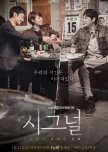
One of the Most Innovative Thrillers I've Ever Seen!
“Signal” is one of the most innovative and original thrillers I’ve ever had the privilege to watch. It captivates you right from the beginning and never lets up. The writing is crisp and taut, leaving the viewer to sit in wonder as to where the next leg of the story is going to go, while at the same time, wondering what the fate of our three protagonists is.Park Hae Young is a brilliant criminal profiler with a tragic past, one in which he seems to be the center. While he’s a lieutenant with the police department, he does not like the police, nor does he have any faith in their ability to do their job—and with good reason as we find out as the story unfolds.
Detective Cha Soo Hyun is one of the few female violent crimes detectives who seems cold and a bit aloof, but she’s dedicated to her job, and she also comes with a tragic past: the only person to treat her with respect as well as the love of her life in Detective Lee Jae Han who mysteriously disappeared 15 years ago from when this story is set.
Finally, we have Detective Lee Jae Han who leads a one-man crusade to fight against police and political corruption within the police department. He has absolutely no compunction about acting alone, as he’s determined to always do the right thing and bring justice for those who are incapable of getting it otherwise. In many ways, Lee Jae Han is the glue of the trio, and demonstrates that you can never give up no matter what happens. He is the one person Park Hae Young respects within the police department, and soon Cha Soo Hyun as well.
The main focus of this series is a radio that sends its transmissions into the future, and always at the same time, although not every day. Park Hae Young is soon amazed that he’s speaking to Detective Lee Jae Han in the past, using a radio without batteries! How can this be? The series does not ask nor require an explanation, but simply for the viewer to go with it. Perhaps it is the spirit of Lee Jae Han and his fierce determination that causes this phenomenon to occur. In the end, it doesn’t really matter.
Soon placed on a Cold Case Squad under Cha Soo Hyun, Park Hae Young and Detective Lee Jae Han begin to tackle cold cases of the past, and together, hope to solve them and catch criminals who are uncaught—that is until the mysterious radio transmission begins to occur. Park Hae Young has access to evidence that Detective Lee Jae Han doesn’t in the past, including the future location of crimes at future points in time.
However, we soon learn that not everything is resolved because of this advantage, and Park Hae Young quickly discovers that certain things that have been corrected are not always for the best, as others are forced to pay a price for the interference.
There are plenty of plot twists as the story continues with the three of them trying to uncover the central plot to the story that has caused the death of Detective Lee in the past as well as the death of Park Hae Young’s brother. This, of course, raises certain questions, whether they be moral or ethical: can Detective Lee be saved from his fate? Should he be? And can anything be done to save Park Hae Young’s brother?
The series raises a glaring philosophical question: if you could go back and change something from the past, would you? Most people, without really thinking things through, might quickly say, “Yes!” But then, how would things change? This is something that our three characters must ask and answer within the scope of the story. Kobe Bryant was once asked if he had a time machine, would he not want to go back and change things? He very quickly said, “No. I’d never use it. Because that undermines everything that I ever learn from my mistakes.”
Most people have events of the past that they wish they could have done differently. These may even include tragic moments where accidents or events have led to the death of a loved one. Therefore, it may be far more challenging to refrain from using a time machine ability to change the past with the hope of changing the future.
Time stories are very, very difficult to do well. They tend to fall under one of two results: those done very well, and those that are done very badly. There really isn’t an in-between. This is not only one of the few that does it well, but it’s among the very best that I’ve seen. Perhaps only time stories in the Star Trek universe have been done better.
While all three actors are absolutely fantastic in this series, it’s Jo Jin Woong who is the standout for me. He carries himself beautifully as a dedicated detective who is very uncomfortable with personal advances, such as those we see from Cha Soo Hyun toward him, leading to some absolutely hilarious exchanges between the two of them. He plays a hard-nosed detective who refuses to take guff from anyone, no matter their rank. He’s definitely a very idealistic police officer who still believes in the system and that his job is to bring justice. In many ways, Detective Lee is a true hero.
This is a series that will hold your interest all the way to the end. I had only a slight reservation at the very end, and I thought it was because they might have been leaving the door open for another season, but that wasn’t the case. How did Detective Lee survive/escape his last attack? And are Park Hae Young and Cha Soo Hyun successful in, not only getting to him in time but also able to bring down the corrupt congressman? The answers to the last two questions, we can assume that they do, but the first question is left much more obscure that, frankly, needed an answer. But, neither of these prevented me from being grateful for being able to watch such a fantastic series!
Was this review helpful to you?

This review may contain spoilers
Truth and Consequences of Korea's Education System
“Crash Course in Romance” is a series that is rock solid through fifteen episodes, and then limps to the finish line with a very mediocre final episode. It was clear that the writers had enough material for fifteen episodes, and then ended up having to come up with some gimmicks to stretch it to sixteen, which is almost always a mistake for a writer to make.This is a series that is part romance, part thriller, which is something that the Koreans are masters. They are fantastic at utilizing multiple genres within a single series and making it work.
This is a series that seeks to shed light on the obsession with education in Korea. Korea is one of the top countries in education, which obviously accounts for much of the country’s success. But, at what cost? Korea also has one of the highest suicide rates in the world, especially among teens. You’re dealing with tiger moms, worn-out kids, and one of the most competitive cultures in the world.
I am an ESL teacher, and I have lived and worked in Korea, China, and Taiwan in the Asian countries. While education is huge in all three, Korea surpasses the others when it comes to an almost obsessive, compulsive need to be the best. And this series does a tremendous job of exposing the education culture of Korea with the realization that change is needed.
First of all, students in Korea are expected to study from sunrise, and in many cases, until midnight or later. This is true for children as young as 2nd or 3rd grade. I remember asking many of my students on the eve of a long holiday what they planned to do (thinking that they might do something fun). All of them said, “Studying. My parents told me to bring my books on our vacation.” In the series, we see the culture of students in Nam Hae Yi, Bang Soo Ah, and Lee Seon Jae.
Bang Soo Ah has an unhealthy and frenetic outlook on her education. If she doesn’t finish as #1, she sees herself as a failure. But worse than that, she gets angry at those who beat her, feeling that they must have done something wrong or dishonest.
Lee Seon Jae is put under such pressure from his mother, that he ends up doing something terribly wrong.
Second, we have Tiger moms. This a term used to describe mothers who are so obsessed with their children’s education and future, that nothing else matters to them. They will even dictate to teachers what should or shouldn’t be done. We have a number of tiger moms depicted in this series. Of course, they will all state that it’s for their children. This is a lie. These are women who live vicariously through their own kids and use them to achieve social status. Their children are nothing but pawns, and yes, this is a form of child abuse. It’s no less abusive for moms in the west who give little-to-no attention to their kids, not caring what they do or don’t do. That is abuse too. These are two cultures of extremes, where balance is needed. Make no mistake: most children in Asian countries and cultures are never given much of a chance to be a kid. Many of their lives are mapped and planned out for them. They are told who to marry, what job they will do, and what to do every single day. I have spoken with so many native teachers of these countries who say that they hate their education system.
Believe it or not, I actually had a Korean student who was upset with his test scores at school. His own mother told him, “If you can’t do any better than this, then you should throw yourself off the balcony!” Yes, that’s a true story.
In this series, we have tiger moms who will do anything to bring other students down. Other mothers down. In short, there isn’t much they won’t do to ensure that their child is among the elite. Now, you may look at some of the scenes in this series and say, “Goodness! Do those things really happen? Do mothers really do these kinds of things?” Yes, they do. And that is the truth of the harsh reality that virtually nothing depicted in this series is exaggerated.
Choi Chi Yeol is arguably Korea’s top academy math teacher. He’s so popular, that moms and students line up on the street for a chance to get into one of his classes. There’s no doubt that he’s a great teacher, bringing great enthusiasm and passion to his classrooms. However, it’s also apparent that teaching is all there is for him. He can barely eat, and he even sleeps less. And his small, bubble world is finally blown up when he meets Nam Haeng Seon. What’s funny is that Choi Chi Yeol is horrible at remembering people’s names, including those he works with. However, someone is killing anyone who attempts to harm Choi Chi Yeol, and we’re given a pretty good thriller aspect as we try to figure out who it could be.
Nam Haeng Seon is a woman who runs a small side-dish café while raising her niece who was left on Nam Haeng Seon’s doorstep when the girl was only a few years old. It’s clear that Nam Haeng Seon wants the best for her niece, but she wisely allows Nam Hae Yi to choose and create her own path. In short, she’s a supportive mother who isn’t a tiger mom. She’s a perfect balance of supporting Nam Hae Yi without going overboard.
The relationship between Choi Chi Yeol and Nam Haeng Seon is endearing and cute, despite the fact that occasionally, there appears to be little romantic chemistry between the two leads. Don’t get me wrong. Jeon Do Yeon and Jung Kyung Ho are masterful in their roles. But I made me wonder if the fact that Jeon Do Yeon is 10+ years older than her co-star had something to do with it. I’ve seen Jung Kyung Ho in series like “Hospital Playlist” and he’s nothing short of brilliant in this series as well. He’s very believable as the tightly wound and somewhat aloof math teacher. I was also very impressed with Roh Yoon Seo (Nam Hae Yi). This young lady has a bright future ahead of her.
This series was a “10” for me until the last episode. The writers suddenly forced a contrived storyline upon us where Nam Hae Yi’s mother comes back, and she suddenly announces that she’s going to move with her selfish, gold-digging mother to Japan, which comes right out of the blue. Also, it simply doesn’t fit with the character of Nam Hae Yi. Now, one might believe that she did it to protect her aunt and Choi Chi Yeol, but no resolution or discussion is ever made to account for her behavior. It was ridiculous and it didn’t fit with the rest of the story. We also got no real resolution between Lee Seon Jae’s mother and his brother, whom she suspected of being a murderer. A resolution scene there would have gone far, but that came up short as well.
All in all, this was a very nice series to be a part of. I’m glad that someone decided to shed some light on Korea’s issues with the educational system. It’s high time the children stop paying the price for their parents’ obsession with status. This series would have been perfect had it ended after 15 episodes, but even with the lackluster 16th, it’s still a good series!
Was this review helpful to you?

This review may contain spoilers
Sixteen Episodes With These Delightful Women Just Doesn't Seem Like Enough!
You know you’ve come across a hit ensemble cast of characters when you’re equally vested in all three of them. In other words, you never find yourself sighing and wishing that the story would go back to the one character you like the most. This is far rarer than people realize. As far as ensemble casts go, the only other K-drama I can find myself saying this about would be “Hospital Playlist.”Three women from different backgrounds live together. They all work in the entertainment industry. Eun Jung Lee runs a production company, and she finds herself working on a documentary about actress, So Min Lee. Jin Joo Im is a screenwriter who is initially working for a more famous and seasoned screenwriter, until she realizes that their ideas are very different, and she has the courage to branch out on her own. And finally, we have Han Joo Hwang, who works for a small production company, at first as a marketing director, but soon as a producer herself. All three women are thirty.
Eun Jung Lee is the glue of the trio. She’s sharp, independent, and finds herself struggling to deal with a personal tragedy. The love of her life recently died of a terminal illness. She sees him everywhere and even engages in conversations with him. If you have ever had to deal with the loss of a loved one, you can easily sympathize with Eun Jung. And while she’s a strong woman, especially when dealing with anyone who tries to bring her or anyone else down, the cracks in her armor are growing by the day until she finally decides to seek some professional help. Eun Jung is the mother hen, and we can determine that she’s always been this way. Her brother, who lives with the them, is a gay man, and it becomes painfully obvious that their parents never accepted him. In short, Eun Jung has always felt compelled to be the pillar of strength for those closest to her. But here is the age-old truth: you can’t take care of anyone else until you first learn to take care of yourself. You have to be the priority.
Jin Joo is a woman who has the courage to face the unknown; to strike out and become and independent screenwriter. Of course, it helps to have the encouragement of friends, but when she meets film director Beom Soo Son, he helps her become more confident in herself. She is the most cautious member of the group, who isn’t as prone to simply “jump in” to a new romance or situation. Having got out of a long-term relationship, we can see why she’d be hesitant to start another one. But then again, life is about risk. Love is about risk, and you can never get anywhere in life by sitting on the sidelines where it’s safe and secure.
Finally, we have Han Joo Hwang, who arguably has more life experience than the previous two. She found herself in love at a young age, had a son, and suddenly found herself all alone when her husband divorced and left her high and dry. Now, as a seasoned marketing director, she takes on a young intern in Jae Hoon, and does her best to pass along what life wisdom she has to help him navigate his own romantic problems. While it becomes obvious that Jae Hoon is infatuated with Han Joo—and we can also see that Han Joo is a bit smitten with him as well—she already knows that getting involved with Jae Hoon is a bad idea. First of all, she’s his boss at work. And second of all, Jae Hoon has a lot to learn about himself and how to be in a relationship. There is a very touching scene in the last episode in which Han Joo maps out perfectly Jae Hoon’s most recent relationship that ended badly and why it failed. Han Joo already knows, that even if they were to enter into a relationship, Jae Hoon would end up treating her the same as he had his previous girlfriend, and Jae Hoon realizes this.
This series is about three women who navigate life’s ups and downs. In some ways, life is like a big K-drama, starring you and those around you, and those with whom you have friendships and relationships. It’s about dealing with one crisis and preparing yourself as best you can for the next one. In a show, you as the writer and director control and dictate what happens to your characters as well as the situations they are in. In life, you can only control yourself. However, in both, you still have to deal with moments of happiness and moments of disappointment and learn how to move on. It’s human behavior. It’s life! And this show does a fantastic job of mirroring life within the confines and world of this sweet and often touching, drama.
And, yes, that also means enjoying yourself and not following some arbitrary rules. As soon as you try to grasp love and life by putting rules and boundaries upon them, you’ve already failed to realize that life and love are like the wind. They are there to be enjoyed, not to be harnessed and held onto. Jin Joo and Beom Soo make this mistake when they try to separate work and love by some silly rules.
Performances in this series are rock solid across the board. As with so many K-dramas, we have hilarious moments, cute moments, and heartfelt moments. We find ourselves cheering for most of the characters, and by the end of the series, we can say that they have come out the other side of things pretty well. But life isn’t about stopping or sitting on our laurels, thinking we’ve finally crossed a finish line. There is no finish line. There is always the next thing. Bruce Lee once stated that a plateau in life makes a nice, brief rest stop, but don’t ever stay there. You have to keep going. And by the end of the series, you are confident that our three protagonists have already come to that realization.
Was this review helpful to you?

This review may contain spoilers
Cherish Those Wonderful Moments!
I will be honest. This coming-of-age romantic comedy/drama surprised me. I thought it was going to be another one of those typical young romance stories, but the writer threw a few curveballs that I didn’t see coming.Na Bo Ra is a young high school girl whose best friend, Kim Yeon Do, is headed to the US for heart surgery. Given how advanced Korean medicine is, I was a little surprised that she had to go so far, but I quickly let it go. Kim Yeon Do also briefly meets Baek Hyun Jin who helps her, and she, of course, immediately falls head over heels for him. Since she is going to be away for a while, Yeon Do asks Bo Ra to find out everything she can about her new, prospective love.
We’ve seen this situation dozens of times in stories like this one as Bo Ra follows Baek Hyun Jin around the school—sometimes with hilarious moments—in order to gather information for her friend. It is 1999 and emailing is slowly becoming the way of communication, and Bo Ra sends her friend emails with updates and information about Baek Hyun Jin. Bo Ra also finds herself speaking with Hyun Jin’s best friend, Poong Woon Ho, who is a confident, but somewhat withdrawn boy who enjoys photography.
I figured was going to begin as another typical storyline, gave me my first curveball. The writer brilliantly decided to use the “mistaken identity” ploy, and it works really well here! Bo Ra finds herself infatuated with Woon Ho, which she figures is all well and good. After all, her friend is in love with Hyun Jin, who doesn’t interest Bo Ra at all. But Hyun Jin becomes interested in her. But that isn’t where the twist begins. When Yeon Do returns, we find out that she’s in love with Woon Ho because he was wearing Hyun Jin’s jacket at the time they met, which had Hyun Jin’s name tag on it. Hence, we now have two girls in love with the same guy. Of course, this crushes Bo Ra, who is now trying her best to prove to her friend that she is NOT in love with Woon Ho, and thus, she steps aside.
The moments between Bo Ra and Woon Ho are sweet and endearing, as it’s clear that these two have real chemistry. Bo Ra isn’t necessarily a wallflower and even takes the initiative to ask Woon Ho out on a date. This occurs right before Yeon Do reveals the truth about the object of her affections. We have tender moments of Bo Ra and Woon Ho eating ice cream, Woon Ho helping a drunk Bo Ra on a field trip, and an especially precious moment under a plum tree.
I was a bit put off by Yeon Do’s reaction when she finds out the truth of Bo Ra’s feelings for Woon Ho. After all, it wasn’t entirely Bo Ra’s fault regarding the mistaken identity. But Yeon Do quickly redeems herself when she realizes that Woon Ho is also in love with Bo Ra, and she encourages her friend to not let anyone stand in her way.
Woon Ho’s mother and brother live in New Zealand, and his father sends him back to the country. We aren’t given an explanation as to why, but it’s here that we get a tearful goodbye between Woon Ho and Bo Ra at the train platform as he sets off. I love how Koreans emote. It always feels so genuine and heartfelt, and we feel the pain of separation as Woon Ho sobs as the train pulls away, and Bo Ra is also left sobbing on the platform.
In the final act of the film, we get another major twist. Woon Ho and Bo Ra are able to maintain contact (only via email) until some time after the new year. Bo Ra is entering college, and we can only assume that Woon Ho is doing the same. Woon Ho vows to return to Korea to be with Bo Ra, but suddenly, all communication stops. Bo Ra’s emails go unanswered, and even when she attempts to call his pager, there is no response. Believing that Woon Ho has lost interest, she angrily and tearfully leaves a message and vents her frustrations, vowing to never want to see or speak with him again.
Now, I’ve seen enough movies and shows over 45+ years to recognize when something is up, and I had a strong suspicion that something happened to Woon Ho. Given his love and devotion for Bo Ra, there was no way he would lose interest. Of course, as a somewhat insecure young woman just out of high school, Bo Ra’s reaction wasn’t a surprise either. The last thing she would suspect is that something tragic has taken place.
Sure enough, as we jump some fifteen or twenty years later, Woon Ho’s brother contacts Bo Ra and invites her to a photography exhibit. Bo Ra is shocked to see that nearly every photograph on display has something to do with her. And it is here that Woon Ho’s brother tells her that Woon Ho died back in 2001.
I found two things frustrating about the ending, despite not really having a major issue with it. First, I don’t care who you are, when you find out that someone has died—especially someone close to you—you want to know how it happened. And Bo Ra never asks the obvious question, and Woon Ho’s brother never tells her. I’ve had close friends pass away in the last few years, and my first thought is, “What happened? How did they die?” And when someone dies young, it’s frankly, a very obvious question.
And second, I wish they’d extended the ending a bit more. More talk and conversation between Bo Ra and Woon Ho’s brother would have been nice. I’m sure Bo Ra would have had a million questions about him. But the exchange is much too brief given the situation. I’d be curious what ended up on the cutting floor during this sequence.
I saw Kim Yoo Jung in “Backstreet Rookie” which was a disappointment. My only minor criticism is when she cries. Her wailing and sobbing almost felt forced at times. Older Bo Ra—played by Han Hyo Joo—felt much more tender and real. Perhaps because Hyo Joo is older and a much more seasoned actress. As she sits and watches the videos that Woon Ho made from years ago, it was much easier to empathize with her.
The movie reminded me a little bit of the classic film “The Man In the Moon,” a story of two sisters who fall in love with the same boy, which ends tragically. Part of me wished this film had more depth like that movie, especially in the end. However, the fantastic acting of Han Hyo Joo and Byun Woo Suk (Woon Ho) really made the ending powerful and heartfelt.
This was a film that was much better than I thought it would be. There is something that has always captivated me regarding good coming-of-age stories and romances. Perhaps because many of these stories involve first-time experiences that come from a place of innocence and childlike wonder. And they are always heartbreaking when tragedy occurs. But then, that’s life, isn’t it? Not every romance will have a “happily ever after” ending.
Perhaps the message here is to cherish the time you have with loved ones. Don’t take them for granted because you never know when time is suddenly up. Relationships are about moments, however brief or long they may be.
Was this review helpful to you?

This review may contain spoilers
Motherhood and Assassin Clash in This Great Romp!
I find it interesting that so many viewers are complaining about the ending, and why it feels incomplete. I guess you have to have been around for 45+ years, watching movies and shows to understand that an ending that feels incomplete is because there’s another part on the way. Another episode or another movie. It really isn’t that hard to figure out.Kill Bok Soon is a very good film about a Gil Bok Soon, one of the best assassins of the MK guild. They call them companies, but I think a guild is more accurate. She’s deadly and she brings light humor to her personality. She smirks and lightly banters with her victims in a way that tells them, “This is business. It’s not personal.” What makes this story compelling is that she also has a teenage daughter. And it becomes obvious, very quickly, that her daughter has no idea what she does for a living, and she aims to keep it that way. And there is, of course, some compelling reasons why Bok Soon shields her daughter from her life.
Bok Soon is nearing the end of her contract, and the guild wants her to renew with them. She’s seriously considering retiring. However, can a rogue assassin who is as good as Bok Soon be allowed to simply retire?
Cha Min Kyu is the top assassin of the MK guild. And make no mistake, his skills outrival even Bok Soon’s as we see him take down 30+ Russians in a massacre. His sister, Cha Min Hee is the director of the MK guild, and she views Bok Soon as more of a liability than an asset since her announcement. It’s also obvious that she doesn’t care much for Bok Soon, which makes you also wonder if she knows the secret between Bok Soon and Cha Min Kyu.
Bodies pile up rapidly as it becomes apparent that it’s a fatal mistake to underestimate or even to target Bok Soon. She’s also not stupid. She knows what’s going to happen before it does, even running through probable scenarios in her mind—which play out on the screen in expert fashion. She will also use any item as a weapon. There’s no such thing as fighting fair in a fight, and Bok Soon is a master of this realization. It’s kill or be killed. There’s no room for apologies.
Jason Bourne is still one of my all-time favorite assassins because he’s just as smart as he is deadly. He’s like a grandmaster chess player who is always several moves ahead of his opponents, as well as being able to adapt to his situation with mere seconds of contemplation. Bok Soon is similar in this regard.
That cast is all top-notch, especially Jeon Do Yeon, who is very believable as the assassin Bok Soon. She’s also masterful at giving us a mom who is trying very hard to understand her teenage daughter, and why being a parent is even harder than being an assassin.
As I stated from the beginning, they certainly left the door open for another film, and I would be very surprised if another one isn’t made. Especially given how Bok Soon’s daughter reacts after finding out the truth about her mother. We were left to wonder how she would react to her mother upon finding out who she really is and what she really does. And what is intriguing is that we some elements of a young Bok Soon in her own daughter.
This was a fun film to watch. It’s well-written and well-performed. The fight scenes were all exceedingly well choreographed. Thank God these actors and actresses do their own stunt work, as it makes the scenes all the more believable and intriguing. Looking forward to the next one!
Was this review helpful to you?

This review may contain spoilers
A Light and Wonderful Coming of Age Series!
This is a very delightful and light coming-of-age series about a young girl, Kuronuma Sawako, who is given the nickname “Sadako” because her appearance resembles the creepy ghost girl from “The Ring.” Her hair is long and straight, and rather unflattering to go with a pale and unassuming complexion. She’s a very shy girl who speaks in a soft voice and doesn’t speak ill of anyone, even those who are put off by her.While Sawako lacks confidence in herself, she’s actually not afraid to pursue and do things, which is one of the things that I found very appealing as well as refreshing about her character. Too often, the shy girl is also a doormat who has to be poked and prodded into doing literally everything. Sawako isn’t that way. She volunteers for jobs, and she actually has no problem interacting with people who interact with her.
It is clear from the start that Sawako only has eyes for Kazehaya Shota, the most popular boy in the school. Kazehaya isn’t put off by Sawako’s shy demeanor, and it’s clear that he endeavors to treat everyone—whether they are popular or not—the same. He’s not conceited or uptight. He has a charming smile and disposition that makes it easy to understand why he’s so popular, especially with the girls.
Sawako quickly makes friends with Yano Ayane and Yoshida Chizuru. What I like about these two girls is that they are quick to stand up for Sawako, even at risk of being ridiculed. I’ve seen many stories with bullying, and it was refreshing to see the proper way for friends to interact and be there for each other. Kazehaya is also someone who is intolerant of bullying.
While the story centers on Sawako and Kazehaya, it’s actually the ensemble group of characters that makes this series appealing. I found myself just as invested and interested in Yano and Yoshida, which was pleasantly surprising to me. Yano is a girl who’s a bit shy herself, and also lacks the resolve to push herself to be the best she can be. She’s had a number of relationships, but they always turn out bad, which leaves her to wonder if she will ever find true love. Chizuru is the fiery, and somewhat temperamental member of the group. But, she is also fiercely loyal and will always have her friends’ backs no matter what. Chizuru finds herself having to grow up in terms of how she sees love. At first, she’s strongly infatuated with Ryu’s—her longtime friend and classmate—much older brother. It takes her some time to realize that the love of her life has always been right there beside her.
The series is a well-done coming-of-age series about the pains and struggles of high school as we see these characters trying to cope and deal with uncertain futures, new and lost loves, and trying to figure out how—and even if—they can maintain a future together while each of them sets off to pursue college and the next phase of their lives.
I also really enjoyed the character of Arai Kazuichi, the homeroom teacher for this group. He’s humorous, light, and encouraging. A true teacher is always looking to instill confidence in his/her students. To encourage them to push the boundaries and not be afraid to pursue their dreams. As an ESL teacher, this is a mindset I’ve always had with my students. And I really loved his interactions with Yano. Sometimes, it only takes one person to believe in you to provide you with the confidence to move forward; to never settle, and to do whatever it takes to fulfill your dream. There aren’t many things in this world quite so tragic as dreams left unrealized because of the lack of courage to take the chance.
The series is light and full of hope that each of these characters at least has a strong chance to fulfill their dreams and live the lives they desire. And while the series may be a bit short on realism, so what! We can all use an uplifting boost to remind us that none of us should ever settle for anything. Always reach for the stars!
Was this review helpful to you?
This review may contain spoilers
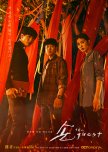
Best Story about Possession Since "The Exorcist!"
Not since “The Exorcist,” one of the best horror films ever made, has a series captured the sheer horror and terror of possession like “The Guest.” Park Il-Do, a particularly sadistic serial killer, finds his evil spirit lingering and waiting to possess and wreak havoc upon the innocent. However, Park Il Do doesn’t work alone. He has minions who possess and work under him as he attempts to break down and destroy Hwa Pyung Yoon with the hopes of possessing “the perfect vessel.”With unlikely allies in Detective Gil Young Kang, and Father Choi Yoon (Matthew), Hwa Pyung Yoon struggles to protect the innocent and free the possessed while hoping to track down and destroy Park Il Do once and for all.
We find out early on that virtually Hwa Pyung Yoon’s entire family was killed by Park Il Do as well as the families of Detective Kang and Father Matthew. It is these tragedies that bring and bind them together with a common cause: to destroy Park Il Do. Detective Kang’s mother, a policewoman, was killed while saving a young Choi Yoon. And Choi Yoon’s brother was possessed and went on a killing rampage. When they find out about Hwa Pyung’s past and his connection with Park Il Do, they blame him for the deaths of their family members.
Detective Kang is a hard-nosed, hot-tempered detective who carries the death of her mother within her heart and soul, as she was there that fateful night, and filled with guilt about how she treated her mother.
Father Matthew is similar to Detective Kang, as he attempts to find some solace in becoming a Catholic priest. Despite his livelihood, it’s clear that he is also a loner and harboring great pain stemming from that terrible night.
Hwa Pyung comes across as a simple man with a kind, but courageous heart as he fights to free people from possession. A gifted medium, he can often see what is transpiring or is about to transpire, making him a valuable asset. However, it’s his ability to connect with people, which both Kang and Matthew sorely lack.
The series if filled with horrific scenes of possessed people slaughtering the innocent, and often with great delight, as well as scenes of self-dismemberment as the possessed also routinely stab themselves in the right eye, which is a signature of Park Il Do’s influence and presence. I found the episodes involving the little girl particularly disturbing, as it is always challenging to see a child’s innocence and purity being used in such a twisted and vile way.
The series does not require that you believe in Christianity or spirits or possessions. The writers clearly bank on the fact that the audience will find the story compelling, and perhaps frightening enough so that the religious aspects aren’t a problem.
This is a gripping thriller that has the viewer guessing all the way up to the last episode, which person is being possessed by Park Il Do, and of course, how our three heroes will endeavor to stop him. And yet, at the same time, we also find that love always triumphs over evil as Hwa Pyung, not only fights to save the life of his grandfather, but also his two dearest friends in Detective Kang and Father Matthew, while renewing their own faith that love and friendship are not weaknesses but strengths.
I was also happy that the series stuck to the heart of the story without any needless romantic incursions or distractions that would hinder the plot.
The series was done five years ago, and the way things ended, one can’t help but wonder if a second season was possible. Even if it doesn’t happen, this is a fantastic, edge-of-your-seat thriller that will not disappoint!
Was this review helpful to you?

This review may contain spoilers
Bad And Crazy Is a True Thrill!
This may be one of the most unique psychological thrillers I’ve ever seen. I’ll admit that I was a bit confused during the first two episodes as I tried to figure out what the heck was going on with Detective Ryu Soo Yeol who is a part of the Anti-Crime Unit, which basically equivalent to our Internal Affairs. He’s trying to piece together evidence of a missing woman, but a mysterious man in a motorcycle jacket and helmet keeps showing up out of the blue and beating the daylights out of him. While it made for intriguing scenes and shifts within the story, it also left me puzzled.It wasn’t until the end of the second episode that I realized that “K”—the man in the motorcycle gear—is actually Ryu Soo Yeol’s alter-ego. A part of himself that finds himself using when confronted with dangerous situations. The interactions between K and Ryu Soo Yeol aren’t just interesting but also contain some of the funniest interactions of the series.
Of course, as with so many other Korean dramas, there is always more to things than meets the eye, as Korean stories are often like onions. You have to peel back another layer to find out what else is going on. At first, we start with—what appears to be—a simple missing persons case that turns into a ring of drug dealers, which then turns into the mastermind who is secretly plotting Ryu Soo Yeol’s downfall. A deep, dark secret from his past as he struggles to put the pieces together as well as dealing with the fact that he’s got a split personality. In the hands of a lesser writer and director, this series could have easily become ridiculous and laughable.
As the series begins, it’s obvious that Ryu Soo Yeol is a very self-absorbed guy. He is just as corrupt as the police officers that he investigates. He’s not above taking bribes and even turning his back on justice and doing the right thing for an envelope of money. He also warms himself up to his superiors, and by all intensive purposes, he’s living the good life without much care. In many ways, the transformation of Ryu Soo Yeol from nonchalant playboy to someone who finally begins caring about doing the right thing, coincides with the appearance of “K.”
However, it soon begins to be painfully obvious that Ryu Soo Yeol is a bright but careless detective, often going into dangerous situations alone rather than with a partner. There’s a reason why police officers and detectives have partners. First and foremost is so that the partner can corroborate their story and version of what happens. There are several cases where Ryu Soo Yeol might have avoided a situation if he’d used a partner.
Lee Hee Kyum is his love interest and fellow officer. Their relationship begins tenuously because it’s obvious that Ryu Soo Yeol had a short fling with her. However, it’s quite obvious that she still has feelings for him. She’s a capable officer, although she does fail to follow one of the most basic rules of handling firearms: never draw your weapon unless you’re prepared to use it. Such carelessness puts her in a dangerous situation and could have gotten her killed.
The relationship between Ryu Soo Yeol and “K” as well as with Ryu Soo Yeol’s enemy Jung Hyun Soo is what drives this series. It has quite a thrilling and captivating story when we finally realize who is behind the sinister plot to destroy Ryu Soo Yeol.
I’ve seen Lee Dong Wook already in “Touch My Heart” in which he was fabulous. I was more than a little blown away by his portrayal of a very different kind of character in Ryu Soo Yeol. Performances in general were fantastic in this series.
For a series filled with action, suspense, and humor, this one isn’t one that should be overlooked!
Was this review helpful to you?
This review may contain spoilers
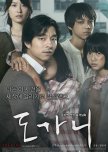
If a Country Won't Save The Children, Then Who Will?
What is the price of a child? As depicted in this film, it’s either a job promotion or money. I would never have believed that anyone—a parent, grandparent, teacher, prosecutor, or judge--could put a price on a child's well-being. And perhaps that is the most disturbing aspect of this story.Anyone who abuses a child is not fit to even call themselves “human.” These are the vilest and most depraved cowards of any human society.
It has always been extremely difficult to watch any film regarding child abuse. I’m a TEFL teacher, and to even fathom anyone hurting or abusing any of my students literally makes my stomach ache and my anger rise.
I’ve since watched three films that are difficult to watch, and this one was no different. In fact, I had to watch this movie over two-nights because I had to stop it halfway through because I was becoming so outraged. “Sophie’s Choice” is an extraordinary film, and it’s also one that I can never watch again. I can still hear the little girl’s screams as she’s being taken away. “Hope” is another one about a Korean girl who was raped in the most horrifying way imaginable. It’s also another film I can never watch again. “Silenced” is now the third. And as good as it was, I already know that I can never watch this movie again.
Based on a true story, “Silenced” is about the teaching staff at a prestigious school in the town of Mujin. A school for the deaf. A new teacher shows up, and he’s excited about embarking upon his new career until he uncovers a terrible truth: the children are being sexually and physically abused. An especially disturbing scene shows a staff member mercilessly beating a young boy, and yet the new teacher—Kang In Ho—simply stands there and does nothing.
The headmaster and his twin brother are well-known throughout the town for their philanthropy. And in a world where money talks, they are more than capable of buying the silence and lies of the staff, prosecutor, defending attorney, judge, and anyone else who dares to stand in their way.
Despite the evidence and unequivocal records of abuse, family members settle on behalf of their children for money. Such people can never be called “parents” or anything of the sort. They simply see their children as a means to acquire money and nothing more. And as a result, the judge gives out sentences that are so laughable, that if it weren’t so tragic, one just might utter a chuckle in response.
The film is as dark as the fog-bound town of Mujin itself, with few likable characters. Kang In Ho’s own cowardly mother tells him to just let it go because there is no point in doing what’s right. It’s easy to say that until you meet the children face-to-face and gain some empathy and perspective about what THEY have had to endure.
This movie brought a real problem to light in Korea. It forced people to ask what the price of a child is, and what happens when corruption and greed are more powerful than justice itself.
Children are not property! They are not there for you to use at your whim! They are not there for you to live vicariously through, nor are they there to be responsible for your own problems. Anyone who uses children in any such manner are child abusers. You do not own your children. And Korea—as well as much of the world—needs to understand just how far and extensive their child abuse runs. This movie brought to light an extreme case, and still, Korea has failed to listen. Why? Because of the indifference of its people. They simply do not care enough.
I was a bit disappointed by Gong Yoo’s performance. I’m not sure how anyone can simply stand there without any expression of outrage or even concern. Yes, he finally bashes the teacher over the head with a plant, but for the most part, Gong Yoo looks lost with almost placid and indifferent expressions. His own mother berates him for standing firm, and all he can say to her is, “I’m sorry.” Amazing that there is no effort to explain the situation and why it’s of the utmost importance.
This isn’t an easy movie to watch, but it’s a necessary one as it puts a spotlight on a horrendous and truly terrifying problem. People often wonder if there are monsters in this world. Just look at the members of the school staff, their families, the prosecutor, and defending attorney, and the judge to realize the truth—yes, there are, indeed, monsters in this world. And they all need to be fought and defeated. If not, then who will save the children?
Was this review helpful to you?


