


 1
1


This review may contain spoilers
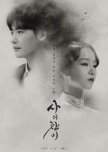
Korea's "Romeo and Juliet!"
As I write this review, I am listening to “Only My Heart Knows” by Sohyang—the greatest female singer on the planet--which is the most eloquent way and expression that I can think of to captivate what I’m feeling after finishing this extraordinary series. Sohyang does for “Hymn of Death” what Celine Dion did for “Titanic.”Romeo and Juliet is considered one of the best romances ever written. Of course, it was also a work of fiction. Jack and Rose were also considered a great romance, but they were fictional characters in a historical event. Yun Shim-Deok and Kim Woo Jin is about real people back in the mid-1920s whose lives abruptly ended when they committed suicide together by jumping off a passenger ship. Now, to some, this may seem to be a tragic romance. As with so many things in this world, it really does depend upon your perspective.
What happens when oppression and suffering become so great that they make a person feel trapped? Let me point out that those who commit suicide or consider it an option are feeling trapped. They feel that there is no other way out of whatever situation they are in. Whether or not you agree with the act doesn’t matter. It’s what they are feeling. How do I know? Because it was something I attempted once myself.
Yun Shim-Deok was a woman well ahead of her time. She was outspoken and wasn’t afraid of being bold and going against a system she didn’t agree with. For the 1920s, this was more of a rarity than most people realize. Coming from a poor family, she was essentially the family’s sole means of making money. She was also given the responsibility—albeit unfairly—to also make enough money to pay for the education of her siblings. But, at what price?
Kim Woo Jin is a writer from one of the richest families in Korea. His father expects him to forsake the foolishness of being a writer and run the family business while being married to a woman who is more about duty and doing what his father wants than being a supportive, loving wife.
Both show incredible talent in their respective fields. Kim Woo Jin is a gifted writer of poems, plays, and criticism—not to mention his love letters to Yun Shim-Deok. Yun Shim Deok is able to captivate audiences with her beautiful voice. And yet neither is allowed to pursue their passion. Kim Woo Jin’s father won’t allow his son to write, and the Japanese attempt to use Yun Shim Deok for their own, sick and demented reasons, caring nothing for her singing talent.
It's been said by many that there are few things sadder than wasted talent. What does it do to a person to not pursue the life they want? What does it do to twist someone’s talent to the point where it’s no longer what it is supposed to be?
Whether you are simply using your son or daughter to carry on family obligations, such as running a family business and having them marry whom YOU want them to, or using your son or daughter by holding them hostage under the “family obligation,” for financial reasons, the result is the same: you are using your children. You are treating them as property, and children are not property. And if you are unable to support your children in helping them pursue their own passions, then you are not fit to be a parent. No, it’s worse than that. You have no right to even call yourself a parent, any more than the parent who is indifferent and neglects his/her children.
This series is powerful and eloquent in depicting two souls who loved each other so much that they refused to leave each other. Not even in death, as they left this life together. It’s beautifully done with incredible performances by Lee Jong Suk and Shin Hye Sun. They have incredible chemistry, which is obviously necessary in order to make this series work. My only very small complaint is that I wish a singer had helped Shin Hye Sun train as a singer. Even if it wasn’t actually going to be her singing, she doesn’t open and move her mouth as a singer would.
The series is short at only six episodes (three via Netlfix as they combined each episode into pairs), but it’s not a series that is easily forgotten. It stays with you from the opening moment of the first episode when you see the two pairs of shoes on the deck of the ship to the moment when Kim Woo Jin and Yun Shim Deok are dancing and then slowly begin to walk to the deck’s edge. And I can’t help but think that the real Kim Woo Jin and Yun Shim Deok are smiling somewhere together.
Most people look upon death as horrible and tragic. That isn’t always the case. And I can’t feel that way about Kim Woo Jin and Yun Shim Deok. If nothing else, I hope this series makes people stop and think, especially parents and how they treat their children. No one has the right to take away another person’s passion and happiness. Those who do so—those who attempt to live vicariously through their children—are the vilest and most selfish people I can think of. Therefore, love and support your children in whatever endeavors they choose. Just remember, that their lives are not yours. Their lives are theirs! And for better or worse, they have the same right as you do to live it as they see fit. Every human on earth was given the same, greatest gift: the freedom of choice. The very nature of “Hymn of Death” cries for freedom! Freedom to live and to love.
Was this review helpful to you?

This review may contain spoilers
It Actually Is A Wonderful Life!
The last Korean series I finished was “Missing the Other Side” which I thought was one of the most heart-warming, thoughtful, and provocative series I’d seen yet. It tugged at the heartstrings in a very profound and meaningful way. I had no idea I would get more of the same here with “Tomorrow.”Someone recently asked me why I watch Korean shows and not much else. I used to watch American shows, but I’ve dropped all of them. I said, “Because Korean stories are character and plot driven. And most of these shows always have food for thought, or a message to make you think about how we can make this world a better place.”
“Tomorrow” is about Grim Reapers who exist in a different plane of existence. They are broken up into various departments, but the department that is the focus of this story is the Risk Management Team, comprised of two members (soon to be adding a third). Their job is to seek out souls who are high risk for committing suicide and to try and prevent that from happening. The team is led by Goo Ryun, a woman with a mysterious and troubling past. Im Ryung Goo is her partner, another member also tied to a soul from the past. They soon add temporary member, Choi Joon Woong, a young man full of life, whom the Reapers accidentally put into a coma while trying to prevent a suicide. Woong is given the choice to join and help the Reapers for six months or stay in a coma for three years. Naturally, he chooses the former. Of course, being absolutely “green” Woong has a hard time initially fitting in and doing his job, but he brings two distinctive qualities to the team that the other two senior members lack: empathy and compassion. Woong is a young man who wears his feelings on his sleeve. He has a difficult time understanding the coldness of Goo Ryun, and the two often clash.
People may not realize that Korea has one of the highest suicide rates in the world. And the series addresses the most common causes of suicide. Bullying, the loss of a loved one, someone who views their own life as a failure, people suffering from things like eating disorders, assault victims, guilt, or drowning in a wave of public criticism. Each case spans 1-2 episodes, and each one is just as profound and thought-provoking as the last. This is another series you want to keep a box of tissues handy!
Of course, as in most cultures, suicide is against the law and in most religions, a mortal “sin.” It really doesn’t matter if you buy into the somewhat religious belief system that governs the Reapers. That isn’t what is important. What is important is helping anyone to see what a beautiful life they have, and why suicide should never be a last resort. Suicide only brings more suffering and pain than what you are already experiencing. It follows you.
The cause of suicide is unhappiness, and the feeling of being trapped in a reality you feel you cannot escape from. But the root cause of all unhappiness is this: lack of love for yourself. If you love yourself, you will not allow bullies to persecute you. You will stand up for yourself, no matter what. If you love yourself, you will grieve but feel immense gratitude for those loved ones who have moved on. If you love yourself, you will never see your life as a failure, but as a success. You will realize the truth: a single life touches so many. If you love yourself, you will never mistreat your body with eating disorders or unhealthy ways of living. You will take care of yourself as best as you can. If you love yourself, you won’t feel guilty about anything you do to others or anything you do to yourself, for you hold the tool for letting go: forgiveness. If you love yourself, even if someone beats and torments your body, you know that the body is not who you are! You will be able to say the most powerful words ever spoken: forgive them, for they know not what they do.
There is a lot of love in this series that cries out for people to see just how wonderful and valuable their lives are. They are not something to be callously thrown away. But perhaps the central theme of this show is this: there is only one person you ever need to save, and that is yourself. It also speaks to not giving up on yourself. Life is a battle, and you have to keep on fighting. Life will knock you down. Pain in inevitable but suffering is optional. How much you suffer is determined by nobody else but yourself. I’ve used this quote in several reviews, but it’s so powerful given the subject matter of this series. “The world ain't all sunshine and rainbows. It's a very mean and nasty place and I don't care how tough you are it will beat you to your knees and keep you there permanently if you let it. You, me, or nobody is gonna hit as hard as life. But it ain't about how hard you hit. It's about how hard you can get hit and keep moving forward. How much you can take and keep moving forward. That's how winning is done!”—Rocky Balboa. Anyone who is contemplating suicide should really look long and hard at this quote.
And while we are not responsible for what others do, we do have influence. People really need to stop and think about how they treat each other, whether it be through words or action. Put yourself in someone else’s shoes and think about how what you say or do might affect them.
This show has some of the most powerful scenes I have ever seen in ANY show! The Korean War vet being escorted by ALL of the Reapers was incredibly powerful and eye-opening about how war veterans are treated. Such people deserve our undying respect and gratitude. The story of the Comfort Women of World War II was especially poignant. People tend forget about the atrocities committed during that war. It’s always so much easier to lay blame upon others without knowing the facts or circumstances. If you don’t believe that, READ the quote above! Those women had undeniable courage and deserve the highest accolades for what they had to go through. That episode had me in tears at the end when the three women are there to comfort each other (thus, the comfort women!) and remind each other that no forgiveness is necessary.
Performances all around in this series were impeccable. The cast was tremendous, and the storyline between Goo Ryun and Park Joon Gil from their previous life in Joseon is very intriguing, as we unravel the mystery of the connection between these two, and why they both have opposing views regarding suicide victims. Goo Ryun believes they must be helped. Park Joon Gil believes that it’s pointless to help anyone who already has their mind made up, especially when it comes to suicide. And the bridge between them is none other than Choi Joon Woong. Because what is sorely missing from both is empathy and compassion. Judgment and criticism are counterproductive.
This series should be required viewing—and not just by Koreans—but by everyone. Perhaps you know someone who’s down and unhappy. Whether they might be contemplating suicide or not, use your own empathy and compassion to give them a smile, a kind word, your company, or anything to remind them that they are valuable and loved. For what other job is more important than that?
Was this review helpful to you?
This review may contain spoilers
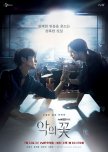
One of the Best Thrillers Out There!
This is a brilliant Korean thriller that will have you sitting on the edge of your seat—possibly literally! While it has very good writing, it’s the performances—especially from Lee Joon Gi (Do Hyun Soo) and Moon Chae Won (Cha Ji Won) that truly captivates the viewer. I am not sure I’ve seen two performers dig so deeply into their feelings and emotions, and I believe that a big reason for this is their obvious chemistry. If I didn’t know that these two were acting in a show, I’d have sworn that these two truly love each other. That is how believable they are. Now, I have seen other performances that come close, but these two may be the best I’ve ever seen in 45+ years of watching movies and shows. It also depicts the worst parents I have ever seen in all of my years. Man Woo Baek and Mi Ja Gong are unconscionable. I really don’t care if it’s their son. To knowingly help a man kill other people is absolutely no excuse. None. And I had absolutely zero sympathy for such deplorable people who turned out to be as monstrous and sick as their son.Do Hyun Soo is a man living with a horrific past. The son of a serial killer, Do Hyun Soo is diagnosed with Anti-Social Disorder. However, after reading up extensively on Anti-Social Disorder, I will argue that he is misdiagnosed. Given the lack of empathy, prone to violence, and especially substance abuse, Do Hyun Soo doesn’t really fit the bill. I believe that due an obvious lack of love, affection, and the ability to simply interact with others, he’s more like someone who has simply cut off that part of him that is capable of those feelings. That is, until something—or someone—provokes a response. He’s unable to identify various feelings, but that doesn’t mean that he doesn’t have them. It’s clear in his smile, his warmth, and also his love, that he’s more than capable of those feelings. He’s simply like a foreigner who can’t read or identify things. His character is captivating, harrowing, and heartbreaking. And the absolute anguish that he feels when he believes this Ji Won is dead, was raw, powerful, and conveyed everything I knew I would feel as well.
Now, the best thriller I’ve ever seen is “Stranger” which was a show a bit more taut and well-written than this one. It also deftly depicts a man who is incapable of empathy in Hwang Shi-Mok, and that actor gave a very real and stellar performance of such a person. And while Hwang Shi-Mok wasn’t diagnosed with Anti-Social Disorder, he’s much closer to being someone with that disorder than Do Hyun Soo. You really have to take into consideration the amount of abuse and trauma that Do Hyun Soo undergoes in his life to truly grasp what a person might be like coming out the other side of it.
Cha Ji Won may be my favorite female TV character of all-time. I’m not joking either. Now, it may be due to personal bias, because she encapsulates everything that a woman should be—to me, anyway. She’s strong, fiercely loyal, dependable, loving, compassionate, dedicated, and someone who is everything any man would ever want in a companion. I don't know how any sane man would ever let her go. My only issue with Ji Won is in how the writers depicted her as a police officer. Frankly, Doona Bae was far superior because she was smart, competent and held her own with anyone. Here, we find out that:
Ji Won is a terrible driver, allowing a cab driver to knock her car off the road by throwing the meter against her windshield?! Come on! Any seasoned cop would never react that way because they are trained to deal with those kinds of situations. Now, if she’d been forced off the road, that would have been believable.
Ji Won leaves a suspect alone. Now, she actually does get chewed out for that one, but it’s still a very big “rookie” mistake that someone like her isn’t likely to make.
Ji Won can’t remember Do Hae Soo despite meeting and speaking with her not long ago? Police officers are trained to remember faces. That one made no sense.
Ji Won is unable to secure a suspect. Another rookie mistake when she lets Yum Sang Chil escape and nearly kill her. Again, she doesn’t follow standard police protocol.
In episode 15, it made no sense that Ji Won wouldn't answer her phone. She knows her husband is out there and that he might try to contact her. This was another mistake on the writer's part in order to make the plot work.
I’ve said it before: never sacrifice character for the sake of the plot. The only big vice I have with the series is at the end of episode 13 when Ji Won suddenly suspects her husband of killing the housekeeper. Now, I understand that Do Hyun Soo doesn’t help his case by not telling her the truth, but Ji Won has already been through several of these scenarios, and she’s always realized that her husband isn’t capable of murder—until now? Plus, Ji Won never bothers to ask herself—what motive would Do Hyun Soo have to kill the housekeeper? None of it makes sense, and frankly, I felt deeply for Do Hyun Soo when he cries out in disbelief, “How do you not believe me? How do you not trust me?” Now, I know this was done to for the sake of the plot, but it was also a mistake because now you’re sacrificing character for plot. In other words, you’re making the character suddenly do something that goes against their character! For me, this is the only really glaring flaw of the series. “Stranger” and “My Name” had better scripts because they never deviated from or sacrificed character for the plot.
Now, the series is masterful in how it makes you suspect Do Hyun Soo for the first few episodes. You aren’t sure of what to make of him. This was genius! Then, you began to wonder, who is the “other accomplice” in the next set of episodes. And finally, you wonder how they are—not only going to catch the accomplice but do so where Do Hyun Soo is not only exonerated but can finally live a real life.
Outside of “24”’s Jack Bauer, I can’t think of another TV character who’s put through so much suffering and torment. Jack gives his all for his country, and Do Hyun Soo gives everything for his family. And perhaps that is also why I wasn’t entirely enamored with the ending. First of all, using the whole “killer grabs the policeman’s gun” ploy is a plot device that has been overused so many times in so many movies and shows, it should literally be retired and never used again! And I didn’t like the gimmick it used to suddenly rob Do Hyun Soo of his memory. How much more does this guy—and Cha Ji Won too!- -have to endure?! It felt like one step too many. However, the writers did their best to give us “hope” for Do Hyun Soo, that he might ultimately learn how to love his wife and daughter again. Except for Jim and Pam from "The Office" I don't think I ever cheered so hard for an on-screen couple more than these two!
This series is unforgettable. There’s no question that once you start, you can’t stop. It also has unforgettable songs and music—the track “Flower of Evil” is something that I’ve listened to so many times, that it’s literally in my head when I go to sleep. Don’t get me wrong. Despite the few issues that I have with this series, it’s still a great watch! And if I could ever personally meet Lee Joon Gi—and Moon Chae Won especially—I would give them my utmost thanks for giving us one of the best “couple” performances I’ve ever had the pleasure to watch. When they smile, you smile. And when they begin to shed tears, you can’t help shedding a few yourself. That is what true art as an actor is: making us feel what you feel. I will look for these two in future shows to watch!
Was this review helpful to you?

This review may contain spoilers
True Family and Friends Are Forever
The central themes of this series are friends and family, and what exactly makes someone family. In many cultures, biological parents--no matter what--are given unlimited respect, even when love isn't present. As it was stated in "Boyz and the Hood:" Any fool can make a baby, but only a real person can be a parent. Of course, I'm paraphrasing, but that is the gist, and there is a lot of truth here.There are still those that might feel that adoptive parents can never be real parents. This is a lie...as much of a lie as saying that a biological parent is the only requirement needed. Mi-Jo's mother and Seon-Woo's father are despicable people who can never call themselves a "mother" or a "father."
Frankly, there are a lot of people who shouldn't be parents; those who are incapable of accepting the responsibility to love and be there for their kids. We see several examples of this throughout this series.
The series centers around three women, all of whom are thirty-nine, and have been best friends since high school. We quickly see just how involved they are in each other's lives, how much they love and care for each other. The strength of that bond is put to the ultimate test when one of them finds out that she is terminally ill.
While this may seem like a melodramatic plot, it really isn't. I am constantly amazed by Korean series and the actors and actresses who are able to simply "be real" in these types of situations. It's not too much and it's not too light. Perhaps that is why they are able to make the audience feel what they are feeling so acutely.
The three leads have undeniable chemistry as three besties! Chan-Young (Jeon Mi Do from "Hospital Playlist), Mi-Jo (Son Ye Jin from "Crash Landing On You" and Joo-Hee (Kim Ji Hyun). There is laughter, teasing and light bickering, joy and tender moments when these three are in a scene together.
What impresses me the most about this series is how family and friends are always there for each other through thick and thin, and it feels absolutely genuine, and this is tested when the time on this Earth is going to be cut short for one of them. We see how this affects each person who's intimately involved.
There's no denying the acting strength of the entire cast, but Joo-Hee (Kim Ji Hyun) was my favorite. She's the somewhat shy and slightly aloof member of the trio. She gives us grace through soft, warm smiles, and it would be a mistake to perceive her as being weak, when she, in fact, has a quiet strength. The scene at the department store with a very rude customer is a testament to this.
The other performance that impressed me was that ofJin-Seok (Lee Moo Saeng) as Cha-Young's love interest. When his voice cracks and goes high-pitch with raw emotion in several exchanges with Cha-Young, made me choke up a few times.
I also loved how these characters never gave in to abuse or intolerance. Mi-Jo's confrontation was a thing of beauty; nearly as impressive as Seon-Woo's showdown with his father.
The last episode will be a tough one to get through. Even when you know what's about to happen. That's the hallmark of great writing and storytelling; when you know what's coming, and it gets you anyway.
I dare anyone to get through the brunch scene with a dry eye, or the video message that Cha-Young leaves for Mi-Jo. Both were absolute scenes of beauty.
There aren't enough shows out there that truly showcase the power of family and friends; that demonstrate that love and being there for each other are the pillars of true relationships. If you don't already have such people in your life, this show may make you wish that you had. It will also challenge you not to take your loved ones for granted. We never know how much time we have with them. Spend it with love and devotion. In the end, Cha-Young is correct: quality is always more important than quantity!
Was this review helpful to you?
This review may contain spoilers
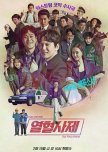
Exciting, Moving, and Hilariously Funny!
I've been watching TV shows for over 45 years. I've been watching K-dramas for the last four. And frankly, the Koreans seem to be masters at combining humor and drama, deftly shifting from one to the other. Nobody else does it better."The Fiery Priest" sees a Catholic priest--Father Kim--, who has no compunction about laying down some serious whoop-a** on criminals and those who seek to harm others. Of course, not all is as it seems as we learn about his backstory.
The series is about murder, political corruption, religious corruption, and the power of the underworld's influence on exploiting the weak and helpless. At our center, is Father Kim, who has a temper to match his fighting prowess. I think if Father Kim lives to be an old man, he'll likely die of a heart attack.
Detective Gu soon becomes his sidekick. Initially Gu is an inept coward who can't seem to do anything right. Caught up in the corruption, he finds himself to be a shell of a cop in name only. Gu reminds me of a Gilligan or Stan Laurel...someone who causes more trouble than he resolves. Much of this is done for comedic effect, and you'll likely split your sides laughing at the antics of Detective Gu.
We also have the fiery Prosecutor Park, also caught up in the corruption, who quickly finds that she has a special place in her heart for Father Kim, even though they act more like a old, bitter married couple.
Once again, to masterful effects, this drama is very story and character driven with fun and exciting action sequences. In many ways, this series has something for everyone.
The humor is off-the-charts, and it's always extremely effective. I don't recall ever laughing so hard throughout a K-drama.
And yet, at its center, the story is about justice and caring for those few people within your inner circle. People who end up having your back and loving you no matter what you do. It's also proof that, despite the trials and tribulations, criminals and evil-doers never win in the end.
If you're looking for plenty of action as well as a series that is outrageously funny, you really can't miss with "The Fiery Priest!" Looking forward to Season 2!
Was this review helpful to you?

This review may contain spoilers
A Somewhat Realistic Love Story That Almost Works
How often do people go through life believing that the grass is always greener somewhere else? And very often, we find that a new place only brings about new pros and cons.As someone who's lived and worked in six countries, I know this truth only too well. Places always have new and interesting things that you find appealing, and things that you miss. This is even true of the country you come from. In short, it's a no-win scenario...so long as you continue to believe that there is something better over the next hill, instead of learning to simply appreciate where you are.
Majhoy is a young Filipino woman who has moved to the Faroe Islands. She is married, has a young daughter, and works two jobs, including an Asian Restaurant/Food Truck. It turns out that there are a number of Filipino women living there...mostly for economic convenience. "Love? What is that?!" one of them jokes.
Nico is a young man who is a producer of documentary films. He visits the Faroe Islands to find out more about why so many Filipino women move and live there. It doesn't take long before he focuses solely on Majhoy. It takes even less time to realize that they have feelings for each other.
Majhoy's husband is a significantly older man. And despite his slight brusque demeanor, it's obvious that he loves his wife. He doesn't mistreat or abuse her.
It becomes obvious that Nico will do anything to take Majhoy back to the Phillippines; ignoring Majhoy's marriage or even the welfare of Lena, Majhoy's daughter. He can only see his own wants and needs. He naively believes that it is that simple to swoop in, disrespect a living situation, and make off with Majhoy.
Unfortunately, Majhoy makes the mistake of capitulating and even giving Nico some sense of hope that his dreams will be fulfilled. It isn't until Majhoy's husband returns from his fishing trip that she realizes that all-in-all, she has a husband who loves and cares for her. Both characters behave selfishly and disrespectfully which makes them unsympathetic and easily unlikeable.
In the end, the one person you feel the most sorry for is Sigmund (Majhoy's husband). The writers try to make you feel sorry for Nico and Majhoy but their selfish, underhanded lack of respect for anyone else makes that difficult. Why? Because it is impossible to be happy while hurting others. It just doesn't work. One's true happiness never comes at the expense of anyone else.
The movie is beautifully filmed in the Faroe Islands. The islands, indeed, look like something out of a fairy tale. I wouldn't be surprised if tourism gets a boost after people see this film. I certainly would like to visit!
The performances are also very good from the entire cast. But if you're going into this film, hoping for a romantic, uplifting love story, you won't find it here. In many ways, the story is too real for that. A big reason that the story doesn't fail is because the writers stayed true to the situation and the characters rather than "give in" to make a "happily ever after" ending. Much like the Faroe Islands themselves, the film leaves you cold and desolate, but true given the reality of the situation.
Was this review helpful to you?

This review may contain spoilers
Love Is Letting Go...Not About Sacrifice
I've seen a few of Kathryn Bernardo's films, and I believe she turned in the performance of her life. She stepped away from the typical romantic-comedies (many of which are actually quite good), and challenged herself to take on the role of a much deeper and much more complex character in Joy.I have always marveled--and not in a good way--of how people tend to use others; even people they love; even members of their own families. Of course, children are usually guilted into it. In short, it's a parent's way of saying, "I suffered, and so now you must suffer too. Why? Because it's how families work."
As stated in other reviews, I am an ESL teacher. I've lived and worked in South Korea, China, and Taiwan. I know quite a bit about how Asian parents tend to treat their kids. Of course, it's not all bad. You'll scarcely find parents who are more dedicated to teaching their children about discipline and hard-work. The large contrast between them and western parents, is that western parents tend to allow their kids to do whatever they want. They're spoiled beyond belief. What is needed is a balance.
As the eldest daughter, Joy is in Hong Kong working several jobs in order to keep herself alive as well as sending money back home to her family in the Phillippines. She has a nursing degree. Her dream is to go to Canada to pursue what she loves. Of course, she meets and falls in love with Ethan, a young man who is also from the Phillippines, who is trying to support his family as well, after a disastrous relationship that nearly cost him everything.
Ethan, of course, is hoping that Joy will decide to stay in Hong Kong, and not go to Canada. This is when the film really grabs the viewer to see what Joy will decide to do.
Love is not about sacrifice for someone else. Sacrifice is about losing something, and love is never about loss. It's always about who you are. In all her wisdom, Joy has to explain this to Ethan as well as outlining the consequences of not pursuing her dream. Fortunately, Ethan finally gets it and is able to do what only love can do: let go. As soon as you try to hold onto it, love ceases to be love.
Filmed in Hong Kong, we're giving a stark and not-so-pleasing depiction of life for many immigrants struggling to survive. Some can do it. Some can't. In the end, you can only truly look after yourself and not lose sight of your own dreams. Of course, the world, and even your own family will throw every reason at you to NOT pursue your dreams. If you give in, you have no one to blame but yourself. If you forge ahead, then you have gained more profound wisdom about life than what most people can only dream about.
My only complaint of the film was that the chemistry between Kathryn Bernardo and Alden Richards was not what it should have been. And because of this, the film loses a bit of its heart and depth. I'd say it was pretty obvious that Kathryn Bernardo did not want to do any kissing scenes with Alden due to her love and respect for her boyfriend, Daniel Padilla. The only kiss we see is one on her forehead in the dark. Can you imagine the lack of depth in a film like Titanic if Jack and Rose only held hands and never shared a kiss? I couldn't help but wonder how much more powerful the film would have been if another actress had performed in the role, or if Padilla himself hadn't turned the role down (which I read that he had).
Still, this is a memorable film that challenges everyone to go after their dreams and let nothing and no one stand in your way.
Was this review helpful to you?
This review may contain spoilers
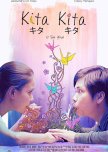
Just...Wow!
Some people don't believe in angels. I believe there are some angels you can't see, and there are some angels you can. This is a beautiful, touching story of two "angels" : Lea and Tonyo, and how they are able to be there for each other.Both are two people living in Japan. Lea has found out that her fiance has been seeing another woman. The stress and trauma has robbed her of her eyesight. The doctors tell her that it is, more than likely, only temporary.
Enter Tonyo, a man who lives across the street. His first attempts of opening communication with Lea are failures. But, he doesn't give up. He has a certain wit and charm that finally wins over Lea, and they begin spending time together. Tonyo knows exactly what to say to get a laugh out of Lea.
There are a couple of plot twists that I doubt anyone will be able to see coming, and the writers need to be given credit for pulling off such a feat, as it seems that more and more writers today either don't dare try, or it ends up not working at all.
What the movie is ultimately about, is kindness, and how a single gesture can work miracles. I think most people underestimate a single, kind act. And how, much like a small pebble, it can send ripples across a lake. The beauty of this film is that we don't see the end results of the acts of kindness of Lea and Tonyo until the end.
The film is beautifully filmed and the actors are simply incredible. The chemistry between Alessandra De Rossi and Empoy Marquez is undeniable. They are the ones that make the film work.
This is one of those little gems (much like a small pebble) that once you see it, you will feel the effects for a long time to come!
Was this review helpful to you?

Live Your Life, Live Your Dreams!
This is the fourth Filipino film that I've now seen, and they're quickly winning me over and desiring more! I'm only concerned that I'll run out via Netflix, leaving me wondering how I'm going to watch some more."Crazy Beautiful You" was my first foray and with the same two delightful leads in Kathryn Bernardo and Daniel Padilla. There's no denying their chemistry, which probably makes things much easier for them as they are a real-life couple. Their charm and obvious feelings permeate the screen. I also love the fact that neither one of them is afraid to show genuine emotion.
This go-around sees Gab, who has been with her boyfriend for 6 years. Finally, he proposes to her. Except that Gab has a problem: she's already married! To her dismay, she finds that after a drunken night, she has married Dos, a young man she met at the club.
Unlike America, where people can get divorces and/or annulments fairly easily, it is not so easy to do in the Phillippines. Gab finds herself having to track Dos down and get him to agree to a divorce. He agrees, as hilarity ensues as Gab tries to play out various "divorce reasons" to satisfy the court. Everything from impotence, insanity, homosexuality, etc. These will have you laughing out loud.
However, as one may predict, Gab and Dos start falling for each other as they attempt to track down the one witness they need to satisfy the divorce criteria. While the initial format is predictable, the way things play out is not. There are a couple of twists that I'm not sure anyone will see coming.
I was also pleased that the writer didn't fall for the overly-used "big climactic ending" that is so commonplace that they're actually boring. Instead, we get a true, legitimate ending that satisfies the story, the characters, and the viewer. And while I loved "Crazy Beautiful You," the ending of this film is done much better, in my opinion.
Another thing I love about these movies is that they have poignant messages. This film dares one to live your dream. Live your own life. No one, not even parents, have the right to control your life and tell you how to live it. And you can't be afraid to make mistakes. How else does one learn? How else does one realize what works and what doesn't work without mistakes?
Mary Tyler Moore once said, "Someone who has had nothing but perfect and wonderful experiences isn't very brave." It takes adversity to truly strengthen a person.
Parents and partners alike have one job: empower your children and empower your partner. Give them the space and freedom to be who they are. Control is never the answer. Control is about allowing someone else to live your life for you. Freedom is about allowing someone to live their own life. This movie dares you to do the latter.
Was this review helpful to you?

This review may contain spoilers
Love Never Loves the Same Way Twice!
While Love is unconditional, constant, and unchanging, the WAY we love is always different. People should hopefully take comfort in the fact that that makes, not only way you love someoone unique, but YOU unique as well.Unfortunately, people tend to also forget that many relationships are finite. It's been said, "It is interesting to note that people can easily recognize when a relationship begins, but are unable or unwilling to recognize when a relationship ends."
Mace is a broken-hearted young woman coming off an 8-year relationship with her boyfriend who is living in Rome. Angelica Panganiban plays the role so realistically, you can feel her anger, frustration, and sense of loss. I would wager than anyone, who has ever been where she is, has felt exactly how she feels.
Anthony is a young man also returning home from Rome, and he sees Mace struggling to lighten her suitcase in order to meet the weight criteria. He decides to help her. He's also there through her rants and outbursts, but somehow, we get the sense that he understands her plight.
This is a film that reminded me a lot of "Before Sunrise," a brilliant movie where two people walk around Vienna getting to know each other. However, in this case, it's about two people spending time together, helping each other to heal. While Mace's hurts are recent, we discover that Anthony is also carrying some old hurts and regrets as well, but he's able to find ways to help Mace.
Angelica Panganiban and JM De Guzman are simply brilliant, and more importantly, real. They know their characters inside and out, and they are also very relatable. They could easily be anyone who has been where they are, and because the story is told in such a realistic tone, it works tremendously well.
Perhaps Mace will realize that making someone else the center of your life is always a disaster waiting to happen. Unless you love yourself first, you cannot give what you do not have. Relationships are never about finding someone to complete you. They are always about sharing your completeness with someone else. That is the secret!.
In any case, you learn from past relationships to find what you want in future relationships. And hopefully, when a relationship ends, you are grateful to that person for the time spent and wish them all the best as they continue their own journey.
Was this review helpful to you?
This review may contain spoilers
Rock Solid, Entertaining Show...Until the Very End
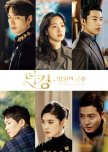
Eun-Sook Kim hasn't failed me yet. She is a master storyteller, focusing on deep, rich characters and plots. "Mr. Sunshine" is still her masterpiece with "Descendants of the Sun" just a hair behind it. "The King: The Eternal Monarch" is another great series, even if it doesn't quite hold up against the other two. I still enjoyed it.I give props to any writer who attempts to tackle "time travel" as a major plot device. It's not easy, and there is so much to keep track of. The best ones tend to provide the best and most feasible explanations. The worst ones tend to make the viewer believe that the writer had no clue how to write using time travel. In my opinion, "Star Trek" and "Star Trek: The Next Generation" always did the best job when it came to stories regarding parallel universes.
The story centers around Lee Gon, King of the Kingdom of Corea, which we quickly find out, is a parallel world to the world that we know. His half-uncle (Lee Lim) seems to be plotting the overthrow of the current king--Lee Gon's father--but we find out that his true aim is to possess a flute that gives the wielder the ability to crossover into those parallel worlds. The coup attempt leaves Lee Gon's father dead, Lee Gon half alive as a young boy, and Lee Lim escaping. However, both are in possession of half of the flute (as it was cut in half), giving Lee Gon and his uncle the ability to crossover.
We find that Lee Gon grows up to be a genious in Quantum Physics, giving him the ability to use mathematical equations to access parallel worlds at various points in time as well as calculate the pitfalls of he and his uncle only having half the flute. Somehow, Lee Lim--not being a Quantum Physics genius--is able to remain a step ahead of his half-nephew.
Lt. Jeong Tae Eul is a young detective in the violent crimes unit as a black belt in Taekwondo. She is the first to come across Lee Gon when he crosses over into the Republic of Korea. Of course, she was immensely skeptical of him when he tells her who he is and where he is from.
Once again, we are provided with rich characters and fantastic actors to play them. Min-Ho Lee (Lee Gon) and Go-Eun Kim are the leads, and it's clear that their chemistry is what helps to drive the story. All of the supporting characters are great as well. The fact that nearly every actor has to play their main role plus their counterparts, was done seemlessly!
It can be a bit challenging keeping track of all the characters and their counterparts, as each character also has a different name in the parallel world. I also wasn't satisfied with the ending. It was as if Eun-Sook Kim tried to find a middle ground for the ending. Would Lt. Jeong Tae Eul become Lee Gon's queen and go to live in his world? Would Lee Gon give up his kingdom and go to live in Tae Eul's world? Both aren't likely, despite the deep love that they have. I know people tend to love "happy endings" so instead, we have both characters spending weekends traversing the multiverse and visitng various parallel worlds. Funny how Tae Eul always has weekends off, despite being a detective, and Lee Gon can simply leave his kingdom whenever he chooses. Nice ending? Sure. Realistic one? No. This wasn't like "Crash Landing On You" in which the two are separated by a wall and have no choice but to make the best of it. This is finding a "happy solution" rather than the "right solution."
Still, I wouldn't let the end prevent you from watching this series. Korean Dramas are fantastic at giving us good characters and good plots that keep us invested and longing to watch the next episode. You won't be disappointed by this series at all.
Was this review helpful to you?

This review may contain spoilers
She Is My Homeland
All seems cheery and peaceful in a small Joseon village circa the early 1600s. The series starts off much like “Gone With the Wind.” Scarlett O’Hara is a spoiled, selfish young woman who is addicted to the attention of young men, and she’s in love with a man who is already in love with someone else. Enter Rhett Butler, the man who is a bit of a philanthropist and an opportunist who is immediately captivated by Scarlett, despite her insecurities and immature behavior.Yoo Gil Chae is very much like Scarlett, and Lee Jang Hyeon shares many aspects that parallel Rhett. Their initial meetings are met with tension and resistance, as Lee Jang Hyeon has no intention of ever getting married, which is just fine with Gil Chae since she’s in love with Nam Yeon Jun, the one man she can’t have because he’s in love with Kyung Eun Ae. Sound familiar? To anyone who’s seen “Gone With the Wind,” it won’t be hard to connect the dots.
Even the setting of “Gone with the Wind,” during the American Civil War, shares similarities when the Q’ing, with help from the Mongols, decide to invade Joseon, thus throwing the small country into strife and turmoil, as the struggle to survive becomes paramount, and it is here that the story really begins to create its own identity.
Gil Chae is a young noblewoman who quickly learns that she can’t rely on anyone but herself if she wants to survive. She quickly realizes that throwing her “noble status” in the faces of her enemies is pointless. Little does she realize that, despite her constant rejections, Lee Jang Hyeon is already smitten by her and the sound of flowers.
Lee Jang Hyeon, on the outside, seems like a slick opportunist who could care less about what’s going on around him. He has no love or respect for the king of Joseon, or anyone who believes that they should follow a monarch, no matter what their own situation or beliefs may be. He’s a master of taking any tenuous situation and making a profit. He also has tremendous charisma that people immediately seem taken to, even the Q’ing, who find out just how valuable his talents are.
However, there is much more to Lee Jang Hyeon than meets the eye. While he may seem to be colluding with the Q’ing, he’s doing all he can to help the simple people of Joseon to survive and, hopefully, and eventually return home.
The Khan, who is the ruling member of the Q’ing in Shenyang, creates unrest when he demands that the Crown Prince be sent to Shenyang to act as a liaison between Shenyang and Joseon. However, the longer the Crown Prince remains in Shenyang, the more suspicious and paranoid the king of Joseon becomes. Initially, the Crown Prince is much like his father until Lee Jang Hyeon directly challenges him to use his status to help save the people, and soon the Crown Prince becomes the only member of the Joseon monarchy that he begins to respect because instead of demanding that the people serve him, the Crown Prince finally begins to realize his obligations to his people, especially when he sees everything that Lee Jang Hyeon is doing for them.
Gil Chae is hardly left unscathed as she begins to finally live and stand on her own two feet. She inspires the poor farmers and even gets into blacksmithing in order to create much-needed brass bowls to help boost the failing economy. Gil Chae and Lee Jang Hyeon’s meetings are short and initially met with much friction and even some open hostility, despite Lee Jang Hyeon professing his feelings for her.
Just as it seems that the “ice princess” is beginning to melt, Gil Chae resists Lee Jang Hyeon’s affections, even though she has no clue just how much he’s an integral part of helping the captive people of Joseon who are being held prisoner in Shenyang. She chooses Officer Gu to marry instead.
This is a series that hardly gives you time to rest or even breathe as new dangers seem to spring up like wildflowers. Gil Chae finds herself kidnapped and sent to Shenyang to be sold as a slave. It’s almost sheer luck that Lee Jang Hyeon happens upon her as she’s being auctioned off on the selling block. Gil Chae learns that her husband came looking for her, but upon hearing that she’d been violated by the Q’ing, he gives up and heads home. This finally opens the doors for our star-crossed couple to finally profess their love for each other.
Once again, before they can truly bask in each other, we learn that the king of Joseon has become even more paranoid and vile. Believing that his own son is conspiring to dethrone him and that the Joseon captives in Shenyang are a part of an army being raised by his son, the vicious, diabolical king orders the captives to be killed. Even as Lee Jang Hyeon secures their release from the Q’ing, he finds himself caught in the king’s sadistic plot.
Just when you thought there was a possible way out, the Crown Prince and his wife are poisoned to death, and all remaining captives are also rounded up and killed. It’s ironic that throughout the series, the Mongols and Q’ing are referred to as “barbarians,” and yet, by the end of the series, you may be asking yourself, “Who are the true barbarians?” What happens when a country turns its back on its own people? Perhaps we learn very quickly who the real barbarians are. The Q'ing seem bad, but we quickly learn that Joseon is far worse!
There is also a twisted and sick idea that Joseon women, even if touched by barbarians, are somehow violated and are expected to kill themselves. It’s a demented notion, obviously thought up by small-minded old men. When Kyung Eun Ae’s husband finds out that a barbarian grabbed her shoulder in a vain attempt to rape her, he’s horrified that she didn’t take the noble path of suicide. It’s amazing how often throughout history, ignorant and delusional men decided that they could market their women’s chastity like measuring the value of gold.
This is an epic series of love, adventure, turmoil, loss, and the measure of loyalty. When a country or regime does the unthinkable, it’s the duty of its citizens to rise up. As Benjamin Franklin once said, “Those who would give up essential Liberty to purchase a little, temporary Safety, deserve neither Liberty nor Safety.” Too often, the cowards cower to authority rather than doing the right thing, and that’s what we see here, which is rampant throughout history.
Lee Jang Hyeon represents true nobility and that doing the right thing is often unpopular. It takes a while for his companions, and even Gil Chae to fully understand and realize what he’s doing. He rarely asks for any credit. He’s loyal to the people of Joseon, and he’s loyal to Gil Chae. Both are unwavering, which is what makes his character so compelling.
Brace yourself for the last episode, and you might want to keep a box of tissues handy! We find that true love and true loyalty always bring their own rewards, even when circumstances to the contrary appear to exist.
Performances are incredible, but it’s Namkoong Min’s Lee Jang Hyeon that truly inspires and captivates. He seems shallow, a bit arrogant, and indifferent, but we learn quickly that these are nothing more than masks that he wears to hide the man that he truly is.
Do yourself a favor. Sit, watch, and listen to the sound of flowers, and just let it all soak in to your heart and soul. You won’t be sorry.
Was this review helpful to you?

This review may contain spoilers
Charming and Delightful Kim Ok Bin Gives Us A Strong Woman While Exposing the Hypocrisy of Society!
This is a simply delightful and incredibly hilarious romantic comedy that succeeds largely due to its originality and not going down the pitfalls of overused cliches. I haven’t laughed this hard since “Hospital Playlist,” and there are too many numerous moments that will either have you laughing out loud or possibly even rolling on the floor with laughter.However, as with so many Korean shows, not everything is for comedic value as the writers expose the incredible sexism and hypocrisy of the entertainment world that is largely in place due to warped religious, societal, and cultural values that are in place because of male chauvinistic rules about what is proper and what isn’t. Sadly, society loves to build up a hero, but it loves to tear one down even more. Whenever anyone is placed upon a pedestal—which is always a skewed and warped version of the real person—expectations will always inevitably take a hit because people refuse to see such people as human.
Nam Kang Ho is on top of the world as far as the movie industry goes. He’s the top-billed star in the highest demand. What people don’t realize is that he has a fear of being intimate with women. Even doing kissing scenes with female co-stars causes him to have a negative reaction. Of course, as with all rumors, it’s assumed that he doesn’t like women.
Yeo Mi-Ran is a lawyer who is also a master martial artist. Nothing brings her so much pleasure as exposing men for what they are (or what she believes them all to be): liars and cheats who look down on women. She also has no compunction about beating them up if they push things too far. Her relationships never go further than one-night stands, and usually done to prove that men are exactly what she believes them to be.
Ironically, what we have here is a bit of a role reversal. In some ways, Nam Kang Ho behaves more like how a woman would react to relationships that never pan out. And Yeo Mi-Ran has almost masculine traits in how she deals with men. She makes absolutely no apologies for how she lives her life. And why should she? Because she’s a woman? Hence, the hypocrisy of today’s world which is always at the forefront for entertainers thanks to social media. So, a man can sleep with as many women as he likes, and there is virtually no negative feedback. However, if a woman is caught doing the same thing, a cascade of negative feedback is always inevitable. And this series beautifully exposes such insane and sexist views that are largely created by men and promoted by everyone.
At first, Yeo Mi-Ran has a strong dislike for Nam Kang Ho when she misunderstands something that he says to his agent and friend. She vows to destroy him and put him in his place. Before long, she’s hired by a law firm that represents people in the entertainment industry and—of course—she ends up working with and representing Nam Kang Ho. Thus begins a very cute and often hilarious relationship where both Yeo Mi-Ran and Nam Kang Ho begin to realize that all is not what each believes the other to be. One of the absolute funniest moments is Yeo Mi-Ran attempting to teach Nam Kang Ho how to fight so that he can properly do a fighting scene in his new film. Little does he realize that he’s dealing with an expert and quickly finds himself subdued and knocked out. Of course, we already know that Yeo Mi-Ran is no wallflower, no damsel in distress who needs to be saved by a man in any circumstances.
One of the all-time great scenes in the series is when Nam Kang Ho and Yeo Mi-Ran profess their feelings and proceed to make love. What makes the scene work so perfectly is because the characters are allowed to be who they are. It isn’t Nam Kang Ho who initiates things—as we’ve seen hundreds, if not thousands, of times in romance movies and shows. Believe it or not ladies, men actually also enjoy having their female partners take charge sometimes too! I actually clapped my hands when the scene played out because I was thrilled to see the female character take matters into her own hands—and in this case, literally!
Some of the greatest of entertainment stars live outside of the limelight. Now, I realize that this is much harder to do in a small country like Korea, but basically, no apologies or even explanations should ever be made for how they live their lives. If you care too much about what people think, then perhaps you’re in the wrong business. The life of any celebrity is always wrought with the highs and lows, the positive and negative views of the media and the public. You’re a hero one day and a goat the next. The courageous make no apologies and never feel that they have to explain themselves to anyone, for that merry-go-round is literally endless.
This is an absolutely terrific series that tickles the funny bone and warms the heart, and like so many Korean shows, has a heartfelt message to expound to its viewers. Be careful about putting people on pedestals for they will always disappoint you in the end. Just because someone makes their living in the spotlight doesn’t mean that they are any different or more special than anyone else.
Performances across the board were incredible, but frankly it is Kim Ok Bin who steals the series for me. She’s able to create a character who doesn’t come across as overbearing or some uptight man-hating feminist. Despite being tough and independent—a great example for women to follow—she also has a soft, feminine nature that she takes great pride in demonstrating. She also helps to change the outdated perception that just because she’s a woman, she’s hardly weak. In many ways, Yeo Mi-Ran is a champion for women to follow and also for men to help them realize that there is true strength in being a woman and exhibiting strong, feminine qualities. And Kim Ok Bin handles this masterfully. It was so refreshing and also inspiring to see this kind of woman portrayed in this series.
These ten episodes went by fast, as I was watching at least two per day, but it was just long enough to encapsulate everything the writers wanted to convey without the need to prolong things unnaturally. Even the end didn’t feel like the writers had to delve into the “romantic comedy” playbook to wrap things up. They stuck with the characters and allowed things to evolve organically and naturally. Such are the hallmarks of a great series!
Was this review helpful to you?

This review may contain spoilers
The Two Main Female Characters Make This Series Soar!
There is much to like in “A Business Proposal.” The story may seem a bit cliched, but it’s the execution of that story that makes it stand out from so many others. It’s smooth and the writers are careful not to change the character for the sake of the plot, which is too common of a mistake that I’ve seen. What really makes this series stand out is the strength of the two main female characters in Ha Ri Shin and Jin Young Seo.Too often, we see young women in K-Dramas act indecisively and like wallflowers whenever they face obstacles. They tend to be too easily influenced by their parents or peers, unable to make decisions for themselves. And when faced with hardship, they tend to wilt faster than a flower in the scorching sun. Not these two! Ha Ri Shin and Jin Young Seo are strong women who are decisive, mature, and can think for themselves. They are also not afraid to stand up for themselves, which is something very refreshing about this series!
My favorite series involving “young love” is still “Our Beloved Summer” but this one comes awfully close! My favorite shows of the older and more mature persuasion are too tough to call. With fantastic shows in “Mr. Sunshine,” “Crash Landing On You,” and “Hometown Cha-Cha-Cha” it’s tough to decide. ‘
The pacing of this show is perfect! Everything moves along smoothly without extraneous scenes or ridiculous new storylines to keep the story going. Therefore, I was grateful that the series ended after 12 episodes. Everything was covered, and there was no reason to attempt to stretch things out.
It’s really hard for me to decide which character—and even actress—I like more between Kim Se Jeong (Ha Ri Shin) and Seol In Ah (Jin Young Seo). Both are marvelous as two young women who initially set out to scheme their way through a blind date that neither of them wants to figuring out how to be with the men that they love. Both bring a refreshing strength and even feistiness to their roles. As I said, these two women are not wallflowers. They can take care and look out for themselves. I’ve seen Kim Se Jeong before in “Uncanny Counter”—and imagine my thrill to learn that there is another series of that one coming!—but this is my first exposure to the equally beautiful and captivating Seol In Ah.
The only characters I pretty much despised were Da Goo Kang, the grandfather, and Min Woo. Da Goo Kang, is a typical bully with nothing but selfish intentions. Meddlers always have that in common. Their attempts to control others under the guise of “love” is truly sickening. If it’s selfish, it cannot be love since love can never be selfish. I was thrilled to find Ha Ri Shin not giving into Da Goo Kang’s immaturity and selfishness. I was worried that she was going to cave into him. And Jin Young Seo was a true champion standing up to her own father, who was just as much of a bully as the grandfather. Bullies only get their power when someone gives it to them. At heart, they are gutless cowards.
Ha Ri proves her strength by not seeing herself as an inferior person just because she doesn't come from a wealthy family. And Jin Young Seo proves her strength by having the courage to break free of her father's iron grip.
Min Woo, a longtime friend and initial crush of Ha Ri, is a despicable young man who has a girlfriend, but behaves in a most insensitive manner when he demonstrates his feelings for Ha Ri right in front of her! I was initially surprised that Ha Ri would not call him out for this. I certainly would not want a “friend” who does something so vile and cruel to someone else. Fortunately, she finally does let him have it, even though it was a bit long time in coming.
The series is a step in the right direction if the aim is to project strong, female characters and demonstrate that they are people too as well as characters who will not yield to the cheap intimidation tactics that so many of their counterparts in the past have done. I was more than thrilled to see these characters did not take the road most others have traveled by, but instead, carved out their own road by showcasing empowered women.
As I stated before, I hope to see more series with strong women in the future!
Was this review helpful to you?

This review may contain spoilers
Some of the Most Horrible Women Ever Put on Screen!
“Love Next Door” endeavors to be a light, sweet romantic comedy with some drama thrown in for good measure. What we end up with is a bunch of women who are barely tolerable, and sometimes, not even that. We get some domineering, controlling, meddling women who snap at the smallest of things. They are also selfish and cowardly in how they act toward each other as well as others around them. Frankly, I’m not sure how or why any reasonable person would want to spend five minutes alone with any of them. They are about as appealing as a pit of vipers.Choi Seung Hyo and Bae Seok Ryu are childhood friends who grew up together because they lived next door. Their mothers have also been friends for a long time as well, although there are plenty of times throughout the series when we wonder how and even why. Their mothers and two other women get together in their “Lavender Club” to hang out. What ends up happening is they spar, argue, and compete over everything. Believe it or not, this is how many women in Korea interact with each other. Everything is a competition and a fight for status. What’s especially sad is that they often use their own children to acquire that status. They’ll brag to others about what schools they go to, what educational academies they’re enrolled in, what grades they get, and even what areas they excel in. These are women who live vicariously through their children. They use them as pawns, which is why many of these so-called “mothers” aren’t even fit to be parents at all.
Seok Ryu has returned to Korea from being in the US with a prestigious company. Of course, her domineering, twisted mother, Mi Suk, can only think about how this impacts her, especially after bragging to her friends about Seok Ryu. Things become further complicated when Seok Ryu announces that she’s also broken off her engagement. Mi Suk nearly disowns her daughter right there on the spot. Mi Suk uses the pathetic excuse that, “I don’t want my daughter to live a hard life like me!” This is a lie. Mi Suk is only concerned about how Seok Ryu’s decisions reflect on her. Her anger is out of pure spite and selfishness.
Seok Ryu isn’t exactly an angel herself. We find out that she was diagnosed with stomach cancer and refused to tell anyone about it. She claims that she was sparing everyone the pain. Whenever someone pushes others away, it’s never to spare others the pain, but to spare themselves of their own. Seok Ryu is a true coward, and when Seung Hyo finds out, he justifiably berates her for her thoughtless and selfish act, even going so far as to call her a hypocrite and a coward which is 100% on the nose!
Seung Hyo is a young man who’s making his way in the architectural world, opening up his own firm and doing quite well. However, it’s obvious that he’s in love with Seok Ryu, even though he puts up defensive walls and refuses to let her know about it. When he finally does, Seok Ryu can only think about her own failings and problems, and she promptly refuses his advances. Seung Hyo laughingly buys a small carton of milk to be used to give Seok Ryu time to think it over. The stupidity of such an act is this: love isn’t about thought. If you actually have to think about it, then you’re very obviously not in love. What we have are two 34-year-olds acting like 16-year-olds. It might be endearing, but it’s actually quite pathetic. Even when they finally do end up together, Seok Ryu is too scared to tell anyone about the relationship, and so she begs Seung Hyo not to tell anyone. If you’re too ashamed to tell anyone about the relationship, then you have no business being in one. They scurry around like two kids worried about getting caught with their hands in the cookie jar!
We also have the third member of the childhood trio, Jung Mo Eum, who is my favorite character of the series. She’s a paramedic who doesn’t apologize to anyone for who and what she is. She unapologetically wears her heart on her sleeve, especially after meeting journalist Kang Dan Ho. It’s funny watching Jung Mo Eum berate Seok Ryu for being silly about her feelings for Seung Hyo, but after kissing Kang Dan Ho, she’s suddenly a 14-year-old girl hiding and running away from him. That was the only annoying thing about her. Kang Dan Ho has a cute little girl (his niece, in fact) that he’s raising all by himself. Korea still has problems accepting single parent families, and after finding out, Jung Mo Eum’s pathetic mother refuses to allow Jung Mo Eum to see him. Luckily, Jung Mo Eum lovingly tells her prejudiced mother that she has no say in the matter and that she fully intends to continue seeing Kang Dan Ho. Jung Mo Eum is the only strong female character of the entire cast! I would have preferred the series revolve around her rather than Seok Ryu.
Seok Ryu is very immature, but suddenly, like a light switch, everything is suddenly “okay” with her in the last four episodes or so. The writers must have had something against women to write them all to be such horrid people. It made me miss “Business Proposal” and “Our Beloved Summer” where we got good, strong female characters who knew their own minds, acted their age, and figured out for themselves how to navigate the pitfalls that came up before them.
Seok Ryu’s mother, Mi Suk, is about as cold and vindictive of a woman as I’ve ever seen in over 47 years of watching shows. I’m not sure how anyone was dumb enough to marry this woman. When Seung Hyo’s mother, Hye Suk, offers to pay for a trip to Europe, Mi Suk erupts angrily at her because she feels inferior to Hye Suk. The truth is, Mi Suk has very low self-esteem, and she feels inferior to everyone! It’s no wonder she feels the need to brag and show off her children. She’s a very pathetic character. One of the worst I’ve ever seen. And even when Seok Ryu desires to leave programming for a cooking job, Mi Suk explodes all over her! Her daughter, Seok Ryu is barely any better. Her own self-esteem is so low that she prefers to hide away rather than face her problems. I laughed out of pity each time Seung Hyo wanted to talk things out and Seok Ryu would scurry away like a rabbit saying, “I don’t want to talk about this!”
What’s truly sad is that the performances in this series are very good. I’ve seen Jung So Min in several series, and she’s always very good. Her only problem in this series is that she’s terrible at kissing scenes. Her mouth is always tight-lipped and it’s painfully obvious that she doesn’t like doing them. If that’s the case, she needs to stop doing romantic dramas. It hurts an actor’s performance if they’re unwilling to be genuine and get into a scene, no matter what it is. Also, it’s stated that Seok Ryu lost 70% of her stomach to cancer. I’ve known people who’ve had their stomachs stapled in order to lose weight. There is no way Seok Ryu would be able to eat as much food as she does based on that fact. This was something that the writers clearly overlooked.
The series definitely didn’t live up to the hype with mostly unlikeable characters, especially the women. While there may be many truths, it would have been nice to see these characters grow and evolve naturally rather than simply having the “light bulb” go off to suddenly fix the situation. It just wasn’t believable or realistic. It’s also sad to watch grown ups acting like children around their parents rather than having the guts to stand on their own feet. That’s not appealing either, especially in today’s world where women are finally becoming more empowered than ever before. Overall, this series was disappointing.
Was this review helpful to you?


