


 1
1



This review may contain spoilers
Sakura The Fool WIth a Horrible Last Episode!
Unfortunately, I have found that Japanese dramas are much more hit-and-miss than K-dramas. You know you’re taking a chance. This series is actually pretty decent until the absolutely horrendous final episode which makes as much sense as a five-legged mule. I’m not sure if the writer was drunk that day or simply lost all control over the story and the characters.The series is about a collection of wives who are involved in affairs, although the focus of the show is mostly on Sakura, who finds herself in an abusive relationship with her husband who beats her and cheats on her. He’s basically an animal who believes that a wife is someone to control and must do whatever he tells her. In short, he believes that a wife is property.
Of course, we have a plethora of reasons for these women. An abusive husband, a husband who continuously ignores his wife, a husband who puts everyone else ahead of her, etc. You get the picture.
The irony is that most people in the world are able to realize when a relationship begins, but very few are able to recognize when a relationship ends. And in Sakura’s case, it’s only a question of how much more abuse will she put up with until the obvious is staring her in the face. The abused is just as responsible for the situation as the abuser. Remove either one, and abuse no longer exists.
Sakura finally flees her husband and runs into Haruto, a local man who runs a small goldfish shop. There is an instant connection between the two, and we later find that there is an event from the past that also unites them. Haruto is a kind, gentle man who doesn’t just sell goldfish. He loves and cares for them. Gandhi once stated that how a person treats animals is often an indicator of how they treat people.
After Sakura finally divorces her husband, she goes back to him to try and save their joint hair salon business—which made no sense. Why not work to open your own? You get bit by a shark once, then you’re the fool to go back, hoping not to get bit again. This had me scratching my head. But this wasn’t nearly as bad as Sakura leaving Haruto to pursue her career as the manager of a hair salon. Why leave him at all? Why not pursue this endeavor while staying with him? After all, he wasn’t an obstacle. It made no sense at all. In the end, she basically used him, and became an abuser herself. When she left, I thought their final scenes were silly and completely unsympathetic, despite them standing there foolishly with tears running down their faces.
Equally sad was Sakura’s husband tearfully telling his wife during a mediation session—a precursor toward divorce—that he always loved her but felt insecure. This was the biggest pile of cow dung I’d ever heard in my life! Her husband has no clue what love is, and he never loved his wife. Love is never about controlling someone else, and it certainly isn’t about physical abuse or infidelity. It was like listening to a gutless child whining. All victims are cowards because they never take responsibility for themselves. It’s always someone else’s fault. And yet, Sakura can’t see the problem because she’s much like a naïve and immature child herself.
Overall, this was a decent series. The storyline involving Hisako and the trauma behind her frequent headaches. That would have made a far more interesting series than centering the story around Sakura. If the end had been done better than it was, this series might have a least been good. It wasn’t.
Was this review helpful to you?

This intelligent and creative show is about five young women who live in a share house. Of course, they come from different walks of life, have different backgrounds, and much like most people, each of them carries a secret. Like any roommates who share a living space, they get along, they laugh, they cry, and they often argue and fight. But make no mistake. These girls truly love each other and do their best to be there for each other. That is truly the beauty of this show. It proves that a "family" doesn't have to be your nuclear family. In fact, it's a bit interesting and ironic, that in some cases, these girls seem closer to each other than with their parents.
There are some truly touching moments that might tug at your heartstrings, some incredibly hilarious moments that might get you laughing out loud for a spell, and even some thought-provoking moments. In short, this show has just about everything.
First, we have Jin-Myung Yoon. Yoon doesn't say much, but when she does speak, she is honest and sincere, even to the point of being blunt. She comes across as cold, but she really isn't. Her "tough" exterior hides the wounded woman suffering through the pain of believing that she's alone. She's cautious about who she opens up to, and when she does, Yoon speaks her mind. She has a challenge of truly connecting with people and showing them who she is. However, she loves her roommates, and will do anything for them. She works three jobs and goes to school. She is the most mature of all of them, and she is my personal favorite.
Next is Ye-Eun Jung, who is probably the most immature of the group and has some serious self-esteem issues. She adores her boyfriend, despite the poor way that he treats her. Everything is about status with her. She cares about how she looks, what she wears, how much she weighs, and what everyone thinks about her. She is prone to be thoughtless, but she is also cheerful, cute, and despite her clashes with Kang, she also cares very deeply for her fellow roommates.
Ji-Won Song is the most energetic and creative of the bunch. She also has absolutely no problem expressing herself. She's never embarrassed. She will also frequently take the initiative in activities where others are hesitant. She lives her life a bit on the edge, and sometimes gets a bit carried away with the "truth." She is rarely ever down or upset, and she is the one most likely to try and cheer up a friend.
Kang Yi-Na is the only one who doesn't share a room with anyone else. A woman with a tragic past, she works as an escort. She also has no vices about walking around with little/nothing on, which makes some of the other roommates uncomfortable. She has more "life knowledge" than the other girls, especially about how men behave. She isn't tricked by the antics that men play, and this gets her into fights with Ye-Eun over Ye-Eun's naivety about her own boyfriend. It's a toss-up as to who is tougher: Kang or Yoon.
Lastly, we have Eun-Jae, who is the newest addition to the house. She is also the youngest with the least amount of life experience. Coming from the country, she is a young woman who is extremely naive about how things work. It is also very difficult for her to speak her mind or even speak up about things until it's already reached a boiling point. Very sweet with a timid personality, she is very much like the "baby sister" of the group. All of the other girls feel a sense of "protectiveness" toward her.
Not only is the writing top-notch, but so is the acting. These five women have a certain chemistry that can't be overlooked. They know their characters inside and out, and they make the show work! Each brings something special to the table, but it's those moments when they are truly looking out for each other as well as being there for each other that demonstrates the true power of the show.
I would guess that many people would love to have a "family" like this! Why? Because no matter what happens, at the end of the day, they truly love each other, and isn't that what a family is?
**Netflix finally released Season 2, and the show is just as good as ever, adding a couple of new characters, and leaving me hoping and praying for a Season 3!**
Was this review helpful to you?

This review may contain spoilers
"Change No Circumstances in my Life"
It’s somewhat ironic that most people are obsessively focused on changing their life situation rather than being focused on changing themselves. Kobe Bryant was once asked in an interview if he were given the opportunity to go back in time to change something, what would he change. He replied, “I would never use it. It would undermine and destroy everything I’ve worked so hard to be. Without those challenging circumstances, I wouldn’t be the person I am today.”Ha Eun Gyeol is a young man who is a great student, and thanks to a mysterious man he meets in a local music shop, he finds that he has a love and passion for music. He is a CODA (Child of Deaf Adults). His parents are deaf as well as his older brother. Life isn’t easy for Ha Eun Gyeol as he is blessed with the burden of often being the translator for his parents and his brother.
The one time Ha Eun Gyeol attempts to live for himself, rather than constantly being there for his family, he incurs his father’s anger when he finds out that Ha Eun Gyeol has been sneaking out to play in a school band. And then, one mysterious moment, Ha Eun Gyeol finds himself suddenly transported back to 1995 when both of his parents were in high school. Yes, the series does have common themes and storylines to “Back to the Future,” but while the great film trilogy was largely fun and entertaining, the series endeavors to go much deeper. I’m sure that if most people were given the opportunity to go into the past to change something, they’d jump at the chance.
Ha Eun Gyeol makes the mistake of trying to “fix” everything, especially in regard to both of his parents, not understanding that everyone has burdens. Everyone has struggles, but that it’s those struggles that make a person who they are. It strengthens them. A diamond can only be created by immense pressure. So, too, can the human spirit be strengthened in helping a person realize who they are.
Ha Eun Gyeol finds that he’s not the only “time traveler.” On Eun Yu is another soul in great despair, believing that her life is nothing but a tug-of-war between her parents, she gives up wanting to live, and so her ulterior motive for returning to 1995 is to find a way to, either change it to her benefit, or give up trying.
The series is remarkable in how it demonstrates how so many people believe that something in their life needs to be fixed or changed. Both Ha Eun Gyeol and On Eun Yu find that their mysterious benefactor—the man who arranged to have them sent into the past—refuses to really help them. Thus, leaving them to come up with their own answers. Such is the method of a true teacher. Find your own way.
There are many heartfelt and touching moments throughout the series. Ha Eun Gyeol is a young man who wears his heart on his sleeve. He’s prone to breaking down into tears, which is a true strength and not a weakness. However, he’s also prone to taking the blame for every “bad” thing that seems to happen, and thus he carries a tremendous weight on his shoulders. Only in the end does he realize that nobody can live anyone else’s life for them. Everyone walks their own path, and no two paths look exactly alike. People impel, but they do not compel.
We have more than enough to do with focusing on ourselves. Of course, offer help and advice when asked, but never intrude upon someone else’s path. It may seem noble to carry someone else’s burden for them, but the interesting thing about carrying a burden is that sooner or later, it will make you strong. However, when you carry someone else’s burden for them, don’t ever expect them to get strong enough to be able to carry on without you.
The budding romance between Ha Eun Gyeol’s parents is especially touching and poignant, especially when we see the abusive circumstances that his mother lives with. Ha Eun Gyeol spends so much time trying to help his parents, that he scarcely has time for anything else.
This is truly a beautiful series with some very deep spiritual truths, and the music is captivating with some great songs. I can easily understand why this series is beloved by so many. By the time you reach the end, hopefully, you will make it a point to focus on your own life rather than everyone else’s.
Was this review helpful to you?
This review may contain spoilers
There Is Nothing So Precious or Comparable to a Mother's Love
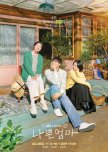
This is a series involving a mother who begins to realize that her “Tiger Mom” philosophy is not the way to be an effective, loving parent and that being “strong” doesn’t mean being abusive. I’ve encountered many “tiger moms” in my job as an ESL teacher, having worked in Korea, China, and Taiwan. The most abusive parents I have ever encountered are tiger moms and the moms of the West who treat their children with indifference. Both are forms of child abuse. Believe it or not, there are worse forms of abuse than just physical.Unfortunately, in the case of tiger moms, these are parents who demand total, complete control. They will claim that it’s being a good, loving parent when nothing could be further from the truth. These are parents who map out their children's lives and deprive them of the ability to decide anything for themselves. In short, these are parents who live vicariously through their children. They use their children to feel better about themselves. Under such parents, children rarely have the chance to even be children.
Jin Young Soon is a widowed pig farmer whose son, Kang Ho, is born shortly after her husband’s death. She immediately decides that her son should become so powerful that nobody can hurt him. She already decides that he will be a prosecutor. He is forced to study at all hours, can only eat a certain amount of food because he might get sleepy and be unable to study, and he’s never able to go on class trips. When he breaks any of these rules, he’s soundly beaten to the point of severe bruising. When he uses some time to draw, his mother tears it up. When he plays on his computer, she throws the computer into the fire. Yes, at this point, she is a truly horrible mother. Such abusive tactics are born out of fear not love.
This series throws us a series of curveballs that might be challenging to predict, which is another reason why the writing is so taut and expertly written. Kang Ho in a final outburst to his mother, decides to leave her and find a way to increase his power by marrying Oh Tae Soo’s daughter and being adopted by Song Woo Byeok as his son—the local crime boss who is also Kang Ho’s father’s murderer. Of course, nothing is as it appears to be. The viewer is left to wonder if Kang Ho has really grown up so resentful of his mother that he is willing to consort with these horrific people. Oh Tae Soo was the prosecutor who swept Kang Ho’s father’s case under the rug and now has aspirations to become Korea’s new president.
We find out later down the road that everything was a ploy in an attempt to bring down Song Woo Byeok and Oh Tae Soo, except that it backfired and nearly cost Kang Ho his life. After his attempted murder, Kang Ho’s mind is reduced to that of a child, and his memories are lost. Now back with his mother, they are both given a second chance. Kang Ho’s chance is to recover and hopefully be able to finish what he started as well as mend the bridges he’s burned. For Jin Young Soon, it’s a chance to maybe be a better mother than she was before. Much of it is a bit of trial and error as Jin Young Soon still has much to learn about how to be a good parent. She still resorts to abusive tactics, but down the road, she finally realizes how her abusive methods have hurt Kang Ho as well as others around him.
Jin Young Soon and Kang Ho live in a small, remote farming village made up of some of the quirkiest and most delightful characters you’re ever likely to encounter! Son Yong Rak (Kim Won Hae) is the village head, and this actor has a true gift for comedy. Having seen him in several other series, I smiled as soon as I saw him because I know how good he is! He’s married to a very odd, woman who is always wearing a facial mask and has a knack for saying things at the worst times.
Jung Gum Ja (Kang Mal Geum) is Jin Young Soon’s best friend and ironically has a daughter (Mi Joo) who was born at the same time as Kang Ho. Mi Joo is Kang Ho’s love interest, and it’s very heartbreaking how he leaves her in order to pursue his goal of taking down Song Woo Byeok and Oh Tae Soo, because he believes it’s too dangerous for her, but of course, he doesn’t tell her that. Little does Kang Ho realize that Mi Joo’s twins, Ye Jin and Seo Jin are, in fact, his children. This was one of the few parts of the story that wasn’t a surprise. By the way, Gi So Yoo (Ye Jin) and Park Da On (Seo Jin) are delightful little performers! What talent these two have! I enjoyed their scenes together so much, and I was amazed at how good they are!
Lastly, we have Sam Sik, who is the dimwitted son of Jin Young Soon’s neighbors. He falls in with bad crowds, gets thrown into jail, and ends up indebted to a loan shark. He’s also in love with Mi Joo, even though she has absolutely no feelings for him at all. Yoo In Soo does a fantastic job playing the funny but not very bright Sam Sik who is always in some kind of trouble. However, his heart is usually in the right place which makes him likable despite his obvious flaws.
Performances are outstanding across the board—in addition to the great performances already mentioned above—Ra Mi Ran (Jin Young Soon) is incredible, but frankly, Lee Do Hyun gives us a mesmerizing performance as Kang Ho, especially during his depiction of Kang Ho with a childlike mind. Lee Do Hyun deserves every accolade.
The series is an endearing story about the mother/son relationship, on the one hand, but it’s also a fantastic thriller as well, as we are left to wonder after the first episode, how the despicable Song Woo Byeok and Oh Tae Soo will finally be brought to justice. We also learn why Kang Ho is such a great prosecutor as he devises a perfect plan to trap them both. Kang Ho’s biggest mistake at the outset of the series is that he tries to do everything himself. The second time around, he knows that he can’t tangle with these two criminals alone. He needs help, and he gets it. And perhaps, that is one of the essences of the series: everyone needs help, even mothers as Jin Young Soon also realizes that Kang Ho’s recovery wasn’t just due to her efforts but to everyone in the village who helped.
We have a heartfelt ending in which Jin Young Soon finally succumbs to her stomach cancer, and she leaves a beautiful letter for Kang Ho, apologizing for being such a horrible mother and declaring that she will do better next time. Her last wish is to be his mother again in another life.
As children, it’s often a painful realization to know that parents aren’t perfect. There is no manual or book to help. They make mistakes. A good parent admits to their mistakes and helps their children to understand that. The best parent is one who provides their child with the freedom to be who they want to be, as well as help them create and cultivate the tools and wisdom to make the best choices for themselves. But then again, children obviously make mistakes too, and parents have to learn to be understanding and compassionate as well as to let them know: I’m always here for you if you need me.
This is a beautiful series that confirms that there is nothing so precious or comparable to a mother’s love. Make sure to let your mothers know how much you love and appreciate them.
Was this review helpful to you?
This review may contain spoilers
Imbalanced Romance Between the Heroic Kang Doo and the Immature, Cowardly Moon Soo
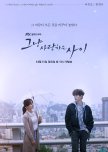
Kang Doo and Granny end up being the only two truly noble and likeable characters in this entire series with Ma Ri and Jung Yoo Jin being right behind them. The show would have been so much stronger and better if even Moon Soo had even half the character of Kang doo. In the end, we realize that she doesn’t even remotely deserve him.Kang Doo and Moon Soo are survivors of a horrific accident; a newly built shopping mall that collapses on them when they were teenagers. As the story unfolds, we find that Kang Doo is about as noble and heroic as a person can be. Yes, he’s got a temper, and for a while, he feels pathetic and unworthy. But not only does he rebound, he is always looking after people; looking after those he cares about; and even beyond that, he’s always THERE for them. That’s the mark of a truly noble person. Jun Ho Lee should’ve won every single acting award out there for giving us a harrowing and complex depiction of a Kang Doo who is always in pain, always struggling, always fighting, and always doing right by people. He mirrors the famous quote of Rocky Balboa of, “Life ain’t about how hard you hit. It’s about how hard you can get hit and keep moving forward.” Does Kang Doo stumble and make poor decisions? Yes, but he always quickly sees that there is a better way. He’s a man who’s continuously tormented.
Moon Soo, unfortunately, is someone who finds it safer and easier to just stay within her little bubble world. One could argue that Kang Doo has had a much harder road in life, and yet Moon Soo lacks the courage and even the conviction to fight and be there for those who need it. Actress Jin Ah Won is almost a complete opposite from Jun Ho Lee. In fact, she’s easily the weakest actor of the ensemble. Her expressions are often stoic and bland. She looks like a 15-year-old and she gives us a Moon Soo who acts like it too. It’s nearly laughable the times that Kang Doo tries to hug her, and she recoils like an 8-year-old child who’s had a spider dropped down her shirt! It shows her level of immaturity.
What really angered me was when Moon Soo finds out about Kang Doo’s health condition. At this point, she’s not even talking to him at all. She’s ignoring him. He goes to her house to tell her about his problem. Without even opening the door, he faints. She then gets angry with him for not telling him! How exactly does THAT work?!? I was like, “Are you kidding me?! You were ignoring him and you blame HIM for that?!” That was my last straw with Moon Soo. From then on, I had no heart or sympathy for such a cold, cowardly character who is unable to see past her own pain. Throughout the series, Kang Doo is always there for her. And throughout the series, Moon Soo constantly comes up short because she can’t be there for him when he needs help, and she invariably and conveniently ignores and forgets all that Kang Doo has been through. She completely dismisses it and even his condition when she hasn’t the guts to deal with it.
I’ve been watching K-dramas for nearly 5 years now. I’ve seen so many good ones and a few bad ones. However, I can’t remember one where I’ve found the leading lady so unappealing.
I can’t even sympathize with Moon Soo when she tearfully asks her friend, “Why does Kang Doo have to go through this? Hasn’t he been through enough? Why is this happening to us?” Funny questions from a person who can’t even be with him when needed, and by someone who’s blatantly ignored him. How can there even be an “us” when you refuse to be a participant or even show up!
The characters of Granny and Kang Doo keep this series afloat. By the last episode, I nearly decided to forget the whole thing as I was so fed up with Moon Soo. I wouldn’t wish a “Moon Soo” on anyone. She’s about as supportive as a piece of used tissue.
Kang Doo and Granny make this series a “10” for me. Moon Soo makes it about a “3” or “4”. Not to mention that actress Jin Ah Won is about the worst kisser I’ve ever seen! Kissing her must be like kissing a dead fish. No heart. No feeling. It says a lot about Won’s comfort level and her ability to even act out a simple scene like that.
While the story is an intriguing one, this definitely isn’t a series I’d watch again. It deserved a much better actress than Jin Ah Won; someone seasoned and professional enough to really give us a likeable and intriguing character with a complexity to match Jun Ho Lee’s performance. The imbalance really hurt this series. I certainly won’t look to watch anything else by Jin Ah Won. She sticks out like a sore thumb in this series against far better performances by nearly everyone else who all overshadowed her.
Kang Doo’s sister is almost as bad. Not even a hug or word of support for a brother who’s dying. Was it the writer’s intention to give us such cold, unfeeling women in this show? If so, he succeeded! He gave us two mothers who aren’t even worthy of the title.
Kang Doo is a hero in every sense of the word for always doing right by others; for always looking out and caring for others. The true shame is how no one was able to do the same for him.
The series also ends way too conveniently with a "magical" and unlikely ending. The writer didn't have the guts to go down the road less traveled and realize that Moon Soo might have actually learned the most about herself and appreciated Kang Doo had he not survived. The ending was a real cop-out which undermined much of the premise of the series.
Was this review helpful to you?
This review may contain spoilers
Navigating the Pitfalls of Love and Sex
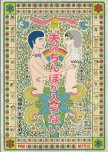
One of the age-old questions is put front and center: Is love sex? Or is sex love? People might be surprised at the answer. Sex is not love, as Kenichi puts it. However, sex is/can be an expression of love. This is where Kenichi and his wife Kumiko run into trouble.It is clear that Kenichi and Kumiko both love each other. However, they have a difficult time adjusting to the fact that they cannot have conventional sex. Now, it can be dangerous to view this series with the eyes of a westerner. You have to understand something about Japanese culture. I'm not saying you will agree with it, but you will understand why Kumiko and Kenichi do not handle the problem in the same way that others might.
Japanese people are among the sweetest people I have ever known, but they also tend to have one glaring issue (one that even they admit to!): they are never very direct in their communication. There are even some wonderful, and even funny, youtube videos posted by Japanese people who address this.
Kumiko is an extremely shy young woman, who never really speaks up about anything. She keeps her problems and dislikes bottled up within her. It doesn't help that she has a domineering mother who is clearly ashamed of her. Remember that "shame" is not something that Japanese people take lightly. Western viewers are likely to show frustration and say, "Why doesn't she go and see a doctor? Why doesn't she talk about it with her husband?" Again, it's the culture, for better or worse. And, I daresay, there are those around the world who take issue with some of our cultural ideas too! I should know as I was a Peace Corps volunteer for four years and have also lived and worked in five different countries as well!
The bottom line that is addressed in this series is a failure to communicate. This is a universal problem in marriage and relationships, not just an Asian one. And we see the damage that is done by not talking things out. Both Kenichi and Kumiko attempt to avoid the issue by finding solace in other people. As we know, avoidance and denial never make a problem go away. If anything, it exacerbates it, which is one of the things this series addresses.
The series is very well done, with exceptional performances from Aoi Nakamura (Kenichi) and Natsumi Ishibashi (Kumiko). They give us a couple that clearly love each other but are unable to figure out how to address the issue of not having sex.
What is sad is that intimacy is a necessary ingredient for a happy marriage. And intimacy doesn't necessarily mean sex. There are many ways for a couple to BE with each other. There are ways to make it work, and my only issue with the series is that there really isn't much mentioned about how a couple can be intimate without sex.
Marriages don't fail because of a lack of sex. They fail due to a lack of love, communication, and intimacy. This series does a pretty credible job of addressing this, especially in the "communication" department!
Was this review helpful to you?
This review may contain spoilers
Let's Be Happy!
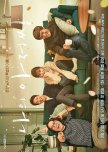
Every once in a while, a series comes along, or perhaps even a movie, that is so heartfelt and thought-provoking that you just want to sit with it after you've finished it. This is one of those series.Perhaps one of the most profound truths, that is too often missed, overlooked, or simply forgotten is that true happiness can only come from one place: from within. People futilely look for such happiness in all of the wrong places. They may find brief moments of joy, or perhaps in a distraction, but ultimately find that all such counterfeits are fleeting.
Happiness is only ever something you can be. It’s an impossibility to “do” happiness. In other words, whenever you believe that something outside of yourself (work, relationships, money, sex, etc.) can bring you happiness, it’s like constantly chasing an elusive shadow that you can never catch. Happiness is literally a choice, just as unhappiness is also a choice. Eckhart Tolle wisely stated, “It’s never the situation that makes you unhappy, but merely your perception of the situation. If you want to change your experience, change your perception.”
“My Mister” is an absolutely brilliant and poignant series about a group of people who are clearly living unhappy lives. It reminded me a little of “It’s a Wonderful Life,” in which George Bailey has no idea of the wonderful life he’s had, despite not necessarily getting to do all of the things he’s dreamed of, or the hardships he's had to endure.
Park Dong Hun is a general manager at a firm where he’s a structural engineer. Right from the start, we realize that he’s not a very happy man. He’s in a loveless marriage, and the only bit of joy he seems to find is in spending time drinking with his two brothers, both of whom are unemployed as the series begins. However, Park Dong Hun does have one noble aspect to his character. He’s essentially a good man who will always do his best to do right by others. However, despite this, he’s also prone to being a bit of a doormat, allowing others to use and abuse him.
Lee Ji-An is a temporary worker at Park Dong Hun’s company. She’s a young woman in severe debt, no thanks to her mother, who borrowed a tremendous amount of money, and after she died, Ji-An assumed the responsibility for paying it off. She came from an abusive family, in which she had no choice but to kill her step-father in defense of her grandmother, a sweet woman whom Ji-An looks after and cares for. As the series begins, she is a woman simply looking out for herself, even resorting to stealing and extortion in order to survive, sometimes working 2-3 jobs. She is a miserable young woman who rarely ever smiles, and never bothers with even a “Thank You” if an act of kindness or help comes her way. In fact, the one time she does say, "Thank You," it's powerful because we know how much she means it.
Park Dong Hun has two immediate problems. His wife is cheating on him with the CEO of his company, and he gets pulled right into the middle of the office politics, when the members of the board are in a battle to get rid of the new CEO. An envelope, mistakenly sent to him with bribe money, gets him into trouble. JI-An gets involved when he attempts to hide the money, and she initially steals it. To Park Dong Hun’s surprise, she attempts to help him, even when the CEO hires her to help him get Park Dong Hun fired.
What transpires is an unwitting and unlikely relationship between Park Dong Hun and Lee Ji-An as both struggle to uncover what is going on at the company. Lee Ji-An has assistance from a young man who’s a master at computers and wire-tapping, and she uses these things to get information. After all, especially in this day and age, information is power, and Ji-An knows it. She quickly discovers that Park Dong Hun’s wife is having an affair, but she attempts to help Park Dong Hun save face. Actually, it’s even more than that. She tries to spare him the pain.
It doesn’t take long before it becomes clear that Lee Ji-An likes Park Dong Hun. Perhaps it’s because he is the very first person in her life to treat her as a human being, often doing things to try and help her, including helping Lee Ji-An get her destitute grandmother into a facility. Too often, people underestimate what an act of kindness can do for someone else. Park Dong Hun doesn’t even realize the powerful ally he has in his corner, doing all she can to protect him from the wrath of the CEO and those plotting his downfall.
Park Dong Hun and Lee Ji-An have something in common, despite their age difference: they both have a very low self-esteem. Even once Park Dong Hun confronts his wife about the affair, it’s clear that nothing will change because there’s simply no love between them. They run through the same, exact routine every day. There are no loving or even kind words exchanged between them. They’re simply roommates playing a part for the sake of his family and their son. In short, it can hardly be called a “marriage.” It’s more of a relationship of convenience. In short, due to both of their situations, they’re simply no longer compatible.
Lee Ji-An, on the other hand, firmly believes that she’s eternally trapped in the life she’s living. Most prisons exist out of our own making, and Lee Ji-An doesn’t believe she’s worthy of doing anything else. Her only lifeline; her only hope for possibly a better future, lies with Park Dong Hun. “You’re the only person who has ever been nice to me,” she says, and they frequently talk about how pitiful they are. It’s interesting in life how easily people find others who are of the same mindset or have the same feelings of self-worth, or lack thereof. It’s the simple law of magnetism. What you put out, you attract. Happy people tend to attract others who are happy, and unhappy people attract others who are miserable.
The comic relief of the series comes in the form of Park Dong Hun’s two brothers, who often act more like the two stooges! These two guys are so hilarious sometimes that I found myself laughing as soon as a scene cut to them. They bicker and squabble, and they can’t seem to turn a corner in their little “midget van” without rolling it over…literally! Park Gi-Hun is the youngest brother, a former movie director, and a bit temperamental, who shares a cleaning service with the oldest brother, Park Sang—Hun, a man who wears his emotions on his sleeve, but constantly complains about never having any money. His wife doesn’t even want to have anything to do with him, and both brothers are living with their mother, who frequently chews them out for their lack of success. In short, Park Dong Hun is the sole light of pride with their mother, but he’s also the sole reason for her constant worrying and stress, hoping that he’s happy.
Throughout the entire series, there is only a single person who understands that happiness begins with you, and that’s Park Dong-Hun’s best friend, Gyum Deok, who became a Buddhist monk, even leaving his wife to pursue his only goal: to be happy. He is also the only one who knows what to do when he's faced with a challenge. He meditates, thus re-centering himself. Everyone has a different path, and part of that path is about also following your passion and finding your gift. Gyum Deok often provides little pearls of wisdom for Park Dong-Hun, who is often struggling just to stay afloat. But, it’s not enough to simply “get by” in life, however that looks. And by the time the series ends, we get two genuine moments: Park Dong-Hun smiling—really smiling—when he’s finally learned how to be happy and enjoy his work. And Lee Ji-An, who realizes that a person can change and make great strides in this world. Perhaps, she finally understands that the only “shackles,” the only thing that truly holds a person back, isn’t other people’s perceptions of us, but the delusions of such thinking that exists only within our own minds.
There are a number of sweet and tender moments throughout the series. My personal favorite was when Park Sang-Hun rallied and paid for flowers, food, and calling everyone to be at Lee J-An’s grandmother's funeral. If you can’t find something to do for yourself, find something to do for someone else. He spends months saving up his money, and without even having to think about it, he makes sure that the funeral for Lee Ji-An’s grandmother is done properly. However, the last words of wisdom from Lee Ji-An’s grandmother are simple, regarding all of the kind things that Park Dong Hun has done for both Lee Ji-An and her grandmother. “Make sure to pay him back. And the way to pay him back is to be happy.” What’s ironic is that this is the most powerful way to demonstrate gratitude.
IU does a great job as Lee Ji-An. She rarely ever smiles, effectively showing us how miserable Lee Ji-An is, but she went even deeper than that. She showed us a character who truly lives without hope, which I don’t think is nearly as easy to do as people might think. And then Lee Sun Kyun effectively gives us Park Dong Hun, who feels trapped in an unhappy life. At one point, when Park Dong Hun stands at the Han River, and we already know what’s going on in his mind. This was a powerful moment, because as Lee Ji-An is listening to him through the wiretap, she also knows what’s going through his mind.
Among the most powerful relationships are those that bring two people together for true healing to take place. Park Dong Hun and Lee Ji-An could have easily gone the other way, and effectively destroyed each other, but instead, they find a way to help and be there for each other, which in turn helps them help themselves. And the only reason the latter occurs is because deep down, despite their situations, both are essentially good people. While it appeared that Lee Ji-An had feelings for Park Dong Hun, it’s really more about her seeing someone else who values her. The relationship between the two was done extremely well. No physical contact or other moments were needed to realize how much they actually do love each other. Love doesn’t always imply a romantic component, and that is why the love they share is so powerful and compelling. This is especially evident in the very last scene of the series.
I cannot overstate how incredible this series is, and it’s already among some of my all-time favorites. I can see why so many people are enamored with it. If nothing else, it should serve as a reminder to find happiness within yourself first. Be happy!
Was this review helpful to you?

This review may contain spoilers
People Are Not Possessions!
When you cage a lion, it no longer is truly a lion. The same can be said of people. People are not possessions, and too often, we live vicariously through others, for others, and make them responsible for our own happiness. Each one of these things is like a cage.Hiroto Komori and his brother, Michito, come across a small boy left outside of their home. They don’t know where he came from or even who his parents are. When asked what his name is, he responds, “Lion!” It’s his favorite animal, even carrying a stuffed lion with him everywhere he goes.
Hiroto works a city job in which he helps people on welfare. It’s quite obvious that he doesn’t really enjoy his job. It’s a means to an end. After all, he feels responsible for his younger brother, Michito, who has Autistic Spectrum Disorder. Every day is a routine, which is what most autistic people require. Anything that deviates from the routine can be very disruptive. Hiroto walks his brother to the school van every day. And every day, he picks him up and they walk home together along the sea as Michito enjoys kicking a stone.
We find out that Hiroto and Michito also have an adopted sister, Aoi. In flashbacks, we find that she was an especially unhappy teenager, who was abusive toward both brothers as well as being ungrateful toward their parents. However, despite the abuse, she remembers that Hiroto always treated her well. Fast forward to the present, and we find that Aoi fakes her death as well as that of Shuuto (Lion) in order to try and escape from the clutches of her abusive husband, who beats both Aoi and Shuuto. Much of the series is spent in watching Shuuto grow closer to his two uncles, as well as them trying to help their sister.
Aoi is also being assisted by the somewhat mysterious Mr. “X” who comes up with the initial plan for Aoi and Shuuto’s escape, also furnishing her with burner phones so that they can communicate. It’s through Mr. X that Hiroto finds out why his sister seems to acting so recklessly.
The series is a touching one, in which, perhaps for the very first time, Shuuto is able to enjoy a positive, family dynamic with his two uncles. There are many humorous and light-hearted moments as Hiroto and Michito attempt to alter their lifestyles around their new houseguest.
Aoi’s husband beats her and takes off with Shuuto, but Hiroto is able to track them down. I was pleasantly surprised that we didn’t get the typical “fist-a-cuffs” but instead, Hiroto tries to explain why Aoi’s husband’s abusive nature is doing more harm than good. Her husband explains that he can’t be alone and that Shuuto is all he’s got. Even among family members, possession always brings about negative repercussions. That is where resentment and anger tend to flare up, and her husband finally backs down.
However, throughout the series, we find that Hiroto has never truly lived for himself. His entire life has revolved around Michito, and after much soul-searching, he realizes—that for the good of both of them—he needs to finally venture out and create a life for himself. While it’s challenging for Michito to understand, he finally gets it, and it’s beautifully expressed in the black-tailed gull that he paints as a mural, and understanding that a gull has to be free to fly. In fact, that is the true nature of every, single soul: freedom.
Overall, the series is a strong one, but at only a eleven episodes, it didn’t quite reach its full potential. I was hoping for more interactions between Hiroto and Aoi. She never properly thanks him for getting Shuuto back, and given their tumultuous upbringing, I was hoping for a nice heart-to-heart. I also felt that Hiroto’s two friends, Mio Makimura and Youta Sadamoto, were relegated too much in the background. I would have liked to have seen even more scenes, demonstrating how deep their friendship truly is.
We also had a couple of side-character that could have also used more screen time, such as reporter, Kudo Kaede, and the police detective she’s clearly in love with, Takada Kaji. I won’t say that the series felt rushed, but rather, it could have delved even more deeply than it did.
Young Sato Tasuku is absolutely adorable, and he’ll easily find his way into your heart as soon as you begin watching this series. The young actor has a very bright future. Yagira Yuya plays a very calm, reserved Japanese man, and he plays it well. He perfectly captures the introverted but pained Komori Hiroto. And, of course, Bando Ryota is stellar as Michito.
This is an excellent feel-good series that should be a lesson to us all: don’t treat others like possessions. Let them be who they are. This is especially true and necessary among family members.
Was this review helpful to you?
This review may contain spoilers
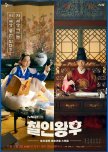
Appreciate the Brilliance of Shin Hye Sun in This Incredibly Entertaining Series!
I have seen Shin Hye Sun in three series before this one: Oh, My Ghost, Stranger, and most recently in Hymn of Death. All of the above are dramatic roles, and all I can say is, “Oh, my God!” Her comedic chops are off the charts! She is nothing short of brilliant, stealing virtually every single scene that she is in! I compare her to Lucille Ball. While the rest of the cast is absolutely fantastic, this series doesn’t work without Shin Hye Sun’s incomparable performance!Most body-switching movies and shows are same-gender switches. I’ve seen just a handful of cross-gender switches, and while they tend to go for comedic effects, the actors tend to overcompensate. The man exaggerates female characteristics such as speech and walking while the woman does the same. Shin Hye Sun, instead, goes for more subtlety and realism as a man who’s suddenly been thrust into the body of the Queen. Jang Bong Hwan is a chef from the future, so he not only has to figure out how to live in the body of a woman but also a woman who also happens to be of royalty!
What we end up getting is some of the funniest and zaniest roles I’ve ever seen. Shin Hye Sun brilliantly doesn’t even alter her speech very much. Just to the point in her smirk, the way she sits and communicates, which is Jang Bong Hwan’s style. In short, she gives us a very masculine queen as well as one from the future, who isn’t afraid to inject current idioms, terms, and ideas into her speech, often causing hilarious confusion among the Joseon people from 200 years ago who have no idea what she’s talking about. King Cheol Jong even begins keeping a Dictionary of the Queen’s Language in an attempt to understand her. He also has no idea why his once docile queen is now far more aggressive and direct in her speech and manners!
We are taken back to Joseon about 200 years in the past when a puppet king is being controlled by nearly everyone around him, but most notably by the Grand Queen Dowager, the Queen Dowager, and Kim Jwa Geun (the Grand Queen Dowager’s brother). It did take me a few episodes to get the names down because there are so many. Basically, you have two rival families in the Kim’s and the Jo’s who are vying for control of the country. The Queen is of the Kim family while the King is of the Jo family. Little do they realize that the King is far stronger than anyone realized or anticipated as he struggles to find a way to bring balance and contentment to his subjects, who mostly live in slavery and poverty. But the wild card in this drama is the Queen. No longer meek and docile, Jang Bong Hwan quickly decides that the Queen is nobody’s puppet and nobody’s fool. Instead, he figures out a way to understand his new role but also how to help the King gain power to stand up to those who would use him for their own purposes.
I’ve said this in numerous reviews already, but Koreans are masters of storytelling and always find a way to convey an uplifting message or something to think about to improve things. This series is no different. Overall, the series is comedic, but it does have some dramatic moments, some heart-wrenching ones, and also some inspiring ones too. In the end, we find that both King Cheol Jong and Queen Kim So Yong (after she’s reverted back to herself without Jang Bong Hwan) have both changed (even if Jang Bong Hwan left behind a few seeds of influence!). Jang Bong Hwan, himself, realizes that he is no longer the same, self-serving man that he was before either. He wisely states, “Perhaps it isn’t about trying not to be rotten, but instead cutting out what is rotten.” And that such an idea might—in fact—help to change the world, but it first begins with changing yourself. Gandhi himself stated as much when he said, “Be the change you wish to see in the world.”
This is simply one of the most delightful series I’ve seen, and it is literally rock solid from beginning to end. I kept waiting to see if the story would begin to falter or drop off slightly toward the end. It didn’t. It kept me completely invested from beginning to end.
Unfortunately, the government in Joseon from 200 years ago proves that not much has changed in the world since that time. The rich still oppress the poor. The powerful still exploit the weak are always in search of ways to retain even more power. Mr. Queen gives us some food for thought; that just because that is how things are, it doesn’t mean that nothing can be done or that they must somehow stay that way. King Cheol Jong and Queen Kim So Yong give us two examples of what can be done if will, determination, and courage are vested. Or perhaps one of my favorite quotes from Lord of the Rings: Even the smallest person can change the course of the future.
Was this review helpful to you?

This review may contain spoilers
Fun and Frustration of Dating and Relationships!
This is a fantastic series that attempts to put things into perspective regarding dating and relationships. Anyone who has dated or been in any kind of a relationship will almost surely find himself/herself relating to one or more of the six characters (three men and three women).The series is mostly light and humorous with some occasional serious tones. Fortunately, the series is so deftly told that it easily transitions from "comedy" to "drama" without batting an eye.
As anyone knows, dating and relationships can be fun and exciting when they begin, but soon grow into frustration and turmoil the longer they go on. As one character points out, "Relationships are like wars. Easy to start. Difficult to end."
The series is filmed like "The Office" in which a small documentary team follows the characters around and asking questions such as, "Is it possible to have a positive break-up?" or "What does the word "first" mean to you?" The answers are often compelling as well as humorous.
The characters begin to realize some deep truths regarding relationships. Most people enter them to prevent lonelines or because they don't like themselves, and they expect someone else to fill in the "gaps" and "holes" that they feel are dotting the landscape of their lives. Of course, entering into relationships for these reasons means that the relationship is already doomed to fail. Why? Because unless you love your Self first, you cannot possibly share what you do not have with someone else. And the other person soon realizes how unfair it is to be pressured into being the sole source of happiness for someone else.
To be in a relationship means to accept your partner as they are. Eun Oh Lee makes a truly provocative and wise request to Jae Won. "Can you accept me for who I am? I'm a mess, and I have a long way to go before I find myself." Acceptance and awareness of dysfunction is probably the ultimate key to having a successful relationship. After all, relationships aren't about filling gaps and holes. They are about sharing. And ultimate sharing cannot be experienced until absolute vulnerability is attained.
The series is masterfully done, and the actors expertly handle their characters like prime jockeys handling their horses. They bring tears and laughter to a subject that has befuddled nearly every person in every culture since the beginning of time.
My favorite scene is Rin-Yi standing up for herself after her boyfriend basically tells her how he's ashamed of how she lives her life. Shame has no place in any relationship. Don't let people use "shame" to tell you how to live your life. The only real shame they feel is for themselves.
I have seen more and more of these types of series coming out of Korea where the writers are virtually crying out, "Let people be who they are! Stop trying to control everyone and everything!"
Along with the characters, you'll likely find yourself sharing in their laughter, fun, and frustration as Korea continues to churn out the best shows in the world, in my opinion.
Was this review helpful to you?

This review may contain spoilers
Carrying the Weight of the World!
The magic of this series actually doesn’t rest in the romance. It rests in the magic of how a little boy decides to bear the weight of the world upon his shoulders and carry that burden into adulthood.There are many aspects of this series that we’ve seen countless times. A rich man who ends up falling in love and courting an ordinary woman. A rich man who lavishes her with bought out amusement parks, boat rides, restaurants, and so on. There is still the arcane belief that happiness lies in a relationship with a wealthy person, unfortunately, usually the man. It’s been said that money can’t buy happiness. It also can’t buy love, as true love has absolutely nothing to do with wealth.
Lee Young Joon is the Vice-Chairman and partial owner of a massive corporation. He’s also a bit of a narcissist. If you look up the true definition of a narcissist, Lee Young Joon only fills some of the boxes, but not all of them, which leads us to believe that he’s conceited and full of himself, but he’s not necessarily a narcissist in the typical sense. Yes, he’s bossy, overbearing, demanding, and he must always get his way. However, buried underneath is a man who is capable of deep feeling.
Enter, Lee Young Joon’s secretary, Mi So Kim. While Lee Young Joon is very smart and capable, it’s obvious that the person juggling and taking care of all of the balls in the air is his unwavering and loyal secretary. However, after reaching her boiling point in having to work for nine years for the self-centered Lee Young Joon, Mi So Kim decides that it is time to pursue something else, thus leaving Lee Young Joon in a quandary.
However, there is far more than meets the eye when it comes to the relationship between these two, and it’s here that the true heart of the story takes off. As children, Lee Young Joon and Mi So Kim were kidnapped by a deranged woman and kept inside an abandoned building. Cable ties were used to bind their hands and feet. Mi So, who was only five, has spent years trying to find the “mysterious” boy who not only saved her life, but also did all he could to prevent her from seeing the nightmare images from that fateful event. It's endearing and heartwarming to find a young boy who takes on that kind of responsibility.
Lee Young Joon feigns memory loss of that day, and even goes so far as to deny that he was even the boy who was with Mi So, thus opening the door for his jealous and envious brother, Lee Sung Yeon, to believe that he was the one who had been kidnapped, due to the amount of guilt their parents placed upon him. Too often, parents forget how lashing out can create deep psychological scars and even manipulate memories.
Rather than confess to Mi So that he was the one who had saved her, Lee Young Joon decides to deny it in order to prevent her from reliving that horrible past. In short, he does everything in his power to protect her, even from those memories, and we find out that Lee Young Joon hasn’t suffered any memory loss at all, but is simply bearing the brunt of it, even to the point of suffering horrible nightmares and scars. This is how we learn that Lee Young Joon is a truly noble and loving person because, just as Mi So has been looking for him since she was little, Lee Young Joon has also been looking for Mi So.
There is an absolutely adorable scene shortly after Lee Young Joon takes little Mi So home after the kidnapping, where she professes her love and even proposes marriage to him. Sometimes the most profound memories are those we have as children, and in this case, even years later, their dreams come true.
The series is essentially wrapped up by the 12th episode, and as another reviewer pointed out, the last four episodes contain mostly filler stories. One of the things that hurt the series was that too much attention was given to the romantic relationship between the co-workers. Frankly, while there were some hilarious and silly moments, I really didn’t care because I wasn’t invested in them. Anyone who has been involved in a workplace romance will readily tell you that they are a bad idea. Even the awkwardness created by the relationship between Lee Young Joon and Mi So, should be enough to give anyone pause before entertaining one.
The performances between Park Seo Joon and Park Min Young are first-rate, even if their chemistry was a bit inconsistent at times. Park Seo Joon’s crowning performance is still in “Itaewon Class,” and I felt that Park Min Young gave a better performance in “Her Private Life,” mostly because she had better chemistry with her male lead in that series.
Most of the humor is provided by Park Seo Joon as we see how silly and awkward he makes Lee Young Joon, especially when he’s praising himself or telling Mi So how great he is. He does have a few cringeworthy moments when he crashes Mi So’s vacation, or when he tries to plan out their wedding, even going so far as to pick her dress for her. His friend was correct: he’s like a bulldozer. However, it’s hard to escape Park Seo Joon’s charm, which reminds me a little bit of Michael J. Fox as Alex Keaton in “Family Ties.”
Overall, this is a good series that would have been great had they cut it to twelve episodes. However, don’t let that sway you. The last four episodes are still good, but they just don’t quite hold up compared to the rest of the series.
Was this review helpful to you?
This review may contain spoilers
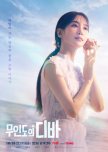
Castaway Diva is Mostly a Cast Away Series
Castaway Diva is a good story that does a lot of things right, while overlooking and dismissing a lot of things throughout the story. In many cases, a 16-episode story arc can run too long. This is a case where the series would have been better served with 16 episodes rather than 12.The premise is a good one, in which Seo Mok Ha finds herself stranded on an island for 15 years, after trying to escape her abusive father. I didn’t know that there are over 3,000 islands within the Korean Archipelago, a fact that should have been mentioned to give the viewer some idea of why Seo Mok Ha was so difficult to locate.
Some suspension of disbelief is required for this aspect of the series. Unlike in the movie “Castaway,” which was well researched by Robert Zemeckis, Seo Mok Ha has suffered no psychological effects from being isolated. She isn’t suffering from malnutrition, and her teeth are perfectly white. Also, that far north, Korean winters can bring cold weather, even on that island, and yet, she somehow survives this without any ill effects as well. It plays out more like a Disney movie than anything resembling realism. And yet, despite all of this, I was interested in seeing more of “island” Seo Mok Ha and some explanations about how she survived and got through a day. The series spends little real time on this aspect.
We know from the beginning that Seo Mok Ha has aspirations of being a famous singer, just like her idol, Yoon Ran Joo, going so far as to send Yoon Ran Joo a demo with the hopes of taking her first step toward a possible singing career.
One of the themes of this series is child abuse. It’s a disturbing crime, no matter the form it comes in. It was difficult to watch Jung Ki-Ho holding off Seo Mok Ha’s abusive father, as he’s being pummeled on the dock. It was far worse seeing people standing and watching while doing absolutely nothing about it.
Jung Ki-Ho relates to Seo Mok Ha’s plight as his own father—a police officer—is even more sick and abusive. 15 years later, we find that Jung Ki-Ho, along with his mother and brother, have found a way to live a new life away from Jung Bong Wan (their father) with the hopes of escaping the abuse.
There are many parts of the series that work well, but there are also many parts that are severely overlooked or just don’t really work at all. It was as if the writer had either forgotten or simply didn’t take such logic into account. As a result, the story suffers.
I was waiting for a conversation between Seo Mok Hal and Jung Ki-ho after his identity is finally revealed. I was waiting for Seo Mok Hal to ask him all about what happened on that fateful day on the dock; to find out what had happened to him, and all of the questions a close friend would have had running through their minds. No conversation takes place. They move on as if nothing had happened.
Jung Ki-ho goes to great lengths to expose his father for the abuser that he is, including setting up equipment to use as evidence against him, particularly when his father beats him yet again. And yet, when the evidence may be crucial in bringing Jung Bong Wan to justice, or at the very least, used to demonstrate to the prosecutor the nature of Jung Bong Wan’s character, the evidence is suddenly nowhere to be found, nor is it ever mentioned again.
Also, with the number of charges brought against Jung Bong Wan, how is a man like that allowed to roam freely? No explanation is offered regarding this either. It was as if the writer chose to dismiss these things in order to make the plot work---which is always a mistake, by the way.
I love Eun Bin Park. I think she’s one of the best young actresses in the business, but after “Age of Youth,” Hot Stove League,” and “Extraordinary Attorney Woo,” this is my least favorite performance of hers. It was as if she couldn’t find the balance between the innocent, young girl stranded on an island, and the driven young woman striving to fulfill her dream! In short, she often overacts in a number of scenes, and at times when it’s just not warranted at all. It sounded forced. I like that Seo Mok Hal is a strong woman who is loyal, but her transition from stranded island girl to an ambitious singer was so fast that it was as if she’d never been on the island at all!
Another problem is that the chemistry between Eun Bin Park and Chae Jong Hyeop is literally nowhere to be found. The little “romance” never took off at all, not only because the two actors had no chemistry, but also because the amount of screen time devoted to them together was miniscule at best. There was nothing built up, nor was there anything taking off from when they were in middle school together. Frankly, the chemistry between the two actors portraying Seo Mok Hal and Jung Ki Ho in middle school was far more appealing!
Also, there are just too many times when characters quickly dismiss a conflict or problem and then it’s just magically resolved. The biggest glaring example of this was between Seo Mok Hal and Park Yong Kwan. They have tremendous friction between them, and he refuses to let Seo Mok Hal use his song. But suddenly within the space of a day, he does a one-eighty.
The songs are well sung in this series, but frankly, none of them caught my ear. That’s always been a thing about basing a movie/show on music. If the music doesn’t work, then it hurts one of the key elements. I can’t think of any musicals that I liked when I didn’t care for the songs or find them appealing.
Castaway Diva is not a bad series, but it’s not a great one either. Its sloppy writing and lack of chemistry prevented it from being a great series. There was more chemistry between Seo Mok Hal and Yoon Ran Joo. Perhaps if the writers had focused on that aspect more, the series would have been much better. If you spread yourself out too thin as a writer, you end up coming up short on all of your storylines. Castaway Diva is a perfect example of this.
Was this review helpful to you?
This review may contain spoilers
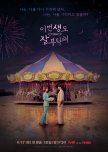
A Love That Trancends Time and Space!
This is a series that transcends both time and space. It reminds me a little bit of the movie “Somewhere in Time” in which a man finds out that he’s had a romantic relationship with a woman from over 70 years ago—but from his viewpoint, she is the only one who knows it.What we have here is Ban Ji Eum, a woman who has the ability to remember her past lives. In this case, she remembers 18 of them and is currently in her 19th lifetime. Interestingly enough, her 18th life touches on people around her and carries over into the 19th because she dies at the age of 12 in a mysterious auto accident that we come to realize was no accident at all which also yields to a present-day mystery involving her as well as Moon Seo Ha, a boy she knew from her 18th life and is now infatuated with in her 19th. Don’t worry. It sounds more confusing than it actually is. What we end up having is a very endearing and touching story.
Each time Ban Ji Eum reincarnates, she not only remembers who she was in previous incarnations, but she also remembers the things she’s done. In short, she also brings the skills she’s learned in the past into the present—everything from a trapeze artist to a flamenco dancer to a master bowman. We also find out that she’s also been both male and female as well. Her strong desire to reunite with Moon Seo Ha is what causes her to reincarnate in this current lifetime. Of course, Moon Seo Ha has no idea that Ban Ji Eum is the same girl who tragically died protecting him (Yoon Joo Won), and he’s still traumatized by the loss of his only friend—a friend that he obviously loved very deeply as well.
People obviously have different ideas about reincarnation. Most people in the West simply do not believe in it, despite several subtle references in the Bible as well as other texts. People in the East are far more likely to believe in it. For the story to work, it really doesn’t matter if you believe in it or not. There have been documented cases of people who vividly recall past incarnations. For most people, it’s a place they remember. An Indian man toured the Tower of London and remembered a door in a specific place. The tour guides all told him that no such door existed. He insisted it was there. Reluctantly, they checked it out, and sure enough, the door was where the man had said it was. They were naturally astounded and wanted to know how he knew. He simply said, “I remember it being there.”
There’s a reason why people are not necessarily meant to remember past lives. The primary reason is that it would overload you with unnecessary memories that are best left forgotten. Imagine remembering all of the suffering and grievances of your past lives and the toll they would take? Not to mention all of the suffering and grievances that you may have inflicted upon others as well. No, it is actually a gift to not remember, and in the end, it would serve no useful purpose. Even now, most people dwell on the past or the future, and not on where their attention needs to be: the present.
While it may seem fascinating to remember so many lifetimes, we quickly find that it is a great burden for Ban Ji Eum, as she attempts to find out why she’s one of those very few people who is able to remember. She knows there must be a reason, and Kang Min Ki is a mysterious archaeologist who holds the key. We all carry things forward—especially harsh grievances which must be forgiven and let go. This is the wisdom that Kang Min Ki tries to help Ban Ji Eum realize. This is also why forgiveness is one of the most powerful methods of letting go of the past and allowing oneself to move on.
The story takes some unexpected twists as Ban Ji Eum confesses who she is to Moon Seo Ha and also to Yoon Cho Won—her sister from her 18th life. Of course, they can scarcely believe her at first, but then Ban Ji Eum knows things—details—that only Yoon Joo Won would know that helps Ban Ji Eum convince them. These bring some incredibly touching moments, and people can also take solace in the fact that our loved ones are never truly gone or taken from us. They simply change form for a new role.
The only aspect that didn’t quite work for me, was the end. It made no sense that Kim Ae Kyung (a niece from Ban Ji Eum’s 17th life) and her survival depended upon Ban Ji Eum undertaking a ritual that would effectively wipe out all of her memories of her past lives, including those she’s interacted with in her current life. It would have made more sense if the ritual simply removed her memories of her past lives without affecting her current one. I understand that the writer was probably trying to find a more dynamic and unique way to end the story, but it didn’t work very well. Also, remembering past lives isn’t something that’s going to necessarily bring harm to those closest to you. However, I can understand Ban Ji Eum’s desire to remove the burden of remembering so many incarnations. Had they gotten the ending right, this would easily be a perfect “10” series for me, as it keenly held my interest from start to finish.
Performances are astounding, especially Shin Hye Sun, who never fails to impress me. She’s like a Korean Meryl Streep. She can literally do anything put forth to her, and she always turns in amazing performances. She is currently my favorite Korean actress. Everything from a thriller (Stranger) to comedy (Mr. Queen) to historical romance (Hymn of Death) to this one demonstrates that the mastery of her craft is varied and diverse.
I also really enjoyed Ha Yoon Kyung who is also a fantastic young actress! Everything from “Hospital Playlist” to “Extraordinary Attorney Woo” to this drama demonstrates that this young lady’s got a bright future ahead of her. And Cha Chung Hwa (Kim Ae Kyung) is one of the best character actresses in the business. Ahn Bo Hyun (Moon Seo Ha) was fantastic as well.
If this story based in reincarnation tells us anything, it’s to get things right the first time, although people rarely do. There are two types of relationships: dharmic and karmic. Dharmic relationships are those where you have a natural, easy connection with someone. You are together simply for the joy of it. Karmic relationships are those that tend to be strained or have much conflict because there are issues that still need to be resolved. Obviously, our task—as we move in our circles—is to transform those karmic relationships into dharmic ones. So, why wait until the next lifetime, when something can be done about it now? Such is the power of forgiveness, which is the central theme of this series. Let go of the past—grievances and all.
Was this review helpful to you?

This review may contain spoilers
LIfe Is Choice
This is a wonderful character-study series that demonstrates one of Life’s great truths: Life is choice and you determine how you react to what goes on around your and the experiences that you have. We are given two characters with very polarizing ways of living. One embraces what happens, no matter what it is, and learns how to let go. The other plays the role of the victim and is constantly running away from life and the problems that inevitably come. By the end of the series, the viewer should be left with one question to answer: which path do you prefer?Mok Hae Won is a very lonely woman who flees her job and life in Seoul for the small town in the countryside. Her upbringing is filled with unhappiness, from a father who abused her mother, a mother who is so cold and distant that she rarely sees her. And when she does, her mom barely says anything at all. There are no loving words or even the hint of a smile. The same is true of Hae Won’s aunt, who is just as cold as Hae Won and her mother. In short, we find very quickly that this is not a pleasant family to be a part of. They keep their distance from others, mostly because they are so content in their own bitterness and unhappiness, that they don’t even want to take a chance on something better. These are three very miserable women who hardly have anything appealing about them at all.
Im Eun Seob is a young man who is quiet but steadfast in how he lives his life. He’s loving and never hesitates to help someone who is in trouble. He gives no thought to his own safety, nor does he ever ask for anything in return. His own family abandoned him, and he was left with a family who took him in and raised him as their own. This family is warm and good-hearted, and they aren’t afraid of trials and tribulations. In fact, they face things head-on.
This is especially true of Eun Seob’s little sister, Im Hwi, who is a young high school girl full of life and zest! She may be a bit conceited, but she also never fears expressing herself, no matter how it may offend others around her. Despite not being popular, Im Hwi never allows that to affect her. She’s a very strong, young woman who’s already mastered one of Life’s great lessons: it doesn’t matter what other people think of you. One might wonder how Hae Won might have grown if she’d had a friend like Im Hwi when she was in high school.
It's easy to blame our parents for our shortcomings and even problems and failings. But the truth is that we never need to look further than ourselves when things don’t work out. Hae Won is a weak woman who enjoys playing the role of the victim. And people who play the role of the victim are always cowards because they are intent on blaming everyone else for their problems. What is even worse about Hae Won is that she has no forgiveness or tolerance for the imperfections of others. She fails to realize that nobody is perfect, not even our parents, but we must learn to forgive and look past the flaws and imperfections that everyone has.
Hae Won holds a grudge against her high school friend, Kim Bo Young because of a mistake that Bo Young made. Yes, it was a mistake, and even Bo Young acknowledges it, but toward the end of the series Bo Young points out to Hae Won that most people have cracks and problems that make them imperfect. Still, Hae Won cannot see past her own pain.
Of course, a romance brews between Eun Seob and Hae Won—who Eun Seob has loved since high school, unbeknownst to her. He runs a small bookstore in the small town, and it’s clear that he loves his life, despite living a life that seems boring and ordinary. Eun Seob loves Hae Won completely, despite her flaws and imperfections, and he also realizes that as soon as winter is over, she will leave. Some people are fair-weathered people. They only stay until real problems arise, and then they flee. Hae Won is such a person, which is why the viewer already knows the inevitable.
The romance is sweet and touching, and the chemistry between Hae Won (Park Min Young) and Eun Seob (Seo Kang Joon) is real. But the romance runs together with the mystery of who killed Hae Won’s father, and how she will deal with the truth of the past. We already know that Eun Seob is a man who can deal with pretty much anything. He has a mountain cabin where he can go to collect himself and be with his feelings. He’s also quick to forgive as well as express himself to others without fear or reservation. He knows that Hae Won is not built like that. While both characters endure much suffering, especially in their childhood, we see how each character has chosen to deal with their adversity. One deals with it, and the other finds a way to run away from it. Eun Seob already realizes one of life’s truths: the quickest way out is always through.
Eun Seob also knows that true love is not about holding on, but about letting go, which is why –despite how painful it is—he lets Hae Won go because he also knows that she has to learn to deal with the past as well as find herself.
The world is full of Eun Seobs and Hae Wons, and it’s up to us to decide which one we want to be. We can embrace and endure what comes, or we can play the role of the victim and wallow in pain and misery like Hae Won, her mother, and her aunt.
I loved the simplicity and beauty of the piano music that went with this series. I felt it really added to the atmosphere and enhanced the story.
Performances were first-rate all around. I have to say that one of the standout performances for me was Kim Hwan Hee (Im Hwi) as Eun Seob’s sister. She had such a command of the role as the tenacious and loving Im Hwi. The best scene of the series for me is when Im Hwi tearfully begs Eun Seob not to leave when she believes he’s going to leave with his uncle, and never return. It was such a touching scene, especially as Eun Seob—being the loving man that he is—buys and replaces Im Hwi’s bike seat with the one she’s been wanting. She also pretty much stole every scene she was in. I hope to see more of this talented young lady!
Some people hate winter (analogous to difficult times) and can’t wait until spring arrives. Others embrace the cold and find a way to navigate it. Such is the path of human lives in dealing with life. This series was one of the best character studies that I have seen when it comes to how to deal with life. Remember, life is choice. So, which do you choose?
Was this review helpful to you?

This review may contain spoilers
The Joy of Doing What You Love!
If you are not doing what you love to do, then by the time your life is winding down, you may look back with regrets because of how much time was wasted. Kobe Bryant put this to his listeners once during a conference. He said, “If you aren’t doing what you love, then why are you doing it?” I think very few people in the world do what they love because of so many factors: money (usually assuming a lack of it), what people will think (family, friends, society), or even because you don’t believe in yourself enough to take the chance. Let me point out something about people like Bruce Lee, Kobe Bryant, and others. They never rested on talent alone. They put in the work so that they could be the best that they could be. And, yes, that is what it takes.Quartet is a lovely story of four misfits. I call them “misfits” because they feel that they are outsiders who don’t seem to fit in anywhere. However, they all share one passion: the love for music. Three violinists and one cello player find themselves at a karaoke bar—seemingly by happenstance, but I think by the end of the series, we realize that it wasn’t an accident. One person sharing a joy is one thing, but it gains even greater power when four people combine their passion and talents.
Beppu is the leader of the group. He not only has a talent for the violin, but he’s someone how knows how to get things done. However, he doesn’t rule with an iron fist—unless it’s about taking out the garbage! He has no problem listening to the others and gaining their thoughts and feelings about something. His family owns the villa in the countryside where the four choose to live together and perform nightly at a local restaurant. The venue may seem small, and perhaps insignificant to some, but that’s not the point. They’re doing what they love.
Maki is the heart and soul of the group. A woman with a mysterious past. First, we’re left to wonder what happened to her husband, as her mother-in-law recruits Suzume to find out, as she believes Maki has killed him. We also find out that not is all as it seems with Maki, and will her dark past find its way into harming the group?
Iemori is easily the funniest member of the group with his quirky logic when it comes to identifying and discussing seemingly insignificant things. He’s always a source for a laugh, but make no mistake, he’s got a big heart. He’s almost childlike and in a good way.
Last, but certainly not least, we have our cellist in Suzume. A lonely young woman who loves playing her cello on the streets for whatever money she can get. She also wears her heart on her sleeve. It’s pretty clear early on that she truly loves the other members of the group, especially Maki. Perhaps this is the only true family Suzume has ever had. And when she begins to shed tears, it’s hard to hold back ourselves. She’s a little clumsy and has the propensity to sleep anywhere! Under the coffee table, slumped over chair, it really doesn’t matter. She will also do whatever she can to protect and help the other members of the group. We find out, very quickly, that she is not at all comfortable spying on Maki for Maki’s mother-in-law.
The group’s four members are endearing as they get to know each other throughout the series. Only one of them has a real job when the series begins. The other three are either unemployed or are about to leave their respective jobs. Of course, they begin to question the rationale of simply being a quartet. Even friends and family find it difficult to understand the logic of essentially doing something for very little. Toward the end of the series, it’s Suzume who answers this question when she talks about seeing the smiles on people’s faces or those rare moments when they get some feedback about how happy the listener is because of their music.
We also see the sad lives of those who are not living their passion and dreams. Arisu is a petty, vile young woman who works at the restaurant where the quartet performs. All she cares about is getting out there and finding a way to make a quick buck or perhaps find someone wealthy to take care of her. At one point, she schemes to steal Maki’s violin when she finds out how much it’s worth. She’s extremely self-centered, doesn’t care about anyone else, and it’s easy to see why she’s such a miserable woman. Even she finally finds her rich husband at the end, we also know two things: it will never last, and that type of happiness is always fleeting.
We also find a letter in the last episode from a musician who clearly didn’t make it as one. The person unloads their own frustrations and unhappiness at the group, unable to understand why they continue to play when they don’t play well. Of course, anyone who listens to this group can see that they play just fine. They may not be on par with some of the elite, but they can play! And the point is that they never gave up. They don’t let anyone or anything discourage them from doing what they love. This is showcased beautifully in the last episode when a can is thrown at them as they perform on stage, and many of the listeners get up and leave in the middle of the performance. However, what is truly magical is that none of these things prevents the quartet from continuing to play with smiles on their faces for the few who’ve remained behind.
In the end, if you are doing what you love to do, you don’t care if you’re doing it in front of a thousand people, a few people, or even none at all. You’re doing it for yourself, which is the most important thing. You don’t care if it brings you millions of dollars, a few dollars, or none at all. The joy of doing it is its own reward. And that is the beautiful message of this lovely series!
Was this review helpful to you?


