


Extraordinary Drama
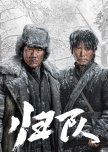
This amazing Chinese drama---one of the best of 2025---stars Hu Jun in the role of a platoon leader in the Northeast Anti-Japanese United Army during the 14-year Second Sino-Japanese War.After his team is scattered, Hu Jun, as Lu Chang Shan, searches for each of them–-bringing them back together, one by one to continue their mission to defeat the Japanese and reclaim their land.
I’m usually not a fan of war movies, but this drama is exceptional. It’s never boring, and never repetitive---showing how individual human beings dealt with the challenges of food shortages, prison camps, cruelty, deprivation, and loss.
While there’s plenty of suffering, this drama is not a downer. It’s human, entertaining, and sprinkled throughout with good-natured banter. In fact, it’s mostly uplifting, depicting the best of human nature, as well as the worst. The camera work, the OST, and especially the acting is immensely moving and poignant.
Americans, as a whole, unfortunately, have almost no knowledge of the degree to which China suffered, but ultimately prevailed, in World War II. Even this drama barely scratches the surface. (For a more granular and depressing account of the unmitigated horrors of this conflict read The Rape Of Nanking: The Forgotten Holocaust Of World War II by Iris Chang.)
I can’t say enough good things about Hu Jun, who plays the heroic, but extremely kind and compassionate, Lu Chang Shan, a man who nurtures each member of his team as needed, and is also wiley and shrewd when necessary. Other actors who deserve respect for their portrayals are too numerous to mention–really, almost all of them.
I don’t often give praise like this. But this series is a triumph of Chinese cinema. Don’t miss it.
Was this review helpful to you?
Slower than a snail in a snowstorm
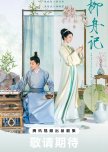
Another series that felt like it dragged in places–the pacing was off, the characterizations were inconsistent, and it sometimes zigged when it should have zagged. Hard to tell what the problem was exactly. I blame the script because it seemed that the actors tried their best, at times, to breathe life into this walking corpse.In the first half of the drama, we’re introduced to the two leads. Although an amnesiac, Miantang, the wife, is the perfect woman: beautiful, graceful, competent, always smiling and tactful, and unfailingly supportive of her miscreant of a husband. In other words she’s robotic and uninteresting. (Chinese movie makers–why do you keep giving us female leads like this?)
She’s also intelligent enough to figure out, eventually, that she’s being manipulated by her sorry excuse for a mate, who gaslights her whenever she tries to get a straight answer about their relationship.
But she’s such a perfect spouse, he begins to fall in love with her in spite of himself (of course he does). And this happens just as she starts to get her memories back. This would have been a great opportunity for the writers to show her shock, surprise and anger when she discovers that she’s been deceived–but no. As often happens in this series, this dramatic opportunity was squandered with a shrug. Instead, we just observe her coldness beginning to emerge–as she quietly plots her revenge.
This woman is not content to just pay him back in kind. She’s hellbent on murdering him.
I have to confess that her sudden switcheroo seemed a tad excessive. This same husband had been (at times) considerate and kind, had never laid a finger on her–and had even saved her life.
At this point, we discover–with no foreshadowing or preparation whatsoever–that this woman is NOT the helpless victim that she pretends to be. She’s one tough cookie, with a rough and tumble past. (I’d give you more details but the spoiler police will come knocking if I do.)
This is so out of character compared to how she’d been presented up to that point that I felt disrespected as a viewer.
As for the ML, his character is equally schizophrenic. As a prince, he can be dignified and responsible when he needs to be. But when he tries to be flirtatious--or when he drinks too much--he often behaves like a sappy, doltish adolescent. The actor does his best to hold this mishmash of personas together, but the dialog and set up isn’t skillfully conceived or even coherent–leaving him with not much to work with.
Last, but not least, is He Zhen, played by actress Liu Lingzi. This woman is required to be almost expressionless throughout the series. She has a monotone affect–she never smiles, she never laughs. And as a result, it’s hard for viewers to see why the Marquis of Zhennan likes her. I can’t understand why the writers couldn’t have given her a little more vitality.
There are some beautiful parts of this drama – for example, when the Empress uses the metaphor of the caged bird to explain her feelings to her husband. That was a very nice touch.
Was this review helpful to you?
Very Touching
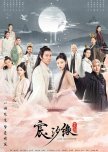
While I found “Senior Deity” winsome and charming–he didn’t seem quite as quick on his feet in some of the battle scenes as the God of War ought to be.Don’t misunderstand me, ninety percent of the time Chang Chen is masterful as a leader torn between love and duty. At times, he’s tender and indulgent toward LingXi, and at other times stern and punitive. I thought he was perfectly matched to the role.
Still there are glitches. In her stint as a mortal, the FL keeps mistaking “SD” for her 20-year-old fiancé, an illusion it was hard for me to sustain, even assuming some immortal legerdemain.
Speaking of the FL, too much praise is heaped on her “adorableness,” “cleverness,” and “kindness” before she’s earned those accolades. LingXi doesn’t start out as the strong, admirable woman she later becomes. And trying to pump her up like this felt like a cheap trick.
In the beginning she’s petulant, vapid, and given to adolescent mischief–but that’s part of her appeal to the stiff, impassive, and excessively dignified deity. He IS somewhat frozen–both figuratively and literally. Still, there’s something very endearing about him.
There are many sloow patches in this drama, and even some gratuitous plot meanderings that were annoying, rather than helpful. Some of the secondary characters seemed to have no function except as fillers. The script needed to give them something to do, anthing, other than stand around whining, drinking, or commenting on the leads.
The worst of these was Yuan Tong, the female general who sapped my energy each time she showed up thinking dark thoughts that never went anywhere. (I blame the script, not the actor.) Did we really have to see her–at least twenty times–doing a whole lot of nothing? Like waiting for a broken traffic light that just wouldn’t turn green.
On the other hand, the costumes and the imaginatively conceived architecture, buildings, and furnishings made it a feast for the eyes.
One other thing – Pay attention to that little animated dog. His reactions and behavior, often in the background, are pretty cute. My only problem with him is that he's knocked unconscious by the bad guys waay too many times. When animal abuse keeps happening–even fictionalized animal abuse–viewers start normalizing it.
Was this review helpful to you?
Enjoyable
I didn’t think I’d finish this series, but, truth be told, it got better and better as it went along. The mournful Buddhist theme set against the many shots of the beautiful countryside gave the whole drama a rich, poignant feel. I liked and cared about the characters–the secondary ones as well as the main ones. The pacing worked for me, and the plot wasn’t overly complicated.But I do have a few nits to pick.
1. The continual use of crows as omens of evil and doom annoys me. This is a recurring problem in Chinese films (and in some western films too). Can we get away from this stereotype?
Everywhere crows have suffered at the hands of humans. They’ve been shot, snared with wire, tortured and murdered by the thousands, and they don’t deserve it. Crows are curious and incredibly intelligent animals.
Crow families work together to build nests. They show empathy and compassion and will help a friend or neighbor if they can. (Look up the research.) They’re not the evil demons they’re often portrayed as in series like this one. I’d like to see them catch a break with movie makers. Don’t give viewers a reason to persecute them. Please?
2. This drama was supposed to be a romance. Did the main couple even kiss? There was one scene of two shadows on a window screen coming together. That might have been a display of affection--or not. The “seduction” scene between the two second leads had all the warmth of a congealed blob of refried beans.
3. Now and then a character gave a speech that sounded like a sermon or something from Economics 101. For example, I didn’t mind that Mei Xin talked about the financial exploitation of the lower classes by the upper classes, but it went on and on and ON.
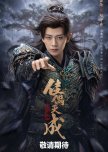
4. It was nice seeing Riley Wang in a different kind of role (serious Taoist cultivator), but there wasn’t much juice in that lemon. He didn’t smile once. I like Riley better when he plays a bad boy.
5. As for the ML, he was something of a cipher. His expression never changed, even when he was looking longingly at the FL. But as the story went on, he somehow found ways to express his feelings through subtle glances and gestures. I ended up really appreciating his toned-down character and the actor who played him.
Overall, entertaining and thought-provoking.
Was this review helpful to you?
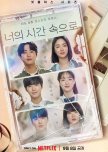
Required a flow chart...
...to really get the details of what was going on. And a spread sheet would’ve come in handy too.The time travel elements were confusing, even for people like me who read a lot of a time travel novels. The trajectory of characters going backwards and forwards in time wasn’t always clear.
Two characters were sharing bodies with other characters in at least three time periods. One character, with two different names but a single identity, was hopping back and forth between decades and even managed to get together with himself at one point–so the two of them (one of them?) could figure out what to do. AAAaaarrgh!
The dubbed English actors all spoke in monotonous voices, and the acting seemed stiff, awkward, and mechanical. It was a noble attempt–with a lot of problems. Five stars.
Was this review helpful to you?
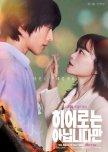
IF YOU LIKED IT...YOU PROBABLY SHOULDN'T READ THIS REVIEW
It's hard to believe a story about a family with superpowers could be so boring. With a couple of exceptions:What I liked:
1. The special effects were good. Don't want to give it away, so I won't mention specifics.
2. I really liked Bok Dong-hee, Gwi-ju's sister. She was hilarious and charming.
3. The father, Oh Man-seok, also plays the dad in SOMETHING ABOUT THE RAIN.
One of the reasons I like Oh Man-seok, other than his eternally cheerful demeanor, is because he's one of the few Korean actors in a major series with less than a lily-white complexion. Hey, Netflix, how about more brown-skinned Asian actors in your series? Thanks.
4. A satisfying ending.
What I didn't like:
1. My main problem is that this series lacks any logical coherence. Why is there an elaborate wedding--with no guests--mind you, when A) the groom didn't actually propose, and B) the bride never accepted the non-proposal? Did either of these two ever say "I love you"? Did I miss something? This is the stiffest, least-convincing marriage ceremony I've ever seen.
And each person in the family is aware that the marriage is a fraud, and an attempt to steal their money. And everybody goes along with it. Really?
2. Then there's the matter of the brother, Gwi-ju, who apparently needs to "save" someone. While at first, Gwi-ju is out to "save" a dude that he worked with, suddenly the target of his obsession changes.
He's now set on "saving" Do Da-hae, a woman who's moved into the house under suspicious circumstances.
But as Ms. Do points out to Gwi--ju, in a rare display of logical thinking--rare for this series anyway, she actually doesn't need saving as she's a healthy, fully functioning woman. Therefore she must have survived whatever horrible, no good, very bad thing happened to her in the past. You know, that thing that Gwi-ju has a bee in his bonnet about.
3. Firemen don't stand around giving speeches to someone they're trying to save while the building's going down-but someone does that in this drama.
4. The actress who plays Gwi-ju's daughter is adorable, but the romance between the character she plays and the most popular boy in the school is, well, hard to believe. This is middle school, folks.
TO BE CONTINUED... *************
Later: This series is so illogical it's impossible to suspend belief or care about anyone in this family. A couple of questions:
4. What exactly are the rules for Bok Gwi-joo's superpower? At first, he can only revisit times when he was happy-until Do Da-hae enters the picture. Then the rule changes: he can only revisit happy times when he was with her. But then the rule changes again-he goes back to a happy moment he shared with his classmates, without Do Da-hae. Then it changes again, he watches a happy moment between his mom and dad-but wait! A very young Do Da-hae rides by on her bike. Whaaa?
It feels like the writers made it all up as they went along.
5. What side of his neck is Bok Gwi-joo's mark on? Is it on the left? Is it on the right? On both sides? "They say it will never go away." Who said that? I don't remember anyone consulting a doctor.
The ending made up for a lot...but, but, but...why couldn't Mr. Time Travel come back on his own recognizance? It's not like he hasn't done it 1000 times.
Writers, you can do better!
Was this review helpful to you?

Mature and engrossing
No glossy fairy-tale sentimentality here. This series starts as a multifaceted examination of love–showcasing its promise, its challenges, its various manifestations, insecurities, and difficulties.An amazing group of actors show us the pressures, problems, and power games experienced by a group of friends, all young adults, caught up in the ups and downs of romance – and its many complications.
The ML and the FL are both dedicated to discriminating what’s real from what’s bogus–but in different domains. The ML (played by Liu Yuning) specializes in sussing out authentic designer handbags from copies, whereas the FL tests various men to see if their romantic intentions are sincere–or not.
While the ML’s profession is considered reputable, the FL’s methods are a bit sleazy--veering off, at times, into techniques that could reasonably be called entrapment.
As for genuine, long-lasting love–is there any such thing? Or does love eventually deteriorate because of the many unavoidable pitfalls, problems, and contradictions? The drama asks the question, but never really provides an answer.
Edgy and quirky, a variety of experimental techniques mirror the ambiguity of the story telling. For example, indoor scenes are sometimes filmed with a gauzy filter, making it look as if they’re encased in fog
Gao Wei Guang, who plays Old Gong, adds humor and flair. He’s a reckless, creative, and toxic presence in the drama. As it turns out, he’s also someone who has a surprising moral sensitivity and capacity for friendship.
Unfortunately, the last few episodes really drag. For example, one couple’s divorce seem to go on forever. Other couples cycle in and out of their problems a few more times–I stopped caring about who was going to end up with whom.
Also the director completely changes the tone of the last episode–giving the whole drama a weird send off. I much prefer it when the writers choose the ending of the series themselves instead of asking the viewers to figure out what happens.
But altogether a surprising and innovative series.
Was this review helpful to you?
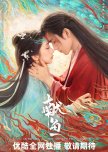
A few problems
I’m not sure exactly what’s wrong with WHEN DESTINY BRINGS THE DEMON, but this drama just didn’t land for me–partly because it’s so simpleminded. For example, when the demon army invades the Grandmaster’s stronghold in ep. 20, the demon fighters are all dressed in black. The good guys are dressed in white. Pretty convenient.There are many parallels in this story with LOVE BETWEEN FAIRY AND DEVIL. There’s a dragon buddy in one, a snake buddy in the other. Fairies and demons fight each other in the first. Immortals and demons are at war in the second.
The female leads in each series are different. While Orchid is sometimes irritating in LBFAD, she’s also lovable, funny, and appealing, and she grows into a strong, impressive woman.
But the writers of WHEN DESTINY BRINGS THE DEMON infantilize Tingyan. She pouts and simpers and makes eyes at Jiao. Her goal is life is to eat, drink, and try on pretty clothes. It doesn’t hit home with her until about halfway through the series that her boy is a serial killer. Also, who is this woman? Is she a demon? a reincarnated human? or a fish?
What’s motivating the ML? Power? Revenge? The attainment of higher cultivation levels? Personal animus? The villains seem like a bunch of feckless, bungling clowns. It’s hard to take them seriously. Mostly they seem like a swarm of annoying insects buzzing around Jiao’s head. Every once in awhile he brushes them all away.
Arthur Chen as Sima Jiao is disarmingly handsome, but that’s not always an advantage for someone wanting to be taken seriously as an actor. His looks make him subject to everyone’s projections. Sima Jiao, is a pit of hatred, negativity and despair– in other words, a damaged soul.
The writers need to show us how someone who’s never known a kind word, can reach into his heart and find a boatload of self-sacrificing love for Liao Tingyan, a well-meaning, not-too-bright klutz. But character motivation is missing throughout. They don’t give Chen enough to work with, I’m sorry to say–so Sima Jiao’s transformation into Mr. Wonderful isn’t convincing. Or at least it wasn’t to me.
The comedy scenes in WDBTD are repetitious and not very funny. It’s cute that Liao Tingyan keeps using 21st century lingo and 9-to-5 work metaphors in her “employment” with her “boss,” but after the third or fourth time this device gets a little old.
The characters in this drama are always telling the viewers what’s happening: “Why isn’t the Grandmaster here? Looks like he’s figured out our plan.” Or, “If I can win the Grandmaster’s favor, perhaps I can help Mother through this crisis.” Weak writing.
The special effects and CG make many scenes seem low-budget.
My greatest wish for Arthur Chen is that he can find a substantial role that truly inspires him--maybe some kind of an eccentric character–a role that he can individualize and make his own. This drama doesn’t give him that.
Was this review helpful to you?

Awesome
MOVING is just as good as the most of the reviews say it is. It’s basically an entertaining thriller, and almost every episode ends in a cliff hanger. Each character is a complete individual--even the villains aren’t totally evil. Everyone’s more or less a victim of their particular circumstances. While certain characters have powers, their abilities often create as many problems as the solve.The story manages to be surprising in spite of the overworked theme. Unlike some other Korean and Chinese dramas, this one never once made me feel that the writers were making it up as they went along. The story was well-crafted, tightly woven, and believable within a fantasy framework.
The back story was parceled out a bit at a time, and sometimes the writers would circle back and fill in the details of a previous scene adding texture to the plot or more dialog to a previous conversation. The visual effects and ost during the final credits for each episode enhanced and deepened the atmosphere.
Because the plot, characterization, and logical development were so well-done, I have very few criticisms. I’ll just mention a couple. It bothered me that Mr. Electric, who went AWOL twice with disastrous effects to the company’s property, was allowed to keep his job as a bus driver. A few weeks before the school year ends, practically the entire school collapses in rubble and ruin, and yet during the graduation ceremony, a few weeks later, everything looks as good as new.
But I’m being a bit picky--it's really quite good.
Was this review helpful to you?
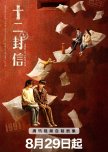
Best Chinese Drama I’ve seen in 2025
I give high ratings to dramas that:1. Entertain me.
2. Teach me something.
3. Or have heart – the rarest.
This is a No. 3.
I can’t say this is a perfect production, but I couldn’t help but fall in love with the two leads (and also with many of the minor characters). This was a MUCH more appropriate role for Yinglu Wang, than her role in WHEN DESTINY BRINGS THE DEMON. She plays a strong woman with sensitivity and nuance. As for Yiran Zhou, he commanded every scene he was in.
Attention to detail really boosted the quality of this drama. The cinematography, the ost, the editing--all were outstanding. I usually don’t like an ending that doesn’t wrap things up neatly -- but, for me, this one worked perfectly. We see all the different sacrifices various characters make for love – and at the end, the most rigid character, makes the ultimate sacrifice. (Although maybe not..?)
Speaking of attention to detail, I read that FOUR orange cats were used in the making of this drama. Cats being cats, that helped ensure that at least one of them would always be in the right mood. Another endearing detail–a woman who’s nine months pregnant is the action hero who saves the day.
Loved it!
Was this review helpful to you?
Excellent Drama
The land is truly the main character in this drama. The need for land–the work it entails, the greed it incites, and the love it inspires–is central to everything that happens.This drama is so well acted by so many that it’s hard to know who to single out. But I have to mention, especially, Dahong Ni, who plays the FL’s father, a man so craven that he chooses to subject his daughter to rape and disgrace rather than part with the money needed to save her. It’s not easy to play a villain, someone who’s both utterly despicable–and yet believable and understandable. He’s brilliant in this part.
Also, the patriarch of the Feng family, played by Yongjian Lin, is another character twisted by greed–yet he’s somehow likable, even lovable at times. His wife, in a role played by Chi Peng, is an absolutely kind, simple, and understated human being who’s a healing presence in the family. Both these actors did an outstanding job.
NOTE ADDED LATER: I was so pleased to see that Chi Peng won a Magnolia Award for Best Supporting Actress in this series. She so richly deserves it. For those who don’t know the Magnolia Awards are widely considered to be one of the highest and most respected honors in the Chinese television industry.
Like many people in both China and America, I come from a long line of farmers, many of them miserably poor. I felt a pang of recognition and sympathy for these simple, hard-working folks, some so deprived they don’t even own matches.
Ownership of land is all important in this series--those who don’t have land are at the mercy and whims of their landlords. The constriction of their souls have made some of these landlords rapacious and unscrupulous. The working poor, who exist at the edge of starvation, struggle to grow enough food to feed their families. But many still find it in their hearts to share what they have with their neighbors.
One jarring note–whenever any one of the poverty-striken characters opened his or her mouth, I was greeted with the sight of perfectly aligned, gleaming, white teeth–which kept reminding me that I was watching a piece of fiction. Also, I found it a bit unbelievable that (in episode 29 and 30) marginalized, food-insecure human beings would so easily give up their grain reserves in order to feed a mass of unknown refugees swarming through their village. Maybe this was the charitable thing to do, but not psychologically credible, given that every episode prior to this had shown how prized every morsel of food was.
In many Chinese dramas there’s one character who’s so perfect he or she isn’t quite human. In this series that character is the saintly Wendian. (Hey, Chinese movie makers–may I make a suggestion? You don’t need to do this to drive the point home.)
This is the first Chinese series I’ve seen that focuses on the rural poor. It was a welcome change. THIS THRIVING LAND is a fine drama and very watchable.
Was this review helpful to you?
Cartoon cliches
Series writers, directors, and other such craftsmen are masters of misdirection. In THE TRAUMA CODE, we’re encouraged to focus, indeed obsess, about Baek Kang-hyeok, the series’ enigmatic, superman doctor, while all manner of insanity is swept under the rug.What kind of insanity? The buffoonish behavior of a certain hysterical hospital administrator who screams, yells, and bloviates while bodies are piling up in the corridors. The fact that said hospital has such a skeletal staff that minimally trained people are recruited to do serious surgery whenever the head dude isn’t around. The constant catastrophizing as our hero theatrically attends to one patient after another–once under a hail of bullets, once while clinging precariously to the side of a cliff. Each time the viewers are assured that the patient’s chances are slim to none–but somehow they all pull through. (Well, almost all.)
I know. This is standard fare for a medical drama, especially one based on a webtoon. And, I have to admit, it’s done smoothly and almost (but not quite) convincingly here.
Was this review helpful to you?
Uneven but worth a watch
As an English speaker, trying to follow the plot through subtitles–I was confused. Why? The series features a set of identical twins with similar names who decide to temporarily switch places and take over each other’s lives. One actress plays both girls as adults. A different actress plays both girls as teens. In addition, there are the male leads who are interested in the two girls.That wouldn’t be so much of a problem if it weren’t for the fact that a lot of back story has to be filled in for ALL of these characters. And the focus jumps back and forth in time and place without clear indication when a switch happens.
It helps that one of the twins has long hair and the other has short hair. The first twin (long hair) has a corporate job in Seoul, while the other one (short hair) works on a strawberry farm. This would work if they both stayed put. But, no, Ms. Office Worker comes home now and then and Ms. Strawberry Farm finds time to visit Seoul. Mi-ji, the twin with the bubbly personality, is likable but immature–she pouts, shrieks, sulks, and throws temper tantrums. It gets tiresome after awhile.
Each girl–when I say girl we’re mostly talking about these two as 30-year-old women–has to fake it when the people around them mention incidents that occurred before the identity switch took place. Viewers have to keep the timeline remember the date of the switch–and also whether or not the short-haired girl is wearing extensions in order to pass for her sister.
Let me add that everyone in this series has psychological issues, including the parents, the grandmother, and another older woman who, it turns out, has also switched identities with someone else. Aaargh!
While the actors do a skillful job with the script they’ve been given, the plot was just too convoluted for me. I could follow it, but it made my brain tired. And in some places, things just weren’t believable. For example, each of the male leads has to convince the viewers that he’s only interested in ONE of the two girls–and that he can not only tell them apart (although their mother can’t)–but loves his chosen girl’s unique characteristics.
Maybe it could be true in the case of the dude who loves the girl who has some verve and personality, but the other twin is despondent, poker-faced, and impassive–and she seldom responds or reacts to her admirer in any way whatsoever. Also, there’s a sexual abuse situation that’s so minimal that if you blink, you’ll miss it. But all the characters talk about it endlessly. I loved the older characters, especially the mothers, played by two amazing veteran actors.
Was this review helpful to you?
This review may contain spoilers
Cotton candy with a Buddhist veneer
I was in the mood for a dreamy fantasy, and the first episode of THE UNCLOUDED SOUL looked like it might do the trick. But by episode 2, I began to realize it had turned into a children’s flic with cute little pixies, a demon school for newbies, and a menagerie of talking animals and plants. The meanie demons (not the nice ones) were always dressed in black–so you could tell who the bad guys were. The decor reminded me of Snow White, Cinderella, Peter Pan or even the Wizard of Oz with a dash of Harry Potter thrown in.At first, Demonland ( Valley of Ten Thousand Demons) had a feel-good glow. As for the plot–there were enough contradictions to confuse a quantum physicist. When the FL accidentally tied the match-making red thread around her own wrist and that of the ML, he told her that from now on the two of them would never be separated. They would forever have to stay thisclose to each other. Two scenes later, the FL is back in class with the other kids (her demon besties), but the ML is off doing grown-up demon stuff.
There’s a school “test,” which is described by the “teacher” as having two goals 1) steal a pillow, and 2) make a human child cry. The pillows are duly stolen, but...make a child cry? Really? I was hoping for Darth Vader, but these folks have all the menacing gravitas of a group of trick-or-treaters on Halloween.
The FL learns a spell to make silver, but seems to have totally lost this ability in a later episode when she needs a couple of ingots to pay a merchant. A certain character, supposedly an immortal, is stabbed to death. Other “immortals” are also killable. Little things like this had me grinding my teeth.
On the other hand, the FL is cute and spunky. The ML, in spite of being a demon, is the perfect boyfriend: handsome, protective, warm, and sensitive. He even learns to cook the FL’s favorite foods for her birthday.There’s something sweet and poignant in their relationship that kept me hanging in there. Then there’s the dashing captain whose only flaw is that he takes himself way too seriously – and that he’s a little too bonded with his sword, who is also his sister (don’t ask).
A group of human women (including the FL) are sent to a mysterious island ruled over by a a beautiful immortal who has kidnapped the ML and injected him with poison, in an attempt to break his spirit. These women are forced to cook and clean and dodge magic manifestations in a series of degrading competitions, meant to bring out their greed and selfishness – all for a chance to become immortal. Mixed in with this display of sappy banality is a haunting atmosphere of tragedy and gloom that hangs over everything like a pall.
In short, this series doesn’t seem to know what it wants to be. Is it a children’s story? A romance? A tragedy? A Buddhist morality play? I felt pulled in a dozen different directions at once.
*******************
Was this review helpful to you?
This review may contain spoilers
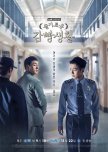
Not perfect, but close
I’m not a fan of baseball or prison stories, so you’d think this drama wouldn’t be for me.You’d be wrong. It's excellent.
PRISON PLAYBOOK walks a narrow line-sometimes basking in sappy pathos, and at other times careening into hilarious caricature.
The creators of PRISON PLAYBOOK get it mostly right-with a few flubs. Is it always believable? No. But the story is original and entertaining enough for viewers to overlook the relatively few flaws.
Park Hae-Soo nails it as Je-Hyeok, a lovable, honorable lunk-head, who winds up in prison. But shows he has some brains when push comes to shove.
Jung Kyoung-Ho's portrayal of Je-Hyeok's loyal best friend is so convincing and touching that I now want to watch every drama he's ever been in. Another stand-out was Choi Moo-seung. He brought tears to my eyes more than once. What an incredible performer!
Captain Yoo, played by Jung Hae-In, enters this drama as a supposed vicious murderer. Yeah, right. This sweet-faced actor is about as scary as a kitten. In every other drama, he plays the perfect boyfriend - see LOVE NEXT DOOR. Not to worry. He improves throughout--as do most of the others.
A few negatives: Lots of product placement going on-which mostly didn't interfere with the meandering plot. The wrestling and fighting between the cell mates often looked staged. And when Go Park-sa was suddenly rushed out the door, a promising secondary plot involving corporate malfeasance was cut off at the knees. What was that all about?
Soundtrack: When a mournful oboe is wailing in the background or a saccharine piano melody is plucking at our heart strings - additional sound effects interject a note of humor and frivolity (dharma drums, off-key chords), as if to say, "You guys aren't taking all this too seriously, are you?" Nice.
I could have done without the incessant bird whistles.
In a real prison, things aren't quite as benign as presented in this series. Or so I’ve been told.
Here, the seven or eight rotating cell mates-a unique collection of lock-down losers-are all endearing and likable. Most are societal victims. Some get justice, some don't.
Sort of like life.
Was this review helpful to you?


