



Top tier opening credits
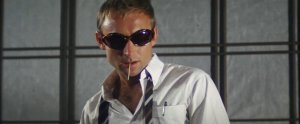
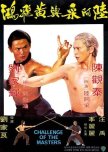
It's fascinating that for his second film as a director, Lau Kar-Leung would choose to create his own version of the Wong Fei-hung legend, ever the visionary though, Challenge of the Masters sees Lau decide to concentrate his attentions on a young, callow Wong Fei-hung in what was a near-revolutionary statement at the time. Although the film's title implies plenty of duelling, it actually thrives less on narrative surprise and more on the sheer pleasure of watching mastery forged through discipline, pain, and stubborn will. This is not the confident folk hero of later stories, but a hot-headed, frequently humiliated young man whose talent is obvious and whose character is very much under construction. Obviously, being Lau's second film as a director yields plenty of rough edges; his filmmaking style not quite knuckled down yet. Grounding the limited action in a sense of lineage and authenticity, the few martial arts bouts that do make an appearance are to his usual standard, although they aren't the focal point of the film, as more emphasis is given to rigorous and realistic training sequences. The sequences dominate the film, staged with an almost documentary clarity; every improvement feels earned, every strike the product of repetition and refinement. Being this is Gordon Liu's first leading role, he plays Wong with an engaging mix of arrogance and vulnerability, a brilliant feat as he lets us enjoy both his cocky missteps and his gradual emotional tempering. There's a gentle humour running throughout, especially in the mentor-student dynamic, but it never undermines the seriousness of the training or the respect for tradition. While the simple narrative thrust of Challenge of the Masters is enough for most filmmakers, a director of Lau Kar-Leung's lustre requires something a bit meatier to get his teeth into, yet the film still manages to offer up a well-balanced combination of action, drama and moral philosophy, albeit with repetitive redundancy and some wobbly pacing. Opening credits are top-tier, though.Was this review helpful to you?
Not enough Wong Jing-ness
Offering up a weird, part quasi-spiritual sequel to his own remake of Buddha's Palm and part spoof of the whole phenomenon, Taylor Wong's Kung Fu Vs. Acrobatic is a gloriously scrappy feast of pure adrenaline, minimal budget and maximum commitment. Far from polished and definitely not subtle, there's an attempt at crafting a modern-day homage to the black and white Chinese fantasy flicks of yesteryear; unfortunately, that all seems to have been thrown out from the moment the opening credits have finished rolling. The film has all the right ingredients for a lively, engaging romp, but the concept seems to have been stretched to 100 minutes, which ultimately feels longer than anyone on set had material for. It definitely feels like the sort of film that Wong Jing would have been better off directing himself, as Taylor Wong's direction is fine for what it is. It just leans way too far into uninspired slapstick, complete with obnoxious sound effects, despite the presence of a few good jokes, Yuen Wah's hitherto unheralded break-dancing skills and the sudden appearance of a mystical hammer-wielding cartoon ninja turtle. The action certainly speaks louder, and the film's cast is clearly putting in more effort than necessary, with Andy Lau having a limitless amount of charisma to burn, and the gorgeous Joey Wong is merely reduced to window dressing, presumably drumming her fingers whenever she's offscreen. Ultimately, despite some genuine enthusiasm here and there, Kung Fu Vs. Acrobatic amounts to little more than daft fun; had it been made a couple of years later, perhaps it would have found better luck, but as it stands, it's a lacklustre, oddly disheartening send-up of films that were far wittier and imaginative.Was this review helpful to you?
Beautifully cruel and deeply pessimistic
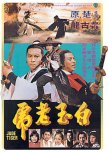
Exploring the merits of loyalty with an almost Shakespearean level of intrigue, The Jade Tiger is a stylish, labyrinthine wuxia mystery that delves deep into its obsession with deception, hidden identities and psychological gamesmanship. Less concerned with heroic purity than with paranoia and moral rot, the film plays more like a martial-arts whodunit, rather than any form of traditional wuxia, where every character is lying, manipulating or quietly preparing to betray someone else. Plunging headfirst into a web of false alliances and shifting motives. Heroes are rarely what they seem, villains are disturbingly charismatic and the line between justice and cruelty is intentionally blurred. The story can feel convoluted, sometimes aggressively so, but the confusion only adds to the film's atmosphere, mirroring the characters' own inability to trust anything they see or hear. This is a world where intelligence is more dangerous than strength, and virtue offers little protection. Directed with near effortless style by Chor Yuen, the film benefits from some exceptional visual design with plenty of fog-bound sets and blood red suns leaking into the running time, interiors feel claustrophobic and theatrical, while compositions emphasise screens, doorways and layers that only add to the theme of concealment. The action is sharp, with way more exploding fake eyeballs and hidden blades within a blade within a blade than you'd expect in a period swordplay picture, but secondary to the mood; it all often arrives suddenly and ends brutally, violence seems inevitable once secrets surface. Performance-wise, Ti Lung is his typically reliable self, while Lo Lieh is deliciously villainous; equally, the beautiful Lily Li is easy to appreciate, and Yueh Hua brings plenty of stoic intensity. While it's certainly thematically darker than your average Shaw Brothers film from this era, what truly distinguishes The Jade Tiger is its cynicism in a way that's beautifully cruel and deeply pessimistic, suggesting that the martial world is already poisoned beyond repair.Was this review helpful to you?
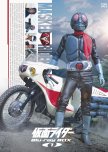
Rider Jump! Rider Kick!
Giving birth to one of the most endearing pieces of tokusatsu media on the planet, the influence of the original Kamen Rider is impossible to overstate. Its themes of identity, sacrifice and resistance against oppressive power still resonate even today, giving rise to the idea of the tragic, masked hero in one of its most enduring forms. Despite initially starting as a more mature option for tokusatsu fans, the show truly finds its stride when it stops taking itself too seriously and starts having fun with its pulpy premise, treating it with a surprising earnestness. Granted, some pretty notable factors have unfortunately dated the show in its accessibility, being an excruatingly 98-episodes long, it's very easy to get burnt out with how repetitive it can be, with some episodes showing their age more than others. While the show's adamant refusal to explain itself and sudden shift in tone due to Hiroshi Fujioka's injuries is jarring, the overall look and stylings of the show are so endearingly charming, visually rich and all around exciting. Rarely does it feel like the budgetary limitations get in the way of telling a good story. The fights are dynamic, the motorcycle action is aplenty, and the sound of the opening theme is more than enough to get the blood pumping as the Riders face off against a swarm of Shocker grunts or in a showdown against the monster. While certainly rough around the edges, everything about Kamen Rider is done with such infectious enthusiasm; throughout its ups and downs, its message never falters. Human life is more important than even peace and justice, and your humanity is not defined by your body alone.Was this review helpful to you?
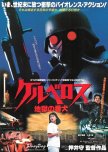
Check your expectations at the door
I feel like I need to check my expectations at the door with the Kerberos films, because Stray Dog has now made it two for two in terms of what the saga promises being vastly different to what it delivers. A voyage of self-discovery and an almost complete inverse of the claustrophobic and highly contained surrealist tone of The Red Spectacles, this film is instead slow, meticulous, delicate and at times insanely beautiful, almost as if Mamoru Oshii is attempting to channel the works of Takeshi Kitano. Scenes breathe, conversations feel incidental, and the camera observes rather than dramatises. It offers brief glimpses and hints to the wider armour-clad world of this tantalising dystopian universe, never fully delivering like its earlier companion piece. Instead, we get a slice of life holiday road trip, cosy and melancholic, usually encompassing a silent exploration of local scenery and Kenji Kawai's wonderfully relaxing musical score, in an attempt to find meaning in downtime. Oshii's direction is remarkably relaxed, the cinematography filled with bustling moments in dense urban environments, a dedicated segment in the portrait of a life. However, the tone frequently shifts between slapstick comedy and over-the-top gags, which ultimately makes the serious moments harder to realise, especially the incredible final act shootout, which felt so rewarding to see, bookending a long stretch of near-idleness. I need more of that in the next films because I don't think I could take being blue balled like this for a third time. While there are definitely elements to Stray Dog I liked, being so quiet, strange and disarmingly casual, it all feels in service of a saga that squanders its awesome setting. Here's hoping Jin-Roh delivers...Was this review helpful to you?
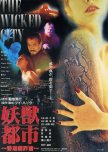
A neon-soaked cyberpunk-infused drug trip
A feverish, neon-soaked descent into a cyberpunk-infused drug trip at its most excessive and imaginative, Tsui Hark's adaptation of The Wicked City is less concerned with coherence than with spectacle, atmosphere and a restless sense of urban dread. Playing exceptionally fast and loose with its source material, the pacing is absolutely relentless, opting for a mafia-style soap opera with a doomed love at its core, rather than the political ramifications of its origins. The visual insanity of the film feels almost unearned in the grand scheme, with Hark and director Peter Mak unleashing a barrage of practical effects, grotesque creature designs and kinetic action sequences that are truly chaotic. It all oscillates between horror, action and dark fantasy, delivering sex, violence, bizarre sensuality and outrageously colourful lighting. Yet, beneath the excess lies a familiar Tsui Hark preoccupation: anxiety about modernity, urban alienation and the hidden rot beneath a glossy metropolis. There's a deep-rooted obsession with transformation permeating throughout, bodies mutating, realities slipping, identities dissolving, creating a sense of constant instability. At times, this works brilliantly, evoking a city on the brink of moral and supernatural collapse; other times, it overwhelms the narrative, which can feel fragmented and rushed. The performances from the central cast are entirely serviceable; they function well within Tsui Hark's heightened, stylised universe. Leon Lai operates as the brooding protagonist with stoic restraint. At the same time, Michelle Reis brings an alluring, tragic presence that fits the film's noir-inflected tone. A fascinating artefact of unrestrained creativity, where ambition matters more than polish, seductive, violent and perpetually on the verge of completely losing its sanity, there's a method to The Wicked City's madness. Its storytelling is messy, its mythology underexplained, and its indulgences plentiful, but if you're willing to meet it at its level, it's a wild, flawed and ultimately unforgettable ride.Was this review helpful to you?
Was this review helpful to you?
Was this review helpful to you?
Poetic
As a musical adaptation of The Butterfly Lovers, The Love Eterne really surprised me, especially given my viewing of Tsui Hark's adaptation at the start of this month. While part of me still prefers that version of the story, it's hard to fault an infectiously cheerful and kaleidoscopic musical, loaded with gorgeous sets and charming sentiments. Shot on the Shaw Brothers backlot, writer/director Han Hsiang Li and cinematographer Tadashi Nishimoto soar with a vast vision that covers the film in shimmering colour that dazzles in the elegant melodic numbers. Displaying an impressive sensitivity towards the courtship, Li uses graceful wide shots to gaze at the blossoming romance. Adapting a well-known traditional story, the screenplay by Han Hsiang Li beautifully employs the operetta numbers to create an epic operatic atmosphere that pulls at the heartstrings. Dipping the tale into Melodrama, Li hits a poetic note with the thoughtful dialogue capturing Bo's and Ti's eternal love, turning them into beautiful butterflies. Topped by some utterly spellbinding performances, The Love Eterne is essential viewing for any aspiring fan of Chinese Opera.Was this review helpful to you?
Beautifully bittersweet
A wonderfully bittersweet update on the classic Chinese Opera, The Lovers thrives on overdone romanticism, but one that consists of lots of muted slapstick, opulent visuals and unbearably cute moments that are impossible to hate. Foremost, this iteration of The Butterfly Lovers is very adorable, wacky, and endearing until it suddenly turns horrifically tragic. One where our doomed lovers cry tears of blood, the sky is tinted pink, purple and orange, with the earth swallowing them whole. It all builds with incredible emotional power as it progresses, largely thanks to Tsui Hark's trademark style and his excellent eye for beautiful imagery. The visuals for the film are utterly luscious, with stunning art direction, production design and cinematography. The performances and chemistry between Charlie Yeung and Nicky Wu are truly breathtaking; you can't help but fall a little in love with them yourself. The music is simply beautiful, elevating the events of the film and immersing it in a dreamlike atmosphere. Sometimes the music alone can make you feel like you're floating in a state of infatuation, or mourning a tragic situation with much sorrow and tears. While The Lovers plays on some rather familiar and dear emotions, it also succeeds at being perhaps the most self-indulgent romance ever heard of, but equally compelling and utterly watchable.Was this review helpful to you?
Typically lush and compulsively idiosyncratic
A wonderfully warm blend of fantasy, romance, and Looney Tunes-style comedy, don't be fooled by Love in the Time of Twilight's sappy title; it's all a mask for what is ultimately a nifty time travel murder mystery period piece. The setup for this elaborately staged romantic fantasy screams Tsui Hark from minute one. To bring his protagonists together, Tsui uses a series of overdone comedic coincidences which make American slapstick seem like slow-paced melodrama. There's muggy shtick, unfortunate puke gags, horribly dated effects and romantic misdirections aplenty. While it all seems agreeable, the alternate reaction may be one of bemused exhaustion. Sure, everything in this world is cute and silly, but it can also be tiring due to the bizarre leaps of logic which seem to operate as a sort of shorthand. The film is incredibly opaque story-wise, but Hark infuses his pictures with a kaleidoscopic energy and cinematic charm that's infectious and even beguiling, causing you to look past so many of these issues with a smile on your face. Helped wonderfully by the magnetic chemistry between Charlie Yeung and Nicky Wu that shines throughout; even when the duo are bickering nonstop, they make for an incredible onscreen pairing with performances to match. Typically lush, compulsively idiosyncratic and eclectic, but put together with the usual Tsui Hark panache, Love in the Time of Twilight is an entertaining little film that accomplishes more in its 100 minutes than most films can ever aspire to despite a truly bizarre series of plot devices and an occasionally incoherent narrative.Was this review helpful to you?
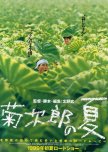
A master even without violence
I'm continually amazed by Takeshi Kitano's batting average, his ability to fashion both laughs and heartache in a single instant is unparalleled, Kikujiro is no exception to this rule. A film imbued with serene beauty, presenting a series of increasingly poignant tales, yet so enamoured with itself that it had me wiping away tears of both laughter and sorrow. The film risks tipping headlong into sentimentality more than once, but every time it comes close, Kitano quickly gets the film back on track, leaving us with the emotional effect but effectively stripping it of sugary excess, filtered through his distant and deadpan touch. It's a film that prompts real emotional engagement because it cares for characters that it is happy to paint in imperfect colours, allowing us to warm to them throughout the story rather than pushing them on us in a cheap hard sell. Kitano structures the film as a collection of almost stand-alone vignettes, narratively linked sketches whose comical thrust is sometimes underscored by a touching element of sadness, each of which contributes to our understanding of the two lead characters and their fitfully evolving relationship. His direction is sublime, capturing the loneliness of its two main characters with beautiful ease, his playfully surrealist leanings even more pronounced here than in his previous films. Combined with another enchanting score by Joe Hisaishi, with its gorgeous blend of strings and piano, Kikujiro paints a beautiful take on alienation and guardianship. Brilliantly acted, well-written, achingly hilarious and featuring some truly stunning photography, a bittersweet symphony of unaffected profundity and voluminous emotional depth that hits all the right notes.Was this review helpful to you?
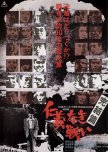
Ending on a high note
Despite Police Tactics ending on a high note, I guess Toei thought there was still more to tell with this story and mandated that we get a definitive ending with nothing left unresolved. The fittingly titled Final Episode maintains the series' exceptional quality, one that doesn't feel tacked on in the slightest, easily the talkiest of the series and burdened with the task of wrapping up dozens of loose threads, it's a testament to Kinji Fukasaku's incredible talent that he and his crew were even able to fashion a film out of so little material and on such a tight schedule. Though the incidence hasn't been perfect all along, five pictures deep, the trajectory of the ongoing narrative mirrors, at the first and the last, how the instalments are approached in terms of both film-making and storytelling style. The progenitor explored the violence of the yakuza in the early post-war years as Japan rebuilt, and it's quite fitting that as both written and executed it would bear wild, chaotic energy that was a veritable shot in the arm for the genre. Granted the pacing of this one is filled with stops and starts due to the loose structure of its script and the big players are mostly kept to the sidelines for the majority of the runtime; I'll be damned that it follows in the same vein as Deadly Fight in Hiroshima thanks to some exceptional performances from its cast, all of whom deliver fantastic performances. As compelling for its performances as for its historical detail, Final Episode keeps the energy level high, its technical aspects strong and its cast thoroughly engaging right up until the last body falls and the Battles finally end, one age of the yakuza fades to be replaced by another.Was this review helpful to you?
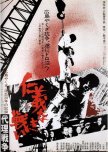
Power plays and ticking time bombs
Returning the focus to Bunta Sugawara's gangster Hirono and the ongoing brutal power plays after the events of its predecessor, Proxy War ups the betrayal, scheming and chaos akin to that of a ticking time bomb, counting down to detonation. Alliances are formed only to be broken the next second, rival parties are reconciled only to go at it again the next day. It's definitely the most deliberately paced entry so far, a slow burn and a convoluted one at that to be sure, as the yakuza get richer and expand, they also grow more cautious, preferring to handle situations with mediators at a dinner table instead of in a dark alley with a knife. A real testament to Kazuo Kasahara's meticulously crafted screenplay. Kinji Fukasaku attempts to show some semblance of restraint in the chaos this time, taking his time to build the field of play before it all erupts in sudden assassinations and gangland violence, there's not as much blood as in previous instalments, but when violence erupts, you feel it. Fukasaku's use of widescreen filming techniques is on full display here, filling every inch of the frame with movement and colour. You could watch these scenes multiple times and each time focus on something different because every actor is doing something, unwilling to go unnoticed even when the scene is being powered by someone else. Everyone fights for your attention and thanks to the continually strong performances from the cast, they all demand it. Backed by another exceptional score by Toshiaki Tsushima, it's hard not to appreciate just how well Proxy War tells its story. It has enough going on to fill out a three-hour film but the fact that Fukasaku delivered that story in under two hours is rather amazing, a tight film with not a single wasted scene or subplot. While the film may lack some of the chaotic madness seen in the first two films it more than makes up for that with a clear vision and a deftly plotted screenplay.Was this review helpful to you?
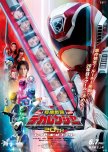
Tokuso Sentai Dekaranger 20th: Fireball Booster
1 people found this review helpful
Low key and laid back reunion
As a 20th anniversary celebration of one of Super Sentai's best teams, Fireball Booster is a surprisingly low-key little outing, granted the Dekaranger squad already had their big emotional reunion 10 years prior so I wasn't expecting anything on that level. For the most part, this plays a lot like one of the series' more traditional adventures, one that doesn't strive to tell a more "mature" story, instead opting for just another day in the life of our favourite Space Police. It helps that main series writer Naruhisa Arakawa returned to pen the film, alongside veteran Super Sentai director Katsuya Watanabe, the writing is hilarious and production values are to the same high standard I've come to expect from this era of tokusatsu filmmaking, it doesn't miss a beat. However, the main shake-up coming into Fireball Booster is the introduction of Rui, whose addition proves to be another example of a V-Cinema film putting forward a good idea but not having enough time to let it properly develop. Regardless, it's always a joy to see this cast together again; although I get the suspicion they must live rent-free in Toei's basement given how they are almost always ready to swing into action whenever asked, even coming out of retirement in Tomozaku Yoshida's case. It's something Saban would never be able to do with Power Rangers, even if the cast of SPD is more than up for it, he's too tight-fisted to ever let that happen.Was this review helpful to you?


