



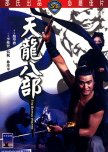
full-on, balls-to-the-walls wuxia fantasy
Some titles evoke worlds of wonder, others are dull and inspire confusion, but The Battle Wizard brings about very specific expectations of a magically adept sorcerer casting furious spells. What you ultimately end up with is giant snakes and fighting monkeys mixed with a claw-hand firing neanderthal and laser beams. A full-on, balls-to-the-walls wuxia fantasy, thanks largely to its lightning pace, crazy costumes and vicious bloodshed. Directed by Pao Hsueh-Li, the film delivers an avalanche of bizarre imagery and a candy-coloured explosion of artificiality. The pacing is chaotic, characters appear and vanish abruptly, while emotional stakes often get buried beneath the aesthetics of a psychedelic fairy tale that barely pauses long enough to make any form of sense. The rather inventive choreography mixes martial arts with supernatural gimmicks that constantly escalate the insanity. One duel might involve acrobatics and elegant staff fighting; the next involves a villain firing invisible force waves, while another summons venomous creatures. It never settles into repetition because the film keeps trying to outdo itself. Undoubtedly uneven and featuring some extremely questionable choices in its execution, nearly everything about The Battle Wizard feels like a nightmarish fever dream, where imagination is the name of the game and lunatic energy rules the day, embracing its own excess with contagious enthusiasm.Was this review helpful to you?
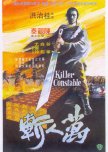
Bloodthirsty to the brink of insanity
Soaked in a nihilistic air of dread and foreboding, Killer Constable trades flashy heroics for a grim exploration of loyalty, desperation and moral decay. Imbued with dark, rainy atmospherics that mix the look and feel of the Japanese Chanbara classics with the craftsmanship of the Shaw Brothers hits, it's a wonderful feeling to have finally found a film by Director Kuei Chih-Hung that I can at last call good, and of course, it's the only wuxia he ever made. It's a stark, fatalistic and sobering tale where everyone is exhausted to the depths of their souls, every swordsman is a sadist, and every blade has to be bathed in blood before it's put away. It's not one to shy away from violence, covering the film and even the camera in contrasting splashes of bright red arterial spray as the brutally bloody swordplay dominates the runtime. Often shot in a way that's akin to a horror film, complete with spooky settings and moody lighting, all the while leaving us constantly haunted by increasingly surreal depictions of abject poverty and futile warfare. Despite moments of grandiosity overshadowed by sullen melodramatics and some deeply unsympathetic characters, where even the titular constable is cold-blooded and heartless, the performances of the film's cast shine. Chen Kuan-tai illuminates the screen with fighting skill and emotional passion, out-grimming the Grim Reaper as nothing stands in the way of his mission, not women, children or even his friends. At the same time, Ku Feng, as his equal, plays an especially homicidal robber-chief who thinks nothing of throwing all his men at their relentless pursuer; ethics of right and wrong become increasingly blurred, with only Yu Tsui Ling being the only cheerful performance in a sea of despair. Unfolding over a series of black, smoky, impressionistic wastelands, Killer Constable can be a deeply depressing experience just as much as it can be an incredibly thrilling one, a film that's both blessed and cursed by its unique style, downbeat, gloomy and bloodthirsty to the brink of insanity.Was this review helpful to you?
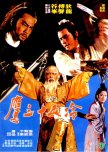
Understands the cost of violence and isn't afraid to sit with it
Filled with an ominous mixture of brotherhood and pessimism, The Avenging Eagle treats guilt and identity not as passing motivations, but as burdens that shape every decision we make. The well-worn narrative hooks of a killer seeking redemption are treated in a compact and free-spirited way, with a persistent sense of inevitability, almost fatalistic, hanging over the proceedings, but equally jumping from the present to the past with an energetic free spirit. Sun Chung is a director fully in control of the action, with a beauty in his scale and framing. It's definitely one of the prettiest Shaw Brothers productions around, thanks to its exquisite colour palette and extensive use of actual locations, rather than the more studio-bound productions. The action is certainly sharp and purposeful, never feeling gratuitous, with some relatively impressive flow and choreography. However, it can be exceptionally gimmicky with its overuse of choppy slow-motion and unintentionally hilarious freeze frames to emphasise moments of tension. However, this can be easily overlooked thanks to the dynamic performances of the three main cast members, Ti Lung and Alexander Fu Sheng command the screen as consummate warriors united in tragedy, while Ku Feng provides a suitably wicked foe for the pair; they certainly give the lyrical script a lease of life. Offering a careful balance of melancholic, reflective and occasionally bleak storytelling, The Avenging Eagle understands the cost of violence and isn't afraid to sit with it, a lean, mean story of vengeance and redemption that offers a dark and punchy treat.Was this review helpful to you?
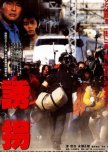
Gripping from its vertigo-triggering beginning to heart-stopping end
For a film that won three Japanese Academy Awards and helmed by the man who finally killed Godzilla, Abduction sure has fallen into almost complete obscurity, one that I've been after for a very long time. Taking the classic crime thrillers that dominated 60s Japan and filtering them through a deeply melancholic yet utterly gripping 90s lens, the film excels in its quiet desperation of people caught in a crisis, no surprise given director Takao Okawara's impressive line-up of Godzilla films to his name. It's the only one of his directorial efforts not to feature heavy special effects work, no guys in monster suits, no miniature cities being levelled; instead, there's a visceral urgency to the action, with plenty of slick images and an atmosphere rich with tension. Though the story seems simple enough, there's more to the titular abduction than meets the eye, consistently twisting and turning, all coming together in a beautifully executed narrative, confidently guided by Okawara's hand, often leaving us with a gnawing hunger to find out what happens next. The pacing is steady, sometimes even dry, but deliberately so, mirroring the slow, frustrating reality of an investigation where leads don't pan out and time is always slipping away. Everything about its production is so thoroughly absorbing, from its razor-sharp editing to its sumptuous photography. Even the musical score by Takayuki Hattori, despite having never been a huge fan of his work, especially his Godzilla scores, delivers some absolutely enchanting cues, all rounded out by truly exceptional performances from its cast, headed by the Tokyo Drifter himself, Tetsuya Watari. Being Okawara's penultimate film, Abduction is truly amazing, gripping from its vertigo-triggering beginning to heart-stopping end, a real shame that he has remained absent from the director's chair ever since the turn of the millennium.Was this review helpful to you?
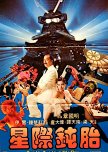
Definitely one that should have been left in the Shaw Brothers vaults
An almost desperate attempt to stay relevant during Hong Kong's emerging 80s New Wave movement, Twinkle Twinkle Little Star is a seemingly Frankenstein'd fever dream of sex, sci-fi and ill-advised musical numbers. A serial farce that, even with logic and reason relegated to afterthoughts, the weirdness that shows up here is mystifying in its inanity. It feels like each of the six writers was separately sequestered and asked to write fifteen minutes' worth of material each before being thrown together in a blender; the result is a pretty risible sex comedy with incredibly poor jokes ranging from suicide and impotence to rape and fame, all delivered by a cast of petty, venal, tantrum-prone characters. Granted, there are some interesting enough production values, the special effects scenes are brief, but eye-catching: a giant spaceship made of stars, shuttle bays cribbed from Battlestar Galactica, a Millennium Falcon look-alike swoops across the night sky, while the vast sets are beautifully lit in swathes of orange, blue and gold. Director Alex Cheung was clearly more at home with his crime dramas, because when he turned his hand to the nonsense on display here, which is close to a full-on cinematic disaster, the energy is manic, the cast match it, but the sped-up slapstick quickly wears thin. Despite an amusing pseudo-lightsaber/nunchuck battle against a Darth Vader-clone towards the end, Twinkle Twinkle Little Star is undoubtedly one film more geared towards the self-punishing crowd, a truly one-of-a-kind exercise in confusing entertainment. Definitely one that should have been left in the Shaw Brothers vaults because a few more layers of dust wouldn't have made much difference.Was this review helpful to you?
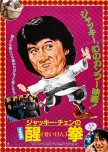
The cinematic equivalent of a coma
The cinematic equivalent of a coma, the story behind Fearless Hyena II is more well-known than the film itself. A patchwork disaster that barely holds together, but how on earth Lo Wei managed to convince Jackie to do a nude scene is truly beyond me. Originally set to be Jackie's first film under a new contract with Wei, the story of how he avoided getting killed by the triads and returned to Hong Kong to become a megastar is the stuff of legends. Ultimately, Lo Wei supervised a reshoot of the uncompleted film, mainly by taking the footage from the 1980 shoot, incorporating some used and unused scenes from Chan's previous films, and hiring a double to bridge the gaps created by his former star's departure; Lo was able to assemble some form of sequel which, to his credit does manage to cover for it's lack of main star until the climax when Chan's absence becomes blatantly obvious. The premise is almost exactly the same as the original film, aside from the awful Jackie Chan lookalikes who play his "relatives" that never existed before, with the most outrageous wigs and fake beards you’ll ever see. The direction is laughable, carrying a definite Lo Wei vibe throughout, which ultimately makes the film feel more like a film from the 60s than one from the 80s, while Austin Wai's protagonist does the film no favours, although to be fair, there is at least some competently staged fights in places. Ultimately, Fearless Hyena II is nothing more than a simple novelty, only really worth the watch to see the smattering of scenes Chan shot prior to his departure, because the film has nothing else going for it… Game of Death was a better-made film than this.Was this review helpful to you?
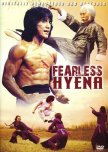
Jackie punches someone so hard in the balls that he dies.
At its core, The Fearless Hyena is an overly familiar traditional kung fu revenge story, but, being that this is Jackie Chan's directorial debut, you get the added treat of watching him figure himself out in real time. Showcasing his own brand of charm, naivety and bravado in a film that blends traditional martial arts storytelling with the comedic, expressive style that would later define his career. Split pretty much straight down the middle in terms of tone, shifting between slapstick humour and surprisingly brutal violence, it shows Jackie experimenting with a formula he hadn't fully perfected yet. Fight-wise, the choreography is intricate and very well performed, boasting a beautifully inventive chopstick food fight and Jackie defeating the villain by punching him in the balls so hard that he dies, which is worthy of 5 stars all on its own. It helps that the cast is populated with a variety of interesting characters, led by a great turn from James Tien as Chan's elderly master, but, of course, the real star of the show is Chan himself. Unfortunately, it seems he hasn’t fully freed himself from Lo Wei quite yet as there is a lot of Wei's influence still present; as it's clear this wasn't a big-budget or heavily refined production, Wei's writing is more prevalent than Chan's. But there’s definitely a charm in that roughness; it feels scrappy, personal and driven by a creative ambition of expression, so while The Fearless Hyena isn’t Jackie's best film, it is an important one, less about perfection and more about watching the blueprint of something great being built. Capturing him at a turning point, transitioning from a traditional martial arts actor into the genre-defining star he would become.Was this review helpful to you?
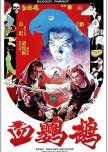
Sadly, not an answer to a certain Monty Python sketch
Instead, Bloody Parrot is an eerily atmospheric gross-out sexsploitation wuxia horror with a blood-splattered bird nowhere in sight. A fever dream dressed in silk and shadows; there's a wonderful gothic elegance to the film's aesthetics with plenty of foggy interiors, ornate costumes and lavishly colourful sets that lean fully into confusion as a stylistic choice, crafting a world where illusion and deception are the only constants. Directed by Hua Shan, the film is packed with heroic dollops of nudity, thanks to Jenny Liang, who walks around half-naked, and buckets of gore, including one seriously yucky autopsy scene and a corpse dissolved with acid in a grisly close-up. It’s all ultimately compensating for the plot's tendency to keep adding and dispatching characters on a whim. The narrative twists pile up with such intensity that they stop feeling like twists and start resembling a surreal collage. Shan's wild camerawork and breakneck editing impart an otherworldly atmosphere, and he ensures another brilliantly choreographed swordfight breaks out every five minutes. Even when the story falters, the imagery keeps you hooked. The performances from the cast feel appropriately heightened; they don’t aim for realism so much as operatic intensity. Emotions run hot with a melodramatic edge that amplifies the film’s dreamlike quality, as do the musical cues lifted straight from Mad Max and even Ming's ring sting from Flash Gordon. Although Bloody Parrot never fully edges into the full-on gross-out mode you'd wish it would, it does reveal in its utter chaos and disorder to deliver a brilliantly entertaining time.Was this review helpful to you?
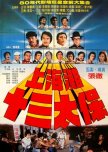
Those more familiar with Cheh’s work are undoubtedly going to get more out of this one
Thriving more on action spectacle than any form of actual cohesion, Shanghai 13 is an ambitious, if terribly under-budgeted slice of chaos. It can be messy, loud and occasionally exhausting, feeling more like a product of 70s Shaw Brothers than an 80s one; a whirlwind of ambushes, betrayals, disguises, and heroic last stands as a parade of iconic fighters squaring off in increasingly dramatic scenarios. A veritable hodgepodge of director Chang Cheh's past cinematic output, the choreography is typical of his usual energetic and relentless style; unfortunately, the rest of the film looks like he fell asleep in his chair, operating more as a string of vignettes that lack any of the polish found in his earlier studio works. Any attempt at character beyond archetypes is stripped down to the barest essentials, the film instead favouring the almost nonstop barrage of action. It ultimately operates as a vehicle for as many stars to appear as possible, with all the big names showing up for one scene before dramatically exiting moments later, rinse and repeat. To be fair, however, all the stars do deliver in their respective roles, be they Jimmy Wang Yu, who doesn’t even throw a punch, Danny Lee as a charismatic sniper or Andy Lau, who comes equipped with a cool white outfit and converse. Extra brownie points have to go to the super funkadelic musical score and banger of an opening theme. As a film that was initially planned to fund Cheh's own retirement, Shanghai 13 operates as a victory lap for the veteran director, delivering a film that's equally brainless and thrilling as it is deadeningly cheesy and undeniably entertaining.Was this review helpful to you?
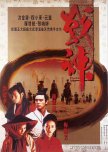
The legends are true, even the sad ones.
Like a folktale passed down through memory, Moon Warriors is lush, lyrical and ever so slightly untethered from reality. Steeped in the traditions of its genre, it's tragic, yearning and tinged with inevitability, all the while drenched in natural beauty: misty coastlines, windswept forests and moonlit waters that give the film an almost ethereal quality. The craftsmanship is New Wave at its finest, and director Sammo Hung delivers a wonderfully subdued swordswinging adventure, gifting us two of the greatest choreographers ever combining their talents in a film that blends wuxia fantasy, budding romance and aggressively high-flying acrobatics, not to mention an Andy Lau / orca bromance. Sammo beat Warner Brothers to the punch on that fad. The undercranked camerawork really adds an element of dynamism and furious pace to the incredibly choreographed action, mixing wire-fu swordplay and traditional kung fu with a flawless ability; the final duel on the beach is the standout for me. The cast only adds to the film's mesmerising allure; Lau is always a joy to watch, bringing with him a quiet sincerity to his role as our humble, lovestruck hero, and the chemistry he shares with Anita Mui's princess is an absolute treat to watch onscreen all the while Maggie Cheung, in one of her most offbeat roles, gets to stretch her villainous chops as a betrayer who has a thing for the emperor. It might be one of the few times I've ever seen her not smile. Coupled with an utterly joyous musical score and lightning pacing, despite a few bizarre moments that verge on daft, Moon Warriors is an absolute delight. Filled with atmosphere, beauty and a poetic resonance that lingers long after the credits roll while expertly immersing you in feelings of longing, fleeting connections, and lives shaped by forces beyond control. And like the tide it so often frames, it's the sadness that never quite recedes.Was this review helpful to you?
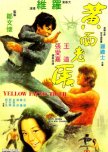
A gloriously trashy slice of gritty kung fu action
A gloriously trashy slice of gritty kung fu action, Slaughter in San Francisco is a sensational title that offers a pared-down promise of disreputable thrills, pure grindhouse poetry. Having originally been conceived as another vehicle for Bruce Lee, before his falling out with director Lo Wei and jumping ship to make Way of the Dragon, the undoubtedly sloppy production carries with it a certain appeal that's raw and unpolished, its pace is constant and unrelenting, even if certain events just feel like an excuse to get to the next bout of fancy fisticuffs, but it all comes across as a piece of weirdly charming exploitation. It feels quite like a low-budget film from the US underground scene awkwardly crossed paths with the action of Hong Kong and the tone of the typical American crime shows from the same era; scenes feel stitched together rather than carefully constructed, with the dialogue occasionally drifting into unintentionally comedic territory and some truly lousy police work populating its runtime. That being said, there's a lot of nicely photographed location work, while Lo Wei's choppily staged action carries with it a visceral urgency; the performances are all mostly solid, although Chuck Norris receives top billing, he's actually the villain with a diabolically cool name and sense of style donning Ray-Ban sunglasses, a fedora and a fur coat or watching his underlings practicing karate while eating an unnaturally large apple. Unfortunately, the film does very little to establish Don Wong despite his protagonist status, while Sylvia Chang makes an extremely early career appearance. Despite its plethora of action, Slaughter in San Francisco is very much a footnote in plenty of established careers, its serious edge ultimately at odds with all the inevitable B-movie silliness but that's where the fun really lies.Was this review helpful to you?
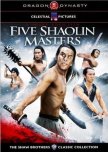
A long fought battle
Carrying with it those familiar themes of brothers-at-arms and the bonds of fellowship that run through so many Shaw Brothers films, Five Shaolin Masters is certainly a long fought battle amidst this struggle for survival. It's certainly a tipping point for its creative team, serving as a relatively lean martial arts showcase for its stars while also marking the last collaboration between director Chang Cheh and action choreographer Lau Kar-Leung before they went their separate ways. It undoubtedly spreads its attention too thin in attempting to balance the five main leads' screen time; it unfortunately drags its feet for a lot of the runtime with long stretches of minimal activity occasionally interspersed with extended martial arts sequences that, while impressive, border on the repetitive, even exhausting. Thankfully, it's a well-shot picture with some wonderful photography, aesthetically pleasing training scenes and lovely camerawork throughout, with even the occasional bit of comedy, although it veers quite heavily into gallows humour. The heroes aren't that deeply explored, but their dedication to Shaolin traditions and mutual trust creates a strong sense of camaraderie with each master representing a different martial style and personality, which gradually converge in the film's climactic confrontation. It almost gives the film a sense of strategic buildup, like pieces moving into position before the final strike. The performances are mostly solid, with maybe the sole exception of Alexander Fu Sheng, who looked like he was suffering from the heat sweats throughout. I just found his antics rather grating, more than endearing, but that seems to have been by design, given he was nearly always accompanied by childish music. Despite my niggles, Five Shaolin Masters is still very much worth a watch; it may stand as a rather influential piece of kung fu cinema, but it takes ages to really hit the ground and go.Was this review helpful to you?
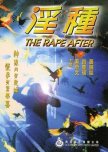
Demonic Boogaloo
Doubling down on the original’s mix of supernatural possession, grotesque body horror and shock-heavy exploitation, Devil Fetus 2 is somehow even more unhinged than its predecessor and that's even before you consider it's title. There’s an almost raw, almost punk-like energy to it, playing the whole ordeal straight no matter how unhinged its chaos gets with a steady escalation of bizarre imagery that only gets stranger as the runtime goes on. That is, if you could even see what was happening half the time, given this is a highly elusive film and the picture quality, even on the best release, is pretty appalling. However, the direction by Tom Lau is filled with flashes of creativity; scenes will frequently pivot from eerie supernatural dread to sudden bursts of outrageous gore or surreal supernatural effects, which undoubtedly help balance out the otherwise grim tone the film carries. It’s the kind of film where every ten minutes something stranger than the last thing happens, often leaving you wondering whether the cast knew what was coming next, subtly was definitely never on the table, however. Despite its title, The Rape After is a pretty gnarly piece of commercial underground cinema with some extremely crusty visuals, begging for a proper restoration. Poster goes hard as well.Was this review helpful to you?
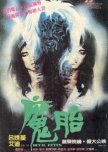
Something icky this way comes.
Full on maximalist horror, Devil Fetus wastes no time getting down to the gnarly goodness, unleashing a series of wild, over-the-top gross-out attacks on the occipital lobe at every possible moment. It's a positively ludicrous dose of gleeful insanity and maybe the best 90-minute prophylactic advert ever crafted. Packed with plenty of exploitive sleaze, including horndog ladies who love to make sexy time with the demon, the film is directed with an incredibly frantic pace and visual flair by Lau Hung-Chuen; its boundless energy and momentum are simply infectious. It can be surprisingly intense at times, with its nightmareish atmosphere, wonderfully grotesque practical effects, and disturbing body horror often overlapping with the film's more surreal elements. Yet it still manages to include a healthy dose of humour, including the best hard cut I think I've ever seen. Unfortunately, because the film jumps from one scene to the next, there's little narrative cohesion beyond the initial setup, yet it serves as a rather ingenious way of keeping you constantly on your toes because you never know what sort of chaos will unfold next. Especially when it’s all accompanied by a bit of cheeky Vangelis on the soundtrack as well as Ennio Morricone's score to The Thing, big win there. Offering up a very convincing case for careful family planning, Devil Fetus is an absolute must-see for anyone considering having kids.Was this review helpful to you?
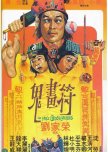
Who you gonna call? Someone else.
Offering up a decidedly offbeat mix of horror, comedy and martial arts, The Fake Ghost Catchers undoubtedly riffs on the success that came about with Sammo Hung's Encounters of the Spooky Kind, although it ends up taking things in a vastly different direction. The horror elements are more playful than frightening, relying on wonderfully colourful lighting, fog-filled sets and practical effects that feel charmingly handmade rather than terrifyingly convincing. That being said, there is still some wonderfully freaky imagery courtesy of prolific choreographer Lau Kar-Wing in the director's chair; the martial arts take a bit of a backseat, though still reflecting the studio-house style of the time: energetic, theatrical and tightly staged. Wong Jing's script is certainly a mess of scenes, but the loose, scrappy nature and drastic shifts in tone are ultimately embraced with exceedingly silly and outlandish performances from its cast; the comedic timing carries the film more than its action does, as the comedy springs from cowardice, overconfidence, and the growing panic as carefully orchestrated illusions collapse. Leaning heavily into slapstick, more structured supernatural lore, gags are often prioritised over narrative flow, but it ultimately doesn't matter when your music is lifted verbatim from one of the best Doctor Who stories, The Invasion, no complaints there. Don Harper's music is incredible. Imperfect or not, I'm quickly realising that I massively prefer the more outlandish Shaw Brothers productions over their traditional wuxia tales because, for as ridiculous as The Fake Ghost Catchers is, it can still be lively, inventive, and often genuinely funny, carrying with it an immense amount of charm that lies less in polish and more in its energetic, anything-goes spirit.Was this review helpful to you?


