



Kung Fu Cannibalism
Forgoing the psychedelic arthouse ambitions of his feature debut for down and dirty exploitation, Tsui Hark's We’re Going to Eat You is an unlikely and unsettling combination of a cannibal film fused with the slapstick of The Three Stooges. Although essentially humorous, the film can suddenly shift and present some genuinely unsettling scenes. The bloodlust and an appetite for human flesh being played for laughs is disturbing, but the sheer irreverence makes the overly sardonic tone so effective. The frenetic direction, editing and camerawork mix splatter, slapstick and mad martial arts choreographed by Corey Yuen to often impressive effect. However, the non-stop barrage of chases, hair-raising close calls and near-death escapes, a structure obviously indebted to The Texas Chainsaw Massacre, grows tiresome and repetitive. Typically for a Hark film, characters frequently espouse personal philosophies, trying to make sense of an often chaotic universe. However, amidst the lunacy, the various plot threads never go anywhere. While We're Going To Eat You probably isn't the martial arts answer to Cannibal Holocaust; instead, it sets up a black comedy and then indulges in some morbid fun with a bit of kung fu thrown in for good measure, compensating for its lack of polish and coherence with Hark's boundless energy and everything-and-the-kitchen-sink attitude.Was this review helpful to you?
Kamen Rider Ryuki The Movie: Episode Final
0 people found this review helpful
Saved the best flying kicks for last
Everything about Episode Final feels significantly more dynamic, fierce, and exhilarating, clearly benefiting from its theatrical presentation with a dark, supernatural edge. The whole thing plays fast and loose with the show's rules, almost as if they shot themselves in the foot with Zolda's Giga Launcher by making a finale that debuted way before the series had even ended, one that turns up the bleak factor to maximum. Even the happier and more carefree moments come with a silver lining; knowing that the Rider War cannot be escaped, these people will have to die one way or another, and we can do nothing but watch. The result is a much more urgent narrative than what we saw in the show, and a slickly directed one at that, arguably the best-looking of the entire Ryuki saga, with Ryuta Tasaki once again in the director's seat, adding real flair to the film as the camera sweeps and dives around the impeccably choreographed action. Ryuga makes for a fantastic villain and feels like the true 13th Rider, a dark mirror counterpart to Ryuki, who takes no prisoners with sheer brutality. He's one of the major highlights here; another is unquestionably the franchise's first female Rider, Femme. While not as fleshed out as you'd like her to be, she is utterly adorable for all the time we spend with her, definitely helped by Natsuki Kato's enchanting performance. While Episode Final is undoubtedly going to leave you with more questions than answers in a lot of aspects, for me at least, it managed to provide an immensely satisfying end to Ryuki's narrative that didn't feel like a complete reset of the status quo. It makes for a heroic last stand as these characters resign themselves to their fate, yet still fight for all that's good in the world to the bitter end.Was this review helpful to you?
The any % speedrun
Essentially, speedrunning Ryuki's original fifty-episode narrative over the course of a 50-minute runtime, 13 Riders had a lot of potential in crafting an engaging what-if companion piece to the TV show, even allowing kids to vote on the ending. Unfortunately, it all ends up as a wasted opportunity and definitely feels like it should be way longer than it is; most likely, it's a case of this being a primetime special that had to be welcoming to unfamiliar viewers. Little time is spent on fleshing out the narrative outside of the most basic of setups before we're flung headfirst into the special's plentiful action. Granted, all the action is incredibly well shot, thanks mainly to the direction of long-time tokusatsu director Ryuta Tasaki; however, the narrative is exceptionally hollow, with little justification given for the events surrounding said action. It just feels like an excuse to parade the last 3 Riders who didn't appear in the show for some reason in front of the camera. All three of whom do very little to leave a lasting impression, not from a lack of trying, but more from a lack of screen time, at least the cast are all still on form. Most egregious of all for me, at least, is that they got frigging Keiichi Wada to play Ryuki's original ill-fated host, before altogether dropping him less than a minute in. This would have been so much cooler had he been the main focal point of this special, seriously, Toshiki Inoue, I know you are better than this. Regardless of the ending you choose for 13 Riders, it still feels like an extension of the show rather than something entirely separate, a bit darker and more mysterious, but with just as much flair and humour, regardless of all the in-universe rule-breaking taking place.Was this review helpful to you?
In the end, only one Rider can remain.
One of the more popular and highly regarded Kamen Rider shows, Ryuki, is an odd beast. Its fifty-episode length certainly feels unwarranted, but when combined with the show's complex depiction of justice and outstandingly choreographed action, it can make for immensely satisfying viewing. The humour doesn't always work and can even be detrimental to the tone the series is trying to maintain, especially given the high amount of emotional plot beats during the final stretch. Many episodes feel very meandering, focusing on a small cast of characters and emphasising the sillier elements; it all feels like a different show entirely, where the Rider Fight is merely an afterthought.It's difficult to buy into Shinji's antics at the start, but thankfully, it seems the writers realised this and gave us a second Rider to follow right from the get-go with Ren. They make for an intriguing double act early on, with Shinji's carefree attitude contrasting heavily with Ren's more personal involvement in the big battle royale. The problem arises when nearly every character introduced, even the small one-offs, has their own arc and journey, which leaves many of the leads fighting for screentime; it makes the series feel cramped when it has a whole other dimension to explore.
As this show features a whopping ten Riders to keep track of, with some having a greater impact than others, it can be a challenging follow. Some turn up and leave just as quickly as they are introduced, while others stick around for a lot longer. Imperer and Scissors are examples of the former more than the latter. Their ultimate deaths are also a mixed bag, with Scissors' demise only there to serve as a warning to the fate that will befall the rest of the cast, while Raia's death is utterly soul-destroying, signalling a change in direction for the rest of the run.
Production-wise, it feels very much of its time; the reliance on CG ultimately dates the show quite severely, but the direction usually more than makes up for it with the musical score being generally delightful to listen to, even if it's somewhat repetitive. The cast all do a great job with the material, bringing a range of different levels of energy to their roles. It's hard to single out any standouts when they are all good.
Honestly, I think Ryuki is just alright in the end. The mystery regarding the Kanzaki siblings doesn't do a lot for me, especially when it's plainly evident that Shiro is the big bad from the moment he's first mentioned. Still, when the show is focused on each Rider and their individual goals, I was hooked. It's a show where I wish the core elements were just a bit more consistent because it had all the potential to be a winner, especially with its brutal gut-punch of an ending. Still, I did enjoy watching the show, and am looking forward to checking out Dragon Knight one of these days.
Was this review helpful to you?
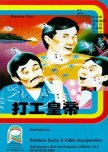
They work hard for the money.
There is a bouncy '50s feel to Tsui Hark's lightning-paced blue-collar comedy, Working Class. One that represents a communal place of camaraderie and bright, day-glo dreams with an abnormal amount of political hubbub amid the four-colour fun. It may be a relatively straightforward comedy, but the film still exhibits Hark's incredible ability to add something to even the most well-trod narratives, showing us how life can be pretty unrighteous and hard to get through, but that man can find the meaning of life even in the most imponderable and trivial places and really be happy. The performances are hilariously exaggerated, as are most of Teddy Robin's ridiculous sunglasses and the bottle of baby oil used to keep an often-shirtless Sam Hui out-glistening his dry-looking castmates, while the romance between Hui and the always stunning Joey Wong is adorable. The best thing is getting to see Tsui on screen... he is such a cool guy, oozes charisma and intelligence, while his direction is as scattershot and screwball as ever, with some very well-handled comic scenarios that manage to move from cliché to humour, all brilliantly underscored by a not-so-subtle and incredibly catchy Canto-synth cover of Donna Summer's She Works Hard For The Money. Those expecting innovation may be disappointed by Working Class, but the film is ultimately a dazzling little gem in Hark's impressive filmography, one that's guaranteed to leave a smile on your face.Was this review helpful to you?
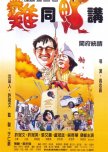
Possesses a cultural specificity and an incisive understanding of people
Rich with local detail, Chicken and Duck Talk serves up plenty of slapstick, overacting and situation comedy thanks to its satirical look at Hong Kong culture and its robust understanding of its locals. The conflict between ingrained cultural institutions, such as the Hong Kong-style café, and corporate chains like McDonald's has long been an issue in Hong Kong, and the film smartly satirises that situation. Be it the reactionary tactics that are exaggerated business strategies, using fast, cheap imitation as a way to give the business an edge. Or writer and star Michael Hui's pragmatic, penny-pinching ways are an exaggeration of the Hong Kong people and the film's local pride, whether appropriate or inflated. Ordinary people can be lousy, and the emotions they operate from are so basic that it's easy to understand and even sympathise with them. People are naturally difficult, and Michael Hui captures that reality clearly and with self-deprecating humour. While the film has mostly good intentions and a very moral heart to it, it does slip up on occasion with some questionable production values, lacklustre direction, generous overacting and dated humour. That being said, Richard Yuen delivers a suitably funky score which includes not-so-subtle riffs on both the classic James Bond theme and, bizarrely, Streets of Fire. I can't believe I even caught that. Qualifying as an accurate, if exaggerated, primer on the daily lives and ingrained values of Hong Kong and its people, Chicken and Duck Talk is imbued with a generous amount of energy that's difficult to hate, even when it's got sit-com style family conflicts, sudden introductions of sentimentality or mild cases of xenophobia.Was this review helpful to you?

A moving expression of restless spirit
Whether or not you loved or hated Shin Kamen Rider upon an initial viewing, this episodic version certainly won't change your mind; however, I can't deny that this works so much better when paced as a 5-episode mini-series than a film. Especially when this cut even comes with the added bonus of additional footage not seen in the film, complete with unique title sequences and eyecatches. With the brightly coloured costumes, black trench coats, high-speed motorbikes, and a fondness for mid-air combat, it certainly maintains a distinctive style, expanding upon Anno's inhuman worldview and never letting self-consciousness get in its way, as epic and absurd as it is sincere and emotionally engaging. Filtering elements of the original through a distinctly modern lens that grapples with violence and the worth of human beings, a moving expression of the title hero's restless spirit. While this episodic version of Shin Kamen Rider still ends up occasionally scattered, all my praise for the production remains, one that's chock-full of plenty of witty moments, fantastically insane action sequences and striking on-the-nose homages. A vicious and thoroughly dense love letter to the Tokusatsu icon. While Shin Ultraman still ultimately stands as the best of the Shin trilogy, I'm very much hoping Shin Kamen Rider isn't the last we've seen.Was this review helpful to you?
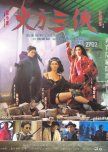
Wall-to-wall delirium
Offering wall-to-wall delirium, The Heroic Trio is certainly bursting with creative energy and pulpy comic book visuals, compensating for a confusing and cloyingly over-sentimental story by serving as an irresistible showcase for three of the coolest women warriors ever to hit the silver screen. Even with all the eye-popping motorcycle stunts, bloodthirsty undead, cannibal infants, and kinetically choreographed wirework, the whole film feels like it's about to come apart at the seams despite hitting the ground running with such a tantalising hook. Style may be more plentiful than substance, but thanks to Johnnie To's consistently stunning visual eye with sweeping camera movements, wind machines, and an abundance dry ice, it matters little—especially when combined with the supernatural fight sequences, choreographed by Ching Siu Tung, that are dark, violent, and bursting with all imaginative dynamism you'd expect from this era of Hong Kong cinema. Although I wish the film had embraced the darker and more disturbing aspects of its tone throughout. It's hard to fault any of the performances from the leads; Maggie Cheung, Michelle Yeoh, and Anita Mui are all fabulous company, even if the latter two have been saddled with straighter roles as everyone else goes off the chain or hams it up, especially the likes of a near-mute Anthony Wong, severing heads with a lip smacking glee. Despite all of The Heroic Trio's inspired lunacy, the artificial trappings tend to make the film feel set-bound and confined, but ultimately, none of that diminishes the overall entertainment value the film possesses in spades.Was this review helpful to you?
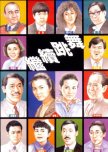
mfw no dancing
More of a free-wheeling and heart-warming romantic drama than a full-on comedy, Carry On Dancing is a fairly dull affair, but it's an affair that at least has something to say. Offering insights into how an individual relates to the larger environment, with the thin line between the sane and the insane blurring. There are some nice scenes and mildly amusing moments, thanks to the adequate direction, sappy music and performances from the cast, but it never becomes genuinely funny at any point. It's a real slog to get through and could have really benefited from some Yuen Woo-Ping dance choreography, hell, even any form of dancing at all. Despite Carry On Dancing's best intentions as a madcap romantic farce, the frequent dislocations and excessive number of unnecessarily one-note characters only slow things down.Was this review helpful to you?
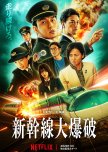
An effective solid disaster film throwback
An affectionate and well-realised update of Junya Satō's The Bullet Train, Bullet Train Explosion's devotion to delivering relentless edge-of-your-seat thrills ensures it's a blast from the moment it leaves the station. After his masterful reworking of Ultraman 3 years ago, I've been patiently waiting for Shinji Higuchi's next film. While the visual effects, direction, cinematography and camerawork are all top-notch, the carnage feels relatively restrained compared to Higuchi's prior work. However, even then, the film's greatest strength lies in its construction of tension and its commitment to showing how people respond to chaos. Some rise while others fall. Even with Higuchi as the film's conductor, this is still very much a one-track film, where Satō's original cross-cuts the action on board its Shinkansen with Ken Takakura's criminal antics, and here we are solely dedicated to the action on board. Despite its familiarity, there's also a fair dose of originality, although the late-game villain reveal had me howling with unintentional laughter. It's a long journey, full of near misses and assorted beats of suspense; although it abandons the complicating human factors that gave the original its soul, the film works very effectively as both a remake and a legacy sequel alike, even if the first half is far stronger than its latter half. Backed by strong performances and a rousing score by Taisei Iwasaki, Bullet Train Explosion is an effectively solid action disaster throwback, full of collectivism and collaboration.Was this review helpful to you?
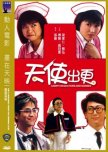
Carry On Shaw
A relatively faithful adaptation of the Carry On humour, Carry On Doctors and Nurses sees the Shaw Brothers taking a stab at creating their own interpretation of the classic formula. It repeats many beats from the four hospital films of the classic British institution but mixes them up just enough not to seem like a direct riff on the same jokes, just with worse timing. While there are plenty of great moments of slapstick pratfalls and an equal dose of Hong Kong's brand of absurdist humour, the film fails to come together satisfactorily and contains too much dead air to tickle the funny bones. Anthony Chan's direction isn't terrible and does enough to keep the picture moving with a shot of surrealist horror. I admit to getting a good chuckle out of the exceptionally lengthy Ghostbusters parody, but other jokes tend to wear out their welcome very quickly, being milked to the point of powder. While Carry On Doctors and Nurses certainly isn't awful, it does feel rather tired, although the cast's bafoonery does elevate it above the realm of disposable.Was this review helpful to you?
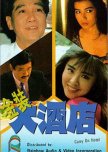
Carry On Hotel
It's hilarious to me that the unequivocally British Carry On series was popular enough in Hong Kong to inspire its own set of exploitation films. Although Carry On Hotel doesn't really fit the vignette of that series and is as lightweight and inconsequential as they come, it still provides plenty of screwy all-star silliness and as many tonal mixes as something crafted by Wong Jing. As most of the stories are unrelated to one another, the film progresses without pausing for much unnecessary reflection or even explanation of what is happening, maintaining a comfortable pace to keep the proceedings moving without losing the viewer, however, director Jeffrey Lau struggles with consistency and pacing. We're merely expected to follow these numerous unimportant storylines while finding some form of entertainment in them. It seems that the presence of big stars and nonsensical comedy is meant to make everything all right, and it somehow does, ideal for spending a mellow afternoon with HK Cinema pals Eric Tsang, Cherie Chung, Joey Wong, Richard Ng, Cecilia Yip and Jacky Cheung. Unlike bigger and more ponderous all-star comedies, Carry on Hotel never attempts anything other than strange comedy and brief, amusing asides, a fluffy affair that can be suitably diverting, especially if watching these likeable stars engage in silly pratfalls is your idea of a good time.Was this review helpful to you?
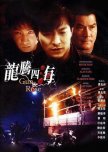
Definitely not a Sweet Child of Mine
Cobbled together is the best way to describe Gun n' Rose, for all its star-studded cast brings to the table we end up surrounded by tiresome comedy routines and a script that feels like it was written in a drunken afternoon with the added challenge of fitting in as many gangster flick clichés as possible. There's little to no structure with this Clarence Ford-helmed mess, only existing to serve one purpose; give its stars as many opportunities to look cool as possible, the effortlessly badass Andy Lay in particular, oozing charmisa throughout. The action is completely over-the-top, but effective in that acrobatic guns blazing style, with some brilliantly choreographed and inventive set pieces sprinkled throughout the film's rapid runtime, however, the horrendously disorienting editing is what sadly kills it; all those fancy moves are nothing if you can't follow where everyone is in terms of proximity to one another or even master a basic cut. The cast feels rather wasted or just flat-out misplaced here, Leon Lai is blandly intense while Simon Yam gets almost nothing to do, Lau is admittedly one of the film's saving graces but it's easy to see how his smarmy persona can quickly grate on the viewer. Even more out of place is Alan Tang, who uses an army of stunt doubles to achieve dizzying stunts that he clearly isn't suited for as he can barely jump two feet off the ground. Since he's also the producer of the film, Gun n' Rose ultimately feels like a well-staged vanity project more than coherent entertainment, still some decent music, a killer main theme, choice performances and fun action do make up for the film's shortcomings; there is undoubtedly a fan base for this film, although, sadly, I am not amongst them.Was this review helpful to you?
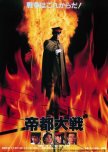
Swaps surrealism for sheer horror
Swapping the dark fantasy and wild surrealism of its predecessor for sheer unnerving terror, Tokyo: The Last War still manages to feel ambitious even with its relative limitations and plenty of spine-chilling imagery. The story is much more straightforward, with a narrower narrative focus which lends the plot a greater degree of urgency and momentum; teeming with plenty of visual flair. You don't need to dig very far to find out the film was predominantly ghost-directed by Lam Nai-Choi and even features some choreography by Philip Kwok, expanding on the Hong Kong-styled elements of the first film. There are plenty of truly harrowing sequences throughout this film, the tone is consistently bleak, rarely containing a moment of hope for its characters, with the firebombing sequences especially delivering goosebumps whenever they grace the screen. The combination of having effects work by Screaming Mad George and H.R.Giger doing the art direction gives the film a strikingly gruesome edge to it in which people are dispatched in horrifically brutal fashion. The performances from the central cast are all solid but it's really the returning Kyusaku Shimada who steals the show, Kato is given a much more menacing edge this time, with plenty of build-up as this darkly oppressive figure. Combined with a great musical score by Koji Ueno, Tokyo: The Last War is certainly an escalation of that of The Last Megalopolis, a dramatic departure in tone and style but that only makes it more compellingly different and mesmerising. One that is certified to leave chills lingering long after it's over.Was this review helpful to you?
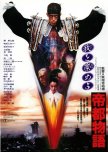
Japan's Dune
One of Japan’s most expensive films of the 80s, Tokyo: The Last Megalopolis is deeply rooted in the neon-tinged landscape of its time blended with the surreal gothic urban nightmare of the past. Akio Jissoji's wildly engrossing adaptation of Teito Monogatari certainly puts its money onscreen, epic in scale but does so with an identity crisis, it's a film that feels distinctly less Japanese and more like it came from Hong Kong with the references to obscure Chinese philosophy certainly adding to the disassociation. There's an obvious comparison to that of David Lynch's Dune, both films being ambitious, visually lush, large-budget adaptations of dense science fiction works that compressed the source material's narrative to fit a 2-hour time slot. There are moments with striking visuals that recall Jissoji's earlier work, diving headfirst into surrealism, his direction certainly shines but it's done so with a colour palette that lacks any form of scale other than grey, really annoying given some of his other more colourful works. Furthermore, there are problems to be found with its story, pacing and often sporadic editing, it's a film that needed more room to breathe than it was given and feels like a lot of material was left on the cutting room floor; however, that being said, the film's effects work is simply top-notch with the creature designs by frigging H.R.Giger make a distinct impression. The acting for the most part is all great, especially from the late great Shintarō Katsu and a very hammy Kyusaku Shimada as the evil sorcerer Kato, in conjunction with Maki Ishii's atmospheric score certainly gives the film a unique vibe most would be unable to replicate. As a mood piece, it's hard not to recommend Tokyo: The Last Megalopolis, however, the film simply tries to cover far too much ground in too short a time, yet at present it feels like it stretches on forever. The ambition is here but it all got lost in the edit.Was this review helpful to you?


