

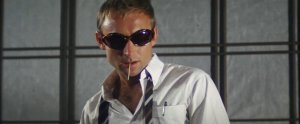



A some what step up from A Legend.
Some what of a step up from A Legend, Panda Plan gets by because this is Jackie Chan doing exactly what he's known for, possibly for the last time. The film only really manages to elicit a light chuckle, even at the most trying of times. The problem stems from a lead who's way past his prime, although to be fair, at 70, Chan remains spry and in great shape, but there's no denying that awkward framing, poor editing, obvious speed ramping, body doubles, and painted-out wire work do serious heavy lifting. Zhang Luan's lightweight Die Hard-in-a-zoo action demands so little from its viewers, often thinking a poorly realised CGI panda is a good substitute for all the stuff we love Jackie Chan films for. Instead, the film becomes more of a tedious trudge through lazily choreographed fight sequences, sluggish chases and torridly scripted interactions between Chan's lethargic protagonist, an interchangeable ensemble of goofball mercenaries and a horrendous villain, all coupled with forgettable music and some questionable acting from the supporting players. Setting aside the meta references, Panda Plan fails in its attempt to aim at the kids with the stale jokes that don't appeal to anybody, irrespective of age; it's high budget, but the effort isn't. Maybe New Police Story 2 will deliver… I remain hopeful for that one at the very least.Was this review helpful to you?
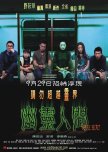
Fancy a Toblerone?
Theoretically, any film that opens by decapitating Anthony Wong should be a winner; unfortunately, Visible Secret gets stuck with what it wants to be. It wants to be a slick and sexy horror-comedy, but instead it completely squanders all its promise shortly after the opening credits have finished rolling. It's a film that never quite clarifies what it aims to be; the horror elements feel perfunctory and passed over in favour of the romantic and character-based elements. It's more suggestive than genuinely frightening, but in a way that reflects the region's modern, millennium-era scene in its portrayal of young people caught in history, trying to understand both the world around them and each other as they navigate life, love, identity, and family. Ann Hui's direction is exceptionally muted and melancholic, creating an eerie, almost dreamlike tone that feels distinctly early-2000s Hong Kong cinema, succeeding more as a thoughtful meditation on loneliness, memory, and the inability to let go. Yet it all feels off, almost unfinished, bogged down by its narrative loose ends and especially the editing. The performances from the cast are fine; no one really stood out to me, outside of the terrific Kara Hui and Shu Qi, although the latter was mainly down to her fashion choices, while Tommy Wai's soundtrack is perfectly servicable in complementing the tone and visuals. Unfortunately, Visible Secret simply does not gel together; although there is certainly some quality stuff buried in its middle, it is the sort of character-based drama done better elsewhere. It doesn't go for scares or laughs. It falls into this weird valley where nothing is quite right, offering more of a more a gentle, ghostly romance with occasional dark humour than anything sharper or gnarlier. Still, maybe that's on me for expecting more from what its opening promised.Was this review helpful to you?
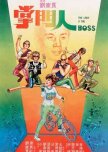
Blends fun and fighting as only Lau Kar-Leung could
A clash between old-world discipline and new-world confidence that blends fun and fighting as only Lau Kar-Leung could, The Lady Is the Boss is loud, chaotic and hilariously abrasive, fully embracing its oddball identity. Spending its early acts indulging in absurdist gags, it does begin to lose focus around the midway point, throwing caution to the wind with its spotty scripting; however, the film really comes alive during its many inventive and highly entertaining fight sequences, adorably adapting Lau's choreography style for practical purposes, exchanging bloody fisticuffs for dance fights and shimmering blades for BMX bikes and gymnastic equipment. It even includes a few tongue-in-cheek pastiches of some of Lau's more famous works, all set to some super funky synth beats, while the film's commitment to absurdity gives it a truly infectious energy. A lot of the comedy had me giggling uncontrollably, thanks largely to its cast and how much fun they are clearly having with their roles, especially Gordon Liu and the adorable Kara Wai Ying-Hung delivering tenfold as the titular lady. Comedy certainly takes precedence over elegance and means that while The Lady Is the Boss is not as refined as some of Lau's other works, it's lively, assertive and hard not to enjoy on its own rambunctious terms.Was this review helpful to you?
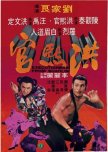
Weirdly fascinated by testicles
Unusual to the point of being downright eccentric, Executioners from Shaolin carries a significant amount of generational weight while also serving as an incredible showcase for Lau Kar-Leung as an action filmmaker. From its blistering opening credits, a surreal, red-tinted deathmatch to its ferocious, bloody freeze-frame climax, the film is littered with fabulous choreography and wonderfully realised action. Unfortunately, it is bitterly unfocused as to what it wants to be, not lingering long enough on one thing to truly grab me, trying to balance a marital drama and the typical Shaw Brothers revenge yarn to less than stellar results, thanks to a brutally uneven pace and a weird fascination with testicles. There are some decent comedic beats here and there, but the film doesn't make the best of its lighter moments, often taking away from the revenge hook that supposedly drives the narrative, with the shift in focus from father to son robbing us of a fulfilling conclusion to this tale of vengeance. Performance-wise, there's an exceptionally brief but memorable role from Gordon Liu, Lily Li is wonderful, especially alongside Chen Kuan-Tai as the sympathetic and obsessive father figure, but it's Lo Lieh's turn as the villainous and nefarious Pai Mei who is the real highlight and has gone on to be the stuff of legend. The only real sore spot is Wong Yu, who doesn't really leave much of an impression beyond what might be one of the worst haircuts and wardrobes I've ever seen in a Shaw Brothers film. Although epic in scope, Executioners from Shaolin ultimately feels as if it's been cut down to the bone, not emphasising any of its narrative threads to truly tie us down. It's an odd film in that its flaws are more about what is not seen than what is seen, while it may not be the slickest or fastest film in Shaw Brothers' output, its heart and ambition still shine through.Was this review helpful to you?
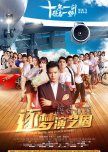
Contender for the worst Chinese film ever made.
There are vanity projects that are hilariously awful but still entertaining to behold. Then there's Pure Hearts: Into Chinese Showbiz. Absolute word vomit of a title aside, I don't think I've ever seen something as hollow and empty as this in my entire life. A glossy, tone-deaf abomination of filmmaking that mistakes clichés and tropes for a narrative. It borders on the dangerously incompetent at times, putting the cast in situations they should never have been placed in, where the Director should have been told no, but given the fact that this film was crowd and government funded, speaks volumes about where his priorities lie. He just wanted to live an extravagant lifestyle and used this film to fund and live it, no matter who he steamrolled over.Was this review helpful to you?
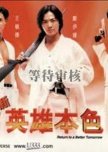
A better successor to the original than the actual sequels!
Arriving as a knowingly skewed echo of the heroic bloodshed era, Return to a Better Tomorrow has all the right ingredients of a slick and snazzy slice of action brilliance, playing on all the familiar themes and tropes that come with the territory. As much as the A Better Tomorrow namesake was undoubtedly slapped onto this to sell tickets, it didn't stop Wong Jing from going all out on the production, even with the notable absence of both John Woo and Chow Yun-fat. It's great to see Wong Jing taking himself seriously for once, as this is extremely atypical of his usual bouts of tonal insanity. The film still contains a few jokes here and there, plus a healthy dose of self-awareness, but these don't outright break the film's relentless pacing or its serious tone. There's a clear attempt at emulating the look and feel of the original, even if it's less interested in operatic tragedy and more so in remixing familiar iconography, although that oddly works in the film's favour, delivering plenty of punchy gunfights, splattery violence, dapper trench coats, dual-wielding shotguns and, of course, lots of cool posing! Jing's direction is great, filled with energy and a heavy amount of stylistic flourishes; the photography is extremely colourful, the musical score goes hard, and the performances all around are great, even if characterisation is sketched in bold strokes rather than fine lines. In a period where Hong Kong cinema was already looking back on its own myths, Return to a Better Tomorrow is a highly underrated little gem that has seemingly been lost amongst Wong Jing's blitzkrieg on the industry. It certainly isn't a replacement for the classic it riffs on, nor does it aim to be, although I'm probably committing absolute sacrilege when I say this is a better successor to the original than both II and III.Was this review helpful to you?
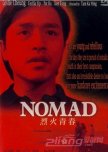
High-class soap opera
Bizarrely fluctuating between an exuberant reflection on young adult life in Hong Kong and a gory thriller, Nomad possesses an enchanting quality about it to the point it can be absorbingly disorientating. It manages to capture a brutal honesty of youth, from hairstyles to philosophies, but beneath its exterior lies a moody, elliptical meditation on alienation, desire, and a generation untethered from stable identity as the film's quartet of characters drift aimlessly together, going on dates, having sex, and vaguely contemplating the future. Unfortunately, its story is unfocused, playing more like an episodic series of skits filled with absurdist comedy, and, despite being relatively short, its pacing is exceptionally slow. Granted, the film is at least a looker; the photography and art direction are absolutely stunning, although Patrick Tam's actual direction is relatively messy, the super unsexy sex scenes filmed in choppy slow motion really hammer that home. His tone is one of impish confidence, never allowing his characters to fully succumb to the anxieties that pervade them. The sudden shift from languid romance to random acts of brutality in the final act feels almost like a wake-up call for the viewer, almost like the writers were trying to inject a bit of excitement to cap it all off. It really does just come out of nowhere, especially after wallowing in plenty of self-indulgent pretences for most of the thankfully short runtime. The performances from its cast are mostly solid, but the musical score tips over into pervasive, heavy-handed, if you would, rendering certain scenes ridiculous when they perhaps would have benefited from simple silence. As a cornerstone of the Hong Kong New Wave, it remains provocative, melancholic and stylistically bold, but all comes together as an ultimately disorderly and chaotic experience. Nomad certainly drifts through the motions, losing sight of what it really wants to be. It feels kind of cruel to have watched this after My Heart is that Eternal Rose, but I was expecting more than a high-class soap opera.Was this review helpful to you?
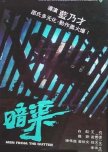
Eurocrime with a jolt of Michael Mann's visual design
Given his more famous body of work and especially the title, you'd probably be expecting Men from the Gutter to be another one in a long line of incredible Lam Nai-Choi horror. It is not. Instead, trading the classical Shaw wuxia sheen for street-level desperation, it's an outstanding, gritty, hard-edged action thriller. One that gives a neon-lit glimpse into Hong Kong's grimy underbelly of smoke-filled gambling joints and roach-infested tenements filled with grubby, desperate lowlifes. It's all conceived in a way that combines elements of gritty Eurocrime with a jolt of Michael Mann's visual design. It crams a lot into its tight 88-minute runtime, with excitingly staged action that's rough, pragmatic and rather splat-tastic at points and all complemented by Lam Nai-Choi's own slick photography, intense direction and even a cool cod-Tangerine Dream electronic score. This isn't heroic bloodshed yet, but you can feel it forming in the margins. The characters are defined less by archetypes than by exhaustion. These are men with no illusions left; every alliance is temporary, every moral line negotiable with the cast selling that weariness well. Lo Meng and Jason Pai Pao deliver earthy, impassioned, and downright menacing performances that are far more morally ambiguous than the stoic archetypes they usually played, especially in the quieter moments where ambition gives way to fear or resignation. As a Shaw Brothers production, it's fascinating precisely because it doesn't feel like a classic Shaw film. The studio trappings are present, but the spirit belongs to what comes next. While Men from the Gutter may not be as iconic as what followed, it serves as a raw and compelling bridge between eras. A tough, unsentimental crime film that captures a moment when both its characters and its studio were fighting not to be left behind.Was this review helpful to you?
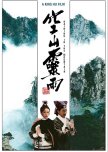
It never rains on this mountain
Favouring quiet contemplation over combat, Raining in the Mountain unfolds like a moving scroll of exquisite paintings with mist drifting through mountain paths, rain tapping on tiled roofs, and robes gliding down corridors. From the opening moments, Hu signals that this will not be a tale driven by conquest or glory, but by impermanence, restraint and moral testing; its plot functioning less as a narrative engine than as philosophical scaffolding, the play-by-play almost akin to that of a heist film. It is a film of movement; action is deliberately muted, even anti-climactic. Fights dissolve into evasions; pursuits end in stillness. What matters is not who wins, but who renounces. In this sense, the film feels closer to a Zen parable than a traditional wuxia film, using genre expectations only to strip them away. Visually, the film is spectacular; Hu's command of space is incredible, with doorways framing moral choices, corridors becoming channels of fate, and the mountain itself seems to breathe alongside the characters. His editing creates a meditative tempo. Every gesture, glance, and footstep carries weight, as if the film itself were practising mindfulness. It may never rain on this mountain, but ultimately, for all its sedate visual beauty, Raining in the Mountain finds its deepest drama not in violence, but in the choice to let go.Was this review helpful to you?
Was this review helpful to you?
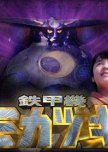
The closest Keita Amemiya has ever come to a kaiju film
I've been deeply neglecting the works of Keita Amemiya in recent years and figured that Iron Armoured Machine Mikazuki would scratch that itch. Serving as an update on the boy and his giant robot subgenre that gave us the likes of Tetsujin-28 and Giant Robo, the series plays around with plenty of tokusatsu tropes and mixes in elements from the big three, be they costumed heroes or giant kaiju. The cards are kept relatively close to the chest for the admittedly rather slow and childish first half, but dramatically reveal a darker, more introspective core amidst all the flashy heroics once the dust has settled. It combines late-Heisei tokusatsu aesthetics with psychological sci-fi and mythic symbolism, with Mikazuki, a mysterious iron giant born from human desire, blurring the line between weapon, god, and reflection of the human soul, resulting in a show that prides itself on emotional conflict, moral ambiguity and the consequences of wishing for power. The monsters aren't just external threats, they're manifestations of human obsession, fear and despair. There's an unmistakable ambition to the series, having originally been pitched as a one-and-done film before Amemiya and writer Toshiki Inoue retooled it into what it is today. Each episode has the scale and look of similar tokusatsu productions from around the same time, but with the added benefit of going against the Japanese norm and being shot in widescreen. You can thank the extremely large budget for that. It all lends a greater weight to Amemiya's incredible visual designs, half of which feel like they've been ripped right out of his '90s body of work. The direction is clean, the music extremely catchy, the writing engaging, and the effects work is to a rigorously high standard; even with the rough early 2000s CG work, it's thankfully rather unintrusive. While Iron Armoured Machine Mikazuki might be flawed, bleak and unapologetically slow in places, it's equally moody, haunting and deeply unconventional. It's the kind of series that lingers in your mind not because it was polished or popular, but because it dared to be strange, sombre and sincere in an era when few shows of its kind were willing to take that chance.Was this review helpful to you?
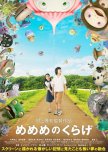
More pop art than film
Caught in a very awkward disconnect that blends children's fantasy, pocket-sized kaiju and Takashi Murakami's unmistakable superflat aesthetic, Jellyfish Eyes struggles to find a stable footing and becomes so muddled at points that it is all but impossible to discern why anything is happening. The visual design is undoubtedly the film's strongest aspect, with each one of the weird and wacky creatures popping against the muted, almost sterile human environments, but the effects are so lacklustre and stiff that they all become this horrifying blend of adorable concept and nightmarish realisation. At times, the imagery feels closer to an art installation or a horror attraction than a children's film, undoubtedly thanks to the combination of Murakami and Yoshihiro Nishimura's backgrounds in their respective fields. The direction is passable at best, though the camerawork is downright hideous at points; it's clear Murakami has an acute visual sensibility, but a tin ear for expressing human emotion through drama. As a result, much of the film comes off as either insufferably saccharine or strangely out of tune, even with the bright colours. It wants to weave a tale of friendship and loyalty that also addresses humanity's propensity for destruction, but is more often than not let down by its failure to deliver any form of emotional clarity or dip below the candy-coating superficiality of it all. The pacing is slow, exposition-heavy and occasionally opaque, all delivered by a cast of child actors that scream more than they act, although the musical score was fine. Honestly, it's probably better to view Jellyfish Eyes as a failed experiment more than anything else, never fully cohering into a satisfying whole and would have undoubtedly worked better as the anime or horror film it was originally intended to be.Was this review helpful to you?
Was this review helpful to you?
Was this review helpful to you?
Was this review helpful to you?


