



Arigato, Ultraman
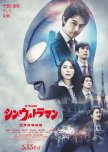
I genuinely couldn't wait for a second longer in viewing this, I've been so excited for its release for so long that when some heroes leaked it to the internet during October I was over the moon, yet equally annoyed due to the fact I was already dedicated to Spooky Season at the time. But finally, my time has come and Shin Ultraman is everything I hoped it would be and more.As the threat of giant unidentified lifeforms known as "S-Class Species" worsens in Japan and just when the JSDF and SSSP are pushed to the breaking point, a silver giant appears from beyond Earth's atmosphere.
In this house, we do not stand for Shinji Higuchi erasure, dude had just as much input in the creation of this as Hideaki Anno so it feels morally wrong to completely exclude him from any and all credit he deserves. This film is fucking raw and equally gorgeous, with so many shots of note but the scene of "Ultraman" standing amongst the burning ruins of a city goes hard. Also worth noting is that if you only went to see this or Shin Godzilla due to Anno's name, maybe rethink how you are approaching these movies, just saying.
There's a conscious production design decision by the duo to make Shin Ultraman look as if it was in its genesis and absolutely not concerned with reaching the modern "standards" of polished reboot looks is such a refreshing take. Shin Ultraman looks the part of a brilliant piece of tokusatsu media, a fresh reboot for a new generation and a love letter for long-time fans as both Higuchi and Anno are themselves.
Like Shin Godzilla before it, the visual effects are fantastically stylised. There's a clear love for the original designs and a clever little riff on the reuse of the Shin Godzilla CG model if you know your Ultraman. Shirō Sagisu returns as the composer for the second time, beautifully enhancing the original works of Kunio Miyauchi while adding in works left unused from both Shin Godzilla and of course, fucking Evangelion.
There's so much to be said about the overwhelming success of this film, for a time the highest-grossing film of 2022 in Japan alone and currently sitting at the most commercially successful Ultraman film beating out my beloved Superior 8 Ultra Brothers. It stands tall as one of the finest examples of both a reboot and a piece of Ultraman media, although perhaps not as tall as Brave Love Tiga.
The film doesn't really want to spend time with the politics of its predecessor, as Higuchi has stated in interviews "if we just did the same thing, it's kind of pointless". More power to the man, but the film isn't without a small political commentary on the Japanese government and how they would delineate a situation like this.
There's a little commentary on humanity's place in the universe, and whether we've proven ourselves worthy of continuing as a species. This messaging isn't always elegantly executed but, like so much of the film, it's presented with such enthusiastic sincerity that it's hard to resist. The world may sometimes be a terrible, frightening place, but Shin Ultraman argues that a little decency can still go a long way. I fucking love it, roll on Shin Kamen Rider!
Was this review helpful to you?
The weaker of the Amemiya duology
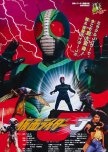
Easily the weaker of Keita Amemiya's two Kamen Rider films, but J does many things that ZO doesn't. Kamen Rider J skips out on the backstory of its Rider and instead leaves the questions till later opting for the action-first approach. The creature designs are suitably Amemiya with the direction and music as great as they always are, I could have done without the annoying little sidekick as it felt like Amemiya was trying to draw in a younger crowd with it, given the costume design of Zu it feels like the exact opposite, she possesses considerable dommy energy.Was this review helpful to you?
A superior Bodyguard
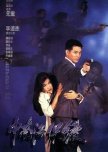
The Bodyguard from Beijing is a bit of lively, unpretentious fun that takes Mick Jackson's The Bodyguard but replaces Kevin Costner with Jet Li and the weird musical numbers with kung fu. Corey Yuen directs with a visceral energy that wouldn't be out of place in a Wong Jing movie and although, the writing is certainly a bit on the hokey side Li's charisma as a real man's man shines through. With plenty of high-energy and varied gunfights to keep you engrossed, a solid musical score and a fantastic final fight to boot elevate what could have otherwise ended up as a rather undercooked and stale riff, yes it's rather generic but there's a heart-beating somewhere underneath its surface.Was this review helpful to you?
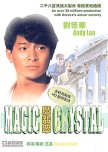
Seriously underrated madness
One part ET, another part Indiana Jones but a Wong Jing movie in every other sense, Magic Crystal has everything and the kitchen sink cheesed up to the max, but dosed on adrenalin too. Wong Jing's signature chaotic direction, balls-to-the-wall pace, brutal stunt work, cheesy yet ridiculously charming effects and humour that ranges from childish to outright offensive but it's presented in such a way that it remains hilarious. Topped off by an incredible cast that includes the likes of Andy Lau, Cynthia Rothrock and an awesomely villainous Richard Norton all of whom commit 100% to the film's stupidity. It's over the top and knows it, delivering endless, ferocious and well-choreographed action all set to a rocking synth score that has become a staple of most 80s Hong Kong movies. Daft, dumb and oh-so-fun, Magic Crystal is one you owe yourself to watch if you are in any way a fan of shlocky excellence. Then again I also gave 5 stars to Future Cops... so you decide.Was this review helpful to you?
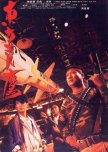
Sammo does John Woo
If you only know Sammo Hung for his more happy-go-lucky roles, then Eastern Condors will be a massive shock to the system, going as far as to tread into John Woo's territory of heroic bloodshed. Taking the idea of The Dirty Dozen but setting it in Vietnam, Sammo got serious with this one, even cutting his trademark hair and slimming right down. There are no mincing words about how brutally violent Eastern Condors gets... Hands get chopped off, Vietcong kids play Russian Roulette and people are shot point blank with no hesitation, in the wrong hands it's distasteful stuff, but Sammo treats it all with sincerity, marking this film out as one of his finest accomplishments as an actor, martial artist and director.Although the majority of the action is hyper-intense gun fights occasionally punctuated by a familiar moment seen in Western war films like The Deer Hunter or the Rambo franchise, there is a spectacular final bout of full-contact fisticuffs for the patient ones among you. The cast is populated by plenty of familiar names and faces, although I do wish they got a bit more characterisation outside of their nicknames and who plays them, they all commit often coming away bloody and bruised from the hyper-dangerous stunt work. For better or worse, Eastern Condors has a gritty edge that makes it truly stand out amongst Sammo's filmography often feeling like what Heroes Shed No Tears had originally wanted to be, it's an absolute must-see!
Was this review helpful to you?
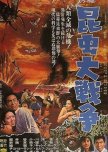
Exhausting
Exceptionally convoluted and deliriously nihilistic, Genocide is appropriately harrowing and periodically bonkers if a little middling around the second act. The second of only two movies from director Kazui Nihonmatsu, having previously helmed The X from Outer Space, Genocide is all over the place with enough hair-brained ideas to fill two movies let alone a single 84-minute one, primarily the hallucinogenic bees being bred by an insane holocaust survivor. Nihonmatsu handles the film with considerably more skill than his prior effort, there's a wider variety of shots and a better building of suspense thanks in part to the photography of Shizuo Hirase and the passable score from Shunsuke Kikuchi. It's very much an accident of a film, suitably ambitious and apocalyptic in its finality, ultimately hinging on the potential detonation of a hydrogen bomb and the single mother who may have to single-handedly repopulate a country. Genocide is an exhausting yet very rewarding experience, showcasing so pretty damn good filmmaking for its small budget but, as noted before, has too much plot for its own good.Was this review helpful to you?
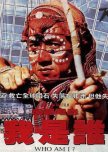
Watch the HK Cut
The answer is Jackie Chan. Who Am I? sees Jackie tackle the amnesiac spy thriller years before the Matt Damon shaky cam series and although a lot of the acting from its supporting cast leaves a lot to be desired (almost to the point of brain dead), the action more than makes up for it. The story feels unnecessarily complex and often messy but makes for an otherwise very compelling mystery (provided you watch the right version) in one of Jackie's more serious turns ala Crime Story. Benny Chan's direction is all pretty solid and Nathan Wang's score is decent if very dated, but seeing it paired with Jackie running around causing mass destruction in the Netherlands all while clad in a pair of clogs was truly a sight to behold. Despite a tepid first half, the film picks up steam with some great action, a fantastic car chase and the usual death-defying stunts in the second, with the rooftop fight easily ranking as one of his best, it's all just as imaginative and energetic as his early works even with Chan's advancing age.Was this review helpful to you?
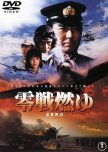
Another one for the “Toshio Masuda is one of Japans most underrated directors” pile.
There's something strangely perfect about Zero being directed by Toshio Masuda, having been kicked out of the kamikaze in 1944 for being excessively liberal and pacifistic. It's a real treat to finally see another one of his war epics after so many years, this time him and him alone in the chair. Based on a serialized story by Kunio Yanagida, this is the story of the Mitsubishi Zero through the eyes of the engineers who designed the plane and the pilots who flew it.Shoichi Hamada is a pilot flying the Imperial Navy's ace in the hole, the Mitsubishi A6M Zero, during the first years of the war the Zero is seemingly unstoppable, shooting down almost every type of plane the allies send at them. Hamada's best friend is Kunio Mizushima, assigned to the ground crew, they are both in love with one girl… but will the ravages of war tear them apart?
Toshio Masuda's direction is simply sublime, taking what worked on Tora! Tora! Tora! over a decade ago and bringing it back tenfold. It is clear Masuda had no love for war and thus directs the film with a dash of gritty realism, unflinching in its portrayal of death, bad decisions and ultimate endeavour for a lost cause. By stark contrast when the film isn't wowing you with its climatic and brutally intense battle sequences, it shines with a glorious use of colour.
The plotting is well done, keeping the story of the Zero first and foremost while framing the story of the young pilot around it. Masuda seemingly backhands the naval authorities for using the pilots as expendable property. In general, the film has no respect for higher authorities, portraying most of them as simply using their soldiers, and not caring about their lives. The story is told in reverse, starting from 1944 and going in reverse to 1937. The pacing is well done, keeping everything at about the same level.
The acting is great on most parts, and even the expats seem to be doing well, it's often noted how poor a lot of them were in Japanese films of the era but here they do a standup job. As for the main characters, they are directed with enthusiasm that goes with their youthfulness. The love triangle is directed well but in a way, it's almost like a precursor to the later Michael Bay shakey-cam fest, Pearl Harbour, ending on that usual "war romance" subversion.
Daijiro Tsutsumi as Hamada brings all sorts of emotions to the table, and by the end, it is clear the Japanese war machine has become him. Kunio Mizushima, played by Jun Hashizume, shows clear concern for his friend as well as a great love for the female love interest, Shizuko Yoshikawa. Shizuko Yoshikawa, herself is a very well-done love interest. She clearly has a mixed bag of emotions for the two leads and loves them both on different levels. Tetsuro Tamba's brief appearance as Isoroku Yamamoto casts him as a very sympathetic man, clearly concerned for the lives of his young pilots despite only appearing for about 5 minutes. Shin Takuma does well as Teruo Tojo, the Zero's financier and Mitsubishi Motors president, showing quite a youthful energy and enthusiasm for his character.
The special effects by later Biollante to Destoroyah Effects Director Koichi Kawakita are very well done, clearly showing off just as much enthusiasm for pyrotechnic effects as his teacher Teruyoshi Nakano. The miniatures look great, and it’s nice to see a few Zero miniatures portrayed accurately as white in the opening 30 minutes. The camera angles during the air battle scenes are daring, and Kawakita makes use of frenetic camera movements during the battle scenes to enhance the combat. There is quite a bit of stock footage in the film, all the way from Storm of the Pacific to Kawakita's own Zero Pilot and to The Imperial Navy, but the original effects all look fantastic and blend very well with Kawakita's efforts.
The music by Harumi Ibe has a dated late 70s-early 80s quality that actually works for the film, and the score uses a lot of horns as well as 70s-style guitar work that make it clear Ibe was primarily used to the 70s style of composing and hadn't quite made the jump to the 80s sound design yet. Even then it's a great score and the film's theme song, Dawn, is sung beautifully by Yujiro Ishihara. Befitting the film's historic ending scene well.
Overall, I can't recommend Zero enough. It's clear how much Toho bought their A-Game in 1984, between this, The Return of Godzilla and Sayonara Jupiter, their tokusatsu efforts were on top form. If you ever get the chance to see it, do so.
Was this review helpful to you?
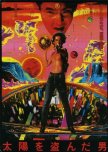
A perfect companion to Oppenheimer
The Man Who Stole the Sun treads the finest of lines in trying to balance its subject matter and tone, but Kazuhiko Hasegawa's controversial movie about nuclear terrorism is a darkly comedic and thrilling satire on a subject once considered unsatiriseable annihilating any form of genre borders in the process. Holding particular resonance for Japanese audiences, as while the country does use nuclear power, it has long held against amassing a nuclear arsenal due to the devastating effects that ended World War II. The movie doesn't stop dead for any form of long-winded nationalistic or philosophical speeches and instead insists on a conceivable reality with seemingly no motivation.One of only two movies directed by Kazuhiko Hasegawa, which in turn feels like a crime in itself, Hasegawa rewards the viewer with some utterly sublime direction and excellent framing, with plenty of thrilling action set pieces to command his viewer's attention at all times (the car chase feels like it was ripped right out of a Ringo Lam movie). It balances the unorthodox nature and tone of the movie exceptionally well, juxtaposing the shifts with unnatural ease. Complimented by funky and often ill-fitting music by Takayuki Inoue to glorious success.
The performances are all excellent, with Kenji Sawada playing the everyman gone rogue with an endless amount of animosity slowly succumbing to the effects of radiation poisoning making him more and more unpredictable as the movie goes on. But it's the award-winning performance from the stoic and hardened Bunta Sugawara that really captivates me as he normally does in his roles, single-minded and exceptionally driven.
Overall, The Man Who Stole the Sun, even at two and a half hours long, never feels overly long or bloated. The film absolutely refuses to limit itself, and that's why it's so entertaining and impressive.
Was this review helpful to you?
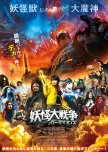
Fun if uninspired sequel
Takashi Miike's loose and belated sequel to The Great Yokai War, Guardians is much more of the same, so if you liked the previous adventure, you'd like this. It's made for kids so accessibility is a key factor to its appeal, meaning there's not much meat to its story beyond your standard hero's journey, but just because it's more kid-friendly doesn't mean it lacks a lot of wacky, and sometimes downright disturbing, imagery courtesy of the Yokai themselves which are brilliantly realised (both east and west alike). Miike even managed to bring back our great guardian god Daimajin for an extended cameo which put a big smile on my face knowing he was originally lined up to direct a film reboot in the late 2000s. Fox-Faced Woman also was 😳.While there's certainly a lot of love and creativity put into this movie, I can't deny like the previous film, it certainly has its faults. The child-friendly tone does its story no favours, especially in the final act where you'd normally find Miike going hell for leather, it falters. The overreliance on CG like the last, has dated the film extremely quickly although Japan has never really had the best of results with this technology. Regardless, for what it's worth, The Great Yokai War –Guardians– is a fun romp but extremely subdued Miike which is saying a lot.
Was this review helpful to you?
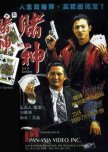
Verstility is the name of the game
Original Hong Kong VersionEven with this ancient DVD print full of screen tearing and damaged frames, God of Gamblers showcases one of Chow Yun-Fat's most versatile performances effortlessly switching back and forth between impeccably suave and utterly adorable on a dime. Backed by the ever-amazing Andy Lau, it's really only two extremely questionable moments that hold this film back from being rated any higher. Even then Wong Jing's intense gambling drama is a classic of Hong Kong cinema and one I will definitely pick up on Blu-ray. I do question the sheer number of sequels and spin-offs though with one of them being a time travel story... Nonetheless, sign me up.
Was this review helpful to you?
One of John Woo's Magnum Opus'
Hong Kong Theatrical CutUnquestionably one of John Woo's magnum opuses, released at a time when Hong Kong was inundated with over-the-top action films, The Killer still endures to this day the prime example of the 'heroic bloodshed' subgenre that Woo excels at. With high-octane action set pieces, theatrical characterizations and an unrelenting sense of redemption, The Killer succeeded in everything it set out to do and then some, finally getting John Woo the attention he deserved in the West, for better or worse.
Was this review helpful to you?
Juvenile 2.0
Ghost Book feels deeply reminiscent of Yamazaki's debut film, Juvenile (hell, even the adorable little Tetra makes a cameo appearance), a lighthearted family romp often dealing with some relatively difficult themes for its target audience. There's an element of Pokémon thrown into the narrative with the film's characters tasked with "catching them all", benefiting this narrative hook is the lovely monster design, stellar voice work by legendary voice actors such as Akio Otsuka and Rie Kugimiya; and their impressive realisation capturing the essence of Etsuyoshi Miyamoto's original illustrations brilliantly. Unfortunately, the characters are all exceptionally one note, despite the cast's rather heartwarming performances they are probably the most laid-back group of ghostbusters ever, often characterised by very limited personalities (I swear Kudo is just a few steps away from being a full blow serial killer) or singular traits. There's no urgency with this film, it just kind of chugs along at its own pace, often leaving room for a nice family dinner despite the race to get home. That being said, Ghost Book operates on a level of childish fun, obvious in its sentiment and simplistic in its messages. However, it makes up for its narrative wateriness with a wholesome vibe you can't bring yourself to hate.Was this review helpful to you?
Shaolin Temple 3: Martial Arts of Shaolin
0 people found this review helpful
High-flying athleticism and extraordinary beauty
A wonderfully energetic showcase of high-flying athleticism and extraordinary beauty, Martial Arts of Shaolin is a spectacular, fast-paced and frequently sensational celebration of Lau Kar-leung's love for less fantastical martial arts, constantly pushing for the tenets of discipline, pacifism and tolerance. It's far less traditional than most of the typical Shaw Brothers output. There's no set or soundstage to be found here, with beautiful mountains, ancient cities and temples, and rolling green pastures hosting hundreds of extras in a lavish, large-scale epic. It does boast some fairly interesting meditations on Buddhism and the limits of pacifism in the face of injustice. However, this is about as straight-laced a revenge story as you could ask for, although the motivation for said revenge isn't even revealed until the very end; thus, it looks like the characters are just being arseholes to everyone they meet, it's a story that only exists to provide a framework for increasingly elaborate displays of physical skill and in that department, it's no slouch. Lau's direction is sublime; every bout feels like a natural one-upmanship of each other. Fights are fast without becoming incomprehensible, with a wonderful amount of variety, from traditional weapons combat to hand-to-hand duels and large-scale confrontations; the sheer physicality is exceptional. As one of Jet Li's earliest performances, there's a ripe youthful vigour about it, effortlessly switching between comedy and commanding when required; he has a tremendous screen presence, even when he is doing very little beyond demonstrating how impossibly fast he can move. He is astonishing. His speed, balance and precision are almost unreal, whether he is fighting with his bare hands, staff, sword or other weapons. The climax is where everything comes together, and after the slower character and training material, the film unleashes a succession of increasingly elaborate fights, culminating in a spectacular final confrontation. By this point, Martial Arts of Shaolin's relatively thin and increasingly uneven story hardly matters: the sheer skill of the performers and Lau's choreography provide all the momentum necessary, although far from one of his deepest or most sophisticated films, judging it purely as a showcase for classical kung fu, it is enormously entertaining.Was this review helpful to you?
Schizophrenic Double Dragon
Schizophrenic Double Dragon. Taking Jackie Chan's doctrine of building action-comedy around a simple idea pushed to ridiculous extremes, it's a shame that Twin Dragons amounts to a somewhat chaotic collection of comedy, romance, car chases and martial arts only barely held together by the sheer charisma of its leading man. The annoying thing is that there's a lot of genuinely funny shtick throughout, but it's hampered by erratic pacing and a disjointed structure. The separated siblings' story is hardly new, but the film is more interested in how much comic mileage can be extracted from having two Jackie Chans running around; once it cuts loose, however, it's a strong reminder of why Chan's early-1990s work remains so enjoyable. The fights are fast, inventive and packed with the kind of physical ingenuity that distinguishes him from his contemporaries. The climax, in particular, delivers some spectacular choreography, combining hand-to-hand combat, vehicles and elaborate physical gags with Chan's stunt work up to its usual impressive quality; it gives the film's action sequences considerably more energy than its rather thin story deserves. Despite being co-directed by Tsui Hark and Ringo Lam, two directors at the top of their game at the time, it's a film that doesn't feel like either of their respective styles; Hark's anarchic sensibilities and Lam's harder-edged action do not gel cohesively together, especially given all the glaringly cheesy camera trickery employed in some shots that greatly undercut the illusion of twin brothers in the same frame. Thankfully, Chan throws himself into both characters with enthusiasm; the contrast between the two brothers allows him to showcase different sides of his screen persona. Equally, Maggie Cheung and Nina Li Chi make for some wonderful supporting ladies, Kirk Wong makes for a great villain, and there's the sheer abundance of cameos from Hong Kong directors, maybe the most in the history of Hong Kong cinema, that prove to be the funniest additions, with Lau Kar-leung and Wong Jing as major highlights. Unfortunately, once the novelty of watching Chan interact with himself wears off, there isn't always enough underneath Twin Dragons to sustain the momentum. When it's funny, it's really funny, yet it could have all been so much better.Was this review helpful to you?


