



Watch City Hunter instead
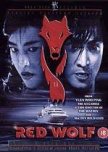
A far less goofy but equally far inferior Die Hard on a Ship than that of Wong Jing's City Hunter, The Red Wolf, by Yuen Woo-Ping standards, is a very below-par effort. It essentially amounts to watching a rather boring, stripped-down version of Daddy Seagal's Under Siege; despite occasionally delivering flashes of exciting action, it's weighed down by a weak script, forgettable characters and inconsistent pacing, suffering from its own inability to create any form of engrossing narrative. Sadly, this concoction never really seems to gel, and the total lack of tension makes the scenario feel a lot less enticing. Yuen keeps things buttoned down for the first half hour but eventually unleashes the full force of the Hong Kong stunt community and the Die Hard trope generator, although it does all feel too little too late at that point. Once up to speed, the only reason the film ever slows down again is so people can torment Cecilia Ng Sin-Si. I don't know why Yuen picks her out for special treatment; she loses her dad straight away, her mother is then gunned down trying to protect her, and she spends the rest of the film being kidnapped, threatened, chased, strapped to a bomb and hung from a rope. Despite the contrary, this film is about action, not child abuse and in that regard, it's alright; there are some good bouts of combat that are decently inventive and make good use of the setting, but it's not all that memorable. Fresh-faced Kenny Ho brings little to the leading role; he doesn’t do anything specifically wrong, he just seems so incredibly bland, and it’s easy to see why he never really made it as a star. Christy Chung, on the other hand, is totally wasted as she has nothing to do other than scream a lot and get in the way during the action scenes. Outside of maybe the snazzy musical score, it's difficult to really recommend The Red Wolf; the lack of any real stand-out moments just leaves me constantly wanting something more. Watch City Hunter instead.Was this review helpful to you?
The Beach has Eyes
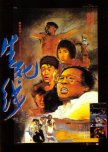
Borrowing stock and trade from gnarly American slashers of the time yet never losing the unique qualities of a Hong Kong horror, The Island begins as a leisurely excursion before steadily mutating into a relentless fight for survival as it plays out a pointed class conflict of its educated urbanites against the violent members of an isolated rural community. Beneath its surface lies an implicit clash between modern urban society and isolated, almost prehistoric violence. The humour in this is very much of its time and place, while the violence is way less visceral than the genre films it aspires to. It's well-shot thanks to director Po-Chih Leong, but it's the island itself that becomes the film's greatest asset. Its rocky coastline, dense vegetation and isolated coves create a convincing natural prison where escape feels impossible. The landscape isn't simply a backdrop; it actively contributes to the mounting sense of dread. It's certainly effective, if a little simplistic, and it manages to feel exhausting even after only 90 minutes. All the acting is solid throughout, but it's the score by Lew Dik that is the true highlight, a synth fan's dream. It really gets the pulse racing, enhancing so many of the more memorable sequences, whilst some of the tense moments get the classic horror treatment. Though overshadowed by more famous Hong Kong horror films, The Island is an otherwise solid little feature with plenty to savour, tense, atmospheric and surprisingly uncompromising, proving that Hong Kong filmmakers could adapt Western horror conventions without losing their own cinematic voice.Was this review helpful to you?
Ellie My Love
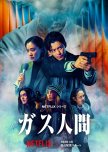
Genuinely wasn't aware this was a thing until it was seemingly dumped on Netflix last week. An extremely ambitious Japanese–South Korean co-production, Human Vapor does everything a remake should aspire to, utilising Honda's original film as a jumping-off point before going in its own direction to do something radically different with the material. It hits all the right beats, modernising the premise with a darker, more grounded tone that leads into a compelling supernatural murder mystery, gradually evolving into an exploration of revenge and the human cost of scientific ambition. It's just kind of a shame that the whole thing eventually runs out of steam by the end of its lengthy eight-episode run. Visually, however, there's little to complain about; Shinzo Katayama directs his socks off, the performances are superb across the board, while the music by Takashi Ohmama is simply outstanding. The visual effects deserve their own special mention; done by the same team behind Godzilla Minus One, they are outstanding; every transformation is thoroughly unsettling, inventive and seamlessly integrated. Although the momentum slows to an absolute crawl after an opening sequence that literally blows you away, the series never loses you, as you buy into the horror of what the Human Vapor truly is, remaining a hugely entertaining romp that sublimates the atomic-age paranoia and kitschy monster mayhem of the 60s into a thrilling cautionary tale for the modern era, replete with bountiful action, romance, peril and enough renditions of the Southern All Stars Ellie My Love to last a lifetime.Was this review helpful to you?
Was this review helpful to you?
Now we're playing with power, Nintendo Power!
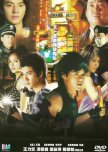
Finding out that The Avenging Fist was originally supposed to be an adaptation of Tekken filled me with an indescribable joy. Naturally, it should have been a winner; I mean, it's Wong Jing doing an unofficial video game adaptation. Unfortunately, Future Cops, this is not. A convoluted homage to sci-fi classics, or at least one that tries to look like it, utilising extensive CGI and a production design motif that can only really be known as a neon metropolis, there's certainly a video game look to this glossy spectacle. The over-the-top design is quite welcome; the all-powerful gauntlet is a literal Power Glove after all, as it puts us in the right mood for the action fluff to follow and while the action is Corey Yuen's department, his trademark fluid choreography is muted beneath camera tricks and VFX plug-ins. What's left is serviceable enough fighting, but it's certainly not the main attraction here. This really is pure spectacle if nothing else, a well-produced mishmash of comic book platitudes and overused plot devices. Looks are seemingly more important than anything else to director Andrew Lau. Fantastic visuals are one thing, but being flooded with them at the expense of everything else leaves little room for excitement or empathy, especially when you proudly boast about the appearances of Sammo Hung and Yuen Biao, only to then criminally underuse them. Biao at least gets to shine as a villain, albeit a frustratingly mute one at that, while Sammo is dripped out in some truly incredible costumes, the very shiny metal hat is a feast for the eyes, I want one. It's a shame that most of the new guard can't compare; they might look pretty, Gigi Leung and Kristy Yang especially, but largely lack the presence and Peking Opera chops of their older counterparts. Far more fascinating in its failures than it ever is in its successes, The Avenging Fist is certifiably insane, building itself on some classic Hong Kong action tropes but never seems to find a footing on any of its one thousand elements, crashing and burning in such a spectacular fashion that it's almost praiseworthy in its disastrous ways.Was this review helpful to you?
Jumborg 9 supremacy
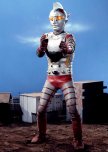
Released as part of Tsuburaya's 10th anniversary celebration, a year jam-packed with so many different tokusatsu productions from everyone and their mothers, Jumborg Ace is a confused beast, unsure if it should be a revenge-driven thriller or embrace the goofier antics of contemporaries. Yes, it very much lives in the shadow of the better-known Silver Giant from Nebula M78; the formula has already worn thin, but the series does deserve a bit of credit for blending high-flying monster action with mecha elements years before giant robot anime would truly explode in popularity. What keeps you going more than anything is the rather emotional central storyline; revenge is always a powerful motivator, and it keeps you hooked merely to see how far these characters are willing to go, especially once Jumborg 9 gets introduced. Unfortunately, the show has more than its fair share of child-focused episodes that regularly interrupt the momentum of its invasion narrative, while supporting characters sometimes receive limited development, and a lot of the acting reflects the broad style common to children's television of the early 1970s. Still, these shortcomings are outweighed by the show's infectious energy and sincerity. The production values are pretty typical of the era with miniature cities, rubber-suited monsters and colourful pyrotechnics all on full display. Although occasionally showing their budgetary limitations, they're executed with enough enthusiasm, the action sequences are brisk, inventive and often surprisingly brutal, with Jumborg Ace dispatching enemies in ways that stand out even among his giant hero peers. While the opening perfectly captures the larger-than-life spirit of the series, I find myself once again unimpressed by a Shunsuke Kikuchi score; there's not a lot I can even say about it. Regardless, Jumborg Ace is a fine little show in its own right; its blend of giant robots, alien invaders, and heartfelt heroism makes it essential viewing for fans of vintage tokusatsu despite being another series cursed to never get a proper ending.Was this review helpful to you?
We love you Weng Weng
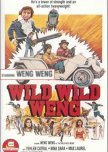
Words cannot describe how much beautifully demented joy D'Wild Wild Weng brings me, an utterly deranged Kung-Fu Western featuring Tribal Dwarves, Mexican Banditos, and even a detachment of ninjas for Weng Weng to murder. It's just as gloriously chaotic as the two Bond parodies that make up the heart of his tragically limited filmography. Naturally, Weng is magnetic, spending the film up to his usual antics, employing his diminutive stature in ever more inventive ways before sliding across the floor and kicking a bad guy in the balls, but this time he gets to serenade a young lady too, and it's magical. Surprisingly, the most unusual thing is the comedy relief sidekick because he can't talk. There are obviously a number of conceptual problems associated with the character who can't talk; certainly, giving him most of the exposition was a mistake. The bigger issue is the potential for irritation, but on balance, it's seldom more annoying than it is fascinating, so I'm on board all the way, especially when things start to get weird. Sadly, it seems the holy grail of Weng Weng adventures is currently being withheld from us mere mortals, but for what it's worth, there isn't anything better than watching Weng mowing down enemies with a Gatling Gun.Was this review helpful to you?
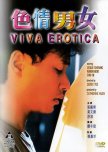
An ode to artistry and perseverance
For a film which revolves around sex, Viva Erotica doesn't feel the least bit sleazy or grimy, instead offering an electrifying meta-filmic takedown of both the absurdity and sensationalism of the world around Category III filmmaking. It throws out the window any typical expectations you have, delivering a provocative satire that pokes fun at the film industry while celebrating the people who keep it running. It certainly helps that the film has a tremendous spirit of style with some wonderful direction and photography, plus a terrific sense of humour, with its tongue firmly in cheek, featuring witty dialogue, cheeky references, and guest cameos that ground the film in a slightly offbeat existence. The different styles reflecting different moments, within its realm of porn, there's a lot more colour and movement, but it slows down when it's brought back to reality. It dips into the classic retrospection of filmmakers, moving flawlessly from moment to memory and back again, while thriving on capturing the typical heart of low-budget indie cinema, just with extra nudity and sex thrown in. Leslie Cheung gives a great performance, tackling his role with abandon, embodying the turmoil an artist endures when his ideal must be compromised to meet the reality of the market. He's flawed, but in a very natural and relatable way, as people can't always make the right decision at every turn. All the while, Shu Qi is doing a parody of bad porn acting, resulting in cinematic gold. It helps that they're backed by a fantastic support team, a mix of different personalities who all have something to add, originally out digging into artistic integrity but evolving into becoming a family and together, trying to create something great. Although at times, Viva Erotica seems precisely like the soft-core sex flicks it's trying to skewer, starting with a literal bang with one of the most enthusiastic bonking scenes ever witnessed, yet it all comes together in a surprisingly heartfelt examination of filmmaking, artistic compromise and the struggle to survive in a commercial entertainment industry.Was this review helpful to you?
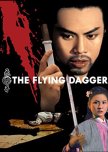
A Shaw Bros Spaghetti Western
With the dusty, fatalistic vibe of a spaghetti western disguised as Shaw Brothers swordplay and blessed with an incredible black-and-white opening sequence, you'd be forgiven for thinking that The Flying Dagger would be a rape revenge tale lead by a female swordswoman; what you get instead is Lo Lieh wandering into town like a wuxia Clint Eastwood, throwing knives with absurd accuracy and looking cooler than everyone else in the room. It's certainly an impressive bait-and-switch, opting instead to deal with the internal struggle between good and evil that exists within all of us, where honour and chivalry often carry little weight in the world. Chang Cheh's direction already shows his growing fascination with violence, sacrifice and masculine heroism, hallmarks of his later works. The action is relatively brief but frequent, often punctuated by the deadly precision of thrown knives and colourful villains. Lo Lieh is always a great watch, dominating the screen with his effortlessly charming if not entirely noble persona, Yeung Chi Hung makes for a wonderfully nasty villain, cackling wildly and throwing daggers with absolute precision into his foe's limbs or torso as he sees fit, while Cheng Pei-Pei, who, despite headlining, unfortunately takes a backseat, barely getting a chance to break into action, is shackled to the tortured woman in love stereotype. It means that the third act is bogged down when the romantic sub-plot takes precedence over the film's main drive of loneliness, belonging and redemption. Still, the stylish camerawork and snappy pace mean that The Flying Dagger soon gets back on track, delivering just the right kind of heroic sacrifice and blood-soaked righteousness you'd expect.Was this review helpful to you?
Pure exploitative vindication
Pure exploitative vindication. Possibly one of the worst pieces of shit I've ever had the displeasure of viewing, Bruceploitation was already a subgenre I had a huge discomfort with, but Bruce Lee and I has taken that to a whole different level. An intimate portrait of Betty Ting Pei's illicit love affair with Bruce Lee, told from the perspective of the world's neediest sympathy sponge, it's a downright sickening production. Cheap at every turn, it's a sleazy mix of gossip, melodrama and outright fabrication; every scene is designed to exploit Lee's fame rather than celebrate what made him such a magnetic screen presence in the first place. It's only really worth a vague glance to see Danny Lee as Bruce Lee; other than that, we'd be better off burning every available copy. I feel no sympathy for Betty.Was this review helpful to you?
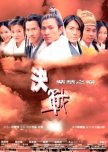
Old-school wuxia comedy with a glossy post-handover makeover
An old-school wuxia comedy with a glossy post-handover makeover, The Duel bounces between political conspiracies, mistaken identities, romance, comedy and increasingly absurd action sequences with enough CGI and star power to light up Victoria Harbour. It's less like a straight martial arts film than a variety show built around the promise of a sword fight that never comes. It's very much a hybrid effort, and the comedy is ill at ease with the heavy drama that occurs later on, but credit to Director Andrew Lau because, for the most part, the film is utterly gorgeous with plenty of soft colour and wonderful scale. The uneven silliness and fluid fight choreography are ultimately a victim of the incomprehensible editing, and unfortunately, it all kind of falls apart when paired with the comedic writings of Wong Jing and the hyper robotic leading performance from Nick Cheung, looking fairly ridiculous with dreadlocks and a pencil moustache. He lacks a well-defined comic persona, coming across as more annoying than entertaining, but here his presence is strangely welcome as it looks like he is at least enjoying lampooning the straight-faced drama. Andy Lau is always a welcome presence, and I kinda love Vicki Zhao, but, for the most part, The Duel is a rather middling but glossy affair. Messy, overstuffed, but reminiscent of other early nineties wuxia comedies.Was this review helpful to you?
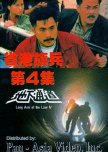
Fear, hope and disillusionment
A sequel from an entirely different genre and taking the gritty bleakness of the series into overdrive, Long Arm of the Law IV is cut from a completely different cloth, abandoning the robbery-centred plots of earlier instalments and instead acting as a highly incendiary response to the Tiananmen Square massacre. There's a reason this hasn't seen a re-release since its VCD, one I ultimately imagine is down to a narrative based on Operation Yellowbird, the extremely bold use of footage of the Tiananmen Square protests, and it's far from subtle recreations of the events with a horrifically high body count to boot. Rather than thriving on momentum and carefully orchestrated chaos, Director Michael Mak instead goes for restless, messy but ultimately ambitious storytelling, and I respect him for that. It's an exceptionally bold piece of filmmaking, even if it feels as if they've had to make a compromise to avoid the Category III rating. There's a genuine sense of displacement and uncertainty, portraying characters caught between political realities and the false promise of escape. Hong Kong is no longer the glamorous refuge it might appear to be from across the border; it's another hostile landscape where survival comes at a cost. The action scenes are effective, though they're not the main attraction. What lingers is the atmosphere, the paranoia, the exhaustion and the sense that every character is running toward a future that may not exist. Bolstered by some outstanding performances and Joseph Chan's incredible music, Long Arm of the Law IV remains a highly compelling action thriller, not because it delivers bigger action or higher stakes than its predecessors, but because it captures fear, hope and disillusionment with a brutal honesty, ending the saga on a deeply pessimistic note.Was this review helpful to you?
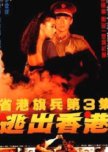
Commercial action spectacle over gritty realism
The first two Long Arm of the Law films built their reputation on grit and desperation, with their criminals trapped by circumstance. Long Arm of the Law III takes a drastically different route. It's bigger, louder and far more of a star vehicle that certainly plays to Andy Lau's strengths as both a charismatic hero and romantic leading man. Although it loses the vicious edge, it remains a strong piece of engaging melodrama where one moment it’s a tragic romance about displaced migrants chasing a better future; the next it’s a brutal crime thriller packed with betrayals, gunfights and ruthless gangsters. It sits in a sort of unhappy middle ground where it’s too romanticised to be a full-blown neo-noir, not quite a heroic bloodshed and too glossy to be a hard-edged crime thriller. However, returning director Michael Mak still delivers plenty of grit and determination; his action sequences are excellent, with a climactic stretch, in particular, offering a barrage of bullets, double-crosses, and body counts that feel determined to top everything that came before it with a heist final heist that feels straight out of the Michael Mann playbook. The trade-off is that some of the social realism and bleakness of the earlier films gets diluted with the script occasionally relying on coincidence, broad villainy and emotional manipulation. Yet there's something undeniably entertaining about the film’s emotional excesses, an energetic slice of Hong Kong cinema in its heroic-bloodshed prime. Lau's charisma undoubtedly helps sell the film, but equally is his wonderfully goofy relationship with Elizabeth Lee. The rest of the performances are all pretty great, with highlights from Elvis Tsui, Kirk Wong, Max Mok and a pre-Liu Kang Robin Shou. Although it very much feels like the point where the series fully embraced commercial action spectacle over gritty realism, Long Arm of the Law III is a wonderfully messy and violent slice of fun.Was this review helpful to you?
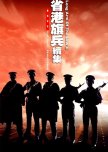
Fighting fire with fire
Fighting fire with fire, although it never quite escapes the shadow of the original, Long Arm of the Law II is a slicker but no less brutal follow-up that's just as tense, cynical and morally corrosive. It's dog-eat-dog, where violence is simply a routine fact of survival, self-preservation takes precedence when you're in over your head, stuck in increasingly dangerous limbo, where neither fully criminals nor fully accepted by the authorities they serve. It all feels like a decidedly glossier affair, losing the raw unpredictability but retaining the dirty, pessimistic attitudes; it feels lived-in and authentic, aided by some wonderful location shooting and a visual style that often resembles reportage more than conventional genre filmmaking, but with Michael Mak taking over directing duties, it doesn't stop the film from being almost as breathtaking as its predecessor. Shootouts are messy, brutal affairs; panic and desperation are the de facto settings when everything goes wrong. Yes, it does occasionally rely on overly familiar undercover-cop conventions, with the storyline getting a little muddled in the middle due to a surfeit of subplots, but the film delivers absolutely thrilling firepower amid all its barbarity, even stopping for a karaoke number. The cast, led by Alex Man, Elvis Tsui and Ben Lam, gives the film much of its emotional weight, teaching us the ultimate lesson when it comes to being an undercover cop: it sucks, it contributes wonderfully to the film's sense of realism and desperation. Their characters, fish out of water introduced into a capitalist society, this time with a touch more levity, are not idealised heroes but trapped men trying to navigate systems that view them as expendable. Complimented by the usual Hong Kong lax standards when it comes to stunt safety and a fantastic musical score, Long Arm of the Law II is a gritty, unsentimental and relentlessly tense concoction of bombastic firepower and fallout that's certainly not for the fainthearted.Was this review helpful to you?
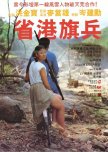
Brutally visceral
Brutally visceral from beginning to bloody end, Long Arm of the Law speaks volumes about its people and society, exploring how Mainland Chinese in the Bamboo Curtain era desperately desired better opportunities in the colonial-ruled Hong Kong, even if it came at the cost of losing their lives. Everyone has their own personal issues to work through, but this isn't a feel-good, fuzzy film about redemption and ultimate reconciliation. The characters are stymied or even undone by their disassociation with Hong Kong; their success and/or failure hinges on who they are. In the end, they don't affect the situation; it affects them. Every decision pushes the gang deeper into danger, and every attempt to regain control only accelerates their downfall. They are not glamorous antiheroes, but poor, opportunistic men chasing a fantasy of quick wealth, observed with a mixture of sympathy and brutal honesty. Arriving just shy of the heroic bloodshed boom that would soon dominate the landscape, many of the genre's defining traits are already here: desperate criminals, fractured loyalties, explosive violence and a city that seems determined to grind everyone down. Seriously, how on earth has Johnny Mak only ever directed this?! He paints Hong Kong not as a neon playground but as a crowded, chaotic landscape filled with cramped apartments, back alleys, cheap hotels and criminal middlemen. Favouring confusion, panic, and sudden eruptions of violence where gunfights are messy and frightening, while chases feel improvised and desperate. It's utterly mesmerising. Above all, the casting is the major key; from top to bottom, the actors are mainly amateurs, but their performances are starkly real, no doubt helped by the improvisational attitude to some scenes that lend them all a beautiful authenticity. There are no heroes here. There's only a society that loses. A tense, cynical, and deeply atmospheric portrait of men chasing a dream that was doomed from the start, few films feel as raw, influential, or unsettling as Long Arm of the Law.Was this review helpful to you?


