




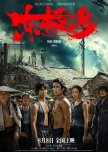
Great action film: visually breathtaking, brutal, and explosively message-driven
Watch this if you:• love wartime action
• appreciate great cinematography
• want to check out some underwater wire fu
• are up for epic statements about inhumanity and war
• are willing to go with iconic characters and broad symbolism
• want to see Zhu Yi Long’s amazing acting and 9.5% body fat abs
• want to see Wu Lei's wonderful acting and his ability to embody goodness and justice
• want to watch Ni Ni's awesome acting and her character's role as a force for change
• are curious about why “propaganda” is not an insult in the Chinese filmmaking industry
Don’t watch this if you:
• can't take brutal violence
• prefer realism and naturalistic character development over powerful message delivery
• are never okay with demonizing villains
• are sadly insensitive to the awesomeness of Ni Ni, Zhu Yi Long and Wu Lei.
• always judge a film by the same standards as those of Oscars voters
• think “propaganda” is only and always a bad thing
This is a powerful action movie that made me cry buckets. It's a:
Stunning visual experience
Enraged condemnation of a Japanese war crime
Grueling, devastating ride
Hymn to justice and kindness
After seeing it, I needed a few days to move out of the loss and sadness.
A week or so later, I started getting curious about where Dongji Island's filmmaking style fits in Chinese filmmaking history. Because it's quite strongly message-driven. I mean, I usually notice ideological content in films and tv shows, whether that's a cultural stance in Hollywood products or political messaging in cdramas. And after some preliminary internet searching, I learned that being propaganda is not a movie flaw in China the way it would be in my country. It seems like within Chinese filmmaking, propaganda can be art.
Anyway, in my opinion, Dongji Island has elements of extremely well made propaganda, but overall it's great art.
Because of its propaganda side, though, I don't have much hope for it to become popular in the West. I think Oscars voters go for stories with realism, psychological growth and complexity that privilege the individual. Dongji Island is fueled more by the message than it is by psychological arcs. While its characters have individuality and uniqueness, their symbolic weight is emphasized. And the movie subordinates the individual to the collective.
What’s stayed with me the most are not only the deep emotional impact and the amazing visuals, but also the performances. Besides the leads, Wu Lei, Zhu Yi Long, and Ni Ni, who are all on fire, I keep remembering moments from supporting actors, especially Chen Ming Hao, Ni Da Hong and Yang Hao Yu.
I’m really grateful for the limited American release, because I was able to see this on the wide screen! The lowest score I gave it was for rewatch value, because I would have to take a lot of deep breaths before I walked into a theater to see this a second time. But it will remain with me from just the one experience.
Was this review helpful to you?

This review may contain spoilers
Some thoughts about viewer experience
[Just a heads up that I tagged this review as possibly containing spoilers, because I talk about differences between the web novel and the show. If you've ever seen a romance drama before, the level of implied spoilerage in here shouldn't be too spoiler-y. But while I try to write about the drama so that you could read this and still experience the drama for yourself, I think of this review as better read after you've seen the drama.]I came late to Amidst a Snowstorm of Love, and I found a division of opinion. My own opinion, though, is not divided. I am blown away by this passionate, perfect drama. I can’t get enough of the screenplay’s densely packed excellence; intriguing characters; and complex personal, social, professional, and family relationships. I love that it has that comfiest of tropes, The World Is Your Wingman! And I adore its moving touch with life transitions. With no antagonist nor any catastrophes to get in the way, the drama stays with the beginning uncertainties of falling in love, and the emotional journey of becoming a couple and facing obstacles together. I’m grateful for this drama’s emotional rewards, compelling mood, and romantic intensity.
But since I began my the journey despite the critics, I was curious: What’s up with the negativity? And I have some thoughts.
First, there are ways Wu Lei’s brand of celebrity is unique, so there may be more people with conflicting opinions about his projects. Second, this drama has a lot more going on than just romance, including not only large themes but also a complex, symbolically charged male lead. And those elements aren’t to everyone’s taste. And third, Chinese TV uses innuendo, while Western media is all about show and tell. So the drama’s strategies in adapting a web novel about a sexual relationship for Chinese TV may have frustrated viewers, if they aren’t into reading between the lines.
I'll start with the length of Wu Lei’s career and the variety in his roles. Because of the many different ways he appeals, his fans cannot all be on the same page.
Older fans remember the “Nation's Little Brother” as a child actor. Fans who came along later first saw him as a teen action hero. A still younger group met him as the badass elite cavalry commander, the relatable comeback athlete, and the vengeful Han dynasty general. And some fans may have taken a shortcut to Amidst a Snowstorm of Love directly from his arthouse role as the iconic Mulian. For westerners who followed Wu Lei from Netflix movie Upcoming Summer, with its international audiences levels of LGBTQ+ content, there could be some culture shock. Wu Lei has his own studio, and his fans aren’t given marching orders through a fan association like in larger studios. His projects can’t possibly please all the fans, all the time.
Second, Amidst a Snowstorm of Love is not a typical cdrama romance. It’s got some big themes. That’s a particular flavor of romance. And I think romance fans may have gotten their wires crossed about what to expect.
The themes are centered on male lead Lin Yiyang. Female lead Yin Guo has an arc, too — she comes into her own in multiple ways. But Yin Guo as a character is not super packed with meaning. In contrast, Lin Yiyang carries a lot of symbolic weight. For the nation, he’s a returning top level talent — a symbol of reversing “brain drain.” As a snooker player, he’s that badass who comes out of retirement, to the dismay of those who expect to beat him. As an individual, he’s an orphan and a loner. And he’s in exile, holding up a makeshift community, and facing trials to reach home. As the brothers who come for him show, his absence is a wound in their community. Clearly, these layers of identity aren’t just tacked onto his character to give him a reason to brood. They’re way more substantial than the typical CEO’s childhood trauma.
That’s already a good amount of depth. In addition, the drama creators may be drawing on neurodiversity to construct Lin Yiyang’s character. In youth flashbacks, he’s impulsive and emotionally dysregulated. He says, "I used to talk mean” and that he misread others’ reactions. It may work to say adult Lin Yiyang is following these masking rules: (1) Don’t do anything without thinking it through first; (2) Don’t talk, but if you have to talk, keep it short; (3) Build relationships with acts of service. (For example, he's appreciated in multiple locations as tutor, billiards mentor, restaurant helper.)
Further, like some neurodiverse people, Lin Yiyang has difficulty navigating complex communication in the moment. When he meets Yin Guo for the first time, his manner is undeniably uncomfortable and direct. But later he's often seen trying to avoid being overwhelming to Yin Guo and making efforts to give her physical space. At one point, an elder spots a gap in Lin Yiyang's understanding - thank goodness for the advice of wise elders in cdramas! In the beginning episodes, Lin Yiyang comes off as someone who is hyperfocused on Yin Guo and super motivated to respond to her feelings and desires, but hampered in getting that across.
So here’s this disability-inflected character and these layers of symbolism. And then there’s the drama’s reputation as best-romance-ever. But romance fans like different things. I’m a romance fan, and I adore big themes and a multi-layered male lead. I like romance for the sake of romance, sure, but for me it doesn’t compare with a drama like Amidst a Snowstorm of Love. However, for other romance fans, big themes interfere with the romance. And they like their green flag to smile and be bashful. They really don't want him to lock his deadly serious gaze onto the eyes of his object of desire to the point of discomfort. So Amidst a Snowstorm of Love is not their idea of best-romance-ever. I say again, some wires may have gotten crossed.
Third, some Western viewers prefer what they're used to: shows that show the progression from first kiss to first time having sex in a realistic and titillating way. They don't want to read between the lines — they want to see some action. With this drama, those viewers are naturally going to be disappointed. Chinese TV censorship works in multiple ways, including self censorship to meet official requirements and to avoid viewer complaints. There’s no way a drama can adapt a web novel that's open about a sexual relationship without substituting implication and innuendo.
I do enjoy reading between the lines. Partly, I like getting artful raw material to head canon about the characters. And another part is I get a kick out of the double talk. That innocent pizza? That Titanic reference (Titanic was notoriously censored in China)? Hey drama creators, I see what you did there!
So I had fun with the scenes of Yin Guo gradually opening up to Public Displays of Affection. I've come across a few arguments between English speakers about Yin Guo's resistance. But I interpret the PDA scenes as code for the couple going further with physical intimacy. It's a practical choice for the drama to substitute PDA negotiations for all the mutual acts between the web novel characters that would not fly with censors. I did read the web novel, and there’s zero PDA. The web novel couple, naturally enough, prefer to make out in private, on beds. In addition, the push and pull of the drama’s PDA scenes is absent — the web novel couple take their time, and they make a mutual decision.
That unrushed intimacy from the web novel — I think the drama captures it in the many small moments in which Lin Yiyang consciously chooses to follow Yin Guo’s lead. There are many scenes where he's utterly centered on her reactions and makes decisions following her cues. Despite the drama including that PDA push and pull, overall it catches the respect, vigilance, and attention Lin Yiyang dedicates to Yin Guo.
Taken as a whole, the drama does a wonderful job of conveying the spirit of the web novel in a medium with very different rules. I admire the drama’s creativity in getting around constraints. Even though I’d like to see the deleted scenes, the drama as it exists gives me everything I need to construct a satisfying narrative. (It was after finishing the drama that I read the web novel, and I found out I did get ahead of the characters, but not by a lot.) However, not all viewers want to decipher cues and references to construct their own narrative. Probably, there are more fans who feel this way on English language forums.
While there have been a few English-speaking anti-fans, Chinese viewership is extremely high, and Amidst a Snowstorm of Love has won multiple awards. This drama is a success with its intended audience. And the reasons for its popularity are undeniable: In addition to being superbly written and directed, and featuring amazing acting by everyone involved, it takes chances to push the idol drama envelope. My experience of this drama is undiluted joy and appreciation. It's beautiful, romantic, and deserves all the praise it's received, and more.
Was this review helpful to you?


