
 K-Drama




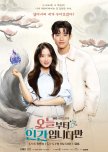
ULTIMATE BIAS BECOMES ULTIMATE DEFENDANT
The drama successfully blends the high stakes of a murder mystery with the often chaotic world of K-pop fandom. By placing a 'fangirl' in a position of power as a defense attorney, it subverts the typical idol-fan dynamic. The story centers around Maeng Se-na, a cold-blooded 'villain lawyer' who conceals a ten-year obsession with the group Gold Boys. Her world is turned upside down when her 'ultimate bias,' Do Ra-ik, is framed for the murder of a fellow bandmate. The tension arises not only from the trial but also from Se-na's struggle to maintain professional boundaries while her 'fan heart' is in turmoil.Unlike many fan-themed dramas, such as "Her Private Life," "Idol I" handles the fandom aspect with surprising maturity. Se-na is an 'ethical fan' who wants justice for Ra-ik—not just because she likes him, but because she values the truth. Coming off her performance in "The Judge from Hell," Jae-young delivers a standout portrayal, perfectly capturing Ra-ik's duality: the polished, 'visual center' idol on stage versus the isolated, cynical, and vulnerable man facing a life sentence. Additionally, the cohabitation trope—necessary for his protection—feels earned rather than forced. Their chemistry is built on a slow-burning intellectual respect, which makes the romantic payoffs in the final episodes much more satisfying.
However, like many K-dramas, the legal procedures are occasionally 'creative.' If you are a fan of hardboiled legal thrillers, you might find some evidence-gathering scenes a bit too convenient or dramatic. While the finale provides a 'neatly wrapped' happy ending, the transition from Ra-ik's trial to their 'organic' romantic reunion feels slightly rushed in the final hour.
In conclusion, "Idol I" succeeds because it portrays idols as human beings and fans as capable professionals. It's less of a fairytale and more of a reckoning with how we perceive celebrities.
Was this review helpful to you?
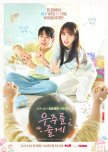
FROM TRAGEDY TO TOGETHERNESS
The story follows Seon Tae-hyung, a free-spirited photography assistant, and Woo Hyun-jin, a pragmatic job seeker. The two are in-laws who can barely stand each other until a tragic accident claims the lives of their siblings, leaving them as the joint guardians of their 20-month-old nephew, Woo-joo. The drama's strongest asset is its initial setup: two 'parenting novices' forced to cohabitate and navigate the chaotic, messy, and often hilarious world of raising a toddler while grieving their own losses.Once again, Bae In-hyuk proves he is the king of 'hidden pain'. His portrayal of Tae-hyung balancing his desire for freedom with a growing, fierce love for his nephew is the emotional anchor for the show. Park Yu-ho ( playing baby Woo-joo) is a scene stealer. The moments of domestic bliss and the struggles of early parenthood felt authentic and provided the 'healing' vibes viewers craved. Also, the cinematography is crisp and warm, and the chemistry between the leads is undeniable, especially in the early episodes where their bickering turns into mutual support.
However, the second half of the drama disappointed a lot of viewers as it felt like the introduction of the second male lead was unnecessary. The plot shifted away from the 'found family' dynamic to a predictable, frustrating love triangle that ate up valuable screentime. While the show excelled at character building early on, the finale felt rushed. Major plot points, like the legal guardianship battle, were crammed into the final two episodes, leaving some viewers feeling 'hate-watched' into the conclusion. Also, the female lead's character, Hyun-jin, develops slowly, making her seem indecisive or passive compared to the more layered Tae-hyung.
In conclusion, Our Universe is a classic 'healing drama' that occasionally trips over its own tropes. If you enjoy domestic fluff, adorable baby interactions, and high-quality acting, it's a solid 7.5/10. However, if you have a low tolerance for 'second Lead Syndrome' or late-game plot holes, you might find the final episodes a bit taxing. Anyways, it's a beautiful journey about becoming a family, even if the road gets a little too bumpy towards the end. RECOMMEND IT.
Was this review helpful to you?
This review may contain spoilers
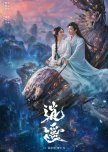
SOUL - CRUSHING BEAUTY
'EVERYTHING HAS STARTED ANEW, EVERYTHING IS JUST ONLY BEGINNING'This story centres around the Jade Wine Divine Spring ( Yuli Spring), a mythical source ofpower that has caused a hundred years of conflict between the humans and demons. The story follows Xiao Yao, a spirited and adaptable human girl who stumbles into the valley of ten thousand demons. She encounters Hong Ye, the demon king, who has grown disillusioned after centuries of war and betrayal. While it begins with a lighthearted 'mortal girl meets cold demon king' trope, the plot eventually dives into a complex, non-linear mystery involving time travel and reincarnation. It presents the idea that some tragedies are inevitable, even as the characters travel back 10,000 years to change the past, they find themselves fulfilling the very destiny they sought to avoid.
Moreover, Tan Songyun is known for her range, as she breathes life into Xiao Yao, transitioning seamlessly from a quick-witted con artist in the early episodes to a woman burdened by the weight of ancient memories. While some viewers found her early 'childish' persona polarizing, her emotional depth in the latter half of the series is widely praised. Minghao delivers a restrained, nuanced performance. He portrays Hong Ye not just as a powerful ruler, but as a 'heartbreakingly devoted' figure whose instinct is always to protect. His chemistry with Songyun is a slow-burning, relying more on subtle tension and shared glances than overt romantic gestures. ( NEO HOU WAS SOO PRETTY IN THIS DRAMA, AND THAT JUST MADE ME SO HAPPY ♪(´▽`)
Furthermore, the production value is one of the drama's strongest suits. The cinematography creates a stark contrast between the two realms. The demon realm is rendered with vibrant, whimsical colors ( think pink glowing grass, silvery skies, and glittery blue water). It feels like an enchanting, whimsical adventure. The human realm is more grounded and traditional, emphasizing the grit and Greek that fueled the search for immortality. Also, the CGI is polished, particularly in the large-scale battles and the depiction of the Yuli Spring, though the costume design stays within safe traditional xianxia territory.
Lastly, one of the characters that made me so disappointed and angry was Dali. She was seriously just a fake flower. Xiao Yao's intentions were very pure, and she just wanted to be friends with her, but her expectations let her down as Xiao Yao got stabbed in the back by Dali only because she felt inferior and not loved by everyone ( which is not exactly true). That reason was too lameand if I were Xiao Yao, I would never forgive her or let alone be friends with her anymore.
This drama avoids the typical 'happy ending' tropes in favor of a more philosophical conclusion about loss and the purity of the heart. While the pacing can be slow in the middle arcs, the emotional payoff and visual world-building make it a must-watch for 2026.
Was this review helpful to you?
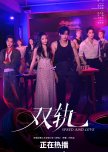
IN DARKNESS, THERE'S ALWAYS A LIGHT TO GUIDE YOU OUT.
'SPEED AND LOVE' is a rare C- drama that feels more like a movie than a series. The chemistry between Esther Yu and He Yu is absolutely fire; they perfectly capture that 'long-lost soulmate' tension, and their 'stare-downs' and quiet moments feel very high-stakes. Esther Yu shows so much growth here in a more mature role, and He Yu is definitely a new favorite as his portrayal of Jin Zhao is raw and protective. The soundtrack and cinematography are top-tier, making even the quiet moments feel intense.The Thailand episodes are stunning. It has a gritty, cinematic film look rather than a typical bright TV soap vibe. The main leads transition from impulsive teenagers to stable adults, making their final reunion feel earned. Also, the FL is the one chasing and saving the ML, which is a refreshing change in pace. The racing and underground boxing scenes are well-choreographed and add great intensity.
However, at first, I didn't want to watch it because of the forbidden romance tag or the 'pseudo-sibling' set-up, but eventually I forced myself to watch it, which was really worth it. Also, there are moments where the characters break up 'for others' own good'(Noble Idiocy), which was frustrating for me, who prefers direct communication.
Lastly, I recommend it if you love stories about healing, second chances, and forbidden tropes done with actual depth.(✿◡‿◡)
Was this review helpful to you?
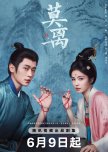
REAL MEANING OF "MO LI" (THE FIRST JASMINE)
The title means 'never part' and perfectly captures the profound devotion and unshakable bond between two highly traumatized, fiercely intelligent leads who start with separate revenge agendas but become each other's sole anchors. On the surface, Bai Lu plays the traditional role of a noble daughter seeking vengeance for the destruction of her clan's legendary Lishan Academy. But she portrays Ye Li with many hidden layers. Ye Li is plagued by nightmares and trauma from her eight-year exile on Mount Li. She talks to people who aren't there and masks her deep fear with modern, quirky resilience. Her dialogue is a brilliant study in subtext; she rarely says exactly what she means, and her language is always like chess, thinking ten moves ahead. On the other hand, Cheng Lei leaves behind the 'cold but secretly OP' male lead trope. Mo Xiuyao is a heavily traumatized, disabled commander confined to a wheelchair, riddled with survivor's guilt after the massacre of his brother and his army. Cheng Lei delivers a powerhouse performance. He beautifully portrays the raw frustration of physical limitation, bitter self-loathing, and the agonizing restraint required to bow to the Empress Dowager, the very woman responsible for his family's ruin, to maintain national stability.Furthermore, the romance of The First Jasmine is arguably one of the most rewarding slow-burns in recent C-drama history, as it relies on earned intimacy rather than forced tropes. Ye Li's love language is fundamentally food, a trauma response to her starving years at Lishan. In the early episodes, her way of chipping away at Mu Xiuyao's defensive walls is simply bringing him honey cakes, millet porridge, and lotus cakes. The visual transformation of the Ding Manor from a dark, isolated 'man-cave' to a place of warmth, laughter, and soaring kites is a beautiful representation of their mutual healing. They don't just fight side by side; they quietly piece each other back together. The production doesn't rely on cartoonish, one-dimensional villains. Characters like the Empress Dowager and even the scheming Prince Mo Jingli are driven by understandable, deeply human motivations of self-preservation and fear. The drama asks heavy moral questions: 'When your family has been framed and slaughtered, do you accept the status quo for the sake of the country's peace, or do you burn everything down for justice?" It beautifully anchors this dilemma in traditional philosophy, emphasizing that true justice and state governance must begin with cultivating one's internal character and harmonizing the family first.
However, this drama has a few flaws. Around the midpoint (specifically the Cangbei arc involving Princess Ling Yun and Su Zhi Die), the pacing hits a few speed bumps. The drama occasionally introduces new subplots before entirely wrapping up previous ones, which can cause minor narrative whiplash. Viewers looking for explosive, melodramatic confrontations might find some of the political resolutions a bit flat or quietly intellectual. It is a show that rewards patience and favors tight dialogue over chaotic action.
In conclusion, The First Jasmine is a beautifully directed, cinematic, and thought-provoking masterpiece. With an exceptional, film-like musical score, stunningly restrained acting, and a script that treats its audience with intellectual respect, it is a must-watch for anyone who loves high-stakes political intrigue and deeply mature romance.
Was this review helpful to you?
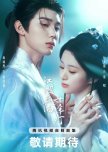
A MATCH OF MINDS
The narrative centers on Cai Zhao, a free-spirited disciple of the Qingque Sect, and Mu Qingyan, a strategic and emotionally complex young master determined to uncover the truth behind his family's massacre. As they traverse Jianghu, they confront longstanding conflicts between righteous and demonic factions, ultimately revealing the ambiguity inherent in the distinction between hero and villain.The gradual development of the romance between Zhou Yi-ran and Bao Shangen constitutes the series's most compelling element. Their intellectual compatibility avoids reliance on clichéd misunderstandings. Mu Qingyan emerges as a notable, morally ambiguous protagonist whose manipulative and paranoid tendencies stem from childhood trauma. Conversely, Cai Zhao demonstrates perceptiveness, often discerning Mu Qingyan's intentions, which results in a dynamic characterized by psychological tension. Notably, Mu Qingyan's devotion frequently manifests in intense or obsessive behaviors, exemplified by his insistence that the 'lady of his heart' be accepted by his sect, irrespective of her background. The first consensual kiss in episode 29 is widely regarded as a pivotal moment, offering a rare glimpse of vulnerability in Mu Qingyan.
Yuzhi is depicted as the archetypal righteous hero: upright, protective, and respectful. In the initial episodes, he rescues the protagonists from an ambush and consistently serves as a loyal ally to Cai Zhao. His frequent presence near Cai Zhao often provokes irritation in Mu Qingyan. Distinct from conventional jealous rivals, Yuzhi is commended for his maturity; he does not become antagonistic due to unrequited affection but maintains his respect for Cai Zhao. While Mu Qingyan embodies the unpredictability and peril associated with the Demonic Sect, Yuzhi symbolizes the stability and tradition of the Righteous Sect. His support during Cai Zhao's period of solitude and confinement underscores his enduring loyalty. Consistent with the author's style, the dialogue is characterized by wit, and the characters display notable intelligence. The narrative avoids contrived plot devices, and the ensemble cast, including Li Yunrui, contributes depth to the multi-generational themes, enhancing the historical authenticity of the setting.
However, numerous viewers have observed abrupt scene transitions and disjointed editing, likely resulting from extensive censorship or aggressive post-production. The pacing in the initial episodes and the concluding arc is occasionally inconsistent, with certain side plots, including significant revelations, appearing protracted. Although the series excels in atmosphere, the depiction of physical combat is at times diminished by the emphasis on plot and dialogue.
In summary, viewers who prioritize character development, compelling chemistry, and intricate plotting will likely find the series highly rewarding. Conversely, those seeking continuous action or a fast-paced narrative may find the deliberate pacing and editing choices challenging.
Was this review helpful to you?
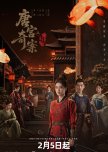
DARK FEMINIST-CODED MYSTERY.
Set during the Tang Dynasty, the story kicks off with the mysterious death of Princess Ningyuan during the Lantern Festival. The investigation brings together two contrasting brilliant minds: Li Peiyi, the chief guard of the inner court, cold, battle-hardened, and cynical, with a personal mission to solve her family's massacre from 15 years ago. Xiao Huai-jin is a meticulous official from the astronomy Bureau with a Sherlock-esque photographic memory.Moreover, this isn't your typical romance-heavy idol drama. It's a slow-burning investigation where the partnership is built on intellectual respect. Li Peiyi is refreshingly mature and 'alpha', often taking the lead in physical and tactical situations. Many of the standalone cases focus on the plight of women in the inner court, dealing with themes of power, systemic abuse, and justice. It feels grounded and more socially conscious than standard palace fluff. Director Yin Tao brings a lush, atmospheric look to the Tang Dynasty. The cinematography is dark and moody, matching the dark detective tone of the script.
However, while the overarching mystery is compelling, some viewers find the individual cases occasionally rely on 'leaps of logic' orrepetitive 'cat and mouse' chases that drag the middle episodes. If you are here specifically for a fiery romance, you might be disappointed. Some fans have noted the chemistry feels 'flat' compared to the leads' previous collaborations because the showprioritize the 'gritty detective' vibe over romantic tension. Early episodes suffered from choppy transitions, though the narrative tightens significantly by the second major case.
In conclusion, Unveil: Jadewind is a solid choice forfans of Strange Tales of Tang Dynasty or Under the Microscope. It's a 'Bai Lu vehicle' through and through; she dominated the screen with a powerhouse performance that moves away from her usual 'spoiled/arrogant' or 'tragic heroine' archetypes into something much more formidable.
Was this review helpful to you?
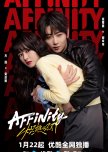
SCIENCE MEETS OBSESSION
The story is set in a future world (2051) and explores a 'genetic mystery'. Wu Nongyu, a gentle graduate student in genetic engineering, crosses paths with Xie Xinxu, a brilliant but emotionally detached man with antisocial tendencies. Their connection is driven by 'genetic compatibility' or a 'biological affinity' so strong it challenges logic. Xie Xinxu, who lacks empathy, essentially 'hunts' Wu Nongyu, guiding her into his world while they navigate a perilous journey involving hidden research facilities and 'affinity inhibitors'.The most praised aspect of the drama is the 'feral' chemistry between the leads. Many viewers note the high level of 'skinship' and steamy scenes that push the boundaries of typical C-drama censorship. Cui Yuxin's portrayal of Xie Xinxu as a 'walking red flag' who slowly learns human emotion has won over many fans. The show blends tropes like 'Omegaverse' ( Alpha/Omega dynamics), "Esper-guide', and the dark romance with a 'Resident Evil'-style sci-fi backdrop. With episodes lasting only a few minutes, it delivers major plot points and emotional payoffs every 15-18 minutes.
However, critics describe the plot as a '1000 foot drop in logic' and a 'fever dream'. You often have to 'turn off your brain cells' to enjoy the erratic storytelling. While the camera quality is good, the CGI is frequently criticized as looking like a 'school videography project', including a bizarre scene involving an orange octopus. Also, the tone can jump from a life-or-death thriller to slapstick comedy within minutes, causing 'emotional whiplash'.
In conclusion, if you overlook the questionable CGI and a plot that defies physics, it offers some of the most intense chemistry and creative world-building seen in the 2026 short-form drama market
Was this review helpful to you?

WORKPLACE CHAOS
The story follows Dam Ye-jin, a powerhouse television home shopping host known for her legendary 'sell-outs' streaks. Outwardly successful but privately battling severe chronic insomnia and a career setback, she is desperately trying to secure an exclusive beauty contract with a major corporation. Her mission takes her deep into the countryside to find Matthew Lee, a meticulous, multi-tasking researcher and farmer who holds the exclusive right to a rare, miracle cosmetic ingredient ( the 'white-flowered Noori mushroom'). Guarded, blunt, and fiercely protective of his town, Matthew wants nothing to do with corporate sharks. When Ye-jin invades his quiet rural life to secure the contract, the stage is set for a hilarious, chaotic clash of worlds.Furthermore, Ahn Hyo-seop plays brilliantly against his usual 'suave CEO' type here. As Matthew Lee ( fondly nicknamed Mechoori by the locals) is delightfully gruff, a bit stiff, and practical, he hides a deeply, fiercely protective heart. Chae Won-bin is a total standout. She handles the physical comedy flawlessly without ever making her character feel like she's over-acting. Her transition from a high-strung, burnt-out workaholic to someone who finds peace in the country is credibly endearing. The show shines brightest when it leans into its rural comedy elements. The local village ahjummas, the chaotic town sports festival, and the ridiculous subplots, like a quick game of one-on-one basketball turning into a massive ego battle, give the series a genuinely warm,community-driven feel. Also, the production team did a fantastic job with the split-screen sequences early on, contrasting Ye-jin's sterile,showroom-like city apartment with Matthew's peaceful, nature-driven routine. The cinematography in the rural village is gorgeously warm and scenic.
However, while the first two-thirds of the show are full of lighthearted fun and healing, the final two episodes stumble slightly by throwing in a few too many artificial corporate conflicts and late-stage misunderstandings. It forces dramatic tension where a cozy wrap would have sufficed. The timeline of product development, manufacturing, and corporate scandals happens at warp speed. It's a drama where you have to turn off the logical side of your brain regarding business logistics and just enjoy the character interactions.
In conclusion, Sole Out on You doesn't reinvent the classical K-drama rom-com wheel, but it executes its tropes with so much heart and humor that it's impossible not to smile. It's a breezy, comforting watch that beautifully captures how people with 'holes in their hearts' can help each other heal.
Was this review helpful to you?
A FOX WHO HATES BEING HUMAN
Unlike the usual Gumiho stories where the fox wants a soul, Eun-ho has no interest in being human. After seeing her sister’s short and tragic life centuries ago, she decides that being human isn’t worth it. She spends her immortality living a glamorous, cynical life, granting wishes for the rich in exchange for luxury. But her carefully controlled world falls apart when she literally and magically crashes into Kang Si-yeol, a famous and self-absorbed soccer star. The accident makes Eun-ho lose her powers and become an ordinary human, suddenly facing the messy emotions and physical weaknesses she’s avoided for 500 years.Kim Hye-yoon keeps impressing with her lively, expressive acting. Her Eun-ho isn’t a tragic lead; she’s bratty, arrogant, and focused on getting what she wants, which makes her growth feel real. Lomon’s Si-yeol is the perfect calm counterpart to Eun-ho’s wild energy. Their journey from bickering to romance is driven by their clash of chaos and discipline, something fans of Lovely Runner or My Demon will enjoy. The show avoids the usual ‘sad immortal’ story and instead looks at identity and freedom, asking if a long, safe life is really better than a short, meaningful one.
Still, the show sometimes has trouble balancing its silly comedy with deeper, emotional moments. One moment you’re watching a goofy soccer training scene, and the next, there’s a serious historical flashback. In the middle episodes, the story leans a lot on the ‘wish-granting’ monster-of-the-week setup, which can get repetitive before the main plot picks up again near the end. The CGI for Eun-ho’s tails looks great, but some of the supernatural effects seem a bit old-fashioned.
Overall, No Tail to Tell is lively, fun, and a bit chaotic. It doesn’t try to be groundbreaking, but it works because it keeps things light. If you want an easy weekend watch with great acting and an ‘enemies-to-soulmates’ feel, you’ll enjoy this show.
Was this review helpful to you?
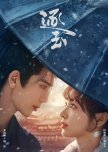
AN UNLIKELY ALLIANCE
The narrative opens with Fan Changyu, a bold and physically formidable butcher from a small town, who discovers a half-frozen, mysterious man collapsed in the snow. This individual, Xie Zheng, is a high-ranking noble and strategic genius who has been stripped of his status and is fleeing a 17-year-old conspiracy that destroyed his family. To conceal his identity and regain his strength, Xie Zheng enters into a marriage of convenience with Changyu. He assumes the role of her subservient husband, assisting in the management of her household and business, while she offers him protection from imperial assassins.Fan Changyu is a refreshing subversion of the 'strong FL' trope. She is a literal pig butcher, physically powerful, loud, and pragmatic. Her strength isn't just a plot point; it's her identity. She wields a butcher's knife with terrifying competence, yet her vulnerability shines through in her 'fake marriage' with the male lead. On the other hand, Xie Zheng/ Yan Zheng, starting as a wounded, mysterious fugitive saved in the snow, plays the 'subservient husband' role while secretly plotting a 17-year- old revenge mission. This drama allows him to 'aura farm', maintaining a quiet, lethal dignity even when he is supposedly beneath the FL's social station. Another character that left a mark on this drama is Sui Yuanhai/ Qi Min, who is a standout as the obsessive, toxic prince. His performance provides a chilling foil to the healthy, supportive growth of the main leads. Yu Qianqian is a businesswoman who brings a layer of 'modern' ambition to the period setting. However, her storyline with the villainous Qi Min is often more compelling than her individual arc.
The drama’s visual style, under Director Zeng Qingjie, is its greatest strength. Instead of the flat filters common in recent dramas, it employs deep shadows and warm candlelight to create an authentic, inviting atmosphere in the Zhao family home and butcher shop. Bird's-eye and 360-degree dolly shots during the wedding and marketplace scenes lend the small town of Lin'an a cinematic scale. The snow appears heavy and cold, and the sets are convincingly worn, with scuffed floors and layered textures that suggest a world beyond the camera.
However, while the first 25 episodes are neatly 'movie-quality', the final stretch struggles to tie up its massive web of politics. The complexity of the '17-year-old massacre' is resolved with dialogue-heavy exposition ( the Prime Minister Wei's monologue) rather than organic storytelling. Despite being a 'progressive' drama, it falls into the trap of making every significant male character fall for the FL. (The introduction of the Li Family and the various princes. By episode 20, the focus shifts from Changyu's independence to a repetitive cycle of different men trying to 'protect' or 'claim' her, which slightly undermines her character's initial agency.) Lastly, the transition from a 'domestic slow-burn' to a 'war epic' is jarring. The transition scenes show Changyu heading to the battlefield. The gritty realism of the butcher shop is replaced by some noticeably cleaner, 'spotless' armor and faster-paced editing that loses the grounded feeling of the earlier episodes.
In conclusion, Pursuit of Jade is a visual odyssey that succeeds because of the chemistry between Tian Xiwei and Zhang Linghe. It is at its best when it focuses on the 'slow-burn domesticity' of the fake marriage and at its weakest when it tries to be a complex political thriller.
Was this review helpful to you?
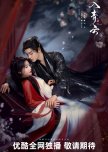
Full time intense Romance
I don't even know what to say. This drama blessed my eyes with ethereal visuals, especially when Ji Bo Zai's hair turned white and his make-up; it was just too beautiful, and of course, I cannot forget our fairy Ming Yi's visuals; her acting was superb. In terms of the genre, the director and writer really fed us the audience very well with the romance genre. It was very intense, which caused me to have butterflies in my stomach and made my heart flutter a lot. However, it was not that impactful to me apart from the romance, but I definitely recommend people to watch this drama, and I know you will like it.Was this review helpful to you?
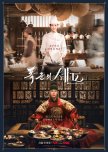
A MICHELIN STAR IN JOSEON
The drama follows Yeon Ji-yeong, a world-class chef specializing in French cuisine, who, after a solar eclipse during a flight, finds herself transported back to the Joseon Dynasty. She lands right in the middle of the forest, where King Lee Heon, a brooding, volatile monarch inspired by the real-life historical tyrant, King Yeonhuigun. To survive, Ji-yeong must do what she does best: cook. She uses her modern culinary techniques and 'fusion' ideas to captivate the King, all while trying to prevent him from becoming the monster history remembers.Furthermore, as the 'Rom-com Queen', YoonA carries the show with her wit and resilience. Her character Ji-yeong isn't just a 'damsel in the kitchen', she's a professional who uses her skills as a political tool. Lee Chae-min brings a chilling yet vulnerable edge to King Lee Heon. The tension comes from the fact that we know his historical counterpart was a villain, making the stakes feel much higher than your average time-travel romance. Directed by Jang Tae-yoo( My Love from the Star), the visuals are stunning. The 'culinary battles' against the Ming Dynasty are particularly thrilling and emotional.
However, like many high-concept K-dramas, the finale has been polarizing. Some viewers felt the time-slip mechanics were left a bit too ambiguous, and the 'CGI letters' in the final field scene felt a little out of place compared to the grounded Production of the rest of the show. Also, because it uses a real tyrant as a template, the show occasionally struggles to balance lighthearted 'mukbang' scenes with the very real, dark history of that era (like the suppression of free speech).
In conclusion, Bon Appétit, Your Majesty is a feast for the eyes and the heart. It successfully reinvents the historical ( sageuk) rom-com by adding a high-stakes 'save the villain' mission to the recipe. It's perfect for fans of Mr.Queen who want something a bit more atmospheric and emotionally resonant. And this is my second time watching drama, so this review is my honest feelings towards this drama.
Was this review helpful to you?
A beautiful creation
This drama is a great work of art, from the moment it was written to the casting of the perfect actors to bring it to life for the audience, and it is indeed astonishing. I am really a fan of thrillers, mysteries, and action dramas, as they put me on the edge with each scene and episode, and when they uncover hidden clues, it makes me feel a sense of accomplishment, even if I wasn't the one who went to look for clues.The series covers the theme of deceit, betrayal, and revenge, which is well executed in this series, as the cast makes the audience feel the emotions they act out, engaging everyone.
Overall, I would definitely recommend this series to mystery, drama, and action lovers.
Was this review helpful to you?
This review may contain spoilers
A WELL PORTRAYED REASONS FOR REVENGE
This drama is a fantasy historical rom-com that puts a fresh spin on the soul-swap trope. Kang Tae Oh was a really great choice for this drama, as his ability to switch between the heartbroken and vengeful crown prince and a wide-eyed merchant woman is really praiseworthy, as he was able to mimic both personalities during the soul swap. Critics cited his portrayal of grief in the final episodes as a career best. Apart from Kang Tae Oh, Kim Se Jeong's acting was also incredible and magnificent, as her ability to carry the prince's authority while in her merchant body provides both the show's best comedic beats and its most empowering moments. She is also one of the actresses whose acting is both cute and adorable, not cringy.Furthermore, the left state councillor, who is the villain, presented reasons behind his villainous act as it was the product of power-induced rot. The act he committed is half justifiable, as all he wanted to do was gain a little more power so he could protect his lover, but the fact that the king stood in his way, he had no choice but to personally hand his lover to his friend( the king), as he had the power to protect her. However, the King was only a possessed individual who craved for the throne and didn't care about her, which led her to be accused of a crime that she didn't commit, and dying infront of the left state councillor. This drives him to become a bloodthirsty character who only wants to avenge the royal family for their greed. But, as the first half is acceptable, the other half is not, as he shouldn't have implicated the other royal members, such as the current king and the crown prince, as they have no connection with what happened to his lover and have only suffered from the effects of his revenge.
Moreover, the cinematography made heavy use of the colors white and red to symbolize the 'Flower of Fate.' This drama avoided the mid-series drag that is common in 16-episode dramas and moved the plot swiftly by focusing on the unentangling of the souls and the exposure of the palace traitors.
Lastly, the most haunting moment was the scene where Park Dal I was trapped in the crown prince's body, holding her own 'lifeless' physical form. Also, the final episode did portray the fantasy genre with the God of Destiny, allowing love to override death. That felt like the emotional payoff was earned through the characters' sacrifices. Also, the healing was given in the epilogue through the characters' happy ending. With that being said, I definitely recommend it, and I promise you won't regret it.
Was this review helpful to you?


