

 135
135 431
431 16
16 2
2 6
6 3
3 8
8 10
10 3
3 13
13 1
1 1
1 1
1 1
1 2
2 6
6 8
8 5
5 9
9


"People can change completely depending upon the circumstances"
Takahashi Issei playing a dual role was all the motivation I needed to watch Reborn. The drama had an interesting premise but failed to capitalize on it for most of the episodes. While Issei was fascinating to watch as two different characters, much of the story failed to engage me.Neo Kosei began working in relief organizations gaining a good reputation. He propelled that quickly into a corporation that capitalized on others' misfortunes. He comforted himself by saying that the sacrifice of a few gave greater gains to the many. (I kept hearing a quote regarding Ebenezer Scrooge going through my head during this drama. "I have seen your nobler aspirations fall off one by one, until the master passion, Gain, engrosses you," Belle from A Christmas Carol.) When Neo takes a tumble down a temple staircase, he awakens in the body of Nomoto Eito in 2012, who coincidentally looks just like Neo. Eito was supposed to have died in an accident and yet now Neo is walking around in his body and part of the Akari Shopping Street that Neo had destroyed in 2026. Eito/Neo finds himself competing against himself as he tries to save the Akari shopkeepers and gain his old life back. Despite Eito/Neo’s attempts to change the future, the alley and his own life seem on a collision course with the known future and terrible price to pay.
As I said, the premise is worthy of a drama. The problem was the implementation. Chiefly, the shopkeepers weren’t well written. There were three that were often in the shot but rarely called by name. Most came across as amiable but financially incompetent and worse kept electing Eito’s dad, the financially inept Eiji, as chairperson or president. He was maddeningly bad with money and relied on himself instead of Eito/Neo which repeatedly made the situations go from bad to worse. There was a reason the street was failing. Eito’s love interest was kept hanging for 14 years which stretched the bounds of credulity. To top it off, the ending was unsatisfying and left numerous questions unanswered. If not for Takahashi Issei I would have rated this lower but gave it a .5 bump for him. Watchable, but frustrating.
16 June 2026
Was this review helpful to you?
Why Didn’t I Tell You a Million Times?
15 people found this review helpful
This review may contain spoilers
Ditto
Somewhere a screenwriter was watching the movie Ghost for the fifth time and decided it would make a great drama. Just trade out a police officer who can see ghosts for the clairvoyant Whoopi Goldberg and Satoh Takeru for Patrick Swayze. The title I Should Have Told You a Million Times was even reflected in the 1990 movie. If you've seen the movie, nothing in this drama will come as a surprise. Having said that, the characters were all likeable enough to keep my interest throughout the drama.The story opens with a Sixth Sense beginning, but if you've read the synopsis, the suspense fell flat. Thankfully, they didn't drag it out. Yui and Naoki were childhood friends who reconnected and began dating. On her birthday, he disappears. Along comes Detective Uozumi whose latent spiritual sight evolves just in time to see Naoki. Uozumi works to figure out what happened to Naoki while he's embroiled in another murder investigation. The three become friends as they dig through the past to see how old relationships and old crimes are playing havoc with the present. There were also some Ghost Whisperer moments where they helped a couple of wandering ghosts with their regrets.
Despite some repetitious scenes and obvious borrowing from other sources, I enjoyed the story as it unfolded. The bromance that developed between Naoki and Uozumi helped cover over some of the weaker writing. The suave Satoh Takeru and nerdy Matsuyama Kenichi had a nice chemistry. Inoue Mao showed how hard it is to let go as Yui held on tight to a man she couldn't see. With all the extra time they were given and a translator as well, it was frustrating that Yui and Naoki didn't work through their emotions and regrets. In some ways, their relationship came across as fairly shallow instead of an intimate love---words matter.
The supernatural murder mystery came to its natural ending in episode 9, but then they decided to tack on a wish fulfillment ending for the last episode that almost completely ruined this drama for me. With one little tweak they had the opportunity to showcase the perfect ending for a tearjerker drama but by dragging it out, took all of the emotional punch from the previous episode. In time, I will block out the last episode, grind through the five stages of grief and remember the other episodes and engaging characters fondly.
7/5/23
Was this review helpful to you?

"If you call me sister you have to be worthy of it"
I set the bar pretty low for these ultra short dramas, but Revenge of Royal Princess taxed my patience all while getting me to click on the next episode to see how the writers would dig themselves out of the hole they put themselves in. I’m still not sure that they did. There were a number of “what the what?” moments or times I thought I must have accidentally skipped some episodes.Li Yan Chu is the fierce princess who helped her hapless brother become emperor and fend off a coup. She saves the hostage Han Shu from execution and trains him to be her brother’s sharpest blade. Knowing she’s dying she plans her assassination to tie Han Shu tighter to the emperor. Instead of just becoming a bodyguard, somehow Han Shu is made a Regent and has a complete personality change. The deceased Li Yan Chu has her own transformation when magically her spirit inhabits the body of a murdered warrior who looks like her. Uh, what? She goes back seeking revenge and keeps her true identity a secret from both Han Shu and her brother.
Yan Chu was ruthless and treated Han Shu like a trained pet. Even as Xie Yu Gui, she offered him no kind words. All of her kindness was saved for her worthless brother. Han Shu’s temperament could cause whiplash with how quickly it could change. Aside from Yan Chu and Han Shu, there was also the Prime Minister seeking power and his conniving daughter with the most annoying voice seeking to be Han Shu’s wife. The acting ranged from adequate to please stop you are making my ears bleed. The story had a tendency to skip forward and around without any warning or logical consistency, even for a short drama trying to wedge as much story in as possible. There were many times I checked the episode number when my brain went, “Wait, what just happened?”
If you can handle the jumps in story and lapses in logic, there is entertainment to be had. This was a tale of ruthless people trying to outsmart and outruthless the others. If you are looking for romance or a sweet story, this ain’t it.
5 April 2024
Was this review helpful to you?

This review may contain spoilers
"Certain things don't rely on fate or luck but on the heart"
Please Don’t Be Moved aka Qiu Qiu Ni Bie Xin Dong throws you right into the story and continues at a breakneck speed as it races to the ending. The cast is kept to a minimum so that the focus stays on the main couple and their lightning fast journey.You have to be quick to catch the thrust of the plot which is that a young woman had been transported into the story she was reading just as Yu Wan Wan was to be married. While her betrothed An Tang stood by, his illegitimate brother broke up the wedding and carried Wan Wan away convinced that she was a spy. Wan Wan believed the only way she could return home was by kissing An Tang. The villain, Chi Han, was quite persuasive as he fell in love with her causing Wan Wan to have to make a decision---Stay with the sexy villain or kiss the petty hero and go home?
If you are a fan of wrist grabs, there are wrist grabs aplenty and even a little sexy time. I’m always amazed how these short dramas push the envelope with kisses and intimate moments compared to full length dramas. Wang Xing Wei brought on the smolder as bad boy Chi Han. The philosophy of the writers seemed to be more is more with the emotional angst and longing. If fireworks are good, fireworks with snowflakes are better! The biggest drawback to the drama was that in trying to cram as much story as they could into a short amount of time, episodes often started in a completely different setting or emotional place than the last one finished in. The first few episodes were uneven narratively and emotionally but found a better balance as it went along. Certain key elements were skipped over to arrive in the place the writers wanted them to be, just the big moments arrived on screen, not the steps to get there.
Please Don’t Be Moved was a cheesy, fun, rollercoaster ride even when it bordered on whiplash inducing damage as characters’ emotions made drastic turns and pertinent plot points bounced in and out. If you enjoy time travel Cdramas and have 45 minutes to invest, this is one you might want to give a try.
11/2/23
Was this review helpful to you?
Walk, Eat, Wander and don't miss out on this delightful drama!
One Day Off was a soothing, tranquil drama which showed that all who wander are not lost. Served up in eight small bites of travel and food, the drama was easy to digest. It was also gently inspiring without overstepping into preachiness.Teacher Park Ha Kyung dealt with life's stressors and monotony by using one of her weekly days off to travel. She explored new and old places meeting a variety of people along the way. Sunsets, bakeries, and butterflies led her to some of life's small and grand adventures.
By escaping her daily rut physically and mentally she stretched her mind and heart. "Life is about messing up!" Reflecting on how she was the same age her parents were when they had children, she also found ways to accept the inevitable effects of time and aging. She faced generational conflicts, "Democracy is always loud by nature" and learned to "Dance, even if you trip!" Her traveling also helped her to come to terms with grief and loss as she reminisced.
The drama was beautifully shot and helped the viewer briefly travel to new and interesting places as well. Lee Na Young made for a perfectly lovely traveling companion on these simple but enlightening journeys. Showing how Ha Kyung was slightly awkward at times, but more often than not accepting of where she was in life, I thoroughly enjoyed her performance. She gave just the right balance of maturity and youthful inquisitiveness.
Each episode encompassed a new idea as well as place and touched on various emotions. The drama offered up laughter, sorrow, and new relationship possibilities. Every place on her travel itinerary featured delightful food offerings. One Day Off highlighted how the moments of clarity, joy, and human connections make the efforts worthwhile. It also showed how those same wanderings can deepen the pathway into knowing ourselves, sparking new curiosity for adventures of the mind, regardless of age. Walk, eat, wander---One Day Off shows the journey is truly more important than the destination.
6/2/23
Was this review helpful to you?
This review may contain spoilers
"Is it expensive because it's special, or special because it's expensive?"
Hunger followed Aoy from street food chef to the world of decadent fine dining. Thailand's class divide was explored through the world of cooking with a rather dismal view of the wealthy and the chefs who catered to them. The competition for food and domination led the main characters to define what it was they were really hungry for and what they were willing to sacrifice to sate that craving.Aoy works in her family's small, crowded restaurant. Her friends are all searching for jobs, envious that she had a job waiting on her after graduation. Tone, a sous chef for Hunger, an exclusive catering company for the extremely wealthy, gives her a card to audition for a job opening. As run down and hot as the family eatery is, Hunger is large, militantly clean and organized, and run with an iron fist by Chef Paul.
During Aoy's tenure with the volatile chef, she learns much about herself and her hunger. Initially, she hungered to be special. As she is introduced to the lavish styles of the rich and famous she yearns for some of that for herself, especially when she sees Chef Paul treated like a rock star. Chef Paul hungers to remain relevant and on top, willing to do anything necessary to stay there. When he crosses the line legally, Aoy realizes she can no longer work for the popular chef. But she goes from one frying pan into the fiery wok. A promoter named Tos hires her to be the head chef for his new restaurant. She becomes scarcely more than a marketable commodity which all comes to a head at a bacchanalia party pitting her against Chef Paul in a cook-off.
Chef Paul's disdain for the upper class that kept him in his expensive home and lifestyle was shown through the meals he prepared for them. Bloody food, red sauces dripping from lips, raw meat lowered from the ceiling in a theatrical show brought out the primal, even sacrificial instincts in the diners. They didn't have the ability to understand quality, only the showmanship and popularity of the chef. In contrast, Aoy hungered to cook with love and with the flavors that had meaning for her. She hoped to touch the place inside where familial memories remained.
Hunger asked some interesting questions. "Is it expensive because it's special or special because it's expensive?" Which begged the question in regards to Chef Paul, was his food any good or did the diners perceive it to be good because of the display and rarity of ingredients? When Chef Paul insisted a diner drag the lobster tail through a gray sauce reminiscent of clay, did it actually taste delicious or was it supposed to because of the presentation? Also, "What you eat represents your social status." Which, again, doesn't always imply quality, just more rarity of delicacies.
Hunger went beyond the desires of food and class and even briefly delved into the physical. While massaging a slice of meat, Aoy and Tone shared a primal intimate moment as they caressed each other with their meat covered hands. Tone did not share the same level of hunger for fame and success as Aoy and Chef Paul leading to problems between the two young people.
The two ambitious chefs ended up seeking different routes to satisfy their ravenous cravings to be the best. Chef Paul was willing to sacrifice anyone and anything, including his morals to remain the supreme chef to the wealthy. Aoy had to determine what she was truly hungry for. Could only the hedonistic rich crown her with success and self-esteem or could her hunger be satisfied elsewhere?
If hunger had a flaw, it would be that the hammering of the debauchery of the wealthy was done too repeatedly and without any nuance. The film did seem overly long as well. I can't say that the bloody looking plates of food seemed appealing but they did showcase Chef Paul's inner contempt for his clients.
The central thrust of the film came down to Aoy's choices. Aoy had to decide what she truly hungered for and what would satisfy that inner craving to be special. What would she be willing to part with and what did she want to embrace? Hunger may not have completely satisfied me or introduced me to anything new, but I found it comforting and not too overbaked.
4/8/23
Was this review helpful to you?
This review may contain spoilers
Microhabitat reveals the choices, sacrifices and comprises people make as they become adults.Miso, the title character, makes a living cleaning houses and lives on the edge of homelessness. Her joys in life consist of cigarettes, a glass of Glenfiddich whiskey, and her poverty stricken boyfriend. When her rent increases and the price of cigarettes doubles she makes the decision to move out of her unfurnished room.
Miso then begins the adventure of visiting her old band mates who have moved on and become more of what society expected of them. It’s a movie divided into chapters, each with a different friend she encounters with her meager belongings on her back.
Each of her friends have changed so much she barely recognizes them. They are all tethered to their own suffering—a stressful job, a loveless marriage, unwanted motherhood, divorce, etc. Despite her situation she brings understanding and kindness to each doorstep even when she is met with a lack of understanding from her former friends.
Like a warm breeze blowing through their lives, each person’s quiet desperation is revealed and Miso’s contented nonconformist life doesn’t seem quite so absurd.
Microhabitat is more observation than strict storytelling. Esom brings a serene almost ethereal quality to the screen as she shows Miso’s quiet determination. Her friends’ “normal” lives seem almost manic in contrast.
Microhabitat touches on what we value, the compromises people make, the economic fragility of people’s situations, and the depth of friendships. It’s a slow film with moments of humor, tenderness, and biting revelation. Miso’s choices may not sit well with everyone but they raise questions about what brings us joy, what we are willing to sacrifice, and the need for safety nets we all need whether emotional or financial.
Was this review helpful to you?

This review may contain spoilers
"Our mouths can tell lies, but our hearts don't believe it"
Analog Squad was a heartwarming made family and biological family drama that reached inside and touched me. Execution can make or break a story that’s been told before in different ways and this story nailed it. Without becoming maudlin the characters all faced secrets that they were keeping or were being kept from them.“We lie to make other people happy”
Pond is a mysterious character when we meet him. He’s hired his ex-girlfriend to play his wife, a guy who works at a pager company to play his son, and a young woman whose family owns a video rental store to play his daughter. They head south to visit his dying father whom he hasn’t seen in over a decade. When his father makes a miraculous recovery the fake family has some tap dancing to do to keep the charade up.
“Everyone lies for their own sake”
Each of the family members is hiding a secret or several. Pond keeps secret why he left home, why his wife and children left him, and a host of other problems. Lilly/Mam is hiding a health problem. Keg/Mon hides the fact that his mom whom he adores is a nude model and that he’s going to the United States. His mom is hiding a whopper of a secret from him. Bung/Mag is hiding the fact that she’s a lesbian from her family, plus a family member is hiding a devastating secret from her. Pond’s biological daughter discovers a secret as she’s preparing to be married.
“Because when you compare it to death, anger is literally nothing”
The secrets could be overwhelming at times but most of them were dealt with a loving and forgiving hand as the characters worked through their complex feelings. This made family became deeply entwined with Pond’s parents and with each other. Just as real families struggle to communicate and confront complicated problems, the fake family found themselves dealing with many of the same issues. As they worked together and spent time with the “grandparents” they began to untangle some of the knotted challenges in their own lives.
“You have to accept that mistakes are a part of life and you deal with them”
The made family began to develop deep feelings for each other and the couple they were lying to, including love and guilt. The journey that took the longest to traverse was the one that had started the convoluted mess everyone found themselves in-Pond’s. Running away from the truth had caused him to make decisions that went from bad to worse over three decades and brought him to a place where he was ready to take his own life.
“Sometimes waiting is its own form of happiness”
For those of us old enough to remember the 1990’s and Y2K, this will bring back some memories. People were afraid that computers would stop working and planes would fall out of the sky. The fear was that it would be similar to an EMP blast that would cause technology to cease. Some of the technology on display included portable CD players (the darn skipping!), videos and video stores, and ancient looking computers that held less than your cell phone and were slow. Then there was the now almost obsolete technology of pagers and phone booths. Pond’s dad owned a photography studio and used cameras with film. They did a good job of taking us back to 1999 after the financial collapse and the devastation it caused people. By setting most of the story in a small village it was believable that it was 24 years ago. The best part of the cinematography were the shots of the gorgeous Thai scenery. The forests, water, and islands were stunning.
“There are no real or fake bonds. If we feel it, we feel it.”
This story of healing, reconciliation, forgiveness, and growth both in the family and made family was satisfying on several levels. Not every problem was neatly tied up in a bow, but most were resolved satisfactorily. Each member of the newly expanded family discovered something that filled an empty place in their heart. The family might have been fake but the love was real.
9 Dec 2023
Was this review helpful to you?
This review may contain spoilers
What we do for love
The Wedding Banquet showed what people will do for love--love for lovers, love for tradition, and love for family. The movie's title comes from a raucous and drunken wedding banquet that seemed to signal the beginning of a couple's life together. Problem was, the couple being celebrated were a sham and the real love was between a gay couple trapped in a show for one man's traditional parents from Taiwan.Wai Tung and Simon had been lovers living together happily for five years in America. Wai Tung lived a busy, upwardly mobile lifestyle by all appearances assimilated into American life. Meanwhile back in Taiwan, his parents were ready for him to be married and producing grandchildren unaware he was gay. So determined were they that they set him up in an expensive matchmaking service. Simon decided Wai Tung should marry Wai's tenant, Wei Wei, a broke artist without a green card, to help her out and get Wai's parents off his back. The ruse worked well enough that Wai Tung's parents decided to come to America for the wedding. Cue the merry marriage high-jinks and misunderstandings.
The Wedding Banquet could have veered off into slapstick comedy or morose melodrama but Ang Lee managed to walk a fine line as Wai Tung confronted his life with Simon and the expectations of his family. The comedy arose more out of character and the situations these people found themselves in rather than random sight gags much to my relief. Wai Tung loved Simon and his parents and didn't want to disappoint either. He also felt responsible for Wei Wei who was obviously in love with him. Simon also felt real as he became the odd man out while the farce took place in his home. And Wei Wei ended up facing the emotional consequences for marrying a man who loved another man. Both she and Simon came to love Wai Tung's parents. Throw in the parents with their own complicated emotions and what could have been a trite story turned meaningful and heartfelt.
The actors were all quite capable, with Gua Ah Lei giving a truly complex performance as a mother wanting her son to be happy, preferably within the confines of their traditions. Winston Chao and Mitchell Lichtenstein brought their characters to life as they bickered, loved, and fought to be together.
1993 was a different time than today. In most states gay couples were not readily accepted and marriage was out of the question. New York, for the most part, was more open-minded. This movie, without resorting to being preachy or patronizing, showed a loving gay couple working through their problems, albeit with some hilarious and heartbreaking moments. The relationship felt real and consequential. It was also a time when cell phones were as big as WWII walkie-talkies and were used for the sole purpose of a phone and to make the occasional call---minutes were expensive!
Made for only $750,000 Ang Lee poured more heart than money into this film. Even with a few rom-com contrivances, I found myself rooting for all of these people. I desperately wanted them to have their happily-ever-afters. The Wedding Banquet wasn't perfect, but it was perfectly funny and heartwarming and romantic. In the end, everyone learned a little more about love and acceptance even when they didn't come in the package that was expected.
8/4/22
Was this review helpful to you?
“What you see is no longer what it once was.”
Yanagawa was a story of love, loss, and lives that were sadly isolated. A friendship from twenty-years prior had made it difficult for at least two people to move on, and one of those people had far less time ahead of him to reminisce.Li Dong stumbles out of a doctor’s appointment and bums a cigarette off a stranger. He’s just discovered he has stage 4 cancer. He meets with his brother without telling him the diagnosis and proposes a trip to Yanagawa, Japan. When his brother rejects the idea, he tells Li Chun that their old flame, Liu Chuan, is living there. The brothers haven’t seen her in 20 years and have never gotten over her. The two men catch the first flight out of Beijing and are soon checking into their room at a Japanese house. They find Chuan singing in a small bar. Will she be as excited to see the men as they are to see her?
The first hurdle to overcome with this film were the age gaps. Ni Ni would have been 32, Edward Zhang-40, and Xin Bai Qing-47. That 20-year time lapse would have made Chuan 12 years old when she left Beijing. Apparently, the writers assumed the audience would age her up in their minds to make her compatible with Xin’s 27-year-old Chun. The brothers were also in their 40s which meant they were grown ass men stumbling around. I never could reconcile the ages.
The brothers were opposites with Dong being the quiet, reserved, bookish brother and Chun the outgoing extrovert who sought to be the center of attention. Dong never wanted to leave a trace of himself in the world and began to put his house in order. The top two things on his bucket list were to take a trip with his older brother and see Liu Chuan one more time. During the trip, Chun often belittled or interrupted Dong. The older brother was married with a child, yet made every effort possible to sleep with Chuan. Despite declaring his eternal love, he was the one who caused the alienation between the two twenty years prior. So self-absorbed, he could never imagine that the beautiful Chuan would have ever been interested in shy Dong. And Dong must have merely wanted to gaze upon the object of his affection as he never held an important conversation with her. His best joke was one he forgot. Aside from the brothers, the landlord of the house they were staying in also had eyes only for Chuan. Ni Ni’s character spent most of her time with the reverse harem fending off grabby men or singing sorrowful songs. I’m a huge fan of hers and this film felt like a waste of her talent. She still managed to shine, though her best scene was with the Izakaya where the two women deeply understood each other empathically.
The characters spoke a variety of languages. The three from Beijing spoke Mandarin though in different accents. Dong also spoke Japanese. In order to converse with Nakayama Noki, the landlord, they switched to broken English as neither Chun nor Chuan could speak Japanese. Korean singing was heard coming from one of the boats. Both Chinese and Japanese folk songs were also sung. Regardless of the thin reason for Chuan deciding to live in Yanagawa, I wondered how lonely she must have been with the language barrier. Though she often sang John Lennon’s “Oh My Love,” which spoke of finally seeing clearly and living peacefully with the world so maybe it wasn’t a problem.
Yanagawa was a low budget film that managed to be aesthetically pleasing due to the scenery and cast. Much time was spent talking on boats and benches or in Izakaya’s bar. Loose ends were left dangling as people conversed little knowing that one of them was on a ticking clock. Twenty years is a long time and people mature and outgrow the familiar. “What you see is no longer what it once was. Nothing is what it used to be.” Yet truths eventually made their sorrowful appearances, ones that could only be seen clearly in the rearview mirror.
“Oh, my love, for the first time in my life
My eyes are wide open
Oh, my lover, for the first time in my life
My eyes can see”
(John Lennon)
2 June 2026
Was this review helpful to you?
Be careful what you wish for!
What happens when a lonely nerd uses an ancient spell to summon love? He ends up with My Undead Yokai Girlfriend. A mix of comedy, romance, friendship, the supernatural, and mystery, Boku no Itoshii Youkai Girlfriend had a little bit of everything.University student Hachi and his friends belong to an E-games team called the Underdogs. After a “romantic” betrayal, desperate Hachi and his friend Tanuki use a forbidden spell book to conjure him a girlfriend. The girlfriend ends up being a nine-tailed fox, Princess Izuna Imiki whom Hachi calls Izzy. Izzy’s first priority is getting laid so that she can stay in the human world. It will also bind her to Hachi and him to her. Izzy’s other goal is separating the heads of her enemies from their bodies so that she can release the other yokais from the place where humans trapped them---The World of Nothing and Timeless Darkness. Along the way evil humans conjure zombies and strive to stop Izzy from completing her goal. Hachi isn’t sure how to handle this new girlfriend who appears to be a serial killer.
I would have rated this cute drama higher if not for some of the acting. Sano Hayato’s Hachi drove me to distraction with his over-exaggerated acting and Hachi’s childish behavior. It was painful to watch. Some of that is on the writers to be sure. The female cop also behaved childishly and erratically while the other cops played their roles straight. On the other hand, I loved Yoshikawa Ai’s portrayal of Izzy. Izzy was strong and didn’t act like she’d eaten too much sugar. Not everyone can pull off a warrior princess role but she did a good job. The Underdog gang was a mixed bag of characters. I enjoyed Tanuki and Hikari’s budding romance. A word about best friend Tanuki played by Anthony. I’ve seen rather crass comments about his casting. Anthony is Japanese, born to a Japanese mother and American father. His father died when he was two and his mother married a Japanese man when he was five. As he said of growing up, “There were girls and boys and then there was me, this mysterious black being.” He grew up around Tokyo and doesn’t speak much English because he is Japanese and was raised Japanese. So bitch about the Amazon and Coke PPLs all you want but this man does not deserve the ire for not fitting some people’s narrow view for Jdrama casting. I’ll get off my soapbox now.
The production values were uneven but in a story like this it wasn’t terribly important. Some random thoughts…The producers must have spent most of their money on the special effects as the sets weren’t very memorable. A wealthy lawyer’s office looked more like a storage room. I thought it was interesting that several characters had blue streaks in their hair like you might see in comic books. Bonus points to the drama for working one of my favorite songs, Chicago's Hard to Say I'm Sorry, into the story. Demerits for a Coke float that had ice in it! Lastly, anyone who knows me knows I have kinemortophobia. Hate zombies and the zombies in this drama were creepy. But even I have to admit peering through my fingers that trying to figure out how many zombies you can fit in a VW van was funny.
My Undead Yokai Girlfriend was entertaining. The ending left room for a second season though that remains to be seen. Maybe enough time will pass so that Hachi can grow up and control his emotions better as he discovers how deeply entwined he is in the supernatural goings on. I would definitely be open to seeing more of Princess Izuna Imiki’s story.
10 October 2024
Was this review helpful to you?
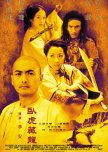
"A faithful heart makes wishes come true"
I first watched this film when it was theatrically released in my country years ago. All I had to go on was a friend's recommendation and zero background in the wuxia genre. To say I walked into the nearly empty theater apprehensive would be an understatement. My fears were for naught. In a matter of minutes, I was completely mesmerized by the cinematography, music, and acting. Having watched my share of fantasy and super hero movies, I had no problem with the flying and light body technique as the characters danced across rooftops or fought high in a bamboo forest. The graceful movements and fighting techniques were like nothing I had ever seen. Crouching Tiger, Hidden Dragon was the gateway into a new world for me. Little did I know that it would set the bar for all films that followed.Though this movie was a wuxia, the heart of the film were the two romances. Yu Shu Lien, the owner of a delivery escort service and Li Mu Bai, a warrior trained at Wudan had fought their feelings for years. Their love was unrequited as Lien had been engaged to Li Mu Bai's friend, but he was killed and the two would not act on their feelings. Now they are reunited as Mu Bai brings her his famous sword, The Green Destiny, and asks her to deliver it to their protector. His journey toward self-enlightenment has brought him to her and he wishes to leave the bloodshed behind them. The 400- year-old sword is too much temptation for Jen, a young woman engaged to be married but secretly trained by the devious Jade Fox. The incognito Jade Fox had poisoned Mu Bai's master years before for his refusal to teach her the secrets of Wudan. Lien is aware who stole the sword and works to return it without bringing any dishonor to the families involved. The middle of the film focuses on Jen and her previous love affair with Lo Xiao Hu/Dark Cloud, a charismatic desert bandit, and in the present when she takes the sword a second time to find her way as a wandering warrior. Mu Bai and Lien know she needs someone righteous to train her before she becomes a poisonous dragon. The treacherous Jade Fox has only vengeance on her mind for Jen and Mu Bai. By the end of the film the characters will collide in a deadly conclusion.
On a recent re-watch, I could see all of the classic wuxia elements from the over 200 martial arts movies I have watched since that long ago day in the theater. Ang Lee used those elements but blew them up into a grand epic, showcasing a wide variety of stunning scenery taking the genre where it had not been before. Characters traveled through the mountains, desert, verdant valleys, and lush bamboo forests. The inn and outdoor café sets ubiquitous in so many old kung fu films made their appearance in grand style this time. The busy city streets didn't feel like a small set, but substantial with plenty of extras to add an additional layer of realism. Ang Lee made full use of the sets and scenery to bring about an energetic and beautiful atmosphere for the story to be told in. Unlike so many martial arts movies prior to CTHD the characters in this film were more important than the fighting. He not only succeeded in making a gorgeous framework for the story but also in developing characters we could feel empathy with as they struggled with their deepest feelings. They had depth and emotional weight to them instead of the thinly drawn characters of old. By paying attention to the smallest details and insisting on a quality presentation, Ang Lee set the bar higher for those who would follow him.
Michelle Yeoh was a revelation to me, and I will always be thankful for this film introducing me to her. She had been in the business for over 15 years at this point honing her craft and risking life and limb at times to do so. Though her fighting technique was fearless, quick, and agile, it was her expressive face revealing longing, fierceness, and tenderness that quickly drew me in and made me a life-long fan. Her portrayal of the mature and wise Yu Shu Lien was perfect. Chow Yun Fat as the spiritual warrior Li Mu Bai, showed how he was torn between his love for Lien, his desire for enlightenment, and his need to avenge his teacher. His calm demeanor was in stark contrast to Jen's firebrand personality always teetering on being out of control. Zhang Zi Yi in only her second film held her own with the veteran actors. As Jen she conveyed naivete, passion, and anger fluidly. Chang Chen as the ardent Dark Cloud resonated the wildness of the desert and his fervent love for Jen. Again, there was the contrast of Jen and Lo's fiery passion in comparison to Mu Bai and Lien's controlled, repressed love. Rounding out the stellar cast was Cheng Pei Pei as Jade Fox. I have gone on to watch her earlier movies where she had been the young female warrior who faced insurmountable odds, paving the way for other actresses. I'm so pleased they used her in this movie as the vengeful villain and gave the kung fu veteran a chance to shine.
Lien and Jen both sought freedom in their own way and both were bound by duty. Jen loathed being forced to marry wishing only to be free and Lien greatly desired to be with Mu Bai, but was prevented by a rigid sense of honor. The two couples were the inverse of each other emotionally and would gradually become more like the other whether a crouching tiger, biding its time or a hidden dragon of emotions. Lo and Jen, embodied the recklessness of youth with no regard for tomorrow. Lien and Mu Bai sought to guide them to more thoughtful actions. For restrained Lien and Mu Bai, they had reached the point where they were finally able to break through their control to unleash their feelings and unspoken words. True love trumped spiritual enlightenment as what was important became revealed in one last breath.
The only quibble I have with this magnificent film is with the long flashback interlude showing Jen and Lo's love affair. It was similar to The Taming of the Shrew and feels dated in the telling.
Yuen Woo Ping masterfully matched the fight choreography to the mood of the film. The actors did much of the fighting, check out all the face time during the battles. Instead of CGI, the floating and leaping, even in the bamboo forest-truly a thing of beauty, was accomplished by wire work. The fights were more elegant than brutal and more visually captivating than realistic. Aside from the bamboo forest fight, the fight between Lien and Jen was spellbinding. The experienced Lien used a variety of weapons as she sought to subdue the thief of the Green Destiny in a memorable fight choreography.
After my recent re-watch I found that Crouching Tiger, Hidden Dragon has stood the test of time. Though I have searched for its equal or better through the years I have yet to find a martial arts film to top this one. Only Hero's stunning aesthetic came close. Compelling characters, wonderfully acted, enchanting cinematography, a haunting score, and balletic fight scenes have made this the measuring stick for all other films. It is rare for a film to touch me deeply emotionally and this one has for over two decades. I need to remember to thank my friend again for encouraging me to visit this world of wonder.
3/31/23
Was this review helpful to you?
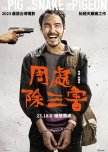
"One mistake can lead to irreversible regret"
The Pig, the Snake, and the Pigeon was a tough film to rate and harder to review. The film showed how different people react when death stares them in the eye. Do you attempt to mend your ways or seek a lasting legacy no matter how reprehensible?Chen Kui Lin aka the Kuilin Kid made a name for himself by taking out not one, but two mob bosses. While lying low he discovers from a pharmacist who treats gangsters that he has stage 4 lung cancer. She works to convince him to do the right thing and turn himself in. After praying to General Guan and tossing the divination sticks nine times he goes to the police station to do just that. Problem being that an armored car had turned over and people were lined up to turn in the money they’d pilfered. While waiting he sees a wanted poster with the top three fugitives. He was ranked #3. At that moment he determines to take out the top two to improve his legacy.
The first half of the film had numerous brutal, no holds barred fights between Kui Lin and the cop Chen Hui and between Kui Lin and Hongkie. Hongkie was vile, a rapist, and deadly. No tears shed for anything bad happening to him. The second half of the film delved into the spiritual side and repentance. Even a killer like Kui Lin could grasp at the thread of hope. At least before the violence erupted into new disturbing levels.
I’ve never been an Ethan Juan fan but I have to admit he did an admirable job as the killer who could murder people easily but could also be quite affable and charming. He rescued at least two people and tried to save a third. That didn’t mean he was a good guy and it would be wrong to idolize him. His last violent act disturbed me greatly and threw me into a moral quandary attempting to understand his reasoning.* The final twist wasn’t much of a twist and in the end, it didn’t matter, at least to Kui Lin.
The Pig, the Snake, and the Pigeon had high production values and well shot fight scenes. The acting was quite good and Ethan Juan made it hard to not feel some empathy for his character. The story could be uneven and the final third of the film took too long to resolve. Far from glorifying the gangster lifestyle, it showed that three evils no matter how fair or repugnant they might appear to be needed to be vanquished. Interestingly, only one facing death had the courage to do something unorthodox to rid society of the animalistic ills.
3 March 2024
***********Spoiler below**********
********************************
The only way I could resolve the massacre at the cult was that after all the evil they had done including murder and destroying at least one child’s future, he thought they would continue their wicked ways . Many of the people in the cult who did not heed his warning knew it was a scam and were enforcers and the others who stayed behind were either in on it or so brainwashed that would continue to drive people to suicide or murder when ordered. The ambiguity of the ones left behind who were killed was very distressing to me and why I didn’t rate this film higher.
In the end, Kui Lin paid for his crimes and the pharmacist who got her three birds, actually a whole flock, with one stone was also facing a painful death herself.
Was this review helpful to you?
This review may contain spoilers
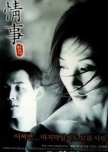
An affair tells the story of a married woman in her late thirties drowning in a gray world of mediocrity and what happens when she is confronted by passion and desire. Seo Hyeon’s reserved life is comfortable but devoid of color and dreams. She is married to a man she has never been in love with. Her uninspired life is reflected by the traffic report station her car radio is set on.
U-in returns to Korea to start a new job and prepare for his marriage to Seo Hyeon’s sister. He is a young man bound by his father’s expectations. He falls in love with Seo Hyeon at first sight despite their age difference. Slowly and deliberately he pursues her. She tries to take refuge in familial duty but succumbs to his advances.
Seo Hyeon’s time with him is awash in colors, feelings, and dreams. He exchanges her traffic station for romantic guitar music and her predictable existence for one of excitement. For the first time in her life she falls deeply in love.
Ultimately she has three choices:
Choose to destroy her family and leave for a new life with U-in.
Maintain her duty to her family and stay with a man she has never loved.
Take a chance on herself and leave the gray world that has enveloped her.
Each choice has consequences involving loss. The question is which choice can she best live with?
The loves scenes are sensual in this movie and a bit of a shock after watching the guppy kisses of Kdramas. There is a sense of intimacy even in the scenes where they don’t touch as well.
The movie never seeks to excuse their relationship, more to understand her need for a lifeline out of the dark ok-ness she has settled for.
Lee Mi Sook and Lee Jung Jae bring these characters to life, their passion, love, and guilt.
The musical was okay, but not particularly memorable.
As far as rewatch value goes-just like U-in’s love for Seo Hyeon, An Affair is highly addictive.
Was this review helpful to you?
This review may contain spoilers
"The truth depends on who tells it best"
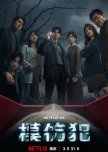
Copycat Killer was a copycat of numerous serial killer stories, set apart only by its relentless and gratuitous images of young women been tortured and murdered. Told in a time before social media, it tried to paint television news as bringing as much chaos to society as the brutal murders of imperfect victims.The drama utilized character types we’ve seen before. Chris Wu played the brilliant and moral prosecutor with a tragic past who is a thorn in everyone’s side for not tolerating any dishonesty and doggedly devoting his life to solving crimes. I found this confusing. Prosecutors in my country use the evidence police bring them to go to court and try the cases, they don’t dig up the evidence themselves. Cammy Chiang was the overly earnest young reporter disillusioned with the news media. The criminally underused Ko Chia Yen was Wu’s ex and a psychologist to help him make sense of the killers’ motivations. Ko is a gifted actress who had few scenes and none of which showed her range. Ruby Lin’s news anchor and producer had potential but the writing let her down as well. The villains ranged from mildly complex to laughable.
Copycat’s writing was uneven and the pacing slow. The first three episodes were more confusing than world building. Story lines that promised follow-ups were dropped. In the initial episode, a killer made the statement, “As long as the evil in your heart is triggered, anyone out there has the capacity to become a killer…Do you think there’s no evil in you?” The writing clumsily tried to push Wu’s prosecutor into that ethical corner. The news media was shown as morally bankrupt, uncaring of how much damage their coverage did to victims and their families as long as the ratings were high. Due to their race to air the most graphic or emotionally volatile content they became complicit in the killers’ crimes.
Aside from the writing and pacing issues, the main problem I had with this drama was its depiction of women. It tried to have it both ways-repeatedly show scantily clad women tortured and murdered in a titillating manner and then call out the media and society for blaming the victims. One character that was written for us to empathize with due to his loyalty and connection to main characters simply emphasized how unimportant young women’s lives were. The noble citizenry vilified the imperfect young women as being unworthy of justice and finding their killers a waste of tax payer money. The old myth of only the perfect victim, the chaste and obedient woman from a good family, being worthy of our sympathy or help was trotted out again and again. Perhaps Copycat was highlighting how victims and their families are often victimized as much by “righteous” people as the criminals who committed the heinous crimes but the lingering shots on chained women or extended scenes of gratuitously murdered women muddied those waters. The drama also briefly addressed the troubling old belief that the family of a perpetrator was as guilty as the criminal and not worthy of a happy life even if they had nothing to do with their relative’s actions.
Copycat Killer was a disturbing drama, not because it dealt with serial killers or had gory scenes, which it did, but because in trying to show society’s misogynistic and limited views of women they simply reinforced violence against women as a means of entertainment.
11/17/23
Was this review helpful to you?


