

 135
135 431
431 16
16 2
2 6
6 3
3 8
8 10
10 3
3 13
13 1
1 1
1 1
1 1
1 2
2 6
6 8
8 5
5 9
9


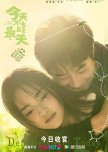
"Losing control is the essence of life"
Definitely Not Today was a bit of a surprise to me. It dealt with two big trigger warnings-suicidal actions and sexual assault. Not subjects usually confronted in modern Cdramas. And those two subjects were just the tip of the iceberg. While the drama didn’t make light of them, it did deal with the subjects in a darkly comedic and at times touching way.Mi Chong has lost everyone in his family and has decided it’s time to go. He’s made all the preparations, chosen a date that has meaning to him and picked the spot. As he mentally prepares to say goodbye to the world, he sees a girl drowning in the same water he’s chosen for his grave. Initially irritated, his kindness gets the better of him and he rescues her. He has no idea what mayhem he has unleashed into what he hoped was the end of his life. The rescued girl, Zhi Liao, was desperately escaping one perilous situation and has no idea that she is in a greater danger than she could have imagined.
The drama started in a traumatic place with Mi Chong’s determination to commit suicide and near the end revealed a traumatic element in Zhi Liao’s past. The two characters were both damaged, living in pain, and with deeply repressed anger and guilt. Both had been abandoned and taken advantage of by family members. Mi Chong dealt with his bone crushing losses by becoming uninvolved in his own life. Zhi Liao transformed into chaos personified as she lashed out at everyone around her. They were both trapped by their pasts and clawing against the walls they’d created. In the other they discovered a glimmer of hope, even as their lives were in jeopardy.
The acting skills varied widely and the script could be as messy as the characters at times. The editing was often clunky and unrelated events popped up out of nowhere. This did not appear to be a high budget drama. Moods veered widely from sweet and funny to violent and sad. I was particularly concerned about Mi Chong's crippling depression and withdrawal from life. Despite Zhi Liao’s street smarts, she seemed completely unaware of his deadly intentions. Both characters had basically been told to get over their debilitating wounds. Yet for all its flaws I found myself deeply engrossed in it. Definitely Not Today opened with darkness and near the end confronted another darkness. Somehow these two broken opposites unintentionally, and later intentionally, offered each other hope and light into both of their lives. And just maybe, love and a smile.
24 May 2026
TRIGGER WARNINGS: Multiple suicide attempts. Sexual Assault-rather graphic. Attempted sexual assault. Attempted child murder and suicide. Forced prostitution attempt. DUI and alcoholism. Child abandonment. Depression. Stolen inheritances. Animal death. Seriously, how did this ever get made in China?
Real world note: Both characters were deeply in need of a mental health therapist to help them with their traumas and pain, love can’t cure everything.
Was this review helpful to you?
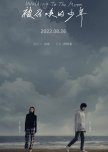
Perception is reality even when it's a poem
Walking to the Moon is a 2022 short film. The actual film was under 8 minutes yet resonated long after. Seen through the eyes of an autistic boy, the world alternated between nightmare and poetry in motion.Ning An lives with his mother who runs a hair salon. Her boyfriend is derogatory toward him as Ning An is autistic. During a distressing moment, Ning An flees the salon and runs to the ocean.
Much of what transpires in this short film is from Ning An’s perspective, how he sees and experiences the world. A mirror is a window to the moon and ocean. A walk in the surf becomes a dance to the music of the whales and gulls all to the rhythm of the waves. The moon calls to him at the door to the ocean, personified, in a gentle underwater ballet.
This film is ethereal, enigmatic, a song, a dance, and a reminder that everyone sees the world in a deeply personal manner. I suspect viewers will interpret this film that glides between “reality” and “illusion” differently.
“You keep calling me, so I came here.
At the entrance to the deep ocean.
While this moment, ocean and ocean,
I’m here to bring you back.”
19 May 2026
Was this review helpful to you?

After being publicly canceled in August of 2021 and dragged through the mud by netizens, Zhang was afraid to leave his house and be seen in public. (Having read the complaints, it seemed like the punishment did not fit the crime at least from this outsider’s perspective.) Music helped restore the embattled actor and he found new ways to express himself, find work, and begin healing his wounds. This documentary was one of the ways he let people know that words can hurt and that he was choosing to focus on the positive.
There were times the set-ups felt overly staged as he played with children, helped a restaurant owner cook and serve, learned from river raft guides about their business and relationship, or interviewed a Tibetan musician. Having said that, I enjoyed the bits and his chats with the different people who opened their lives to him. The scenery, as expected, was stunning. Mountain vistas, glaciers, rivers, green fields with nomadic herds, all were soothing as Zhang experienced them.
If you are a Zhang Zhe Han fan, I could highly recommend “August” as he bared his heart and discussed his life without going into the “scandal” that nearly broke him. If you don’t know who he is, the documentary is still a sweet ride through the Tibetan mountains with brief glimpses into the people who live and work there.
4 May 2026
Was this review helpful to you?
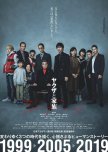
"They are my family, no reason is needed"
Yakuza and the Family aka A Family showed the changing world of the yakuza in three acts through the eyes of Yamamoto Kenji. A fatherless child lashing out at the world, he found a place to be with Shibasaki’s yakuza family. He was to learn that a family born of violence would teach him the meaning of suffering and loss.Yamamoto Kenji spirals out of control after the death of his father that was drug related. His subsequent actions lead him to the door of his own demise when a slip of paper offers him a chance at survival and a new home. Shibasaki gifts him a new father and a place to belong. As the world changes so does Kenji’s fate.
When the film started, we’re watching the classic, cool guys, sunglasses at night yakuza with their pomp and circumstance. As Kenji moved up the ranks he walked openly down the middle of the street and straightened out problems with his fists. Even then, change was in the wings as their turf was scheduled for new development and the police and government were looking to sweep the yakuza away. A further jump in time and the traditional yakuza families were dying from attrition as society had deemed them unworthy. Leaving the yakuza offered no comfort as the men were faced with societal and economic ostracism. Where once Kenji had a found family, now any ties he had were unraveling.
The film was cyclical in its familial, especially fatherly, interactions. As father figures came and went, new ones took their places. Kenji went from having a drug addicted father to a criminal replacement. The viewer had to fill in the shortcuts implying Shibasaki’s paternal feelings for Kenji and vice versa. Violent, loyal men were now Kenji’s family and role models. I’m not sure if it was the director’s goal but it ended up feeling like a nostalgic and sentimental retrospect of the criminal organizations using the family motif.
Kenji’s utter lack of polite social skills became more apparent as he attempted to find a girlfriend. “Get in the car!” is not exactly the line most women are hoping to hear from a potential suitor. The romance was the real weak point in this film and I found it incredibly difficult to buy into. Kenji was capable of showing emotions, but often when he did, the audience was left out of their true depth. His first loss as a yakuza, one he grieved and whose death turned his life upside down, was a character who had few lines. Again, the audience was required to do the writer’s work.
A Family wasn’t just one unit, it was a dysfunctional extended family entangled with other families and loved ones spanning generations. Kenji’s made family was complicated and fraught with danger and slowly disappearing. He fought for them, suffered for them, and even killed for them, only on rare occasions allowing himself to show the personal costs to himself. Kenji might have secretly wished for a normal existence, but a yakuza’s path rarely proceeded peacefully as he discovered. All he could do was what seemed right though it might not be right, to avenge or help the people he cared about despite the price he would have to pay. I’m not sure if it was the director’s goal but it ended up feeling like a nostalgic and sentimental retrospect of the criminal organizations.
3 May 2026
Trigger warnings: Sexual assault, smoking, bare butts.
Was this review helpful to you?

"Games between men are pathetic"
I don’t require a lot from martial arts films. Give me some good fights and a somewhat coherent story, maybe even one compelling character and I’m in. 100 Yards had maybe one out of those three criteria.Shen An’s father is the head of a martial arts academy and dying. His best student comes home and his father has him dual his son for the academy. The academies are part of The Circle which helps to keep the peace. Once upon a time each academy was responsible for policing 100 yards around their school and gradually those territories grew. Now the student and the son butt heads over the future of The Circle and the city.
The fights were well shot without wires and without ridiculous undercranked or sped up shots. They were also sans CGI and extreme close-ups ---thank goodness. No one was thrown twenty feet into the air and bodies didn’t crush brick walls. The fight choreography was more realistic and Jacky Heung had nice moves. His acting, on the other hand, was painfully bad. He only had one facial expression in his bag of tricks which began to wear thin. Andy On’s Qi wasn’t much better. The never-ending fights began to feel pointless and in the end were pointless. The writing and directing went too heavy on the try and instead of cool came across as overly dramatic and cringey.
100 Yards is worth seeing if you are interested in a variety of fights with different weapons and styles. As long as you don’t expect any sort of compelling story or characters.
27 March 2026
Trigger warnings: there were a few slicey scenes but nothing egregious.
Note: The original Circle Chairperson was an actress they styled to look like a cross dressing Brigitte Lin. Hoping it was a respectful homage.
Was this review helpful to you?
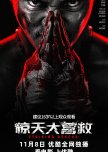
"I can't jump! I'm not Tony Jaa!"
If you are looking for a tight, nail-biting action film with strong acting, Striking Rescue ain’t it. If you are in the mood to see Tony Jaa cut loose with fierce elbows and knees on his opponents like he hasn’t done in recent history…this is it. My rating is comparing this film against other Jaa films.Bai An is on a vengeful rampage after his wife and daughter are gunned down in front of him. Believing the perpetrator to be his wife’s boss, Chairman He Ying Hao, Bai An leaves no stone unturned and no body unbroken in his hunt for He. Lying in wait for He and his caravan travelling through the jungle, Bai An is surprised to find He’s crew attacked and He taken prisoner. In a strange trick of fate, Bai An ends up saving He’s daughter, Ting. The two join forces to find He with nearly everyone in town hunting the pair including Ting’s dutiful bodyguard, Wu Zheng.
The story was a flat framework used to hold up the fights. There were a half-dozen bad guys with their own crews of machete carrying minions that queued up for Bai An to pummel his way through. Despite his hatred of He, he risked his life repeatedly to keep Ting unharmed. Chen Duo Yi made the most of her damsel in distress role. Wu Zheng ended up being a nice fight buddy as the two reluctantly helped each other out. Two of the villains were wildly over the top which didn’t enhance the story. Shi Yan Neng played a villain he could do in his sleep at this point.
Now for a reason to watch this film. Tony Jaa at nearly 50 years old was amazing. I had to look up the fight choreographer and discovered it was Guo Yu Long. I’m not familiar with his work and it doesn’t look like he’s worked on many films, but he certainly knew how to showcase Tony’s talents. One of the best things about Tony’s fights was that he didn’t do a lot of rapid-fire punches that seemed pointless, unless it was the main villain. He aimed for the weak spots-elbows, shoulders, knees, and neck, which down an opponent immediately. Tony may be small but he’s mighty and a thing of frightening beauty to behold.
Striking Rescue may not have provided anything new in an action story and did run long, but it was good to see Tony in fine form again. I’ve missed his vicious knees and elbows. Don’t stay away so long, ‘kay? Rated on a Jaa curve. If you are a Tony fan, you’ll think it’s Jaa-some. If not, probably Jaa-ful.
21 March 2026
Trigger warnings: A few grisly fight scenes and a short operation scene. Child murder.
Was this review helpful to you?
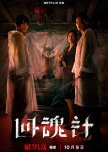
"It's not hopelessness that makes me suffer, but the endless hope"
When two grieving and angry mothers feel that justice has not been served, they bring a killer back to life in order to exact their revenge in The Resurrected. Vengeance turns out to not be so slick and clean, nor easily attained.Wang Hui Chun is vigilant in the care of her daughter Jin Jin who lies in a coma in the distant country of Benkha. Her abusive, unfaithful husband continually berates her for not pulling the plug on their daughter but Hui Chun clings to the hope her daughter will one day awaken. Widow Chao Ching’s daughter Hsin Yi was brutally murdered by the same people responsible for Jin Jin’s coma. The mothers use their own resources to bring the killer to justice with the aid of another victim’s mother. When the killer dies “with dignity” it is too much for them and they put into motion an unnatural plan to resurrect him. Chang Shih Kai is not so easily manipulated and begins to create doubt in the mothers. Hui Chun and Chao Ching also grapple with the powerful people behind Chang, who could prove to be far more dangerous than the dead man.
The strength of this drama lay with the lead actresses. Shu Qi as Hui Chun was the follower of the two, usually siding with whatever Chao Ching decided on. Her world was swallowed up in debt and caring for the comatose Jin Jin, and drowning in endless hope. Angelica Lee’s Chao Ching came across as hard, obsessive and ruthless in her desire for vengeance. Broken by the cruel death of her daughter and her own guilty feelings, her only reason for living was to punish anyone involved with Hsin Yi’s suffering. She doggedly followed every lead offering zero compassion. Fu Meng Po as the killer Chang Shih Kai spent most of his scenes bloodied and tied up. He had to dig deep to bring nuance to the mothers’ despicable foe. While the writers tried to soften him with a tragic backstory, it had no effect on my view of him. He and his organization emotionally and physically tortured young people, killing them when they were no longer useful.
I had no problem with the mothers’ desire for vengeance on the man who tortured and killed their children. Hsin Yi died a horrific death. A mother’s need to protect resides deep in her DNA. Knowing her child was in danger, crying out for her and she’d been unable to save her, would be a parent’s worst nightmare. The first few episodes were enthralling. Even the social commentary on the wicked ways of the rich fit into the story. Then it seemed the writers didn’t trust their characters and added mysterious layers that were unnecessary and garbled things up. KISS is always best (Keep It Simple Stupid). The last few eps ran off the rails, though they managed to salvage the two mothers after tearing their characters up. The writers also reverted to a trope at the end that was tired and overused by the 1980s. I don’t think they were setting up a sequel, I think it was just a cheap trick at a jump scare.
I loved watching Shu Qi and Angelica Lee delve deeply into their characters’ pain and anger. They were quite compelling to watch. For these two alone, it was a drama worth giving a try. Despite the erratic and convoluted nature of the writing in the last three episodes, I still enjoyed this drama overall. The Resurrected was a dark, twisted vengeance drama that will not be for everyone. Please take note of the triggers. Others may find it far too tame. The supernatural element didn’t play into the story too much. The real draw for me was watching two, actually three women process their grief and rage in different manners, all by skilled actresses.
17 October 2025
Trigger warnings: Torture-both of the guilty and the innocent. Sexual assault. Sexual content. Brief nudity. Drug use. Smoking. The occult.
Was this review helpful to you?
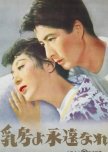
"I've lost my breasts. What can I write about?"
Tanaka Kinuyo tackled three sensitive topics for 1955 in The Eternal Breasts aka Forever a Woman—divorce, breast cancer, and a woman’s sexuality. I'd watched the other four films she directed but saved this fifth one for last as I knew it would be the most devastating for me. Having lost the two most important women in my life to it, I take this disease personally.Fumiko and her two small children, Noboru and Aiko, make the most of their days. Her mother helps the family out when she can as Fumiko’s husband has given up on finding a job, is for all practical purposes a drug addict, and an unapologetic adulterer. After having enough, Fumiko files for divorce. Her only solace through her marriage and divorce was the poetry club she belonged to. Because of the depressing nature of her marriage her poems were described as “overblown.” An old friend sends her poems to a Tokyo newspaper looking for new talent and she is “discovered.” Unfortunately, Fumiko also discovers she has late-stage breast cancer. A young reporter enters her life, more concerned for her health than the story.
Discovering you had late-stage breast cancer that had metastasized to the lungs was a deadly diagnosis in 1955. In truth, if it was already in her lungs, it would have been in her brain and limbs as well. Mastectomies were the primary treatment. Chemotherapy was in its infancy and not trusted. Radiation and some hormone therapies were about the extent of possible medical regimens. Fumiko was confined to the hospital that had bars on the windows and doors, functioning effectively as a cage. Her children were not allowed to visit, which for a mother would be barbaric. Her roommates were transferred to a different room as they neared the end of their life and then the long dark hallway to the morgue. It seemed like a lonely way to spend one’s final days.
Despite being relegated to a room waiting to die, Fumiko began to work through her feelings and thoughts. At first, she felt less like a woman without her breasts. As time went on, she came to realize she still had longings and desires. Her poetry reflected her fight with cancer and death, and what it meant to be a woman. Could she still be a woman without her breasts? She began to speak her truth and her mind more openly. At this point what did she have to lose? The same society that kept her from attending her brother’s wedding and caused her to marry a man she didn’t care about could no longer censor her thoughts or actions. She was dying, what else could they do to her?
The women around her stayed by her side and cared for her and her children. Her brother won the good brother award as he, too, didn’t shy away from her as some men are wont to do. The young reporter, Otsuki, gave her the joyous gift she had longed for. While the mystery after death must be walked alone, Fumiko was fortunate to have loved ones who cared for her.
Tanaka Kinuyo created a strong film about an imperfect woman who loved her children and family, loved poetry, loved men, and in the end was able to love her “sinful” self, unconcerned about any “unreliable gods” out there. Nakajo Fumiko, the tanka poet this film was based on, died at the age of 31, leaving behind four children and her poetry. Your Auntie Butterfly implores you to begin doing breast exams in your 20s, talk with your doctor about your risk factors, and when the time comes, march right in and get squished. The treatments now are much more sophisticated and successful, especially if they catch it early.
"Death shall lighten
and free me
to even ride
on your shoulder"
2 September 2025
Triggers: F*cking cancer
Was this review helpful to you?

"Your lines are your emotions"
If you imagine a rabbit is blue then the rabbit is blue. Adapted from a manga, Blue Period was a gentle coming of age story about a high school boy going through the motions until he discovers his passion. I have not read the manga so my review will be based solely on the film.High schooler Yaguchi Yatora excels at academics and after classes hangs out with his three best friends. Life would seem to be perfect, but he’s merely going through the motions. He finds no meaning or thrill in his days until he’s forced to take an art class. In one blue moment, he discovers his zing and something that makes life worthwhile. He throws himself into his artwork, fighting to make up for a lack of natural talent with determined enthusiasm.
Full disclosure, this kind of film is my jam. I am a frustrated artist and love watching other people perform miracles on paper and canvas even when it is fictional. This was not a film with twists and turns, in fact it was quite predictable. Yet I still enjoyed watching Yatora’s artistic journey as well as his internal journey. Forever comparing himself to others and lacking in confidence, Blue Period explored his steady growth as an artist and as a young man. This film was far from perfect, but for me it was soothing and motivational
The supporting characters were given little time. Ayukawa Yuka (Ryuji), a young transwoman, received most of the attention outside of Yatora. For the most part, the writers were sensitive and showed the prejudice she faced especially within her own family. I disliked how Yatora continued to refer to her by her masculine name instead of her chosen name, other than that he strove to be a friend to her. And Yuka gave him the advice and push forward he often needed. The other supporting characters were there to fill in the canvas.
Blue Period had no villains except for the brutal inner critic that lives within all of us. Yatora came to understand that regardless of how “flimsy and pathetic” people appeared to be, everyone deserved to be loved. Through his art, Yatora began to really see the people and world around him. He learned to stop comparing himself to others and focused on his own path that held mistakes but also wonderful bursts of insight and creative innovation. Inspiration is contagious…pass it on!
"They can't create what I can, a world all my own."
11 July 2025
Was this review helpful to you?
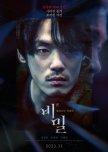
"This too shall pass"
Unforgivable starring Kim Jung Hyun sporting some sexy facial was a dark and tragic story of how one assumption and ill spoken word could start a domino effect of cruelty, death, and gruesome torture.Detective Lee is called to a bloody crime scene in a public bathroom. Inside the victim’s mouth is wedged a note. Before long Lee and his young partner, Detective Kim aka Professor of Statistics, are hip deep in bodies tracing back to bullying incidents in high school and the military. The person with the biggest grudge is removed from the suspect list as he committed suicide 10 years prior.
Unforgivable once again trod through the national trauma of school and military bullying and how the governing forces are complicit by their inaction. The kind of nightmarish acts that cause victims to commit suicide were difficult to watch. Everyone tied to the case was involved in some manner to Choi Young Hoon, a nice young man who bore the whispers of being gay. Even the hint of being attracted to the same sex was enough for Choi to be ridiculed, shunned, beaten, and eventually driven to his death. Those involved in tormenting him began to be executed by an avenging angel. Detective Lee harbored his own guilt related to Choi that would cause him to break his rule of never becoming emotionally involved with a case.
Unforgivable was in many ways a standard Korean crime drama, which is not a knock, most of them are quite watchable. (Down below I’ll give my reason for bumping it to an 8, above average for my scoring.) Kim Jung Hyun was compelling as the dogged detective and also showing Lee’s downward spiral of guilt upon discovering his connection to the crimes. This film will not be for everyone. The crime scenes were grisly and there was a disturbing sexual assault. In a just world all the tormentors would have faced the legal system and been given serious jail time for their actions. In a better world, Young Hoon would have had access to protection from his bullies and before things escalated, the perpetrators would have been disciplined and deterred. In a more perfect world, there would have been no bullying and people would have accepted Young Hoon for who he was. In Unforgivable’s world, if justice wasn’t an option, neither was forgiveness.
27 May 2025
Trigger Warnings:
Suicides, a rape scene, and gruesome crime scenes
Spoilery thoughts following:
*
*
*
*
I bumped my score up .5 for the film following through with the revenge to the end instead of leaving the Big Bad alive to answer with the courts as so often happens. I never had a doubt who the killer was, the person most in need of justice for Choi Young Hoon and who also realized their own complicity in his lonely life.
Was this review helpful to you?
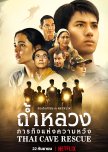
"Let's find out our fate"
Thai Cave Rescue is a drama that I rated more on feelings than subjective evaluation. This was the first production to be given permission by the boys and their families. Best to remember when watching this that while they strove for authenticity, events and people were changed for dramatic effect. If you are too young to have heard about this real-life event or had no interest in the worldwide reporting at the time, my comments may be spoilery.I remember hearing about the boys lost in the cave near the Myanmar border with Thailand back in 2018. When they had gone into the cave like they had done before, they didn’t know that a monsoon rain was incoming that flooded much of the cave while they were inside. Like others around the world, I prayed for them every day and scoured the news often to see if they had been found, hoping they were alive. When they were found I rejoiced! But my joy was tempered with the news that getting the boys out of the treacherous cave was close to impossible.
At first it seemed the Thai government had been resistant to foreigners helping but those closest to the scene brought in expert cave divers from around the world. Hydrology specialists, drillers, no stone was unturned in trying to find a way to safely bring the boys out. What the drama didn’t tell was that when the divers were searching for the boys, they found four men who had been working in the cave and struggled to rescue them because the men thrashed around nearly causing death to all of them. Bringing 12 boys and their coach who had been stranded without food for over a week through 4 km/ 2.5 mi of some of the most dangerous underwater paths seemed an insurmountable task. There were underwater openings so small that it required the divers to squeeze through, other places stalactites and stalagmites were like stone teeth. Silt in the water made visibility low. And every day the rescuers raced against the clock as the rains caused the water levels to rise.
This drama did a good job of focusing on certain aspects of the Wild Boars team and the rescue efforts. Even at 6 episodes, the rescue efforts were enormous with 10,000 people on the ground outside the cave. Resources poured in from around the world. People gave of their time, their expertise, their money, and in the case of Thai farmers--their crops. People volunteered with food stalls to feed the people working around the clock to save the boys. The parents were shown in their anguish, praying for their children to once again be held in their arms. The governor dealt not only with his own personnel, but foreigners, the parents, reporters, and higher-ups afraid of losing face if the operation was a failure.
Most importantly, the boys were shown as the children they were. Their young coach taught them meditation to ease their minds and hunger pains. As one of the divers said to him, “You saved these boys, now it’s up to all of us to rescue them.” The Thai Navy SEALs stayed with the boys as others hashed out plans to bring the boys home. The drama didn’t shy away from the hard truth that bringing the boys out might have a low percentage of success. The estimates of success were as low as 30% of the boys surviving.
Beam Papangkorn Lerkchaleampote gave a beautiful performance as the Wild Boars’ coach who was willing to do whatever he could to protect the children in his care. The young actors gave very natural, unpolished performances which actually worked for this documentary style drama. Many of the older Thai actors had the complication of performing in both English and Thai with mixed results. Ek Thaneth Warakulnukroh as the Governor gave a complex performance as the man dealing with maddening officials, heartbreaking parents, overwhelming choices, and Mother Nature’s wrath.
Partially filmed in the actual cave and even the boys’ own homes, the drama felt real. The ever pouring rain could be felt dampening everyone’s spirits. The caves that had been so beautiful as the boys initially walked through became a dark watery monster as the waters rose. And yet people risked their lives, pitched in however they could, and always fought for these boys as if they were their own. It was beautiful to see how people could pull together when there was nothing to gain except helping 13 strangers.
In many ways, the Wild Boars became the world’s children as people rallied around them both physically and in spirit. “I’ve seen Buddhists, Christians, and animists, heads bowed in prayer. I’ve even bowed my own. Whatever you believe, believe in these boys.” Amen, Governor, amen.
20 May 2025
Spoilers:
RIP
Retired Navy SEAL Saman Gunan died underwater in the cave when he lapsed into unconsciousness.
Navy SEAL Beirut Pakbara died months after the rescue from a blood infection he incurred at the cave.
Beam died in 2022 before the drama premiered, found unresponsive in his bed by his family.
Real Wild Boar captain, Duangphet Phromthep died at the age of 17 in the UK by suicide in 2023.
Was this review helpful to you?

"I will devour them for you"
Every once in a while, I need a wish fulfillment drama like Kurosagi aka The Black Swindler. Where much like in Leverage, capable people punish and stop swindlers and criminals who often evade prosecution. Kurosaki Koshiro had a strong need for revenge after the deaths of his family members due to a swindler and worked with a powerful man who may or may not have been his enemy to accomplish his goals.Kurosaki goes by many alias all beginning with Kuro. He is a Black Swindler who devours White Swindlers who prey on the vulnerable and fleece them of their money. He shares his take with Katsuragi, a sweet shop owner and launderer of illicit money. Katsuragi sells Kuro information on swindlers who are drawing the wrong kind of attention. In going after one white swindler, he meets a man much like his father who has lost everything. The man’s daughter, Tsurara, is vehemently against Kuro helping her dad. She is studying to become a lawyer so that one day she can be a prosecutor. Another fly in Kuro’s anointment is detective Kashina, who much like Tsurara is overly enthusiastic, judgmental, and living in a black and white world. Each time Kuro thinks he’s taken down the person who helped destroy his father, he finds a deeper level of swindling deceit.
I like to visit a world where there is someone who gives criminals their comeuppance. Not everyone in The Black Swindler felt the same way. Tsurara and Kashina seemed far more offended by Kuro who brought down swindlers than the actual swindlers themselves. Kashina who banged on about the need for law-and-order beat Kuro just for the heck of it at one time. Pretty sure assault on a citizen was a crime. Then he followed Kuro to Shanghai to prevent him from taking down a Big Bad and somehow managed to find Kuro on a remote street in a city of 25 million people. I have trouble finding my husband when we get separated in the grocery store! Also guessing China would frown on a foreign officer doing business clandestinely on their soil. Kashina and Tusrara with their shouting and breathless earnestness came close to spoiling my viewing experience. What made up for them were the more well written characters. Hirano Sho gave Kuro the emotional depth this single-minded character needed. Miura Tomokazu as the world weary and creative dessert chef Katsuragi was the perfect reluctant father figure and foe. I enjoyed every time Yamamoto Koji came on screen as the enigmatic and humorous Shiraishi. Nakamura Yuri’s character didn’t have much depth as Katsuragi’s assistant, but was skilled enough to take down the bad guys quietly and efficiently.
There were stand alone cases Kuro faced and those that tied back to the swindlers he was hunting. The cases were interesting and Kuro always got his man, even when he was a woman. The solutions may have been over simplified but I didn’t care, it was nice to see the schemers give Kuro a good meal as he devoured them and their ill-gotten gains.
8 January 2025
Was this review helpful to you?

Delicately crafted and emotionally engaging
If you've had a bad day or are feeling down, I can't recommend this short film enough. Come walk with a 90-year-old woman as she puts on her best dress and shoes to go out and buy tangerines in A Day.Grandmother finishes the last tangerine for her breakfast as the good spirited, but invalid Grandfather lies on his mat. On her way to the fruit stand to purchase more tangerines she meets women in various stages of life---a child singing on her tricycle, a harried woman in her car, a middle-aged woman hustling for every cent, and a young girl creating paper airplanes out of memories. Grandmother observes and interacts with them with humor and generosity.
The acting is beautifully natural and compelling with few words spoken. Gentle, classical music flows in the background. History reminisced becomes reality rewarded with a tangerine. An undercurrent showing the hardships of elderly poverty never drives away the hopeful mood. Oozing with kindness and bittersweet reflections, A Day is a day trip worth visiting.
“All the time it is the same, ‘Tick tock, tick tock.’”
20 November 2024
Was this review helpful to you?
Neomu masisseoyo!
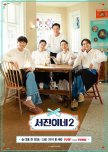
Jinny’s Kitchen S2 added a new cast member and took the show to scenic Iceland. With cold winds whipping across Reykjavik, the team served up nourishing hot soups to warm their customers.Lee Seo Jin-“Boss Dimples”, Yung Yu Mi-“Queen of Serenity”, Park Seo Joon “Ace Pitcher”, Choi Woo Shik-“Class Clown”, Go Min Si-“Rookie MVP”, and Relief Dishwasher-“Mr. Beanie” manned the dining room and kitchen doing their very best to give Iceland delicious Korean dishes. Unlike Mexico where the crew served up very simple dishes, the cast took cooking lessons to be able to prepare the more complicated soups which required more prep work as well. Also, unlike Mexico, where Woo Shik had to try and drum up customers on the boardwalk, the line wrapped around the block on the first day much to the cast’s surprise!
Once again, the cast showed off their cooking skills, this time under greater pressure with a continually full dining room. My absolute favorite was Go Min Si. She was quite impressive as a prep chef, Dolsot Bibimbap preparer, dishwasher, and pretty much anything else the head chef of the day needed. She never complained and simply stepped up and did whatever needed to be done no matter how tired she was. Yu Mi was the epitome of calm and organized as usual. Seo Joon managed 6 or more burners with his intense organizational skills. Woo Shik had his day as head chef dancing and joking but also taking the food seriously. He and Seo Jin also took care of the customers in an orderly fashion.
There was a wide variety of customers, both Icelandic and tourists. For the most part English was the communal language for customers and cast. On the first day an Indian American showed up. While familiar with some of the cast, she’d been in Iceland for 48 hours and hadn’t had any rice and was looking forward to the meal. A Korean American customer had lived in Iceland for 4 years and as he ate said he felt most Korean when eating Korean food. People from all over the world settled in and enjoyed the different dishes and drinks. Most assuredly, the popularity of season 1 on Prime brought people to the restaurant eager to be on television, but most weren’t too overt about it. The show didn’t share how much the dishes were this time which I was quite curious about. The only bill I saw revealed was for two women which came to 20,000 Kronur/144 USD which seemed a bit pricey.
While this year was more hectic than last year, I thought it had its own charm. The pop-ups and music made for a lively kitchen scene. Min Si was a great addition as she learned quickly and made the head chef’s job easier. Of course, each of the cast members played to their own strengths and kept things positive with humor and camaraderie. Jinny’s Kitchen is a hidden gem no longer and wherever they might go for S3 they can expect their global audience to show up.
Some of the menu items to tempt you:
Beef Galbijjim
Dolsot Bibimbap
Dakgalbi
Sundubu Jjigae
Ttukbaegi Bulgogi
7 September 2024
*Neomu masisseoyo-So delicious! (according to the subtitles)
Was this review helpful to you?
"Your love has sustained me"
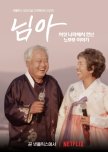
Long lasting love was explored in Netflix’s My Love: Six Stories of True Love. Couples from six different countries who had cohabitated from 40-60 years were shown going through their mundane days and facing challenges that arose in their lives. The couples were a mixed bag with something for everyone.1-USA. Ginger and David
“First time I saw her, I loved her.”
The focus of Ginger and David’s segment seemed to be on the financial aspects and paperwork for dealing with aging and dying. The large family gatherings and business on the farm were also highlighted. This segment wasn’t my favorite and some aspects felt staged.
2-Spain. Nati and Augusto
“You have to be strong at this age---like a warrior.”
I loved this couple, they were by far my favorite. They teased and goodheartedly bickered as they showed the importance of humor and companionship in a successful relationship.
3-Japan. Kinuko and Haruhei
“Alone it would be hard for you but together we can manage if we try.”
This couple faced a lifetime of discrimination because Haruhei had developed Hansen’s disease/Leprosy as child. For 15 years he’d been institutionalized even after he was cured. They showed how perseverance and hope sustained them as they faced negative attitudes, fought for justice, and dealt with a terminal illness.
4-Korea. Saeng Ja and Yeong Sam
“I still feel young at heart. But my body can’t keep up.”
Saeng Ja suffered debilitating back pain from decades of hard work and abalone farming. Yeong Sam scolded her whenever she did too much. Their surviving son didn’t want to take over the business and the two were left wondering if they had enough money to survive without the farm and boating business. The loss of a child, regrets, and physical ailments took a toll.
5-Brazil. Nicinha and Jurema
“Dreams are built, little by little.”
The two women had been together for 43 years and lived most of it with their children and grandchildren in a dilapidated house on the crowded hill of Rocinha with a view of the ocean. Three hours away in a quiet village they had bought a small plot of land where they were building a house little by little for retirement. Regardless of their poverty and age they had a determination to fulfill their dreams. An interesting couple that unlike the others were open about infidelity.
6-India. Satyabhama and Satva
“We are getting older but the work doesn’t cease.”
Satyabhama and Satva lost their millet and cotton crops during an unexpected deluge. Their grown children were forced to leave to work in the factories along with everyone else their age. Only the old and the very young remained. The couple were too old to handle the fields themselves leaving them in a precarious position. This segment focused on the “ceaseless cycle of migration.” This segment felt overproduced and the names of the couple weren’t authentic so I was left wondering how much of it was real.
Each story had a different director which showed in how the episodes were developed. At over an hour, some of the episodes were too long with not enough compelling material to fill them. Others went by quickly. The first and last episodes were the weakest for me as they both felt overly staged. Many of the couples faced a lack of financial resources as bodies aged and were unable to work like in their youth, illnesses, and their own mortality. Regardless of their circumstances all but one of the couples were still close and supportive of each other even after decades of dealing with life's challenges which was encouraging.
18 August 2024
Was this review helpful to you?


