
 K-Drama


This review may contain spoilers
Alas, it went with the current
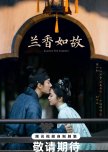
Against The Current? It did seem like that was the direction in which this drama was flowing. At least initially. Most Cdramas set in imperial China take the POV of someone from either nobility or scholarly classes. It’s therefore rare – and refreshing – to see a drama like Against The Current (ATC) take the POV of an indentured servant. Though this POV comes with major caveats, which I’ll discuss later.
The first part of the drama is a brutal tale of servants surviving at the hands of masters in a society that sees their lives as practically worthless.
The second part of the drama is a self-deluded escapist romance that seems to have nothing to do with the first half of the show.
It’s the latter where I have two big bones to pick. One is its depiction of class politics, the other is the so-called romance.
A PROMISING START
Our FL is actually born into a well-off family who perish as a consequence of court politics. This seems particularly cruel for the women who have no control over the affairs of men and yet must suffer their fates with them.
But our FL escapes death thanks to a husband and wife: indentured servants who were gracious receivers of a charitable act from the FL and her mother. This couple ultimately adopts the FL and thus the protagonist of ATC becomes an indentured servant herself.
As I’ve discussed in other reviews, servant characters are often depicted only in relation to their masters (who are normally the main characters). ‘Good’ servants are those who are loyal and willing to die for their master. ‘Bad’ servants are ones who dream of a life beyond servitude and who dare reach for that ambition. These latter characters are normally carted away to meet their death out of frame.
ATC initially seems to flip this usual approach on its head. FL, Xu Lanxiang, is now surviving a world where her life, and the lives of her adopted parents, are at the whims of indifferent masters: the Lin family. The drama pulls you in with the warmth and sincerity of the Xu family, and Lanxiang’s fellow servants who, each with their own grit and tenacity, ultimately band together to endure the power dynamics of the Lin household.
This part of the drama is beautifully written. In other dramas, indentured servants are normally cardboard cut-out tropes. In ATC, they appear as fully-fleshed characters. The best scenes of the whole series come from touching moments Xu Lanxiang has with her parents and her servant friends. These all the more emotional because it’s clear that – for these people at the bottom of the ladder – these moments are rare and deeply cherished.
Almost all of this beautiful writing evaporates after episode 27.
BONE ONE: CLASS POLITICS
My biggest frustration with ATC was the creators’ refusal to pick a lane and stick to it. Before and after episode 27 feels like two different dramas stuck together with PVA glue that hasn’t even dried yet.
After putting all this effort into portraying the rich, complex and deeply fraught lives of these characters at the bottom of the ladder, the drama does a “bait and switch”, as one other reviewer puts it.* The plot essentially rips aways the FL from her adopted parents and replaces the viewpoints of Lanxiang’s servant friends with those of the Lin women. I’d already been a bit annoyed when the first half of the drama had started following the POVs of noble Lin family members, and was really peeved off when these POVs formed the main storyline in the second half. Ultimately, Lanxiang herself seems to align her own ambitions, interests, and concerns with the wealthy Lin women more than her servant friends. As anhsm points out in their review,** much of what constitutes Lanxiang’s skills and interests apparently stems from her time in the Shen family, stunting her character development. This does explain the affinity to the Lin women, but significantly undermines the great premise of this show.
It’s a huge shame really because we do get glimpses into stories from the bottom that could have dominated the second half of ATC – but didn’t. For example, Ji’er’s story of surviving the brothel and then having her parents take her money and run away is a plotline I would have loved to have followed all the way through. Not only does she have a unique connection to Lanxiang because they grew up together, but she’s also a strong character on her own. Yet, the brothel chapter is barely given an episode, and the incident with her parents is summed up in a few sentences by her maid.
The same goes for characters and scenes outside of the domestic sphere. Sadly, ATC follows other dramas of its genre and the military plot points are told from the Lin perspective i.e. top-down. However, again, we’re afforded a glimpse into a could-be storyline with Garrison Supervisor Li and his men. They are lowly soldiers caught in the middle of a power clash between Prince Han and the Emperor. To survive, they really have no choice but to follow the whim of whoever metaphorically points a sword at their throat. They only get a few lines before they are whisked away, out of sight and out of mind. So too are the soldiers who are captured in a brief yet poignant moment as they wash blood off the palace stairs. They too are like the servants of the Lin household, having to clean up after the violence of their masters.
I was surprised to see that there’d been much discussion on the power dynamics around the ML being a divorcé*** when I felt like the far weightier power dynamics hinged on the class differences outlined above. For whatever reason, the class struggle is not the lane the creators of ATC chose for its latter half.
BONE TWO: SO-CALLED ROMANCE
The ‘scheme to get the bride’ plot point is one we’ve seen before in dramas. One example that comes to mind is the Story of Minglan (2018) where the ML crafts his way to the FL step by step. The FL is initially pissed off at his actions – no one likes being manipulated after all – but later on the FL interprets these actions as flattery and, to a certain degree, sincerity. However, there’s a couple of key differences between the MLs of these two shows. First, in SoM, the ML already has an amicable relationship with the FL, and he’s also saved her multiple times. Second, the ML understands the struggles of the FL and is willing to support her to achieve her goals. Third, he respects the people she respects. None of these apply to Lin Jin Qi in ATC.
Instead, Jin Qi is more alike the Emperor in the Legend of Xiao Chuo (2020) who schemes his way into marriage with the FL. In LoXC, the Emperor fixates on the FL, primarily for political purposes, but also secondarily for his own romantic self-interest. He ends up brutally separating the FL from her romantic interest à la King David (kinda). She eventually resigns herself to her fate, and makes the most out of a bad lot so she can at least achieve her own political ambitions. I would argue that even the Emperor in LoXC is still less despicable than Jin Qi. At least the former can see that the FL has political goals that he can help her achieve, but latches onto this without any consent from the FL. Jin Qi doesn’t even try to understand Lanxiang and her desires. He ignores this AND refuses to seek consent.
Lanxiang sums up this situation well in episode 34, “You don’t even know what I think or want, yet you dared to marry me.” Nevertheless, this is set against a backdrop of romantic music and what I presume we’re meant to take as an emotionally tender moment between her and Jin Qi. It’s this juxtaposition that gets me riled up at the drama’s creators. Like what do you mean you’re trying to persuade us that any of this is romantic when all you’ve depicted is entrapment and oppression?
I transformed into the Golden Gate Bridge with the amount of disbelief I had to suspend about the so-called romance. The only way ATC could try convince us was by completely transforming Jin Qi so we’d forget about the coercion, entrapment, and indifference towards servants’ lives. His character goes from ruthless schemer to annoying simp. For Pete’s sake, do you really expect me to believe he cares so much about the Shen family – who he never even met - that he looks after their burial ground? I can see how the creators might’ve thought this scene was a nice way to tie the story back to the FL’s origins at the beginning of the drama. Meanwhile, all I could do was eye roll and scrub through it.
FFS PICK A LANE PLZZZZ
One monologue from Lanxiang in episode 30 gave me a glimmer of hope that, in the last minute, perhaps ATC could redeem itself. Then that hope disintegrated.
Lanxiang starts out by declaring that she doesn’t believe in subjects submitting to the emperor, or servants submitting to masters (yes, do go on!) or wives submitting to their husbands. However, its made pretty obvious by the end of this monologue that this is actually about her grudge against the imperial family for wiping out the Shen family and has nothing to do with any inclination to support class struggle from below.
By this stage in the series, I don’t have any time for the song Lanxiang is singing. It reeks of neo-liberal girlboss feminism. Women deserve to have the same rights as men! They too should be able to own private land and participate in the economy! They too should be able to be an offical or general! They too should be able to do all this and still order around indentured servants who are inherently coerced into labour and oh wait…yeah when you put it like that…rings a bit different hey. The girlboss narrative seems like fun until you realise that – a lot of the time – the boot on the neck of the indentured servant woman is simply replaced with a high heel (or the Ming dynasty equivalent).
As far as I see it, the creators had three options of where they could’ve taken this drama. One, something akin to The Story of Minglan, in which Lanxiang stays in the lane of a woman from a well-off family who has suffered injustices but eventually comes out on top via marriage. Two, something akin to The Imperial Doctress (2016) where, after episode 27, ATC goes into full tragedy territory and we watch Lanxiang’s gradual demise. Or, three, the ATC could’ve stuck to its premise and stepped outside the box, serving a fresh story that revolved around the ups and downs of indentured servants and ex-servants as they struggle for freedom despite higher-ups pulling the strings. And yet, this drama didn’t quite dare.
--------
*Review: https://kisskh.at/profile/AfricanAmericanLoveKdrama/review/611196
**Review: https://kisskh.at/profile/an.hs.n/review/609388
*** Sixth Tone article ‘Divorcés Starring in TV Romances? China’s Internet Isn’t So Sure’: https://www.sixthtone.com/news/1019121
Was this review helpful to you?


