
 News
News 


 2
2 2
2 1
1


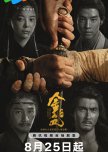
An atmospheric wuxia in the unforgiving desert of China's far northwest
Remnants of Gold revolves around 300,000 taels of gold suddenly appearing in the desert of Northwest China during the early years of the Ming Dynasty, with rumours saying that those seeking it become vengeful ghosts, killing each other. When the Zhang family's escort agency was wiped out overnight, the daughter ventured alone into the desert to seek revenge while an imperial investigator was sent to solve the crime, marking the starting point of a tale of revenge, greed, loyalty, brotherhood, friendship and justice in this far, desolate part of the jianghu.
Gu Long (the novelist) and Xu Bing (the screenwriter and director) set the distinctive tone
This 13-episode drama is an adaptation of Gu Long's novel “Flying Eagle over the Great Land” (大地飞鹰 - Dàdì Fēiyīng.) by Xu Bing, who is also the director. These two aspects are important when it comes to Remnants of Gold, as both the style of the novelist and Xu Bing's strong signature in his dual role, impact the type of wuxia you see on screen.
Let's start with Gu Long. I haven’t read anything from him, but secondary sources in English, such as Wuxia Society, describe his style in its mature period as having a distinctive minimalist prose, with extensive dialogue like a script in a play, complex character psychology and Western literary influences, highlighting aspects of human life, intelligence, poetic philosophy and mysterious plots.
You can trace all the above in Remnants of Gold, where fight scenes are there but scattered and used more as a device to tell us something than as mere inevitable confrontations to showcase martial arts skills: unleashing the plot, revealing characters' positions and agendas, marking the climax both for the characters and the main story arcs.
But even when a fight isn’t narratively important, it still needs to be well filmed visually. Whether it’s a single punch or just one thrust, it has to look real and remain coherent with the atmosphere it’s inserted into. And the fight scenes in the drama were in general lacklustre, with few exceptions. I wasn’t expecting highly choreographed fights such as in Side Story of Fox Volant or Blades of the Guardians, but considering Xu Bing’s previous Eastern Heretic and Western Venom wuxia (2025) or Fearless Blood republican road trip (2023), they felt bland for his standards. As there were two adittional directors working with Xu Bing this time, it must be the case of the uneven result on the screen.
Xu Bing's style is also evident. This is the fourth drama I saw by him as screenwriter and director – the only one who managed to reach this achievement – and loved all of them. They're not for everyone's taste as they're full of personality, but they align with my sensibility.
Since the first episode of Remnants of Gold, a lot of things happen while apparently nothing is happening; the drama might feel slow sometimes but a lot is conveyed under this apparent pace. The story builds in arcs that increase the tension slowly until it explodes, then starts again from a slow pace to repeat the cycle but now with an evolved context and new characters, while the ending always leaves a bittersweet taste.
You could say that his usual big trademarks fit perfectly with Gu Long’s soul — those traits described earlier — , while also bringing his own flavour through subtle touches of dry humour, random characters showing up to distort plans, absurd situations that test your patience, simultaneously contrasting dynamic scenes in a sequence. All characters, even the smaller ones, are well fleshed out too, and all are entertaining and interesting in their own right.
The result is an atmospheric, moody drama which focuses on the characters' inner world and their interactions with each other, where the pursuit of gold is more of a test to reveal the real essence of those searching for it than a classic action-packed wuxia with heroes. If you like this combination, you’re in for a ride.
Production with Xu Bing is always very solid, although this time the other aspect that was underwhelming besides the fight sequences was the cinematography. To clarify, the drama has texture, but the combination of studio settings and real locations (Dunhuang’s Mingsha Mountain, Guazhou, and Aksai) downgrades the final result somehow in my opinion. I wrote about it already in other place, so I won't elaborate further now. I'll just say it wasn't a dealbreaker for me, as I was enthralled by the general mood, and after an initial adjustment, it became secondary to the whole experience.
The Gold and the Desert will test who you really are
Friendship, loyalty, justice, corruption, what's right and what is wrong are the underlying topics, as expected in all wuxias, but in this jianghu there's no hero, or at least the classic ones you could call such. The far desert land with its infinite sand, constant wind, desolate conditions, scorching sun and unbearable heat forgives nobody and pushes everybody to their limits: the decisions they make along the way will show who they've become and who they truly are, whether they like it or not. Some characters have more arc development than others, but they always remain coherent within their logic.
Every character can be defined by their relationship with gold: a tool for freedom and a life of pleasure, a tool to gain and have power, simple greed, those who don't care about it at all for several reasons, those who are bound to it due to loyalty and brotherhood, an excuse to accomplish revenge. But they're also defined by their relationships with others: the most important things are those that sometimes are kept unsaid, while other times are said directly; on other occasions, what is said opposes what is done,, and for others, both words and actions match.
The desert is the omnipresent character that determines everyone's fate, and from whom they can't escape: For some, it's a trap; for others, a choice; in other cases, it's part of who they are and what they value; it can even be freedom for a few.
I had fun with all the characters without exception, including endearing or remarkable smaller ones. Among the main ones, my favourite is the complex and conflicted Yu Hou. It's been a while since I liked a character so much, and it's definitely because of the writing and the excellent performance by Chen Kun, really fleshed out but restrained. And I also ended up liking Yu Ping quite a bit, played by my hit-and-miss Yin Fang - this time on the bright side. As for the secondary ones, I was particularly entertained by the coroner and the bandit Tie Futu – whose actor happened to be the director of Side Story of Fox Volant!.
For me, Remnants of Gold is a very engaging human study disguised as a gold treasure hunt in a far and harsh jianghu, with a very distinctive personality, well written, well executed, well acted. I was thrilled to have a wuxia with his flavour and this mood set in these desolate locations, a breath of fresh air I truly appreciate. Without doubt, it has cemented Xu Bing as one of my favourite cdrama screenwriter-directors for his latest projects.
-------
I´m leaving here for those interested, a paper translation of Gu Long’s own words about how he understood what wuxia should be (coinciding with my own reading of what I saw in this Xu Bing’s audiovisual adaptation). Author: Yan Wang Title: My translation of Prologue of Gu Long’s martial arts novel “End of the World, Bright Moon and The Blade (1974)” — Platform: Academia.edu
-----
This piece is about style and spirit — the traits non mandarin sources associate with Gu Long, and how I see them reflected in Xu Bing's writing and directing, not about how faithfully the drama follows the plot or the changes made from the source novel, which I don't discuss here. "Fits perfectly with Gu Long's soul" is shorthand, and a literary use of language, for those traits described earlier in the paragraph.
Gu Long (the novelist) and Xu Bing (the screenwriter and director) set the distinctive tone
This 13-episode drama is an adaptation of Gu Long's novel “Flying Eagle over the Great Land” (大地飞鹰 - Dàdì Fēiyīng.) by Xu Bing, who is also the director. These two aspects are important when it comes to Remnants of Gold, as both the style of the novelist and Xu Bing's strong signature in his dual role, impact the type of wuxia you see on screen.
Let's start with Gu Long. I haven’t read anything from him, but secondary sources in English, such as Wuxia Society, describe his style in its mature period as having a distinctive minimalist prose, with extensive dialogue like a script in a play, complex character psychology and Western literary influences, highlighting aspects of human life, intelligence, poetic philosophy and mysterious plots.
You can trace all the above in Remnants of Gold, where fight scenes are there but scattered and used more as a device to tell us something than as mere inevitable confrontations to showcase martial arts skills: unleashing the plot, revealing characters' positions and agendas, marking the climax both for the characters and the main story arcs.
But even when a fight isn’t narratively important, it still needs to be well filmed visually. Whether it’s a single punch or just one thrust, it has to look real and remain coherent with the atmosphere it’s inserted into. And the fight scenes in the drama were in general lacklustre, with few exceptions. I wasn’t expecting highly choreographed fights such as in Side Story of Fox Volant or Blades of the Guardians, but considering Xu Bing’s previous Eastern Heretic and Western Venom wuxia (2025) or Fearless Blood republican road trip (2023), they felt bland for his standards. As there were two adittional directors working with Xu Bing this time, it must be the case of the uneven result on the screen.
Xu Bing's style is also evident. This is the fourth drama I saw by him as screenwriter and director – the only one who managed to reach this achievement – and loved all of them. They're not for everyone's taste as they're full of personality, but they align with my sensibility.
Since the first episode of Remnants of Gold, a lot of things happen while apparently nothing is happening; the drama might feel slow sometimes but a lot is conveyed under this apparent pace. The story builds in arcs that increase the tension slowly until it explodes, then starts again from a slow pace to repeat the cycle but now with an evolved context and new characters, while the ending always leaves a bittersweet taste.
You could say that his usual big trademarks fit perfectly with Gu Long’s soul — those traits described earlier — , while also bringing his own flavour through subtle touches of dry humour, random characters showing up to distort plans, absurd situations that test your patience, simultaneously contrasting dynamic scenes in a sequence. All characters, even the smaller ones, are well fleshed out too, and all are entertaining and interesting in their own right.
The result is an atmospheric, moody drama which focuses on the characters' inner world and their interactions with each other, where the pursuit of gold is more of a test to reveal the real essence of those searching for it than a classic action-packed wuxia with heroes. If you like this combination, you’re in for a ride.
Production with Xu Bing is always very solid, although this time the other aspect that was underwhelming besides the fight sequences was the cinematography. To clarify, the drama has texture, but the combination of studio settings and real locations (Dunhuang’s Mingsha Mountain, Guazhou, and Aksai) downgrades the final result somehow in my opinion. I wrote about it already in other place, so I won't elaborate further now. I'll just say it wasn't a dealbreaker for me, as I was enthralled by the general mood, and after an initial adjustment, it became secondary to the whole experience.
The Gold and the Desert will test who you really are
Friendship, loyalty, justice, corruption, what's right and what is wrong are the underlying topics, as expected in all wuxias, but in this jianghu there's no hero, or at least the classic ones you could call such. The far desert land with its infinite sand, constant wind, desolate conditions, scorching sun and unbearable heat forgives nobody and pushes everybody to their limits: the decisions they make along the way will show who they've become and who they truly are, whether they like it or not. Some characters have more arc development than others, but they always remain coherent within their logic.
Every character can be defined by their relationship with gold: a tool for freedom and a life of pleasure, a tool to gain and have power, simple greed, those who don't care about it at all for several reasons, those who are bound to it due to loyalty and brotherhood, an excuse to accomplish revenge. But they're also defined by their relationships with others: the most important things are those that sometimes are kept unsaid, while other times are said directly; on other occasions, what is said opposes what is done,, and for others, both words and actions match.
The desert is the omnipresent character that determines everyone's fate, and from whom they can't escape: For some, it's a trap; for others, a choice; in other cases, it's part of who they are and what they value; it can even be freedom for a few.
I had fun with all the characters without exception, including endearing or remarkable smaller ones. Among the main ones, my favourite is the complex and conflicted Yu Hou. It's been a while since I liked a character so much, and it's definitely because of the writing and the excellent performance by Chen Kun, really fleshed out but restrained. And I also ended up liking Yu Ping quite a bit, played by my hit-and-miss Yin Fang - this time on the bright side. As for the secondary ones, I was particularly entertained by the coroner and the bandit Tie Futu – whose actor happened to be the director of Side Story of Fox Volant!.
For me, Remnants of Gold is a very engaging human study disguised as a gold treasure hunt in a far and harsh jianghu, with a very distinctive personality, well written, well executed, well acted. I was thrilled to have a wuxia with his flavour and this mood set in these desolate locations, a breath of fresh air I truly appreciate. Without doubt, it has cemented Xu Bing as one of my favourite cdrama screenwriter-directors for his latest projects.
-------
I´m leaving here for those interested, a paper translation of Gu Long’s own words about how he understood what wuxia should be (coinciding with my own reading of what I saw in this Xu Bing’s audiovisual adaptation). Author: Yan Wang Title: My translation of Prologue of Gu Long’s martial arts novel “End of the World, Bright Moon and The Blade (1974)” — Platform: Academia.edu
-----
This piece is about style and spirit — the traits non mandarin sources associate with Gu Long, and how I see them reflected in Xu Bing's writing and directing, not about how faithfully the drama follows the plot or the changes made from the source novel, which I don't discuss here. "Fits perfectly with Gu Long's soul" is shorthand, and a literary use of language, for those traits described earlier in the paragraph.
Was this review helpful to you?


