


 2
2 1
1 1
1 1
1


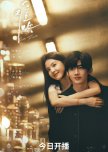
The First Frost made me cry, dream… and rant !!!
To be honest, this is one of the most beautiful Chinese dramas I’ve ever watched. You get completely immersed in the story — it’s touching, with so many emotionally moving moments that really got to me. I binged it all in one go. It’s romantic and full of hope. The male lead is simply outstanding — very promising, with a natural acting style, and what’s especially refreshing is that he doesn’t have that "celebrity ego" that you often see in other Chinese actors. The actress is beautifulNow, about the plot and storytelling: just like Hidden Love, I really enjoyed this drama. You can instantly feel it’s from the same author — with all their strengths and weaknesses. This story has more dark elements, and I love that (since The First Frost is actually part of the same book series as Hidden Love — it’s a prequel). But honestly, it's better not to know that going in, because it can interfere with how you experience The First Frost.
As in Hidden Love, there were also things that emotionally bothered me here. I absolutely love the male lead’s unconditional love, but again, there’s a clear imbalance — the female lead doesn’t show the same level of emotional commitment. Everything the boy did in his life somehow revolved around her… but what has she done for him? Not even a proper “I love you.” Yes, I get it — trauma, emotional wounds… but in that case, the story should’ve leaned more toward a dramatic tone.
I would’ve emphasized this emotional imbalance if the drama had been tonally dramatic. But here, everything remains soft and romantic, and that imbalance is treated like it’s normal — as if it’s supposed to be that way.
Please don’t tell me this coldness is a cultural thing — it gets in the way of true emotional resonance. I wish there had been at least one small gesture, a little sacrifice from her side, or some sharp, heartfelt dialogue. (By the way, the dialogues often felt childish — for example, in episode 27, this was sorely lacking, especially if we’re supposed to treat this as a “literary” work.)
I really liked the second couple. As for the male lead — he’s completely different from his character in Hidden Love. Maybe a slightly “bad boy” persona like the one in Hidden Love would’ve fit better here, given the context. That said, I have nothing against the actor — he’s amazing, very expressive, and makes the character feel soft, sensitive, stylish, and so on. They made a casting that is very very close to Lusi and Chen Zheyuan instead of differentiating
And one more thing — sometimes I couldn’t tell if certain scenes or actions were unnecessary because of how the story was written, or just because they had to stretch it out to 32 episodes.
Ahhh… if only this same story had been told in just 8 episodes — it could’ve been a masterpiece.
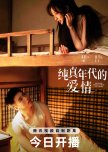
A Thoughtful and Nostalgic Portrait of Love in 1970s China
Here we have a well-crafted series, carefully produced, with a refined aesthetic. The director truly immerses us (and for me, it was my first time—so thank you for that journey) into 1970s China, where we mainly follow four couples, each with different kinds of love and different life goals.The main couple builds their relationship slowly, based on first love. Their relationship is very healthy, mutual, and balanced, with romantic moments. It’s an exemplary relationship built on mutual support, friendship, and encouraging each other’s dreams, with the modesty and innocence of first love.
The second couple comes from past traumatic relationships. With more experience and maturity, they portray a more passionate love. At first, there is a lack of communication, but it gradually evolves into something more open as they learn to express themselves.
The third couple, involving the female lead’s brother, represents a more traditional, domestic kind of love typical of the time—less romantic and less idealized, but still very solid.
The fourth couple shows younger characters who make rational choices. Their relationship works because they understand that their personalities and life paths are compatible.
Character writing:
All of the above shows how extremely well-written the characters are. They feel alive, and we can understand every single one of them—not only the couples, but also the parents and supporting characters.
Casting:
I want to highlight the entire cast, which is very consistent and strong. It truly feels like an ensemble rather than a show built around one standout star, and I appreciate that.
The director gives us many romantic and nostalgic moments, with very positive vibes. It also reminds us that in the past, people may have had less materially, but they communicated more and found happiness in simple things.
Context and pacing:
The series takes its time, which can be both a strength and a weakness. For me, the energy drops after episode 20, and the show loses some of its charm afterward. Otherwise, I would have considered it flawless.
The series also portrays the social realism of 1970s China, with professional constraints, strong social pressure, and limited access to education—yet an even stronger desire to learn and grow.
Fei Ni is the central character: pragmatic, ambitious, and clear-minded. She is quite rare in Chinese dramas, and it’s refreshing to see a character who can sew, work, write, study, and still be kind.
Her love interest is resourceful and positive—thanks to these qualities, there is almost nothing he cannot achieve. The early episodes are also quite humorous.
Another strong point is the absence of clichés. The story is not built just to glorify a star, but offers a genuine and thoughtful narrative.
To sum up:
It has a “When Life Gives You Tangerines” kind of mood in a C-drama version, but more stretched out—which is also its main weakness.
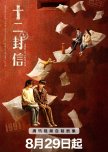
A Cinematic and Deeply Emotional C-Drama
Many viewers have already shared their thoughts about this drama, so I will simply try to add a few reflections of my own.ABOUT THIS DRAMA
This is undoubtedly one of the most emotionally profound and fully realized C-dramas I have ever seen. Its power lies not only in the difficult lives endured by the main characters, but also in the quiet, sincere romanticism that permeates the story. Here, we encounter a form of romance that feels genuine—generous, restrained, and deeply introspective. It does not rely on grand declarations of love, stylized slow-motion glances, or an overwhelming musical score to manufacture emotion. Instead, it trusts the story, the characters, and the silence between them. It is also a story of generous love—love that requires sacrifice, relationships that are neither egocentric nor one-sided, and the quiet art of both giving love and learning how to receive it.
What makes the drama remarkable is that the actors do not merely perform their roles—they inhabit them. Their characters feel lived-in and authentic, the result of writing that is thoughtful and carefully developed. The director clearly knows what emotional landscape he wants to explore, and the actors possess the talent to bring these characters fully to life. The result is a series of performances that feel deeply human. This is not an idol drama; it is something far more grounded and sincere.
This is the second time I have watched it, and both times it stirred the same emotions within me.
PROD
The production is truly impeccable. The atmosphere is distinctive and almost cinematic, enveloped in a gentle nostalgia that evokes the early 1990s—particularly the year 1991—with remarkable sensitivity.
The director and screenwriter deserve special praise; their work reveals a rare clarity of vision and emotional intelligence.
CASTING
Even the supporting characters contribute meaningfully to the narrative. They are warm, engaging, and essential to the overall tapestry of the story, enriching the world around the protagonists.
As for the central couple, their chemistry feels natural and deeply convincing. From the very beginning, we believe in them. We grow attached to them almost immediately, and like the “next generation” portrayed in the story, we find ourselves quietly hoping for their happiness.
FL
Wang Ying Lu, in Twelve Letters, brings to life a character who is strong, intelligent, and resolute, yet capable of moments of vulnerability. Her Ye Hai Tang becomes not only a pillar of strength for the young man, but also for his family. Wang Ying Lu delivers a performance that is both natural and deeply persuasive.
ML
I have saved the most striking performance for last: Zhou Yi Ran as Tang Yi Xun. His portrayal is nothing short of remarkable. There is an extraordinary maturity in his acting—subtle, restrained, and rich with nuance. He convincingly embodies the character first as a high school boy and later as an older version of himself, allowing us to witness the gradual shaping of a life.
Tang Yi Xun is a boy from the margins of society, someone hardened by circumstance yet ultimately transformed through love. Love gives him not only salvation but also purpose. Instead of merely enduring another day in silence, he gains the rare and precious luxury of living for someone beyond himself. Slowly, he begins to believe in the possibility of a future.
Zhou Yi Ran captures every dimension of this journey: the fierce energy of the fight scenes, the quiet devotion, the sensitivity that lies beneath the surface. There are even subtle shades of darkness born from his past, reminiscent in spirit of a Oliver Twist-like figure—restless, wounded, yet deeply alive. Whether he is fighting or overcome with emotion, we feel those moments alongside him.
One can truly admire his magnificent interpretation , especially after the character’s release from prison. In those moments, it becomes clear how skillfully the actor presents two different facets of the same person — a version that appears far more mature than his actual age, yet remains subtle, nuanced, and entirely believable.
The scene with the cake, when he finally begins to eat, is particularly remarkable. It is executed with such emotional precision that it feels worthy of great cinema, the kind of moment that could easily be projected on a large screen.
After witnessing such a performance, I am convinced that he has the talent not only to carry television series, but also to lead ambitious cinematic projects of international quality, even at such a young age.
AND....
If one were to mention a slight weakness, it might be the second couple. Although they remain sympathetic characters, they inevitably appear somewhat pale when compared to the intensity of the main pair. Yet their function is different: they act more as investigators who help propel the narrative forward rather than as the primary emotional center of the story.
The ending, in my view, is both logical and elegantly handled. It does not linger excessively on the characters’ happiness, leaving instead a delicate sense of continuation—as though the magic of the story quietly extends beyond the screen. What remains is a lingering emotional aftertaste, something akin to that distinctive sweet-and-sour flavor that Chinese dramas know so well how to weave into their narratives.
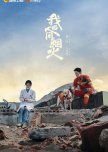
A Romantic Spark Amid a Patriotic Drama
Both lead actors deliver good performances, with a good on-screen chemistry that anchors the series. The show’s atmosphere and thematic focus recall “Crash Landing on You,” emphasizing patriotism and the demanding, vital work of firefighters and paramedics.However, the subplot exploring social class divisions and their conflicts feels overused, highlighting the need for writers to pursue more original narrative avenues. Nevertheless, the series remains highly enjoyable, largely due to the top cast and the seamless pairing of its main characters
The House That Remembers
Starting from the third episode, I grew quite skeptical about this series, largely because of the female lead and her temperament. The story unfolds slowly—very slowly—and so does the heroine herself. Yet toward the end, she undergoes a truly beautiful transformation: she becomes a pleasant, endearing young woman with sparkling eyes, and in many ways even outshines the actor. It seems to me that she is the one who creates the show’s unique atmosphere, and her role turns out to be far more compelling.The actor performs ok, but I do not feel any real chemistry between him and the heroine—he seems to be giving only the bare minimum. And the initial cause of their animosity I never fully understood, nor how they eventually managed to resolve it.
The secondary couple is charming.
But the true “protagonist” of this series remains the house itself. The people who live in it, the memories it preserves, and the emotions it evokes form an entire life of their own—an authentic family home.
The brother’s narrative arc is poorly developed, marked by numerous emotional inconsistencies, and the same can be said of the family dynamics (relations with the father, mother, and so on).
And although the series does not rely on tired clichés and its premise is rather fresh, the director ultimately fails to explore and deepen certain themes, leaving us on a somewhat superficial level.
beautiful serie but : Bold Beginnings, Restrained Endings
A very touching drama. The director did an excellent job — honestly, even better than the novel, of which I read a few chapters in English.Both actors perform beautifully. Their acting is restrained but full of deep, meaningful glances. The topic is heavy. I cried several times — it’s deeply emotional.
The ending is beautifully filmed — incredibly moving. I want to see this actor in another project — he’s extremely promising.
The actress also plays very naturally — this kind of role fits her perfectly. There’s real chemistry between them — not a passionate or physical one, but deep and comforting, which suits this kind of story and theme.
What stands out most is that the series shows how young people process and accept difficult, even tragic situations.
It underlines how adults shouldn't just protect them by hiding the truth, but rather guide them, explain things clearly, and support them emotionally.
It captures that unique phase of adolescence when a child begins to think independently from their parents, and slowly starts becoming an adult.
Regarding the subject matter — the series touches on very sensitive issues: the patriarchal system in some parts of Asia, the suffering of women, and how rumors can destroy a life.
This drama deserves to be classified as serious artistic work.
However, it’s unfortunate that from the middle of the series, censorship and propaganda start to dominate — too obviously. (All the “study, study, and study again,” go abroad but come back, family values, forgiveness, etc.)
I understand the ideology might serve a societal purpose, but it takes away from the artistic depth and the space for reflection and analysis.
In the end, it remains an enjoyable series to watch and dream through — thanks to the happy ending.
Start-Up: A Light Yet Flawed Drama About Ambition and Entrepreneurship
The story revolves around the high-stakes world of tech startups in South Korea, featuring characters who aspire to build their own companies in the competitive landscape of Silicon Valley-like settings. The series focuses on the personal and professional lives of its protagonists. It’s a drama that remains enjoyable to watch, offering a 'American Dream' vibe that aims to motivate young people to succeed in their business ventures. However, the treatment of this theme is often quite light and sometimes childish. Despite the interesting cast, and my liking for all the actors in it, the series suffers from issues with its storyline and character development.The main problem lies in figuring out who the central character of the series is. Is there more than one? Is it Nam Do-san? If it is supposed to be Nam Do-san, he’s quite a passive character who lacks leadership qualities as a startup entrepreneur, and we can’t quite judge his intellectual genius either. Despite this, he remains likable thanks to the actor’s performance.
Seo Dal-Mi (Bae Suzy) is a character within this feminist trend, fighting for her place in the world. However, I find it hard to imagine a CEO with no studies or experience managing such delicate technical and budgetary issues. She comes in and quickly takes Nam Do-san’s spot with just a few ideas—having a couple of ideas doesn't mean she’s ready to lead a future company specializing in AI with significant investments. Nonetheless, she remains likable due to her gentle performance.
Now, Kim Seon-ho’s character, Han Ji-pyeong, is where the writer made a fatal mistake by not emphasizing his role as the sole main character. This could have elevated the series to the level of serious dramas, giving it real depth. While the story is centered around him, and he is the one who drives the plot most of the time, his background is not developed enough. He’s the one who built everything from nothing, and his character is complex with touching relationships, especially with the elderly lady. It’s a shame that this wasn’t explored in depth. He could have been a kind of Gatsby in certain ways. The actor, however, plays the role perfectly.
Despite the interesting subplots and attempts to add depth to the story, the writer didn’t manage to nail the stakes. Nevertheless, it remains an enjoyable and light series to watch.
Bankable stars and romantic scenes can’t save this series from inconsistent characters ?
The director, known for previous successful dramas like "Love Is Sweet " and more..., had set high expectations.Visually, the series is undeniably appealing. The styling, and aesthetics are well done—even “hot” at times. Both leads are attractive and have good on-screen chemistry. Esther’s acting, while often repetitive, suits a broad audience with her naive, childlike, and bubbly charm. However, her range is extremely limited in nuanced, emotional, introspective, or demonstrative scenes. Still, she fits her role visually; she looks beautiful and very young. A lot of effort has clearly gone into the visual aspect of the show.
From EP1 to EP 13
Yet, one of the most striking issues lies in the characterization of the main heroine, which feels completely inconsistent. She refuses to accept her mother’s decisions about her personal life—which is understandable, perhaps—but at the same time remains cold toward the woman who is kind to her, the stepmother. Her father, although shown only in a limited and underdeveloped way (which is disappointing), appears to be caring in the past despite his flaws: he cooks for the children, shares a passion for cars, and spends time with them. He feels more human than the mother, who struggles to accept another boy in her home. The heroine, meanwhile, never takes a moment to talk to her father, understand what’s happening, or reflect on her place in the family.
Up until episode 12, we see a girl who comes to live with her father’s family after years apart and settles in as if this is completely normal and her place is legitimate. She doesn’t seem to consider whether it’s convenient for the family or if she has the right to stay. At just 18, she decides, “I’m staying here…” without consulting anyone. Her only focus appears to be her boyfriend and her teenage romantic impulses.
Her behavior towards the male lead is particularly immature—like a spoiled 9-year-old: “make me tea, cook for me, I don’t like this, bring me that, drive me there,” and so on. She claims to stay “to help him,” but what exactly does she offer? Her actions revolve almost entirely around romance, instead of using the opportunity to connect with her sister, family, or contribute in a mature way. Perhaps her character will develop later, but I personally wanted to see these essential traits early on to understand, empathize with, and support her.
There are also subtle moments that struck me as surprisingly sloppy in writing: for example, a scene where the female lead is drunk with a friend of the male lead, and the male lead comes to pick up the girl, leaving the other girl almost" unconscious" without saying or doing anything. So Everything in the series centers ONLY for the main female lead. It’s an incredibly small, human detail, yet it speaks volumes in the context of a film where every second should help the audience understand a character.
The chronology of events is also confusing. When did her love first begin—at nine years old? The timeline is unclear. Did it happen later, perhaps instantly under the shower, as the show suggests? Similarly, the male lead’s intentions are barely conveyed, with only one line to explain his feelings, yet their interactions suggest something very different. A romance allegedly starting when he was 13 seems implausible, especially given the complex family context. The story asks the viewer to suspend disbelief to accept these developments. From the very first episodes, there are many highly provocative adult scenes, and at the same time, there are brother-sister relationships or depictions of a vulnerable young girl, which is unsettling
Overall, the plot emphasizes romantic drama at the expense of consistent, believable character development. I suspect the series will follow predictable patterns: a few kisses, some tragic obstacles, and time for the heroine to grow—possibly during university—before exploring mature relationships.
By “visual,” I specifically mean styling—wardrobes, looks, cars, the city—rather than directorial choices. The styling is very successful. Lighting, however, often misses the mark; for instance, please avoid that whitish glare on the male lead’s face in close-ups. The racing scenes are well-executed but may feel technically weaker compared to Western standards. For comparison, even the “Fast & Furious” films, despite being commercial, display strong action dynamics cinematography, and big budget
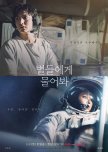
A Well-Directed but making you want to rewrite the script and send it back for reshoots
When the Stars Gossip is an ambitious series that showcases tremendous effort from the production team and a desire for innovation, steering away from clichés to appeal to an international audience. However, despite these efforts, the series ultimately fails on a large scale.Why did it fail?
The series undeniably has many strong aspects and aimed for a grand scope, but it suffers from a major issue: a lack of clarity in its narrative purpose. It’s difficult to pinpoint exactly what When the Stars Gossip is trying to convey.
The story follows a romance between an astronaut and a gynecologist, but it also attempts to explore multiple other themes—without successfully tying them together. From the beginning, the series places itself in competition with top-tier dramas, raising expectations significantly.
Strong Performances but No Chemistry
The cast delivers impressive performances. Lee Min Ho surprises in a role that breaks away from his usual stereotype of the charming, wealthy romantic lead. He likely took on this risky project to challenge himself. Meanwhile, Gong Hyo Jin delivers a professional, natural performance that fits her character perfectly.
However, the couple lacks chemistry. Their relationship feels more like that of a married couple of 30 years rather than a fresh and passionate love story. This absence of spark makes it difficult for viewers to connect emotionally. he cool astronaut trio, which worked well and could have been truly endearing, faded away after episode 8. The Chaebol father, who played his role so well that I even started to 'like' him, had a satirical side that could have been even more striking and humorous.
An Internationally-Oriented Soundtrack
One of the strongest aspects of the series is its soundtrack. Featuring a strategic selection ranging from Hallyu pop-rock to hip-hop and classical music, the OST is clearly designed to appeal to a global audience.
A Well-Directed but Poorly Written Series
The director does an excellent job, and the production quality is commendable. Unfortunately, the real issue lies in the script.
The writer attempted to create an innovative story blending:
Science fiction, but not executed convincingly.
Themes of procreation and demographic challenges, relevant to aging populations in developed countries. This idea had great potential but ultimately falls apart due to logical inconsistencies.
Satirical comedy, which could have been a bold and effective choice—if fully committed to. However, the series oscillates between realism, comedy of absurdity, and serious drama without successfully uniting these tones.
As a result, the characters suffer from weak development. None are particularly engaging, and their actions often contradict their initial personalities. The love story escalates too quickly to be believable, and while the series raises profound philosophical and ethical questions, it fails to explore them meaningfully.
That said, episodes 7 and 8 stand out as particularly well-executed and engaging, proving that the series had the potential to succeed
A Misdirected and Misunderstood Project
Even the series’ promotional campaign was misleading. The teaser failed to accurately represent its tone, which may have contributed to the audience's confusion.
So...
Despite its flawed script and inconsistent narrative, This serie is still worth watching for its talented actors (10/10), the director’s efforts (9/10) , and the high production values. It raises thought-provoking questions about life, death, and the ethical limits of science. And making you want to rewrite the script and send it back for reshoots :)))
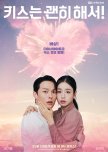
The Rom-Com Even Skeptics Watch Till the End
it is a clear 2025 romcom "coup de cœur" for , first and foremost because of its leading actors! Chan Ki-Yong delivers an outstanding performance, showcasing an impressive emotional range. In the rom-com genre, he proves to be remarkably convincing. His character’s evolution — from a narcissistic macho figure to a charming and deeply charismatic man — is perfectly executed and thoroughly satisfying.Alongside him, Ahn Eun-Jin offers a very solid and nuanced performance. Gentle, natural, and remarkably precise, she inhabits her role with consistency and authenticity from beginning to end.
The second major strength lies in the explosive chemistry of the central couple. Their relationship begins with a passionate, lightning-strike attraction and gradually transforms into a deep love rooted in understanding and honesty. The true success of the series is that this couple is genuinely lovable — you care about them, you root for them.
The supporting cast adds further charm: Woo Da-Bi Kim is a delightful surprise, both in character and performance, delivering a warm and endearing portrayal. Moo Joon appears particularly promising and seems to open up as an actor through this project. The mothers’ characters also stand out for breaking conventional stereotypes.
The director’s work is dynamic and modern, infused with retro inspiration. The series relies on well-established formulas of the Korean industry while offering numerous nods to the respective filmographies of both the protagonists and the director. The screenwriter handles the main narrative line effectively: the relationship feels authentic, and the male character remains well written and credible until the very end. The story also touches on relevant social issues — job insecurity for young people, the challenge of balancing motherhood and work, ecology, and declining birth rates — all key sociological topics in contemporary South Korea.
That said, the series tries to tackle too many themes at once. Toward the end, narrative gaps become apparent, particularly in the development of secondary characters. Kim Moo Joon’s storyline could have been handled far better; the character feels underdeveloped, though a spin-off could potentially explore this further.
The 12-episode format ensures a fast pace and constant plot twists — sometimes too many. This is especially noticeable in the final two episodes, where many familiar clichés are checked off. Still, strong directing and excellent casting manage to keep the ship afloat with flair.
The soundtrack is another highlight, blending rock, 70s and 90s pop, and ballads. The track Face To Face stands out as particularly effective, alongside a touching and memorable ballad.
Overall, the series leaves the impression of a well-crafted, high-quality piece of entertainment — one of the best romantic comedies of 2025, with both its strengths and its flaws.
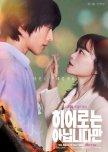
What The Atypical Family Reveals About Us: A Heartfelt Analysis
The Atypical Family tells, with extraordinary delicacy, the story of immobility — the lives of two families quietly diverted from their natural trajectory. It is a remarkably accomplished drama, built upon solid narrative foundations, subtle writing, and profoundly human characters.The series revisits the figure of the superhero with intelligence and restraint. Here, no one saves the world; instead, the extraordinary is anchored in the everyday, embodied by ordinary people whose powers are nothing more than exaggerated versions of the flaws and sensitivities we all carry within us. For the Bok family, these abilities are not gifts but burdens. They are exhausted by contemporary ailments: screen addiction, alcoholism, eating disorders, emotional withdrawal. Through this supernatural prism, the show mirrors our own intimate fractures — the invisible wounds of ordinary human beings.
The Bok family, despite having everything to be happy, remains trapped in a past that keeps them from truly living. They no longer speak to one another, no longer share meals, no longer share a life. Their bonds have dissolved into silence. Meanwhile, another group — not a real family but a collection of strangers bound by questionable activities — displays stronger familial ties than those who share blood.
Unable to inhabit the present, the Bok family drifts forward like shadows of their former selves. Each has buried themselves alive in their own way. And the drama excels at portraying this slow sinking with astonishing finesse, never resorting to heaviness or pathos.
Then comes Do Da-hae (and her family), whose arrival changes everything. She shakes the family awake, gathers them, listens to them, and becomes the catalyst for their unexpected rebirth.
The casting is outstanding.
Jang Ki-yong delivers one of his finest performances to date, revealing a nuanced emotional palette, full of gentleness and restraint. Chun Woo-hee is superbly precise in her role. The teenage trio — Park So-yi, Moon Woo-jin, and Kim Soo-in — already known from other promising projects, is nothing short of remarkable, performing with disarming maturity.
The series weaves slow-burn humor, family drama, introspection, and fantasy with graceful mastery. It delicately explores the weight of the past, the struggle to reconcile with oneself, and the possibility of finally living. Each character — and each family — embarks on a deeply moving redemption arc. Both families end up helping each other heal, step by step.
The OST is breathtaking, and the piano motifs that are tender, precise, and perfectly placed.
The only real weakness of the series lies in its ending, which leaves a few questions unanswered. I would have loved a Season 2 with a lighter tone, exploring the collaboration between the two families now beautifully redefined. Even if the final moments feel slightly rushed, even if the narrative loop is not fully closed, none of this diminishes the emotional richness of the series.
The Atypical Family is nourishing, heartfelt, and deeply human — a story whose true power lies not in its conclusion, but in the journey it offers.
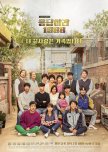
Nostalgia, Warmth, and Perfection: A Must-Watch Drama
What can I say? At the moment, this is the best drama I've watched among K-dramas (along with *Twinkling Watermelon*). I've seen quite a few, and while I like many of them, I almost always find flaws.The nostalgic atmosphere is incredible. Even if it's not our culture, we can either discover it or relive our own era and childhood (I find many similarities with the culture of that time). The drama is full of positive moments and human values that modern society is gradually losing.
Deok-seon is an incredibly endearing character, and her actress, Lee Hye-ri, perfectly portrays her growth—from a slightly naive and immature girl who always cares for others to a responsible and charming young woman.
Bo Gum is perfect in this role, and his transformation from a gifted teenager into a man who knows exactly what he wants and goes for it without hesitation is impressive.
This drama has no villains—only kind-hearted people! The entire cast is amazing, and each character’s story is touching and beautiful. Despite its slow pacing, The entire cast plays wonderfully, transporting you into their neighborhood. the characters are well-developed, and the cinematography is simply stunning.
Overall, if I have two perfect dramas, this is one of them.
Warning: there are a lot of food scenes—some might find it a bit too much! 😆
And of course, Park Bo Gum in this role is simply flawless.
If you enjoy nostalgic, warm, and slow-paced dramas, this is exactly what you need!
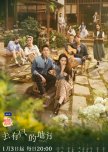
slice-of-life drama: Like novels such as Before the Coffee Gets Cold
slice-of-life drama: Like novels such as Before the Coffee Gets Cold and The Miracles of the Namiya General Store...I’m really enjoying watching this series little by little in the evenings — it’s perfect to breathe, relax, and fall asleep to. A true slice-of-life drama, almost literary in the way its dialogues and ideas unfold.
Here, there isn’t really one central character, but rather a whole atmosphere that feels incredibly cohesive and human. There’s no huge dramatic goal driving the story. The beginning (ep1) was actually quite hard for me because I usually don’t enjoy this kind of subject matter, but as the series progresses, it feels like we go through therapy alongside the characters, slowly changing our thoughts and moving away from sadness little by little.
The male lead feels very natural and not idealized at all — which is rare for male characters in dramas, since they’re often written like perfect princes. The relationships also feel realistic and grounded.
This is exactly the kind of drama China knows how to do so well — one of its real specialties and unique strengths, alongside wuxia and xianxia.
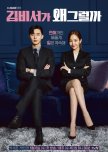
A hugely popular series
A hugely popular series, loved by many for the couple’s chemistry and the funny moments. I Think this is a Korean adaptation of the movie "Two Weeks Notice" with Sandra Bullock and Hugh Grant. The couple in this series is quite amusing, and the chemistry between them is perfect—which is the main ingredient for this genre. But towards the end, as it seemed to me, everything started to slide into kitsch: too much marshmallow and chocolate cream on bread—it just felt over the top.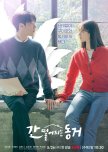
My Inner Student and the Perfect Gumiho
I watched this series with great pleasure. The actors are excellent, and the chemistry of the main couple works beautifully.Jang Ki-yong appears strikingly different from his previous roles. Here, he is gentle and tender, almost ethereal. He transforms himself with each project — even his manner of walking and his facial expressions change. His performance is subtle and refined. Romance is strongly present and brings a warm glow to the story. The couple truly works, which is essential for this kind of series.
Lee Hyeri is bright and full of energy, faithful to what she does best. She plays naturally, without visible transformation, an endearing character with whom many can identify: honest, friendly, sometimes a little clumsy, yet carrying the fresh innocence of a carefree student — neither exceptionally brilliant nor lacking. The idea of the series seems to be that the “student within us” can still dream of a perfect gumiho.
Jang Ki-yong’s character almost embodies perfection, perhaps too much — but as he is a mythical being, this excess is forgivable. He rarely shows anger, which only emphasizes a very human trait he has yet to acquire — something he still needs to learn.
The secondary characters are also charming, and their storylines are engaging. I found the interactions between Jang Ki-yong and Kang Han-na particularly captivating. Their more mature, less “student-like” dynamic created an oddly unsettling contrast when placed next to Lee Hyeri’s character, and there was a hint of flirtation that made me feel slightly uncomfortable.
This is a positive and light-hearted series, one that does not aim to explore profound themes, yet perfectly fulfills its role as pleasant entertainment, free of pretension and poor taste


