

 3
3 2
2


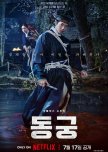
A Ghost Story About the Living
In my opinion, The East Palace succeeds not because it reinvents the historical fantasy genre, but because it combines several familiar elements- palace intrigue, ghost lore, horror, and tragedy- into an unusually atmospheric package. The series follows Gu-Cheon, a ghost-slayer, and Saeng-gang, a court lady who can communicate with spirits, as they investigate supernatural events connected to the Crown Prince's East Palace.The show's greatest strength is its mood. Unlike many fantasy sageuks that eventually become political dramas with supernatural decorations, The East Palace keeps the supernatural element at the center of the story. The palace feels haunted in a genuine sense, not merely by ghosts, but by the sins, secrets, and unresolved guilt of the royal family. The combination of dark Joseon-era settings, spectral imagery, and folklore-inspired mythology creates a distinct identity. I have seen several reviews noting that the mystery and horror atmosphere remained engaging throughout the series, and this is very true. The spirit realm and the constant sense of unseen danger give the drama a tone that feels closer to gothic horror than a traditional palace romance. I caught myself thinking: does this drama really need romance? I mean, it doesn't kill the mood, so to speak, but I think it would have worked perfectly well without it.
I must say, Nam Joo-hyuk had the difficult task of carrying a character who could easily have become a generic fantasy hero. Instead, Gu-Cheon works because he's reluctant, flawed, and often feels outmatched by forces larger than himself. His performance isn't necessarily his most emotionally devastating role, but it is one of his most controlled. He sells the weariness of a man constantly moving between the worlds of the living and the dead. His action scenes and supernatural confrontations also have enough physicality to make the fantasy elements believable. He was good, and even quite brilliant in some scenes. I commend him.
Nam Joo-hyuk was good, but Roh Yoon-Seo was a wow for me; she often stole the climactic scenes. This is to say that if Gu-Cheon was the engine of the plot, Saeng-gang was the heart of the story. The writers could have written her as a passive gifted character who exists to support the hero. Instead, they gave us Saeng-gang, who can hear and communicate with spirits, giving her a unique emotional connection to the suffering surrounding the palace. Many of the drama's strongest moments come through her reactions rather than the larger action sequences. She grounds the supernatural story in human pain, grief, and empathy. For me, she's ultimately the most memorable character in the series.
The palace politics were better than expected. This was one of the pleasant surprises: the political intrigue doesn't overwhelm the horror story. The palace conspiracies matter because they are directly connected to the curse and hauntings. Instead of feeling like two separate dramas stitched together, the political and supernatural threads reinforce each other. I liked the subtle message the drama tries to send: ghosts are often manifestations of human corruption. The true horror isn't the spirits themselves; it's the people who created the conditions for those spirits to exist.
Where The East Palace falls short, or maybe I should say its biggest weakness, is that the plot occasionally becomes too complicated for its own good. I think the writers sometimes confuse complexity with depth. At times, the mythology expands faster than the emotional stakes, and a few reveals don't land as powerfully as intended because I'm too busy trying to keep track of the mechanics. The show is also less original than it appears at first glance. The haunted-palace mystery, cursed bloodline, spirit realm, and hidden royal secrets are all familiar genre elements. What elevates the series is execution, not innovation.
I will own up to this and say it outright: it might not be fair, but truth be told, when I first saw the trailer for The East Palace, the drama Kingdom came to mind, and it is one of my favorites, if not the favorite zombie K-drama; if not the all-time favorite zombie drama in any language to date; I could not help but compare it. Kingdom feels tighter, more ambitious, and more politically sophisticated. Its social commentary and relentless pacing make it one of the strongest Korean genre dramas ever produced. Yes, The East Palace is smaller in scope and more character-focused. It aims for atmosphere, folklore, and emotional mystery rather than large-scale political catastrophe. So, while I don't think it reaches Kingdom's level, I also don't think it was trying to do that. But I couldn’t help but compare them.
Without getting into heavy spoilers, the ending resolves the central conflict while leaving enough room for future stories. So, I wouldn't be surprised if there were a second season, if it hasn't been announced already. Personally, I'd be interested in a second season if it continues developing the mythology and the relationship between the leads rather than simply introducing another palace curse. The foundation is there; the question is whether there's enough narrative fuel left for another meaningful story.
I write all of this to say that even though The East Palace isn't the next Kingdom, it is one of the more memorable fantasy-horror sageuks in recent years. Its haunting atmosphere, strong lead performances, and emotionally resonant supernatural mystery make it easy to recommend. I think the best part is that I came away thinking that Roh Yoon-Seo may have ended up being the show's biggest revelation. I liked it a lot!
Was this review helpful to you?
This review may contain spoilers
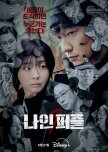
This One's a Must-Watch!
Okay, K-drama fam, what are you even doing if you haven't started Nine Puzzles yet?! I was hooked from the opening action. I realized I desperately needed it only when I started watching this drama. It’s been rough these past few years in the K-drama world. Nine Puzzles immediately draws you in with its dark and compelling central mystery. We meet Yoon Ena (Kim Da-mi), who, as a high school student, finds her uncle murdered next to a peculiar puzzle piece. The kicker? She has no memory of how she got to the crime scene, making her the prime suspect in the eyes of the lead investigator, Detective Kim Hansaem (Son Suk-ku). The case goes cold, but the shadow of suspicion never leaves Ena.Fast forward ten years, and Ena has become an exceptionally talented criminal profiler for the Seoul Metropolitan Police Agency. Just when she thought she might escape her past, a new string of murders begins, each victim found with a similar, eerie puzzle piece. These new crimes are undeniably linked to her uncle's cold case, forcing Ena to confront her buried memories and team up with the very detective who once suspected her. Fueled by past trauma and present urgency, their tension is palpable and makes for incredible viewing.
I absolutely loved how the drama weaves a complex web, promising a deep dive into psychological thrills. It's not just about finding the killer; it's about uncovering a decade-old truth, understanding trauma, and navigating the blurred lines of trust and suspicion. The casting of Kim Da-mi and Son Suk-ku is nothing short of brilliant. Their dynamic is the absolute heart of this show. The last time I saw Kim Da-mi in a drama was in Our Beloved Summer, but she first made a profound impact as Yi Seo in Itaewon Class; she was top-notch. And it is the same here. She is simply captivating as Yoon Ena, and I am not surprised that she is; she is a seriously gifted actor. She brings her signature intensity and raw vulnerability to the role. Ena isn't your typical profiler; she's burdened by her past, emotionally guarded, yet incredibly sharp and almost unnervingly direct. Da-mi perfectly portrays Ena's internal conflict – the trauma of her forgotten past battling with her present brilliance. There are moments where her quirky, almost detached demeanor belies a deep well of pain and determination. Her expressions, especially in her eyes, convey so much about a character who has lived under a cloud of suspicion for so long. She’s the kind of complex female lead I crave in crime thrillers, and Da-mi delivers her with an impressive nuance that makes you both root for her and question her at the same time.
And then there's Son Suk-ku as Detective Kim Hansaem. Oh, my goodness, he's just phenomenal! Hansaem is a meticulous, driven detective who has never let go of Ena's uncle's murder—his first unsolved case. I have to admit he is the reason I watched this drama. He's pragmatic, cynical, and initially views Ena with a heavy dose of skepticism, if not outright suspicion. Suk-ku embodies Hansaem's weariness and dogged determination with such precision. His ability to convey so much with minimal dialogue, using subtle shifts in his gaze or posture, and even his hat, is truly remarkable. The push-and-pull dynamic between Hansaem and Ena is electric; it's not a romantic tension, but a fascinating blend of professional respect, lingering suspicion, and a shared, desperate need for the truth. Their scenes together are a masterclass in subtle chemistry.
While the focus is rightly on the leads, the supporting cast also adds significant weight. Actors like Kim Sung-kyun and Hyun Bong-sik add their considerable talents to the ensemble, adding even more complex character interactions as the mystery deepens. The cameos, oh, my God, star-studded showcasing Hwang Jung Min, Lee Sung Min, Ji Jin-hee, Lee Hee Joon, Ok Ja Yeon, and Park Woong—were also fantastic, adding star power and intrigue.
So, if you are still asking yourself why you should watch Nine Puzzles, I will tell you. The core puzzle concept is brilliantly executed. The clues are unsettling, and the connection between the past and present cases is genuinely chilling. Exceptional leads in Kim Da-mi and Son Suk-ku are a dream team. Their performances alone are enough to make this drama a must-watch. It delves into the trauma of its characters and the complexities of human memory and perception, elevating it beyond a simple crime procedural. Yoon Jong-bin directs the icing; the cinematography, pacing, and overall atmosphere are top-notch, ensuring a gripping viewing experience.
This drama did not disappoint, not one bit. It delivered in every way possible. It is one of the strongest K-drama thrillers of 2025. It's dark, intelligent, and perfectly cast. If you love a drama that makes you think, keeps you guessing, and features incredible acting, do yourself a favor and start binge-watching Nine Puzzles immediately.
Was this review helpful to you?
This review may contain spoilers
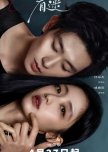
Come for the Revenge, Stay for the Chemistry
What makes Fascination stand out as a short web drama is not necessarily the originality of its plot. Hidden identities, revenge schemes, wealthy family conflicts, and emotionally scarred protagonists are all familiar elements in Chinese dramas. The difference lies in the execution. This drama understands that its greatest asset is the chemistry between its leads and builds nearly every scene around the tension between them. The result is a series that feels addictive, emotionally charged, and surprisingly polished for a short-form production.The premise begins with Lin Moqing, played by Jesse Ren, approaching Lan Hewei, played by Qi Yan Di, under false pretenses. His initial objective is purely strategic. He intends to use and manipulate her as part of a larger plan involving his powerful family and unresolved conflicts from his past. However, Lan Hewei proves far more intelligent, resilient, and unpredictable than he anticipated. What begins as a calculated game gradually develops into something deeper and far more emotionally dangerous.
The story unfolds in several distinct phases.
The first phase is manipulation. At the outset, Lin Moqing appears to have complete control. He is the strategist, and every move seems carefully planned. The story does an excellent job of convincing viewers that Lan Hewei is merely another piece in his revenge puzzle. However, she quickly demonstrates that she is nobody's pawn. This is where the drama truly shines. Rather than presenting a helpless heroine and an all-powerful hero, the writers create a compelling battle of wills between two intelligent, capable people. The second phase is the power shift. As secrets emerge, the balance between the two leads begins to change. Lan Hewei starts uncovering inconsistencies in Lin Moqing's story, while Lin Moqing begins developing genuine feelings for her. This creates significant internal conflict for him and elevates the emotional tension beyond the revenge narrative itself. Before long, the romance becomes more compelling than the plot that initially brought them together. The third phase brings the larger family conflicts to the forefront. Hidden agendas, betrayals, family loyalty, inheritance, power, and revenge all begin to collide. While some revelations may be predictable for seasoned genre viewers, the drama keeps enough intrigue and momentum to hold the audience's attention. The fourth and final phase focuses on resolving the emotional tensions that have been building throughout the series. This portion delivers many satisfying romantic moments, but the pacing also weakens slightly. Important developments happen quickly, and some relationships could have benefited from more screen time and exploration.
The drama features interesting characters, but Lin Moqing stands out as one of the more compelling male leads in recent mini-dramas. What makes him so interesting is the contradiction at the heart of his character. He is highly calculating, emotionally damaged, intelligent, and yet deeply vulnerable beneath the surface. He begins the story driven almost entirely by purpose and revenge, but the narrative gradually reveals his emotional weaknesses and insecurities. What I appreciated most is that his transformation feels earned. He does not suddenly become softer overnight. Instead, each moment of vulnerability unfolds naturally, making his character growth believable and impactful. That said, at times Lin Moqing feels almost too competent. Because he spends much of the series controlling every situation, some dramatic moments lose some suspense, as viewers come to expect another hidden plan. Fortunately, his emotional development more than compensates for this weakness.
Lan Hewei, on the other hand, is arguably the drama's best-written character. And you notice this immediately. She embodies many of the qualities audiences increasingly appreciate in modern female leads: intelligence, independence, emotional strength, perceptiveness, and the ability to challenge anyone who attempts to manipulate her. What I particularly admired is that she doesn't simply react to the hero's actions. She actively drives the story forward. When she suspects deception, she investigates. When challenged, she fights back. When emotionally hurt, she refuses to lose her agency. As a result, the relationship feels balanced, making the leads' interactions far more engaging.
The romance and chemistry between Lin Moqing and Lan Hewei are unquestionably the drama's greatest strengths. Their relationship drives the entire series. It contains everything fans of the genre could hope for: attraction mixed with distrust, emotional push and pull, power struggles, slow revelations of feeling, and intense romantic tension. What elevates the romance beyond the script is the actors' performances. Many scenes work not because of the dialogue, but because of their expressions, body language, and timing. Their chemistry is undeniable. Often, the audience can sense what the characters are feeling long before they are willing to admit it themselves.
Jesse Ren does an excellent job balancing Lin Moqing's cold, calculating exterior with his growing emotional vulnerability. He has a natural screen presence and brings strong intensity to confrontation scenes. His performance is particularly convincing as Lin Moqing's carefully controlled facade begins to crack. As for Qi Yan Di, she arguably delivers the drama's standout performance. Her portrayal avoids many of the clichés often associated with female leads. She brings confidence, intelligence, emotional depth, and vulnerability to Lan Hewei without ever making her appear weak. The emotional scenes are especially effective because her reactions feel genuine, not exaggerated. This was my first time watching her, and by the end of the drama, I had become an instant fan.
While Fascination is undeniably driven by the relationship between Lin Moqing and Lan Hewei, the supporting cast plays a vital role in sustaining the tension and expanding the story's emotional landscape. Unfortunately, they are also some of the biggest victims of the drama's short runtime.
Zhu Wen Jie, played by Tiffany Gao, serves as one of the drama's most emotionally complex supporting characters. Rather than existing solely to move the plot forward, she reminds us how ambition, loyalty, and personal desire often collide in the world of Fascination. Tiffany Gao gives the character a quiet intensity that makes her scenes memorable, even with limited screen time. She conveys both strength and vulnerability, allowing me, as the viewer, to understand the internal conflicts driving the character. What makes Zhu Wen Jie particularly interesting is that she rarely feels entirely right or entirely wrong. Instead, she exists in the moral gray area that much of the drama occupies. I wish the series had spent more time exploring her motivations, because at times she seemed capable of carrying an entire subplot on her own. Her presence adds another layer to the story's themes of loyalty, sacrifice, and self-preservation.
One of the most fascinating and disturbing characters in Fascination is Lin Moqing's brother. He is far more than a rival or antagonist. He is a profoundly traumatized and psychologically fractured individual whose obsession with violence, blood, and control makes him one of the most unsettling figures in the drama. While many villains pursue power or revenge, his motivations often feel rooted in something much deeper and more troubling than greed and revenge. The series gradually suggests that his instability is tied to years of emotional damage stemming from his upbringing and family relationships. What makes the character so compelling is that he serves as a dark mirror to Lin Moqing. Raised within the same environment, the two brothers represent opposite responses to trauma. Where Lin Moqing eventually learns trust, vulnerability, and emotional connection, his brother descends further into obsession and self-destruction. The result is a character who is both frightening and tragic, not because he is evil, but because he appears incapable of escaping the damage that has shaped him.
From a performance standpoint, Liu Yan Qiao delivers a restrained and effective portrayal. Rather than relying on dramatic outbursts, he brings subtlety to the role, allowing much of the character's emotional conflict to emerge through expressions, reactions, and interactions with other family members. His strongest scenes often involve Lin Moqing, where the complexity of their relationship becomes most apparent. While the drama's limited runtime prevents the character from receiving the depth he arguably deserves, Lin Mo Jiao remains one of the more memorable supporting figures. His presence strengthens the family storyline and adds emotional weight to many of the decisions and conflicts that shape the narrative.
Lu Xing, played by Wu Sheng Qi, is perhaps one of the drama's more underrated characters. While many male characters are driven by power, revenge, or control, Lu Xing stands apart because he's willing to follow rather than lead. His relationship with Zhu Wen Jie creates an interesting reversal of traditional gender dynamics often seen in Chinese romance dramas. Rather than dominating the relationship, he appears comfortable being guided by her, and that devotion makes him unexpectedly endearing. In a story filled with emotionally guarded characters, Lu Xing's sincerity provides a welcome contrast. Wu Sheng Qi brings a calm, dependable presence to the screen through Lu Xing.
In a sense, the supporting characters in Fascination represent both one of the drama's strengths and one of its biggest missed opportunities. The actors bring enough depth and charisma to make viewers care about their stories, yet the compressed format keeps many of them from reaching their full potential. Had the drama been a traditional 30-to-40-episode production rather than a mini-series, characters like Zhu Wen Jie, Lin Mo Jiao, and Lu Xing could have received richer development and more meaningful arcs. Even so, the performances are strong enough to leave an impression, and each character contributes something valuable to the overall narrative.
Another factor that helps Fascination stand out is its cinematography and production quality. For a mini-drama, it is surprisingly polished. The series excels at stylish close-ups, visual composition, romantic tension, and the luxurious aesthetic associated with its wealthy characters. The camera work is particularly impressive. It frequently focuses on facial expressions and eye contact, which works perfectly for a character-driven story. The production team clearly understood that the chemistry between the leads was the show's biggest selling point and framed scenes accordingly.
The pacing is generally one of the drama's strengths; however, it comes at a cost. Supporting characters such as Zhu Wen Jie, Lin Mo Jiao, and Lu Xing are interesting enough to warrant deeper exploration, yet the short runtime leaves many of their arcs feeling abbreviated. This is particularly noticeable in the latter half of the drama, where emotional and narrative developments sometimes arrive faster than they can be fully explored. Overall, though, Fascination succeeds because it understands exactly what viewers want from a romance-suspense mini-drama. It delivers strong chemistry, an intelligent female lead, an emotionally layered male lead, family intrigue, revenge, romantic tension, and fast-paced storytelling.
While the plot isn't groundbreaking and the ending feels somewhat rushed, the lead performances and relationship dynamics elevate the material considerably. If you enjoyed dramas such as Maid's Revenge, Circle of Love, or other high-tension Chinese revenge romances where strong-willed leads continually challenge one another, Fascination is absolutely worth watching. Its greatest achievement is making viewers care less about the revenge plot and more about whether two complicated people can learn to trust each other despite their deception.
Was this review helpful to you?
This review may contain spoilers
Unique, Stylish, Bold, and Thought-Provoking
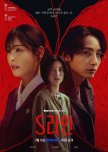
I decided to watch this because I am an avid fan of Lee Soo-hyuk. He has a knack for choosing very eccentric dramas, and I find that very intriguing about him. The central concept of S Line is a surreal and terrifying phenomenon: the sudden appearance of glowing red lines, or S-Lines, above people's heads. These lines are not just any visual gimmick; they represent a public record of an individual's past sexual relationships, connecting them to every person they've been intimate with, chaotic to say the least. The story unfolds as a mysterious murder mystery, triggered by the chaos that erupts when these private connections are suddenly made public. The show follows three main characters whose lives become intertwined with the S-Line phenomenon.The three main characters, or should I say driving force, in this drama are Detective Han Ji-wook (Lee Soo-hyuk), assigned to a bizarre death case tied to the S-Lines. He initially dismisses the phenomenon as an urban legend. Still, after acquiring a special pair of glasses that allows him to see the lines, he is shocked to discover a tangled web of connections above his own head. This discovery forces him to confront his past and dive deep into the mystery. Shin Hyun-heup (Arin), a high school student, is the only person who has been able to see the S-Lines since birth. She has lived a reclusive life, burdened by this curse-like ability and the tragic family secret it exposed. She becomes a key figure in the investigation, as her unique perspective is crucial to understanding the phenomenon. Lee Gyu-jin (Lee Da-hee) is a mysterious high school teacher who appears calm and collected on the surface but harbors dark secrets. She is a central antagonist, revealed to be behind many disturbing events and using her own ability to see the S-Lines to manipulate others and orchestrate a twisted plan.
As the series progresses, the plot delves into a murder investigation, a shocking family tragedy, and a commentary on how society would react if all intimate secrets were laid bare. The finale culminates in a climactic confrontation where the S-Lines, once only visible to a select few, become visible to everyone, plunging the world into a state of chaos and forcing humanity to grapple with radical honesty. The ending is both haunting and thought-provoking, leaving a wide-open ending for a potential second season.
Taking a deep dive into the characters, I have to say that as complex as S Line is as a story, as fascinating is the cast of S Line for their praiseworthy performances, particularly in how they each handle their roles within the bigger scheme of the drama's dark and multifaceted themes.
Lee Soo-hyuk as Han Ji-wook brings his signature charismatic and icy elegance to the role of a detective grappling with a personal and professional crisis. His portrayal of a man whose own secrets are exposed is layered and compelling.
Arin, as Shin Hyun-heup, is the surprise for me in her dramatic transformation from her bubbly idol image as a member of the K-pop group Oh My Girl. She delivers a nuanced and emotional performance as a young adult burdened by a profound psychological trauma. Her character is the emotional anchor of the story, representing the vulnerability of those who cannot hide their past.
Lee Da-hee as Lee Gyu-jin is the outlier for me in that I didn't recognize Lee Gyu-jin as Lee Da-hee until the last episode. She was quite enchanting in her portrayal of the mysterious and manipulative high school teacher. Her performance is chilling and captivating, as she embodies a character who believes she is cleansing the world by exposing secrets.
I am not at all surprised that S Line received a mixed but generally positive reception or that reviewers and viewers alike admired the show for its innovative and daring premises and ability to use a fantastical concept as a potent metaphor for real-world issues, such as online surveillance, cancel culture, and the double standards of sexual shame. I also think it's fast-paced, and a six-episode format is one of its biggest strengths as it prevents the story from dragging and keeps me engaged and on the edge of my seat. The cinematography is also admirable for its use of dark, eerie visuals that complement the psychological thriller genre. I am not surprised at all that it won the Best Music award at the Cannes International Series Festival, highlighting its strong production value.
This drama is not for everyone, and I may be among the very few who gave it a 10-star rating, but that is okay. Not everything is for everybody. I enjoyed it for its uniqueness, style, boldness, and thought-provoking nature, particularly in how it challenges conventional K-drama storytelling. It is a must-watch for fans of psychological thrillers, and if you are looking for something outside the norm.
Was this review helpful to you?
This review may contain spoilers
The Police are the public and the Public are the police
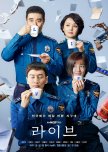
I've meant to write a review of this series for a while, but never got the chance until now. Like every Korean drama I randomly come across on Netflix and decide to watch, I'm never sure what to expect, and so much more for this one, since I wasn't familiar with many of the cast when I watched this back in 2019. The premise, however, intrigued me with a drama that tells the story of police officers, from the lowest field cadets and patrol officers, to their superiors, including corporals, captains, and more, as they form the 'Live' team at the Hongil patrol division. Each officer's personal experiences even more compound the story, as they all work individually and collectively at one of the busiest, most stressful jobs in the world to earn a living. And I think what I liked most about Live is that it focused on the impact that humane, community policing can have on police officers and the community they serve. I recently read a quote that reminded me of how I felt when I first watched this drama. “Police officers are professionally trained people who work to de-escalate and are certainly trained to a level of high tolerance... On the other side, they are also human beings, who have their own feelings, thoughts, and families.”I appreciated Live in more ways than one, for realistically depicting the image of policing in Korea, and the fact that cultural norms affect policing, including the reality that some police officers still demonstrate authoritarian, violent, corrupt, and non-democratic behaviors. However, many great police officers work hard for the safety of the people and the eradication of crime. I liked that it tried to bring awareness by tackling many issues, many of which were difficult to watch, and in some cases taboo to address, from domestic abuse to bullying to serial raping, prostitution, child abuse, neglect, and police corruption. It also addressed the psychological effects of police work, everything from motivations, anxieties, psychological defenses, and resultant behavior on police officers, and how different the effects are on male police officers vs females. How do those effects affect their interactions with the citizens they work hard to protect?
I enjoyed almost all the characters and actors in this drama, everyone from Lee Kwang-soo as Yeom Sang-soo, a hard-working rookie policeman who takes the job to make a stable living and realizes it was more than he bargained for, but decides to give it his all both professionally and personally diligently. To Bae Seong-woo as the erratic Oh Yang-chon, a former Violent Crimes Unit Detective, who was quickly promoted to Captain after solving several violent crime cases. He unexpectedly gets demoted as promptly as he was promoted, and is assigned to work at the Hongil Police Precinct Office, where he slowly learns through his interactions with his teammates to overcome his erraticness personally and professionally. By far, my favorite in this drama was Bae Jong-ok as Detective Ahn Jang-mi and Oh Yang-chon's wife, in how she emotionally and perfectly depicts the struggles and rewards of a working woman, police officer, mother, and wife, as she tirelessly works to overcome the difficulties she faces in her marriage. My second favorite was Sung Dong Il in the role of Ki Han Sol, the leader of the Hongil patrol division, who tries to lead by example despite suffering from a life-threatening illness. What I liked most about him was his impartiality as a senior police officer, making the right decision seem easy despite the contrary.
As I noted before, I enjoyed this drama and the many characters it introduced. Except for Han Jung Oh, I had difficulty connecting with her. And I am not sure if it's the actresses I couldn't work with or how she depicts the character, because I greatly admired the teenage version of the character for bravely overcoming two major incidents to become a police officer. And maybe I am being too harsh on Jung Oh. I mean, she did have to overcome some pretty traumatic stuff, and I guess that shaped her as an adult. But even with that said, I found the more I watched Jung Yu Mi as the adult version, the harder it was to connect to her struggles, as she tried to cope with the everyday stresses of her personal and professional life, including being torn between two colleagues who pine for her affection. There was almost an element of insincerity to her.
I remember reading an article by Writer Noh saying that Live as a drama would be different from previous police procedurals, which focused mainly on solving cases. At the same time, it would be more about people tasked with policing to make their world a better place. And I think she, the director, the actors, and everyone involved did exactly what they set out to do -- throw a light on the softer, more humane side of police officers who weren't afraid to be humans, who struggle everyday both professionally and personally to keep order and help people in need. Live as a series shows what good, realistic policing should look like: professional, accountable, transparent, and introspective, with a solid understanding that the police are the public and the public are the police. Kudos to Lee Kwang-soo; his acting here was the best I have ever seen.
In conclusion, Live is a compelling drama that offers a unique perspective on the lives of police officers. Its realism, strong character development, and emotional depth make it a standout series. If you're looking for an engaging and thought-provoking drama, Live is undoubtedly worth watching.
Was this review helpful to you?
Slow and Steady Wins the Race
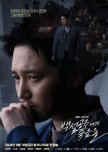
I've finally finished watching Black Out, and I must say I was excited to see Byun Yohan as the lead in a new drama. I don’t think I saw him in anything since Mr. Sunshine. He was heartwarming in that one and also pretty good in this one. So, yeah, Black Out, it’s a thriller that knows how to keep you guessing. The basic plot is about a guy who gets out of prison after serving ten years for a murder he says he doesn't remember. Of course, nobody believes him, and he has to try to figure out what actually happened.What I liked:
The mystery: It's a classic "who-done-it," but with enough twists and turns to keep it interesting. I was constantly changing my mind about who was guilty.
The acting: The lead actor, Byun Yohan, is excellent. He portrays the main character's confusion and desperation brilliantly. The supporting cast is also solid, with some characters you love to hate.
The pacing: The story unfolds at a good pace. It's neither too rushed nor too slow. There's always something happening, and new information is revealed at a reasonable rate.
The ending: Without giving away any spoilers, I found the ending to be satisfying. It wrapped up the loose ends and provided a sense of closure.
What I didn't like as much: Some of the side characters can be frustrating at times, and their motivations aren't always super clear. But that added to the suspense.
Overall, I'd say Black Out is a solid thriller. If you like shows with a good mystery, strong acting, and a satisfying ending, you'll enjoy this one. It kept me on the edge of my seat, and I'd highly recommend it to other K-drama fans.
Was this review helpful to you?
Uncanny Counter
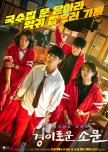
Two episodes in and I find myself wanting more. The first week's outing had a bit of everything, action, humor, fear, a sense of justice in the face of injustice, and, of course, evilness. It might only be the first episode, but I didn't want it to end as I was having so much fun. I love the concept of this drama. A group of ordinary humans turned super-beings, each for their ability to possess or be a unique power that helps a higher beings' quest to hunt demons who come to earth wanting immortality. I must say I loved seeing Kim Se Jong; she looks great, and so do Yoo Jun Sang, Yum Hye Ran, and Jo Byung Gyu. It's good to have JBG back.There's no denying evil exists in this world, but the light will always conquer the darkness. This drama quickly became my happy place and besides Yoo Joon Sang, Im Joo Yeon Moon's best friend is my favorite persona. I love how endearing the story is in that it's not just about capturing evil spirits, but also about righting the wrongs of ordinary people along the way. As they say, evil lurks in places where one would never imagine to charm its way into one's life and one always needs uncanny counters to help combat if not completely irradicate them (if only possible). I am in love!
Was this review helpful to you?
First Impressions
Ms. Incognito: My First Impressions—I Am Obsessed! 🔥Okay, seriously, if you aren't watching Ms. Incognito yet, what are you even doing? I went in expecting a decent, run-of-the-mill K-drama, but nope. It immediately grabbed me by the throat and yanked me onto this wild, chaotic train. I am officially hooked! 🎣
The Vibe? Vincenzo Met a Chaebol Melodrama 💅
The plot is pure, delicious craziness. You've got this poor-but-badass bodyguard, Kim Young-ran (Jeon Yeo-been), who marries a dying chairman on a contract. Classic, right? Except she has to go completely incognito for three months as a sweet-as-pie kindergarten teacher to survive the inheritance battle. The whiplash is real. The first couple of episodes are a high-octane thriller with some seriously sleek cinematography and action. They did not hold back on the suspense.
The Cast Is Doing the Lord's Work 🙏
Jeon Yeo-been is a whole mood. She's smart, she's tough, and you absolutely root for her. Seeing her pivot from a hardened bodyguard to a simple kindergarten teacher is just a chef's kiss. I get the sense that she will be carrying this show on her back, and I'm living for it.
But let's talk about the villain, Ga Sun-young (Jang Yoon-ju). She is a magnificent piece of work—vicious, obsessive, and honestly terrifying. She's the kind of villain you love to hate.
And then there's Jin Young as the cute strawberry farmer. He's clearly the eventual love interest; everyone who's watched the first two episodes knows this, and I can't wait to see what unfolds here. I'm calling it now: he's got some secret badass backstory, too. Strawberry farmer? Please. That man is an ex-special forces op hiding in plain sight, lol.
Final Verdict (So Far)
It's got crime, it's got high-stakes drama, and it's got Jeon Yeo-been being a total powerhouse. If they can maintain this pace, it will be an all-time favorite. Seriously, cancel your plans, grab your snacks, and get watching. You won't regret it. 10/10 opening episodes!
My final verdict, now that I have finished the drama, is that yes, I initially found it gripping. The premise and the lead actress's ability to portray the characters' duality were hooking. But something changed when Yeo-been moved to that small town. She was supposed to lie low, but everything she did made her stand out even more. From the way she dressed to the way she talked, I mean, it defeated the purpose. The transition from the tense, thrilling first few episodes was awkward, turning into a cheap small-town comedy/romance, which was disappointing, with strange character mannerisms and plot inconsistencies emerging as the show progressed. I found myself losing interest, and by the time the show ended, it became predictable.
Was this review helpful to you?
This review may contain spoilers
Wow
Wow, what a catching drama. I've been looking forward to this mini-series. I'm not familiar with Kang Sung Yun but know Jo Han Sun from Stove League. I must say the way the series started creeped me out, I wasn't sure if it was real or a dream and was relieved to see it was just a dream, but only to find out it was all real. We start with Su Jin, who was strangled and thrown off her apartment balcony or pushed off. But what I found quite intriguing and seriously peculiar was that there was something quite off about the apartment complex, the residents, and the whole neighborhood.In the beginning, I couldn't figure out why Miss Lee took the cell phone from the scene, but I see she is trying to protect the madly in love, Tae Hwa. There are plenty of suspects from Tae Hwa to the guy Su Jin was in love with to even Miss Lee, and others. I found myself so wrapped in this episode that I didn't want it to end. Jo Han Sun, as Lieutenant In, is superb. I also find myself liking Miss Lee, something about the way she carries herself. I look forward to tomorrow's episode and hate that this is just a mini-series I hope they make a full drama out of it soon with the same cast.
Was this review helpful to you?

Ultimate spectacle where pride, passion, and legends collide
I love that this show is receiving a very positive reception and strong popularity, despite the controversies surrounding it and how it was founded. The main issue is the legal and intellectual property (IP) dispute with the network JTBC, which produced the predecessor show, The Strongest Baseball (or A Clean Sweep). Fireworks Baseball was launched by Studio C1, led by producer Jang Si-won, who had previously directed the first three seasons of JTBC's popular show, The Strongest Baseball. It features the same format, the same manager (Kim Sung-geun), and many of the same key players, and was initially planned to be Season 4 of the original show. A public conflict arose when JTBC announced the cancellation of the tryout process for The Strongest Baseball Season 4. Producer Jang Si-won went ahead with production independently, renaming the show Fireworks Baseball (or Flame Baseball) and launching it on YouTube, which led to both sides taking legal action.JTBC's Claims: JTBC filed a criminal complaint against Studio C1 and PD Jang Si-won, alleging IP infringement, trademark violation, breach of trust, destruction of electronic records, and obstruction of business. They claimed Studio C1 was violating the IP rights of The Strongest Baseball by producing a show with a similar concept and cast. They also raised suspicions of overcharged production costs for previous seasons.
Studio C1's Counter-Claims: Studio C1 denied the allegations and countered that JTBC was attempting a hostile takeover of the show's IP. They claimed JTBC engaged in "illegal acts of obstruction" such as interfering with stadium rentals, making threats to other channels, and attempting to poach the cast and crew.
A major frustration for fans was that JTBC repeatedly filed copyright infringement reports against Fireworks Baseball videos on YouTube. Due to these reports, episodes that had amassed millions of views were deleted, leading to fan complaints about the "abuse" of the copyright system and the infringement of their right to enjoy the content. Due to the constant deletion of videos, the production company (Studio C1) eventually launched its own independent platform to host the episodes.
The biggest takeaway for me is that the show consistently reports high concurrent viewership, with some episodes surpassing 200,000 to over 300,000 simultaneous viewers during their release or live broadcasts. This indicates a solid and engaged fanbase. As an avid fan, I am hooked by its inspiring content, which showcases a team of former professional and amateur players who, despite their age or past careers, demonstrate dedication, teamwork, and a relentless spirit to compete and win.
The matches are thrilling, showcasing a high level of competition and the ability to entertain both on and off the field. As much as I enjoy the games, I love the funny exchanges and camaraderie among the players. I think what makes this show even more credible and appealing are the well-known figures in Korean baseball, such as manager Kim Sung-geun and legendary players like Lee Dae-ho and Park Yong-taek, along with its high production quality.
Fireworks Baseball is not merely a successful sports variety show; it is an unstoppable cultural phenomenon that has brilliantly hijacked the national spotlight. The program has transformed the baseball diamond into an arena of visceral, high-stakes drama. It’s a compelling saga built on the triumphs and heartbreaks of baseball legends clawing for redemption. The show doesn't just capture the audience; it dominates its attention with a raw, inspiring narrative of teamwork and relentless perseverance, amplified by electric, intense baseball action. Every episode is a torrent of clutch hits, strategic gambles from veteran Manager Kim Sung-geun, and jaw-dropping comeback victories that ignite the collective passion of the audience. The show isn't just well-received, it's crushing the competition, proven by its record-breaking viewership numbers and the fervent fan dedication that repeatedly sells out massive live-game venues. Fireworks Baseball is the ultimate spectacle where pride, passion, and legends collide. You can watch it on https://studioc1.co.kr/
Was this review helpful to you?

This review may contain spoilers
A Shop for Killers -- Updated Review -- Finale
Now that A Shop for Killers 2 has concluded, I wanted to revisit my initial thoughts and build on them with the full season in mind. Looking at the season now, some of those early impressions still stand, but the completed story gave them far more weight and context. My overall reaction is that this second season is bigger, denser, and more overtly political than Season 1, but it still manages to completely capture your attention. I felt transported into this world every week, and I remain in awe of how much work was put into the writing, directing, action choreography, performances, and overall production.The biggest change is that the show traded some of the relentless survival-thriller energy of Ji-an defending the shopping mall for a broader war against Babylon and a deeper exploration of Jin-man’s past, his plans, his alliances, and the machinery operating behind everything that happened in Season 1. Where Season 1 was tactical, Season 2 is operational. Season 1 was about surviving the moment. Season 2 is about understanding the larger system, the long game, and the execution of plans that had been in motion for years. It shifts the focus from “What is happening?” to “How do we destroy Babylon?” The narrative fills in gaps from the first season and expands the world through Jin-man’s survival, Babylon’s internal politics, and the broader network of killers and operatives. Some viewers may miss the claustrophobic intensity of the first season, but I think the show simply traded one type of tension for another. It was no longer about whether Ji-an could survive the shopping mall. It became about whether Ji-an, Jin-man, and their allies could outmaneuver an organization as vast and corrupt as Babylon.
Ji-an remains the emotional center of the series, but what makes her arc so compelling is that she is no longer merely reacting. In Season 1, she was being hunted. In Season 2, she begins making choices. More importantly, she begins to understand that Jin-man’s world does not operate by normal rules. At the start of the season, there is still a part of her that wants to distance herself from that world. She wants to believe in reason, compromise, and negotiation. Episodes 5 and 6 become particularly important because her attempts to reason with Jin Kusanagi make it painfully clear that idealism and playing by the book do not work in a world built on manipulation, violence, and power. Kusanagi views compromise as weakness and every attempt at good faith as leverage to exploit. What makes Ji-an’s journey work is that she does not lose her humanity. She does not suddenly become cold or cruel. Instead, she begins to understand what Jin-man understood long ago: survival depends on preparation, strategy, and understanding exactly who you are dealing with. By the finale, she is no longer just trying to escape her uncle’s shadow. She understands why that shadow existed in the first place. She is not becoming Jin-man, but she is beginning to inherit the part of him that knew how to survive.
As for Jeong Jin-man, Lee Dong-Wook once again carries the show effortlessly. He remains charismatic, controlled, believable as a strategist, and convincing as someone who can be both deeply protective and absolutely terrifying. One of the smartest aspects of Season 2 is how it reframes Season 1. Many things that initially seemed sudden or chaotic are revealed to be pieces of a much larger operation against Babylon. Jin-man remains fascinating because he genuinely loves Ji-an while routinely manipulating information “for her own good.” He is loving but secretive, protective but controlling. He does not protect like an ordinary uncle. He protects like an operative. Every lesson, hidden rule, warning, contingency plan, safe route, ally, and backup system was built around a single objective: keeping Ji-an alive.
The most moving aspect of the season for me was realizing just how much preparation went into that protection. The yellow ribbons tied around the trees. The escape vehicle. The routes through the woods. The fallback plans. The hidden structures. The people positioned in the right places. The planning surrounding the shopping mall. When Ji-an had to destroy the shopping mall and escape, those yellow ribbons were not simply markers. They were proof that someone had imagined the worst possible scenario and built a path through it for her. The escape vehicle was not simply transportation. It was preparation, foresight, and love expressed through action. In a show filled with assassins, betrayal, weapons, and death, those details became some of the clearest expressions of affection. Jin-man may struggle to express love directly, but he built an entire infrastructure around Ji-an’s survival.
As for Pasin and the old crew, they continue to provide continuity while expanding the mythology of Babylon and the mercenary world. Pasin’s storyline becomes one of the clearest examples of how the show plays with loyalty, betrayal, and misdirection. When it first appeared that he had betrayed everyone, I found it difficult to believe because this series thrives on incomplete information and false assumptions. What looks like betrayal is not always betrayal. Sometimes it is coercion, strategy, sacrifice, or someone trying to protect the people they love. Babylon understands this. The organization does not merely attack people physically. It attacks relationships. It weaponizes family, grief, loyalty, and fear. Throughout the season, people are manipulated, betrayed, pressured into impossible choices, and forced to question those closest to them.
When I first wrote about the early episodes, two of the new additions who immediately stood out were J and Q. By the end of the season, I felt even more strongly about that assessment. J brought unpredictability and a completely different energy to the series. His movements, attitude, and presence helped make Babylon feel like a much larger organization with different branches and operational styles. Q, on the other hand, immediately commanded attention. She never needed to be loud to feel dangerous. She carried herself like someone used to control, execution, and discipline. The chemistry between J and Q gave their storyline emotional weight, but what I did not fully appreciate at first was how important Q would become.
J’s death becomes one of the emotional weapons Babylon turns against her. Kusanagi manipulates Q’s grief and directs her anger toward Jin-man. This is one of the best examples of how Babylon operates. Its greatest weapons are not always guns or assassins. Sometimes they are lies, misinformation, and grief pointed in the wrong direction. I completely understood why Q initially accepted the story she was given. She was grieving and wanted someone to blame. However, some of the strongest moments of the season come when she finally realizes she was never truly Kusanagi’s partner. Deep down, I think she already knew it. Her grief simply prevented her from accepting it. She was an asset. Her loyalty, grief, and trust were all being exploited. Once that truth is exposed, Babylon begins losing control of one of its own weapons. What makes Q’s eventual alignment with Jin-man so satisfying is that it never feels sentimental. They do not suddenly become friends. They simply recognize the real enemy standing in front of them. Q’s storyline highlights Babylon’s greatest weakness. It can create fear, obedience, ambition, and dependence, but it cannot create genuine loyalty. Where Babylon uses people, Jin-man prepares them and protects them. That distinction ultimately becomes one of the reasons Babylon starts falling apart.
Unfortunately, my opinion of Jin Kusanagi never really improved. I understand what the writers were attempting. She was clearly intended to be a master manipulator and a major antagonist within Babylon’s hierarchy. But for me, she was annoying rather than intimidating and is one of the very few K-drama characters I have genuinely disliked in nearly a decade of watching dramas. Every scene involving her felt more frustrating than tense. What made matters worse was that she rarely seemed competent enough for the position she occupied. She possessed all the arrogance of a mastermind without the presence, effectiveness, or menace to back it up. Even the performance did not work for me. The screaming outbursts and eccentric mannerisms often felt more irritating than threatening. Many times, disliking a character is evidence of a strong performance. That was not the case here. I did not dislike Kusanagi because she was a great villain. I disliked her because I genuinely did not enjoy watching her.
Bale, on the other hand, remains one of the most memorable characters in the franchise. He is pure chaos, and that made him fascinating, especially because he functioned as Jin-man’s dark mirror. Both were lethal operators, but while Jin-man treated violence as a necessity, Bale treated it as entertainment. He was unpredictable, genuinely dangerous, and had the kind of screen presence that elevated every scene. I was genuinely disappointed to see him eliminated so early, even though I understand why it happened. His fate reinforced another major theme of the season: Babylon uses people until they become inconvenient. Still, Bale’s absence was felt. He brought a level of danger that Kusanagi never matched. Bale did not need the story to constantly tell us he was dangerous. His presence made us feel it.
One of the greatest improvements over Season 1 is the international expansion of the cast. The inclusion of actors from Japan and other countries fundamentally changes the texture of the series. The Japanese branch brought a different rhythm, style, and efficiency to the action. J and Q helped make Babylon feel less like a mysterious criminal organization and more like a global institution with branches, hierarchy, rivalries, and competing agendas. Babylon no longer felt like a vague plot device. It felt like a machine. Season 2 is also heavier because of how much loss surrounds the characters. The deaths of teammates, friends, and family members are not simply there for shock value. They reinforce the emotional cost of living in this world. Murthehelp is not just a business. It is a found family held together by loyalty, sacrifice, secrets, and survival.
The people around Ji-an and Jin-man are not simply fighting because they are paid to do so. Many of them fight because they believe in someone. That makes every loss hurt more. Every death is both a personal wound and a strategic loss. Every betrayal carries emotional damage and operational consequences. The final episode perfectly demonstrates why I keep describing this season as operational. It is not one giant fight. It is a chain of strategies. Kusanagi believes she has finally gained the upper hand through Jin-man’s biometric information and Murthehelp’s data. On the surface, it looks like she has won. In reality, Ji-an and Jin-man are turning that advantage into a trap. While Kusanagi believes she is hunting Murthehelp, she gradually becomes the target herself.
The finale’s use of misdirection, particularly the heat-signature deception involving the mannequins and lamps, is exactly the kind of detail that made this season so rewarding. It was not simply a clever trick. It showed that Ji-an and her allies were no longer reacting. They were shaping the battlefield, manipulating information, baiting reactions, and exploiting assumptions. Earlier in the season, Ji-an tried to reason with Kusanagi. By the finale, she understands that Kusanagi only understands leverage, power, exposure, and consequences. By the end of the season, Babylon feels both larger and more vulnerable. The series reveals the cracks beneath its power. Its leaders lie to one another. Its operatives are disposable. Its hierarchy breeds ambition, and that ambition breeds arrogance. Jin-man and Ji-an do not begin defeating Babylon because they are stronger. They begin defeating it because they understand it. They exploit its weaknesses, expose its lies, turn information into a weapon, and rely on relationships Babylon will never truly understand. That is why Q’s storyline matters so much. She is not simply another supporting character. She represents Babylon losing control of its own people. Once the truth emerges, Kusanagi’s manipulation collapses, and Babylon’s internal rot becomes part of its downfall.
No doubt Season 1 was tighter and arguably more original. It had a simple, nearly perfect premise: survive the night. Season 2 is bigger, messier, and far more ambitious. It is not always suspenseful, and the pacing occasionally suffers under the weight of its expanding mythology and politics, but I still love it. If you watched Season 1 primarily for Ji-an’s fight for survival, Season 2 may feel less focused. But if you were fascinated by Jin-man, Babylon, Bale, Murthehelp, and the larger world surrounding the shopping mall, this season delivers exactly what you wanted.
For me, this season is less about the inconceivable acts these people commit and more about the machine that created them. More importantly, it is about the network built to protect one person from that machine. The yellow ribbons, escape vehicle, hidden plans, alliances, safe routes, and sacrifices all lead back to the same idea. Everything was built to keep Ji-an alive. Season 1 was about Ji-an surviving the world Jin-man left behind. Season 2 was about understanding, inheriting, and eventually beginning to command that world. She is no longer simply the girl in danger. She is becoming someone Babylon may one day regret underestimating. Season 1 may remain the tighter thriller, but Season 2 is the richer, larger, and more ambitious story. It explores loyalty, sacrifice, grief, manipulation, truth, and family.
For all the assassins, mercenaries, betrayals, deaths, and hidden agendas, A Shop for Killers remains, at its heart, a story about family. Season 2 simply broadened the battlefield enough for us to see how far people were willing to go to protect it. I simply cannot wait for Season 3.
Was this review helpful to you?
Power corrupts, but does it have to corrupt one's soul, too?
I wholeheartedly believe there is some truth in every fictional story. Blood Free is no exception, especially in the way it depicts how the 1% delusional wealthy believe themselves to be superior to everybody else and think, not just accept but demand that the laws of man and land not apply to them in any way, shape, or form. They deserve not only elitism, amorality, but immortality just because they are wealthy boggles the mind. It makes me wonder. I know power corrupts, but does it have to corrupt one's soul, too? How can a parent such as Seon Woo Jae's ( I love me some Lee Hee Joon) mother, who loves her child so much, have such disregard for someone else's child; what makes them think only their child is precious? I will never understand. That said, what a brilliantly made drama!Watching a fantastic show on TV or a great movie in the theatre sometimes leaves us thinking about what made that so great and why it moved us or made us nervous. I have come to understand that a TV show or movie can only become influential when all the key elements such as plot, character, thought, diction, spectacle, musical score, mystery, action, directing, and acting are done correctly -- all of which were intelligently weaved in Blood-free to make it beyond excellent, superb in fact. I think Blood Free is undoubtedly one of the best K-dramas Disney+ has ever produced, right there with A Shop for Killers, if not the best. Kudos to all, especially Han Hyo Joo. She was outstanding, and so was Ju Ji Hoon and everybody else. When I started this drama I thought Yoon Ja Yoo the most impactful character but by the end of it On San (Lee Moo Saeng) left an even bigger mark. The mere fact that this was only 10 episodes, made me believe there would be a second season to it. I await it, patiently.
Was this review helpful to you?
This review may contain spoilers
There is Human in Humanity
They say the function of wisdom is to differentiate between good and evil. But the residents of happiness do not make it easy to do that. It's crazy how some infected seem to have more humanity than the so-called humans. Whoever said I see humans, but no humanity must've been talking about the true nature of humans in a crisis, just like the one Happiness depicts. I must commend the writer, I didn't expect the twist about Andrew and Kim Se Hoon (Han Joon Woo). And I hate that it had to turn bad, just as I started to appreciate them. But looks can be deceiving, and there is no better camouflage than a crisis situation to serve as a cover for evil. And as strange as Kim Se Hoon was, I knew he wasn't necessarily a bad guy and thought the same of Andrew, but I couldn't have been the furthest from the truth with my assumptions.Everything about how the story unfolded, from the time Yi Hyun is infected to the time Sae Bom returned to the resident building, spoke directly to how infinite the greed of man can be even in an emergency situation. Despite being infected, Yi Hyun proved to be a better human than all the non-infected combined. The hardest thing to comprehend was that even as people were fighting to stay alive, all Representative Yeon Ok, Joo Hyung, his shady girlfriend Woo Sang Hee (Moon Ye Won), creepy lawyer Hae Sung, and SY cleaning crew Gi Se Gyu (Kim Young Woong) and his wife Ji Moon Hee (Lee Ji Ha) could think of was how to personally benefit from the situation regardless of the danger the posed to others. So it was only fitting to finally see them get what they deserved. Their greed in a way was their own self-punishment. This was an exciting drama, I enjoyed every minute of it. A thousand kudos to the writer, director, all the actors, but especially Han Hyo Joo, Park Hyung Sik, and Jo Woo Jin for keeping invested to the end.
Happiness as a drama made me realize that the events that seemingly brought out the dehumanization of humanity and fundamental ills of society weren't in Next as a drug, but in mankind's selfishness, hatred, anger, jealousy, fear, stupidity, distrust, greed and love of power. I like the message Happiness advocates. It's true that crisis situations expose mankind's struggle to deal with sudden changes and unexpected events, and there will always be those who try and benefit, be it the elites of society or even the government. But just as there are people and institutions driven by their fear, greed, hatred and selfishness, there are those driven by their desire to help others in a time of need. Most human beings are like that. They want to live by each other’s happiness - not by each other’s misery. They don’t want to hate and despise one another, because even in a residential apartment building, let alone the world, there is room for everyone. The ending of this drama is what happiness is about, because in life it's not where you live, but who you live it that matters.
Was this review helpful to you?
Was this review helpful to you?
Endearing First Episode
I am so excited to see Lee Kyu Han back on the small screen; how I wish he had a major role, but I love him nonetheless. He blew me away as the tormented Mo Wan Soo in Graceful Family (now that drama was good). I really enjoyed Won Jin Ah in Life and Just Between Lovers and as such, look forward to seeing what she and Ro Woon (I already like him as I'm not as familiar with his work) bring to She Would Never Know, but I won't lie I'm in this for Lee Kyu Han. However, I do like that Hyun Seung doesn't shy from his attraction to Yoon Song Ah and goes for what he wants, a relationship with her. His direct approach is what endears me to him. It also helps that the drama is directed by the same director for Fated to Love You, one of my favorite dramas. I am looking forward to the journey indeed.Was this review helpful to you?


