

 3
3 2
2


Creative - I am in love
Yes, we have another nonbeliever. They say an arrogant person considers himself perfect; this is the chief harm of arrogance. It interferes with a person's main task in life - becoming a better person—the difference between Kim Sabu and Cha Jin Man (I'm already tired of him, and we are just getting started) and anyone else that goes up against him. I missed everyone, and it's good to see them all back, but Im Won Hee is the best—I love him. It's so good to see him here again. I loved how Cha Eun Jae grew into herself in the second season despite all her challenges, especially regarding Seo Woo Jin. And this season doesn't look any different except that they would have to face them together. I hope their love is strong enough to withstand it all.I love that there is always something new to learn from this drama. Acknowledgment, appreciation, recognition, and acceptance that's all anyone wants in what they do, how they do it, and where they do it, whether they are a doctor, a lawyer, a prosecutor, a plumber, or a janitor. It's the one thing we all have in common. Appreciation has the amazing habit of bringing more reasons to be grateful, do better, and be better. It's what Eun Jae wanted from her father and what Jang Dong Hwa needed to hear from Seo Woo Jin as his mentor to be confident in his choices.
I so appreciate this drama for how it tackles the social, medical, personal, and professional issues that arise as doctors work hard to save patients in a world where the main concern is who takes responsibility for a doctor's oath to do whatever it takes to save a patient's life -- that a Kim Sabu is an anomaly to squash rather than the benchmark to strive for and emulate. I can only imagine how hard it must be to become a doctor; the schooling, training, residence, sacrifices, yelling, humiliation, and hurtful words residents and fellows are subjected to, and it's why I understand the many Jang Dong Hwa's out there.
Was this review helpful to you?
They say the Love of Money is the Root of all of Evil
An arch, multi-strand, multi-character three-ring circus movie revolving around a Louis Vuitton overnight bag full of cash that long-suffering sauna worker Joong-man (Bae Sung Woo finds in an abandoned locker at work. While Joong-man sees in the bag a chance to escape his drudgery-filled life, dealing with his overbearing mother and pissed-off wife, other sets of characters are no less invested in acquiring this untraceable fortune.Everyone from sleazy customs official Tae Young (Jung Woo-Sung), who is on the hook to gangsters for a debt incurred by his missing wife to Yun Hee (Shin Hyun-bin), an escort who is fed-up-and-ready to take revenge on her husband who beats her regularly by trying to pull off a con job on a well-off besotted client of hers. And then there’s the Yun Hee’s imperious boss (Jeon Do Yeon), a goddess in lipstick who knows what it’s like to be hurt by men.
Some of the plot’s maneuvers are quite intricate and interestingly portrayed in chapters akin to one reading a book, with each chapter cleverly tying into the book's main premise, so to speak. At times the story is hard to follow, but that doesn’t in any way take away from the performances, which are all perfectly pitched, from the leads right down to the comic-relief minor characters, such as Park Ji-Hwan’s lowlife sidekick and Youn Yuh-Jung as Joon Man’s overbearing mother. The intense color palette blends neon signs and green-lit interiors with the vast amounts of scarlet blood that flows due to the frequent violence. There is no denying there is much violence but isn’t that expected when money is involved in the mix.
Was this review helpful to you?
Not Perfect but Better than Most
Professor Yang's ending narration of the law is an imperfect justice. Still, it must be perfect for those who teach and learn it alike, for there's nothing more violent than an unjust law is the ideal ending to an imperfect drama that was better than most. I am sad to see it come to an end. I enjoyed it. I was more than grateful to have Kim Myung Min grace my small screen; he is one of those actors I genuinely appreciate, from his voice to his facial expression and mannerisms. I will miss him and the unique way he approached the role of Professor Yang, who gave his all to his students while demanding the best, wanting his students to know they have it in them to be the best. As Maya Angelou said, if you are always trying to be normal, you will never know how amazing you can be. And how fitting that in the end, he had Han Joon Hwi and Kang Sol A by his side.I liked all the actors, each for their very individual approach to their roles, from Lee Jung Eun as Professor Kim to Lee Soo Kyung as Kang Sol [B], and Lee David as Seo Ji Ho. Go Yoon Jung as Jeon Ye Seul, Hyun Woo as Yoo Seung Jae, and the rest of the wonderfully talented cast who clearly articulated that as much as the choices they each made changed them. It didn't define them except for Sol B, but she is a work in progress. I will, of course, be remiss in not giving a special mention to the fabulous Kim Bum in how he portrayed Han Joon Hwi, who never once let the circumstances around him sway him away from his principles. And much-gained respect to Ryu Hye Young in the role of Kang Sol [A], who, despite all odds, perceivers if not shines in an environment that wasn't set up to help someone with her background succeed.
In its unique way, the drama touched and addressed some aspects of the many dilemmas it brought up very nicely, especially the issues it presented in date rape, sexual assault, physical abuse, corruption, political manipulation, and crime and murder. But at the same time, it was vague in addressing the consequences of the more prevalent issues that plague everyday life, such as bribery, hacking and cheating, plagiarism, eroding principles, and the fragile lines between good and bad -- evil done in the name of good, or evil done in the name of evil, which is worse, isn't it the same in the end. I am not entirely sure the show lived up to its motto of truth and justice only by the law. As someone once said, law and justice are not always the same; justice is an ideal, and law is the tool. I enjoyed it highly recommend it.
Was this review helpful to you?
And last but not least, Sung Dong II, what a talent, he embodied the evil spirit to perfection. All in all, a great job with the writing, directing, casting, acting, and producing of this drama; I enjoyed it and hoping for a season 2. Stay healthy and safe, and hopefully, I see you on the next one!
Was this review helpful to you?
When a Brilliant Mystery Becomes Exhausting -- I survived it!!!
I have been looking forward to Mousetrap, which makes writing this review a little difficult. I wanted to love it. In fact, for the first four and a half episodes, I genuinely thought I was watching something special. The premise was fascinating, the atmosphere was unsettling, and the mystery immediately pulled me in. A man wakes up to discover someone has stolen not only his identity, but seemingly his entire existence. That is the kind of psychological thriller setup that instantly gets my attention. And then somewhere around the middle of Episode 5, I hit a wall.I am not exaggerating when I say this drama took me four days to finish because I had to keep taking breaks. It wasn't because it was emotionally devastating or because it was so intense that I needed time to recover. I was exhausted trying to keep up. Every episode seemed to introduce another revelation, another stakeholder, another hidden connection, another identity, another layer of deception. Instead of feeling immersed, I often felt like I was struggling to hold onto the story. The strangest part is that I walked away wondering whether the drama failed me or whether I failed the drama.
The deeper Mousetrap goes, the less it becomes a mystery that unfolds naturally and the more it becomes a puzzle that constantly changes its own rules. Every time I felt like I understood what was happening, the show would reveal another hidden truth and force me to reevaluate everything I thought I knew. Then it would do it again. And again. By the end, I felt like I needed a flowchart.
The biggest source of my confusion was, unsurprisingly, Je Moon Jae himself. Or rather, the multiple versions of Je Moon Jae. We learn that Seo Yu Min had his life stolen and ultimately responds by taking over Moon Jae's identity. But then we discover Moon Jae himself is not exactly who we think he is. Then there is Park Sun Yong's connection to the entire situation. At a certain point, I found myself less invested in the emotional stakes and more concerned with remembering which version of Moon Jae was being discussed.
What fascinates me now, after sitting with the story, is that I think the confusion is partly the point. The more I think about it, the more I realize Mousetrap is not really about crime, identity theft, or even revenge. It is about identity itself. Every major character is trying to become someone else.
Moon Jae steals a name, a life, a future, and even another person's accomplishments. After being victimized, Yu Min responds by doing essentially the same thing and going a step further, turning himself into an identical Moon Jae. He doesn't simply want justice. He wants to become the person who destroyed him. What begins as revenge slowly transforms into obsession. This was one of the most tragic elements of the story for me. Yu Min becomes someone deserving of sympathy, but as he lets himself be consumed by the very darkness he set out to punish, he turns as monstrous as the man he hated.
Which brings me to what I think is the drama's central message: when you spend your life stealing identities, eventually you lose your own. Nobody in this story truly wins. The victim becomes an aggressor. The aggressor becomes a victim. The hunter becomes the hunted. The person chasing the imposter discovers he has been living as an imposter himself. The irony is almost suffocating.
As for the ending, I still don't know if I completely trust what the drama presents as truth. Just because Park Sun Yong and Noja reach a conclusion doesn't automatically mean it is the absolute truth. This series spends ten episodes teaching us not to trust appearances, narratives, memories, or identities. Why would the final explanation suddenly be unquestionable? That ambiguity is both one of the ending's strengths and one of my frustrations.
Performance-wise, the cast deserves a great deal of credit because they somehow manage to ground characters that could have easily become impossible to follow. The actors carry much of the emotional weight even when the narrative starts tying itself into knots. Ultimately, I admire Mousetrap more than I enjoyed it. It is ambitious, layered, and clearly the work of writers who were determined to create something more complex than a standard thriller. I genuinely respect that ambition. At the same time, there were moments when that complexity crossed over into exhaustion. Instead of building tension, the constant twists drained momentum. Instead of becoming more invested, I found myself becoming more detached.
I understand what the story was trying to say. I appreciate the themes of envy, identity, guilt, and revenge. I can recognize the craftsmanship behind the intricate web of lies and stolen lives. But I would be lying if I said I wasn't relieved when it was over. Mousetrap is one of the most ambitious identity thrillers I have watched in recent years. It asks compelling questions about who we are, whether a stolen life can ever truly belong to the thief, and whether revenge inevitably transforms us into the very thing we hate. Unfortunately, for me, its increasingly convoluted web of identities, secrets, and interconnected subplots became more exhausting than engaging. By the end, I didn't care.
I didn't finish Mousetrap feeling satisfied. I finished it feeling like I had survived it. And honestly, I still can't decide whether that's exactly what the creators intended. If you watch this drama after reading this review, I would be curious to hear your thoughts.
Was this review helpful to you?
Story: The drama centers on investigative journalism, a concept that K-dramas have largely varied from in recent years. One of the best is Argon (2017), featuring the late Kim Joo-hyuk, who is sorely missed. The cases Unmasked tackled seemed to be based on real-life crimes, which made it that much more unique and, at times, revoltingly upsetting, that this world we live in harbors unimaginable monsters. The drama follows a structure in which a team of reporters working for a public news channel investigates cases of public interest, which are then presented in a show format.
Characters/Acting: Kim Hye-soo's performance as the lead investigative reporter, Oh So-ryong, is well written. Ethical, uncompromising, and willing to go the distance for the truth and her team. Jung Sung-il's character as the odd one out is endearing, if not typical of the hate-to-love trope, so to speak. He is thrown in with a team he doesn't want, but with the team, he learns to appreciate not only the team but himself. The other character worth mentioning is Choo Ja Hyun, for her portrayal of the demented Cho Hae Won, who tries to escape her twisted, wealthy family but fails, only to return years later with a vengeance.
Tone: The drama features a fast-paced and energetic style, incorporating silliness and humor without hesitation. I found the mix of suspense, thriller, and comedy to be effective. It was preachy at times, but I didn't mind it.
In summary, "Unmasked" is a drama that blends genres and focuses on investigative journalism. Its strengths lie in its cast and story.
Was this review helpful to you?

Law, Order, Justice -- a double edged concept
If the intent with Bad Guys: Vile City’s opener was to be impactful, I have to say it was successful. Not only was it impactful it had me wondering why I had kept off watching it for such a long time. I thoroughly enjoyed the first installation of Bad Guys, not that I see this as a sequel but more as an extension and a pivotal one at that. The extent to which law, order, and justice are marginalized, making gangsters out of those who swore to protect the sanctity of the law, is horrifying. I can only imagine how bad it must’ve been for anyone, let alone a team of prosecutors, detectives, and public service persons, to take extreme measures of hiring and working with lawbreakers to catch criminals.I couldn’t for a life of me understand why this group of law officials turned gangsters would need Noh Jin Pyung (Kim Mu Yeol), a rookie prosecutor on their team. Not only that, throw him in the chaos and expect him to follow suit blindly. I was baffled until I realized Noh wasn’t just a witness that could bring Jo Young Gook’s (Kim Hong Pa) criminal organization down but was a pivotal member of OH Goo Tak’s (Kim Sang Joong) Bad Guy’s. It all starts to make sense.
Aside from the impressive opener, I hadn’t realized Joo Jin Mo was part of Bad Guys: Vile City’s cast. I genuinely enjoy his method acting style. The way he immerses himself in his roles, and particularly here as Heo Il Hoo, a widely feared, former violent mobster who turns to the right side of the law after an assassination attempt, was fantastic to watch. Kim Mu Yeol, on the other hand, I was not familiar with until this drama, and he has my respect. The way he delivers the role, the conflict between good and evil, always on edge, constantly torn between law and lawlessness, was beyond impressive. Woo Je-mun (Park Joong-hoon) is another actor I am embarrassed to say I had never encountered before as an experienced prosecutor on a crusade. After losing two colleagues trying to follow the letter of the law, he decides to employ the same dirty tricks his target uses.
The same goes for Ji Soo as Han Gang-Joo, a young man, a killer who lived his entire life as an underdog, making every sacrifice to support and protect his younger sister. After an assassination attempt on his sister (meanwhile, the mayor’s secretary), Gang-Joo joins the investigative team, both for revenge and atonement. There is no forgetting Jang Sung Cheol (Yang Ik-June), psychopathic gambling, drug addict detective, broken to no repair but ironically determined, without compromise, to fight corruption to his last breath. Of course, there’s no forgetting Ji Seung Hyun as hitman Joo Jae Pil for the short time he was in the drama. He is a versatile actor who seems to excel in any role he takes, be it a sensitive veterinary in You Are My Spring to a morally ambiguous newspaper report in The Good Detective or a straight and narrow conglomerate in Hello Me.
A lot happens in Bad Guys: Vile City and when one takes a closer look at the totality of what makes a group of prosecutors and police detectives unafraid to deal out random violence and torture, but not only that band with an ex-mobster and an assassin, one can understand why they become determined to cross the line to battle organized crime, get revenge, and end institutional corruption in their city. More than the method Bad Guys: Vile City uses to reach its goal, it’s the journey it takes where a group of people who have nothing in common bond and come together beyond their common purpose sets it apart from other like dramas in a way including Bad Guys.
Was this review helpful to you?
This review may contain spoilers
No Ordinary Drama
This is a bit of a long review combining the first two episodes. I am thrilled with this drama. Its opening episodes have already made a strong first impression, introducing a unique and heartwarming fantasy romance premise. I didn’t expect the show's opening, featuring Lee Hae-Sook, a seemingly heartless businesswoman with a rugged exterior, yet a gentle way of speaking. But we quickly learn there's more to her than meets the eye. I keep saying this, but I didn’t expect Lee Hae-sook’s complex character. On the surface, she's a formidable debt collector, not afraid to face down tough individuals. Despite her initial coldness, Hae-sook is revealed to have a softer side, especially in her relationship with her husband. Their relationship is portrayed as both loving and tinged with a sense of sadness. Her husband’s gentle and affectionate nature and his admiration for her beauty at all ages are clearly a significant motivator for her decision in the afterlife. And I think this fantasy afterlife intrigues me about this drama.Who among us wouldn’t want to know or at least be in control of how and where they land in the afterlife? I know I do, so I am intrigued and decided to watch this drama. Yes, Son Suk Ku was a significant deciding factor, but the story's premise was an even bigger. I also love listening to Kim Hye Ja speak. She is such a classy and dignified actress, it's hard not to fall in love with her. As sweet as it was to watch the love between Lee Hae Sook and her husband in the present life, the way the show presents a unique vision of heaven is even more intriguing, the idea that Heaven is not necessarily the traditional paradise many of us believe, raises questions about what constitutes happiness and fulfillment in the afterlife. The Heaven Admission Counseling Office and the subway ride to heaven add a bureaucratic and somewhat mundane element to the fantasy setting. This idea introduces questions about what heaven represents and how it functions. The presence of characters who are still dealing with unresolved issues from their past lives also adds to the complexity, making me believe this is no ordinary drama.
However, I think the biggest twist and in just two episodes is that when Hae-sook arrives in heaven and is given the option to choose her appearance, she initially opts for her younger self but ultimately decides to remain in her current 80-year-old form, thinking that’s how her husband would probably present. However, Nak-jun chooses to present in his 30s in heaven, creating an interesting dynamic, and maybe he chose that period because it was when they were the happiest. Anyway, I think these first two episodes have set the stage for a compelling narrative, blending humor, heart, and fantasy. The performances by Kim Hye-ja and the rest of the cast are captivating, and the drama raises thought-provoking questions about life, death, and the afterlife, which is precisely how I like it.
Updated review now that I have finished the drama. 5/29/2025
Alright, let's dive into the emotional rollercoaster that was the final four episodes of Heavenly Ever After. After watching the initial setup of Hae-suk and Nak-jun's heavenly reunion and how they individually, together and other times with help from others who had some impact when they were alive, the last four episodes kicked things into high confusing and at times distracting gear, transforming it from a sweet fantasy romance into a profound exploration of grief, sacrifice, reflection and somewhat traumatic but true liberation.
The biggest revelation, and perhaps the most heart-wrenching, revolved around Som-yi (Han Ji Min was brilliant; I found myself alternating between feeling pity and hatred for her; this is a testament to her incredible acting for sure). What started as a mysterious woman suddenly appearing in heaven escalated into the discovery that she wasn't just anyone; she was a manifestation of Hae-suk's deepest, most suppressed trauma: the memory of their lost son, Eun-ho. It became clear that Som-yi's initial fury and even her attempt to erase Hae-suk were her misguided way of trying to take away a mother's immense pain and guilt over their son's death. This twist deepened the emotional stakes significantly, making Hae-suk's journey in heaven about far more than just reuniting with her husband for me. It was about confronting her past and finding a way to heal. Kudos to the writer for this complex yet strangely satisfying exploration of guilt, loss, shame, and unconditional love.
Then came the truly emotional moment when the Pastor (Ryu Deok Hwan) revealed himself as the grown-up Eun-ho. This was a stroke of genius, allowing Hae-suk and Nak-jun’s son to be a guide, a figure of understanding, rather than just a source of past sorrow. His presence provided the missing piece of the puzzle, clarifying Som-yi's existence and, most importantly, giving Hae-suk and Nak-jun a chance for a true, even if spiritual, reconciliation with their child. That was incredibly powerful when Eun-ho tells his mother that everything is alright and that he needs her to let go so he can find his own peace. It allowed Hae-suk to finally release the burden she carried, which in turn allowed Som-yi (that embodiment of her grief) to vanish. This whole arc was incredibly moving and provided immense closure. It was magnificently done.
And then there's Ko Nak-jun (Son Suk Ku), whose unwavering love and commitment were truly put to the ultimate test. We learn that his devotion to Hae-suk was so profound that he was willing to shoulder her pain, taking on the responsibility for their son's death even when it wasn't solely his. The drama then throws another massive revelation at us: Nak-jun and Hae-suk had been married not just once, but twenty-three times across various past lives. This cyclical existence was tied to Nak-jun's regrets, his inability to let go of their suffering. Son Suk Ku was excellent as I knew he would be. A strong, complex character for an equally strong and brilliant actor. I am in awe of him.
The final episodes truly culminated in Nak-jun's ultimate act of love and sacrifice. After seeing their countless past lives, he makes the incredibly difficult, heartbreaking decision to break the cycle. He chooses not to be reincarnated with Hae-suk but instead steps away, allowing her to live a life free of the "suffering he brings," free of lingering attachments and past regrets. His farewell to Hae-suk, where he carries her over the final bridge and expresses his desire for her to experience a life without him, is one of the most poignant moments of the entire drama. It's a selfless act proving his love was truly "more beautiful than heaven".
Hae-suk's reaction, quivering lip, tears, and eventual acceptance speak volumes about her growth. She honors his wish, walking through the gates to live her liberated life. The ending is bittersweet, but ultimately hopeful. We see Hae-suk giving an interview, desiring to be reincarnated as an actor embodying various lives, a beautiful, meta-commentary on Kim Hye Ja's own illustrious career and the show's message about embracing life to the fullest. The final shot of two strangers locking eyes and smiling, hinting at a possible future fated encounter or simply the continuation of life's beautiful connections, left me with a feeling of profound hope and the belief that true love, in whatever form, truly transcends all.
These last four episodes really elevated Heavenly Ever After into something truly special. It beautifully captured how “All” the characters, human or otherwise, weren't afraid to confront deep emotional scars. It offered a unique, philosophical take on the afterlife, ultimately delivering a powerful message about letting go, finding peace, and love's enduring, selfless nature. I was thoroughly impressed by how they brought everything to a satisfying conclusion. It started as a sweet, emotional fantasy drama but transcended into a profound human drama as it got closer to its ending. It delivered hearty laughter and heartfelt emotions and a thought-provoking exploration of love, identity, and the timeless connections that bind us, regardless of where or how we exist. Its stellar cast and innovative storyline make it a drama that truly stands out.
Was this review helpful to you?
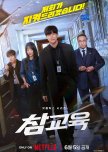
Raw Lessons --- The Violence They Breed, The Silence They Choose
I must admit, I was not at all prepared for what Teach You a Lesson turned out to be. I wasn't entirely sure what to expect, but it certainly wasn't the visceral, stomach-churning piece of television that unfolded. The opening of this drama doesn't gently ease you into its world; it deliberately traps you in a front-row seat to absolute, predatory carnage. Watching two bullied students systematically stripped of their basic humanity by a peer who believed terrorism was a birthright simply because of his father’s immense power was agonizing. But what truly made my blood boil wasn’t just the explicit physical violence; it was the stifling, heavy realization that the entire adult infrastructure around them had consciously chosen to look away. The writer, director, and phenomenal cast deliver something far more terrifying than the original webtoon: a grounded, furious psychological dissection of an education system that has completely decayed from the inside out.The drama is undeniably a tough watch, showcasing horrific incidents that intensify from one episode to the next. Yet before the first episode even concluded, I fully understood the desperate need for an organization like the Educational Rights Protection Bureau and welcomed it completely. And the fact that there were adults out there who worked so hard, using every means possible to ban it or shut it down, speaks volumes to the priorities of politicians and others who don't care to right wrongs that do not immediately affect them. That a rogue agency had to be created to operate on a razor’s edge, not for cheap revenge or shock factor, but for the sake of saving humanity, and not just for the ones being bullied but the bullies as well- is ingenious.
What I truly admire about the series is how deliberately it builds its case to prove that juvenile delinquency is no longer merely a matter of playground scuffles; it has evolved into an organized, predatory industry. And while protecting juveniles is admirable, when they become the ones the world needs protecting from, and the law does nothing, the law itself becomes the injustice—not just to the victims, but to the delinquents themselves who are crying out for intervention through their behavior. If they are going to commit adult crimes, then they need to be punished accordingly. What I loved most, however, is how unapologetically the drama demonstrates that to break a cycle of abuse, you must strike hard at the root cause. I am by no means a proponent of violence, but the narrative makes an uncompromising argument: in extreme situations where the system completely abandons you, force becomes the only definitive answer. And we see this time and time again throughout the show. Furthermore, the fact that the ERPB isn't out to punish, but rather to reframe the entire approach to juvenile reform by holding parents and other adults accountable as well, is what's truly intriguing. They aren't just there to hand out corporal or physical punishment to the kids; they are dismantling the safety nets that allowed these kids to become monsters in the first place, forcing the instigators to finally face the real-world consequences of their actions. Watching how effectively they cut through the bureaucratic red tape and systemic enablement makes me genuinely wish the ERPB were a real agency.
The true triumph of Teach You a Lesson lies in its casting. The actors completely reject the flashy, stylized, and romanticized tropes of typical vigilante K-dramas. Instead, they ground their characters with a heavy, exhausting moral weight. Na Hwa-jin, played by Kim Mu-yeol, delivers a masterful, deeply charismatic performance that carries the show's entire emotional arc. There is a constant, suffocating tension in his performance; you can feel the profound grief of a man whose own fiancée was murdered by a juvenile offender two years prior. He acts with a terrifyingly controlled authority, not as a vigilante who enjoys the chaos, but as an exhausted professional executing a grim, dirty necessity because the laws are shattered. He beautifully balances intimidating physical force with an intensely protective, almost desperate instinct for the victims.
Lee Sung-min wows again. As the Minister of Education and mastermind behind the ERPB, he brings his trademark gravitas to the screen, perfectly embodying the institutional despair that gave rise to this rogue agency. Lee doesn't play Gang-seok as a slick, power-hungry politician; instead, he portrays a broken, grieving father whose daughter was stolen by a system that protects abusers over victims. His performance anchors the show’s ethical stakes, making us fully understand why an adult in a position of authority would choose to burn down existing structures just to save a child.
Jin Ki-joo is phenomenal as the former Special Forces sergeant turned ERPB inspector. She completely matches Kim Mu-yeol’s burning intensity while injecting a distinct, fierce physicality into her scenes. Han-rim is crucial because she strips away the narrative's typical lone wolf fantasy. She plays Han-rim with a sharp, no-nonsense edge that highlights her tactical competence while anchoring the team's moral compass. Meanwhile, Pyo Ji-hoon (P.O) provides a brilliant, necessary contrast to the raw trauma surrounding the team, offering a grounded stability that I thoroughly enjoyed.
The most disturbing question the drama forces me to confront is: How do teenagers become this brutal, and why do adults let it happen? There are many, many things I loved about this drama. To begin with, I love how fiercely the drama critiques the legal structures governing minors. The bullies in this show are highly intelligent; they don't just break the law, they weaponize it. They know exactly how old they are, and they treat youth protection legislation as an absolute shield against accountability. When a teenager realizes that their actions carry zero legal or societal consequences, the psychological barrier against inflicting maximum pain completely dissolves. Insulated from punishment, their sadism evolves into a sport. The series is arguably far harsher on the adults than it is on the children, and rightfully so. It frames adult apathy as the primary fuel that allows bullying to thrive. I liked that the show refuses to paint educators as one-dimensional villains. Instead, it shows how terrified and exhausted they truly are. Trapped between overreaching youth legislation and the constant fear of losing their livelihoods to predatory parents, looking away becomes a survival mechanism. If they pretend like they don't see it, then they don't have to engage with a system that will inevitably scapegoat them. It's brutal.
But more than anything, I loved how loudly the narrative screamed that bullies do not exist in a vacuum. It fiercely attacks the toxic culture of hyper-protective, elite parenting. Wealthy, influential parents view their children not as human beings who need moral guidance, but as extensions of their own social status. When a child commits a horrific act, the parent’s immediate instinct is to buy, threaten, or politically manipulate the problem away. They treat severe violence as a minor indiscretion, completely validating and reinforcing their child's predatory behavior. What’s even worse is how these parents completely dehumanize those who are being bullied. They act as though these victims aren’t precious to their own families, as though they aren’t deeply loved and deserving of the exact same respect they demand for their own despicable children. Nothing infuriates me more than these grotesque acts of belittlement.
There is so much more that can and should be written about this drama, but I will summarize my thoughts by saying Teach You a Lesson is a deeply uncomfortable, heavy-hitting reality check. While the concept of a rogue government task force using physical enforcement is an unrealistic, highly controversial quick fix that raises massive ethical dilemmas, the emotional and systemic truth underneath it hits like a sledgehammer. It exposes the terrifying vacuum left behind when the law, the schools, and the parents completely abandon their moral responsibilities. It is a tough, violent, and agonizing watch, but it serves as a glaring, uncompromising mirror to a society that routinely ignores the screams of its children until the damage is entirely irreversible.
Was this review helpful to you?
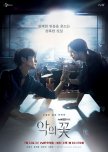
Hooked
Oh, my heart, I am so completely head over heels with Lee Joon Gi and refuse to believe he’s on the wrong side. I’m so desperate for him not to be the killer that I find myself coming up with excuses as to why things are unfolding the way they are – he must have a reason, of course, there is one, please let there be one. He’s working to clear up his name even if events unfold to belie that thinking, and I am sticking to that. I am also holding out to the hope that when Ji Won figures out HS’s reality, and she will sooner than later, she’ll instinctively trust he isn’t a cold-blooded killer. Boy is this is one stellar drama or what -- I am hooked!Was this review helpful to you?
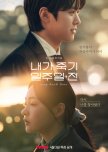
This review may contain spoilers
Short but Sweet -- Heartwarming!!!
This one really got to me. It's definitely one of those dramas that tugs at your heartstrings. The whole vibe is somber but also beautiful, you know? It's all about this girl, Hee-wan, who's pretty much given up on life, and then her childhood best friend, who died years ago, shows up as a grim reaper. It sounds somewhat out there, but it's actually quite touching.Because it's only six episodes, the story remains highly focused on Hee-wan and her feelings, as well as her connection with Ram-woo, the grim reaper. You really get into their heads and feel what they're going through. It's stunning, but in a sad way, if that makes sense. The colors are soft, and everything has a dreamy, melancholic feel that perfectly suits the story.
The two leading actors, Kim Min-ha and Gong Myung, are just fantastic. Kim Min-ha perfectly captures the feeling of being utterly lost and then slowly regaining a reason to live again. And Gong Myung as the grim reaper is sweet and gentle with her. You totally buy their connection, even in this crazy situation.
What I really liked is how the show handles loss and the process of trying to accept it. It's not all doom and gloom, though. It shows how even when you know you don't have much time left, you can still find little things that make life worth living. Watching Hee-wan make her bucket list and experience those small moments was really moving.
Now, I will say that if you're looking for something extremely upbeat and happy, this might not be it. It's definitely on the sadder side. And because it's so short, I found myself wishing we could have learned a bit more about their past and perhaps seen their relationship develop a little more. Plus, the whole grim reaper thing is a big part of the story, so you have to be okay with that fantasy element.
A really poignant and sweet little drama. It prompts you to reflect on life, loss, and the significance of the people you care about. Kim Min-ha and Gong Myung are great, and even though it's a bit of a tearjerker, it's worth watching if you're in the mood for something heartfelt and a little bit different. Just grab some tissues!
Was this review helpful to you?
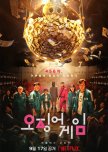
This review may contain spoilers
Life Should be About More than just Surviving
When I first started watching this drama, I wondered if there was a message to it. Only when I got to the end, I realized it had a powerful message about survival and sacrificing for the person next to you. The drama was almost like a warning for people not to lose touch with their humanity, especially in today's world where watching other people's misfortunes has become entertainment. I enjoyed Squid Game, the concept, and everything from how the events unfolded flowed seamlessly, even as grim and bloody as it got. I felt the writer, director, and all the actors did a fantastic job delivering and actualizing the story. I particularly liked Wi Ha Joon in the role of the cop and brother, who does the impossible to find and save his brother, only to find out he was the one who needed saving and from his own brother. It was a grim moment to take, but as they say, sometimes family can be your worst enemy. I was pleasantly surprised to see Lee Byung Hun in the drama. I didn't expect that.I must say I loved Lee Jung Jae for learning and teaching the remaining survivors Park Hae Soo and Jung Ho Yeon, through such a twisted and blood ordeal, that maybe life should be about more than just surviving alone. But to find out that the journey was nothing but one person's sick attempt to have fun with their bored life, and to think nothing of the many lives lost was appalling. So in that sense, I completely understood why, despite getting what he so desperately wanted, and especially after working as fiercely as he did to not want it anymore. It's like they say, be careful what you wish for, you might get it only to find it wasn't something you needed after all, because the loss far outweighed the gain. Money isn't everything after all. I cannot wait for a second season. There has to be one.
Was this review helpful to you?
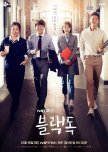
Black Dog
Black Dog did a great job tackling and depicting the working of the school system without over-exaggerating them. The drama showed the many problems facing the South Korean education system and did a great job setting up the social context of the profession, especially from the perspective of beginning teachers. It tackled everything from nepotism, to temp workers social stigma, to teacher/student discrimination (top students vs. average), and the cutthroat and competitive atmosphere between teachers who do not always work for the students but rather to better themselves. It even addressed the fact that a school is really an organization and a rigid one at it but that there will always be people such as Go Ha Neul and the College Advisory Department who are willing to take that extra step to change the status quo.All the actors did a wonderful job -- but especially our College Advisory Department We got to see Go Ha Neul (Seo Hyun Jin) try to break down and tackle that rigidness and succeeding in making a dent including witnessing her journey from a beginner teacher to her growth not just as a teacher but as a person who impacted the lives of students and teachers alike, making them better people (students) and teachers. All with the help and direction of Park Sung Soon (Ra Mi Ran), the head of the career counseling department at the school, Do Yeon Woo (Ha Joon), a Korean language teacher, and Bae Myung Soo (Lee Chang Hoon), the Biology teacher -- all of whom impacted each others' lives in ways they never expected.
In the end, the real message of the story was to never give up and as hard as change maybe it is not impossible. As the saying goes you can't build an adaptable organization without adaptable people--and individuals change only when they have to, or when they want to. Beautifully done, sorry to see it end. I will miss it and highly recommend it.
Was this review helpful to you?
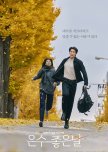
A K-Drama Slump Killer
Oh, My God. I'm absolutely obsessed with Walking on Thin Ice! I went in because of Kim Young-kwang, but Lee Young-ae quickly won me over. The show itself is a certified banger. Seriously, if you're not watching, you're missing out on the best kind of chaotic thriller. I have rewatched the first four episodes twice already.The Plot Is Full-Throttle from Episode One 🤯
Forget slow burns, this show throws you into the deep end. Kang Eun-soo is a regular mom/housewife whose life is completely collapsing, with a terminally ill husband, financial ruin, and about to be homeless. Then she stumbles on a massive bag of drugs (worth, like, a zillion won) and her whole Breaking Bad-style transformation begins. By the end of Episode 1, she's already connected to Lee Kyung (Kim Young-kwang, who is breathtakingly handsome), the hot art teacher who's secretly a high-end drug dealer and much, much more. I feel like there is a revenge plot twist coming, and I am here for it. The drama avoids the usual clichés; the stakes are sky-high, and I genuinely have no idea where it's going, which is such a relief!
The Leads Have Explosive Chemistry 🔥
You'd think a desperate housewife and a mysterious, double-life art teacher/drug dealer wouldn't work, but the dynamic between Lee Young-ae and Kim Young-kwang is fantastic. Lee Kyung (James) is quirky with a hint of danger, but Eun-soo doesn't just cower; she fights back. She uses her former bank sales skills to pitch a drug-selling business model! The shift from him trying to control her to her outsmarting him (hello, peppermint candy swap! 👋) in Episode 3 was brilliant. Their bickering partnership is what makes the suspense fun. I'm already shipping the chaos.
Eun-soo's Desperation is Too Real (and Annoying)
Okay, look, my only minor gripe is how absolutely reckless Eun-soo is, especially in the early episodes. Desperation is one thing, but making HUGE purchases and yelling the dealer's name in a crowded club? That's basic crime 101 failure! I agree with other viewers that she's constantly on the verge of getting caught by both of them. However, one must appreciate that her desperation is what makes her so bold, culminating in the shocking move at the end of Episode 3, where she turns herself in. Girl's got nerve! This plot reminds me of the American series Good Girls, three suburban mothers, best friends who turn to crime after a grocery store robbery to escape financial ruin. If you haven’t seen it, I highly recommend it.
Jang Tae-goo (Park Yong-woo) is the Human Bloodhound with Razor-Sharp Instincts Wrapped in a Cold Stare 🧊
Jang Tae-goo isn't some hot-headed cop running around yelling. He's the quiet one in the corner, and that makes him ten times scarier. Park Yong-woo plays him with this incredible, low-key intensity. He's the Ace Team Leader of the narcotics unit, nicknamed the "Psychic" because his gut feeling is apparently 99% accurate. And honestly, I believe it. He doesn't need a huge, flashy chase scene to be menacing; he needs to stare at a CCTV screen, and the tension skyrockets. He has this knack for cornering people with chillingly simple questions, which Park Yong-woo delivers with zero emotion. It maximizes his intimidating presence.
Overall Verdict
This is a high-quality, tightly written thriller that doesn't mess around. The acting is phenomenal across the board, the suspense is consistent, and the moral ambiguity is spicy. This one's going on the "must-watch while it airs" list. It’s a hexagonal, well-made drama that screams “must watch”.
Was this review helpful to you?

Was this review helpful to you?


