

 123
123 225
225 20
20 2
2 4
4 5
5 10
10 5
5 7
7 6
6 3
3 10
10 5
5 2
2 7
7 35
35 3
3 4
4 4
4 2
2 1
1 3
3 3
3 5
5 2
2 6
6 30
30 35
35 13
13 21
21


A MISSED OPPORTUNITY
*Bogotá: City of the Lost* is a crime drama starring Song Joong-ki, but despite an interesting story, it doesn’t fully deliver. The film follows Kook-hee, a young Korean man who moves to Bogotá and gets involved in the city’s black market. It promises action and suspense but feels slow at times, with too much talking and not enough excitement.One good thing about the movie is its setting - Bogotá looks gritty and realistic, making you feel like you’re really there. Song Joong-ki does a great job acting, but the story doesn’t give enough attention to other characters, making them feel unimportant. The action scenes are also not very thrilling, which is disappointing for a crime movie.
Overall, the movie has some good moments, but it doesn’t live up to expectations. If you’re a big fan of Song Joong-ki, you might enjoy it, but if you’re looking for an intense crime thriller, this one might not be for you.
Was this review helpful to you?
This review may contain spoilers
A HEARTBREAKING YET BEAUTIFULLY CRAFTED FILM
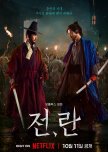
*Uprising* is a heartbreaking yet beautifully crafted film that takes us on an emotional journey through the friendship of Jong-Ryeo and Cheon-Yeong, set in a time of brutal class divisions in historical Korea. The plot centers on how the rigid social hierarchy affects their lives, particularly Cheon-Yeong, a slave who is forced to endure countless hardships in place of Jong-Ryeo.What starts as a cruel situation, Cheon-Yeong being beaten in Jong-Ryeo’s stead, evolves into a deep bond. Despite the fact that Cheon-Yeong isn’t born a slave, his family’s downfall forces him into this role, and it's his strength and refusal to accept the established hierarchy that makes him stand out. When he begins secretly teaching Jong-Ryeo how to fight, the dynamics between the two change, leading to a friendship that feels genuine despite the social disparity.
However, the film doesn’t shy away from the harsh realities of their world. Even after helping Jong-Ryeo win a prestigious sword-fighting competition, Cheon-Yeong is denied his freedom by Jong-Ryeo’s father, who breaks the promise of releasing him from slavery. This betrayal deeply scars Cheon-Yeong, though Jong-Ryeo still tries to protect him by sending him off to fight the Japanese invaders, hoping this will finally earn him his freedom. The film is filled with these moments of hope and crushing disappointment.
After years of fighting, Cheon-Yeong returns home only to find the world he left behind in ruins. Jong-Ryeo’s family home has been burned down by the people who suffered under the oppressive rule of his father. In one of the film’s most gut-wrenching moments, Cheon-Yeong tries to save Jong-Ryeo’s wife and son from the flames, but she refuses his help out of pride, seeing him as a slave rather than a person who might save her life. Her death serves as a stark reminder of how deeply ingrained social prejudice was, even to the point of self-destruction.
The climax of *Uprising* sees a tragic reunion between Jong-Ryeo and Cheon-Yeong after seven years of separation. Jong-Ryeo, unaware of the full story, initially believes Cheon-Yeong is responsible for his wife and son's deaths. Their final confrontation is tense, but as the truth is revealed, the film shifts focus from their conflict to a bittersweet reconciliation. Just when they finally resolve their long-standing misunderstanding, Jong-Ryeo is mortally wounded in battle against the Japanese. Cheon-Yeong kills the Japanese leader, Genshin, in a satisfying act of revenge, but it’s too late to save Jong-Ryeo.
In Jong-Ryeo’s final moments, he asks Cheon-Yeong if they’re still friends, referencing an earlier lighthearted exchange from their youth. It’s a poignant moment that captures both the tragedy and beauty of their relationship. Despite everything that has happened, the film shows that love and loyalty can persist, even in death. This scene is devastating, but it offers closure, showing that their bond was real despite the cruel world they lived in.
On a larger scale, *Uprising* also critiques the corruption of the ruling class, embodied by King Seonjo, whose greed and cowardice lead to the suffering of the common people. His alliance with the Japanese and subsequent desertion of his own throne during the invasion sparks the uprising that defines the film. The subplot involving Seonjo and the infamous Japanese leader Genshin, known as the “nose-snatcher,” adds layers of historical context and brutality to the narrative. In a symbolic twist, Seonjo’s greed is punished when the treasure he’s promised turns out to be boxes of human body parts, noses, to be precise, reflecting the horrors of war and the consequences of his betrayal.
In the end, Cheon-Yeong and a few of his fellow survivors form a new community, symbolically named “Beom Dong,” meaning “A world together.” It’s a hopeful note to close the film on, but *Uprising* doesn’t let the audience forget the price paid for such unity. The film leaves you with a lingering sense that although there’s hope for change, the struggle against social inequality is far from over.
*Uprising* masterfully balances personal and political themes, offering a powerful meditation on friendship, loyalty, and the fight for justice. It’s a tearjerker that hits hard, especially as it reveals the lasting impact of societal divisions, even as it tries to inspire hope for a better future.
Was this review helpful to you?

Chaotic Fun, But Rough Around the Edges
Kian’s Bizarre B&B is exactly what the title promises - a strange, offbeat, and at times hilariously chaotic variety show that blends celebrity charm with social awkwardness.The biggest draw here is the chemistry between the cast. Jin, despite his global fame, slips comfortably into the awkward, low-budget mayhem that defines the show. He’s funny, unexpectedly sharp, and brings a grounded warmth to the mess. Kian84, with his eccentric ideas and strange logic, drives most of the unpredictability. Ji Ye-eun, while more reserved, adds a balancing energy and is gradually warming up.
What really works is the unpredictability. You never know what kind of random “project” Kian will suggest next.
However, the show feels more awkward than entertaining in the early episodes. The pacing drags at times, with scenes that feel under-edited or stretched too thin. There’s a sense of disorganization - not the fun kind, but the frustrating kind.
The editing also deserves critique. There’s little rhythm or narrative flow. Instead of a cozy slice-of-life vibe, it sometimes feels like a YouTube vlog that hasn’t been tightened up for broadcast.
Still, there are moments of quiet humor, genuine warmth, and unexpected hilarity. It is worth checking out. It's a variety show that doesn’t try too hard to impress; it just lets the chaos unfold. And that’s oddly refreshing.
Was this review helpful to you?
This review may contain spoilers
WHEN THE SCALPEL SLIPS
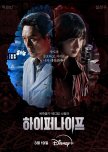
Hyper Knife begins like a cold, precise surgical instrument: sharp, deliberate, and thrilling in its control. It’s a female-led psychological thriller set in the morally compromised world of underground neurosurgery, anchored by the combustible pairing of Park Eun-bin and Sul Kyung-gu. She is a prodigy with a scalpel and a dangerously fragile sense of morality; he is the mentor-turned-rival who matches her brilliance but clashes with her principles. From the first episode, the series exudes confidence. The surgical sequences are eerie and intimate, the score pulses like a racing heartbeat, and the dialogue slices with a surgeon’s certainty. The first four episodes are a masterclass in tension, every operation doubling as a psychological duel.Then, midway through, something shifts. The slow, methodical dissection of character and motive gives way to a rush of reveals and shortcuts. Motivations that deserved careful exploration are abruptly explained in passing, as if the show were hurrying to clear the board rather than deepen the game. This is where the writing, so taut in the beginning, starts to loosen. The tonal precision that made the first half so gripping begins to fray.
By the finale, the collapse is complete. What should have been a cold, surgical reckoning swerves into emotional reconciliation, sentimentality, and a kind of sappy melodrama that feels at odds with everything the show had established. The moral stakes suddenly feel arbitrary, forgiveness is granted without the groundwork to make it convincing, and key threads are left dangling. The final confrontation, built up with such promise, fizzles into an ending that blunts its own edge.
And yet, even at its weakest, Hyper Knife never stops being watchable, largely because of its leads. Park Eun-bin is magnetic, a “gloriously unhinged queen” whose crazed eyes and unnerving calm are impossible to look away from. Sul Kyung-gu matches her beat for beat, their scenes together simmering with the tension of admiration and betrayal. The cinematography and score maintain an operatic, surgical tension, turning even the most implausible moments, like a barefoot, blood-spattered operation, into something unforgettable.
In the end, Hyper Knife is a paradox: intoxicating in the moment, but oddly hollow in retrospect. It promises a scalpel’s cut and delivers it in the first half, only to pull back when the blade should have gone deeper. Watch it for the performances, the mood, and the thrill of its opening episodes, but be prepared for a finale that dulls the edge it worked so hard to sharpen.
Was this review helpful to you?
A Quiet Duel of Legacy and Pride
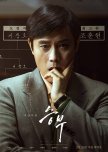
*The Match* is a compelling drama film based on the real-life relationship between two of South Korea’s most iconic Go players: Cho Hun-hyun and his protégé-turned-rival, Lee Chang-ho. Set in the early 1990s, the film traces their journey from a bond of deep respect and trust to a dramatic confrontation on the board that reshapes both their lives.The performances are the heart of this film. Lee Byung-hun is remarkable as Cho Hun-hyun, portraying a man torn between pride in his student and fear of being replaced. Yoo Ah-in brings a quiet intensity to Lee Chang-ho, expressing his character’s transformation from an obedient disciple into a confident and self-assured challenger. Their dynamic carries the film, grounding its emotional weight in realism and restraint.
The direction is subtle and patient. The film avoids melodrama, opting instead for a slow build of tension through deliberate pacing. The cinematography treats the Go board like a battlefield, using close-ups and careful lighting to give weight to every move.
One of the film’s strengths lies in its dialogue, which is thoughtful and philosophical. Lines like “A teacher is not someone who gives answers, but someone who opens the way” resonate far beyond the context of the game. The screenplay explores the loneliness of mastery, the burden of legacy, and the moment when every student must eventually step out of their teacher’s shadow.
There is also warmth and humor throughout the film, which balances the more intense moments. These touches humanize the characters and make their emotional journey all the more relatable.
It is a meditation on ambition, mentorship, and the bittersweet nature of growth. It’s a film that lingers because of the quiet, personal truths it reveals in the spaces between each move.
Was this review helpful to you?
A Gripping Political Thriller with Stellar Performances and Intense Twists
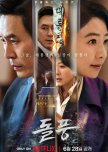
The Whirlwind, a political drama, delivers a gripping, fast-paced narrative centered on Prime Minister Park Dong-ho and Deputy Prime Minister Jeong Su-jin as they engage in a high-stakes power struggle following an assassination attempt on a corrupt president. This 12-episode series shines with intense plot twists, morally complex characters, and stellar performances, making it a standout political thriller.The acting is exceptional, with Sul Kyung-gu’s charismatic portrayal of Park Dong-ho blending idealism with cunning, while Kim Hee-ae’s Jeong Su-jin is a formidable force driven by ambition. Their rivalry unfolds like a strategic chess match, each move calculated and thrilling. The drama maintains relentless momentum, weaving a narrative that critiques corruption and media manipulation without taking explicit political sides.
The Whirlwind excels in delivering a satisfying conclusion, with strategic sacrifices that leave audiences reflecting on the cost of power. It’s a must-watch for fans of intricate power plays and veteran performances, offering a compelling look into a corrupt political system.
Was this review helpful to you?
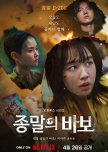
A Disorienting Yet Poignant Tale of Humanity’s Final Days
Goodbye Earth, a sci-fi dystopian series set in Woongcheon, South Korea, offers a gripping premise: humanity faces its final 200 days before an asteroid obliterates Earth. The show follows Jin Se-kyung, a former teacher turned volunteer, portrayed with heartfelt resilience by Ahn Eun-jin, as she navigates a crumbling society under martial law alongside her boyfriend. The narrative explores how people cling to hope, love, or vengeance in the face of certain doom, prioritizing human connection over apocalyptic spectacle. Yet, its ambitious storytelling is marred by initial narrative disarray, gradually finding its footing as it delves into profound human moments.The series shines brightest when it focuses on personal stories. Se-kyung’s quiet strength anchors the chaos as she fights to protect children caught in societal collapse. The ensemble cast delivers solid performances, bringing depth to characters grappling with despair, faith, or defiance. Visually, the show captures a gritty, grounded apocalypse, with scenes of looting, military crackdowns, and eerie normalcy that evoke the weight of impending doom. These moments of joy, sorrow, and connection feel authentic and moving, offering a fresh take on the end-of-the-world narrative.
However, the first three episodes present a disorienting experience, with a narrative structure lacking clarity and coherence. The plot jumps haphazardly between timelines without clear indicators, blending flashbacks and present-day scenes in a way that makes it challenging to follow the sequence of events. This lack of a clear timeline detracts from the viewing experience, leaving viewers struggling to engage fully. Additionally, the abundance of characters introduced early on adds to the confusion. While a large cast could enrich the story with diverse perspectives, many characters feel underutilized or underdeveloped, diminishing their impact on the overarching plot.
By the fourth episode, Goodbye Earth begins to coalesce. The timelines become more discernible, and the once-disparate characters start to intertwine in meaningful ways, creating a more cohesive and engaging experience.
As a philosophical drama with grand aspirations, the series overcomes its initial shortcomings to deliver a poignant exploration of humanity’s resilience and fragility in the face of extinction.
Was this review helpful to you?
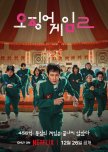
A Funeral in a Circus Tent, and Everyone’s Still Buying Tickets
Honestly, it felt like attending a funeral hosted by a circus. Everything’s bigger, louder, more extravagant, and yet somehow everyone’s crying behind the makeup. It’s tragic and ridiculous in equal measure, which, let’s be real, is probably the most accurate reflection of modern life that television has ever managed.The production quality is absolutely divine. Every frame glitters like blood on marble. You can see Netflix’s money sweating through the screen, trying desperately to remind us that this show is still the event. The games are flashier, deadlier, and even more absurdly poetic. One minute, you’re gasping in awe; the next, you’re wondering why your jaw’s on the floor for something so horrifying. It’s that same candy-colored nightmare vibe that Season 1 perfected, only now it feels like the nightmare has a PR team.
There’s still genius at play, though. The social commentary is sharp enough to draw blood. It digs deeper into guilt, survival, and humanity’s endless appetite for spectacle. You can feel the show’s ambition swelling, like it’s trying to transcend its own hype and become philosophy. But in trying to say everything, it sometimes forgets to breathe. It’s like watching a man deliver a powerful speech while drowning. You want to applaud, but also hand him a life raft.
The new characters are a mixed bag of heartbreak and missed potential. Some of them are genuinely magnetic: flawed, desperate souls who carry that same tragic spark that made Season 1’s cast unforgettable. But others feel like cannon fodder with dialogue. It’s grimly funny in a way that shouldn’t be funny at all.
Now, I can’t ignore the big flaw: the surprise is gone. Season 1 was lightning in a bottle. It shocked, unsettled, and said something piercing about humanity. Season 2 can’t surprise us anymore, so it compensates by overthinking everything. It’s like a magician repeating a trick, but now he’s explaining it as he performs. Impressive, sure, but the wonder’s dulled.
If I had to sum it up, Squid Game: Season 2 is a tragicomic elegy for its own brilliance. It’s a show mourning the death of its novelty while frantically trying to resurrect it with glitter and gravitas.
I’d give it a 7 out of 10. Think of it as an open-casket sequel: you’re here because you loved the first one, you know what’s coming, but you can’t resist one more look. It’s overlong, overwrought, and occasionally over itself, but my God, it’s alive.
Was this review helpful to you?

Deception, Betrayal, and Karmic Doom
Karma is a crime thriller, yes. But more than that, it is a slow, merciless descent into the inescapable consequences of human greed, desperation, and revenge.Rather than following a singular, linear plotline, Karma constructs a mosaic of six intertwined lives, each thread weaving a tighter, more suffocating knot around the next. What begins as seemingly separate tragedies: crippling debt, an accidental killing, an unhealed past, gradually and methodically converges into something far darker than anyone could have anticipated.
At first, the show might give the impression of being an anthology, as each early episode focuses on different characters with narratives that appear self-contained. However, by the third episode, the true nature of the series emerges, the realization that these stories are not isolated events but rather fragments of a much larger and deeply interwoven nightmare.
Each character is more desperate than the last, and each possesses a dangerously flexible morality. Their choices ripple outward, affecting one another in unexpected ways. Even as they attempt to escape their fates, the past has a way of creeping back, ensuring that every action, no matter how seemingly small, has devastating consequences.
The beauty of Karma lies in its storytelling precision. This is not a series of twists for the sake of shock. Every turn, every betrayal, every revelation is earned. Just when you think you’ve grasped the full picture, you suddenly realize you’ve been looking at it from the wrong angle the entire time.
At its core, Karma reveals the gradual desensitization to violence. The characters begin hesitant, fearful of what they are capable of. But as time passes, that hesitation fades. Violence begets greater violence, and soon, the line between necessity and cruelty blurs.
This is not a drama to be watched passively. It is a drama that demands your full attention, your patience, and your willingness to be drawn into its suffocating world.
It is for the people who crave stories that leave a mark, stories that challenge and haunt, stories that unravel like a beautifully constructed nightmare.
Was this review helpful to you?
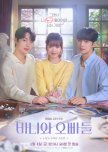
Come for the Pretty Faces, Stay Because You Forgot Where the Remote Is
Crushology 101 kicks off with a dazzling premise: a young woman, freshly humiliated, decides that from now on, only gorgeous men are worthy of her time. Truly groundbreaking. If you ever wanted a show that promises emotional growth and then immediately forgets about it in favor of pretty faces, congratulations... you’ve found it.-> Story and Pacing:
The opening scandal is genuinely hilarious. But after that, the plot politely packs its bags and leaves. Bunny’s "handsome-only" rule is less about emotional healing and more about assembling the Korean drama version of a boy band. Growth is "teased" (if by teased you mean "mentioned and ignored"), and episodes start blending together into one long montage of Bunny blushing at different men.
-> Characterization:
Ban Hee-jin (Bunny) begins as someone you root for, until you realize she’s stuck on a hamster wheel of terrible decisions, and the script is too scared to let her get off.
The male leads (Ji-won, Jae-yeol, A-rang)? Icons of originality. We’ve got the brooding quiet guy, the smug flirt, and the sensitive artist - almost as if someone checked off a bingo card titled "Standard K-Drama Love Interests."
Their instant fascination with Bunny is truly touching, considering none of them know her beyond her tendency to trip over her own feet and stare dramatically into space.
-> Tone and Execution:
The show fully commits to its webtoon look, which is adorable until it’s supposed to get serious. Emotional scenes flash by so fast you’d think the editors had a hot dinner waiting. Any heartfelt moment is immediately buried under a mountain of cartoonish antics. Emotional stakes? Never heard of them.
-> Highlights (Such As They Are):
Bunny’s internal monologues are gold if you enjoy secondhand embarrassment.
Jae-yeol and Bunny actually have chemistry (an endangered species here).
Every once in a while, the show remembers it could be about self-esteem and body image... before getting distracted by another "accidental fall into a guy’s arms" scene.
-> Verdict:
Crushology 101 is colorful, chaotic, and as deep as a puddle. It’s the perfect background noise for folding laundry or wondering what more interesting dramas you could be watching. It’s just another webtoon adaptation you forgot you watched.
Was this review helpful to you?
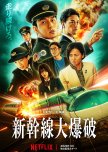
A High-Speed, High-Stakes Thriller
Shinji Higuchi, the visual mastermind behind Shin Godzilla, returns with Bullet Train Explosion, a gripping disaster-action spectacle that reimagines the 1975 cult classic The Bullet Train for a new generation.Takaichi, the stoic senior conductor aboard the Hayabusa No. 60, and Rena Nonen (Non) as a rookie train driver thrust into crisis, the film quickly builds tension when a chilling phone call warns of a bomb on board. The catch? If the train drops below 100 miles per hour (161km/h), it detonates. What follows is a high-octane race against time, with the bullet train turned into a ticking time bomb hurtling toward Tokyo.
While the government refuses to negotiate with the anonymous bomber demanding a 100 billion yen ransom, the fate of the passengers - including a disgraced politician (Machiko Ono), an insufferable tech mogul (Jun Kaname), and a panicked group of high schoolers - falls into the hands of the train crew and the determined JR East control team, led by Takumi Saitoh’s Kasagi.
Higuchi’s signature is all over this film: the polished VFX, the grounded sense of chaos, and his admiration for capable, everyday heroes. As in his previous work, Bullet Train Explosion is as much about human resilience and collaboration as it is about spectacle. The film doesn’t shy away from political jabs either. Its portrayal of indecisive politicians and corporate cowardice feels both timely and biting.
The bombers’ ultimate motives might stretch believability, but the emotional investment in the characters, the kinetic pacing, and Higuchi’s flair for cinematic destruction keep the film on track.
Verdict: Bullet Train Explosion is a turbo-charged tribute to disaster cinema. A suspenseful, stylish, and surprisingly heartfelt. Shinji Higuchi proves once again he knows how to detonate drama, not just bombs.
Was this review helpful to you?
This review may contain spoilers
A Thrilling Descent into Chaos
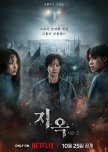
*Hellbound* Season 2 wastes no time plunging viewers back into its dark, morally complex universe where divine judgment and human corruption intertwine. This season raises the stakes, delving deeper into the mysteries surrounding the resurrection phenomenon while expanding its character dynamics in ways both shocking and exhilarating.The return of Jinsu (Kim Sung-cheol): His visions and ultimate transformation into one of the very monsters that once terrified humanity underscore the show’s central theme: no one is above judgment, not even the messiah-like figures they create.
Kim Jeongchil’s political machinations, in alliance with the government, form another key pillar of the season. His desperate attempt to maintain control over the New Truth by using Park Jungja (Kim Shin-rok) as a pawn adds a layer of intrigue and treachery.
Thematically, this season explores the devastating consequences of blind faith and power-hungry institutions. The New Truth’s “Resurrected One” plan, though initially grand in its ambition, becomes a symbol of their crumbling control. The demonic monsters serve as an ever-present reminder that divine retribution, though wielded by men like tools, remains uncontrollable and terrifying.
Meanwhile, Hyejin (Kim Hyun-joo) continues to act as the moral center of the show, pushing against the tide of corruption and madness. Her rescue mission for Park Jungja is one of the season's most thrilling arcs, showcasing her resilience and determination to protect the innocent, even in the face of overwhelming odds. The poignant moment of Jungja reuniting with her son provides a much-needed emotional reprieve amidst the chaos.
Director Yeon Sang-ho masterfully balances action, horror, and character-driven drama, creating a tense, chaotic atmosphere that builds relentlessly toward the finale. The introduction of new power players like Senior Secretary Lee, who manipulates events from the sidelines, adds political intrigue that complements the show’s exploration of spiritual fanaticism.
While the season provides plenty of answers, it also raises new questions, particularly about the resurrection and the true nature of divine judgment. The ending leave the future wide open for another chapter, rife with potential.
In short, *Hellbound* Season 2 intensifies its exploration of morality, faith, and the consequences of power, delivering a season that is as thought-provoking as it is thrilling. It masterfully intertwines human emotion with its dark, supernatural premise, making it a must-watch for fans of psychological and religious horror.
Theories I found good:
While Jin-su taunts Se-hyeong for wasting his last chance by trusting Jin-su, it is ultimately proven to be Jin-su who wastes his resurrection. He spends his second chance the same way he did most of his first life: selfishly, seeking a salve for his emotional pain without care for the pain he knowingly inflicts on others. Jung-ja’s declaration is its own kind of decree, as Jin-su realizes they are not the same.
Jae-hyeon may have a latent power, just as Jung-ja does.
What we do in this life, and how we care for each other, does matter. Even when Jin-su came back from hell, he feared he might still be in it. We create our own hell, individually and collectively, and even when there is a supernatural power also getting in on the game.
Stories have power, and Hye-jin is giving Jae-hyeon a good and true one. It is the kind of story that Jin-su was never told when he was little and alone. The kind of story Secretary Lee, the New Truth Society, or the Arrowhead would never bother telling because it doesn’t feed the kind of fast, uncaring power they are looking to grow. The kind of story Detective Jin Kyung-hun (Yang Ik-june) tells his daughter, Hee-jung (Lee Re), as she dies from cancer in his arms. Hee-jung lived most of her life under the thrall of Jung Jin-su and his empty promises, but it’s a family picture, a story of love, that gives her comfort in her final moments.
Was this review helpful to you?
This review may contain spoilers
Swipe Right on AI, Left on the Plot
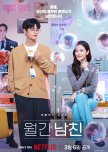
Boyfriend on Demand is built on a premise that feels both futuristic and alarmingly believable. The series follows Seo Mi-rae, a webtoon producer whose life runs on a relentless loop of deadlines, caffeine, and quiet existential dread. She is overworked, emotionally drained, and so buried in her job that dating an actual human being probably feels like signing up for a second full-time position. So when she is offered the chance to test a subscription platform that allows users to experience romantic relationships with AI-generated boyfriends inside immersive fantasy scenarios, she does what any exhausted modern person would do. She clicks “yes” immediately.And honestly, the first half of the drama is genuinely fun.
The concept taps directly into a very modern fantasy. Romance without inconvenience. These virtual partners are attractive, attentive, emotionally articulate, and perfectly tailored to the user’s preferences. They never forget anniversaries, never say something so baffling that it makes you question their entire personality, and never send those mysterious one-word text replies that somehow carry the emotional weight of a slammed door. The show understands exactly why this fantasy is appealing, and it leans into it with a playful energy that makes the early episodes entertaining.
Part of that charm comes from the rotating parade of AI “boyfriends” Mi-rae encounters inside the platform. Each scenario drops her into a carefully engineered love story designed to feel like the ideal romantic experience. The series even has fun with cameo appearances from actors like Seo Kang-joon and Lee Jae-wook, who pop up as various fantasy partners generated by the system. It is playful, a little ridiculous, and exactly the kind of premise that could spiral into something wonderfully strange if the show fully committed to exploring it.
Meanwhile, Mi-rae’s real life is far less dreamy. Her most consistent interaction with actual humans seems to involve arguing with her coworker Park Gyeong-nam, played by Seo In-guk. He is competent, calm, and irritatingly composed. He is the type of person who somehow manages to handle everything perfectly while everyone else around him looks like they are slowly unraveling. Their dynamic practically shouts that this will become the real romance. The show telegraphs it so loudly that it might as well flash it across the screen in neon.
What makes the premise intriguing is the uncomfortable question lurking underneath it. If someone could experience a perfectly curated romantic relationship in a digital environment, why would they willingly return to the messy unpredictability of real people? Real relationships involve misunderstandings, emotional baggage, awkward silences, and the occasional moment when you look at someone you supposedly love and wonder why they chew food like that.
For a brief moment, the series seems interested in exploring those ideas. It hints at becoming a story about how seductive engineered intimacy could be and how easily someone might drift into a world where romance is always satisfying and never complicated.
Unfortunately, the drama never pushes that idea nearly as far as it should.
Around the midpoint, the story begins repeating itself. Mi-rae cycles through different virtual boyfriends and fantasy scenarios, but the narrative does not evolve much beyond that pattern. The show seems oddly reluctant to dig into the psychological or ethical implications of the platform, which is ironic because that is the most compelling part of the entire concept. Instead of examining why someone might genuinely prefer a flawless digital partner to a real human being, the story gradually drifts away from the technology altogether.
Before long, the virtual dating premise fades into the background, and the series transforms into something far more familiar. It becomes a workplace romantic comedy about two coworkers who argue constantly but are clearly destined to fall in love. It is not a terrible shift, but it does make the original concept feel less like the engine of the story and more like decorative window dressing.
Mi-rae herself is also a somewhat uneven protagonist. She is clearly meant to be relatable, a hardworking professional who stumbles into an escapist fantasy. However, the writing occasionally nudges her behavior into territory that feels immature or oddly unprofessional. Watching her become increasingly absorbed in the platform makes emotional sense at times, but there are moments when you cannot help thinking that someone with her career responsibilities should probably have a little more self-control.
Performance-wise, the cast delivers solid work across the board. Jisoo brings a likable warmth to Mi-rae, while Seo In-guk has the kind of effortless screen presence that can make even a restrained character interesting. The issue is not the actors. The problem is that the script does not give them enough material to build a truly compelling relationship. Their chemistry flickers occasionally, but the story never digs deeply enough into their emotional dynamic to make the romance especially memorable.
In the end, Boyfriend on Demand is an enjoyable drama that never quite reaches the potential of its premise. It begins with a clever idea about digital intimacy and the seductive promise of perfectly engineered romance, but eventually retreats into the comfortable territory of a conventional romantic comedy.
And that is a little disappointing, because the concept had the potential to be strange, unsettling, and unexpectedly insightful about the way technology shapes modern relationships. Instead, the series settles for something lighter and far more familiar.
It is still pleasant to watch, but it just feels a bit like ordering a bold experimental dish, only to realize halfway through that it is basically comfort food wearing a futuristic costume.
Was this review helpful to you?
This review may contain spoilers
A LIFETIME IN EVERY MOMENT
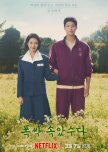
OVERVIEW:When Life Gives You Tangerines is a deeply moving drama that traces the life of Ae Sun and Gwan Sik, navigating hardship, love, and societal pressures in mid-to-late 20th century Korea. Ae Sun’s life intertwines with Gwan Sik, whose quiet strength and shared commitment to family provide an anchor amidst relentless challenges. Together, they confront financial instability, the rigid hierarchies of small-town society, and personal tragedy, while fostering hope, independence, and compassion in their children. Across the series, the narrative delicately balances moments of heartbreak, humor, and triumph. It explores themes of family loyalty, gender roles, socioeconomic inequality, love, grief, and the quiet heroism found in ordinary lives.
______
COMMENTARY:
I can still feel the salt on my skin and the bite of the wind off the sea when I think about Ae Sun. She is a woman forged by the ocean, by loss, by resilience, and by the relentless insistence of love in its quietest forms. From the very beginning, her life unfolds not as a series of grandiose gestures, but as a mosaic of small, aching moments: a poem left unread, a stepfather’s unfulfilled promises, the stubborn, unwavering devotion of a boy who never knew how to speak fully of his heart. Watching her grow is less about observing plot turns and more about feeling a lifetime compressed into the rhythm of the tides. The show isn’t content to simply tell a story; it drags you into the granular textures of Ae Sun’s life: her home, her family, the marketplace, the sweat and grime and tenderness of daily survival, and somehow makes those textures feel infinite, monumental, and unbearably intimate all at once.
There is something achingly human in the way Ae Sun navigates her early world, torn between families, loyalties, and her own yearning for connection. Her mother, a Haenyeo whose body and spirit were both battered by the ceaseless demands of life underwater, is at once fierce, distant, and heartbreakingly present. The story never paints her as merely heroic; it allows her to be flawed, exhausted, pragmatic, and yet capable of transcendent love. Ae Sun’s insistence on recognition, from the small victory of a poetry competition to her dreams of education and freedom, illuminates a universal longing for acknowledgment from the people we love most, and the show refuses to simplify the ache of being unseen. When her mother finally reads Ae Sun’s poem, when her words break through years of emotional barricades, the scene resonates with a raw, almost physical ache. It is an intimate reminder that love is often a quiet struggle, fought not with grand declarations but with persistent presence and unwavering commitment.
Gwan Sik’s presence in Ae Sun’s life is similarly understated yet monumental. From the earliest glimpses, he embodies a quiet, steady force: the boy who brings food, the one who looks out for her when the world threatens to sweep her away. His loyalty is never flashy, and yet it is suffocatingly vital, so much so that when Ae Sun pretends to reject the idea of marriage for his sake, I felt the weight of their shared sacrifices pressing down on every choice they make. The narrative’s brilliance lies in these little interstices, in the way it allows the audience to live through the silences as much as the dialogue, to feel the pauses between their words as loaded with history and love. It is in these silences that the show’s intelligence shines; the writers understand the gravity of the everyday, the way life accumulates meaning through small, consistent acts of devotion.
The juxtaposition of time frames: the past, present, and the reflective narration by Geum Myeong creates an almost literary texture to the series. It allows the narrative to oscillate between intimacy and the broader sweep of consequence, reminding us that each small act ripples across decades. Watching Ae Sun grapple with her stepfather’s betrayal, with societal expectations of women, and with her own ambitions, I saw the contours of a life shaped by structural limitations as much as personal choices. The historical context, from the years of post-war reconstruction to the economic upheavals of the 1990s, grounds her story in a vivid, believable reality. Yet, the show never becomes a history lesson; it’s always anchored in emotion, in the way these external pressures etch themselves into the bones and psyche of its characters.
Ae Sun’s approach to motherhood is another layer of profound intelligence in the storytelling. Her fierce insistence that her daughter Geum Myeong not be consigned to a life she herself endured, whether through the denial of a tricycle or the threat of becoming a Haenyeo, demonstrates the transgenerational lens through which the narrative operates. Ae Sun is not simply protecting her child; she is challenging the cycles of gendered labor, of constrained ambition, of societal expectation. Watching her negotiate with in-laws, fight unjust systems, and simultaneously nurture her family, I was reminded that heroism is often domestic, moral, and invisible. Her victories, whether small or large, carry an almost revolutionary weight precisely because they are grounded in the quotidian, in the refusal to accept a life that is diminished by convention.
The narrative’s handling of grief is nothing short of masterful. The death of her youngest child, the quiet toll of Gwan Sik’s laborious life, the eventual loss of Gwan Sik himself... all are presented not as melodrama but as lived experience. The series resists the temptation to resolve grief neatly; it lingers in the discomfort, the guilt, the quotidian struggles of moving forward. The parallel depiction of Gwan Sik’s private mourning alongside Ae Sun’s public resilience captures an elemental truth: that love and loss are not singular, linear experiences, but shared, multivalent, and often incomprehensible. The show’s refusal to sentimentalize these moments, coupled with its exquisite attention to the ordinary (meals shared, boats repaired, poetry written) renders its portrayal of human endurance profoundly authentic.
The arcs of secondary characters are equally compelling, intricately woven into the tapestry of the main narrative. Gwan Sik’s family, with their generational tensions, prejudices, and occasional redemptions, mirrors the broader societal pressures the protagonists face. The choices of Hyeon Suk, Eun Myeong, and Geum Myeong illustrate the ways parental influence, personal ambition, and historical circumstance collide in shaping identity. The show’s remarkable ability to render even tertiary characters with depth ensures that the world feels lived-in and emotionally credible.
Equally impressive is the series’ attention to the minutiae of cultural and historical specificity. From Haenyeo traditions and the rhythms of island life to the pressures of societal hierarchy, the narrative immersed me in a richly textured world. But it did so without overwhelming me with exposition; rather, these details are integrated organically into character decisions, plot developments, and emotional beats. There is a poetry in the way daily life is depicted, a sense that the ordinary is itself extraordinary when observed closely and with empathy.
The intergenerational narrative is another triumph. Geum Myeong’s story, from her struggles to assert autonomy to the eventual reconciliation of her ambitions with familial duty, echoes and refracts Ae Sun’s experiences, providing a meditation on the legacies of sacrifice, resilience, and love. The show’s subtle assertion is that while cycles may repeat, consciousness, courage, and affection can reshape outcomes. Watching Geum Myeong negotiate the modern urban world, in contrast with her mother’s historical milieu, reveals a thoughtful exploration of progress, societal change, and the enduring nature of familial bonds. Ae Sun’s support, her sacrifices, her quiet pride, and her guidance exemplify the ways parental love can empower rather than constrain, a rare and refreshing portrayal in any medium.
There is an emotional sophistication throughout the series that is rare for even the most lauded dramas. The joy is unpretentious, the humor delicate and situational, and the sorrow pervasive yet not exploitative. Moments such as Ae Sun stepping onto the boat despite superstition, Gwan Sik diving back to her in a symbolic embrace, or the family navigating financial and moral crises, are both narratively and emotionally satisfying because they are grounded in consequence, ethical choice, and love. Each act, large or small, resonates with lived truth; it’s impossible to watch without feeling a profound mixture of hope, despair, pride, and empathy.
Stylistically, the show is meticulous. The direction emphasizes naturalism: camera work captures the tactile texture of daily life, while editing maintains an organic rhythm that mirrors the ebb and flow of the characters’ lives. Ae Sun embodies a woman of depth, intelligence, and ferocity without losing tenderness; Gwan Sik conveys devotion and vulnerability in equal measure; Geum Myeong and Eun Myeong carry the weight of generational continuity convincingly. Even minor characters are fully realized, which is a testament to both writing and direction.
Perhaps what lingers most, long after the final frame, is the series’ meditation on time, memory, and the persistence of love. There is a temporal expansiveness to the storytelling; the narrative trusts the viewer to inhabit years of growth, struggle, and triumph alongside its characters. The past is never merely backstory, but it is the soil from which every emotional and moral choice grows. The present is never just a moment; it is a culmination of countless decisions, small acts of courage, and enduring bonds. And the future, glimpsed through the arcs of the children and grandchildren, carries the weight of hope and responsibility, tempered by the wisdom gleaned from hardship. It is this narrative philosophy that elevates the series above melodrama into something meditative and deeply human.
In reflecting on the entire story, I am struck by the insistence on the profound in the ordinary. Ae Sun’s poetry, written across decades, is more than art; it is a record of love, grief, endurance, and observation. Her book becomes a vessel for memory and emotional truth, demonstrating that a life’s worth is not measured by accolades or wealth but by the constancy of care, courage, and engagement with the world. The narrative’s cumulative impact is overwhelming: the triumphs are sweet, the tragedies wrenching, and the everyday moments carry symbolic weight because they are lived with attention, intention, and love.
At its core, the series is a meditation on what it means to live a full life: to face adversity, to love deeply, to make mistakes and take responsibility, to allow grief to shape rather than define, and to find beauty in the ordinary. It examines the intricacies of human connection, the balance between individual ambition and familial duty, and the moral and emotional complexities of everyday life. Every character, plot development, and emotional beat is interwoven into a rich, resonant tapestry that left me not merely entertained but fundamentally altered.
I have come away from this story with a deeper appreciation for the quiet heroism embedded in daily existence, for the way love can persist silently through years of hardship, for the ways grief and joy coexist in the same heart. Ae Sun’s life is not a fairy tale; it is something far more intricate, profound, and real. It is a life fully inhabited, and watching it unfold has left me, as a viewer, reflective, moved, and profoundly humanized.
_______
FINAL REFLECTIONS:
This drama did not simply unfold before me, but it reached out, took my hand, and walked me through the quiet poetry of life. It arrived like a whisper at the perfect moment, as if it had been waiting for me, knowing I needed it before I even did. And now, as I step away, I do so with a heart that sees more clearly, that loves more deeply - my parents, my siblings, the family I have yet to meet. Love that had always been there, yet somehow feels more vivid now, more profoundly alive.
With every episode, I wept, not just from sorrow, but from the weight of beauty, the kind that presses against your chest and makes you ache. The drama did not seek to impress; it did not force sentimentality. Instead, it captured life in its purest form. The fire of fleeting moments that propel us forward. The warmth of love that holds you just right, wrapping itself around you like a childhood memory. The unnoticed, mundane details of everyday life - the quiet rustling of morning, the lingering gaze of a loved one, the weight of an unspoken word - all painted with such tenderness that they became luminous.
But it also held space for the shadows, for the fractures we cannot bear to touch. It did not turn away from the memories we bury, from the wounds we pretend have healed. Instead, it showed the quiet, steady courage it takes to gather the pieces, to look back, to remember. And in that remembering, to choose - again and again - to keep living.
Never has a story felt so natural, so unassumingly profound, as if I had simply been invited to walk through life itself, to feel it fully. And as I reached the final moments, I cried - not just for what was lost, not just for what was found, but for the sheer, breathtaking experience of being alive.
To the writer who wove such delicate truths into a story, to the director and cinematographers who made every frame an embrace, and to the actors who did not merely perform but became - thank you. IU and Park Bo Gum shone as always, but every single soul in this drama - the parents, the grandparents, the brother, the sister-in-law, the rival father-in-law, the ex-boyfriend, the children - etched themselves into my heart.
I will return to this drama not just as a viewer, but as someone who now understands. Again and again, whenever I need to remember love. Whenever I need to remember life.
"THANK YOU FOR YOUR HARD WORK"
Was this review helpful to you?
This review may contain spoilers
A Soul-Stirring Exploration of Life, Death, and Redemption
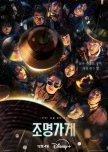
"Light Shop" is an emotionally gripping and thought-provoking narrative that masterfully blends supernatural intrigue with deeply personal stories of love, loss, and redemption. This series takes viewers on a poignant journey through the lives of characters who are trapped between life and death, all connected through an enigmatic light shop. With its rich character development, stunning visuals, and poignant exploration of the human condition, this show stands out as a must-watch for fans of supernatural dramas and psychological thrillers.PS: If anyone doesn't want any spoilers, scroll straight to the "conclusion" part.
Plot and Storytelling:
The concept of "Light Shop" is deceptively simple but profoundly complex. At its heart, it is a story of interconnected souls, each character grappling with their own past, regrets, and unfulfilled desires. What begins as an eerie, horror-like atmosphere, gradually transforms into an exploration of hope and second chances. Light Shop itself serves as a metaphorical crossroads where souls meet and interact, discovering not just the truth about their own lives but also the way their destinies are woven together.
The storytelling is nuanced, shifting seamlessly between different character arcs that initially seem unrelated. However, as the narrative unfolds, the viewer begins to see how these disparate lives intersect, all leading to a heartbreaking yet redemptive climax. Each episode builds tension, gradually revealing the layers of each character's tragic past and the complex emotional journeys they undergo. The pacing is well-balanced, ensuring that while the story has its emotional moments, it never feels rushed or heavy-handed.
Character Development:
The strength of "Light Shop" lies in its cast of deeply human characters, each of whom brings a unique perspective to the story. From Jeong Won-yeong, the mysterious and compassionate guardian of the afterlife, to Lee Ji-young, a woman whose love for her deceased boyfriend transcends death, each character is richly layered, with their own emotional baggage and desires. Their arcs are deeply interwoven, creating an intricate web of relationships that explores the themes of sacrifice, memory, and the pain of unspoken love.
Particularly compelling is the tragic story of Kim Hyun-min and Lee Ji-young. Their love transcends the boundaries of life and death, with Lee Ji-young's determination to save Kim Hyun-min, even after her own death, showcasing the lengths to which the human heart will go for love. The emotional depth of these characters is heart-wrenching, and their unresolved love story will undoubtedly leave viewers reaching for the tissues.
The transformation of Yang Seong-sik, a detective turned grim reaper, adds another layer of complexity to the story. His journey from skepticism to acceptance of his new role and his eventual involvement in guiding souls through the afterlife is both tragic and uplifting.
Themes and Symbolism:
"Light Shop" is rich with themes of memory, fate, and the blurry line between life and death. The concept of light as both a literal and figurative guide is central to the series, with each character’s story revolving around the choices they make when faced with death and the "light" that ultimately leads them to redemption or eternal separation. The lighting store itself symbolizes the fragile nature of life, offering solace, guidance, and sometimes, a second chance.
The show's exploration of life after death is presented in a way that feels both otherworldly and deeply relatable. It asks existential questions about the nature of our lives, our connections to others, and what happens when our time on Earth runs out. The characters' emotional arcs resonate universally, even though the setting is supernatural.
Visuals and Atmosphere:
The cinematography in "Light Shop" is stunning, with beautifully composed shots that emphasize the mood of each scene. The lighting, of course, plays a pivotal role in creating the atmosphere, whether it’s the soft glow of a light bulb or the dark, haunting street where characters wander, the use of light and shadow adds an eerie yet comforting dimension to the story. The show's visual style enhances its emotional depth, making each moment feel weighty and impactful.
Conclusion:
"Light Shop" is an unforgettable journey into the afterlife that not only explores the supernatural but also delves deep into the human experience. With compelling characters, a beautifully layered plot, and themes that resonate on a deeply emotional level, it is a show that stays with you long after the credits roll. Whether you're drawn to stories of love that transcend death, or you're interested in exploring the mysteries of the afterlife, "Light Shop" offers a unique and enriching experience that is as heartbreaking as it is uplifting. This series is a rare gem that reminds us of the fragility of life and the enduring power of love and memory.
A masterpiece in every sense. Highly recommended.
Was this review helpful to you?


