

 2
2 4
4 5
5 7
7 3
3 10
10 5
5 2
2 4
4 4
4 2
2 1
1 3
3 3
3 5
5 2
2


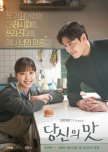
This review may contain spoilers
Starts Off Delicious, Then Overcooks the Drama
Tastefully Yours kicks off on solid ground, introducing a compelling opposites-attract dynamic between its two leads. Beom-woo, a sharp-edged corporate shark, and Yeon-joo, a sincere and grounded chef, are as different as they come. Their clash and eventual chemistry form the emotional heart of the story.Thematically, the show sets up a solid foundation. Yeon-joo’s reverence for food, sustainability, and community adds depth to what could easily be a typical "girl with a dream" storyline. Beom-woo’s journey from privileged arrogance to humbled self-awareness is predictable but still emotionally satisfying in parts. However, the rest of the plot often drags.
The food scenes are probably the best part: the traditional cooking, the contests, and the found-family vibe at Jungjae bring some genuine warmth and authenticity. That said, the rest of the plot often drags or feels rushed, especially the Japan storyline. It’s cluttered with pointless drama that adds nothing, like the love triangle with Yeon-joo’s ex, Min. That subplot is weak, feels shoehorned in, and actually undermines Yeon-joo’s character by turning her into a passive figure caught between two men.
The corporate sabotage and power plays get ridiculous at times, with predictable twists and thinly explained actions. Min’s “redemption” is unconvincing, and the repeated attempts to force drama around stolen recipes and arson stretch credibility. The pacing is uneven, where some episodes feel cluttered, while others rush through important developments.
In the end, Tastefully Yours is a cozy rom-com meal, but one that eventually overindulges in side dishes. Its first half is brisk, sweet, and full of flavor, but the second half meanders.
Still, there’s no denying the aesthetic appeal. The food sequences are beautifully shot, almost distractingly so. The visual language of food and care is a strength that the drama returns to again and again.
Was this review helpful to you?
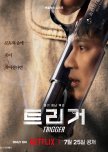
This review may contain spoilers
When Bullets Fly, Logic Dies
Trigger struts in like it owns the place. It promises dystopian thrills, a deep dive into the psychology of rage, and maybe even some searing social commentary. For a moment, you believe it. Then it trips over its own shoelaces, spills coffee on the manifesto, and starts showing stylish gunfights instead.Our hero, Lee Do, is a former military sniper turned police officer who treats his taser like a baby blanket. He’s calm, empathetic, and apparently the only person in Korea with competency. When massacres break out across the country, he’s reluctantly dragged back into gunplay.
Moon Baek, the man who lights the match, who hands everyone guns not for money, but for ideology. He’s all contradictions: flashy yet tragic, smiling while your moral compass quietly vomits in the corner. His presence crackles. Every scene with him is electric.
At its best, Trigger gives you an unsettling mirror: ordinary people realizing that a gun turns them from background extras into the main characters of their own revenge films. It’s chilling, human, and horribly plausible.
Then… the plot walks into traffic.
A teenager and a middle-aged woman find a gun through a casual Naver search, but the entire police force of South Korea can’t figure it out. “Internet? Never heard of it.” It’s the kind of plot hole you could drive a tank through, slowly, so nobody gets hurt.
The script also has a strange habit of making every character around Lee Do incompetent just so he can shine brighter. It’s not clever. It’s like stacking the chessboard so your opponent only has pawns, then bragging about your strategic genius.
In the end, the show’s grand answer to systemic rage is… well… a little Hallmark. Sweet, maybe, but so emotionally oversimplified it makes you wonder if someone swapped it for a public service announcement.
So Trigger starts like a sleek bullet that is fast, dangerous, aimed with precision, and ends like a firecracker in the rain: a lot of smoke, a little noise, and the lingering smell of something that could’ve been spectacular if only it hadn’t soaked itself in style instead of substance.
Was this review helpful to you?
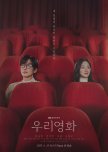
A Love Letter to Life, Loss, and the Stories We Leave Behind
OVERVIEW:In the poignant tale of "Our Movie," a once-celebrated film director finds himself mired in a profound creative drought, his passion for storytelling eroded by years of commercial compromises and personal regrets. Enter an aspiring actress, vibrant yet shadowed by a terminal illness that grants her a finite window to chase her dreams. She approaches him with an audacious proposal: to cast her as the lead in a deeply personal film that blurs the lines between fiction and their unfolding realities. As they collaborate on this makeshift production, what begins as a professional arrangement evolves into an intimate exploration of love, loss, and the redemptive power of art. The narrative unfolds through a series of tender, introspective moments where the characters confront their vulnerabilities head-on. The ML, stoic and introspective, grapples with reclaiming his artistic voice, while the FL infuses every scene with a defiant zest for life, turning their shared project into a metaphor for seizing fleeting joys amid inevitable sorrow. Themes of mortality weave seamlessly into the fabric of their romance, not as a maudlin device, but as a catalyst for profound growth, urging both protagonists to rewrite their narratives before time runs out. Ultimately, "Our Movie" crafts a narrative that resonates as a heartfelt ode to human connection, reminding us that even in the face of endings, the act of creation can forge something enduring and beautiful.
_____________________
COMMENTARY:
From the very first moment I hit play, it felt like this quiet pull, you know? Not the kind of drama that blasts you with over-the-top twists, but something subtler, like a gentle wave that slowly drags you under until you're fully immersed. I remember settling in with my coffee, expecting maybe a light romance with some film industry flair, but nope . . . it snuck up on me with this raw, honest look at life slipping away, and suddenly I was feeling all these things I didn't even know I had bottled up. The way the story unfolds, with the ML who's all bottled-up and lost in his own head, and FL who's bursting with life even though she's facing the end. . . it mirrored something in me, like how we all put off our dreams until it's almost too late. I felt this immediate connection to her energy; she's got this defiant spark, pushing through her illness with such grace and humor that it made me smile through tears more times than I can count. And him? His stoic vibe, that quiet intensity . . . it reminded me of people I know who hide their pain behind a facade of control. Watching them collide, it was like seeing two broken pieces fit together in the most unexpected way.
As I kept watching, the emotions just built up layer by layer. There were moments where I'd pause just to catch my breath because the heartache was so real, so palpable. It's not just about romance; it's this deep dive into what it means to truly live when you know time's running out. I felt this overwhelming sense of urgency mixed with melancholy . . . like, why do we wait for a wake-up call to chase what we love? The FL's vibrancy, her way of turning everyday moments into something poetic, it inspired me, but it also wrecked me. I'd find myself thinking about my own life during breaks, wondering if I'm really making the most of it or just going through the motions like the director was at the start. His journey, reclaiming his passion through their collaboration, hit hard too. It felt therapeutic, almost, watching him open up, layer by layer, shedding that creative slump. But oh, the themes of mortality? They weave in so seamlessly, not hammering you over the head, but lingering like a soft shadow. It made me reflect on loss in my own life, how love doesn't just vanish when someone's gone; it echoes in the stories we tell.
Visually, this thing is a feast . . . the cinematography pulled me in deeper with every frame. Those lingering shots on rain-slicked streets or cluttered editing rooms, the way colors shift from muted grays to warmer tones as their bond grows . . . it all felt like art imitating life, or maybe the other way around. I loved how it borrowed that French New Wave style, with jump cuts and nonlinear bits that made the narrative feel alive, unpredictable. It wasn't flashy, but elegant, like the drama was its own movie within a movie. And the OST? Forget it . . . those tracks would swell at just the right moments, turning a simple glance or confession into something that punched me right in the chest. I'd rewind scenes just to soak in the music layered over the visuals, feeling this mix of warmth and sorrow wash over me. It was healing in a weird way, like a hug that also stabs you a little, reminding you that pain and joy are intertwined.
The acting, though . . . that's what elevated everything for me. The ML, with his stoic, enigmatic presence, he didn't need big speeches; his eyes said it all, that internal struggle bubbling under the surface. I became such a fan of his nuanced performance; it felt so real, like he was drawing from some deep well of regret and rediscovery. And FL? She shone so brightly, bringing this radiant vulnerability that made her character feel alive, not just a trope. Her energy was intriguing, fresh - sometimes whimsical, sometimes heartbreakingly raw. Their chemistry wasn't the explosive kind; it was slow-burn, built on shared vulnerabilities and quiet understandings. Watching them navigate their feelings, from professional distance to something deeper, it stirred up all these emotions in me - hope, fear, tenderness. There were times I'd laugh at her subtle humor, like those little comedic touches amid the heaviness, and then bam, I'd be tearing up at how she faced her reality with such poise. It made me appreciate how the story balanced whimsy and heartbreak, never tipping too far into melodrama.
Deeper in, the meta layers really got to me . . . how their project blurs fiction and reality, turning art into therapy. It made me think about how we all rewrite our stories to find meaning, especially in the face of grief. The way it explores love disappearing or lingering after loss? That question haunted me, leaving me with this wistful ache. I'd finish a session feeling wrecked but also released, like I'd sobbed out some pent-up stuff. It's not a fluffy watch; it's the opposite of fancy plots - slow, slice-of-life melo about life, death, and connection. Yet, it reminded me we're blessed, even in chaos, to have moments of beauty. The side stories, like the crew dynamics or family backstories, added richness without overwhelming, making the world feel lived-in.
By the time it wrapped up, I was a mess . . . traumatized in the best way, but so glad I stuck with it. It changed how I look at things, urging me to live fully, passionately. Not as sad as I feared, but devastatingly brilliant, a work of quiet power that stays with you.
____________________
FINAL THOUGHTS:
As I sit back and reflect on Our Movie, after being swept up in its tender narrative, pouring out the whirlwind of emotions it stirred in me, and gushing over all the things I loved, I’m left with a quiet sense of gratitude and awe. This drama wasn’t just a show I watched; it was an experience that settled into my bones, leaving me changed in ways I’m still unraveling. It’s rare for a story to feel so intimate yet so universal, like it’s speaking directly to you while echoing truths everyone grapples with. My final thoughts are a mix of reverence for its beauty, appreciation for its imperfections, and a deep personal connection that makes me want to carry its lessons forward.
What lingers most is how Our Movie made me confront the fragility of life without drowning me in despair. The way it balanced heartbreak with hope felt like a gift . . . it didn’t shy away from the pain of loss, but it also showed how love, art, and human connection can make even the fleeting moments eternal. I found myself thinking about my own choices, the dreams I’ve shelved, the people I hold dear. It’s not that the drama gave me answers, but it asked the right questions: Am I living fully? Am I telling my own story with courage? Those questions hit hard, and I’m grateful for the nudge to reflect on them. The romance at its core, built on vulnerability and quiet understanding, reminded me that love doesn’t need grand gestures to be profound - sometimes it’s in the small, shared moments that you find something worth holding onto.
The visual and emotional tapestry of this drama is what I’ll carry with me most. Those cinematic shots, the swelling OST, the way every frame seemed to whisper about life’s fleeting beauty . . . it all wove together to create something that felt like a love letter to storytelling itself. I keep replaying scenes in my head, like the quiet confessions or the way they poured their hearts into their film, and I feel this ache mixed with warmth. It’s the kind of story that makes you want to call someone you love, pick up a passion you’ve neglected, or just sit with your thoughts and appreciate being alive. I’m already itching to rewatch it, to catch the nuances I might’ve missed, to feel that mix of a hug and a knife to the chest all over again.
In the end, Our Movie is a masterpiece of the heart. It’s a reminder that our stories, no matter how short or imperfect, matter. It left me wrecked, inspired, and profoundly grateful. I’d recommend it to anyone who’s ready to feel something real, to let a story break them open and put them back together. It’s not just a drama; it’s a mirror, a muse, and a quiet call to live with passion before the credits roll.
Was this review helpful to you?
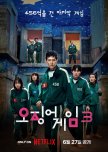
This review may contain spoilers
A FINALE AS HOLLOW AS THE VIPs’ ACTING SKILLS
**Disclaimer: This final review reflects my personal opinion after a second viewing.**Alright, I just tore through Squid Game Season 3, twice, and holy hell, it’s a wild, messy ride that had me hooked but also pissed off at times. This season claws its way back to Season 1’s brutal magic in the first half, betrayals that made me want to throw my remote, and characters I couldn’t stop obsessing over. But many parts straight-up fumbled, and I’m not here to pretend they didn’t.
Gi-hun’s still the heart of this thing, and his relentless fight to burn the game down had me rooting for him, even when it felt like he was slamming his head against a wall. Myung-gi, though? Man, he drove me nuts. No-eul was a badass, though. Her rogue mission and that insane office showdown? I was screaming when she saved Kyung-suk, finally showing her true grit. Jun-ho’s arc got some redemption after Season 2’s aimless mess, but it still felt like he was just flailing against untouchable billionaires. And the Frontman? Dude’s a snake, but a compelling one. His mix of sincerity and backstabbing kept me glued, even if I don’t trust him for a second.
The games hit like a truck: bloody, chaotic, and packed with Season 1 vibes like the marble game and hopscotch. The betrayals stung hard, especially when allies turned on each other like it was nothing. But to be honest, some deaths, like Jun-hee’s, barely made me blink compared to Hyun-ju’s or Geum-ja’s. It made Gi-hun and Myung-gi’s survival feel too predictable, like the writers were scared to go all-in.
The big problem? This season swings for the fences with Gi-hun, Jun-ho, and Woo-seok trying to topple this shadowy corporation, but it’s a lost cause from the jump. Season 1 worked because it was raw: survive, win, get out. Done. This dystopian Hunger Games wannabe vibe is cool in theory, but it’s too big for its own good. The whole “greed always wins” message? Yeah, I get it, but it left me hollow, like the show was just shrugging at its own stakes. And don’t get me started on the VIPs’ acting... cartoonish and stiff, it yanked me out of the story every time they opened their mouths.
It’s a bloody, thrilling mess that recaptures some of the old spark, but it trips over its own ambition and leaves you wishing for a tighter punch.
WHAT I DISLIKED:
• VIPs remain the weakest part of this show. Their acting is wooden, and their presence is cartoonish in a story that otherwise demands gravity.
• Characters like Players 203, 039, and 100, who made it so far in the games, are vivid but lack depth. Their archetypes were one-dimensional.
• While the death-game format still delivers high-stakes tension, I did feel the interpersonal dynamics falter this time. With fewer players remaining, that complex web of social and strategic interplay, the thing that gave previous seasons their gripping unpredictability, is significantly reduced.
• Jun-ho and Woo-seok’s investigation felt like an afterthought. Key moments, like Jun-ho harpooning Captain Park or Woo-seok’s jail stint, were rushed and poorly integrated with the island’s narrative, diluting their impact and making the outside world feel like a side note.
• The season continues the voting mechanic from last time and still aims to reflect modern ideological divides, but honestly, the metaphor feels dulled now. The outcomes were predictable, and the tension that once surrounded each vote has faded.
• The middle of the season sagged under the weight of repetitive character conflicts. Moments of quiet character development, like Geum-ja’s confession to Gi-hun, were often overshadowed by drawn-out brutality, disrupting the narrative flow.
• Unlike Season 1’s rich player dynamics, Season 3’s survivors rarely formed meaningful connections. The “Bathroom Team” (Hyun-ju, Geum-ja, Jun-hee) was a brief exception, but most interactions were transactional or hostile, making it harder to care about the group’s fate.
• The final scene introducing a new recruiter in LA came off as a blatant setup for a spin-off or sequel season. It felt tacked-on and cheap, undermining the emotional closure of the island’s destruction and Gi-hun’s sacrifice.
WHAT I LIKED:
• Gi-hun’s arc is the beating heart of the season. Watching him evolve from a broken, mute shell to a man who finds purpose in protecting Jun-hee’s baby is profoundly moving. His refusal to take the Front Man’s deal made me emotional. It’s a testament to his unshakable humanity, even when the world around him collapses into chaos.
• Jang Geum-ja completely wrecked me in a midseason scene that was both haunting and transcendent. Her dynamic with her son, Yong-sik, became one of the emotional cores of the season. I also appreciated how characters like Jun-hee and Hyun-ju gained complexity and rose to the top, offering some of the best scenes of the season and stepping up when Gi-hun has lost all hope.
• No-eul’s rogue mission is a standout. Her transformation from a conflicted pink soldier to a vigilante fighting for redemption is thrilling and emotionally complex. The office showdown had me cheering. Her choice to live, inspired by Gi-hun’s sacrifice, gave me hope that even the most broken can find purpose.
• Jung Jae-il’s score continues to haunt me, and the surreal, almost nightmarish production design makes even familiar game settings feel disorienting.
• Sae-byeok’s family reunion, No-eul’s flight to her child, and Jun-ho’s custody of the baby in the epilogue felt hopeful.
Was this review helpful to you?

This review may contain spoilers
The Agony and Ecstasy of a Lifelong Friendship
GENERAL OVERVIEW:Friendship, in its truest form, can be a shelter against life’s tempests. But in “You and Everything Else,” it IS the tempest: violent, consuming, and relentless. This decades-spanning drama charts the entanglement of Ryu Eun-jung and Cheon Sang-yeon, two women bound together by intimacy and enmity in equal measure. Their friendship, fraught with rivalry, betrayal, and longing, ultimately bends toward reconciliation, painting a portrait of love and destruction intertwined.
From their first encounter as fourth-grade students in 1992, when Eun-jung was poor and sharp-edged and Sang-yeon seemed perfect as the new transfer student, their dynamic is shaped by mutual resentment and envy. What begins as hostility morphs into a fragile bond through middle and high school, only to become more complicated in college when both fall orbit to Kim Sang-hak, complicating their already fragile dynamic. When they collide again in their thirties, their professional lives spiral into betrayal, jealousy, and stolen ideas within the film industry. In the present day, a terminally ill Sang-yeon re-enters Eun-jung’s life, requesting accompaniment to Switzerland for euthanasia.
What makes this drama remarkable is how believably it captures the way friendships shift with age. Childhood friendships break over small things and reconciliation is just as easy then, but as you get older fights become harder to undo and reconciliations rarer. You could just stop seeing each other and move on. The way the show makes the troubles deepen with time is believable, and it quietly shows the subtle shifts between liking and resenting someone. I especially liked that Sang-yeon and Eun-jung weren’t tied up and made to fight over love alone.
At first Sang-yeon had experienced the death of Cheon Sang-hak, and then mid-series her mother dies, but only after being given a terminal diagnosis does she seem to finally face the lifelong triggers she’d carried. She was full of fear: would she follow her brother into suicide, or suffer like her mother until she died? She said she found comfort in knowing that Switzerland exists. I liked that she had the chance to choose while she was still coherent, and with Eun-jung by her side she was no longer lonely. “Nobody will die happier than me.”
The script, direction, acting, and music were all so calm and composed, with muted colors and long takes that mirror the characters’ emotional restraint... almost documentary-like, and that’s why it made me cry.
It showed so well that Sang-yeon exists as she is now because of Eun-jung, and Eun-jung exists as she is now because of Sang-yeon. Even though their friendship wasn’t all happiness and fond memories, in fact, it was filled more with resentment and jealousy, even those memories became the driving force that shaped them. And so, the show convincingly insists that the two could only ever be each other’s one and only.
Eun-jung felt inferior to Sang-yeon, and Sang-yeon felt inferior to Eun-jung, but I think they were really just trying to fill their own lacks. They drifted apart out of mutual blame and envy.
Eun-jung has always been the one to reach out, so Sang-yeon probably asked her to stay with her at the end knowing Eun-jeong wouldn’t be able to refuse. All the awkwardness, annoyance, and hatred faded, and only then did they find peace, but the saddest thing is that there was no time left to be together. Eun-jung’s face, telling Sang-yeon without hesitation “you did well, you held on,” stuck in my chest.
The final episode in particular was so well made. It was undeniably sad, yet also beautiful. I’ve never seen a drama like this before. It just left me with such a strange, indescribable feeling.
____________________
INSIGHTS:
Eun Jung:
Ryu Eun-jung is the central protagonist, portrayed as a resilient, empathetic, and multifaceted woman shaped by hardship, complicated relationships, and a lifelong struggle between bitterness and compassion. Born into poverty, she grows up in a semi-basement with her single mother, a milk delivery worker. Early exposure to inequality, such as school surveys exposing her fatherless home, bullying, and constant financial strain, leaves her both envious of privilege and fiercely resilient. Helping her mother and hiding her shame about home life forge a toughness that coexists with deep vulnerability.
At her core, Eun-jung is considerate and sincere, qualities that draw others in. Even as a child, she refuses revenge when wronged, showing empathy that becomes her quiet strength. This warmth attracts Sang-yeon’s mother (a mentor), Sang-yeon’s brother Cheon Sang-hak (her first love), and later Kim Sang-hak (her college boyfriend). Yet this same natural charm sparks Sang-yeon’s envy, as Eun-jung effortlessly wins affection Sang-yeon struggles to gain. She can be pessimistic, shaped by traumas which leaves her with guilt, anxiety, and a fear of loss.
Her growth is defined by moving from envy to self-preservation. Academically strong but always second to Sang-yeon, she sacrifices personal wants for her mother’s sake. Inspired by Cheon Sang-hak, she pursues photography, but her college romance with Kim Sang-hak collapses in a love triangle with Sang-yeon. Though jealous and insecure, snooping through mailboxes and drawers, Eun-jung ultimately breaks things off to protect herself, showing her shift toward independence.
As a working adult, she remains principled and uncompromising. She clashes with Sang-yeon over ethics, refuses to let victims apologize to abusers, and calls Sang-yeon a thief after being robbed of her work, rejecting compensation to keep her dignity.
Eun-jung’s photography becomes a metaphor for her perspective. She captures moments of truth but struggles to see her own worth until Sang-yeon’s memoir reveals how deeply she shaped Sang-yeon’s life.
Her guilt over Cheon Sang-hak’s suicide stems from believing she could have saved him, a burden that parallels her later decision to support Sang-yeon’s euthanasia, showing her growth in accepting what she cannot control, even while bitter about the timing.
Alone afterward, she embodies the survivor’s paradox: resentful of betrayals, yet unable to hate fully.
Sang Yeon:
Cheon Sang-yeon is a complex antagonist-protagonist: brilliant, ambitious, and deeply flawed, her life arcs from privilege to isolation, driven by envy, loss, and unfulfilled desires. Introduced as a transfer student in 1992, she comes from wealth and stability: an apartment home, intact family, and prestige through her minister grandfather. As class president, she appears the perfect model student: authoritative, disciplined, excelling in academics. Yet this façade conceals insecurity. Rumors about Eun-jung’s milk deliveries (whether started by her or not) spark conflict, and her strict punishments betray a defensive need for control. To Eun-jung, Sang-yeon embodies utopia, everything she lacks, yet Sang-yeon herself suffers from favoritism, neglect, and longing for love.
Her personality blends confidence with fragility. Exceptionally capable, she is also envious and insecure. Her mother favors Eun-jung, her brother confides in her, and Kim Sang-hak loves her, all of which stoke Sang-yeon’s jealousy. Her provocations stem from this longing for validation. Most often she is secretive, manipulative, and destructive which shows when she sabotages friendships through betrayal and rivalry, steals Eun-jung’s work, among other incidents.
Tragedies accelerate her decline. Her brother Sang-hak’s suicide leads to divorce, poverty, and her mother’s eventual cancer. Overshadowed by her brother’s memory and by Eun-jung’s growing importance in her life, Sang-yeon spirals further. In college, she joins the photography club too late to win Kim Sang-hak, fueling regret and obsession. As a working adult, she is ruthless: sleeping with a director, stealing projects to launch her company, and forcing unethical compromises on staff before quitting under pressure.
Her manipulative streak peaks when she steals Eun-jung’s film project, but later revealed that this act stemmed from desperation to prove herself, not just malice, adding nuance to her character.
Her pancreatic cancer diagnosis mirrors her mother’s illness, deepening her fear of losing control and driving her to seek euthanasia as a way to reclaim agency.
Flawed, selfish, and destructive, yet painfully human, Sang-yeon embodies the tragedy of unhealed wounds and unrequited longing.
_____________________
FINAL THOUGHTS:
I have to say this drama left me in a reflective haze after finishing. It's one of those stories that doesn't just entertain; it burrows into your soul and makes you question the messy threads of your own relationships.
Philosophically, the show burrows deep. It made me think about how envy and loss can warp us into unrecognizable versions of ourselves, how the people we resent most often reflect the parts of us we lack. It’s Nietzsche’s abyss refracted through friendship: stare too long at your insecurities, and they consume you. Yet the drama insists redemption doesn’t come from erasing the past, but from choosing compassion in the face of it.
What I learned here is that forgiveness isn’t for the offender, but it’s freedom for yourself. Grudges are stones in the chest; only by letting go can you breathe. And lastly, pride is an illusion; chase it too long and you end up alone, begging for connection at the end.
The last episode was undeniably sad, yet achingly beautiful. I’ve never seen anything quite like it. It’s melodramatic yet deeply human, heavy yet strangely liberating.
I don’t regret a single scene. If anything, it made me want to text an old friend I’d drifted from, just to say, “Hey.” Because if this drama shows us anything, it’s that love and hate aren’t opposites. They’re entangled threads, woven across decades, impossible to fully untangle. And that’s what makes them endure.
May all the Eunjungs and Sangyeons of this world, even if they never truly understand each other, still find a way to live side by side.
Thank you for reading!
Was this review helpful to you?
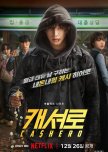
This review may contain spoilers
The Premise Runs Out of Money
Cashero presents itself as a deft combination of superhero spectacle and social commentary, but the series ultimately falters due to its lack of narrative clarity and discipline. What begins as an intriguing and socially attuned premise deteriorates into a confused and unevenly written drama.The story follows Kang Sang-ung, a timid civil servant whose distant and abrasive father leaves him with an unwanted supernatural ability. Sang-ung can access extraordinary physical strength only when carrying physical cash. The greater the amount of money on his person, the stronger he becomes, yet every use of the power directly consumes that cash. Within the South Korean context, where housing insecurity and financial anxiety shape the lives of many young adults, the metaphor is immediately resonant.
Sang-ung has no desire to become a hero. His ambitions are modest and personal, focused solely on saving enough money to buy an apartment with his girlfriend, Kim Min-suk, an accountant. Acts of altruism are something he actively avoids, and only external pressures force him into reluctant intervention.
In its early episodes, Cashero gestures toward a compelling ethical dilemma. The tension between personal survival and social responsibility is briefly explored through the mechanics of Sang-ung’s power. Because his strength depends entirely on liquid cash rather than credit cards, every sudden influx of money becomes a ticking clock. The question of whether he can secure his savings before being compelled into action initially provides narrative urgency.
This tension is squandered almost immediately. A prolonged early arc centered on an unexpected bag of cash exhausts the concept in one stroke, leaving little room for escalation or variation. What should have been an enduring source of suspense instead becomes a prematurely resolved gimmick.
Despite the conceptual richness of its premise, the series rarely examines its implications beyond surface-level humor. Recurrent jokes about masculinity and financial worth, such as Min-suk secretly adding bills to Sang-ung’s wallet to test his strength, substitute for meaningful character development. Kim Hye-jun, frequently cast in assertive and complex roles, is confined to a reductive portrayal of a nagging, money-obsessed partner. Sang-ung, meanwhile, drifts through the narrative with minimal growth, protected from accountability by the show’s indulgent framing of his reluctance.
The series briefly improves when it introduces a wider ensemble of misfit heroes. Byeon Ho-in can phase through walls only when intoxicated, while Bang Eun-mi’s telekinesis is activated through binge eating. These characters provide moments of tonal relief and comic potential, yet they remain largely underused, functioning as background figures rather than narrative drivers.
As an action drama, Cashero feels generic and underpowered. Its visual effects and fight choreography lack distinction, particularly when compared with more accomplished Korean superhero series that have demonstrated greater ambition and coherence.
The most damaging flaw, however, lies in the writing itself. The series repeatedly undermines its emotional stakes through abrupt tonal shifts and a failure to maintain narrative continuity. In one especially jarring moment, Sang-ung witnesses people die violently at the hands of the villain Jonathan, only for the story to immediately pivot to a warm domestic scene in which his trauma appears to have vanished entirely.
From scene to scene, Cashero struggles to define its identity. It piles up effects-driven set pieces and incompatible emotional beats, then leaves us to reconcile the contradictions on our own.
The opening episode hints at a sharper and more disciplined series. What follows is a steady and disappointing unraveling.
Was this review helpful to you?
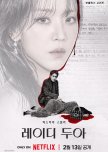
This review may contain spoilers
The Perfect Lie Wore Couture
Luxury comes with a price, often more for perception than substance. Sarah Kim wields this truth expertly, constructing an entire persona as the regional manager of the fictitious European fashion house Boudoir. She storms Seoul’s elite fashion scene with flair, hosting a launch party that captivates the city’s upper echelon. Yet after the event, Sarah vanishes. Her body is later discovered in a Cheongdam sewer, identified only by a distinctive tattoo and a rare designer handbag.Detective Park Mu-gyeong is tasked with the investigation, but the series quickly pivots from a conventional “whodunit” to a deeper, more unsettling question: Was Sarah Kim ever real? She had appeared abruptly, purchasing out entire collections from luxury boutiques and claiming authority over Boudoir, a brand so exclusive that few had ever heard of it. Her elaborate deceptions ensnare ambitious fashion insiders and nouveau riche elites, all eager for validation from old-money circles.
The show invites inevitable comparisons to Netflix’s Inventing Anna and the acclaimed K-drama Anna, scrutinizing society’s obsession with status and appearance. Sarah’s life is laid bare as a constructed fantasy, a brilliant con juxtaposed against her past as an indebted, ordinary woman. Boudoir’s success, entirely fabricated, highlights that prestige exists only as it is recognized by the powerful. Sarah’s narration sets the tone with chilling precision: “Truth, like light, blinds us. Falsehood is like a beautiful sunset that enhances everything.”
Narratively, the series is intricate and layered, employing fractured flashbacks that overlap timelines. The procedural element, the murder investigation, remains secondary, and while Mu-gyeong is visually compelling, his character lacks depth.
Visually, the series is sumptuous, filled with glittering handbags, exquisite couture, and sleek cinematography. Shin Hye-sun inhabits Sarah with remarkable versatility, effortlessly shifting between confidence, charm, and brazen audacity.
At its core, The Art of Sarah is a critique of modern society’s fixation on appearances over substance. Yet the show’s relentless emphasis on glamour sometimes eclipses narrative clarity, leaving illusion itself as the ultimate triumph.
Was this review helpful to you?

ONCE UPON A TIME IN CHUNGMURO
Madame Aema (1982) is a landmark in South Korean cinema. Released during Chun Doo-hwan’s authoritarian “3S Policy” era (Sports, Screen, Sex), it boldly tested the limits of censorship while becoming a commercial hit.Set in South Korea during the early 1980s, Aema follows the high-stakes world of Korea’s first erotic film, charting the journey of a seasoned star and an ambitious newcomer as they navigate a male-dominated industry rife with censorship.
Lee Hanee shines as Jung Hee-ran, a celebrated actress desperate to escape her sex symbol image, clashing with the manipulative producer Ku Jung-ho and director Kwak In-woo. Bang Hyo-rin’s Shin Ju-ae brings fire as a determined newcomer, whose ambition eventually leads her to forge an unexpected alliance with Hee-ran against systemic exploitation.
Visually, the series bursts with kaleidoscopic colors and audacious fashion, a stark contrast to the era’s typically somber portrayals. It foregrounds women’s solidarity while exposing the hidden suffering forced under patriarchal norms. Yet its message is paradoxically conservative: sexual desire is largely vilified, and only one character’s transactional sex is punished. The show favors energetic vignettes over historical accuracy, leading to caricatured characters and uneven tones, but it remains stylish and entertaining.
In essence, Aema is visually dazzling, thematically bold, and enjoyable, though its message and narrative clarity are somewhat muddled.
Was this review helpful to you?
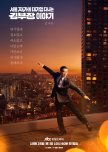
Brutally realistic yet unforgettable.
OVERVIEW:Kim Nak Su, once a perfection-obsessed corporate climber, loses everything and confronts the emptiness of authority without affection. His wife rebuilds their life through real estate, his son forges his own path, and those he once controlled learn resilience, empathy, and self-reliance. Through failure, therapy, and honest work, Nak Su discovers humility, the value of presence over praise, and the quiet dignity of rebuilding. Lives intertwine, mistakes leave scars, but growth emerges: adulthood becomes less about being right and more about showing up, forgiving, and living with the weight of one’s choices.
___________________________
COMMENTARY:
“The Dream Life of Mr. Kim” is a wolf in the clothing of a workplace dramedy. It starts off posturing like a typical corporate satire about an aging middle manager pressured by a soulless system, but by the midpoint it shifts into something far more brutal and intimate: a character study about a man who has spent his entire adult life worshipping the wrong gods.
I went into it expecting light cynicism, a few jokes about hierarchy, maybe some redemption arcs neatly tied with bows. Instead, I got a story obsessed with ego, fear, social masks, and the humiliating price of self-deception. And beneath that is a grim sociological truth Korea has been avoiding for decades: older workers aren’t retiring, they’re being pushed out long before they want to.
This isn’t just one man’s fictional tragedy. Kim Nak-su, the beating disaster-heart of the series, embodies the middle-class checklist so many Koreans strive for: a general manager position at a major conglomerate, an apartment in Seoul, and a son studying at a prestigious university. On paper, it’s the dream life. In reality, it’s a system designed to discard people quietly. Nak-su is abruptly reassigned from the company headquarters to a remote factory, instructed to “keep quiet, kill time,” and even clean up after dogs - a humiliating demotion that reflects what many Korean workers face.
Only 17.3 percent of retirees leave their main job at the official retirement age. The rest are pushed out, with the average Korean leaving their primary job at 52.9, nearly eight years before the legal retirement age of 60. Reasons include recommendations to resign, early retirements, restructuring, reduced workload, and company closures. Those forced out often slip into nonregular, temporary, or daily labor, doing deskilled work far below their qualifications.
Kim’s fictional trajectory mirrors this reality: after resigning, he cycles through precarious jobs, from delivery driver to chauffeur-for-hire, forced to work not by choice, but necessity, because the national pension won’t begin until 65 and pays barely enough for survival. Experts call this decade-long void the “income crevasse,” a period that traps older workers without meaningful support. The public pension system and corporate culture collide in cruel irony: seniors in Korea work at one of the highest rates in the developed world not for fulfillment, but because the alternative is financial collapse.
What makes this show infuriating and compelling in equal measure is that Nak-su is fully responsible for digging the hole he keeps tripping into. His downfall isn’t delivered by some cackling villain in a boardroom. It’s built from thousands of tiny choices: refusing to listen to his wife, ignoring the kindness of others because kindness doesn’t come with a title printed on a business card, pretending his family’s needs are beneath his ambitions. He is constantly choosing the shiny, shortcut version of life, the one that promises power without vulnerability, and that hubris becomes his personal horror story.
Yet the series refuses to flatten him into a caricature. You feel the panic underneath his arrogance. When his job begins slipping through his fingers, you see a man whose identity collapses with it.
When financial disaster strikes and he hides it from his wife, it’s not because he doesn’t trust her, it’s because he can’t stand the mirror she unknowingly holds up, the one that shows him as ordinary, flawed, and scared. The show handles those psychological fault lines with a surprising amount of empathy. It understands that hurt people cling hardest to the illusions that are killing them.
It swings from corporate satire to raw domestic drama to dark comedy that hits so close to the bone you feel uncomfortable laughing. And then there’s the physical comedy of Nak-su’s humiliations - scrubbing floors, dodging barking dogs, trying to play the office hotshot while everyone sees right through him. But that humor never feels like cruelty for entertainment. It’s the sharp edge of realism: life will absolutely kick you when you’re down, but it doesn’t always do it with tragic music swelling in the background. Sometimes it hands you a mop and tells you to get over yourself.
Ha-jin, Nak-su’s wife, is the unsung hero of the story. She grows quietly while he spirals - finding work, rebuilding confidence, facing reality head-on. She isn’t a saint; she’s frustrated, angry, and tired of shrinking herself so her husband’s ego doesn’t bruise. But she is emotionally honest in a world where everyone else is wearing masks. Her journey exposes the truth the show keeps circling: the people we love are the ones most affected by our cowardice. Nak-su’s greatest sin isn’t failure. It’s refusing to let himself be vulnerable with the one person who would catch him.
There is something bold and deeply Korean about the capitalism critique here. The pressure to “look successful” is a monster that eats people alive, and this show doesn’t let anyone escape its jaws unscathed. It’s not glamorizing hustle culture or offering some “work hard and you’ll win” fairy tale. It shows the middle-class dream as a treadmill running on fear: fear of irrelevance, fear of losing face, fear of being left behind. And when Nak-su clings to that treadmill until it throws him off, the series looks at the wreckage and asks: was he ever running toward anything real?
By the time Nak-su hits his lowest point, the show has earned every drop of his despair, and every glimmer of hope that follows. It’s not a series that hands out redemption like a coupon. It demands that Nak-su bleed for it. And in a landscape full of dramas where characters learn lessons in the final ten minutes and live happily ever after, it’s refreshing to see a story that understands real change requires pain, humility, and the courage to admit you’ve been wrong about everything that once defined you.
Watching this show feels like watching a man dismantle the false architecture of his life brick by brick until he finally sees the sky. It’s uncomfortable, tragic, occasionally hilarious, and ultimately deeply human. It’s not the dream life he imagined. But it might just be the first honest life he’s ever lived.
Was this review helpful to you?
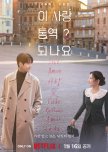
Can This Love Be Translated?
46 people found this review helpful
by Cora  1
1  1
1  2
2  1
1  1
1  1
1  1
1  1
1  1
1  1
1  1
1  1
1  2
2  2
2
1 1 2 1 1 1 1 1 1 1 1 1 2 2 This review may contain spoilers
LOVE LOST IN TRANSLATION
GENERAL OVERVIEW:A confident, stylish genre cocktail with too many ingredients and not enough heart. The Hong Sisters’ ambition is still very much alive, but this time, the excess comes at the cost of the romance it keeps promising and then kind of… not delivering.
The Hong Sisters are back with a glossy, globe-trotting romance that looks expensive, sounds clever, and occasionally seems to forget what story it is actually supposed to be telling.
Kim Seon-ho plays a multilingual interpreter, and Go Youn-jung is a struggling actress who wakes up from a coma as a global star. On paper, that is a killer premise. Truly, no notes. And yet the show treats it almost like a quirky side joke. Instead of really digging into fame, identity, or the emotional whiplash of waking up famous, it runs straight into genre chaos: rom-com meets zombie movie meets psychological breakdown meets travel brochure.
The central romance sparks early and then just… stalls. It gets strangled by increasingly implausible plot devices. Secondary love interests feel pushed to the sidelines, tonal shifts land with full soap-opera logic, and a bizarre split-personality arc crashes the party and derails what should have been the emotional core.
That said, the cast commits. Go Youn-jung shows real range and nerve, pulling off both charm and unhinged energy. Kim Seon-ho slides right back into romantic lead mode like he never left. And the overseas locations in Japan, Canada, and Italy are undeniably gorgeous, even when they feel like they are trying very hard to distract us from the narrative mess.
⸻⸻⸻⸻⸻⸻
COMMENTARY:
• What The Drama Does Right
I went into this drama cautiously optimistic, and for the first third, I was honestly impressed. The opening stretch felt mature in a way most romance dramas are not. It trusted silence. It trusted awkward pauses. It trusted the audience to sit with discomfort instead of constantly explaining everything like we are five years old. Ho-jin and Mu-hee were introduced as adults with emotional scar tissue, not shiny romantic archetypes, and that alone gave the show a stronger foundation than average.
Ho-jin works at first because he is restrained without being cold. His job as a translator is not just a gimmick. It actually feels like a real extension of who he is. He listens more than he speaks. He translates professionally while remaining emotionally inarticulate, which is such a good, thematically consistent contradiction.
Mu-hee works early on because she is not written as bubbly or quirky to hide her wounds. She is anxious, evasive, and deeply afraid of being unwanted. That fear shows up as people-pleasing and emotional retreat. Their early dynamic feels believable. The chemistry is not explosive. It is pressurized. It simmers. It lives in proximity, timing, and unsaid things instead of big dramatic declarations.
Where the drama initially succeeds is in how it frames love as a language that has to be learned. Miscommunication is not treated like a cheap plot trick but as a consequence of emotional fear. Ho-jin assumes rejection because he does not know how to ask for clarity. Mu-hee assumes abandonment because her past trained her to expect it. Their power balance shifts subtly, with Mu-hee holding social power and Ho-jin holding emotional steadiness, and neither knows how to bridge that gap. These dynamics feel intentional and grounded.
⸻⸻⸻
• The Moment It Loses Control Of Its Own Themes
Instead of deepening those dynamics through confrontation and conversation, the narrative starts outsourcing emotional conflict to increasingly convoluted plot mechanisms. The moment Do Ra-mi becomes more than a metaphor is exactly when the drama stops trusting its own emotional intelligence. What starts as a visualized coping mechanism slowly turns into a full-blown split personality storyline that hijacks everything. From that point on, Ho-jin and Mu-hee stop being two adults learning how to communicate and become pieces being moved around by Ra-mi’s logic.
The romance suffers because of this shift. Ho-jin goes from emotionally guarded equal to caretaker and problem solver. Mu-hee goes from flawed but autonomous woman to someone whose agency keeps getting overridden by her alter. The relationship becomes passive. Instead of tension driven by choice, we get tension driven by avoidance and withholding, which is way less satisfying.
Thematically, the show wants to argue that love cannot fix trauma but can coexist with it. That is actually a solid idea. Unfortunately, the execution keeps contradicting that message by stripping Mu-hee of the ability to actively choose love. Her fears are explained, externalized, and eventually personified, but they are rarely confronted directly through honest dialogue until very late in the game.
⸻⸻⸻
• Emotional Ideas vs Narrative Habits
I have complicated feelings about this drama because it is not incompetent, and honestly, that almost makes it worse. There are stretches where it feels genuinely thoughtful, even beautiful. The metaphors around language, translation, and emotional fluency are well chosen. Mr Kim’s repeated emphasis on learning someone else’s language, emotionally and otherwise, is one of the show’s clearest strengths. The early scenes where Ho-jin translates for others while failing to translate himself are quietly devastating and show how well the drama once understood its own premise.
I appreciated that the show did not rush Ho-jin and Mu-hee into a relationship. I appreciated that attraction was communicated through glances, timing, and shared silences instead of constant physical contact. I appreciated that both characters were allowed to be wrong, cowardly, and emotionally inconsistent without being villainized. There is something brave about how unromantic the romance is at times, especially Ho-jin’s bleak “we will break up anyway” philosophy, which feels psychologically honest even if emotionally corrosive.
But I kept questioning the writers’ lack of restraint. Every time the show landed on an emotionally resonant idea, it immediately escalated it. Trauma could not simply exist. It had to be shocking. Fear could not stay internal. It had to be dramatized through an alter ego who steals passports and drugs people. Emotional distance could not be bridged through conversation. It had to be deferred through misunderstandings and long separations. Travel, especially the Italy arc, starts functioning as a substitute for emotional progress, changing scenery instead of resolving avoidance.
⸻⸻⸻
• Missed Potential and Misused Pain
Hiro is positioned as a genuine romantic alternative, not a villain, not a rebound, not a jerk, which is refreshing on paper. But the writing never commits to his emotional reality. His feelings are treated like props. His televised confession is framed as monumental and then immediately stripped of meaning. His heartbreak is briefly dramatized and then brushed off with a tonal whiplash suicide scare that is frankly irresponsible. The show wants the emotional credibility of Hiro’s pain without committing to the consequences of it. That makes his entire arc feel exploitative. He deserved either a fuller emotional resolution or far less screen time.
Mr Kim sits squarely in mixed territory for me, even though I mostly like him. He is often the emotional backbone of the show and articulates its themes with clarity and warmth. But sometimes he veers dangerously close to being a mouthpiece. His wisdom can feel too polished and too conveniently timed. Real people are not always that articulate about emotional truth. Still, I would rather have him than not.
Yong-u is another mixed case. He is likable, grounded, and often more emotionally honest than the leads, which I appreciated. His subplot with Ji-seon works better than Ho-jin’s late-stage entanglement with her, but it still feels compressed. His career dilemma and romantic decision resolve too cleanly. The show gestures toward sacrifice and compromise without letting them sting.
Ji-seon’s storyline actively irritates me because it is badly timed, not because it is inherently bad. Her engagement, affair-adjacent tension, and unresolved feelings toward Ho-jin could have added meaningful emotional contrast earlier in the series. Instead, they get dragged into the final stretch, where they dilute rather than enrich the core story. By the time Ji-seon confronts Ho-jin emotionally, the audience has already emotionally moved on. The drama insists we care, but it has not earned that care at that point.
Nanami is another frustration. She swings between perceptive observer and plot delivery system. Sometimes she is emotionally intelligent, clocking things the leads cannot face. Other times she exists purely to overhear, misinterpret, or pass information along at exactly the wrong moment. She never quite feels like a person with her own interiority. She feels like a well-dressed narrative assistant.
Mu-hee’s aunt and uncle are especially underwritten. They are crucial to her trauma but treated more like thematic devices than actual people. Their motivations are vague, their cruelty unexplored, and their role in Mu-hee’s emotional imprisonment is never fully interrogated. The show wants us to accept their influence without really examining it, which feels like a cop-out.
⸻⸻⸻
• Structural Failures and Plot Escalation
The pacing in the second half is a mess. Episodes bloat unnecessarily, especially Episode 10, which drags emotional stalemates way past their impact. Scenes repeat the same emotional beats without moving forward. Characters circle the same realizations but refuse to say them out loud, not because it makes psychological sense but because the plot demands delay. This gets worse because the drama keeps confusing emotional ambiguity with emotional depth. Early on, ambiguity feels earned. Later, it just feels like stalling. Characters withhold information not out of fear or complexity, but because the narrative needs them to stall, and credibility slowly erodes.
Turning Do Ra-mi into a dominant narrative force is my biggest issue. It strips Mu-hee of agency, flattens Ho-jin into a reactive role, and reframes romance as something earned by enduring chaos instead of built through mutual effort. Trauma-informed storytelling should restore agency, not siphon it away, and here the drama does the opposite by externalizing Mu-hee’s fear so aggressively that healing happens around her rather than through her. The eventual reveal that Ra-mi represents Mu-hee’s mother is conceptually sound but arrives far too late to justify the narrative damage done along the way, especially since so much of Mu-hee’s earlier behavior is retroactively reframed as not entirely hers.
The late revelation that Mu-hee’s parents are alive is indefensible. It adds nothing emotionally or thematically. It trivializes earlier trauma, raises serious ethical and logical questions, and exists only to manufacture a final separation. This is not clever writing. It is lazy escalation. The show keeps weaponizing time like this, resolving thirteen-year estrangements and decades of trauma in a handful of scenes while stretching trivial misunderstandings across multiple episodes. The priorities are wildly skewed.
The winery subplot is borderline filler. Ho-jin’s mother, Dario, the wedding, the misunderstandings, all of it feels like an entire mini-drama grafted onto a story that did not need it. The reconciliation between Ho-jin and his mother is far too easy given the history presented. Burning your child’s book and cutting off contact for thirteen years is not something that resolves neatly over dinner. This arc reduces long-term emotional damage to a single conversation, which undermines the show’s earlier sensitivity to emotional wounds.
There is also a heavy reliance on coincidence. Characters overhear exactly what they need to misunderstand. People arrive at precisely the wrong moment. Confessions are broadcast publicly and then immediately negated. Emotional stakes are constantly introduced and then deflated, never given the silence or space needed to land. These choices erode emotional credibility and make the second half feel like it is constantly interrupting itself.
⸻⸻⸻
• What Still Works Despite Everything
Early Ho-jin and Mu-hee interactions are the show at its best. Their quiet dinners, shared listening, and tentative emotional steps feel real. The drama shines when it embraces awkwardness and lets conversations fail instead of rushing to fix them. There is a very specific loneliness in almost being understood, and the show captures that beautifully before it gets distracted by spectacle.
I also liked that Hiro was never villainized. The show deserves credit for resisting the urge to make him cruel or manipulative. His kindness and restraint are genuinely refreshing, and his encouragement for Mu-hee to pursue the person she loves is one of the more emotionally mature moments in the series.
Ho-jin’s reconciliation with his mother, while rushed, carries real emotional weight thanks to performance rather than writing. The scenes where Ho-jin silently processes his feelings, especially near the end of Italy, are among Kim Seon-ho’s strongest moments.
The final stargazing reunion works because it strips away most of the plot complications and finally lets the characters choose each other directly. It is not profound, but it is emotionally honest, and in a drama that so often overthinks itself, that simplicity feels like a small but meaningful victory.
The acting is strong. Kim Seon-ho carries emotional weight with subtlety, especially in scenes where Ho-jin processes his feelings silently instead of verbally. Go Youn-jung excels when playing both Mu-hee and Do Ra-mi, and her performance stays committed even when the writing undercuts her character’s agency.
Visually, this drama knows exactly what it is doing, and that confidence carries it hard. The cinematography is clean, deliberate, and emotionally literate without being pretentious. The lighting favors softness over gloss, which makes even the most curated settings feel human rather than aspirational.
And the OST was amazing, especially Daydream by Wendy. It is so beautiful and stays with you long after you finish the drama.
⸻⸻⸻⸻⸻⸻
FINAL THOUGHTS:
This drama understands people far better than it understands storytelling. Its strengths are in performance, character work, and thematic ambition. Its weaknesses come from not trusting those strengths without piling on twists. I would rewatch the first half, but not the full series.
The takeaway is clear and slightly mishandled. Love does not heal trauma by itself. Avoidance feels safer than hope. Emotional fluency does not equal emotional courage. The drama understands these truths but sometimes flinches from their implications. It wants to say that connection requires risk, but it often cushions that risk too quickly. The result is a story that gestures toward growth without fully committing to the discomfort it demands.
My final rating sits firmly at 8/10.
~Thank you for reading!~
Was this review helpful to you?

This review may contain spoilers
Overstuffed and Underwhelming
I binge-watched the entire series in one go, from yesterday evening until now. Chuseok is here, I have to wake up early, and my sleep schedule is completely destroyed. I kept watching anyway, not because it was consistently good, but because it was easy to consume and irritatingly watchable.When it ended, I did not come away thinking it was a success. What I felt instead was frustration, because the writer is clearly still talented and full of ideas, yet this project feels rushed, sloppy, and poorly controlled. At multiple points I genuinely wondered whether the writing was done under pressure, because the lack of refinement is impossible to ignore. The direction does it no favors, and knowing that the director dropped out midway explains the uneven pacing, abrupt tonal shifts, and scenes that feel stitched together without care.
Structurally, the story is almost shamelessly derivative of Goblin. Strip away the Arabian Nights skin and replace the genie with a goblin, and the narrative skeleton barely changes. Immortal being, cursed existence, emotionally damaged woman, fate-bound romance, inevitable separation and reunion. It is not homage and it is not reinterpretation. It is recycling. If the writer insists on returning to fantasy romance, this template needs to be abandoned completely, because it has nothing left to offer.
The show’s most damaging flaw is its obsession with excess. It crams angels, demons, genies, shapeshifters, gods, immortals, and half-explained cosmologies into a single narrative without committing to any of them. Instead of feeling expansive, the world feels incoherent. Interesting concepts are introduced and then immediately neglected. Sade and Irem, for example, could have sustained an entire subplot through their shapeshifting alone, but they are reduced to background noise in a story that refuses to prioritize.
The internal logic of wishes is a disaster. Sometimes a wish rewrites reality so completely that entire lives disappear, yet other characters conveniently retain memories when the plot needs emotional leverage. There is no consistency, no clear rule set, and no attempt to hide the arbitrariness. The lamp, which should function as a sacred or dangerous space, is treated like a public lounge. Any supernatural being, or anyone adjacent to one, can enter without resistance. This obliterates tension and makes the mythology feel cheap.
Khalid’s storyline is a particularly egregious misfire. His arc with Shadi feels like it was imported from an entirely different drama and stapled on. Every scene involving him drains momentum and contributes nothing of value. When he finally exits the story, it is a relief.
Visually, the drama is polished to the point of excess. The cinematography is undeniably beautiful, but it often feels like the show is hiding behind aesthetics to compensate for weak storytelling. Dubai glows, villages shimmer, cherry blossoms are framed like visual poetry, and yet none of it adds substance. The early flying scenes are especially bad, with aggressive cross-cutting, ridiculous zooms into space and back, and an OST that refuses to calm down for even a second. The music direction in general is intrusive and tone-deaf, constantly telling how to feel instead of letting scenes earn it.
Ironically, the much-mocked Kim Eun-sook-style banter works better than the spectacle. The problem is not her dialogue, but the desperate attempt to modernize it with Marvel and Disney energy. The writing functions best when it is allowed to flow naturally. Every attempt to look trendy only exposes how dated the sensibility actually is.
That datedness is most obvious in the Min Ji and grandmother bait. The female-female coding is not integrated into the story in any meaningful way. It exists purely to signal relevance, and because the intention is so transparent, it ends up feeling hollow and manipulative rather than progressive.
The structure is bloated beyond reason. Kayoung’s first wish alone, framed as five rounds with a best-of-three setup, is already excessive. On top of that, the story insists on juggling multiple wish-makers, past lives, angelic conflict, immortal politics, family trauma, neighborhood drama, and philosophical commentary on human desire. Nothing is given room to breathe. Cutting half of the side wish-makers and focusing on a single central conflict would have dramatically improved the series.
Episode three is the point where the show finally locks into something watchable. The “If I do it, it’s different” line lands hard, not because it is subtle or profound, but because it is a blunt collision of Kim Eun-sook’s writing habits and Kim Woo-bin’s screen presence. From that moment on, the series becomes tolerable, occasionally even engaging.
The chemistry between Kim Woo-bin and Bae Suzy works better than expected, especially in their past-life versions, but the romance itself remains underdeveloped. Ka-young’s emotional detachment consistently undercuts intimacy, and the humor built around her flat affect feels forced more often than not. There is less romance than the premise promises, not because it is absent, but because the show keeps prioritizing abstract themes about wishes over emotional progression.
The kiss scene is well executed and does some damage control, but it cannot compensate for the broader lack of romantic build-up. The compatibility is there, the writing just refuses to commit to it.
Ki Kayoung as a character is one of the few ideas that actually lands. Watching a character labeled a psychopath who nonetheless follows rules through learned behavior makes her more coherent and, frankly, more moral than most of the humans around her. In a world where no one even bothers with hypocrisy anymore, that contrast is effective, whether intentional or not.
The latter half of the series is noticeably stronger when it narrows its focus. Episodes centered on Genie and Ka-young, particularly those dealing with their past lives, are cleaner and more emotionally grounded. Whenever the narrative shifts back to immortal politics and angelic disputes, the momentum collapses. The resolution of these threads in the finale is weak and unsatisfying. The constant jumping between timelines is confusing rather than clever, and the Arabic narrative elements beyond Genie himself feel excessive and poorly integrated. Many capable supporting actors are simply wasted.
Kim Mi-kyung delivers exactly what she always does, which is solid, reliable emotional grounding. Ahn Eun-jin as young Pan Geum is excellent and arguably more compelling than the main character at times. Her warmth carries the role, even though the prolonged deception subplot overstays its welcome.
The finale delivers a happy ending for Ka-young and Genie, but it feels rushed and unearned. The series needed to clearly show how Ka-young died, how she became Genie, and why Iblis returned to her due to his misjudgment. Instead, everything is compressed into a final stretch that feels messy rather than emotional.
In the end, this is not a good drama. It is overambitious, derivative, poorly structured, and frequently incoherent. I will probably rewatch it, if only because after the ending, I found myself wanting to go back and see where it all started, flaws and all.
Was this review helpful to you?

This review may contain spoilers
When Disaster Thrills Drown in Ambition
Positives:• Intensely gripping first act with high-stakes survival sequences
• Kim Da-mi’s powerhouse performance anchors the emotional heart
• Convincing and affecting mother-child dynamic
• Visually striking and physically immersive set-pieces
Negatives:
• Sci-fi shift in the second half overwhelms narrative clarity
• Repetitive dialogue and uneven pacing
• Hee-jo is underdeveloped and largely functional
• Later VFX, editing, and score sometimes fail to support ambition
• Ambitious ideas clash with the grounded survival story
IN DETAIL [SPOILERS!]:
I like to believe that world-ending natural disasters belong to movies, not to the actual future waiting outside my window. The Great Flood leans into that fantasy, imagining a planet surrendering to water, while narrowing its focus to one woman, her child, and an apartment building in Seoul that is slowly becoming a coffin.
The story begins with Koo An-na and her young son, Ja-in, waking up to an emergency already in motion. The water is rising. The building is filling. Neighbors are panicking, climbing, disappearing. What struck me early on was how quickly the film establishes its physical stakes. This is not about spectacle at first; it is about movement, breath, space, and the constant calculation of how long you can stay alive in a place that no longer wants you there.
That early stretch works. It works largely because Kim Da-mi commits to the role without cushioning it. Her An-na is not stylized or heroic; she is tired, alert, and governed by instinct. The relationship with her son feels grounded, not designed to manufacture tears. Even when the child is difficult, as children in crisis tend to be, the dynamic holds, and I stayed with them.
The film also understands, briefly, how to use the body as a storytelling tool. The best moments rely on physical effort rather than explanation. Climbing, holding, waiting, misjudging distance... these sequences are tightly constructed and genuinely tense. For a while, I was convinced the film knew exactly what it was doing.
Then the writing starts talking too much.
Details about An-na’s past are dropped in with little grace, as if the film does not trust its own disaster to be meaningful enough on its own. Trauma is underlined instead of allowed to exist. Dialogue begins to circle the same ideas. Scenes repeat their emotional purpose without advancing anything. I caught myself drifting, and once that happened, it was hard to fully return.
By the middle of the film, I realized I had lost track of why certain things mattered. An-na’s professional importance, supposedly the reason Son Hee-jo is searching for her, had faded into the background. Hee-jo himself never solidified into a person for me; he remains more of a function than a character, present because the plot requires him to be.
When the film shifts into overt science fiction in its final act, I felt it slip through my fingers entirely. The intimacy that carried the opening is discarded in favor of ideas that are gestured at but never properly shaped. Concepts replace people. Explanations replace tension. Whatever the film is trying to argue about humanity’s future becomes increasingly difficult to pin down.
Worse, the craft begins to unravel alongside the story. The visual effects lose credibility, the flashbacks feel clumsily assembled, and the music presses itself into scenes without offering any insight. Instead of building toward something, the film becomes louder, busier, and less coherent.
By the end, I wasn’t frustrated so much as disappointed. The Great Flood starts with a clear sense of purpose and a strong emotional anchor, then gradually abandons both. Kim Da-mi gives it everything she has, and for a while, that is enough. Eventually, though, the film drowns its own strengths, leaving behind the sense of a story that never decided what it wanted to be.
Was this review helpful to you?
This review may contain spoilers
Survival Is Just Delayed Defeat
OVERVIEW:Bloodhounds Season 2 follows former boxer Gun-woo and his loyal friend Woo-jin as they are pulled deeper into a brutal underground network that connects illegal boxing, corrupt officials, intelligence operatives, and international crime syndicates. What begins as a pursuit of justice after violent threats against Gun-woo’s family quickly expands into a larger conflict involving kidnapping, blackmail, cyber intrusion, and institutional betrayal. The pair’s bond remains central as they navigate escalating dangers while trying to protect Gun-woo’s mother, So-yeon, and their closest allies.
Opposing them is Baek-jeong, a ruthless figure who weaponizes boxing as part of a wider criminal enterprise, using fighters as tools within a controlled system of exploitation and profit. As alliances shift and hidden operatives surface, the story reveals a network where law enforcement and criminals often overlap, blurring the line between justice and corruption. The season builds toward a high-stakes confrontation that exposes how deeply violence is embedded in power structures, leaving the characters caught in an endless cycle of survival and retaliation.
____________
A MORE DETAILED REVIEW (SPOILERS!):
Bloodhounds Season 2, to me, feels like the moment a story stops pretending it is about sport, discipline, or even personal rivalry, and instead admits it has been about systems of control all along. It feels more like a story that gradually sheds its original identity until what remains is a study of systems, pressure, and human beings being processed through structures they barely understand and cannot meaningfully escape. If Season 1 still carried the memory of boxing as discipline, brotherhood, and physical expression of moral conviction, this continuation slowly dismantles that illusion. What replaces it is not a cleaner or more focused narrative, but something far more sprawling and uncomfortable, where violence is no longer personal or contained but distributed across networks of money, influence, surveillance, and institutional compromise. From my perspective, the story becomes less about individuals fighting each other and more about individuals being moved through mechanisms that were already in motion long before they entered the frame.
What stands out to me immediately is how the emotional center remains deceptively simple. Gun-woo and Woo-jin still function as the heart of the narrative, and that continuity is important because it prevents the story from becoming purely mechanical. But even they feel increasingly less like protagonists shaping events and more like reactive figures being carried forward by consequences they did not originate. Gun-woo, in particular, reads to me as someone who internalizes systemic violence as personal responsibility. Every time something goes wrong around him, he absorbs it not as evidence of a broken world but as evidence of his own insufficiency. That psychological pattern becomes one of the most important engines of the story, because it is precisely what makes him usable by others. His loyalty, his protectiveness, and his refusal to abandon people are not treated as pure virtues anymore; instead, they become entry points for coercion. Woo-jin, in contrast, feels like a stabilizing presence who understands that survival in this world requires emotional endurance rather than emotional purity. I do not see him as someone who solves Gun-woo’s problems, but as someone who prevents Gun-woo’s guilt from becoming complete self-destruction. Their relationship, in my reading, is not idealized brotherhood but co-dependent resistance inside a collapsing environment, where affection is not safe but still necessary.
The antagonistic force represented by Baek-jeong, in my interpretation, is less a character and more a system with a face attached to it. I do not experience him as motivated primarily by pleasure in violence or even traditional criminal ambition. Instead, I see him as someone who understands optimization of control. He recognizes that people are not just individuals to be defeated but nodes in a network that can be influenced, threatened, redirected, or economically exploited. What makes him particularly unsettling is not his physical dominance, but his strategic understanding of how to convert emotional bonds into leverage. He does not simply harm people; he restructures their decision-making environment so that every choice leads back to him. That creates a sense of inevitability around his actions, as if resistance is not something he overcomes through strength alone, but something that collapses under its own compromised conditions.
As the narrative expands, I increasingly interpret the world itself as hostile infrastructure rather than a neutral setting. Institutions that should theoretically provide stability, such as law enforcement, intelligence structures, and formal investigative bodies, appear fragmented and inconsistent. At times they attempt to intervene, but their interventions feel reactive, delayed, or compromised by internal infiltration. This creates a persistent ambiguity in how authority functions. It is not entirely absent, but it is unreliable, and that unreliability becomes part of the threat environment. Even when legal mechanisms are activated, they do not produce closure; they produce temporary displacement of conflict. This is one of the reasons I find the story emotionally destabilizing, because it removes the conventional expectation that escalation leads to resolution through institutional correction.
What intensifies this feeling is how violence itself evolves across the narrative. Early confrontations still resemble structured physical contests where skill, endurance, and strategy are visible and legible. However, as the story progresses, I notice a gradual shift away from direct confrontation toward orchestrated harm. Violence becomes increasingly indirect and procedural. It takes the form of surveillance manipulation, digital intrusion, coercion through family leverage, drugging, infiltration, staged encounters, and logistical ambushes. Even when physical fights occur, they feel like endpoints of much larger systems rather than isolated contests. The boxing ring, once symbolically central as a space of discipline and identity, is gradually recontextualized as just another controlled environment within a broader machinery of exploitation. That shift fundamentally changes how I interpret every fight. I stop seeing them as expressions of individual ability and start seeing them as outcomes of pre-established conditions that determine who is allowed to win and under what cost.
One of the most consistent emotional patterns I observe is the transformation of guilt into a structural vulnerability. Gun-woo’s internal logic repeatedly converts external violence into personal failure. This is not simply a character trait; it becomes a mechanism through which the narrative escalates pressure. His inability to emotionally externalize responsibility makes him susceptible to manipulation because every threat against others becomes an internal obligation to act, regardless of strategic cost. Woo-jin’s presence complicates this dynamic in a stabilizing way, but even that stability is limited. I see Woo-jin not as someone who resolves the system’s pressure, but as someone who distributes it more evenly so that Gun-woo does not collapse entirely under its weight. Their bond, therefore, is less about purity and more about shared endurance under conditions that actively punish attachment.
Collateral damage, in my reading, is not treated as incidental but as structural. Secondary characters are not simply endangered; they are integrated into the mechanics of escalation. They function as pressure points, bargaining chips, and informational triggers that move the narrative forward. Their presence is often temporary, and their removal is rarely framed as exceptional. Instead, it feels consistent with how the world operates. This creates a moral environment where attachment itself becomes risky, not because the narrative punishes emotion arbitrarily, but because emotion is precisely what can be exploited. Even spaces that initially appear safe, such as homes, hospitals, hotels, or police facilities, quickly reveal themselves as permeable. They are not sanctuaries but temporary configurations that delay exposure to external force.
As the story progresses, I also notice how technology and communication systems become integral to the violence rather than separate from it. Surveillance networks, hacking, livestreamed betting environments, and encrypted coordination all contribute to a sense that visibility itself is weaponized. Nothing is private in a way that is stable. Everything can be accessed, interrupted, or repurposed. This contributes to a constant state of anticipatory tension, because even moments of relative calm are undermined by the awareness that they are being observed or can be disrupted at any time. The world feels like it has no blind spots that remain unexploited for long.
The role of institutions becomes increasingly ambiguous in this expanded view. Law enforcement and allied agencies are not simply ineffective; they are inconsistently positioned within the same ecosystem of compromise that defines the antagonists. Sometimes they resist, sometimes they cooperate, sometimes they are infiltrated, and sometimes they are simply too fragmented to act coherently. This ambiguity removes any clear moral hierarchy from the narrative world. Authority does not sit outside violence as a corrective force; it is entangled within violence as one of its many expressions. That realization significantly alters how I interpret every intervention. Even arrests or tactical raids do not feel like resolution but like temporary reconfigurations of control.
By the time it reaches its convergence, what becomes most clear to me is that resolution itself has been conceptually dismantled. Even apparent victories do not function as endings. They function as transitions between layers of the same system. When a dominant figure is removed from one position, the structure does not collapse; it adapts. It redistributes influence. It reassigns roles. That creates a lingering sense that nothing in this world is truly concluded, only repositioned. The violence does not stop; it changes format. The people involved do not exit the system; they change their function within it.
_____________
FINAL THOUGHTS:
In the end, what I am left with is not the impression of triumph, justice, or closure, but the impression of continuity. The story does not allow me to believe that violence can be fully resolved through individual effort, moral conviction, or even collective resistance. Instead, it presents a world where violence is embedded in infrastructure, where systems absorb disruption and reconfigure around it, and where human beings are continuously moved through roles defined by power they do not control. Even survival, when it occurs, does not feel like escape. It feels like temporary relocation within an ongoing structure that has no clear boundary and no final point of resolution. And that, more than anything else, is what stays with me.
Was this review helpful to you?
A Confession That Changes Everything
The Price of Confession is prestige pulp polished to a high gloss - serious in appearance and tone, yet unafraid to indulge in moments of moral excess that are all the more compelling for their restraint.Jeon Do-yeon leads as An Yun-su, a widow accused of murdering her husband. The series makes little effort to manufacture doubt about her innocence; instead, its tension arises from watching her ethical resolve erode under sustained pressure, particularly when her child is used as leverage. Jeon’s performance is characteristically formidable; she's measured, wounded, and quietly ferocious, grounding the narrative even as it veers toward heightened drama.
Kim Go-eun commands attention as Mo-eun, the enigmatic inmate known as the “Witch,” who offers to confess to Yun-su’s alleged crime in exchange for a favor that functions less as a request than as a moral pact. Her portrayal is precise and unsettling, injecting the series with a volatile ambiguity that keeps the central relationship taut.
Park Hae-soo’s obsessive prosecutor contributes mounting pressure rather than narrative mystery, while the surrounding media frenzy and legal maneuvering expand the show’s thematic scope without diluting its focus.
The drama proceeds deliberately in its first half before pivoting into a second act dense with psychological twists and reversals.
In the end, The Price of Confession is a dark, intricately plotted duel between two exceptional actresses, executed with confidence and control. Slick, unsettling, and eminently binge-worthy.
Was this review helpful to you?
This review may contain spoilers
I didn’t know if I had the capacity to sit through this. Not because I didn’t want to, but because I was afraid of what it would do to me. Afraid of the weight of it, of carrying it with me after the credits rolled.But here’s the thing: once it began, I couldn’t look away. And I'm still shaking.
The word “survivor” has never felt so complicated. They didn’t just “make it out.” They clawed their way out. They stitched themselves together in rooms built to destroy them. And surviving didn’t mean it ended. It meant beginning a second life, one that society rarely has space for, one that the rest of us would rather not look at because it makes us uncomfortable.
The stories ripple through decades of Korean history:
Brothers Welfare Center first. I swear, this one made my blood boil. They grabbed people off the streets for being poor. Kids. Adults. Anybody. Locked them up in a “welfare center” that was just torture in disguise. People starved, abused, disappeared. Survivors are elderly now, their lives permanently bent around this one horror, and they still haven’t even gotten a real apology. Like… are you kidding me? Watching them speak, I felt ashamed to live in a country that let this happen and then buried it under silence. It wasn’t long ago. It was here, on this same soil I stand on.
Then JMS. And okay, hearing Maple again? I wanted to throw my laptop across the room. She is tired. You can see it. She gave her entire youth to a cult that stole her body, stole her time, stole her voice. And she’s still fighting. Still carrying this. Meanwhile, JMS is still operating. People are still defending him. And I’m like: how many women have to stand up bleeding before we finally say, enough?
But Jijonpa… I wasn’t okay after that. I don’t think anyone could be. A literal “murder factory.” The only survivor describing nine days in that hell; nine days of obeying, cooking, clinging to whatever shred of hope they dangled in front of her. She begged not to be cut into pieces. That was her prayer. Do you understand how broken you have to be to beg for that? How do you listen to a sentence like that and not feel your soul rearrange itself?
And then Sampoong. A department store, like… people were just shopping, working, living. And in seconds, gone. 502 dead. Thousands crushed or buried alive because some men wanted to save money on concrete. Survivors crawl out, but they never leave. They’re still down there. Their bodies walked out, but their souls are buried under the rubble. You can hear it in their voices. They’re still trapped.
I think what shook me most wasn’t just the horror of what happened; it was how familiar the silence around it felt. The forgetting. The way people moved on. The way entire systems turned their backs. Survivors didn’t just have to survive then; they’re still surviving now.
Critique:
Sorry, but the producers? They get a fat zero from me. Because why do you think it’s okay to shove them back into the exact cages they barely crawled out of? Dressing survivors in jumpsuits, tying ropes around their wrists, reconstructing cells, like trauma cosplay? That’s exploitation dressed up as “immersion.”
Their voices alone are enough. Their memories are enough. The tremble in their hands, the cracks in their voices, the weight in their eyes, that tells me everything I need to know. You don’t need to retraumatize them. You don’t need to manufacture “shock value” when the truth is already unbearable. And honestly, it makes me sick that the same system that silenced them for decades is now packaging their pain for viewership points. Survivors aren’t props. Their suffering isn’t a set design.
Final thoughts:
I don’t know how you’re supposed to “wrap up” after something like this. There isn’t a neat bow you can tie on four different hells. It’s ugly. It’s exhausting. It’s waking up every day with scars people can’t see and realizing the world would rather you stay quiet about them.
And yet… they spoke. They sat in front of cameras and dragged these memories out of their bones so we wouldn’t forget. That’s not just bravery, that’s sacrifice. Because every time they tell it, they have to relive it.
Which is why the production choices bothered me so much. Survivors don’t need ropes or cells or costumes to “set the scene.” They are the scene. Their words, their tremors, their pauses... that’s enough. Honestly, more than enough. And I can’t shake the feeling that forcing them through those re-creations was like retraumatizing them for the sake of aesthetics.
If it weren’t for that, this would’ve been a perfect 10 for me. No hesitation. But because of those choices, I have to knock it down to an 8. And that sucks, because the survivors gave us everything. They deserve nothing less than perfection in how their stories are told.
So maybe the only real final thought is this: don’t look away. Sit with it. Let it haunt you. Because the survivors don’t get to walk away when the credits roll, and neither should we.
Was this review helpful to you?


