


 25
25 46
46 8
8 1
1 1
1 1
1 1
1 1
1 1
1 7
7 2
2 3
3 1
1 1
1 1
1 1
1 4
4 1
1 3
3


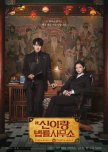
Verdict: Emotion Sustained, Logic Dismissed
Phantom Lawyer opens with a premise that sounds like it came straight out of a quirky 판타지 meets 법정 mashup. Shin Yi Rang is introduced as a kindhearted, almost too pure-for-this-world lawyer who keeps failing job interviews because of his father’s stained reputation as a corrupt prosecutor. With nowhere else to go, he opens his own law office, and this is where the drama quietly tells you to suspend logic. I could not help but side-eye his decision to rent a place that practically screams “haunted real estate discount.” One incense stick later, and Yi Rang gains the ability to see ghosts tied to talismans left behind by their loved ones. These spirits carry regrets, resentment, and unfinished stories, and Yi Rang becomes their unexpected counsel, helping them resolve what they could not in life.
From there, the story settles into a case-of-the-week format. Each ghost client brings a new emotional thread, and Yi Rang handles them with unwavering kindness. The emotional angle is clearly the drama’s priority, often choosing heart over legal complexity. Cases tend to resolve a little too neatly, sometimes relying on convenient turns rather than solid groundwork. Early on, many of Yi Rang’s cases overlap with Han Na Hyeon, an elite lawyer with a flawless winning streak. While their rivalry is meant to create tension, the constant overlap feels more like coincidence doing overtime than organic storytelling. Some cases wrap up so quickly that they barely leave room for legal depth. Evidence appears just in time, confessions come easily, and loopholes that would normally spark debate are brushed aside for pacing. It feels less like a courtroom battle and more like a moral fable dressed in legal robes.
The structure does not do much to support a larger narrative either. Most cases exist in their own bubble, rarely tying back to a central conflict. Yi Rang’s father’s scandal is positioned as the emotional backbone of the story, shaping Yi Rang’s struggles and reputation. Yet, this supposed main conflict only truly takes center stage in the final stretch, and even then, it resolves within roughly one and a half episodes. The investigation feels rushed, the evidence conveniently detailed, and the resolution lands more on the comical side than the impactful one might expect. For a storyline that had been quietly looming since the beginning, it lacks the weight needed to deliver a satisfying payoff. The drama stays consistently light from start to finish, which is not inherently a flaw, but it does limit its potential for a memorable climax.
The final family dinner scene tries to pull everything together emotionally. The concept is touching, almost designed to be a tearjerker, but the execution does not fully land. Choi Won Young, as Shin Gi Jun, delivers a standout performance that adds genuine emotional depth. His presence elevates the scene, making you feel the weight that the script struggles to carry. Unfortunately, the rest of the ensemble does not quite match that intensity. Kim Mi Kyung plays the mother with a restrained expression that borders on flat, while Son Yeo Eun, playing the sister, shines in brighter moments but falters when the tone turns heavy. There is even a moment involving Yi Rang’s coma that feels unintentionally awkward due to the uneven emotional delivery. One small but nagging detail is Yi Rang’s niece, who never questions the bizarre situation unfolding around her, which feels like a missed opportunity for a more grounded touch.
Character writing is where the drama struggles the most. Yi Rang’s defining trait is his endless kindness, but it is written in a way that feels exaggerated, almost like a morality lesson aimed at children. Yoo Yeon Seok has proven in other works that he can portray warm and selfless characters with nuance, but here, he is boxed in by a script that leans too heavily into idealism. Han Na Hyeon undergoes a similarly jarring shift. Esom initially brings a sharp, charismatic edge to Na Hyeon as a win-at-all-costs lawyer, but after her sister’s arc, the character pivots into a softer, justice-driven persona who suddenly becomes shy and romantically inclined. The transition feels abrupt, like a switch flipped without enough buildup.
Yang Do Gyeong is perhaps the most confusing character of the bunch. His personality swings between intimidating, obsessive, comedic, and eventually sympathetic. At times he seems unstable, at others almost childlike, and by the end, he reveals a more grounded motivation tied to his desire for his father’s approval. There is an interesting idea buried there about pressure, resentment, and morality, but it never fully settles into a clear or consistent portrayal.
Then there is the question no one in the drama seems eager to answer. Does Yi Rang actually make money? Representing ghost clients is noble and all, but unless there is a living client willing to pay, the business model remains a mystery. It becomes one of those lingering thoughts you cannot quite shake, like a plot hole in a courtroom drama that refuses to be objected to.
To give credit where it is due, the drama does sprinkle in some enjoyable elements. There are playful references to Dr. Romantic and Hospital Playlist that feel like little winks to fans of Yoo Yeon Seok. The humor leans heavily into slapstick, but it does land more often than not, adding to the overall light tone.
In the end, Phantom Lawyer is best described as an easy watch that blends ghosts and law without digging too deeply into either. It prioritizes emotion over logic, warmth over realism. If you go in expecting a legal drama packed with intricate cases and sharp courtroom battles, this will feel like res ipsa loquitur gone wrong. But if you are in the mood for something light, occasionally funny, and gently emotional, it serves its purpose. It is not bad, but it does not quite leave a lasting impression either, like a case that is closed without ever truly being argued.
From there, the story settles into a case-of-the-week format. Each ghost client brings a new emotional thread, and Yi Rang handles them with unwavering kindness. The emotional angle is clearly the drama’s priority, often choosing heart over legal complexity. Cases tend to resolve a little too neatly, sometimes relying on convenient turns rather than solid groundwork. Early on, many of Yi Rang’s cases overlap with Han Na Hyeon, an elite lawyer with a flawless winning streak. While their rivalry is meant to create tension, the constant overlap feels more like coincidence doing overtime than organic storytelling. Some cases wrap up so quickly that they barely leave room for legal depth. Evidence appears just in time, confessions come easily, and loopholes that would normally spark debate are brushed aside for pacing. It feels less like a courtroom battle and more like a moral fable dressed in legal robes.
The structure does not do much to support a larger narrative either. Most cases exist in their own bubble, rarely tying back to a central conflict. Yi Rang’s father’s scandal is positioned as the emotional backbone of the story, shaping Yi Rang’s struggles and reputation. Yet, this supposed main conflict only truly takes center stage in the final stretch, and even then, it resolves within roughly one and a half episodes. The investigation feels rushed, the evidence conveniently detailed, and the resolution lands more on the comical side than the impactful one might expect. For a storyline that had been quietly looming since the beginning, it lacks the weight needed to deliver a satisfying payoff. The drama stays consistently light from start to finish, which is not inherently a flaw, but it does limit its potential for a memorable climax.
The final family dinner scene tries to pull everything together emotionally. The concept is touching, almost designed to be a tearjerker, but the execution does not fully land. Choi Won Young, as Shin Gi Jun, delivers a standout performance that adds genuine emotional depth. His presence elevates the scene, making you feel the weight that the script struggles to carry. Unfortunately, the rest of the ensemble does not quite match that intensity. Kim Mi Kyung plays the mother with a restrained expression that borders on flat, while Son Yeo Eun, playing the sister, shines in brighter moments but falters when the tone turns heavy. There is even a moment involving Yi Rang’s coma that feels unintentionally awkward due to the uneven emotional delivery. One small but nagging detail is Yi Rang’s niece, who never questions the bizarre situation unfolding around her, which feels like a missed opportunity for a more grounded touch.
Character writing is where the drama struggles the most. Yi Rang’s defining trait is his endless kindness, but it is written in a way that feels exaggerated, almost like a morality lesson aimed at children. Yoo Yeon Seok has proven in other works that he can portray warm and selfless characters with nuance, but here, he is boxed in by a script that leans too heavily into idealism. Han Na Hyeon undergoes a similarly jarring shift. Esom initially brings a sharp, charismatic edge to Na Hyeon as a win-at-all-costs lawyer, but after her sister’s arc, the character pivots into a softer, justice-driven persona who suddenly becomes shy and romantically inclined. The transition feels abrupt, like a switch flipped without enough buildup.
Yang Do Gyeong is perhaps the most confusing character of the bunch. His personality swings between intimidating, obsessive, comedic, and eventually sympathetic. At times he seems unstable, at others almost childlike, and by the end, he reveals a more grounded motivation tied to his desire for his father’s approval. There is an interesting idea buried there about pressure, resentment, and morality, but it never fully settles into a clear or consistent portrayal.
Then there is the question no one in the drama seems eager to answer. Does Yi Rang actually make money? Representing ghost clients is noble and all, but unless there is a living client willing to pay, the business model remains a mystery. It becomes one of those lingering thoughts you cannot quite shake, like a plot hole in a courtroom drama that refuses to be objected to.
To give credit where it is due, the drama does sprinkle in some enjoyable elements. There are playful references to Dr. Romantic and Hospital Playlist that feel like little winks to fans of Yoo Yeon Seok. The humor leans heavily into slapstick, but it does land more often than not, adding to the overall light tone.
In the end, Phantom Lawyer is best described as an easy watch that blends ghosts and law without digging too deeply into either. It prioritizes emotion over logic, warmth over realism. If you go in expecting a legal drama packed with intricate cases and sharp courtroom battles, this will feel like res ipsa loquitur gone wrong. But if you are in the mood for something light, occasionally funny, and gently emotional, it serves its purpose. It is not bad, but it does not quite leave a lasting impression either, like a case that is closed without ever truly being argued.
Was this review helpful to you?


