
 Editorials


 27
27 54
54 8
8 1
1 1
1 1
1 1
1 1
1 1
1 8
8 2
2 3
3 1
1 1
1 1
1 1
1 9
9 4
4 4
4


This review may contain spoilers
Duty Before Blood
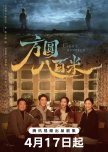
Eight Hundred is, at its core, a story about limits. Not the kind you casually brush against, but the kind that force a choice out of you when there is nowhere left to run. Set in a late 90s mining town, the story begins with a seemingly straightforward case that quickly unravels into something far more personal. Police officer Chen Hong Bin notices glass fragments on a victim that point toward a banned drug, and what starts as a routine investigation slowly exposes a trafficking network embedded within the town. The real turning point comes when the shadow behind it all is revealed to be someone closest to him. From there, the drama shifts into something more intimate and painful, a moral tug-of-war between duty and blood.
The premise already tells you how this will end. Not the exact details, but the direction. Once you understand Hong Bin’s rigid sense of justice, there is no illusion of a miraculous escape. The question is never if, but how heavy the cost will be. The drama plays this out as a prolonged cat and mouse game between Hong Bin and his son, Chen Hui. Hong Bin relentlessly pushes forward, following every lead with almost mechanical persistence, while Hui does everything he can to stay one step ahead. Hui’s descent begins with something almost understandable. Together with his girlfriend Gao Song Ge, he enters the drug trade to pay for her medical treatment. They are not framed as inherently bad people, just desperate and naive enough to believe they can control the scale of their actions. Like many tragedies, it starts with a small compromise that quietly snowballs into something irreversible.
That said, the execution of this cat and mouse dynamic can feel repetitive. The structure often loops: Hong Bin closes in, Hui narrowly escapes, and the story resets before building tension again. It works in maintaining suspense, but at times it feels like running on a treadmill rather than moving forward. Each near discovery could have shifted the stakes more meaningfully, but instead the narrative occasionally retreats into familiar territory. It is engaging in theory, but the impact softens when the progression does not match the intensity of the premise.
The investigation itself walks a fine line between satisfying and frustrating. There are moments where Hong Bin’s methods reflect a classic investigative mindset, such as when he painstakingly pieces together scattered styrofoam fragments. It echoes that old idea that no detail is too small. However, the narrative does not always justify why certain clues deserve that level of focus. When this reconstruction points toward Hui, it feels less like a solid breakthrough and more like a conclusion driven by suspicion. At times, it seems as if Hong Bin is working backward from a belief he already holds, rather than building toward it with airtight logic. It does not ruin the experience, but it does chip away at the credibility of the investigative process.
Where the drama truly finds its weight is in its characters and their choices. I found myself siding with Hong Bin, even knowing how unforgiving that stance is. He is a man who was a cop before he was anything else, and that identity defines every decision he makes. There is something both admirable and unsettling about how unwavering he is. He does not bend, not even for his own son. In a world that often negotiates with morality, Hong Bin feels almost anachronistic, like a relic of a stricter era that refuses to soften. What surprised me most was not that he pursued Hui, but how little hesitation he ultimately showed in doing so.
Hui, on the other hand, is a character who crosses lines one by one until there is nothing left to defend. At first, his actions feel redeemable within a certain moral lens. But the turning point comes when he chooses violence not out of desperation, but intent. His plan to kill Luo Yan, and later his involvement in orchestrating it through Huo Kai Ming, marks a shift into darker territory. The final nail is the death of Tian Jin Hai. What could have been self defense spirals into something far more brutal, and from that moment on, Hui becomes someone you can no longer excuse. Framing Liu Na afterward only deepens that fall. That decision feels particularly cruel, not just because of what it represents legally, but because of the personal betrayal behind it.
Episode 15 stands out for how raw it feels. It strips everything down to a simple but uncomfortable question: what do people choose when given the chance to do right or wrong? The drama does not dress this up with spectacle. It leans into the quiet tension of decision-making, and that is where it resonates most. It is less about plot twists and more about whether characters will make the right choice when it actually matters. In that sense, it reflects reality in a way that is almost unsettling. Crime here is not abstract, it is the direct result of accumulated decisions.
By the time the ending arrives, it does exactly what it promises. There is no dramatic escape, no last minute miracle. It stays grounded. Episode 20 is emotional not because it shocks you, but because it follows through. Watching a father send his own son to prison while still holding onto that bond is quietly devastating. Xu Kai delivers what is easily his strongest performance here. The moment Hui looks back at his parents while being taken away lingers longer than any plot twist could.
Visually, the drama does a commendable job capturing its setting. While some sets lean slightly theatrical, the overall aesthetic works. The costumes and makeup help sell the time period, and the attention to detail in the characters’ appearances adds authenticity. Hui’s tanned complexion and Song Ge’s frail, sickly look subtly reinforce their circumstances without needing explicit dialogue.
In the end, Eight Hundred is a compelling character study wrapped in a crime narrative. As an investigation drama, it falls short in consistency and progression. But as a story about choices, consequences, and the fragile line between right and wrong, it lands with impact. It may not be airtight, but it is thought-provoking in a way that stays with you after the final episode.
The premise already tells you how this will end. Not the exact details, but the direction. Once you understand Hong Bin’s rigid sense of justice, there is no illusion of a miraculous escape. The question is never if, but how heavy the cost will be. The drama plays this out as a prolonged cat and mouse game between Hong Bin and his son, Chen Hui. Hong Bin relentlessly pushes forward, following every lead with almost mechanical persistence, while Hui does everything he can to stay one step ahead. Hui’s descent begins with something almost understandable. Together with his girlfriend Gao Song Ge, he enters the drug trade to pay for her medical treatment. They are not framed as inherently bad people, just desperate and naive enough to believe they can control the scale of their actions. Like many tragedies, it starts with a small compromise that quietly snowballs into something irreversible.
That said, the execution of this cat and mouse dynamic can feel repetitive. The structure often loops: Hong Bin closes in, Hui narrowly escapes, and the story resets before building tension again. It works in maintaining suspense, but at times it feels like running on a treadmill rather than moving forward. Each near discovery could have shifted the stakes more meaningfully, but instead the narrative occasionally retreats into familiar territory. It is engaging in theory, but the impact softens when the progression does not match the intensity of the premise.
The investigation itself walks a fine line between satisfying and frustrating. There are moments where Hong Bin’s methods reflect a classic investigative mindset, such as when he painstakingly pieces together scattered styrofoam fragments. It echoes that old idea that no detail is too small. However, the narrative does not always justify why certain clues deserve that level of focus. When this reconstruction points toward Hui, it feels less like a solid breakthrough and more like a conclusion driven by suspicion. At times, it seems as if Hong Bin is working backward from a belief he already holds, rather than building toward it with airtight logic. It does not ruin the experience, but it does chip away at the credibility of the investigative process.
Where the drama truly finds its weight is in its characters and their choices. I found myself siding with Hong Bin, even knowing how unforgiving that stance is. He is a man who was a cop before he was anything else, and that identity defines every decision he makes. There is something both admirable and unsettling about how unwavering he is. He does not bend, not even for his own son. In a world that often negotiates with morality, Hong Bin feels almost anachronistic, like a relic of a stricter era that refuses to soften. What surprised me most was not that he pursued Hui, but how little hesitation he ultimately showed in doing so.
Hui, on the other hand, is a character who crosses lines one by one until there is nothing left to defend. At first, his actions feel redeemable within a certain moral lens. But the turning point comes when he chooses violence not out of desperation, but intent. His plan to kill Luo Yan, and later his involvement in orchestrating it through Huo Kai Ming, marks a shift into darker territory. The final nail is the death of Tian Jin Hai. What could have been self defense spirals into something far more brutal, and from that moment on, Hui becomes someone you can no longer excuse. Framing Liu Na afterward only deepens that fall. That decision feels particularly cruel, not just because of what it represents legally, but because of the personal betrayal behind it.
Episode 15 stands out for how raw it feels. It strips everything down to a simple but uncomfortable question: what do people choose when given the chance to do right or wrong? The drama does not dress this up with spectacle. It leans into the quiet tension of decision-making, and that is where it resonates most. It is less about plot twists and more about whether characters will make the right choice when it actually matters. In that sense, it reflects reality in a way that is almost unsettling. Crime here is not abstract, it is the direct result of accumulated decisions.
By the time the ending arrives, it does exactly what it promises. There is no dramatic escape, no last minute miracle. It stays grounded. Episode 20 is emotional not because it shocks you, but because it follows through. Watching a father send his own son to prison while still holding onto that bond is quietly devastating. Xu Kai delivers what is easily his strongest performance here. The moment Hui looks back at his parents while being taken away lingers longer than any plot twist could.
Visually, the drama does a commendable job capturing its setting. While some sets lean slightly theatrical, the overall aesthetic works. The costumes and makeup help sell the time period, and the attention to detail in the characters’ appearances adds authenticity. Hui’s tanned complexion and Song Ge’s frail, sickly look subtly reinforce their circumstances without needing explicit dialogue.
In the end, Eight Hundred is a compelling character study wrapped in a crime narrative. As an investigation drama, it falls short in consistency and progression. But as a story about choices, consequences, and the fragile line between right and wrong, it lands with impact. It may not be airtight, but it is thought-provoking in a way that stays with you after the final episode.
Was this review helpful to you?


