


 25
25 46
46 8
8 1
1 1
1 1
1 1
1 1
1 1
1 6
6 2
2 3
3 1
1 1
1 1
1 1
1 3
3 1
1 3
3


This review may contain spoilers
The Quiet Anatomy of Moral Decay
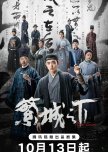
Set in 1609 during the Wanli era of the Ming Dynasty, Ripe Town begins with a string of gruesome murders that seem to have nothing in common except for one chilling detail. Every victim is staged in an eerie tableau, each crime scene marked by the different cryptic messages. Determined to uncover the truth, young Bailiff Qu San Geng joins forces with his friends, only to find themselves peeling back layers of deception, buried secrets, and a cold case that refused to stay dead. As the investigation spirals deeper, the mystery becomes less of a whodunit and more of a descent into the ghosts of the past, where every answer comes at a price.
"To Confucius, it's just so hard to be a decent man."
That line perfectly captures what Ripe Town is really about. At its heart, this is a story about moral decay, justice, and the exhausting struggle of navigating the space between right and wrong. The murder of Captain Leng Wu Ji, Qu San Geng's mentor, immediately makes the investigation personal. The first episode deserves praise for how naturally it flows from tragedy to grief, then to investigation, before ending on an intriguing revelation that immediately hooked me.
San Geng leads the investigation, but interestingly, he is never written as the kind of protagonist who dominates every scene. Instead, he serves as the embodiment of growth. As a young bailiff, he wants to uphold justice with clean hands, believing the world should be divided into black and white. Through frequent flashbacks with Captain Leng, however, the story slowly dismantles that idealism. Captain Leng teaches him that reality is rarely so simple. Sometimes justice requires imperfect methods, and sometimes you only have the wrong tools to reach the right outcome. One of my favorite lines in the drama comes from Captain Leng:
"Conscience is such a thing. If you want to sell it, it won't sell for much. But if you want to keep it, then it's expensive."
It is such a beautiful paradox. Integrity itself has little market value, yet preserving it often demands tremendous sacrifice. Throughout those flashbacks, we watch San Geng admire his mentor's teachings while still desperately trying to preserve his own ideals. It is only after Captain Leng dies and that protective figure disappears that San Geng truly begins to understand what those lessons meant. Bai Yu Fan portrays this evolution convincingly. He honestly reminds me of a chick that has just hatched, slowly discovering that the world is far harsher than it first appeared. His performance is not flashy, but it feels sincere, and that sincerity makes San Geng's growth believable.
After Captain Leng's death, another fascinating character joins the investigation, Judge Song Chen. If Captain Leng teaches San Geng how the world works, Song Chen reminds him what justice should strive to be. Song Chen is perhaps the purest soul in this morally grey world, which is ironic considering he himself is a victim of one of its greatest injustices.
Once a brilliant prodigy with limitless potential, Song Chen became entangled in an Imperial Examination fraud case born from political factionalism. Wrongfully imprisoned, tortured, stripped of his ability to paint after losing fingers on his dominant hand, and left with a crippled leg, he emerges from prison carrying wounds that never truly heal. His closest friend dies because of the same injustice, leaving him burdened with both grief and survivor's guilt. Even after his innocence is restored, nothing meaningful can be returned to him. His scars have already become permanent.
Despite all of this, Song Chen continues pursuing justice with remarkable conviction. Ironically, his own methods are not without cruelty. As a judge, he becomes known for extracting the teeth of criminals during interrogation. It is an uncomfortable contradiction that fits the drama perfectly. Justice itself is not always gentle. Ning Li delivers one of the finest performances in the series. Every expression carries years of accumulated resentment, grief, regret, and quiet fury. Even with relatively limited emphasis and focus on his character, Song Chen left an enormous emotional impact on me. I sympathized with him, cried for him, and admired how steadfast he remained despite everything life had taken from him.
As the investigation progresses, the story begins dedicating entire episodes to events from twenty years earlier, allowing the audience to witness both the present investigation and the origins of the tragedy side by side. Eventually, those flashbacks center on Lu Zhi, who became, without question, the most fascinating character in the drama for me.
Lu Zhi feels less like a villain and more like the product of his upbringing and consequence of adults who failed him. At first, he appears gentle, almost forgettable, like the type of character destined to become another victim. But little by little, something unsettling begins surfacing beneath that kindness. It becomes impossible to tell whether he genuinely wants to become a better person or whether goodness itself has simply become another mask for survival.
The most chilling moment comes when he explains why he chooses to hurt good people. Good people are less likely to retaliate. It presents one of the drama's most disturbing moral paradoxes. Do you target evil people and invite violent revenge, or prey upon kind people because their kindness makes them vulnerable? Virtue, ironically, becomes its own weakness.
Yet the drama never allows Lu Zhi to become a one dimensional monster. His cruelty exists alongside fear, hesitation, and genuine inner conflict. There are moments where he quietly wonders why doing good feels so difficult while evil comes so naturally. Even after everything he does, I still find myself asking whether he was truly good or bad. Looking only at the outcome makes the answer seem obvious. Looking deeper makes it surprisingly difficult. His fear whenever he is cornered reminds us that beneath all the darkness still exists a frightened human being trying to survive.
Yu Yao's performance deserves a standing ovation. Every tiny shift in expression feels deliberate. Every glance, every hesitation, every restrained emotion adds another layer to Lu Zhi's character. His elegant manner of speaking and composed posture create a striking contrast with the chaos inside his mind. Combined with Wang Zheng's direction and exceptional character writing, Lu Zhi becomes one of the most memorable characters I have encountered in recent years. Exploring morality, desire, fear, ideals, and conscience through a single character is no easy task, yet Ripe Town does it with remarkable precision.
Despite its slow pacing, the story never feels dull. Every scene contributes to the larger mystery, making it easy to become absorbed in the investigation. The clues are carefully planted, rewarding viewers who pay attention to small details. It genuinely feels as though you're investigating alongside San Geng and his companions. There is even a subtle layer of dark humor woven naturally into the dialogue, preventing the atmosphere from becoming overwhelmingly bleak.
The visual presentation surprised me just as much as the writing. Director Wang Zheng reportedly drew inspiration from Wu Guanzhong's Jiangnan paintings, and that influence is visible throughout the drama. The compositions emphasize layers, depth, and spatial balance, transforming nearly every frame into something resembling an ink painting. Doors, windows, curtains, screens, and veils are used to create visual penetration, allowing interior and exterior spaces to flow seamlessly into one another. Instead of relying on grand spectacle, the drama embraces stillness. Long, quiet streets stretch across the screen while conspiracies quietly bloom beneath the surface. It is a perfect example of a Latin phrase, which means “the art of concealing art.” The directing appears effortless precisely because every artistic choice is so carefully considered.
The sound design deserves equal praise. Rather than constantly filling scenes with music, Ripe Town uses its original soundtrack sparingly, reserving it primarily for the opening and ending themes. Yet those tracks linger long after each episode ends. During most scenes, subtle sound effects take center stage, quietly reinforcing the tension and atmosphere without drawing attention to themselves. The restraint makes every emotional moment feel even more effective.
The finale delivers one revelation after another with remarkable composure. It never resorts to sensational twists simply for shock value. Instead, every revelation feels earned, and the ending remains grounded in the reality the drama has carefully established from the very beginning. Each major character receives meaningful growth. San Geng becomes more flexible in his methods while continuing to pursue justice. Song Chen's conclusion also feels unexpectedly merciful, offering him perhaps the only path that could finally free him from the resentment he had carried for years. Fittingly, he remains a judge until the very end, both in title and in spirit.
Ripe Town earns its title in more ways than one. Beneath its peaceful streets lies a town that has ripened not into prosperity, but into something rotten. Old grievances have fermented into vengeance, justice has become tangled with compromise, and morality has quietly spoiled with time.
This is a drama I thoroughly enjoyed for its tightly constructed mystery, atmospheric suspense, morally complex characters, breathtaking visuals, restrained sound design, and thoughtful exploration of justice and human nature. It does not simply ask who the murderer is. It asks what kind of world creates murderers in the first place. Long after the mystery was solved, it was the characters and their impossible moral dilemmas that continued haunting my thoughts. Ripe Town has easily become one of the finest Chinese mystery dramas I have watched, and one of the strongest entries in the genre as a whole.
"To Confucius, it's just so hard to be a decent man."
That line perfectly captures what Ripe Town is really about. At its heart, this is a story about moral decay, justice, and the exhausting struggle of navigating the space between right and wrong. The murder of Captain Leng Wu Ji, Qu San Geng's mentor, immediately makes the investigation personal. The first episode deserves praise for how naturally it flows from tragedy to grief, then to investigation, before ending on an intriguing revelation that immediately hooked me.
San Geng leads the investigation, but interestingly, he is never written as the kind of protagonist who dominates every scene. Instead, he serves as the embodiment of growth. As a young bailiff, he wants to uphold justice with clean hands, believing the world should be divided into black and white. Through frequent flashbacks with Captain Leng, however, the story slowly dismantles that idealism. Captain Leng teaches him that reality is rarely so simple. Sometimes justice requires imperfect methods, and sometimes you only have the wrong tools to reach the right outcome. One of my favorite lines in the drama comes from Captain Leng:
"Conscience is such a thing. If you want to sell it, it won't sell for much. But if you want to keep it, then it's expensive."
It is such a beautiful paradox. Integrity itself has little market value, yet preserving it often demands tremendous sacrifice. Throughout those flashbacks, we watch San Geng admire his mentor's teachings while still desperately trying to preserve his own ideals. It is only after Captain Leng dies and that protective figure disappears that San Geng truly begins to understand what those lessons meant. Bai Yu Fan portrays this evolution convincingly. He honestly reminds me of a chick that has just hatched, slowly discovering that the world is far harsher than it first appeared. His performance is not flashy, but it feels sincere, and that sincerity makes San Geng's growth believable.
After Captain Leng's death, another fascinating character joins the investigation, Judge Song Chen. If Captain Leng teaches San Geng how the world works, Song Chen reminds him what justice should strive to be. Song Chen is perhaps the purest soul in this morally grey world, which is ironic considering he himself is a victim of one of its greatest injustices.
Once a brilliant prodigy with limitless potential, Song Chen became entangled in an Imperial Examination fraud case born from political factionalism. Wrongfully imprisoned, tortured, stripped of his ability to paint after losing fingers on his dominant hand, and left with a crippled leg, he emerges from prison carrying wounds that never truly heal. His closest friend dies because of the same injustice, leaving him burdened with both grief and survivor's guilt. Even after his innocence is restored, nothing meaningful can be returned to him. His scars have already become permanent.
Despite all of this, Song Chen continues pursuing justice with remarkable conviction. Ironically, his own methods are not without cruelty. As a judge, he becomes known for extracting the teeth of criminals during interrogation. It is an uncomfortable contradiction that fits the drama perfectly. Justice itself is not always gentle. Ning Li delivers one of the finest performances in the series. Every expression carries years of accumulated resentment, grief, regret, and quiet fury. Even with relatively limited emphasis and focus on his character, Song Chen left an enormous emotional impact on me. I sympathized with him, cried for him, and admired how steadfast he remained despite everything life had taken from him.
As the investigation progresses, the story begins dedicating entire episodes to events from twenty years earlier, allowing the audience to witness both the present investigation and the origins of the tragedy side by side. Eventually, those flashbacks center on Lu Zhi, who became, without question, the most fascinating character in the drama for me.
Lu Zhi feels less like a villain and more like the product of his upbringing and consequence of adults who failed him. At first, he appears gentle, almost forgettable, like the type of character destined to become another victim. But little by little, something unsettling begins surfacing beneath that kindness. It becomes impossible to tell whether he genuinely wants to become a better person or whether goodness itself has simply become another mask for survival.
The most chilling moment comes when he explains why he chooses to hurt good people. Good people are less likely to retaliate. It presents one of the drama's most disturbing moral paradoxes. Do you target evil people and invite violent revenge, or prey upon kind people because their kindness makes them vulnerable? Virtue, ironically, becomes its own weakness.
Yet the drama never allows Lu Zhi to become a one dimensional monster. His cruelty exists alongside fear, hesitation, and genuine inner conflict. There are moments where he quietly wonders why doing good feels so difficult while evil comes so naturally. Even after everything he does, I still find myself asking whether he was truly good or bad. Looking only at the outcome makes the answer seem obvious. Looking deeper makes it surprisingly difficult. His fear whenever he is cornered reminds us that beneath all the darkness still exists a frightened human being trying to survive.
Yu Yao's performance deserves a standing ovation. Every tiny shift in expression feels deliberate. Every glance, every hesitation, every restrained emotion adds another layer to Lu Zhi's character. His elegant manner of speaking and composed posture create a striking contrast with the chaos inside his mind. Combined with Wang Zheng's direction and exceptional character writing, Lu Zhi becomes one of the most memorable characters I have encountered in recent years. Exploring morality, desire, fear, ideals, and conscience through a single character is no easy task, yet Ripe Town does it with remarkable precision.
Despite its slow pacing, the story never feels dull. Every scene contributes to the larger mystery, making it easy to become absorbed in the investigation. The clues are carefully planted, rewarding viewers who pay attention to small details. It genuinely feels as though you're investigating alongside San Geng and his companions. There is even a subtle layer of dark humor woven naturally into the dialogue, preventing the atmosphere from becoming overwhelmingly bleak.
The visual presentation surprised me just as much as the writing. Director Wang Zheng reportedly drew inspiration from Wu Guanzhong's Jiangnan paintings, and that influence is visible throughout the drama. The compositions emphasize layers, depth, and spatial balance, transforming nearly every frame into something resembling an ink painting. Doors, windows, curtains, screens, and veils are used to create visual penetration, allowing interior and exterior spaces to flow seamlessly into one another. Instead of relying on grand spectacle, the drama embraces stillness. Long, quiet streets stretch across the screen while conspiracies quietly bloom beneath the surface. It is a perfect example of a Latin phrase, which means “the art of concealing art.” The directing appears effortless precisely because every artistic choice is so carefully considered.
The sound design deserves equal praise. Rather than constantly filling scenes with music, Ripe Town uses its original soundtrack sparingly, reserving it primarily for the opening and ending themes. Yet those tracks linger long after each episode ends. During most scenes, subtle sound effects take center stage, quietly reinforcing the tension and atmosphere without drawing attention to themselves. The restraint makes every emotional moment feel even more effective.
The finale delivers one revelation after another with remarkable composure. It never resorts to sensational twists simply for shock value. Instead, every revelation feels earned, and the ending remains grounded in the reality the drama has carefully established from the very beginning. Each major character receives meaningful growth. San Geng becomes more flexible in his methods while continuing to pursue justice. Song Chen's conclusion also feels unexpectedly merciful, offering him perhaps the only path that could finally free him from the resentment he had carried for years. Fittingly, he remains a judge until the very end, both in title and in spirit.
Ripe Town earns its title in more ways than one. Beneath its peaceful streets lies a town that has ripened not into prosperity, but into something rotten. Old grievances have fermented into vengeance, justice has become tangled with compromise, and morality has quietly spoiled with time.
This is a drama I thoroughly enjoyed for its tightly constructed mystery, atmospheric suspense, morally complex characters, breathtaking visuals, restrained sound design, and thoughtful exploration of justice and human nature. It does not simply ask who the murderer is. It asks what kind of world creates murderers in the first place. Long after the mystery was solved, it was the characters and their impossible moral dilemmas that continued haunting my thoughts. Ripe Town has easily become one of the finest Chinese mystery dramas I have watched, and one of the strongest entries in the genre as a whole.
Was this review helpful to you?


