


 23
23 43
43 8
8 1
1 1
1 1
1 1
1 1
1 1
1 6
6 2
2 3
3 1
1 1
1 1
1 1
1 3
3 1
1 3
3


The Price of Loyalty
The Wind Blows from Longxi is an espionage drama in the truest sense of the word. Rather than using espionage as a backdrop for romance or political drama, it puts spies and intelligence work firmly at the center of the story. Schemes are layered on top of schemes, loyalties are constantly tested, identities are questioned, and undercover spies seem to be everywhere. Friendship and romance are present, but they are more like seasoning than the main dish, adding depth to the characters without taking away from the espionage at its core.
This is definitely a drama that requires your full attention. A good portion of the show is essentially bearded men sitting around having extremely serious conversations, and there is a lot of dialogue to process. Yet somehow, I was completely immersed. The script has a certain weight to it, and I often felt like I was investigating alongside the characters rather than simply watching them investigate. The first few episodes were easily the hardest to get through because there were so many names, characters, factions, and pieces of information being introduced at once. Once everything started falling into place, however, the experience became much smoother. I also appreciated the recaps at the end of each episode. Considering how dense the story and language can be, those recaps were a lifesaver.
What kept me hooked was the detective work. There are twists upon twists, and I found myself making assumptions constantly, only to question those assumptions a few minutes later. Even when I guessed something correctly, I still wasn't entirely convinced that I was right. That uncertainty became part of the fun. The drama constantly made me feel like I was one step away from figuring everything out, only to move the chess pieces around again. It really rewards paying attention to the smallest details.
The action was another pleasant surprise. Instead of relying heavily on flashy editing to make the scenes look impressive, the drama lets the actors, choreography, and sequences do the work. The result feels grounded and realistic, which makes the action more satisfying to watch. I also enjoyed the little mechanical details woven into the story, especially the bird-shaped wooden and bamboo glider said to be inspired by Lu Ban, the famous Chinese carpenter and architect. I ended up researching Lu Ban because of this drama, which is always a good sign that something has successfully piqued my curiosity. I particularly appreciated that the drama didn't just mention the mechanism but actually showed it being used to fly.
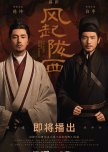
Chen Gong and Xun Xu, played by Chen Kun and Bai Yu respectively, left an especially strong impression on me. This was my first drama with both actors, and they made these two characters incredibly memorable. Chen Gong and Xun Xu are good friends, in-laws, and colleagues within Shu's intelligence agency, yet they could hardly be more different.
Chen Gong is cunning, morally ambiguous, unpredictable, and incredibly difficult to read. I was constantly trying to figure out what he was thinking, what he was planning, and what move he would make next. His ability to navigate through one impossible situation after another was fascinating. Somehow, no matter what decision he made, I found myself rooting for him.
Chen Kun absolutely owned this role. His performance is subtle but incredibly expressive. His eyes, facial expressions, and even the smallest movements convey so much without feeling exaggerated. I especially appreciated how his portrayal of rage and anger did not rely on the usual red, teary-eyed look. There was something much more restrained and realistic in his expression, which somehow made it more powerful. He completely embodied Chen Gong's gravitas as an undercover spy, while still showing his anxiety, charisma, restlessness, quick thinking, and vulnerability. There was so much happening beneath the surface. Breathtaking.
Xun Xu is almost Chen Gong's complete opposite. He is righteous, rigid, and deeply committed to following the rules. Bending them, even for someone he cares about, is almost impossible for him. I enjoyed watching him piece together clues just as much as I enjoyed watching Chen Gong maneuver around them. There were times when I desperately wanted Xun Xu to uncover the truth, and other times when I was practically begging him not to.
Bai Yu also impressed me tremendously, particularly in scenes where Xun Xu was overwhelmed by regret, guilt, and sorrow. His emotions felt raw enough that my heart genuinely sank watching him. And then, amusingly, we get to see this persistent, serious investigator turn into a complete puppy around the woman he likes. It was adorable. Still, I was relieved that the drama did not turn him into someone who would abandon everything in the name of love. Just when I thought he might become weak because of his feelings, Xun Xu reminded me who he was. Shu always comes first, and he remains steadfast in that conviction.
Naturally, the relationship between Chen Gong and Xun Xu became one of my favorite parts of the drama. Their bond is incredibly strong, to the point where distance cannot easily break it. But because they are so fundamentally different, there is always this lingering feeling that sooner or later, their friendship will be put to the ultimate test. The buildup to that test, and the test itself, became some of the most emotional material in the drama. Their relationship gives the espionage story a human heart without turning it into a friendship drama.
Visually, The Wind Blows from Longxi is just as deliberate as its storytelling. The muted color palette gives everything a rustic, vintage, mysterious, and serious atmosphere. It is also surprisingly easy on the eyes. The lack of overly bright colors and attention-grabbing elements means the visuals rarely compete with the story. Instead, they quietly support the mood and allow the audience to focus on the dialogue, expressions, and movements of the characters. The cinematography, sets, costumes, and overall production design come together beautifully. Combined with the OST and score, the drama creates an atmosphere that feels immersive from beginning to end.
The ending sucked me right in and left me feeling thoroughly harrowed. At the same time, I can't say I was completely surprised by it. In a story about spies and intelligence agencies, people are ultimately pieces on a chessboard, and the ending drives that point home rather brutally. Chen Gong and Xun Xu may be important to us as viewers, but to the larger machinery of the espionage game, they are expendable. Still, I couldn't help thinking that there might have been other alternatives, other solutions, perhaps even another possible outcome. Maybe that lingering frustration is exactly what the ending wanted to leave behind. What I do know is that the final moments between Chen Gong and Xun Xu were gut-wrenching. After everything going on, the ending was one of the strongest and most emotional moments of the entire story.
Ultimately, The Wind Blows from Longxi is a drama that rewards attention. It has a heavy start, dense dialogue, a complicated plot, and enough names and schemes to make you question whether you should be taking notes. But once you settle into its rhythm, it becomes an incredibly immersive experience. It may not be a drama everyone will enjoy, even among fans of espionage stories. It asks for patience, concentration, and a willingness to let the story unfold at its own pace. For me, though, the payoff was worth it. I came for the spies, stayed for the detective work, and ended up emotionally invested in the characters.
This is definitely a drama that requires your full attention. A good portion of the show is essentially bearded men sitting around having extremely serious conversations, and there is a lot of dialogue to process. Yet somehow, I was completely immersed. The script has a certain weight to it, and I often felt like I was investigating alongside the characters rather than simply watching them investigate. The first few episodes were easily the hardest to get through because there were so many names, characters, factions, and pieces of information being introduced at once. Once everything started falling into place, however, the experience became much smoother. I also appreciated the recaps at the end of each episode. Considering how dense the story and language can be, those recaps were a lifesaver.
What kept me hooked was the detective work. There are twists upon twists, and I found myself making assumptions constantly, only to question those assumptions a few minutes later. Even when I guessed something correctly, I still wasn't entirely convinced that I was right. That uncertainty became part of the fun. The drama constantly made me feel like I was one step away from figuring everything out, only to move the chess pieces around again. It really rewards paying attention to the smallest details.
The action was another pleasant surprise. Instead of relying heavily on flashy editing to make the scenes look impressive, the drama lets the actors, choreography, and sequences do the work. The result feels grounded and realistic, which makes the action more satisfying to watch. I also enjoyed the little mechanical details woven into the story, especially the bird-shaped wooden and bamboo glider said to be inspired by Lu Ban, the famous Chinese carpenter and architect. I ended up researching Lu Ban because of this drama, which is always a good sign that something has successfully piqued my curiosity. I particularly appreciated that the drama didn't just mention the mechanism but actually showed it being used to fly.
Chen Gong and Xun Xu, played by Chen Kun and Bai Yu respectively, left an especially strong impression on me. This was my first drama with both actors, and they made these two characters incredibly memorable. Chen Gong and Xun Xu are good friends, in-laws, and colleagues within Shu's intelligence agency, yet they could hardly be more different.
Chen Gong is cunning, morally ambiguous, unpredictable, and incredibly difficult to read. I was constantly trying to figure out what he was thinking, what he was planning, and what move he would make next. His ability to navigate through one impossible situation after another was fascinating. Somehow, no matter what decision he made, I found myself rooting for him.
Chen Kun absolutely owned this role. His performance is subtle but incredibly expressive. His eyes, facial expressions, and even the smallest movements convey so much without feeling exaggerated. I especially appreciated how his portrayal of rage and anger did not rely on the usual red, teary-eyed look. There was something much more restrained and realistic in his expression, which somehow made it more powerful. He completely embodied Chen Gong's gravitas as an undercover spy, while still showing his anxiety, charisma, restlessness, quick thinking, and vulnerability. There was so much happening beneath the surface. Breathtaking.
Xun Xu is almost Chen Gong's complete opposite. He is righteous, rigid, and deeply committed to following the rules. Bending them, even for someone he cares about, is almost impossible for him. I enjoyed watching him piece together clues just as much as I enjoyed watching Chen Gong maneuver around them. There were times when I desperately wanted Xun Xu to uncover the truth, and other times when I was practically begging him not to.
Bai Yu also impressed me tremendously, particularly in scenes where Xun Xu was overwhelmed by regret, guilt, and sorrow. His emotions felt raw enough that my heart genuinely sank watching him. And then, amusingly, we get to see this persistent, serious investigator turn into a complete puppy around the woman he likes. It was adorable. Still, I was relieved that the drama did not turn him into someone who would abandon everything in the name of love. Just when I thought he might become weak because of his feelings, Xun Xu reminded me who he was. Shu always comes first, and he remains steadfast in that conviction.
Naturally, the relationship between Chen Gong and Xun Xu became one of my favorite parts of the drama. Their bond is incredibly strong, to the point where distance cannot easily break it. But because they are so fundamentally different, there is always this lingering feeling that sooner or later, their friendship will be put to the ultimate test. The buildup to that test, and the test itself, became some of the most emotional material in the drama. Their relationship gives the espionage story a human heart without turning it into a friendship drama.
Visually, The Wind Blows from Longxi is just as deliberate as its storytelling. The muted color palette gives everything a rustic, vintage, mysterious, and serious atmosphere. It is also surprisingly easy on the eyes. The lack of overly bright colors and attention-grabbing elements means the visuals rarely compete with the story. Instead, they quietly support the mood and allow the audience to focus on the dialogue, expressions, and movements of the characters. The cinematography, sets, costumes, and overall production design come together beautifully. Combined with the OST and score, the drama creates an atmosphere that feels immersive from beginning to end.
The ending sucked me right in and left me feeling thoroughly harrowed. At the same time, I can't say I was completely surprised by it. In a story about spies and intelligence agencies, people are ultimately pieces on a chessboard, and the ending drives that point home rather brutally. Chen Gong and Xun Xu may be important to us as viewers, but to the larger machinery of the espionage game, they are expendable. Still, I couldn't help thinking that there might have been other alternatives, other solutions, perhaps even another possible outcome. Maybe that lingering frustration is exactly what the ending wanted to leave behind. What I do know is that the final moments between Chen Gong and Xun Xu were gut-wrenching. After everything going on, the ending was one of the strongest and most emotional moments of the entire story.
Ultimately, The Wind Blows from Longxi is a drama that rewards attention. It has a heavy start, dense dialogue, a complicated plot, and enough names and schemes to make you question whether you should be taking notes. But once you settle into its rhythm, it becomes an incredibly immersive experience. It may not be a drama everyone will enjoy, even among fans of espionage stories. It asks for patience, concentration, and a willingness to let the story unfold at its own pace. For me, though, the payoff was worth it. I came for the spies, stayed for the detective work, and ended up emotionally invested in the characters.
Was this review helpful to you?


