
 News


 28
 58
 8
 1
 2
 1
 1
 1
 1
 8
 2
 3
 1
 1
 1
 1
 9
 5
 4


This review may contain spoilers
If You Are Alive, I Am Alive
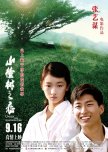
Under the Hawthorn Tree looks almost deceptively simple, and that’s the trick. Set against the Cultural Revolution, it strips away what could have made it a standard melodramatic romance and leaves behind something painfully tender: a story of first love under political oppression. It follows two young people, Jing Qiu and Sun Jian Xin, who meet during this turbulent era and fall deeply, almost impossibly, in love. But the movie refuses to be a grand romance. It simply lets two kids like each other while history sits in the corner with its arms crossed.
Director Zhang Yi Mou treats the Cultural Revolution as more than a historical backdrop. It is an invisible force shaping every part of the romance. Political fear, ideological control, and social suspicion become walls standing between Jing and Sun, making their bond feel both dangerous and fragile. A walk by the river or a shared bowl of food becomes a quiet act of rebellion, and every glance, brief touch, and stolen meeting carries monumental weight. They are experiencing first love under a microscope, constrained by poverty, social stigma, and watchful guardians.
That is why the movie's restraint is its greatest charm. Jing and Sun’s romance feels innocent because it is allowed to grow slowly. They are not a perfectly compatible couple from the start. Jing is cautious, inexperienced, and constantly worried about what her mother and society might think. Sun is more confident and playful, yet his affection is remarkably patient. He understands her fear of crossing boundaries and expresses his love through waiting. When holding hands becomes a major plot event, you realize how much the movie is asking you to feel with so little.
I’ll be honest, though. It did not win me over right away. The slow pace will feel either beautifully patient or painfully drawn out, depending on your tolerance for this kind of storytelling. As someone who likes a solid foundation before the feelings kick in, I found the early romance a little thin, and the occasional intertitles did not help. They move the story forward, but they also make parts of the movie feel like someone summarizing a memory instead of letting you live it. Then somewhere in the middle, it got me. I caught myself smiling at the screen like an idiot, and that was the moment I knew I was in trouble.
Trouble, because the movie plants warnings early. Many lines hint at what is to come, giving the story an ominously beautiful quality, like watching a candle burn in a room where you already know the wind is coming. I had some idea of Sun’s condition, yet watching him hide it from Jing and finally come clean still hit me with a wave of shock. Then he says this to her, lying quietly beside her, almost as if he is saying goodbye while urging her to keep living:
“If you are alive, I am alive. If you also die, I will truly be dead.”
It felt quietly devastating. And then comes the line that broke me:
“I cannot wait for you for one year and one month. I cannot wait for you until you are 25. But I have waited for you my whole life.”
Before he became ill, Sun had promised to wait for Jing, and in his own way he did, right to the end. He spent what remained of his life loving her. I cried at what could have been, at the future they were never given the chance to live. The tragedy is not simply that Sun dies, but that their love is cut short before it can become ordinary. The hawthorn tree sums up all of this perfectly. Named after a local legend about revolutionary blood staining its blossoms red, it becomes a symbol of endurance: a love trying to bloom in toxic soil. It represents something tender surviving in a world that gives it very little room to grow.
The performances give the movie its emotional honesty. They feel remarkably unpolished in the best way, bringing an everyday vulnerability that pulls you in. Zhou Dong Yu is wonderful as Jing because she never makes innocence feel artificial. I love her tiny reactions: the nervous glances, awkward smiles, embarrassment when Sun gets too close, and barely contained excitement whenever she knows she will see him. Jing can be stubborn and overly cautious, which makes her feel like a real person rather than a saint. She is a young woman trying to figure out love while carrying the weight of family expectations and political scrutiny.
Shawn Dou is equally compelling. Sun could easily have become a stereotypical perfect romantic hero, but the actor gives him a youthful awkwardness that makes his affection believable. He can be teasing one moment and deeply serious the next. Their chemistry never feels manufactured. It feels like two young people discovering love without quite knowing what to do with it, and that naturalness makes the later tragedy considerably harder to shake off. Though I have to say, for realism purposes, his perfect teeth are far from realistic considering his character and the conditions back then.
Jing’s mother deserves a mention too. She is easy to judge if you look at her only through the lens of romance, because she can seem like an obstacle deliberately placed in the story. But the more you consider the political climate, the more complicated her behavior becomes. She is not simply conservative. She is terrified of what could happen to her family if Jing is seen behaving improperly. I find that to be one of the movie's quieter achievements: the political system does not always need to appear on screen, because its pressure has already seeped into people's homes and relationships.
Visually, the movie adopts a muted, naturalistic style that mirrors the austerity of rural China in the 1970s. Greenery, modest interiors, and soft natural light create a sense of stillness, while the sweeping scenery contrasts with the emotional confinement the characters feel. Seemingly insignificant objects become sources of intimacy too. A basin, a light bulb, a piece of clothing, or two hands inching toward each other can suddenly matter more than an entire romantic speech.
What I find especially effective is the physical distance between Jing and Sun. They are repeatedly placed close enough to reveal their attraction but far enough apart to remind us they cannot behave like an ordinary young couple. They walk side by side without touching. They sit together with a careful gap between them. When they finally get closer, the moment feels enormous precisely because the movie made us wait for it. Intimacy does not have to be explicit to be powerful.
The music follows the same philosophy. Chen Qi Gang’s restrained score, with its romantic themes and traditional Chinese instrumental textures, complements the rural atmosphere without overwhelming it. More importantly, it knows when to step back. Silence, rustling leaves, and distant footsteps often do more emotional work. You are watching the actors, not listening to music desperately trying to make you cry.
The final act abandons some of the quiet realism of the earlier sections and leans harder into melodrama. I understand why some viewers might roll their eyes, but personally, I think it works. Its sentimentality feels earned by everything that came before. Jing and Sun never get the future they deserve, and the movie refuses to soften the jagged edges of history for the sake of a comforting resolution. By the end, the hawthorn tree is a monument to memory, sacrifice, and the love they were never allowed to fully possess.
What stays with me most is how the romance becomes a story about memory. A short stretch of happiness can remain with someone for decades, and first love can become almost mythical when it ends before it has the chance to become ordinary. It reminds me of the Japanese concept of mono no aware, the bittersweet awareness that beautiful things pass. Perhaps that is why the movie feels nostalgic even while we watch the characters experience everything for the first time. We are already looking back on something that has not yet finished happening.
Under the Hawthorn Tree is a poignant tale of young love crushed by the restrictions of the Cultural Revolution. It avoids cheap narrative tricks and finds its force in the quiet devastation of what might have been. It does not leave you thinking about how grandly these two people loved each other. It leaves you thinking about how little they needed to be happy, and how cruel it is that even that little could not be guaranteed. Some love stories break your heart because the people in them were never meant to be together. This one breaks it because, for a brief and beautiful moment, they were, and the world still found a way to take it back.
Was this review helpful to you?


