
 News


 33
 71
 8
 1
 2
 1
 1
 1
 1
 1
 8
 2
 3
 1
 1
 1
 1
 9
 5
 5


This review may contain spoilers
The Lone Wolf Who Never Fails
Doctor X: Mafia in White is a drama best enjoyed with your brain on vacation and your entertainment appetite fully awake. It is totally unhinged, bizarre, and downright crazy, yet somehow manages to be deeply emotional and devastating when it wants to be. Those looking for logic and realism might find themselves questioning every other scene, but those willing to embrace a wild fictional ride that somehow makes illogical sense may find it surprisingly euphoric. This is one of those dramas where you either get on board with its madness or wonder what on earth you just watched.
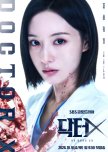
The story revolves around Gye Soo Jung, also known as Doctor X, a surgeon who can seemingly do it all. One might even call her a medical superhero. As she confidently puts it, "I never fail." And true to her words, the drama delivers one bizarre surgery after another, with Soo Jung pulling off seemingly impossible procedures without breaking a sweat. The focus, however, is less on the medical procedures themselves and more on the stories and struggles surrounding each case. Behind this seemingly invincible surgeon is a socially awkward, nonchalant woman whose cold demeanor and relentless drive are rooted in immense guilt and loss. Through fragments of flashbacks, the drama gradually peels back her past while exploring corruption, medical ethics, and what it truly means to be a doctor.
That said, the drama does not exactly do a subtle job of glorifying Soo Jung's godlike surgical abilities. Her skills and integrity are placed so far above everyone else's that practically every other doctor in the hospital comes across as either incompetent or morally questionable. The contrast is deliberately exaggerated to make Soo Jung shine even brighter. From a realism standpoint, it can be downright ridiculous. However, as someone who came for entertainment rather than a medical documentary, I found myself thoroughly enjoying it. There is something undeniably satisfying about watching a superhero-like surgeon challenge the system and deliver one triumphant outcome after another. Almost every character and storyline serves as a plot device to highlight a different aspect of Soo Jung, be it her surgical prowess, trauma, growth, compassion, or integrity. Ultimately, appreciating her character is key to enjoying this drama.
Structurally, the drama follows a case-of-the-week format, with each case spanning roughly one or two episodes while Soo Jung's past gradually unfolds alongside them. Among the various cases, Na Dae Il's arc was probably my favorite. It was wild, mad, unhinged, creepy, and downright hilarious. I genuinely cannot recall seeing anything quite like the things that happened in this arc in other medical dramas. It was the kind of bizarre storytelling that had me simultaneously cringing and grinning, and I absolutely loved it. On the other hand, Oh Sang Beom's arc was the one that slowed things down for me. It was emotionally and politically heavy, and while I have no problem with serious storytelling, I came into this drama looking for fun. The sudden shift in tone took away some of that euphoria and replaced it with tears. Then came Kim Seung Hyo's arc, which broke me the most. It gave me flashbacks to the 2011 Korean movie Silenced, and I was honestly not prepared for how upsetting it would be.
Nevertheless, I appreciate the drama's willingness to explore dark, sensitive, and controversial subjects, including painful aspects of history, while remaining relatively careful with its execution. I particularly like how it understands when to show something graphically, when to get creative, and when to let context clues do the heavy lifting. Sometimes, less really is more, and this drama demonstrates that quite effectively. During Na Dae Il's arc, something as simple as a carving on an organ and two people holding hands inside a patient's body were enough to give me the creeps. During Oh Sang Beom's arc, the camera blocking, directing, and cinematography were relatively simple, yet they conveyed so much emotion that I ended up heartbroken and crying. Meanwhile, Kim Seung Hyo's arc handled its subject matter with restraint, relying on context clues rather than overly graphic depictions, particularly given its involvement of minors. Despite that, or perhaps because of it, the story still managed to make me sick with anger. These three arcs left the strongest impressions on me, although certainly for very different reasons. They also demonstrate that beneath all its craziness, this drama knows how to deliver an emotional punch.
As for the characters, while many of them primarily exist to emphasize different aspects of Soo Jung, they are still delightful in their own right. Soo Jung's little team brings a lovely found-family dynamic that provides warmth and comfort amid all the chaos. Jang Hui Suk is particularly precious in this regard. She always seems to be at the right place at the right time to protect Soo Jung, whether by ensuring her contractual rights as a freelance doctor are respected or by finding ways to let her perform outrageous surgeries despite opposition from other doctors. More importantly, Hui Suk understands Soo Jung exceptionally well and knows how to look after her mental well-being. She is practically Soo Jung's personal guardian angel, except with better negotiation skills.
The doctors at Guseo University Hospital are a mixed bag of frustrating, amusing, and occasionally touching personalities. Park Tae Gyeong is the intern who looks up to Soo Jung, admires her, and arguably understands her better than most people in the hospital. He observes and studies her closely, finding encouragement whenever she challenges the status quo or stands up to authority. In a way, he represents the grounded, aspiring side of the medical profession that Soo Jung inspires. Then there is Jo Won Jin, whose initial impression of Soo Jung is that of an exceptionally capable surgeon who always puts her patients first. She gradually becomes one of her biggest supporters and enablers. As for Bu Seung Gwon, Do Yun Shik, and Bae Heung Gon, their roles largely serve to highlight Soo Jung's extraordinary surgical abilities and integrity as a doctor. The gap is intentionally exaggerated, sometimes to an almost comical degree, but that is simply the kind of drama this is. Despite their varying roles in the narrative, I appreciate how each character has a distinct identity and manages to leave an impression.
The cast is another strong point. With so many seasoned actors involved, I never had much doubt that they would deliver. Kim Ji Won's portrayal of Gye Soo Jung seems to have been a point of contention for some viewers, particularly regarding how expressionless she can be. Personally, I think it suits the character perfectly. I love the little details in her expressions. On the surface, Soo Jung comes across as cold, emotionally distant, and perhaps a little peculiar, for lack of a better word. However, there are subtle moments when her emotions peek through, and Kim Ji Won conveys them so naturally without having to spell everything out. I particularly appreciate that restraint because it makes those rare emotional moments all the more meaningful. Kim Young Min was another standout. A chameleon actor, he brought plenty of flavor to Do Yun Shik, balancing his unhinged comedic side with his deeper dilemmas and vulnerabilities. Rising actor Kim Woo Seok also delivered a satisfying and convincing performance. Overall, the cast brought their respective characters to life, even when the writing occasionally treated them more as supporting pieces in Soo Jung's story.
Visually, my favorite aspect was the set design and color scheme. I particularly enjoyed the color blocking in Soo Jung's home, with its navy bed and brown furniture, as well as how colors were used to distinguish different settings and timelines. Golden yellow and orange hues frequently appeared in flashbacks, light blue and white tones were associated with the hospital, while darker earthy colors dominated Soo Jung's home. These choices gave the drama a distinct visual identity without being too flashy. As for the cinematography, including camera angles and lighting, it was fairly standard. Nothing particularly bad, but nothing exceptionally remarkable either. The OSTs, however, were a pleasant surprise. I found them catchy enough to actually look them up after watching, and they complemented the mood and ambience of the scenes nicely. The quirky background music, in particular, deserves a mention for adding an extra layer of fun to the comedic moments.
As for the ending, it was alright, although a little rushed. Fortunately, it was still clear enough to follow and made sense within the story. It felt more like the drama was ticking off a list of events, telling us what happened next and then what happened after that, without giving the emotional beats enough room to marinate. There was just enough to make me feel something, but not quite enough to leave a lasting impression. If I had to describe the resolution in a few words, I would say it was miraculous, convenient, and an attempt to give everyone the best of both worlds.
The buildup to the climax presented Soo Jung with a difficult dilemma: should she preserve her integrity as a doctor by saving a criminal, or should she seek revenge for the people she loves and prevent further crimes by deliberately waking the patient during surgery? Soo Jung and Won Jin eventually chose to uphold their integrity as doctors and let go of revenge and justice. Yet, somehow, the patient still experienced intraoperative awareness. As much as I enjoy a happy ending where good people remain good and bad people miraculously get what they deserve, the way everything unfolded felt a little too convenient. It was almost as if the drama wanted to reward everyone without having to make anyone compromise their principles. While satisfying on paper, the execution left me somewhat underwhelmed. The cliffhanger surrounding the fate of the hospital and its doctors also made the ending feel more grim than conclusive. Still, I would not consider it a dealbreaker because I had already enjoyed the journey leading up to it.
All in all, I had a genuinely good time with Doctor X: Mafia in White. It is a peculiar combination of medical drama, superhero fantasy, hospital politics, dark comedy, and emotional devastation, all wrapped in a rather eccentric package. I appreciate how it embraces its own madness and somehow makes its illogical storytelling work, especially through Soo Jung's character and her many triumphant moments. It may not be everyone's cup of tea, particularly if you value medical accuracy, realistic character portrayals, or logical storytelling. But if you are looking for something entertaining, outrageous, and unapologetically over-the-top, this might just be your kind of drama. Sometimes, you simply have to suspend your disbelief, sit back, and let Doctor X work her magic. After all, she never fails.
Was this review helpful to you?


