


 4
4 17
17 1
1 5
5 1
1 1
1 1
1


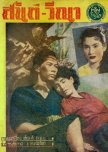
According to the information the Film Archive Thailand gives along with the film, this is the first Thai colour 35mm film. It's also the first feature film to win international recognition. In 1954, the film participated in the first edition of The Film Festival in Southeast Asia in Japan where it won two Golden Harvest Awards for Best Cinematographer (R.D. Pestonji) and Best Art Direction (Urai Sirisombat) and also a Special Award for “the Feature Picture which will Best Disseminate Asian Culture and Increase Understanding of by the West”.
And these are indeed the reasons why I would say it's worth to watch this film -- because the story itself is very predictable and did not touch me.
The cinematography, however, is beautiful, and quite stunning, especially considering the aged material. I loved the peek the film gives us into the lives of Thai villagers 70 years ago, and I loved with how much care the ceremonies were filmed. Among others, we get to see a school, Loy Kratong, a wedding, and the ordainment of a monk -- and the film takes its time to show them to us in detail, though without explanation.
The story itself shows us attitudes towards disabled people, towards women and towards marriage and family of that time (and modern audiences might see how much of it has (not) changed since then). It also, more implicitly, tells us about Buddhist mores, the relevance of the belief in Dhamma and Karma, and what is considered to be a meritful life. In Buddhist teachings, เกิด แก่ เจ็บ ตาย "birth, aging, illness and death" are the four natural inevitable aspects of a person's life. When Santi is "sees the light" (grows up), he sees the world in all its beauty -- and its suffering. Only now can he see his "right" path forward.
The film was thought to be lost for decades -- only in 2014 was the film negative found at the British Film Institute, and screening versions at the China Film Archive in China and the Gosfilmofond in Russia. More than 1700 hours went into the digital restauration.
Was it good?
It has very good cinematography, and it gives us a window into the past. It's also notable for its importance for Thai film history, as it is one of the first 35mm colour films.
Did I like it?
I didn't get on with the story, but I loved seeing the daily life of the villagers, and their ceremonies.
Who would I recommend it to?
To people who are seriously into the history of Thai cinema. And to people who want to see life in a Thai village in the early 1950s.
And these are indeed the reasons why I would say it's worth to watch this film -- because the story itself is very predictable and did not touch me.
The cinematography, however, is beautiful, and quite stunning, especially considering the aged material. I loved the peek the film gives us into the lives of Thai villagers 70 years ago, and I loved with how much care the ceremonies were filmed. Among others, we get to see a school, Loy Kratong, a wedding, and the ordainment of a monk -- and the film takes its time to show them to us in detail, though without explanation.
The story itself shows us attitudes towards disabled people, towards women and towards marriage and family of that time (and modern audiences might see how much of it has (not) changed since then). It also, more implicitly, tells us about Buddhist mores, the relevance of the belief in Dhamma and Karma, and what is considered to be a meritful life. In Buddhist teachings, เกิด แก่ เจ็บ ตาย "birth, aging, illness and death" are the four natural inevitable aspects of a person's life. When Santi is "sees the light" (grows up), he sees the world in all its beauty -- and its suffering. Only now can he see his "right" path forward.
The film was thought to be lost for decades -- only in 2014 was the film negative found at the British Film Institute, and screening versions at the China Film Archive in China and the Gosfilmofond in Russia. More than 1700 hours went into the digital restauration.
Was it good?
It has very good cinematography, and it gives us a window into the past. It's also notable for its importance for Thai film history, as it is one of the first 35mm colour films.
Did I like it?
I didn't get on with the story, but I loved seeing the daily life of the villagers, and their ceremonies.
Who would I recommend it to?
To people who are seriously into the history of Thai cinema. And to people who want to see life in a Thai village in the early 1950s.
Was this review helpful to you?


