
 Celebrity

 1
1


This review may contain spoilers
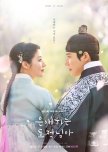
Healing Across Worlds: How To My Beloved Thief Turns Soul-Swapping into a Story of Destiny and Class
Many period dramas explore similar themes, but each approaches them differently. While soul-swapping is not a new device, TO MY BELOVED THIEF uses it sparingly and purposefully—as a tool to tell a story about healing, acceptance, and destiny.It has been a while since I’ve loved a period drama this much, especially one rooted in fiction and fantasy. What stood out to me is that it is not driven by political conflict or revolution. Instead, it centers on social class differences—an especially sensitive issue during the Joseon era. Because of this, the characters’ thoughts, emotions, and choices toward one another feel believable and justified.
Whenever characters from different social classes interact, they discover something new about each other and begin to imagine the possibilities of a different life. This is where the soul-swapping element becomes meaningful. Beyond the theme of destiny between Eunjo and Yeol, it serves as a bridge between two worlds they believe they belong to. Through soul-swapping, they gain a deeper understanding of perspectives far removed from their own. This newfound empathy shapes how they respond to others and ultimately defines Gil Dong as a central symbol of the series—someone who embodies two sides of a society where hierarchy dictates one’s place.
The drama’s impact would not be as strong without its solid screenplay. The writing thoughtfully develops each love story, showing how words can shape another person’s understanding of their own emotions. Even the love square works uniquely because the characters influence and transform one another through their differing worldviews. Their dialogue clarifies feelings, reshapes perspectives, and moves hearts into alignment.
I also appreciate how the series balances romance, drama, and fantasy. Rather than relying solely on the soul-swapping premise to bring the leads together, it focuses on life itself and the world around the characters. This gives the story depth and makes it stand out from other dramas in the genre.
Overall, the series is truly one for the books. The strong character dynamics and compelling performances by Nam Ji Hyun, Moon Sang Min, Hong Min Gi, Han So Eun, along with a talented supporting cast of veteran actors, make it a must-watch.
Was this review helpful to you?

An unexpectedly good drama.
Dream To You is the drama I didn't expect to love this much. I started watching it without expectations, even anticipating some elements I might not enjoy, but dang, I ended up loving every episode.I initially thought I was getting a romance drama, but it turned out to be more of a coming-of-age story about the leads and their journey. I loved how the series used flashbacks alongside the present timeline, making the characters' stories feel more layered.
Strangely, I even found myself liking the second couple more than the leads. There's no messy overlapping interest, and I love them because, beyond romance, they fight for their respective dreams and desires as if these are part of who they are. It makes them feel like real human beings rather than just characters in a drama.
I also enjoyed the filmmaking process woven into the story. It felt realistic, interesting, and easy to follow because of how the drama built each character's perspective.
And I love how they wrapped up the story like a diary, which felt fitting for the journey we've witnessed.
It's a ten for me.
Was this review helpful to you?
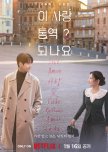
Foreign Language in Love and Life
There are two kinds of language in this world—one that can be spoken, and one that can only be felt. But what happens when a person isn’t fluent in either? How can the other truly understand?Can This Love Be Translated? tells the story of a language interpreter and a rising actress who encounter each other by chance while traveling. Despite working in a field surrounded by communication, they often fail to grasp each other’s feelings—and that’s where a seemingly straightforward plot becomes surprisingly layered?
The drama centers on people who struggle to express their emotions because of personal wounds: one dealing with the sting of unrequited love, another numb to her own emotions, and the last uncertain about the validity of what he feels.
Throughout the filming of a global dating show, the language interpreter, the Korean actress and the Japanese Heartthrob gradually uncover parts of themselves, learn to heal, and even begin to understand languages—both literal and emotional—that once felt foreign, even to themselves.
It carries many tropes I love: love triangles, travel, entertainment industry settings, fun and fluttering moments, good music, and gorgeous scenery—all woven together in a way that kept me engaged.
Interestingly, it also contains elements I usually dislike—family secrets, psychological angles, side couples, and a larger ensemble—yet they all work together surprisingly well, becoming as enjoyable as the tropes I favor most.
That’s what makes this drama different. I assumed it would be just another popular K-drama of today, but instead it turned out to be light to watch, comforting, and free of pressure. Even the things I thought I wouldn’t enjoy ended up becoming some of the highlights. I expected those elements to make the story harder to understand, but they actually helped me see the drama more fully.
No character overshadows the others. Everyone has a role. Every relationship has weight. Every word reveals a part of their story.
And in the end, I found myself able to translate the love they carried—and it’s those emotions that allowed them to love freely, to love themselves, and to love others.
Was this review helpful to you?

A Melodrama That Failed to Fully Shine
It could have been a strong melodrama, much like the writer’s earlier works On the Way to the Airport and A Piece of Your Mind. But this drama failed to sustain its central theme of whether first love can truly end up together.Bringing four characters into one chaotic first-love story could have worked better if each had been given a distinct bittersweet ending. Instead, much of the story drifted into family drama that felt disconnected from the core narrative. From the beginning, the focus was clearly on the on-and-off relationships between the leads and the second leads’ unrequited feelings, so the family background never felt essential enough to carry weight.
I have no complaints about the episode length or the cast ensemble, but with such a promising plot, I honestly hoped they had chosen a different actress to better match both Jinyoung and Shin Jae-ha.
A failure—definitely not shining. ✨
Was this review helpful to you?

thrilling without a story
If the goal of #Bloodhounds2 was to pump adrenaline through the Iron Knuckle Fighting Championship battles, it succeeded—these fight scenes are far better than those in the first season. But if the aim was to tell a compelling story about bravery, it falls flat.I appreciate that the leads feel like true leads and the supporting characters aren’t overwhelming, yet the drama still fails to convey what it wants to. Perhaps it aimed to showcase heroism or a mission to save the lead, but to me, it comes across as an empty screenplay.
As for the leads, they’re some of the weakest male characters I’ve seen in an action K-drama. Sadly, both Woo Do-hwan and Lee Sang-yi feel better suited as supporting characters than heroes.
It’s good to see Rain take on a villain role, but he doesn’t leave a strong impression. He could learn a thing or two about being a captivating villain from Chansung (2PM), who truly steals the scenes he’s in.
Still, it’s not a complete waste of time. The fight sequences have definitely leveled up, but the story itself remains underwhelming.
Was this review helpful to you?

This review may contain spoilers
A Sweet Romance Carried by Its Leads ✨
“It's such a blessing to love someone wholeheartedly.” Indeed, that perfectly reflects what Jin Hyeok and Da Rim are to each other. Both carry heavy emotional baggage because of their families, yet being together somehow makes those burdens lighter.Their time in Jeju Island became an unexpected source of healing, though it ended too soon. Even when they met again as employer and employee, things were far from simple—especially with Da Rim hiding the fact that she lied about being married.
What truly stands out in this show is its cast. Jang Ki-yong and Ahn Eun-jin delivered one of the sweetest romantic comedy pairings I’ve seen so far. Even if the series itself may be forgettable in some aspects, their chemistry made it easy to finish and genuinely enjoy. I especially liked the “hide-and-seek” around the female lead’s fake civil status because it revealed what kind of man Jin Hyeok truly is—a gentleman who tries to stay on his own path despite being clearly in love with her.
I’m also among the minority who appreciated the second male lead. He was never a distraction to the story; he naturally belonged in it. Rather than forcing his way into the romance, he was pulled into the situation by the female lead herself. Contrary to what others say, he simply fulfilled the role of a second male lead: he fought for his feelings without forcing them, and he remained understanding and open-minded, much like the male lead. The same can be said for his female counterpart—they added to the story without overshadowing the main couple.
While the romance itself is easily five-star worthy for me, the final two episodes suddenly felt disconnected from the drama’s main arc. I understood the business sabotage angle, but it felt rushed, as if it was added only to say that part of the story existed, even when the logic felt weak. The amnesia arc gave the same impression.
Although I often dislike how some dramas stretch into traditional 16–24 episode formats, in the case of Dynamite Kiss, it would have been stronger if it had stayed within the newer 12-episode format. Omitting the last two episodes would have easily earned a much higher score from me.
Was this review helpful to you?

This review may contain spoilers
A story of compassion behind manipulations
The plot of Dear X follows an actress who will do anything to stay on top and a man who loves her yet tries to bring her down. While the finale focuses on this central conflict, the story leading up to it explores manipulation and compassion.When people fail to show compassion, they often struggle to recognize it in others. For Ah Jin, goodness seemed tied to power and status, which led her to use those around her to maintain her position. Yet she overlooked a crucial truth: the people she exploited genuinely loved her for who she was—Cafe Boss, In Gang, In Gang’s grandmother, CEO Moon Do Hyuk, Jae Oh, and Jun Seo. Her ambition blinded her to their sincerity, causing everything to crumble—even after Jun Seo offered her a chance at redemption.
I also love the title Dear X. To me, the first “X” represents Ah Jin’s mother—the one who shaped her to become a monster that she is. The final “X” is Jun Seo—the person she aspired to be, her other self.
In essence, the “X” in Dear X is Ah Jin herself.
Manipulation is a common theme in K-dramas, often portrayed through strong female leads. But strength does not erase wounds or weaknesses. Baek Ah Jin stood out because of this complexity. Kim Yoo Jung masterfully portrayed her as both manipulative and vulnerable. Despite Ah Jin’s schemes, her pain and loneliness made her a character I sympathized with. Kim Young Dae and Kim Do Hoon complemented her brilliantly. Young Dae’s nuanced acting made Jun Seo’s emotions relatable, while Do Hoon’s calm yet emotionally rich performance captured Jae Oh’s subtle warmth. Together, the “Kim Trio” balanced the drama’s tension with depth and heart.
Among the supporting characters, my favorites were:
Cafe Boss, who showed Ah Jin genuine compassion from the start.
Jae Oh, a healing presence when Ah Jin struggled with herself.
Moon Do Hyuk, a complex figure who felt like a mix of Jae Oh and Jun Seo.
Jun Seo, the mirror of Ah Jin and the one who reflected her potential for love and honesty.
Writing this review shows how much I enjoyed Dear X. Unlike other dramas that focus solely on manipulation or the trope of a “strong female lead,” this series explored a delicate balance of manipulation and compassion. It highlighted how the characters’ emotions shaped Ah Jin’s life and hinted at what could have been if life had been kinder to her.
As for the ending—it is very Ah Jin: bittersweet and open. She loses the men who loved her, yet Moon Do Hyuk remains, waiting patiently, a testament to his genuine care.
It left me with the question "What if life was a bit nice to her?"
Was this review helpful to you?
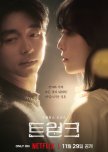
The Trunk is lost.
Bittersweet, chaotic, and at times confusing—that’s how the marriage dynamics and overall plot of The Trunk come across.My initial reaction to The Trunk is mixed, leaning both positive and negative. On the brighter side, I appreciated the messy, emotionally charged relationships between the characters. The angst I was hoping for was definitely there. Marriage, as portrayed in the series, is meant to be sacred—a mutual commitment between a man and a woman. However, the story complicates this by intertwining it with greed, and as a result, the characters’ lives become just as tangled.
I truly loved the cast—Seo Hyun-jin, Gong Yoo, Jung Yun-ha, Jo Yi-geon, and Kim Dong-won. The five of them delivered powerful performances, bringing out the emotional weight of one-sided love, obsession, and romance. They gave me the depth and intensity I was looking for. However, even with such a strong cast, the drama itself fell short in some areas. The biggest issue for me was the plot’s overwhelming messiness.
While I understand that the story aimed to explore complex and layered relationships, there were simply too many subplots. Because of this, the drama struggled to clearly define its main focus. Was it about marriage? Obsession? Crime? Even the crime aspect felt disconnected from the characters, making it seem unnecessary. For me, these elements didn’t fully come together, and I found it difficult to grasp how the “trunk” itself tied into all the complications. Everything felt oddly contained despite the chaos.
The drama only truly gained momentum in its final two episodes. That’s when I finally felt the emotional intensity I had been waiting for—through strong dialogue and satisfying confrontations. Unfortunately, those moments came too late, as I wish that same level of engagement had been sustained throughout the entire series.
Still, it was a worthwhile watch. While the plot may have disappointed me at times, I stayed for the actors—and they delivered what the story could not.
Was this review helpful to you?

Filial. Agape. Eros.
There are many kinds of love in this world, and no two are ever the same.The guy I wanted for UI Yeong in The Practical Guide for Love didn’t end up with her, but it didn’t feel like a loss at all. JiSu found the kind of love he truly deserved through her—whether in his career or his family. And Tae Seop ended up with a man who, from the very beginning, was certain he wanted a life with her.
I believe in dating with the intention of marriage, and I also see friendship as its own form of love. That’s why the setup of the main characters really appealed to me.
That said, the drama isn’t perfect. It has its flaws, just as it has its own kind of beauty.
The first few episodes felt more like introductions to the lead characters. It was a bit slow, though I managed to stay with it because I genuinely adore the three of them. I was close to dropping it, but the second half picked up the pace and kept me hooked. I especially loved how the main characters were interconnected with the supporting ones—it helped me grasp the message of the story more clearly. That’s how I came to understand what the drama was really about. And I loved it. Friendship, family, colleagues, and romance—all four kinds of love were explored in one story, each with heartwarming conclusions.
It may not be perfect, though, because one of my pet peeves showed up again. The side couple had a bit too much flirting for my taste, so I ended up fast-forwarding through some of their scenes. Still, it didn’t take away much, because the drama as a whole captured the different ways love can be expressed. I also fell in love with the polaroids shown during the credits.
Overall, I’m in love with this drama.
Was this review helpful to you?

This review may contain spoilers
Life's fair.... if treated fair as well.
School is meant for studying, but not all students find joy in it. So what could be better than studying? Fighting? I doubt violence is ever a solution in life. 🤔📚But in Study Group, that’s exactly what it shows. In Yuseong Technical High School, it feels like a place that raises gangsters, controlled by a student feared like a monster. Until the recent addition — the so-called dumbest student in school — dared to form a group where students study to enter college… and fight against that injustice. 👊🔥
This Korean drama raised my adrenaline after such a long time. I thought it would be boring at first, but I truly appreciated the friendship and bond that grew between the characters and their drive to reach their goal. The action stunts were stunning and kept me excited all throughout. ⚡🎬
The characters may look ordinary, but I like that each of them was given the chance to tell their own story. 🌟
Except the villain. His face was never scary, but he was intimidating — and that’s because of the actor portraying him. It ws a sublt eyet great portrayal. Still, I felt a bit sad that his character wasn’t explored much. Even though he was a villain, I was hoping to see the reasons behind his actions, especially since there were a few moments near the finale that showed remorse. 🥺
Hwang Min Hyun was amazing as the lead, and likewise, Han Ji Eun was beautiful in her feisty role as a teacher. 👏✨ I also loved discovering new favorites — Choi Woo Min as the capable villain and Hong Min Ki, who was compelling despite having only a few scenes. 💫
I was so ecstatic during the finale episode because I read that there will be a season two, and I truly can’t wait. I wonder who will be Han Wool’s successor. 😭🔥
Was this review helpful to you?
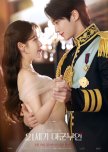
It's not as shimmering like a crown
Intimacy and cuteness alone are not enough to justify a good drama. It always works better when there’s a balance of romance, drama, thrill, and a focused storyline—and unfortunately, that’s where Perfect Crown fell short for me.I did appreciate how the drama explored the parallel worlds of monarchy and the modern life. It gave viewers a glimpse of how both worlds mirrored each other without one completely surpassing the other. However, despite being marketed as a romance drama, I felt that the story struggled to fully establish and develop the emotional connection between the leads. There were moments when even the main characters failed to convincingly deliver the romance, making it hard for me to truly feel that they were in love.
Still, I can’t deny the charm of IU and Byeon Woo Seok, along with the impressive performances of Gong Seung Hyun and Noh Sang Hyun, because they were honestly the reason I stayed invested. Plus points as well for the soundtrack—it’s been a while since we had a drama with such a good set of songs.
Overall, it was just okay for me. Not particularly great, but not bad either.
Was this review helpful to you?
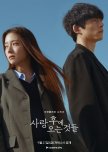
It lingers and aches so good.
❝What do I believe comes after love? I believe we come to understand what love truly is. It’s a sad irony—that only after love do we realize what it really means.❞ — JungoFor me, the title What Comes After Love reads as a statement rather than a question. It feels like the beginning of every answer—completed by the varied emotions and inner worlds of each character.
These ideas shape the story itself. Watching the drama feels like reading a novel—perhaps fitting, since it is based on one. What stands out is not just who the characters are, but how they feel. The narrative offers rich emotional detail, helping me understand and appreciate the story more deeply. Even with short episodes, each one answers the questions I carry about the characters.
What matters most to me is that characters reveal their thoughts and emotions, not just their identities. In What Comes After Love, this is done exceptionally well. Lee Se-young and Kentaro Sakaguchi deliver nuanced performances that bring those emotional layers to life—the very layers I rely on as a viewer.
Because of this, the drama stands as one of the most beautiful romance melodramas I’ve seen so far.
Was this review helpful to you?


