
 K-Drama




Loved the cinematography
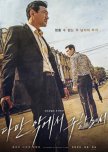
It had been a while since I’d seen Hwang Jung-min in a lead action role, so watching Deliver Us From Evil felt like reconnecting with an old favourite, and he did not disappoint.The Plot**
The story follows Kim In Nam, a professional hitman who has spent years eliminating targets for an organisation but now works on his own. As one last job before he disappears for good, he is given an assignment in Japan involving the yakuza boss. Nam plans to retire quietly in Panama. But just as he thinks he’s finally stepping away from bloodshed, his past comes chasing him back. He learns that he has a daughter from a former girlfriend, a child he never knew existed, and now she has been kidnapped in Thailand.As In Nam races to save his daughter, he is hunted by the ruthless half-brother of the yakuza boss he killed for revenge.
The story is intense and tightly paced. There’s no unnecessary dragging. It moves with purpose. The cinematography shift between Korea and Thailand was one of my favourite aspects. When the film moves to Thailand, the colour palette transforms to intense yellows, humid streets, and neon-lit chaos. It gave me strong late 90s / early 2000s action-thriller vibes. That gritty, sweaty, street-level energy that feels raw and dangerous.
The action sequences were genuinely impressive. Not just generic fight scenes but a combination of: brutal hand-to-hand combat, high-speed chases, gunfights and knife combat.
Hwang Jung-min plays In Nam with a quiet exhaustion. He’s not flashy. He’s not overly emotional. But you can see the weight of his life in his eyes. This isn’t a man looking for redemption; it’s a man trying to do one right thing before disappearing,and then there’s the antagonist, played by Lee Jung-jae, he was terrifying. Unhinged. Stylish. Violent. Cold and he enjoyed the hunt.
The side character Yui, a transgender Korean woman trying to earn money for surgery, added unexpected emotional depth. The actor played her with such charm tough on the outside, but clearly soft-hearted underneath. She brought moments of humour and warmth into an otherwise dark narrative. That balance worked beautifully.
If I had to change one thing, I might have extended the final
confrontation slightly just to build the emotional and physical climax a bit further. But even without that, the ending still hits hard.
Was this review helpful to you?

Easily forgettable...
I think Bow Then Kiss is the type of movie clearly aimed at a much younger audience. The story felt very shallow, and unfortunately, so did the acting. It lacked emotional depth, and I never felt fully invested in the characters or their journey.The so-called “chemistry” between the two leads just wasn’t there for me. There was maybe one single scene where I could feel a spark, one moment that almost worked but one scene can’t carry or redeem an entire film. Chemistry isn’t something you can force; it either builds naturally throughout the story or it doesn’t. And here, it simply didn’t.
Maybe if I were 13 years old, I would have absolutely loved this movie. It has that innocent, soft-romance vibe that can feel magical when you’re younger. But watching it now, it felt more surface-level than sincere. It wasn’t terrible, just forgettable.
Was this review helpful to you?

This review may contain spoilers
Chaos, Youth, and the Illusion of Depth
At first, My Name Is Yours opens like a dark thriller. The first few minutes set you up to expect something psychological, maybe even disturbing, a deep dive into trauma, violence, and consequence. But the movie quickly shifts direction. It’s not a thriller at all. It’s more of a coming-of-age story disguised as something darker.Plot**
The story follows six high school students living in a small, sleepy town on the outskirts of Osaka. Each of them is quietly wrestling with loneliness, identity, and the fear of becoming nothing.
There’s Yukari, known as En, who seems to have the “perfect” life, good grades, stable image and yet hides her own secret struggles. Kotoko, her childhood friend, who skips class often, changes boyfriends constantly, and suddenly falls in love with Narihira. Narihira, however, has feelings for En.
Jun, who is angry at her father after her mother leaves home, and begins a relationship with Io. Io, a transfer student from Tokyo, moved to Osaka after his father remarried, and he’s secretly involved in a forbidden relationship with his stepmother while also seeing Jun. Then there’s Okada, admired by many girls at school, yet he only has eyes for Kotoko.
Their boring and quiet lives take a turn when a middle-aged man is murdered in a residential neighbourhood by a high school student. This shocking event hovers over them, not as a mystery to solve, but as a mirror forcing them to confront their own suppressed emotions.
The movie is based on two short stories by Momoko Fukuda: En and The Night We Listened to The Blue Hearts, Kissed, and Said Goodbye. Maybe the books offer more depth and clarity, but in film form, it felt like too many scattered pieces that never fully connected.
I went into this movie expecting it to centre on the murder, maybe a psychological exploration of who did it and why, digging into the trauma behind such an act. Instead, it becomes a portrait of six teenagers dealing with their own “problems”, loneliness, jealousy, heartbreak only to slowly realise that their lives aren’t as tragic as they imagine.
At times, the movie felt chaotic. There was a lot of information, but it didn’t always flow smoothly. The stories overlapped in ways that felt more confusing than intentional. Instead of building toward something powerful, it sometimes felt like watching six teenagers complain about their lives.
And yet… I can see what it was trying to do.
It tries to capture the fleeting, restless energy of youth, that fragile stage between adolescence and adulthood where everything feels dramatic, urgent, and unbearable. The murder becomes symbolic. It’s less about the crime itself and more about the shock that makes them realise how thin the line is between boredom and destruction. For a moment, they’re forced to confront the fact that their frustrations, if left unchecked, could spiral into something irreversible.
The final scenes, singing, shouting, and almost chanting together, feel like a rebellious celebration of youth. A desperate attempt to hold onto that chaos before adulthood arrives with real, heavier consequences.
Still, the execution didn’t fully land for me. The cinematography had it's moments, but most times it felt like a low-budget indie trying too hard to be profound. It wasn’t horrible, but it wasn’t revolutionary either. It felt more confusing than transformative.
Was this review helpful to you?
This review may contain spoilers
why didn’t I do more?
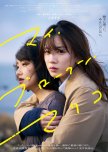
My Broken Mariko is not just sad. It’s the kind of sadness that seeps into your bones. The kind that doesn’t explode loudly but instead lingers quietly, pressing against your chest long after the screen goes black.Before anything, I genuinely think this film needs a trigger warning. It deals with physical abuse, emotional abuse, SA, self-harm, and the long-term weight of trauma. Some scenes are not just heavy, they are emotionally suffocating. It can be triggering to some people!
Plot**
The story follows Shiino and Mariko, two childhood friends who grew up side by side. Mariko’s life, from the very beginning, was shaped by abuse, neglect, and abandonment. While Shiino, the loud, impulsive, fiercely protective friend, always stood next to her, trying to shield her in whatever ways she could. As they grew older, the abuse that once felt shocking slowly became routine. The police calls became fewer. The door banging stopped. The urgency faded. Not because Shiino didn’t care, but because when something repeats long enough, it becomes part of the background noise of life. Mariko continues to suffer, even as an adult, falling into relationships that mirror the same violence she grew up with. And then one day, Shiino sees on the news that Mariko has died.
Spoilers**
As a child, Shiino was fearless. She would scream, call the police, and physically try to break into the house to rescue her friend, but as adults, life dulled that urgency. Maybe she believed Mariko would eventually leave. Maybe she believed things wouldn’t end so suddenly, and now there is no fixing it. When she realises her friend is dead, that moment doesn’t just start a journey; it unleashes a flood of guilt.
Watching Shiino carry Mariko’s ashes felt like watching someone carry the weight of every “what if.” Every “I should have tried harder.” Every “why didn’t I do more?”
On the other side, Mariko represents so many victims who stay in a familiar hell because the unknown feels even more frightening. As viewers, we want to shake her. We want to beg her to leave. But the movie forces us to confront the reality of how deeply abuse reshapes a person. When trauma is all you’ve ever known, it doesn’t feel abnormal; it feels inevitable.
Then the movie forces us to see the aftermath of Mariko's death through Shiino's eyes. Shiino’s heartbreaking and desperate attempt to give Mariko freedom in death, the freedom she never fully claimed in life. Refusing to let her rest in the house that symbolised her suffering, taking her ashes on a journey to a place she once wanted to see… it felt like a final act of love. A delayed rescue mission!
It's heartbreaking because we can understand Shiino's desperation; she could have done something more, but at the same time, she did a lot for her, but it was not enough.
This movie is soaked in guilt. It’s soaked in the kind of grief that whispers, “If only I had…” It’s about realising that sometimes, no matter how much help is available, it's not enough to save someone. And living with that knowledge.
But somehow, beneath all that heaviness, there is also tenderness. There is loyalty. There is a raw portrayal of friendship that is imperfect but real. Shiino isn’t a perfect saviour. She’s human. And that’s what makes it hurt more.
My Broken Mariko feels like a wound. It forces you to acknowledge how abuse can become invisible, how victims can feel trapped in cycles that outsiders don’t fully understand, and how the people who love them can carry guilt long after it’s over.
Was this review helpful to you?

Skip it ! I mean it !
If you’re planning to watch this movie, let me give you a genuine heads-up: I truly don’t think it’s worth it.And I’m not saying that lightly.I usually love challenging films. I enjoy stories that make my brain work, that force me to analyze human behavior, question morality, and sit with uncomfortable themes. I’m not someone who avoids dark or complicated narratives. But this one? I honestly wish I had skipped it. It didn’t just disturb me... it made me feel sick.
The dynamic, the relationship at the center of the story… I don’t even know how to describe it properly. It’s not just uncomfortable; it 's wrong.
I kept thinking, *how did this move from page to screen?* Some stories might work better as books, where ambiguity can stay internal and abstract. But seeing this dynamic visualized made it feel even more unsettling.
I walked away not feeling intellectually challenged, just emotionally drained and disturbed. And if you’re reading this thinking, “Now I’m curious, let me check it out”… DON'T!!!!. This isn’t reverse psychology. It’s not clickbait to make you more intrigued. For once, I genuinely mean it: you’re not missing out.
Some films leave you thoughtful. Some leave you inspired. This one just left me uncomfortable in a way I didn’t need. So sometimes, protecting your peace is the better choice.
Was this review helpful to you?

Maybe you will find your answers....
I watched Blue Period first as a movie and then as an anime, and I wasn’t prepared for how deeply emotional this would feel. The manga may hold even more detail, and the anime breathes life into every brushstroke, but the movie alone carried so much heart.It didn’t just tell a story. It stirred something I thought I had buried.Plot**
The story follows Yaguchi Yatora, a well-liked high school student who gets good grades and seems to be doing everything “right.” But inside, he feels empty. He studies hard, he performs well, he fits in yet nothing feels like his. Everything shifts when he encounters the students of the school art club and is asked to paint his favorite landscape. He chooses to paint Shibuya in blue at dawn, and that one painting changes his entire life.
Through art, he discovers not just talent, but meaning.
Watching Yatora fall in love with painting felt like watching a memory of myself. The first time you truly see shadows. The first time, colours blend exactly how you imagined.
The moment a blank canvas stops being intimidating and starts becoming a possibility. It was so painfully nostalgic.
I could almost smell the oils again. Feel the stiff neck from sitting for hours. The back pain from leaning too long over a drawing board. The silence of a studio filled only with scratching pencils and heavy concentration. Unless you’ve lived it, it’s hard to explain how physical art can be, how it takes over your body as much as your mind.
This movie didn’t just show the beauty of art. It showed the obsession. The doubt. The exhaustion. The hunger to be better.
And the imposter syndrome! That thing; It hit hard.
Because there is something terrifying about loving something so much and then realising how many people are naturally better than you.
Watching Yatora work himself to the bone, not because he was born a genius but because he refused to give up, made my chest tighten. That kind of determination is inspiring… but it’s also painful to watch. You see his effort. You see his fear. You see the cracks in his confidence.
It reminded me that talent isn’t always magical. Sometimes it’s built slowly, painfully, through tears and late nights.
The feeling of finding something that suddenly makes sense. That moment when your whole life shifts direction because you discovered a passion you didn’t even know you were missing. It’s like learning a new language, and realising it’s the only language that truly sounds like you.
Then reality steps in.
Entrance exams. Competition. Financial pressure. Society constantly questioning your choices. The quiet voice in your head asking, “Are you really good enough?”
Blue Period doesn’t romanticise art. It shows how hard it is to choose something uncertain. How vulnerable it feels to care that much. How scary it is to build your future… this movie made me want to pick up my sketchbook again.
This story felt personal. Like it reached into a place I hadn’t touched in years and gently said, “You remember this. You remember how it felt.”
And I do.
I think this movie will speak to you, maybe in the same way it spoke to me, or if you didn’t grow up in art, I still think it will move you. Because at its core, it’s not just about painting. It’s about passion. It’s about that moment when something clicks inside you, and suddenly you want to try harder. To push yourself further. To take your dreams seriously instead of just admiring them from afar.
It’s the kind of manga, anime, or movie that gives you a feeling you can’t fully put into words. Not just inspiration, something deeper. Something that lingers. It doesn’t scream motivation at you. It sits quietly in your chest and makes you reflect.
Maybe it will make you pick up a brush, or maybe it will make you practice your craft more seriously, or maybe it will just remind you why you started in the first place.
But it will give you something. And sometimes, that “something” is magical.
Was this review helpful to you?

Full Speed or Full Destruction
This movie was genuinely thrilling. From start to finish, it keeps you on edge. The only thing I wish it had was a little more dramatic weight during the big plot twist , I needed just a bit more action, a bit more emotional punch in that moment. If they had pushed that scene further, it would have been absolutely amazing.Plot**
The story follows the Tohoku Shinkansen Hayabusa No. 60 departing on schedule from Shin-Aomori to Tokyo, packed with passengers, including students visiting the Shinkansen factory. Everything feels routine until a chilling phone call changes everything: a bomb has been planted on the train, and if its speed drops below 100 km/h, it will explode immediately.
From that moment on, the tension never drops. The conductor and crew scramble to protect the passengers while racing against time and speed to prevent disaster.
What I really appreciated was the pacing. Because the story takes place on a high-speed train, the momentum feels constant. There’s no room to breathe and that works in the movie’s favor. It captures that classic thriller rush where your heart is racing along with the plot.
The acting was strong across the board, and another unexpected highlight for me was the technical detail. I had zero knowledge about train systems, track controls, or command operations going in. But the film explained everything so clearly and naturally that I actually learned something without feeling overwhelmed. It added realism instead of confusion, which made the stakes feel even higher.
Overall, it’s definitely a great watch if you’re in the mood for a tense, and fast-paced thriller.
Was this review helpful to you?

This review may contain spoilers
Supernatural Without the Super Clarity
I went into *Haunters* completely blind; no trailer, no synopsis, nothing. And maybe that was my first mistake.For at least half of the movie, I genuinely had no idea what I was watching. At first, I thought it was about zombies. Then demons. Then maybe aliens? The more I watched, the more confused I became. I was convinced it was about some kind of demon controlling people’s minds. It never even crossed my mind that this was supposed to be a supernatural hero-type story.
Only toward the very end did things start to click and by then, I was already mentally exhausted from trying to piece everything together.
What frustrated me most was the way the story was presented. It didn’t feel like it gave enough context or background for the events unfolding. Supernatural doesn’t automatically mean “anything goes.” Even fantasy needs rules. It needs structure. It needs some grounding so the audience understands what’s happening and why. Instead, it felt like the movie operated under the logic of “it’s supernatural, so it doesn’t need explaining.” But it does. Without context, the stakes don’t feel real, they just feel random.
The pacing didn’t help either. At times it felt dragged out, yet somehow still full of gaps. There were moments that felt like plot holes, or at least unanswered questions, and I kept waiting for clarification that never fully came.
The one thing I genuinely enjoyed was the group of foreigners who become friends with the protagonist. They were sweet, funny, and added some warmth to an otherwise confusing narrative. Looking back, maybe they were meant to be leaving clues or helping frame the bigger picture, but honestly, I was so lost by that point that I couldn’t fully connect the dots.
Maybe someone who loves superhero or supernatural films would appreciate this more. But for me, I was just confused, lost in the plot, the tone, and the direction. I finished it still trying to process what I had just watched.
Was this review helpful to you?

Loud, Surface-Level, and Sadly Forgettable
I really wanted to love *Miss & Mrs. Cops*, especially because I’m a huge fan of Ra Mi Ran. She’s one of those actresses who can carry both comedy and emotion so naturally. So I went into this movie with high expectations… and maybe that’s why it didn’t fully land for me.The film actually starts strong. It even gave me slight *Midnight Runners* vibes at the beginning , that chaotic investigative energy with humor mixed in. But somewhere along the way, it became too loud. There was so much shouting, so much exaggerated chaos, that I never really had time to sit with the story or let the pieces fall into place.
The investigation itself felt very surface-level. The message about undervalued women proving their worth was definitely there but it stayed on the surface. It didn’t go deep enough to create an emotional anchor. I never felt that strong emotional binding that makes a message hit harder or gives the story real weight.
The comedy was present, yes. But because of the serious topic it was dealing with, I felt like it needed more balance. Instead of building tension or diving into the emotional impact of the case, it often relied on loud reactions and physical humor. It felt like the film was circling around its point instead of fully committing to it.
Another thing that held it back for me was the lack of originality. The story felt familiar like I had seen pieces of it in other movies before. It didn’t feel like it tried to push boundaries or offer something new. And when a film deals with such a relevant issue, originality and depth could have elevated it so much more.
It’s not a bad movie ,it’s just okay. Watchable, but not memorable. And with a cast that strong, I honestly expected something sharper and more impactful.
Was this review helpful to you?

The Hype Is Real
I had heard about *My Sassy Girl* for years, even before I properly started watching Korean films. It was one of those titles that kept coming up everywhere, almost like a cultural landmark. In my head, it felt similar to the impact *Boys Over Flowers* had across Asia, the kind of story that becomes so popular it gets remade in multiple countries and completely takes over pop culture.And honestly? After finally watching it, I understand why.
There’s something about this movie that just works. It’s chaotic, romantic, emotional, and unexpectedly heartfelt all at once. You really do have to watch it to fully get the magic, explaining it almost doesn’t do it justice. It balances comedy and emotion in a way that feels crazy yet natural, not forced, and the chemistry pulls you in before you even realize it.
And Jun Ji Hyun? She is just Korean royalty. Effortless. Whether she’s playing a wild, unpredictable character or delivering a deeply emotional scene, she radiates talent. There’s a presence about her that makes you unable to look away. She doesn’t just act , she owns every frame she’s in.
This movie deserves every bit of its hype. It’s iconic for a reason. If you haven’t watched it yet, trust me, it’s really worth it.
Was this review helpful to you?
This review may contain spoilers
You need to feel this raw !
This movie is for a specific type of people ! this is raw and painful, yet beautiful!This movie completely took me by surprise. I was just as shocked as the characters, and it wasn’t until the very end that the sadness truly hit me like a punch straight to the stomach. I honestly don’t think anyone can fully prepare for how heartbreaking this story is. If I can give one piece of advice: don’t read reviews. Don’t look up explanations. Just watch it. It needs to be felt raw.
Plot**
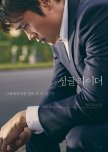
The story follows Jae Hoon, a once-successful fund manager whose world begins collapsing when his company goes bankrupt. Already overwhelmed and defeated, he impulsively books a one-way ticket to Australia, where his wife and son have been living for the past two years for their son’s education. You would think he would surprise them, run into their arms but instead, when he arrives, he sees something that stops him. His wife and son look… happy. Happier than he expected. And rather than announcing his return, he chooses to stay hidden and observe them from a distance.
Spoilers ahead***
Jae Hoon isn’t just a man who lost his job. He’s a man whose entire identity was built around being the provider. His success, his worth, his role as a husband and father all of it was tied to money and stability. When his company collapses, it’s not only financial ruin. It’s ego. It’s pride. It’s the fear of being seen as a failure.
Watching him observe his family from a distance was heartbreaking in a very specific way. He isn’t just broken, he’s displaced. He looks at his wife smiling, lighter, freer than she ever seemed in Korea, and you can almost see the thought forming in his mind: Was I the weight? That realisation is cruel!! He starts to understand that while he was busy earning money for them, he wasn’t emotionally present. And now he’s standing outside their life, quite literally.
What makes this film so powerful is how internal it is. Lee Byung-hun delivers one of those performances where the silence speaks louder than dialogue. His eyes do most of the storytelling. You see the jealousy, the denial, the fragile hope that maybe he misunderstood… and then the slow acceptance. It’s the kind of acting that feels almost intrusive, like you’re watching someone’s private unravelling.
I think what truly breaks him and us is the realisation that while he was busy building financial security, his family was building a life. And that life, without him constantly present, seems lighter. Happier. The film doesn’t scream its message. It shows it quietly, forcing you to sit with the discomfort and draw your own conclusions.
The contrast between gloomy, tense memories of Korea and the bright, open atmosphere of Australia visually mirrors his emotional state. In his memories, everything feels heavy. In Australia, everything feels alive except him. He stands there in his suit, rigid and out of place, like a man who belongs to a different world.
This isn’t a loud movie. It’s not dramatic in the usual way. There aren’t many long confrontations or dialogues. It’s quiet. Observational. And that silence makes it even more painful.
There are layers of sadness here. The sadness of a man losing his job. The sadness of suspicion. The sadness of watching the people you love live well without you. And beneath all of that, the deeper ache: the understanding that emotional presence might have mattered more than material provision.
By the end, the truth that unfold explode and devastation is makes it unforgettable. This was so painful!
Was this review helpful to you?
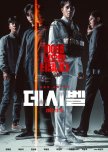
The casting is honestly incredible. Everyone fits their role perfectly, and the performances make the tension feel real rather than exaggerated. The emotional weight behind the action adds another layer to the story, so it’s not just explosions and chaos — there’s depth behind the stakes.
I genuinely don’t want to give away any spoilers because this feels like one of those movies that’s best experienced blind. The twists, the pacing, the reveals they hit harder when you don’t know what’s coming.
If you’re into action thrillers with strong performances and nonstop suspense, Decibel is definitely worth the watch.
Was this review helpful to you?

Through Mountains and Melodies
The Singer was such a heart-warming experience for me, especially because it’s rooted in Korea’s traditional art of pansori. Before watching this movie, I didn’t fully understand what Pansori, and this is why I want to provide some context, so if you are planning to watch this movie, you will have a better understanding of it.What is Pansori?
Pansori is a traditional Korean musical storytelling performance done by one singer and one drummer. It dates back to the Joseon Dynasty and was originally performed for common people. A single performance can last from 3 to 8 hours and sometimes days. It’s not just singing; it combines narration and acting, all accompanied by a single drum.
Plot**
The story follows Hak-gyu, a talented pansori singer whose voice can warm any heart. When his wife and daughter are kidnapped, his world completely falls apart. He eventually finds his daughter, but she has lost her vision, and he still has no idea who took his wife or where she is. With no power or connections to rely on, the only thing he truly has is his voice. So he travels from place to place, performing pansori, not just to survive, but to search for his wife and to console his daughter.
What touched me the most was how his singing became more than just a performance. It was his grief. His love. His desperation. Through his songs, he almost rewrites his own life, imagining gentler endings and happier outcomes than reality allows. When he sings, he is not only singing to an audience but to his blind daughter, painting pictures for her through words and melody, creating a world she can no longer see. Be prepared to feel all the feels.
Even though I don’t understand Korean, I didn’t need to. The emotion in his voice was enough. I had goosebumps while listening to him. I could feel the sorrow, the longing, and the love in every note. It honestly felt like he was pouring his entire soul into those performances. Honestly so heartbreaking !
For me, The Singer isn’t just a period film. It’s a celebration of Korea’s cultural heritage and a reminder that art can carry both suffering and healing at the same time. It showed me that when everything else is taken away, sometimes your voice is the only thing left and that voice can still hold hope.
Said that I hope you will take time to appreciate this movie and enjoy a part of Korean history.
Was this review helpful to you?
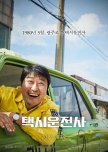
Based on true events
*A Taxi Driver* was such a powerful watch, and knowing that it’s based on real events makes it even more meaningful. There’s something about films rooted in true history that hits differently, you’re not just watching a story unfold, you’re witnessing something that actually shaped lives.Before this movie, I had never really heard about the Gwangju Uprising (also known as the Gwangju Student Independence Movement). After watching it, I found myself reading more about it, wanting to understand the real history behind what I had just seen. That’s one of the reasons I love movies based on true events they don’t just entertain you, they educate you. They open a door to history in a way textbooks sometimes don’t.
Be prepared to cry. This film is emotional. While parts of the taxi driver’s personal storyline were fruits of fantasy, since the real-life driver was never formally identified and didn’t actually meet the journalist again, the core political events and historical context remain true.
Song Kang-ho is, as always, absolutely phenomenal. I’ve loved him ever since Memories of Murder, and he was perfectly cast here. He brings warmth, humor, fear, and transformation to the role in a way that feels so natural.
I don’t want to give away too much of the story even though it’s based on real history, I think it’s best experienced firsthand.
Was this review helpful to you?

Brilliant casting and brutal content
There honestly isn’t much I need to say about VIP except that it was a great watch. With a cast this strong, I wasn’t even surprised that it turned out as good as it did. The performances are intense and everyone plays their role so good that the tension never drops for a second.That being said, I need to give a serious warning!!!!!
If you’re planning to watch this movie, please know that it contains multiple scenes involving sexual assault in extreme gore tones. The violence is not subtle. It’s graphic, disturbing, and at times very difficult to sit through. I personally had to look away several times because some scenes were that intense.
This isn’t a casual thriller you put on for entertainment. It’s dark, brutal, and emotionally heavy. So if you’re sensitive to graphic violence or SA themes, please take that into consideration before watching.
But purely from a filmmaking and acting standpoint, it delivers exactly what it sets out to do; unsettling, gripping, and powerful.
Was this review helpful to you?


