
 K-Drama





A great movie
It's a great action movie, but it's hard to recap with a few words because there are many things happening, and you can quickly give away a spoiler. In terms of plot and acting, it was brilliant, and it has a stellar cast. You need a bit of history brush-up so you can understand it all, but the movie does a good job explaining it all.Was this review helpful to you?
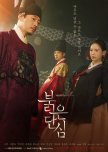
Intense, burning, and magnetic
I found Bloody Heart to be exceptionally good and realistic; there’s something very real compared to other romanticized historical dramas. When you watch the drama, you can actually see how the story feels real, as if these things happened for real, if you know what I mean. The storyline, with the king on one corner, the minister in the other, and the queen in the middle, felt exciting but painfully realistic. What I loved about it was that I could not pinpoint who was the bad guy because you could actually look at each character's motives and understand why they were doing what they were doing, like they all had good reasons and bad reasons. It's similar to the usual chessboard we see in many historical dramas but yet so incredibly different. The acting really elevated this, and the intrigues felt so deep and personal as if it was happening to me. Oh gosh, the acting was painfully good. The intensity of the king's feelings and his rage, contained in regal posture but flooding out from him...and his longing for his queen...was so magnetic! Minister Park was both painfully right but also intensively wrong in his feelings. I don’t have the words to describe this, than it is brilliant drama.Was this review helpful to you?

The original battle
I think I watched Battle Royale for the first time around 2003-2004, and I was very young and had no business watching this movie. However, I say this is definitely one of those movies that marked most of millennials' lives. Whether you are a Japanese movie fan or not, if you were a '90s kid, you would have watched this.Watching now, after over 20 years, it feels crazy. The story is so crazy and needs a huge trigger warning to anyone who is planning to watch it. There are a number of scenes of death in the most brutal way, so definitely, if you can't watch these types of stuff, I would suggest skipping this movie. However, taking into consideration how gore some of Battle Royale's offspring, like Squid Game, is, I don't think it's as violent, but if you are sensitive, then it's a whole other argument.
There are a few things I want to say. For me, this was one of those movies that I remember from my childhood, and it's an experience, not just a movie. In fact, this movie was the inspiration for many other similar concepts you will find. If you are watching this now for the first time, you will find so many flaws in it, but I want you to remember that this was done in 2000, so there were no fancy filters and special effects with the most powerful software in the market. So, watch this with an open mind, remembering this took place years ago. Also, this movie is based on a manga, and undoubtedly, the manga is far superior and darker than the movie because I don't think you can really depict in a movie the horror and darkness the same way a book can.
Battle Royale is an experience; it's the original that led to many modern-day replicates, but yet its message never stops: a world where we are forced to fight against each other instead of the powers that be. Rather than being permitted to challenge the gatekeepers, we turn on each other in desperation to survive. And yet, communities continue regardless.
Was this review helpful to you?
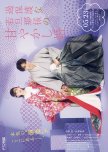
Kahogona Wakadanna-sama no Amayakashi Kon
0 people found this review helpful
Easy skip
Kahogona Wakadanna-sama no Amayakashi Kon is a very short drama. It only has six episodes, and each episode is around 20 minutes long, so the whole story moves very quickly. Overall, if I had to give my honest opinion, I would say the drama lacked a lot. The story jumps from one event to another so quickly that it doesn’t give the audience much time to process what’s happening. Although there are some cute moments between the male and female leads, the overall story feels quite average.Plot***
The story follows Someya Yukito, the young master of a long-established inn in Asakusa. When Yukito’s father becomes ill, he is called to take over the inn and become the new head of the family. In order to uphold family tradition, his relatives pressure him to get married before officially taking over the inn.
Because of this, Yukito decides to ask Tsuruoka Io to marry him. Io is training to become a chef and has basically grown up at the inn alongside Yukito. The drama then follows their life as a newly married couple.
On paper, the story sounds very cute and promising. However, the pacing is extremely rushed. For example, in one episode Yukito asks Io to marry him, and by the next episode they are already married and navigating married life. The story moves so fast that you barely have time to digest any of the developments.
Everything feels like it’s happening at 5x speed, and that really affected the flow of the drama for me. If the show had taken more time to develop the characters and their relationship, it could have been much more enjoyable.
Was this review helpful to you?

This review may contain spoilers
overly used plot but a cute version
Honestly, it’s not a bad movie. It’s actually quite enjoyable, but the biggest issue for me is that the plot is very overused. After a while, it kind of loses its charm because the story feels very familiar.That being said, it’s still a nice movie, and I think people who haven’t seen this type of story before might enjoy it much more than I did.
Overall, it was fun to watch, and one thing that really stood out to me was the theme around curly hair. That part actually resonated with me a lot.
As a millennial who grew up seeing ads on TV constantly telling us that curly hair was messy or dry and that was it was a " problem" that we needed silky straight hair to look pretty, this movie brought back a lot of memories. The way it touched on that insecurity felt very real and relatable, and I enjoyed how the movie brought back something that so strongly defined beauty back in the day.
The reason I say the plot isn’t very original is because it’s the kind of storyline you’ve probably seen before. The movie follows a girl who has a crush on a guy, and her friends help her build the courage to confess her feelings. During a school trip, she’s about to confess to him, but in that moment she realizes she’s actually in love with her best friend instead. They start dating, but things don’t stay simple. The best friend has serious family issues that force him to leave and disappear from her life. Years later, she still hasn’t moved on, and then he suddenly reappears, and their love story continues.
It’s one of those plots where you can pretty much predict what’s going to happen because we’ve seen similar stories many times before.
Even so, the movie is still a light and enjoyable watch. It may not be the most original story, but it has some relatable moments and a nostalgic feeling that makes it worth watching if you’re in the mood for something simple and sweet.
Was this review helpful to you?
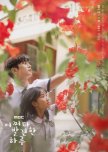
You started off really strong
I went into Extraordinary You without knowing anything about it, and I was honestly pleasantly surprised by how original and interesting the concept was. I don’t think I’ve ever watched another drama with a similar setup, so it immediately caught my attention. I ended up binge-watching the first six or seven episodes because the premise was so intriguing.However, after that point, I started to feel like the drama lost some of its momentum. I’m not entirely sure if it was just the initial excitement wearing off or if the story itself started becoming messy and confusing. The drama introduced a lot of interesting ideas with the whole stage versus non-stage concept, but I felt like the storytelling didn’t always provide enough clarity for what was happening.
One part that really confused me was the Joseon Dynasty storyline. Instead of adding depth, it felt dragged out and made the plot harder to follow. I think it might have worked better if it had been introduced earlier and explained more clearly, because by the time it appeared, the main purpose of the drama already felt like it was starting to fade.
Another thing I noticed was how the focus of the story shifted. At the beginning, it felt like many of the characters had important roles in the narrative, which made the world feel more interesting. But as the drama went on, the attention moved mostly to the main three characters, and I think that took away some of the charm the drama had at the start.
Was this review helpful to you?

The 100th version of rich CEO and poor girl
Business marriage is a common theme and is often overused. If this is your first time watching a Japanese drama that features a relationship between a wealthy CEO and a lower-class employee, you might enjoy it. However, after watching many similar stories and some impressive adaptations, I found this version lacking. The storyline is acceptable but not particularly remarkable. While there are some charming scenes, they aren't strong enough to make this drama memorable. Nonetheless, if you're having a slow week and want something light to watch, this could be a good option.Was this review helpful to you?

This review may contain spoilers
Fans Who Go Too Far
I watched Gachi Koi Nenchakujuu during a time when there were major discussions online about extreme fan behaviour and sasaeng situations in the Asian entertainment industry. Because of that, watching this drama gave me a completely new perspective on the reality of how celebrities often live.
What surprised me most was how well the drama explores the psychology of fan obsession. I honestly wish it had more episodes, because the stories were so interesting, and definitely there was even more that could have been explored.
The drama shows different sides of how admiration for an idol can slowly turn into something unhealthy; they are not blaming the fan, but showing how it all plays out. At first,t it may look like admiration and support, but over time it can become something much more dangerous; a kind of delusion where fans begin to lose their connection with reality.
Through Hinaki’s character, you can clearly see how that obsession grows. Her feelings for Subaru go far beyond normal fandom. In some ways, you could blame Subaru as well, because his actions and the way he interacts with her make things even more complicated. It feels like he takes advantage of her feelings. But at the same time, Hinaki already seems like someone standing right on the edge, like a bomb waiting to explode.
She represents a type of fan who believes every word and every glance from their idol is meant specifically for them. Through a screen, they build a personal fantasy that slowly replaces reality.
Then there’s Kotono. At first, she seems like the opposite kind of fan; someone who simply supports from a distance and understands the boundaries between idol and fan. She looks like the “normal” fan who knows not to cross the line.
But as the story unfolds, you begin to realise that even Kotono isn’t as detached as she believes. In her own way, she also carries a form of obsession, just quieter and more controlled.
That’s what makes the drama so interesting. It doesn’t present obsession in only one form. Instead, it shows how different kinds of fans relate to idols, and how easily admiration can turn into something darker.
I found Gachi Koi Nenchakujuu to be a very clever exploration of fandom culture, especially if you have been in this world. It shows how love and support for an idol can slowly twist into obsession, delusion, and even madness; it's not just the fruit of cinematic storytelling, but a reality.
.
Was this review helpful to you?
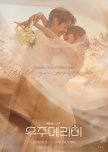
This review may contain spoilers
Great drama but bit rushed towards the end
I really enjoyed Would You Marry Me. It’s a light-hearted drama that was easy to watch, and the casting worked very well. The actors fit their roles naturally, which made the story feel warm and enjoyable from beginning to end.
My only real issue with the drama is that I wish it had a few more episodes. Toward the end, everything started to feel a bit rushed. The story had built up some interesting conflicts, but the resolution came too quickly, which took out the fun.
What I actually found interesting was the way the antagonists were written. They weren’t obviously evil from the beginning, which made their actions more surprising. They managed to fool everyone for quite a while, and that made the tension in the story more engaging. However, when the confrontation finally happened, I felt it ended too easily. After all the damage they caused, their arrest felt too quick and almost too simple. I think an extra episode or two could have added more suspense, maybe a bit of a chase or a stronger buildup to their downfall.
Another reason I enjoyed the drama so much is that I’m a big fan of Jung So‑min. I’ve always liked her as an actress. She has this natural way of acting that makes her characters feel very believable and genuine. Nothing ever feels forced when she performs.
So far, I’ve enjoyed many of her projects, and since watching her in Love Next Door, I’ve been even more excited to see her in new roles and new pairings. She always brings a certain charm and sincerity to her characters that makes the story more enjoyable to watch.
Was this review helpful to you?
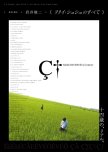
It’s not meant to make you feel good. It’s meant to make you feel everything.
All About Lily Chou-Chou is the kind of movie that was often made in the early 2000s;the type that completely messes with your brain and leaves you thinking, *“That was crazy… but also genius.”*It’s not an easy watch. The film dives into different layers of human nature in very raw and unfiltered ways. At times it’s shocking, uncomfortable, and even difficult to sit through. But that intensity is exactly what makes it powerful.
Trying to explain the plot is actually pretty complicated. There are many characters, many events, and a lot of “why” behind what happens. The story moves through different perspectives and moments, but somehow everything connects through Lily Chou-Chou and the music that surrounds her.
Honestly, it’s the kind of film you just have to experience for yourself. Watching it felt like going on a strange and emotional journey. It’s not a happy story at all in fact, it can feel quite heavy and overwhelming. But at the same time, it’s brilliant.
It’s one of those movies that you admire for its creativity and boldness, even though it leaves you feeling a little horrible afterward. And maybe that’s exactly the point.
Was this review helpful to you?
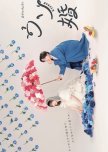
Even a familiar story can feel exciting again when the right cast brings it to life.
I have watched plenty of Japanese dramas about contract marriages and fake relationships, and if I’m being honest, most of them follow the same pattern, setup, character, and emotional journey. After a while, it can start to feel repetitive and boring.But *Usokon* felt different to me.
Even though the story itself follows a familiar contract-relationship formula, I genuinely enjoyed every bit of it. Yes, the concept is one we’ve seen many times before, but the actors brought something fresh to it. They gave the drama a spark that made it stand out from the rest.
The performances were engaging and natural. The chemistry felt alive. Even in moments that could have felt predictable, the actors added emotion and nuance that made the scenes feel new again. It wasn’t just about the contract, it was about how they made us believe in the emotions behind it.
I also found the story slightly more original than most in this genre. Maybe it wasn’t entirely groundbreaking, but it had small differences that made it feel less recycled. And what really elevated the drama for me were the side characters. They weren’t just background fillers; they had personality, presence, and added depth to the overall story.
In the end, I think it was a combination of everything — strong performances, engaging side characters, and subtle freshness in the storytelling, that made *Usokon* a great contract-relationship drama.
Was this review helpful to you?
This review may contain spoilers
When Trauma Lives Between Sisters
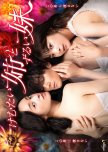
This drama centres on the theme of trauma. Not the loud, explosive kind. But the quiet, domestic kind. The kind that grows inside a house.Plot**
The story follows Togo Jun and Mishima Ran, estranged sisters who have carried resentment since they were little girls. Jun always felt that their mother prioritised Ran, giving her more affection and attention. What began as small childhood incidents: Ran taking Jun’s toys, slowly evolved into something much darker. Clothes. Jewelry. And eventually… even stealing Ritsu, the man Jun was dating. Jun dated Ritsu in high school, but now he is married to Ran. After many years, they reunite at their mother’s funeral, and that’s when everything begins to unravel.
Spoilers ahead****
What I loved about this drama is how carefully it dissects emotional scars. It shows how unresolved childhood wounds don’t just disappear with age; instead, they calcify. They shape your life, your choices, your relationships and ultimately your self-worth.
When Jun decides to leave her maternal home after her mother’s death, it feels like the same pattern repeating. She steps aside. She gives up space. She lets Ran have it. But something finally snaps.
All the suppressed anger she has swallowed since childhood, all the times she allowed herself to be displaced, rises to the surface. And when she chooses to stay, it isn’t just about a house, but it’s about reclaiming herself.
At first, it’s easy to dislike Ran. She seems manipulative, selfish, and almost driven by a need to win. However, as you watch, you start realising that much of her attachment to Ritsu and her way of doing things is based on rivalry with her sister. Like she needs to prove she is better. Chosen. Superior.
But then the layers peel back, and you begin to see her pain too.
Her inferiority complex. Her fear. The way she has also been shaped by the same household, the same mother, the same emotional environment. She is not simply “the villain.” She is another damaged child who grew into a messy adult.
And Ritsu? He is the quiet red flag in the room. I understand he carries his own trauma, but instead of confronting it, he drifts. He accepts whatever role he is given, and that just showed me how he never truly cared. He never truly chooses; he simply follows the current. That passivity of his causes more damage than he even realises.
One aspect I truly loved the most in this drama is that, in the end, the drama shifts from sister rivalry and revenge to them choosing themselves.
That felt mature. Real. Painfully adult. They finally begin making choices not out of revenge, not out of proving something to each other, but out of understanding what they need for their own lives. And that is growth.
Sometimes, throughout the drama, I kept wondering: Would things have changed if someone had tried harder? If someone had stayed? If someone had fought more persistently?
But then I realised, these are not simple people. They are complex, wounded adults shaped by years of accumulated hurt.
We don't meet them as children but as wounded adults who do the best they can, and because trauma doesn’t untangle neatly, healing is messy. And sometimes growth means walking away, not winning.
This drama feels like watching three broken people, tied together by blood, history, and unresolved pain, slowly learning that love cannot survive inside constant competition.
I found it very mature work with the right amount of revenge but also growth.
Was this review helpful to you?

easily forgettable
I went into Cinderella Again thinking it would be an emotional, nostalgic time-travel romance. The premise sounded interesting ;a woman getting the chance to go back and relive her youth, possibly correcting regrets and rediscovering love. That kind of storyline has so much potential for depth, reflection, and heartbreak.But unfortunately, Cinderella Again didn’t work for me.
The biggest issue was the lack of emotional depth. Everything felt surface-level, the story, and the characters' motivations I kept waiting for something to truly move me, but it never did.
Then there’s the time-travel dynamic. Yes, physically she returns to her younger self, but mentally she is still 29 years old. Watching her develop romantic feelings for a 17-year-old felt uncomfortable to me. I couldn’t fully immerse myself in the romance because that awareness never disappears. Instead of feeling sweet or nostalgic, it felt strange.
The chemistry between the leads also wasn’t convincing. I didn’t feel that spark, that emotional tension or longing that makes you root for two people. It felt more like two actors following a script rather than two souls reconnecting across time.
As for the male lead, I’ve seen him in several BL dramas and other straight romances, and I know he can deliver strong performances. That’s why I was surprised that here his acting felt somewhat stiff and lacking flow. Maybe it was the direction, maybe the script, maybe the pairing, but something just didn’t click.
Of course, this is just my experience. I can see how some viewers might enjoy the nostalgia or the fantasy aspect. But for me, I simply couldn’t find it.
Was this review helpful to you?

A Surprisingly Warm Love Story I Didn’t Expect to Love
I went into *Marry Me!* with very low expectations. The story sounded, honestly, a little ridiculous on paper. The idea that a complete stranger would show up, marry you, and simply decide to take care of you as social experiment? In real life, that would be alarming. Wild. Probably even uncomfortable. But because it’s adapted from a manga, I told myself to suspend disbelief. In that world, unusual premises are part of the charm.What I didn’t expect was how warm and comforting it would feel. Instead of turning the concept into something creepy or awkward, the drama treats it with softness. The relationship doesn’t feel forced or strange, it unfolds gently. And I think the reason it works so well is entirely because of the actors. They didn’t play it in a weird or exaggerated way. They didn’t make it feel unsettling, instead they brought sincerity to it. Their performances grounded the story, making something that could have felt absurd turn into something surprisingly touching.
There’s a quiet sweetness to the way they interact; small gestures, hesitant smiles, growing trust. It feels natural, not dramatic for the sake of drama. And that’s what makes it work.
I genuinely didn’t think I would enjoy it this much. But by the end, I found myself smiling at the screen, appreciating how something so simple and unusual turned into such a comforting little love story. Sometimes the most unexpected dramas end up being the ones that stay with you the longest.
Was this review helpful to you?
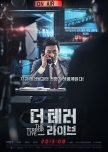
I was holding my breath the whole time!
I was recommended The Terror Live and told it was a great thriller, and I’m so glad I listened.It took me straight back to those early 2000s thrillers I used to watch as a kid, the kind where you don’t move, don’t even dare run to the bathroom during ad breaks because you’re terrified of missing one second. That’s exactly how this felt.
From the moment it started, I was locked in. Completely. It’s the kind of movie that traps you in one space. The tension just keeps tightening and tightening until you realise you haven’t blinked in minutes.
It gave me that specific adrenaline rush only a truly good thriller can deliver, where you’re not even breathing properly. You’re just holding air in your lungs, waiting. And then when it ends, you finally exhale and sit there thinking: “That was insane.”
The pacing is relentless. The story is engaging. The acting carries everything with such intensity that you feel like you’re inside the chaos rather than just watching it. It’s the kind of performance that makes you forget you’re watching a film at all.
I genuinely don’t want to say anything about the plot because this is one of those movies you absolutely need to go into blind. Don’t read summaries. Don’t watch trailers. Don’t spoil it for yourself.
Just press play. Trust me.
When it ends, you’ll feel that same urge I did, to immediately tell everyone how good it is.
Was this review helpful to you?


