

Brilliant- from Ep1 to Ep24 absolute brilliance
The most important thing- an ending done right. This was no open ending, no 5 second glimpse of happiness. THIS was a clear, concrete, loving portrayal of a happy ending. Other cdrama writers/directors- TAKE. NOTES.The acting was amazing, from leads to support everybody did a good job. The story was good, not too unique but brilliantly showcased. The characterization was consistent, there was development and there were plot twists. Pacing was good, dialogues were realistic.
For once, all the bad guys get what they deserve. I especially loved the King's end- oof chef's kiss karma there. Xue Chuyun you are worthy of being an Empress (be my empress please <3)
The romance? Oh they served plenty. They had tension, they had antics, they had angst, they had love. There was enough shown on screen, enough alluded to and enough implied off screen. The kissing scenes were so good, the chemistry all throughout was delicious.
In short, a must must MUST WATCH. We need to show more love and support to such shows so they know what we want more of.
Was this review helpful to you?
I was a bit thrown off when it switched between Taiwanese and Korean because my brain couldn't keep up with the switch at first, but I'm sure that's just because I have to translate it in my head into English. With subtitles, it wasn't as distracting.
Seriously, though. It's a cute, quirky show that I would LOVE to see more of~
Was this review helpful to you?

Head 2 Head
14 people found this review helpful
 1
1This review may contain spoilers
One of the Most Disappointing GMMTV 2025 BL So Far
Sigh. This series gave me everything… and then completely fell on its face. Head 2 Head was my third most anticipated BL from the 2025 GMMTV lineup, and it has quickly become one of the most disappointing shows I’ve watched.Let’s dive in.
This series was rushed. Rushed to the gods. Not only did they air it while it was still filming, but they also seemed incapable of coming up with anything new for the leads to do besides repeating the same conflict over and over again. There’s an episode where the leads go to the hospital not once, not twice, but three separate times for entirely different reasons. That’s not drama, that’s diabolical.
What started as something I was genuinely enjoying quickly turned sour. Sea delivers a much stronger performance here than he did in Only Boo!, which actually gives me hope that he’s growing as an actor. I’m now even more excited to see him in my most anticipated 2026 series, Weirdo 101. Unfortunately, his character here is absolutely beaten to death by the dream mechanic. I understood that Jerome could see the future, but I did not realize he was apparently seeing a decade ahead. The show makes no effort to age the characters convincingly. We’re meant to believe they’re in their 30s, yet they look exactly the same, not ten years older, not even ten days older.
The story becomes a constant loop: Jerome dreams something, debates whether to interpret it, decides whether or not to tell Jinn, then it either happens or doesn’t. Rinse. Repeat. By episodes eight or nine, it becomes painfully repetitive and earns nothing more than an eye roll.
The side couples start off as a nice addition before becoming unbearable themselves. Surf and Java land comfortably in my “oh, I like these two” category, which makes me more excited for Roommate Chaos. Van, however, is awful. The series makes no real attempt to redeem him beyond “my parents are dead, feel bad for me,” while he continues being a lousy sleazebag dragging Farm along. The only interesting thing about his arc was the idea that he might have only loved Farm as a friend and felt obligated to feel more because of what Farm had done for him. That could’ve been compelling. But this is GMMTV, where happy endings are almost always mandatory.
The show does work on a comedic level at times, and I enjoyed the dynamics between the leads and their moms. SeaKeen in the physical romance department is… weary. Not terrible, but undeniably awkward. SurfJava do fine. Overall, though, this is a rushed, sloppy series that’s boring in most moments and ridiculous in others. And please, for the love of everything, stop casting the twins as the lonely comedic friend. It’s tired. It’s repetitive. Let it rest.
Ratings:
Story: 6/10 - Fun at the start, but like many GMMTV series, it completely collapses by the end.
Acting: 8.5/10 - Sea has improved immensely. He still has room to grow, but the progress is obvious. Standouts were Keen and Java.
Music: 5/10 - didn't pay attention to it.
Recommendation Value: 2/10 - skippable. Unless you really liked the actors, this does not warrant a watch. Save your time.
Was this review helpful to you?

Finishing this drama is like saying goodbye to your good friend…
And all you have left are warm memories. As I watched, I started to feel like part of the community - I truly knew these characters, I understood their struggles, hopes and motivations and I wanted them to succeed and find happiness.Healing is the best way to describe it. There are no exciting plots and crazy twists. It’s all daily struggles, small talks, forming friendships, moments of compassion, reminiscing of the past, dealing with the present, planning for the future. The magic of mundane existence in the beautiful surroundings.
Meet Yourself is a story filled with diverse and unique characters - each presenting a different perspective and ways of dealing with their traumas, mistakes, shortcomings and fears. This is a drama that holds many life lessons and precious moments that warm your heart and soul and leave a smile on your face. One of the aspects I appreciated the most was it did not solely focused on the younger cast. Older people were not just a background to showcase the passage of time, to show the future struggles the youngsters might face. They were their own people with vibrant personalities - sometimes far more energetic and driven than their kids and grandkids. I love how the drama took its time to establish well written and developed elderly characters.
It also presents a beautiful variety of relationships - be it romantic or platonic. Family, friends, partners, acquaintances - clearing showing how other people have a big impact on our life, but that we also leave some traces even after what seemed like meaningless interactions. Some people will forever be part of our life, even after they are gone, some were a tiny peace, a passing memory - even if we don’t see it now, all these moments mold us into who we are, and change us into who we are meant to be.
From brilliant and well paced writing to amazing performances, Meet Yourself is truly a whole package. Almost 1000 screenshots I took are a statement of itself - this show is stunning, a visual feast accompanied by a charming soundtrack (Validate being one of my favorites songs).
Honestly, it just feels like this drama was crafted with love and care.
Was this review helpful to you?
This review may contain spoilers
Good short watch
What I liked about the drama here was that it did not really affect Harumi and Maiko’s relationship - no breaking up or big fights due to misunderstanding, or jealousy when the exes and the pasts appeared. They remained trusting of each other but it was also nice to see their insecurities and jealousies which was a natural reaction but they did not let it influence them in making irrational decisions.Maiko’s two pasts were such annoying characters - I think the only ones that I didn’t particularly care for in the whole drama. But it was good to watch how Maiko and Harumi handled the situation.
Was this review helpful to you?
The heiress / butler relationship is hilarious and very different from what I have seen in other dramas.
On the whole a good drama to watch to relax and have fun.
Was this review helpful to you?
Was this review helpful to you?
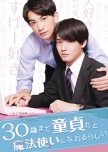
Cherry Magic! Thirty Years of Virginity Can Make You a Wizard?!
14 people found this review helpful
This review may contain spoilers
The Cherry Magic Effect — A Comforting Fairy Tale?
IfI told you that no other show than Cherry Magic ever gave me the feeling of comfort and feeling home would you believe me? I randomly came across this Japanese Drama and it changed me in many ways and I’m not exaggerating here. While dealing with my mental health and my depression to be specific during COVID-19 times — I felt the loneliness and unhappiness inside me growing. The impact and feeling this little drama left in my heart exceeded all my expectations. Even though it did not magically make my problems disappear, it did motivate me to keep trying.Suddenly I found myself in the comment section, commenting paragraphs and paragraphs of random thoughts, observations, admiration, analysis, random niche memes, and a good dose of crushing on the very talented actor Machida Keita. The comment section was never empty. Someone was always commenting, replying, always talking. The warmth of the comment section felt like the best, never-ending hug. This special community found its way into my heart. I truly think that this series attracted very special people, the best kind of people. This is the truly magical part of this experience.
I started to host watch parties for CM to share my joy and discovered how healing the experience of watching and re-watching this drama actually is. I never enjoyed rewatching anything. It is simply not something that gives me that much joy. So, I never really got what people meant by their “comfort” show. However, it changed with Cherry Magic. Almost every single episode made me feel like a teen falling in love for the first time again — extremely happy, giddy, and butterflies in my stomach. Every re-watch felt like an entirely different experience.
But the fact that this is my first Boys’ Love (BL) drama made me do a lot of research and late-night reading. I never felt comfortable to watch a BL drama before. I did not know why something would be classified as Boys’ Love instead of LGBTQ+. I found out there are many different readings and academic perspectives on this genre. So I came to the realization that in no way Cherry Magic is a perfect drama. I am someone who can love something but still views things from a more critical perspective.
You can read the whole article/essay here:
https://aylind.medium.com/the-cherry-magic-effect-a-comforting-fairy-tale-316ea781796d
I also included academic sources and more information on the BL genre.
The Concept of Romantic (Boys) Love
Up until the Meiji period, homosexual acts were practiced throughout the Tokugawa and Edo periods in Japan. In the Edo period, the writers wrote about the relationships between older and younger samurai. Edo writers' idea of love differed from the Western concept of “romantic love”. During the Meiji period, however, Japan was influenced by the west.
The concept of romantic love which involves self-sacrifice and was particularly popular in the ’70s shōjo mangas has western roots. Those popular shōjo manga’s narratives were melodramatic and serious.
“Sex, for the heroine, is often the ultimate form of self-sacrifice where she must prove the truthfulness of her love by “overcoming” the fear and pain associated with the act, rather than accepting or even enjoying it.
The shift from shōjo romance to BL signals changes in the conceptualization of love, from the surrender of the female body for the sake of love to the mutual exploration of love, sexuality, and erotic desire between two protagonists.” (Saito, 2011)
Reality or Fantasy?
The Boys’ Love Genre originated in Japan and was originally created and consumed by women essentially in response to the Japanese obscenity laws in the 1970s which caused a restriction of representation of male-female sexuality. Thus it is “a fascinating example of (fear of) government regulation leading to self-censorship, leading in turn to the creation of a whole new field of fantasy and desire/identification for countless readers of this new subgenre” (Orbaugh, 2003).
The distinction between fantasy and real LGBTQ+ people is one I personally cannot make. Despite the fact that I can see why people might regard the BL genre as a form of entertainment or escape from norms and society, it feels not appropriate to make this distinction. Furthermore, BL media seems to be the most mainstream media for the LGBTQ+ community in Japan, therefore it does have an influence on how the community is perceived by others. It has the power to empower the LGBTQ+ community and to push boundaries, instead of alienating and dehumanizing them further. The expression of desires and sexuality without the sexualization and fetishization of homosexual relationships should be normalized in mainstream media. This is why media is such an important tool. Most academic research seems to focus on mangas and animes, but with the Live-Action genre, we are dealing with real human beings. It makes things even more complex.
Another interesting aspect would be that we are literally able to see Kurosawa’s fantasy scenarios with Adachi through the magical abilities Adachi possesses. The distinction between reality and fantasy takes another dimension and creates an inner conflict between Adachi and what he wants.
Playing it safe?
After reading an interview with one of the screenwriters, I came to the conclusion that CM attempted to create a romantic comedy that would attract all kinds of viewers, thus they tried to stay away from being labeled as BL. I read that the production wanted to not hurt anyone with this production, so they tried to be careful. The production played it safe. They tried to stay away from labeling CM as part of the stigmatized BL genre. Therefore, by portraying this “universal” and “gender-free” love, they did attract a lot of different viewers. However, while attempting to hurt not anyone, this “neutral” approach might not be satisfying enough for some viewers. Is it possible to not label your work as BL genre but also avoiding to call it LGBTQ+ media?
An accurate representation of the community does not mean that the story cannot focus on joy and positive themes. By depicting a fictional world where the identity of an LGBTQ+ person is limited or censored, it might make people who are still figuring out their (sexual) identity feel like their identity and desires are not “normal” or “impure”. Therefore we have to be more careful about labeling romantic stories of LGBTQ+ people without physical intimacy as “pure”. Those dichotomies of pure/impure imply that that physical intimacy between LGBTQ+ people is not considered as “pure”.
Hence why it is important to ask ourselves, if this approach makes it more approachable for conservative viewers, viewers with heteronormative ideologies and might offer us a more fantasy image on real same-sex relationships — A fantasy image that might offer escape and entertainment or harm real LGBTQ+ people by being stereotyped?
On one hand, this drama might be much better in comparison to other BL dramas where sexualization and fetishization, and non-consensual intimacy, rape happen quite often, but on the other hand, people who usually don’t watch dramas and movies that are labeled as BL, might not be content with Cherry Magic. Not everyone feels strange about the way kisses, etc. were handled because they wanted to see some steamy scenes and fetishize gay men. Some people just want a more accurate representation of minorities.
We should not have to lower our expectations because this is a Japanese Drama or BL drama in general. Change cannot happen in a blink of an eye, but there’s a difference between writing a kissing scene and teasing a kiss into the script. I live by the approach that valid criticism can only be helpful for future production. The unexpected international popularity of Cherry Magic showcases that there is a need for media that is comforting and romantic, without unnecessary toxicity and death. You cannot deny the impact pop culture has on society. One has to recognize that Cherry Magic is a step in the right direction, where consent plays importance. Adachi is never forced by Kurosawa. Adachi does not have to prove his love by having sex with Kurosawa. They both respect each other's boundaries and feelings.
Restrictions, Imagination, and Queer Interpretations
“I like the way he can easily say that there’s more to life than just love.”
One of the reasons why this drama seems to appeal to a lot of people on the ace spectrum seems to be the romantic approach in the drama. The protagonist Adachi seems to want to be only physically intimate with Kurosawa due to the romantic connection he has with Kurosawa. However, even if Adachi is supposed to be on the ace spectrum, the teasing of physical intimate scenes is what makes this drama marketable and can irritate people. I would have been totally fine with no kissing and teasing but a short sentence by Adachi saying that he is just not interested in it would have been sufficient. On the contrary, the second couple; Tsuge and Minato share several kisses with each other. So I guess it is ok to wonder why Adachi and Kurosawa did not share a kiss? There is a scene where both of them are waking up in a bed together. Unrealistically, they are both wearing white t-shirts. This might reflect Kurosawa’s fantasy we saw in the first episode, but it also further removes this scenario from reality.
In contrast, Wood (2012) argues that “…ambiguity and uncertainty is productively queer and open to a wide range of interpretation and fantasy.” Therefore, the censorship might appeal to a wide range of viewers and leave room for the imagination of the viewers. This also leads to also to more fan creations.
Furthermore, the screenwriter confirmed our assumption that Fujisaki — a character which is a Fuijioshi in the manga — is actually on the aero or ace spectrum. It would have been wonderful if we would have gotten more scenes with her. Aero and ace characters are rarely depicted in media. Fujisaki is a supportive character who does not interfere with Kurosawa and Adachi. She offers her insight and advice like a true friend.
I have been reading that this drama is made for the Japanese society in mind, and some Japanese LGBTQ+ people seem to enjoy this drama and some do not. It is only fair to recognize those valid critical voices. TV Tokyo sold the rights for Cherry Magic to various international streaming services — such as WeTV and CrunchyRoll and the Blu-ray/DVD has English and Chinese subtitles. Globalization will continue to play a role in how this genre is viewed and marketed. This “label-free” story attracts different people from different cultural backgrounds — people with different intentions and opinions will watch this show. It is nearly impossible to come to a conclusion on such a sensitive topic. The BL genre is not black or white. One possibility for future adaptations would be to hire another scriptwriter who has the experience and can offer a more realistic view of the LGBTQ+community.
Magical Music — To Build a Home
Something that makes this drama even more special is the magical OST. Every music piece was so carefully chosen. I am pretty sure that music really makes you feel at home with these characters. The way they make use of silence is just so impactful in capturing and emphasizing certain moments. Just like the way, the magic abilities of Adachi were not used as a simple plot device, the silence helps us to focus on the raw emotions, moments, and conflicts between the characters and most importantly themselves.
How to Escape — Run Adachi Run
In this drama everyone is running, running away from their problems, running to confront their problems. Both Adachi and Kurosawa are running away from the possibility of happiness and pain. Adachi is afraid to face reality without his magical abilities, his low self-esteem and self-doubt are stopping him until he physically pushes away the person he cares about deeply. Love is not a permanent way to heal our own wounds. Accepting love when you have a hard time to see yourself as worthy of giving and receiving love, can be really difficult. Cherry Magic also offered us a way to escape from the real world. From a cultural perspective, we are in need of the warmth and closeness this drama has offered us during these trying times. Not everyone likes a hug, but when it has become the reality that we should distance ourselves to feel safe, it feels comforting to see Adachi and Kurosawa hugging each other in front of everyone. They touch each other's hearts.
The Magic of Communication
One of the things I dislike the most is when my beloved characters in TV shows and movies are not able to communicate or all of a sudden magically solve their problems. When I think about my favorite couples, my weakness for good communication and dialogue-heaviness is a characteristic that connects them all. Love does not mean to overcome misunderstandings and obstacles by simply accepting love. It means to be vulnerable and also to understand that sometimes you are not able to speak the same language. We, humans, are very complex beings. There seems to be an agreement that someone with low-self-esteem is not able to give and receive love when they are not content with themselves, while I agree that it is very difficult, the process of gaining confidence can be a life long struggle for a lot of people. Thus, I think we should be able to let people inside our lives while communicating our problems. People with low-self-confidence deserve love and I am not talking about only romantic love. We can independently grow together. But of course, there is a risk of being codependent on each other.
There is an emotional scene where Kurosawa thinks about how he wants Adachi to realize how special he is and how he should be more confident in himself. What I really love about this scene is that Kurosawa is aware that he cannot be the person who saves Adachi from his misery, it is on him. Only Adachi can save himself. Kurosawa loves Adachi for who he is. But can Adachi love himself? Their relationship reminds me of love Rae and Finn’s relationship in My Mad Fat Diary. Rae has a hard time accepting herself and Finn’s love. She sees Finn as an 11 and herself as a 4. Both Adachi and Rae struggle to see what their partners see in them. Rae pushes Finn away and so does Adachi. In both stories, they both deal with their lack of confidence in a different way.
My other favorite scene has to be the restaurant scene in episode 10. Everything about it, the subtle acting, the banter — it’s just perfection. We can see the growth of Kurosawa and Adachi, together and independently in that scene. Adachi wants Kurosawa to feel comfortable around him, he does not have to be perfect for him to love him. The potential of their relationship and growth is so visible in that scene. However, we can also see that Kurosawa still struggles a lot with the way he is perceived by others and seeks assurance from others. Kurosawa mentions several times that he is happy around Adachi and that Adachi makes him happy and that being with him is enough which shows us that Kurosawa needs to learn that he has control over his own happiness. Kurosawa is far from perfection, he has his own struggles and conflicts. I wish we could have more time to explore Kurosawa’s world and him making mistakes and learning to accept the imperfect parts of himself. To be honest, they would benefit from therapy :D All my faves deserve free therapy.
Given that each episode no longer than 25min long, which definitely does not leave a lot of time to show deep character developments and complex storylines, Cherry Magic is still able to touch on important topics and create dimensional characters the viewers care deeply about. I do not remember the last time when I cheered and cried this much for two fictional characters. However, the conflict in episode 11, seems to be timed poorly. I wish the last episodes would have been longer, so the pacing seemed more natural and less rushed. The pen scene in the last episode seems too sudden and not natural enough for me personally.
Despite that this drama is not by any means perfect, it is one of the few really good things that came into my life in 2020. I would recommend it to everyone who is in need of some happiness and clumsy first love in their lives. This show has it all. I hope you can experience the Cherry Magic effect.
Was this review helpful to you?

"We would like to talk about things that are never talked about on Korean television."
It's not too common to see Korean dramas with South Korean society’s taboo subjects in the story such as sexual orientation, mental disorders, drugs, rebellion kids, etc. This one has everything mentioned and a bit more. The drama It’s not just about the young people and their youth, but also about parents and the lack of responsibility and/or support many of them have towards their kids. It may seems like a basic short drama, but it talks about some really important issues and I appreciate how diverse the characters are. Each one has their own struggles in life to deal with and you can even relate to them.But like I mentioned before, Discipline is a short web drama. It doesn’t have a long time and investment for a perfect development. However this wasn't an obstacle for the director/writer. They still did a good job working on those previously mentioned issues despite the short time. I may be a little too biased because this kind of story about rebellious youth and friendship is totally my thing, but I assure you this is a worth to watch drama. Just the fact it breaks the traditional on Korean series is a good reason why you should give it a try.
Furthermore, it would be really great if this web drama could gain a long version (like kdramas usually are). Discipline has an important story to tell and this could definitely be as good as it is if it had more time for development.
Was this review helpful to you?
While the story sort of floundered mid-way, I can't say enough about the cast - the acting was on point. Jang Ki Yong and Nam Da Reum were kings of facial expression. Heo Joon Ho was appropriately terrifying. Kim Kyung Nam elicited unexpected feelings towards his character as well. Seo Jung Yeon was perfect as the selfless mother to sons that weren't even hers. And Kim Seo Hyung, the reporter, was even more hated than the villain of the story. I had no complaints about the acting.
I doubt I will ever rewatch this, and honestly if I had just known the ending for our star-crossed lovers, I would have been happy to have skipped out on the last episode altogether.
Was this review helpful to you?
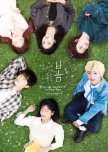
Inspiring paired with remarkable friendships & bromance
This drama was quite a spontaneous watch and grabbed my attention due to Bae In Hyuk starring in this series. It took me a while to grasp something compelling and unique about the series that stood out from other coming of age and youth dramas I have watched in the past. In the end, I flipped to the other side of the coin and found myself enjoying most aspects of the show as it was inspiring and admiring to watch. Arguably, there are minor problems that the drama brings, which will be discussed below. This review is based upon the fact that I have not read the webtoon, thus my judgments will only be about the drama alone.As mentioned in the plot. the drama revolves around two male protagonists that have two very contrasting personalities and lives, but both have their struggles that they individually deal with. It is an atypical story about the hardships of today's youth whilst they are at university. If you are a heavy-watcher of youth dramas or web dramas - like myself - then this kind of story would be very familiar to you. Unlike web dramas based around this theme, however, this drama did bring some surprising depth and storyline contrasting to what you would normally see from a university-based drama. It touches upon serious issues that include poverty, anxiety, trauma, and physical/emotional abuse. One thing I enjoyed about this series is the feelings and vulnerabilities that are expressed with the male characters in this society. The series is centered around two male protagonists was a splendid choice. I found it admiring that the show made it distinctly clear that one can suffer from their own worries, besides having financial problems which means that each problem should be validated. The life lessons that derive from the struggles that the characters faced were remarkable and endearing.
I found the romance story to be satisfactory and lacking development a little. I think the drama could have benefited from developing the friendship more than the romance. It is quite a cliche with how they miraculously meet. Albeit on the plus side, the friendship developed between the couple was cute and the relationship itself was nurturing in some way. The writers decided to include a love triangle, a reoccurring theme amongst K-dramas. I felt like it would have been better to have not included it in the show as it does not add any value to what was already a compelling storyline
The series builds on a stereotypical image of toxic rich families which is an ongoing theme that takes place within many K-dramas; I have grown tired of seeing them, but I liked the slight twist to it.
Overall, the story was surprisingly intriguing to watch as each episode progresses. It can be predictable in some instances, but in others, the drama will bring you a few surprises as well. The pace of the drama was great , but I wish for the drama to find a good balance with developing the friendship between the two male leads and having a great romance story across the cast involved.
The writers of the drama did a fabulous job in showing two contrasting characters who are dealing with immense sufferings in their life, but from two different sides of the spectrum: one that is in need of money to make ends meet and one that is in need of affection due to the loneliness that derives from an unloved family. Soo Hyun has a very reserved and cold temperament, whilst Yeo Jun tries to portray a cheerful and bubbly exterior. As both make their way through this ambiguous and strenuous life, they happen to grow fond of each other and find healing in one another as their friendship develops. But this was not smooth sailing at first. The character development between Soo Hyun and Yeo Jun is notably incredible and phenomenal. The chemistry that the two friends have along with So Bin is touching as well. Both Bae In Hyuk and Park Ji Hoon displayed their character's emotions terrifically and I am thoroughly impressed with Park Ji Hoon’s acting seeing him for the first time in a role.
So Bin is an innocent, socially anxious, and assiduous character. At times I do feel as if she lacks depth compared to Soo Hyun and Yeo Jun and was merely serving as one's partner once her little story was over. Nevertheless, I enjoyed her character development. As always, I am impressed with Kang Min Ah's acting, and seeing her act in diverse roles in her previous projects, she did well in portraying So-Bin.
Young Ran was the tough, sociable, and strong one out of the bunch. It was lovely to see Eunbi as well for the first time in a role.
Mi Joo as a character was anti-climatic and poorly written. Her lack of backstory and development, plus the obnoxious writing of her unrequited love was unbearable to watch.
Chan-Kin. The child-like and playful character was notoriously known as So-Bin’s best friend. Again, even though there was not a lot going on with the character, I did like his willingness to develop and the backstory behind his friendship with So-Bin.
And lastly, Professor Song and Professor Park. I enjoyed their talks and interactions with the students, paired with their perspectives on youth for them when they were in their 20’s. It was quite fascinating. At first, I did not like Professor Song, but after getting to know her character more, I grew fond of her.
There is not a lot of songs that accompany this drama, but I do like all of them and fit well with the series. The one I will highlight is Rothy & Hang Seung Yan's collaboration. This song is beautiful and melancholic that includes amazing harmonisation. A true masterpiece. Another favourite would have to be Park Ji Hoon's 'Talk To Me'.
To my surprise, I could see myself watching a few episodes of this drama again. Despite the sensitive issues that are tackled in this series, I do find this a comfortable watch for a rainy day.
To conclude, this is not an all-time favourite of mine, but I would have to say that it is one of my favourite youth dramas, setting aside the negatives that it brought. If you are a casual listener to Park Ji Hoon - like I am - this drama will for sure get you to know him more beyond just an idol. If you are a massive fan of youth dramas and the cast that are lined up for the series, then it is worth adding this one to the list. On the downside, if you are looking for a great romance, then maybe this is not the drama for you.
Overall, I would highly recommend you watch it for the incredible friendship that encompasses a beautiful message about friendships, bromance, and inspiring life lessons that accompany this. I happen to find myself missing this series as it is coming to an end.
Was this review helpful to you?
Was this review helpful to you?
ACTING/CAST: Decent. There isn't really anybody else besides watching these two interact.
MUSIC: Unmemorable.
REWATCH VALUE: If I'm bored one day, maybe.
OVERALL: I felt a lot of pity for the student throughout the show but the ending is satisfying.
Was this review helpful to you?
This review may contain spoilers
"The truth depends on who tells it best"
Copycat Killer was a copycat of numerous serial killer stories, set apart only by its relentless and gratuitous images of young women been tortured and murdered. Told in a time before social media, it tried to paint television news as bringing as much chaos to society as the brutal murders of imperfect victims.The drama utilized character types we’ve seen before. Chris Wu played the brilliant and moral prosecutor with a tragic past who is a thorn in everyone’s side for not tolerating any dishonesty and doggedly devoting his life to solving crimes. I found this confusing. Prosecutors in my country use the evidence police bring them to go to court and try the cases, they don’t dig up the evidence themselves. Cammy Chiang was the overly earnest young reporter disillusioned with the news media. The criminally underused Ko Chia Yen was Wu’s ex and a psychologist to help him make sense of the killers’ motivations. Ko is a gifted actress who had few scenes and none of which showed her range. Ruby Lin’s news anchor and producer had potential but the writing let her down as well. The villains ranged from mildly complex to laughable.
Copycat’s writing was uneven and the pacing slow. The first three episodes were more confusing than world building. Story lines that promised follow-ups were dropped. In the initial episode, a killer made the statement, “As long as the evil in your heart is triggered, anyone out there has the capacity to become a killer…Do you think there’s no evil in you?” The writing clumsily tried to push Wu’s prosecutor into that ethical corner. The news media was shown as morally bankrupt, uncaring of how much damage their coverage did to victims and their families as long as the ratings were high. Due to their race to air the most graphic or emotionally volatile content they became complicit in the killers’ crimes.
Aside from the writing and pacing issues, the main problem I had with this drama was its depiction of women. It tried to have it both ways-repeatedly show scantily clad women tortured and murdered in a titillating manner and then call out the media and society for blaming the victims. One character that was written for us to empathize with due to his loyalty and connection to main characters simply emphasized how unimportant young women’s lives were. The noble citizenry vilified the imperfect young women as being unworthy of justice and finding their killers a waste of tax payer money. The old myth of only the perfect victim, the chaste and obedient woman from a good family, being worthy of our sympathy or help was trotted out again and again. Perhaps Copycat was highlighting how victims and their families are often victimized as much by “righteous” people as the criminals who committed the heinous crimes but the lingering shots on chained women or extended scenes of gratuitously murdered women muddied those waters. The drama also briefly addressed the troubling old belief that the family of a perpetrator was as guilty as the criminal and not worthy of a happy life even if they had nothing to do with their relative’s actions.
Copycat Killer was a disturbing drama, not because it dealt with serial killers or had gory scenes, which it did, but because in trying to show society’s misogynistic and limited views of women they simply reinforced violence against women as a means of entertainment.
11/17/23
Was this review helpful to you?
The Shades of Justice
In this gripping thriller, we delve into a world where the boundaries of justice are not clearly defined. The story revolves around a young servant who masterminds a heinous crime, leading to the murder of his master's entire family, heirs, and servants. With their wealth in his hands, he vanishes for years, only to be confronted by justice two decades later. This short drama, spanning just 12 episodes, is a rollercoaster of enigmas, mysteries, ironies, suspense, and dark humor.Constable Qu Sangeng, portrayed by Bai Yu Fan, embarks on a harrowing journey to uncover the gruesome murder of his beloved superior, whom he regarded as a father figure. Soon, a string of similar murders emerges, all pointing to a common culprit. Qu Sangeng must untangle the web of connections between the victims and decipher the motive. The trail leads back to an incident that occurred two decades ago at the Lu mansion, which was razed to the ground, claiming the lives of most of its occupants. Only Lu Zhi, played by Yu Yao, and a handful of others managed to escape.
As the narrative unfolds, viewers will empathize with Lu Zhi, understanding the circumstances that drove him to commit these atrocities. As a clever adolescent, Lu Zhi believed he had executed the perfect crime, unaware that someone held knowledge of his dark secret. This mysterious individual resurfaces two decades later to exact vengeance on those responsible.
While Lu Zhi's story is the genesis of these events and the serial killer's vendetta sets Constable Qu Sangeng on his quest for justice, they are not the central characters. The focus of the story shifts to Qu Sangeng and his decision to prioritize justice over personal vengeance, as well as Song Chen's struggles, portrayed by Ning Li. Both the adult Lu Zhi and the serial killer make only hidden or fleeting appearances as the story progresses.
Every character seems to harbor a motive and arouse suspicion. As the present-day plot unfolds and investigators attempt to piece together a complex puzzle, flashbacks shed light on the events from two decades ago. While the drama hints at hidden and illicit affairs, there is no central romantic subplot, reflecting the societal norms of the era.
Without good translations, some viewers may find this drama hard to understand as it is laden with riddles from verses and poems by the ancient sages. Even those well-versed in Mandarin and written Chinese may find themselves struggling with certain scenes and story elements, as the narrative moves swiftly and some details remain unexplained, catering to a more discerning audience. Rewatching becomes essential not for cherishing particular moments or characters but to gain a deeper comprehension and capture the subtleties that might have been missed.
My Verdict
This thriller is an adrenaline-pumping ride, offering a captivating storytelling format, top-notch direction, and commendable performances, with Yu Yao's portrayal of the juvenile Lu Zhi and Ning Li's portrayal of Song Chen standing out the most.
What makes this drama truly striking is its realism, even in today's world, in depicting the complex backdrop of wealth and power. Characters like Lu Yuan Bao, portrayed by Zhang Xi Lin, who transformed from a bandit to a wealthy and influential figure, highlight the murky waters of power dynamics. The story also portrays corrupt government officials who can be easily swayed, and the wealthy who, despite their outward respectability, remain to be despicable and thuggish. The concept of justice is portrayed in shades of gray, demonstrating that what one person sees as justice may be viewed as injustice from another's perspective. This theme resonates with the contemporary geopolitical landscape. For Qu Sangeng, choosing justice over personal vengeance is a wise choice given his superior's role in his father's death which he remains unaware of.
Great watch!
Was this review helpful to you?


